
The Influence of Nyaya Thought on Literature and Art in Ancient India

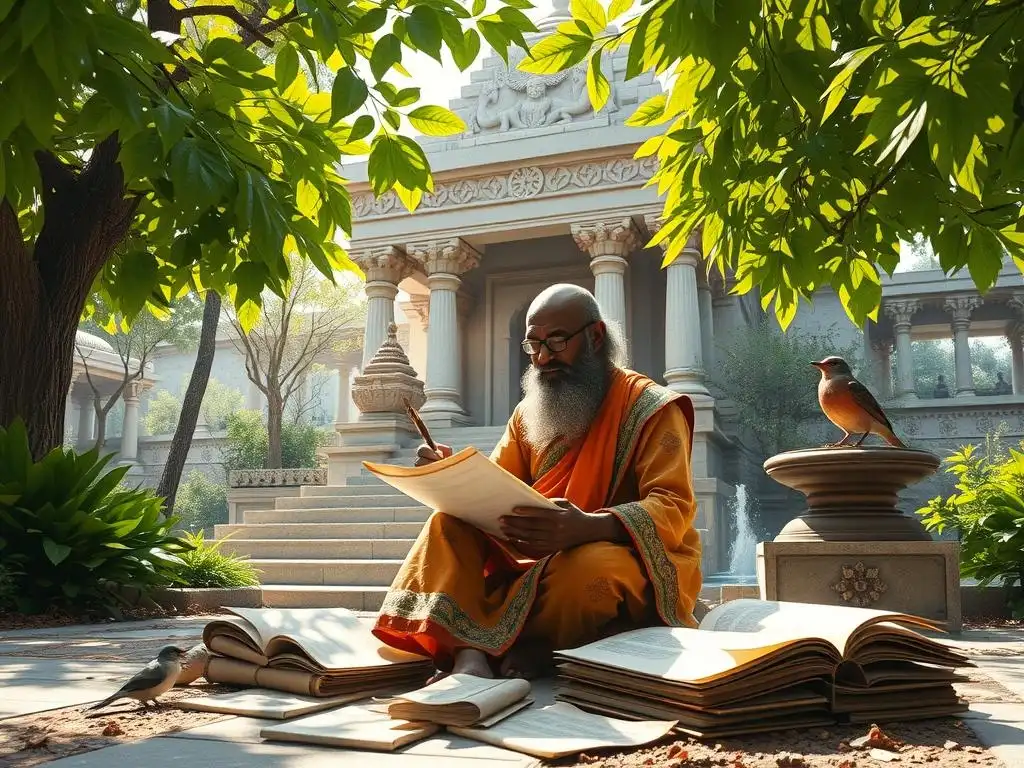
Welcome to Ancient India History, where we embark on a fascinating journey through the rich tapestry of India’s past. In this exploration, we delve into the profound Nyaya thought in ancient India, a philosophical tradition that has significantly shaped literature and art across the ages. Have you ever pondered how ancient philosophies influenced the creative expressions of a civilization?
Join us as we unravel the intricate connections between thought and creativity, and discover how the principles of Nyaya not only guided intellectual discourse but also breathed life into the artistic endeavors of its time. Prepare to be captivated as you uncover the enduring legacy of these ancient ideas!
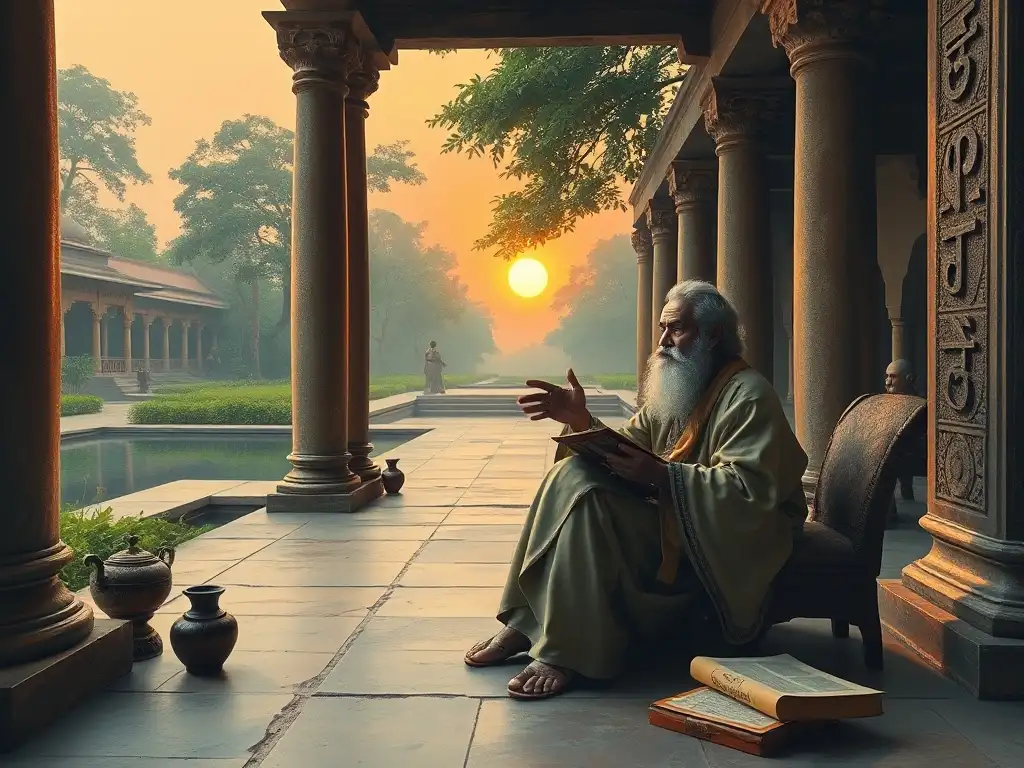
The influence of Nyaya thought on literature and art in ancient India represents a profound intertwining of philosophical inquiry and creative expression. As one of the six orthodox schools of Indian philosophy, Nyaya emphasizes logic, reasoning, and epistemology, making it a pivotal component in the intellectual landscape of ancient Indian civilization.
This article explores how these philosophical concepts not only shaped theoretical discourse but also permeated various forms of artistic expression and literary works. By examining the definition and origins of Nyaya philosophy, its key figures, and core principles, we can better understand its significant impact on ancient Indian literature and art.
Understanding Nyaya Thought in Ancient India
Definition and Origins of Nyaya Philosophy
Nyaya, which translates to "logic" or "rule," is one of the foundational schools of Indian philosophy that emerged around the 6th century BCE. Rooted in the ancient texts known as the Nyaya Sutras, composed by the sage Gautama, this philosophy primarily focuses on the methods of reasoning, debate, and the acquisition of knowledge. The Nyaya school asserts that logical analysis and systematic inquiry are essential for understanding reality and achieving liberation (moksha).
Key Figures in Nyaya School of Thought
A number of prominent philosophers have contributed to the evolution of Nyaya thought throughout history. Key figures include:
- Gautama (Aksapada): The founder of the Nyaya school, who outlined its foundational principles in the Nyaya Sutras.
- Vatsyayana: A significant commentator on the Nyaya Sutras, known for his work in synthesizing Nyaya with other philosophical traditions.
- Udayana: An influential philosopher and logician who expanded on Nyaya arguments and integrated them with other schools of thought.
These figures helped to establish Nyaya as a critical framework for intellectual discourse in ancient India, influencing a range of disciplines, including literature and art.
Core Principles of Nyaya Thought
At its core, Nyaya philosophy encompasses several key principles that shape its approach to knowledge and reality:
- Pramana (Means of Knowledge): Nyaya identifies four reliable sources of knowledge: perception, inference, comparison, and testimony.
- Tarka (Logic and Reasoning): The school emphasizes the importance of logical reasoning as a tool for acquiring knowledge and engaging in debate.
- Anumana (Inference): This principle involves drawing conclusions based on premises, which is crucial for philosophical arguments and literary analysis.
These principles not only laid the groundwork for philosophical inquiry but also provided a framework for understanding complex narratives in literature and art.
The Impact of Nyaya Thought on Ancient Indian Literature
Nyaya Concepts in Classical Texts
Nyaya thought significantly influenced classical texts, particularly in the realms of poetry, drama, and prose. The application of logical analysis and rhetorical strategies can be seen in works such as:
- Mahabharata: The epic showcases intricate dialogues where characters employ logical reasoning to resolve conflicts and dilemmas.
- Shakuntala by Kalidasa: This play integrates Nyaya principles in character development and plot progression, emphasizing the importance of reasoning in human relationships.
These examples illustrate how Nyaya thought enriched literary narratives, offering deeper insights into human experiences and moral questions.
Nyaya and Rhetoric in Ancient Literature
The principles of Nyaya also shaped the rhetorical techniques employed by ancient Indian authors. The emphasis on clarity, coherence, and logical structure can be observed in various literary forms. Notable impacts include:
- Use of Dialectics: Authors utilized dialectical reasoning to present arguments and counterarguments, enhancing the depth of their narratives.
- Character Development: Characters often embody Nyaya principles, showcasing the significance of logical thinking and ethical considerations.
The intertwining of Nyaya thought with literature not only facilitated intellectual engagement but also fostered a rich cultural dialogue that resonated throughout ancient Indian society.
The Influence of Nyaya Thought on Ancient Indian Art
The Nyaya school of thought, known for its emphasis on logic and epistemology, significantly influenced ancient Indian art, shaping not only the aesthetics but also the meaning and interpretation behind various artistic expressions. This philosophical framework encouraged artists and scholars to explore deeper meanings, fostering a culture where art became a medium for intellectual and spiritual discourse. By establishing principles of reasoning and validation, Nyaya thought provided a foundation for artists to create works that were not merely decorative but laden with philosophical significance.
Philosophical Underpinnings of Artistic Expression
At the core of Nyaya thought lies the pursuit of truth through rigorous analysis and logical reasoning. This quest for clarity and understanding permeated artistic expression in ancient India. Artists began to adopt a more structured approach to their work, emphasizing clarity of form and concept. They drew inspiration from Nyaya's principles of valid knowledge (prama), which encouraged them to consider the relationship between reality and representation.
Furthermore, the emphasis on anuvya (inference) in Nyaya thought led artists to portray deeper narratives through their works. This can be seen in the intricate sculptures and paintings that adorned temples, which often depicted stories from Hindu epics, showcasing moral dilemmas and philosophical inquiries. The ability to convey complex ideas through visual means reflected the influence of Nyaya, where the clarity of expression was paramount.
Nyaya and Symbolism in Ancient Indian Art
Nyaya's analytical approach also influenced the use of symbolism in ancient Indian art. Artists began to employ specific symbols to convey philosophical ideas, allowing viewers to engage in a deeper contemplation of the artwork. For instance, the use of the lotus flower frequently represents purity and enlightenment, echoing the Nyaya principle of attaining knowledge through discernment.
Moreover, the integration of yoga and meditation themes in art was a manifestation of Nyaya's influence. The representation of serene figures in meditation serves not only as an aesthetic choice but also as an invitation for viewers to explore the philosophical teachings of self-awareness and the nature of reality. This convergence of symbolism and philosophy exemplifies how Nyaya thought enriched artistic expression, transforming art into a vehicle for intellectual exploration.
Comparative Analysis: Nyaya Thought vs. Other Philosophical Schools
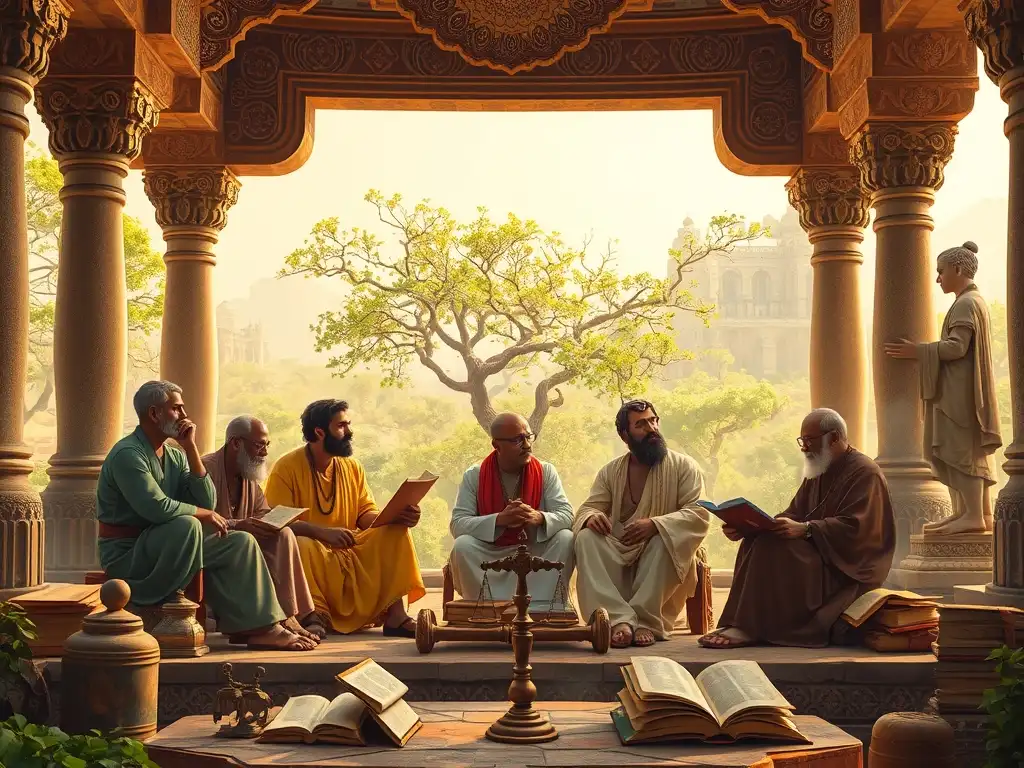
The Nyaya school stands distinct in its rigorous approach to logic and validation, particularly when compared to other philosophical traditions in ancient India. This comparative analysis highlights the unique features of Nyaya thought and its interactions with other schools, illustrating its broader impact on Indian intellectual history.
Differences Between Nyaya and Other Indian Philosophies
One of the main differences between Nyaya and other Indian philosophies, such as Advaita Vedanta and Buddhism, lies in their approach to knowledge and reality. While Advaita Vedanta emphasizes a non-dualistic understanding of existence, Nyaya focuses on the logical verification of knowledge through perception and inference. The emphasis on categorization and analysis in Nyaya creates a framework that contrasts with the more mystical or experiential approaches of other schools.
In addition, unlike the Buddhist emphasis on emptiness (śūnyatā), Nyaya maintains a belief in the existence of an objective reality that can be understood through logical reasoning. This fundamental difference shapes the way adherents of each school engage with the world, influencing not just philosophical discourse but also the themes represented in art and literature.
Synergistic Effects: How Nyaya Influenced Other Schools of Thought
Despite its distinct approach, Nyaya thought did not exist in isolation. Its principles of logic and reasoning permeated other philosophical schools, leading to a rich tapestry of intellectual exchange in ancient India. For instance, the Mīmāṃsā school adopted Nyaya's analytical methods to further its own explorations of ritual and dharma, showcasing the synergistic effects of these philosophical traditions.
Furthermore, the interactions between Nyaya and Buddhism led to the development of Nyaya-Buddhist debates, which were pivotal in refining arguments related to perception and knowledge. This intellectual rivalry prompted both schools to articulate their positions more clearly, ultimately enriching the philosophical landscape of ancient India.
Nyaya thought's influence on literature and art was profound, fostering a culture where philosophical inquiry and artistic expression were interwoven. The legacy of Nyaya continues to resonate, illustrating the enduring relevance of logical reasoning and analysis in the rich tapestry of ancient Indian civilization.
Conclusion: The Lasting Legacy of Nyaya Thought in Literature and Art
Nyaya thought has left an indelible mark on the landscape of literature and art in ancient India. Its emphasis on logic, reasoning, and clarity of expression fostered a culture where intellectual rigor was paramount. The principles enshrined in Nyaya philosophy not only informed literary techniques but also influenced artistic representations, encouraging a nuanced understanding of human experiences and the world.
As one contemplates the interconnections between Nyaya thought and artistic expression, it becomes evident that this philosophical school provided a framework that celebrated analytical thinking and creativity. The legacy of Nyaya continues to resonate, inspiring future generations to explore the profound relationship between philosophy, literature, and art.
Summary of Key Influences
The influence of Nyaya thought on ancient Indian literature and art can be summarized through several key aspects:
- Clarity and Precision: Nyaya emphasized the importance of clear and precise language, influencing poets and playwrights to adopt these principles in their works.
- Logical Structure: The logical frameworks developed by Nyaya philosophers inspired writers to construct narratives and arguments that are coherent and systematically developed.
- Rhetorical Techniques: Nyaya's analysis of perception and inference contributed to the evolution of rhetorical styles in literature, enhancing persuasive writing techniques.
- Artistic Representation: Nyaya's exploration of truth and reality encouraged artists to depict subjects with greater fidelity to human experience and observation.
These influences collectively cultivated a rich tradition of intellectual and artistic achievements in ancient India.
The Relevance of Nyaya Thought in Contemporary Discussions of Literature and Art
In today's discourse, Nyaya thought remains relevant, especially in the contexts of literary critique and art theory. Its analytical approach provides tools for dissecting texts and artworks, allowing for a deeper understanding of underlying themes and messages. Scholars and critics often draw upon Nyaya principles to engage with contemporary issues in art and literature, such as representation, symbolism, and the role of the audience.
Furthermore, as society grapples with complexities in communication and interpretation, the logical rigor of Nyaya philosophy offers a valuable lens through which to navigate these challenges. Thus, the enduring relevance of Nyaya thought enriches current discussions, bridging ancient wisdom with modern inquiry.
Suggested Further Reading on Nyaya Thought in Ancient India
To delve deeper into the intricate connections between Nyaya thought and its influence on literature and art, the following texts and resources are recommended:
Recommended Texts and Resources
- “Nyaya Sutras” by Gautama: The foundational text of the Nyaya school, offering insights into its philosophical tenets.
- “An Introduction to Nyaya Philosophy” by Raghunathan: A comprehensive overview of Nyaya thought, its principles, and its implications for literature and art.
- “Indian Philosophy: A Very Short Introduction” by Sue Hamilton: This book provides a broad context for understanding Indian philosophical schools, including Nyaya.
- “Art and Aesthetics in Indian Philosophy” by Bhattacharya: An exploration of how various philosophical schools, including Nyaya, have influenced Indian art forms.
Notable Scholars and Their Contributions to the Study of Nyaya
Several scholars have made significant contributions to the understanding of Nyaya thought and its impact on literature and art:
- Bimal Krishna Matilal: Renowned for his work in Indian philosophy, Matilal explored the nuances of Nyaya thought and its implications for contemporary philosophy.
- K. G. Z. Shastri: His research delved into the intersection of Nyaya and literary criticism, emphasizing the school’s influence on narrative structure and rhetoric.
- P. T. Raju: Raju’s writings on the relationship between Nyaya and aesthetics have provided valuable insights into how philosophical concepts shape artistic expression.
These scholars have been instrumental in expanding the discourse around Nyaya thought, ensuring its continued relevance in the study of literature and art.
- Understanding Nyaya Thought in Ancient India
- The Impact of Nyaya Thought on Ancient Indian Literature
- The Influence of Nyaya Thought on Ancient Indian Art
- Comparative Analysis: Nyaya Thought vs. Other Philosophical Schools
- Conclusion: The Lasting Legacy of Nyaya Thought in Literature and Art
- Suggested Further Reading on Nyaya Thought in Ancient India
Frequently Asked Questions
What is Nyaya thought in ancient India?
Nyaya thought refers to an ancient Indian philosophical system focused on logic and epistemology, emphasizing valid reasoning and knowledge acquisition.
How did Nyaya thought influence literature in ancient India?
Nyaya thought provided a framework for debate and dialectics, enriching literary works by fostering critical analysis and clarity of expression in texts.
In what ways did Nyaya thought impact art in ancient India?
Artists incorporated Nyaya principles into their works, leading to a focus on realism and logical representation, which enhanced the symbolism and meaning within art.
What are the key contributions of Nyaya philosophers to Indian civilization?
Nyaya philosophers contributed significantly to the fields of logic, ethics, and metaphysics, shaping the intellectual landscape and influencing other schools of thought.
Is Nyaya thought still relevant today?
Yes, Nyaya thought remains relevant, as its principles of logical reasoning and critical thinking continue to influence modern philosophy and education, promoting rational discourse.
Final Reflection: The Enduring Legacy of Nyaya Thought in Ancient India
The exploration of Nyaya thought in ancient India reveals its profound influence on literature and art, demonstrating that the pursuit of knowledge and logical reasoning is not merely an academic exercise but a vital part of cultural expression. Today, as we navigate a world filled with information and competing narratives, the principles of Nyaya remind us of the importance of clarity, reasoning, and critical inquiry in shaping our understanding of the world around us. The relevance of these ancient philosophies is more pronounced than ever, urging us to engage thoughtfully with the complexities of contemporary life.
Cultural and social landscapes are continually shaped by the ideas we inherit from our past, and Nyaya thought is a cornerstone of this legacy. Its emphasis on logical analysis and debate has not only enriched the literary and artistic traditions of ancient India but also laid the groundwork for modern philosophical discourse. As we reflect on this influence, we are reminded of the words of the philosopher Gauri Ma, who said, Knowledge is the light that dispels the darkness of ignorance.
This sentiment encapsulates the essence of Nyaya, highlighting its role in fostering enlightenment and understanding through reasoned thought.
As we conclude this exploration of Nyaya thought, I invite you to reflect on how these ancient principles can be applied in your own life. Consider how the pursuit of knowledge, critical thinking, and open dialogue can enhance your personal and professional relationships. Embrace the spirit of inquiry that Nyaya embodies, and let it guide you in your quest for understanding and creativity. By integrating these timeless lessons into our daily lives, we can contribute to a more thoughtful, informed, and compassionate society, honoring the rich legacy of ancient Indian philosophy.
Unveil the Wisdom of Nyaya – Transform Your Understanding!
Thank you for diving into the fascinating world of Nyaya thought and its profound influence on ancient Indian literature and art. Your curiosity today opens the door to rich cultural insights that can reshape how we appreciate these timeless works. Now, let’s explore ways to deepen your connection with this incredible legacy!
- Engage with Nyaya: Start a dialogue with friends or family about how Nyaya philosophy has shaped contemporary discussions and artistic expressions. Sharing insights can spark enriching conversations!
- Explore Further: Visit your local library or browse online resources to discover more about specific texts or artworks that embody Nyaya thought. Expanding your knowledge is essential!
- Create and Share: Try your hand at writing a poem or creating a piece of art inspired by Nyaya philosophy. Sharing your creations with the community can foster collective growth!
What new perspectives have you gained from Nyaya thought that could influence your own creative expressions?