
The Numerical Key: Exploring the Significance of the Sankhya System in Indian Philosophy

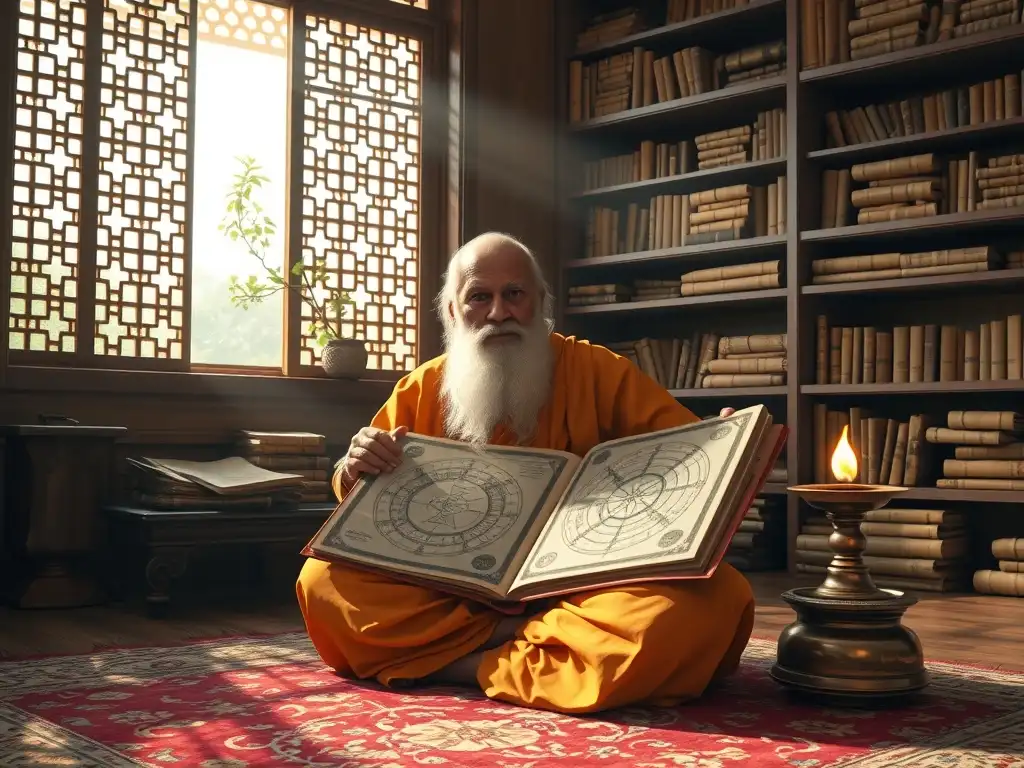
Welcome to Ancient India History, where we invite you to embark on a journey through the vibrant tapestry of India's past. In this exploration, we shine a spotlight on the Sankhya system in Indian philosophy, a pivotal framework that has shaped the discourse of thought and existence in ancient times. What makes this numerical system not just a method of calculation, but a profound philosophical tool?
Dive in to uncover the layers of meaning and significance that the Sankhya system holds, as we unravel how this ancient wisdom continues to resonate in modern philosophies. Let your curiosity lead you deeper into the rich narratives of India's heritage!

The Sankhya system in Indian philosophy represents one of the oldest and most influential schools of thought in the vast tapestry of ancient Indian intellectual traditions. It provides a comprehensive framework for understanding the nature of reality, consciousness, and the cosmos through a dualistic lens. As a philosophical approach, Sankhya articulates a systematic enumeration of principles that delineate the interplay between the material and the spiritual realms.
This article delves into the nuances of the Sankhya system, tracing its historical origins, foundational texts, key figures, and its profound impact on subsequent Indian philosophies. By unpacking the significance of Sankhya, we can appreciate its role not only in philosophy but also in shaping the cultural and spiritual landscapes of ancient India.
Introduction to the Sankhya System in Indian Philosophy
Definition of the Sankhya System
The Sankhya system posits a dualistic framework consisting of two primary realities: Purusha (consciousness) and Prakriti (matter). This philosophy asserts that all of existence can be understood through a numerical analysis of these elements and their interactions. The enumeration of the 24 principles of Prakriti serves as a foundational aspect of the system, systematically categorizing all manifestations of matter and experience.
Historical Context of the Sankhya Philosophy
Emerging around the 2nd century BCE, the Sankhya philosophy developed during a period of significant intellectual ferment in ancient India. It arose alongside other schools of thought, such as Yoga and Vedanta, contributing to a rich dialogue regarding metaphysics and epistemology. The historical context reveals how the Sankhya system engaged with and influenced various religious and philosophical movements, serving as a cornerstone for later developments in Indian metaphysics.
Overview of Key Concepts in Sankhya
The Sankhya system introduces several key concepts that are vital for understanding its philosophical implications:
- Purusha: The eternal, unchanging observer or consciousness.
- Prakriti: The dynamic, ever-changing material nature.
- Gunās: The three fundamental qualities (Sattva, Rajas, and Tamas) that govern the behavior of matter.
- Moksha: The ultimate goal of liberation from the cycle of birth and rebirth (samsara), achieved through the realization of the distinction between Purusha and Prakriti.
The Origins of the Sankhya System
Foundational Texts of the Sankhya Philosophy
The primary text that outlines the principles of the Sankhya system is the Sankhya Karika, attributed to Ishvara Krishna. This text serves as a manual for understanding the philosophical tenets of Sankhya, articulating its doctrines in a concise and systematic manner. Additionally, the Bhagavad Gita and Yoga Sutras reflect the influence of Sankhya philosophy, integrating its concepts into broader discussions of self-realization and ethics.
Key Figures in the Development of Sankhya
Several influential thinkers contributed to the evolution of the Sankhya system, notably:
- Ishvara Krishna: The author of the Sankhya Karika, who systematized the teachings of Sankhya.
- Kapila: Often regarded as the founder of the Sankhya school, though historical evidence remains sparse.
- Gaudapada: A later philosopher who interpreted Sankhya concepts within the framework of Advaita Vedanta.
Influence of the Sankhya System on Indian Thought
The impact of the Sankhya system on Indian philosophy is profound and far-reaching. It laid the groundwork for various philosophical discussions, influencing schools such as Yoga, Vedanta, and Buddhism. The concepts of dualism, the nature of reality, and the path to liberation have permeated many facets of Indian thought, showcasing the enduring legacy of the Sankhya system within the broader philosophical discourse.
Through this exploration, we can better appreciate the significance of the Sankhya system in Indian philosophy, recognizing its crucial role in shaping not only philosophical inquiry but also spiritual practices and cultural expressions throughout ancient India.
Core Principles of the Sankhya System
The Sankhya system, one of the six orthodox schools of Indian philosophy, is renowned for its analytical approach to understanding the nature of existence. At its core, the Sankhya system emphasizes the distinction between two fundamental realities: Purusha (consciousness) and Prakriti (matter). This dualistic framework serves as the foundation for exploring the nature of reality and human experience.
One of the key principles of the Sankhya system is the theory of evolution, which posits that all phenomena emerge from the interaction between Purusha and Prakriti. Prakriti, the primal matter, is characterized by three gunas (qualities) — sattva (purity), rajas (activity), and tamas (inertia) — which combine and manifest in various forms. The Sankhya system advocates for knowledge (jnana) as a means to liberate oneself from the bondage of ignorance (avidya) and the cycles of birth and rebirth (samsara).
Another essential aspect of the Sankhya philosophy is the enumeration of the Tattvas (elements of existence), which provides a structured framework for understanding the universe and human consciousness. By analyzing these elements, practitioners can discern the nature of reality, leading to spiritual growth and ultimate liberation (moksha).
The Concept of Purusha and Prakriti
The concept of Purusha and Prakriti is fundamental to the Sankhya system, representing the dual nature of reality. Purusha is the eternal, unchanging consciousness that exists beyond time and space. It is the observer, the witness of all experiences, and remains unaffected by the external world. In contrast, Prakriti is the dynamic, changing aspect of reality. It encompasses the material universe, including all physical forms, mental processes, and emotional experiences.
The interaction between Purusha and Prakriti is central to the Sankhya philosophical framework. Prakriti is driven by the three gunas, which influence the evolution of the universe. The interplay of these qualities leads to the manifestation of the various forms of existence, ultimately resulting in the emergence of individual souls (jivas). Understanding this relationship is crucial for spiritual seekers, as it aids in the realization of one's true nature as Purusha, transcending the limitations imposed by the material world.
The Twenty-Five Tattvas: Elements of Existence
The Twenty-Five Tattvas, as articulated in the Sankhya system, represent the essential building blocks of existence. These elements are categorized into two groups: the universal and the individual. The first eighteen Tattvas represent aspects of Prakriti, while the remaining seven pertain to Purusha and the individual experience.
- Prakriti (1)
- Mahattva (Cosmic Intelligence) (2)
- Ahamkara (Ego) (3)
- Sattva (4)
- Rajas (5)
- Tamas (6)
- Five Tanmatras (Subtle Elements) (7-11)
- Sound
- Touch
- Form
- Taste
- Smell
- Five Gross Elements (Mahabhutas) (12-16)
- Earth
- Water
- Fire
- Air
- Space
- Five Organs of Action (Karmendriyas) (17-21)
- Five Organs of Perception (Jnānendriyas) (22-26)
- Purusha (27)
- Prakriti (28)
The understanding of these Tattvas allows individuals to comprehend their place within the universe and the underlying principles that govern existence. By contemplating these elements, one can gain insight into the nature of reality and the self, advancing towards liberation.
Understanding the Dualism in Sankhya Philosophy
Dualism in Sankhya philosophy is a pivotal concept that highlights the dichotomy between Purusha and Prakriti. This distinction is not merely theoretical; it has profound implications for understanding human experience and the nature of suffering. The dualistic framework posits that while Purusha represents pure consciousness, Prakriti embodies the material world, including thoughts, emotions, and physical sensations.
This dualism encourages practitioners to cultivate a sense of detachment from the fluctuations of Prakriti. By recognizing that their true identity lies with Purusha, individuals can transcend the limitations of the material realm. This perspective fosters a path toward self-realization, where one understands that suffering arises from attachment to the transient aspects of existence. The dualistic nature of Sankhya thus serves as a guiding principle for those seeking to attain spiritual liberation.
The Role of the Sankhya System in Indian Philosophy
The Sankhya system plays a crucial role in the broader landscape of Indian philosophy. Its analytical approach and emphasis on discernment have influenced various philosophical schools and spiritual practices. The systematic categorization of reality into Tattvas has provided a framework for understanding the complexities of existence, making it a cornerstone of philosophical inquiry in ancient India.
Sankhya's focus on empirical observation and rational analysis has also paved the way for the development of other philosophical systems, particularly in the context of metaphysics and epistemology. Its principles have been instrumental in shaping discussions on the nature of the self, consciousness, and the material world, establishing a foundation for future philosophical explorations.
Comparison with Other Indian Philosophical Schools
When compared to other Indian philosophical schools, the Sankhya system stands out for its unique dualism and emphasis on the enumeration of elements. Unlike Advaita Vedanta, which advocates for non-dualism, Sankhya maintains a clear distinction between the observer and the observed. This differentiation allows for a more structured analysis of existence and the nature of knowledge.
In contrast to Buddhism, which posits that all phenomena are transient and ultimately illusory, Sankhya affirms the reality of both Purusha and Prakriti. While Buddhism emphasizes the path of non-attachment to overcome suffering, Sankhya provides a detailed understanding of the elements of existence, offering a framework to explore the relationship between consciousness and the material world.
The Interplay Between Sankhya and Yoga
The interplay between Sankhya and Yoga is a significant aspect of Indian philosophy. While Sankhya provides the theoretical foundation, Yoga offers practical methodologies for realizing the insights derived from Sankhya. The Yoga Sutras of Patanjali, for instance, draw heavily from Sankhya concepts, particularly in their understanding of the mind and consciousness.
Yoga practices such as meditation, breath control, and ethical discipline are seen as means to achieve the ultimate goal of Sankhya: liberation (moksha). By engaging in these practices, individuals can gain experiential knowledge, transcending the dualistic nature of existence and realizing their true identity as Purusha. Thus, the synthesis of Sankhya and Yoga creates a holistic approach to spiritual development, integrating both theory and practice.
The Influence of Sankhya on Later Philosophical Developments
The influence of Sankhya on later philosophical developments is profound and far-reaching. Its core principles have been integrated into various other philosophical and spiritual traditions, including Vedanta, Buddhism, and even modern psychological theories.
The concepts of dualism and the classification of elements found in Sankhya have inspired numerous thinkers throughout history. For example, many schools of thought in Hindu philosophy have adopted and adapted Sankhya's framework to develop their own metaphysical theories. Furthermore, the exploration of consciousness and self-awareness in contemporary psychology echoes the foundational ideas established by the Sankhya system.
The Sankhya system's analytical rigor and insights into the nature of existence continue to resonate within Indian philosophy and beyond, affirming its significance as a foundational pillar in the exploration of human consciousness and the quest for liberation.
Practical Applications of the Sankhya System
The Sankhya system, one of the six orthodox schools of Indian philosophy, is not only a theoretical framework but also offers practical applications that resonate in various domains today. Its fundamental principles provide insights into understanding the nature of reality, consciousness, and the process of liberation (moksha).
In the realm of psychology, Sankhya's classification of the mind into different aspects—such as manas (mind), buddhi (intellect), and ahamkara (ego)—has influenced modern cognitive theories. This tripartite division aids in analyzing human behavior and mental processes, leading to therapeutic practices that align with Sankhya's insights into mental health.
Additionally, the Sankhya system serves as a foundational element in yoga practices, particularly in the context of yoga philosophy, where understanding the interplay between purusha (consciousness) and prakriti (matter) is essential for achieving self-realization. This practical incorporation demonstrates the system's enduring relevance in guiding personal and spiritual development.
How Sankhya Influences Modern Indian Thought
Sankhya philosophy continues to exert a profound influence on contemporary Indian thought, shaping discussions in various fields such as philosophy, spirituality, and even politics. Key thinkers, including Sri Aurobindo and Swami Vivekananda, have drawn upon Sankhya concepts to articulate their visions of spiritual evolution and societal reform.
In modern educational contexts, Sankhya's emphasis on knowledge and discernment has led to a resurgence of interest in holistic education that incorporates philosophical inquiry alongside practical skills. This approach encourages students to engage deeply with philosophical traditions, fostering critical thinking rooted in ancient wisdom.
Moreover, the Sankhya philosophy has found its way into discussions surrounding environmental ethics and sustainability. The recognition of the interconnectedness of all entities, as suggested by Sankhya's dualism, prompts a more harmonious relationship with nature, influencing contemporary ecological movements in India.
The Relevance of the Sankhya System in Contemporary Philosophy
In the landscape of contemporary philosophy, the Sankhya system holds significant relevance as it offers unique perspectives on topics like dualism, consciousness, and the nature of reality. Its systematic categorization of phenomena enables a nuanced understanding that transcends purely materialistic viewpoints, emphasizing the importance of both the physical and metaphysical realms.
Philosophers today engage with Sankhya ideas to explore questions related to the mind-body relationship, particularly in light of advancements in neuroscience and psychology. The system's insights into the nature of consciousness challenge reductionist approaches, advocating for a more integrated view that recognizes the complexity of human experience.
Furthermore, the Sankhya system's acknowledgment of multiple paths to knowledge encourages pluralism in philosophical discourse, allowing for a synthesis of various schools of thought. This relevance is evident in the ongoing dialogues between Eastern and Western philosophies, where Sankhya's principles contribute to a richer understanding of existential questions.
Case Studies: Modern Interpretations of Sankhya Concepts

Modern interpretations of Sankhya concepts can be observed in various disciplines, illustrating the adaptability and continued significance of this ancient philosophy. One notable case study is the application of Sankhya principles in the field of psychology, particularly in mindfulness and therapeutic practices.
For example, the integration of Sankhya's classification of the mind has led to the development of therapeutic models that emphasize self-awareness and the distinction between thoughts and the self. Mindfulness-based cognitive therapy (MBCT) incorporates these insights, helping individuals cultivate a deeper understanding of their mental processes.
Another case study involves the resurgence of interest in Sankhya philosophy within the context of environmentalism. Contemporary environmental thinkers draw upon Sankhya's dualistic framework to argue for a balanced relationship between humanity and nature, advocating for sustainability practices rooted in philosophical principles that respect both consciousness and material existence.
Critiques and Challenges to the Sankhya System
Despite its historical significance and continued relevance, the Sankhya system has faced critiques and challenges, particularly regarding its foundational assumptions and philosophical implications. Critics argue that its dualistic framework may lead to an artificial separation between consciousness and matter, potentially undermining a holistic understanding of reality.
Moreover, some philosophers contend that the Sankhya system's reliance on a metaphysical entity (purusha) raises questions about empirical validation. This skepticism is often rooted in modern scientific perspectives that prioritize observable phenomena over metaphysical speculation.
Additionally, the challenge of reconciling Sankhya with contemporary advancements in fields such as neuroscience complicates its application in explaining consciousness. Critics argue that as our understanding of brain functions evolves, Sankhya's explanations may require reevaluation to align with empirical findings.
Major Criticisms of the Sankhya Philosophy
The Sankhya philosophy has drawn several major criticisms, primarily centered around its epistemological assumptions and metaphysical claims. One significant critique is its dualistic nature, which posits a clear distinction between purusha (consciousness) and prakriti (matter). Critics argue that this separation can lead to a fragmented understanding of reality, neglecting the interconnectedness of all phenomena.
Another point of contention is the reliance on a transcendent purusha. Skeptics question the necessity of such an entity for explaining consciousness and personal identity, suggesting that a purely materialistic approach could suffice. This criticism highlights a broader debate within philosophy regarding the nature of consciousness and its origins.
Additionally, the Sankhya system's emphasis on liberation through knowledge (jnana) has been challenged by those who argue for the importance of action (karma) and devotion (bhakti) in achieving spiritual fulfillment. This critique suggests that a singular focus on intellectual understanding may overlook the multifaceted nature of human experience.
Responses from Sankhya Proponents
In response to critiques, proponents of the Sankhya system offer several defenses that reaffirm its philosophical value and applicability. They argue that the dualistic framework of Sankhya does not imply an absolute separation between consciousness and matter but rather emphasizes their distinct qualities and roles in the process of existence.
Supporters contend that the concept of purusha serves as a necessary explanatory tool for understanding consciousness, providing a framework that accommodates subjective experiences and the qualitative aspects of awareness. They assert that modern neuroscience can complement rather than negate Sankhya principles, leading to a more comprehensive understanding of consciousness.
Furthermore, Sankhya proponents emphasize the importance of knowledge in the pursuit of liberation, arguing that intellectual understanding is foundational to transformative experiences. They advocate for an integrated approach that recognizes the interplay between knowledge, action, and devotion, fostering a holistic perspective that transcends the limitations of singular philosophical frameworks.
The Future of the Sankhya System in Philosophical Discourse
The future of the Sankhya system in philosophical discourse appears promising, particularly as interdisciplinary dialogues gain traction. The increasing interest in integrative approaches that combine insights from various philosophical traditions suggests that Sankhya's principles will continue to be relevant in contemporary debates on consciousness, ethics, and the nature of reality.
As philosophy intersects with fields such as cognitive science, environmental studies, and social theory, the Sankhya system's holistic framework offers valuable perspectives that can enrich these discussions. Its emphasis on the interplay between consciousness and material existence resonates with modern concerns about sustainability and ethical living.
Moreover, the revival of interest in Eastern philosophies among scholars and practitioners worldwide indicates a growing recognition of the value of Sankhya's insights. As global philosophical discourse evolves, the Sankhya system may inspire new interpretations and applications that continue to resonate with contemporary audiences, ensuring its place in the ongoing exploration of human thought and experience.
Conclusion: The Enduring Legacy of the Sankhya System in Indian Philosophy
The Sankhya system in Indian philosophy stands as a monumental framework that has shaped the discourse of metaphysics, epistemology, and ethics within the Indian philosophical tradition. Originating from the ancient texts, primarily the Sankhya Karika attributed to Ishvara Krishna, this dualistic system emphasizes the distinction between consciousness (purusha) and matter (prakriti).
The systematic classification of the elements of existence has not only influenced various philosophical schools but has also permeated into diverse aspects of Indian culture, including yoga, Ayurveda, and spiritual practices. Through its analytical approach, the Sankhya system has provided tools for understanding the nature of reality and human experience, affirming its relevance across centuries.
Summary of Key Insights
The Sankhya system offers several essential insights that have contributed to its enduring legacy:
- Dualism: The clear demarcation between consciousness and material reality allows for a nuanced understanding of existence.
- Categorization: The classification of the twenty-five principles, or tattvas, provides a comprehensive framework for analyzing the cosmos and the self.
- Influence on Other Schools: Sankhya's principles have significantly impacted other Indian philosophical schools, especially yoga, which integrates Sankhya's metaphysical views into practical applications.
- Interdisciplinary Relevance: The analytical methods of Sankhya have relevance beyond philosophy, influencing psychology, health, and wellness practices that emphasize mental clarity and balance.
These insights illustrate how the Sankhya system has served as a foundational element for subsequent philosophical exploration and practical applications within Indian culture.
The Continued Significance of Sankhya in Understanding Indian Philosophy
The significance of the Sankhya system in Indian philosophy remains profound, particularly in the context of its influence on contemporary philosophical thought. Scholars and practitioners alike continue to draw on its principles to engage with complex questions surrounding the nature of consciousness and reality.
- Philosophical Discourse: Modern discussions on consciousness, especially in fields such as cognitive science and philosophy of mind, echo the dualistic themes present in Sankhya. The system's exploration of the nature of self-awareness continues to foster dialogue between ancient wisdom and modern inquiry.
- Psychological Insights: The Sankhya framework aligns with modern psychological theories that examine the connection between mind and body, particularly in the realm of mindfulness and holistic health practices.
- Integrative Practices: The synthesis of Sankhya with yoga emphasizes its practical applications, promoting mental and physical well-being in today's fast-paced world.
In this way, the Sankhya system is not merely an ancient philosophical doctrine but a living tradition that informs current understandings of existence and consciousness.
Final Thoughts on the Role of the Sankhya System in Modern Thought
The Sankhya system in Indian philosophy serves as a pivotal reference point for understanding not only ancient thought but also its application in contemporary contexts. Its analytical rigor and systematic categorization continue to provide clarity in exploring existential questions.
- Cultural Relevance: As societies confront the complexities of existence, the principles of Sankhya offer timeless guidance, encouraging individuals to reflect on the interplay between the material and spiritual realms.
- Philosophical Resilience: The resilience of the Sankhya system is a testament to its foundational role in Indian philosophy, demonstrating the capacity of philosophical frameworks to adapt and remain relevant through the ages.
Ultimately, the Sankhya system is a testament to the depth of ancient Indian thought, providing a rich tapestry of insights that resonate within both historical and modern philosophical landscapes. Its legacy continues to inspire exploration and dialogue, inviting new generations to engage with its profound wisdom.
- Introduction to the Sankhya System in Indian Philosophy
- The Origins of the Sankhya System
- Core Principles of the Sankhya System
- The Role of the Sankhya System in Indian Philosophy
- Practical Applications of the Sankhya System
- How Sankhya Influences Modern Indian Thought
- The Relevance of the Sankhya System in Contemporary Philosophy
- Case Studies: Modern Interpretations of Sankhya Concepts
- Critiques and Challenges to the Sankhya System
- Major Criticisms of the Sankhya Philosophy
- Responses from Sankhya Proponents
- The Future of the Sankhya System in Philosophical Discourse
- Conclusion: The Enduring Legacy of the Sankhya System in Indian Philosophy
- What is the Sankhya system in Indian philosophy?
- How does the Sankhya system influence other Indian philosophies?
- What are the key components of the Sankhya system?
- How does the Sankhya system approach the concept of liberation?
- Why is the Sankhya system considered significant in the study of ancient Indian civilizations?
Frequently Asked Questions
What is the Sankhya system in Indian philosophy?
The Sankhya system is one of the oldest philosophical systems in India, emphasizing the duality of consciousness and matter. It presents a framework for understanding the nature of reality and existence.
How does the Sankhya system influence other Indian philosophies?
The Sankhya system has significantly impacted various Indian philosophical traditions, particularly Yoga and Advaita Vedanta, by providing foundational concepts regarding purusha (consciousness) and prakriti (matter).
What are the key components of the Sankhya system?
Key components of the Sankhya system include the enumeration of principles (tattvas), the distinction between individual self and universal consciousness, and the process of liberation through knowledge and discrimination.
How does the Sankhya system approach the concept of liberation?
In the Sankhya system, liberation (moksha) is achieved through self-realization and understanding the separation between the self (purusha) and the material world (prakriti), leading to freedom from suffering.
Why is the Sankhya system considered significant in the study of ancient Indian civilizations?
The Sankhya system is significant as it reflects the intellectual depth and philosophical inquiry of ancient Indian civilizations, contributing to discussions on metaphysics, ethics, and the nature of existence.
Final Reflection: The Enduring Legacy of the Sankhya System in Indian Philosophy
The Sankhya system in Indian philosophy remains a vital framework for understanding the complexities of existence and consciousness in today's world. As we navigate an increasingly chaotic and fast-paced society, the principles of Sankhya offer profound insights into the nature of reality, the interplay of matter and spirit, and the quest for self-realization. The relevance of this ancient philosophy is not merely historical; it serves as a guiding light for contemporary seekers of truth and meaning.
The influence of the Sankhya system extends far beyond its philosophical roots, permeating various aspects of culture, spirituality, and even psychology. Its dualistic approach encourages individuals to explore the relationship between the material and the immaterial, fostering a deeper understanding of the self and the universe. As Carl Jung once said, Your vision will become clear only when you can look into your own heart. Who looks outside, dreams; who looks inside, awakens.
This quote encapsulates the essence of Sankhya, reminding us that true awakening comes from introspection and self-awareness.
As we reflect on the teachings of the Sankhya system, I invite you to consider how these ancient insights can be integrated into your daily life. Take a moment to pause, breathe, and delve into your own consciousness.
Embrace the journey of self-discovery that the Sankhya philosophy encourages, and let it inspire you to seek balance and harmony in a world that often feels disjointed. The wisdom of Sankhya is not just a relic of the past; it is a timeless key that can unlock the doors to a more profound understanding of ourselves and our place in the cosmos.
Unlock the Wisdom of Sankhya — Take Action Today!
Thank you for diving into the profound insights of the Sankhya system in Indian philosophy! You’ve taken a meaningful step in understanding how numbers shape our existence and philosophical thought. Now, it's time to fully embrace this knowledge and integrate it into your daily life.
Here’s how you can take action:
- Explore Sankhya further: Read a respected translation of the original Sankhya texts to deepen your understanding and appreciation of its principles.
- Join a community: Connect with like-minded individuals on forums or social media groups dedicated to Indian philosophy to share your thoughts and experiences.
- Practice mindfulness: Incorporate the principles of Sankhya into your daily routines, such as through meditation or journaling, to discover how these concepts can positively influence your life.
What new perspective or insight from the Sankhya system are you excited to apply in your life? We invite you to share your thoughts below!