
Nyaya and the Pursuit of Truth: An Exploration of Its Principles


Welcome to Ancient India History, where we embark on an enlightening journey through the vibrant tapestry of India’s past. Here, we unravel the profound Nyaya philosophy in ancient India, a pivotal school of thought that sought to define the very essence of truth and knowledge.
As you delve into our featured article, “Nyaya and the Pursuit of Truth: An Exploration of Its Principles,” you'll discover how this philosophical framework not only shaped intellectual discourse but also influenced the moral and ethical landscapes of ancient Indian civilization. Prepare to ignite your curiosity and explore the depths of wisdom that still resonate today!
The Nyaya philosophy, a cornerstone of ancient Indian thought, plays a pivotal role in the broader tapestry of Indian philosophy. Rooted in the ancient scriptures known as the Nyaya Sutras, composed by the sage Gautama around the 2nd century BCE, this school of thought emphasizes the importance of logic and epistemology in the pursuit of truth. Nyaya, which translates to "logic" or "justice," is more than just a philosophical discipline; it embodies a systematic approach to understanding reality, knowledge, and the processes that lead to valid conclusions.
As we delve into the principles of Nyaya, we embark on a journey through the intricate web of arguments, reasoning, and methodologies that ancient Indian scholars employed to dissect complex philosophical questions. This exploration not only highlights the intellectual rigor of the Nyaya school but also showcases its enduring influence on subsequent philosophical traditions in India and beyond. Understanding Nyaya philosophy in ancient India allows us to appreciate the nuanced discussions surrounding perception, inference, and the nature of knowledge itself, marking it as a significant player in the quest for truth.
In the sections that follow, we will unpack the foundational concepts of Nyaya, its methodology, and its implications for understanding reality and truth, thereby shedding light on the profound legacy of this ancient philosophical tradition.
- Introduction to Nyaya Philosophy in Ancient India
- Core Principles of Nyaya Philosophy
- Nyaya and Its Contribution to Indian Logic
- The Pursuit of Truth: Methodologies in Nyaya
- Influence of Nyaya Philosophy on Later Philosophical Thought
- Conclusion: The Legacy of Nyaya Philosophy in Ancient India
- Further Reading on Nyaya Philosophy in Ancient India
- References
- Frequently Asked Questions
- Final Reflection: The Enduring Legacy of Nyaya Philosophy in the Pursuit of Truth
- Embrace the Journey to Truth and Justice!
Introduction to Nyaya Philosophy in Ancient India

Nyaya philosophy, one of the six orthodox schools of Indian philosophy, is a significant branch that emphasizes the importance of logic and epistemology in the pursuit of truth. Originating from ancient India, it provides a systematic approach to reasoning and argumentation, aiming to differentiate valid knowledge from mere opinion. This section delves into the foundational aspects of Nyaya philosophy, its historical significance, and its paramount emphasis on truth.
Overview of Nyaya Philosophy
Nyaya, which translates to "logic" or "method," is primarily concerned with the process of reasoning and the means of acquiring knowledge. Its foundational text is the Nyaya Sutras, composed by the sage Gautama (also known as Akshapada) around the 2nd century BCE. This work outlines the principles of logic, debate, and epistemology that form the bedrock of Nyaya thought.
The philosophy is built on four primary sources of knowledge, known as pramanas:
- Pratyaksha (Perception): Direct sensory experience.
- Anumana (Inference): Reasoning based on observation and experience.
- Upamana (Comparison): Knowledge gained through analogy.
- Shabda (Testimony): Knowledge acquired from authoritative sources.
Nyaya philosophy promotes a rigorous method of inquiry, where each pramana is critically evaluated to arrive at a sound conclusion. This systematic approach makes Nyaya a precursor to many modern logical frameworks and highlights its relevance in contemporary philosophical discourse.
Historical Context of Nyaya in Ancient India
The Nyaya school emerged during a period of significant philosophical development in ancient India, particularly during the early centuries of the Common Era. This era saw a flourishing of intellectual activity, with various schools of thought vying for prominence.
Nyaya philosophy was not developed in isolation; it interacted with other philosophical traditions, such as Buddhism and Jainism, leading to rich dialogues and debates. For instance, Nyaya philosophers often critiqued Buddhist epistemology, providing counterarguments to Buddhist notions of perception and inference. The interplay of these ideas contributed to a more nuanced understanding of knowledge and reality in ancient Indian philosophy.
Over time, Nyaya evolved, incorporating insights from other schools and adapting to changing intellectual landscapes. By the time of the Gupta Empire (approximately 4th to 6th centuries CE), Nyaya had solidified its position as a prominent philosophical tradition, influencing various aspects of Indian culture, including law, logic, and ethics.
Importance of Truth in Nyaya Philosophy
At the heart of Nyaya philosophy lies the pursuit of truth, which is considered paramount for achieving liberation (moksha). The Nyaya philosophers posited that understanding the nature of reality is essential for overcoming ignorance and false beliefs. This emphasis on truth manifests in several ways:
- Critical Examination: Nyaya encourages rigorous analysis of arguments to discern truth from falsehood. This method promotes intellectual honesty and clarity of thought.
- Ethics of Knowledge: The pursuit of truth is not merely an intellectual exercise; it is seen as a moral obligation. Knowledge gained through valid means is believed to lead to ethical living and harmony in society.
- Pragmatic Application: Nyaya philosophy extends beyond theoretical discourse, advocating for practical applications of knowledge in everyday life. This pragmatic approach underscores the significance of truth in achieving practical benefits and societal well-being.
Nyaya philosophy in ancient India is characterized by its logical rigor, historical significance, and profound emphasis on the pursuit of truth. Through its foundational principles and historical evolution, Nyaya continues to influence philosophical thought and inquiry, underscoring the enduring quest for knowledge and understanding in human existence.
Core Principles of Nyaya Philosophy
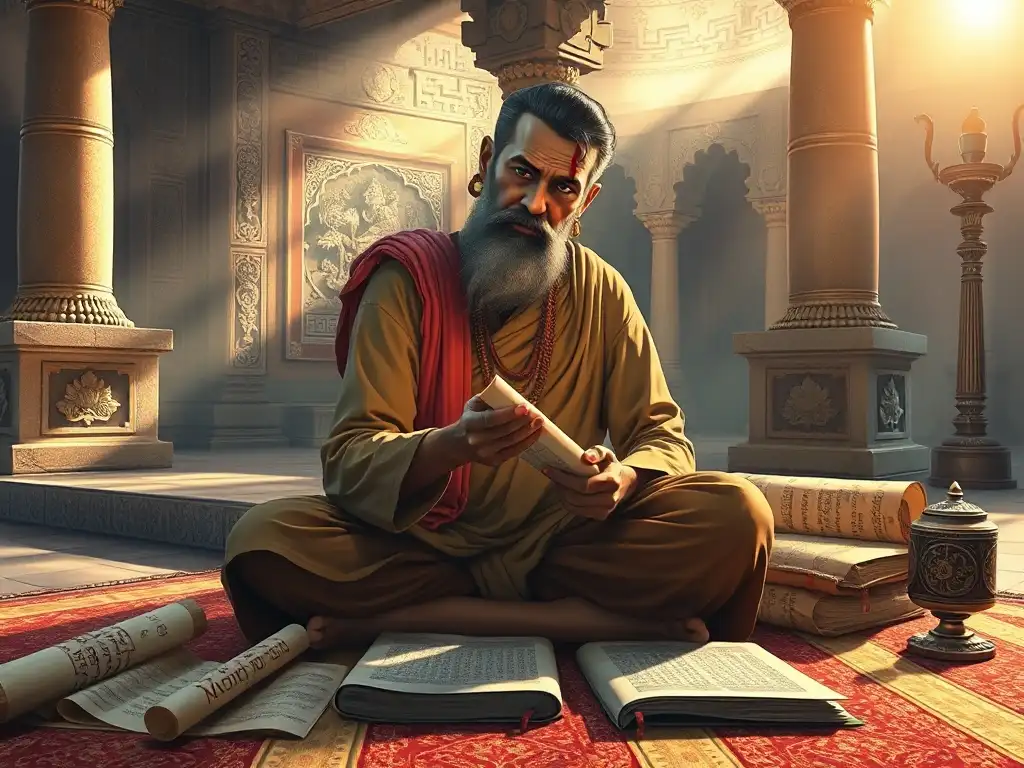
Nyaya philosophy, one of the six orthodox schools of Indian philosophy, emphasizes logic and reasoning as essential tools for understanding the nature of reality and the pursuit of truth. Central to Nyaya is its systematic approach to knowledge, primarily through the concept of pramanas, or means of knowledge. The core principles of Nyaya revolve around the belief that truth can be discerned through rigorous logical analysis, debate, and empirical observation. This philosophy not only influences metaphysics and epistemology but also plays a crucial role in the ethical and social dimensions of ancient Indian thought.
The Concept of Pramanas (Means of Knowledge)
In Nyaya philosophy, pramanas are the means by which knowledge is acquired and validated. The Nyaya thinkers assert that for knowledge to be considered valid, it must be derived from reliable pramanas. The significance of pramanas lies in their ability to distinguish between true and false knowledge, enabling practitioners to engage in a systematic pursuit of understanding.
Types of Pramanas in Nyaya
The Nyaya school identifies four primary types of pramanas:
- Pratyaksha (Perception): Knowledge gained through direct sensory experience. This is considered the most fundamental and immediate form of knowledge.
- Anumana (Inference): Knowledge derived from logical reasoning based on observations. An example is inferring the presence of fire from the sight of smoke.
- Upamana (Comparison): Knowledge acquired through analogy or comparison, where one understands an unfamiliar object by relating it to a familiar one.
- Shabda (Testimony): Knowledge derived from authoritative sources, such as scriptures or credible individuals. This form of knowledge is particularly essential in contexts where direct experience or inference is not possible.
Each type plays a vital role in validating knowledge claims, and the interplay between them enriches the Nyaya methodology.
Role of Pramanas in Pursuing Truth
The role of pramanas in Nyaya philosophy is pivotal for the pursuit of truth. They provide a structured framework through which individuals can critically analyze beliefs and assertions. By employing the pramanas, philosophers and scholars can engage in a disciplined discourse, allowing them to arrive at conclusions that withstand scrutiny.
The emphasis on logical reasoning and empirical validation fosters a culture of debate and inquiry, driving the quest for understanding beyond mere speculation. This systematic approach not only aids in personal knowledge acquisition but also contributes to the collective wisdom of society.
The Nature of Reality According to Nyaya
Nyaya philosophy presents a nuanced understanding of reality, positing that the world consists of various categories or elements that can be understood through logical analysis. Reality is not viewed as a singular entity but as a complex interplay of different components, each with its own characteristics and functions.
Categories of Reality: Padarthas
In Nyaya, the concept of padarthas refers to the different categories of reality. There are generally six primary padarthas recognized in Nyaya thought:
- Dravya (Substance): The fundamental entities that exist independently, such as earth, water, fire, air, and space.
- Guna (Quality): The attributes or characteristics that substances possess, such as color, taste, and texture.
- Karma (Action): The activities or functions that substances perform.
- Samanya (Universal): The common qualities shared among various substances.
- Vishesha (Particularity): The distinguishing features that set one substance apart from another.
- Abhava (Non-existence): The absence of a substance or quality, which is also considered a significant aspect of reality.
Understanding these categories enables individuals to engage in a more profound analysis of existence and its implications.
The Epistemological Framework of Nyaya
Nyaya’s epistemological framework is grounded in logical reasoning and critical analysis. It asserts that knowledge should be approached methodically, with an emphasis on clarity and precision. The framework can be outlined as follows:
- Establishing Validity: Knowledge must be subject to validation through reliable pramanas.
- Logical Deduction: Inferences should be logically sound, ensuring that conclusions drawn are based on established premises.
- Critical Evaluation: Continuous questioning and debating of knowledge claims are essential for refining understanding.
- Integration of Experience: Empirical observations should inform theoretical constructs, bridging the gap between abstract thought and tangible reality.
This epistemological approach cultivates a culture of inquiry, where knowledge is seen as provisional and subject to revision as new insights are gained. Through rigorous analysis and discourse, Nyaya philosophy contributes significantly to the broader landscape of ancient Indian thought, underscoring the importance of logic in the pursuit of truth.
Nyaya and Its Contribution to Indian Logic

The Nyaya philosophy, rooted in ancient Indian thought, plays a pivotal role in the development of logical reasoning and epistemology. Emerging around the 2nd century BCE, Nyaya is one of the six orthodox schools (darshanas) of Hindu philosophy. It primarily focuses on the nature of knowledge and the methods by which truth can be ascertained.
Nyaya's significance lies not only in its contributions to philosophy but also in its influence on various aspects of Indian culture, including law, debate, and scientific inquiry. At its core, Nyaya advocates for a systematic approach to reasoning, emphasizing the importance of valid inference (anumana) and perceptual knowledge (pratyaksha) as essential pathways to understanding reality. This school of thought laid the groundwork for later developments in both Indian and global logic.
The Logic of Nyaya: An Introduction
Nyaya logic, known as Nyaya Darshana, is characterized by its methodical analysis of arguments and its focus on establishing the validity of knowledge claims. The foundational text of Nyaya, the Nyaya Sutras by Gautama (also known as Akshapada), outlines the principles and techniques for reasoning that are still studied today.
Key features of Nyaya logic include:
- Pramanas: These are the means of obtaining knowledge, classified into four primary types:
- Pratyaksha (perception)
- Anumana (inference)
- Upamana (comparison)
- Shabda (verbal testimony)
- Nyaya’s Four Steps to Valid Inference:
- Pratijna: Statement of the proposition
- Hetu: Reason supporting the proposition
- Udaharana: Example illustrating the reason
- Upanaya: Application of the example to the case in question
- Nigamana: Conclusion drawn from the reasoning
This structured approach not only cultivates critical thinking but also enhances the clarity of philosophical discourse.
Comparison of Nyaya Logic with Other Philosophical Schools
The richness of Nyaya philosophy becomes clearer when compared to other philosophical systems in ancient India. Two notable schools that provide contrasting perspectives are Vaisesika and Advaita.
Nyaya vs. Vaisesika: A Comparative Study
While both Nyaya and Vaisesika share a common foundation in Indian philosophical thought, they diverge significantly in their focus and implications:
- Epistemology:
- Nyaya emphasizes the process of reasoning and the debate surrounding the validity of knowledge.
- Vaisesika, on the other hand, concentrates more on categorizing and understanding the nature of reality through substances and their properties.
- Ontology:
- Nyaya asserts that a true understanding of the world is achieved through logical discourse and examination of arguments.
- Vaisesika posits a more atomistic view, where the universe is made up of distinct substances, qualities, and actions.
- Pramanas:
- Nyaya accepts all four pramanas as legitimate means of knowledge, while Vaisesika primarily focuses on perception and inference.
This comparative analysis reveals how Nyaya's logic provides tools for rational inquiry, whereas Vaisesika's ontology offers a framework for understanding the physical world.
Nyaya vs. Advaita: Diverging Views on Truth
In contrast to the dualistic framework of Nyaya, Advaita Vedanta introduces a non-dual perspective that challenges the very foundation of Nyaya logic:
- Nature of Reality:
- Advaita posits that ultimate reality (Brahman) is non-dual and transcends the empirical world, leading to a philosophical stance that questions the validity of multiplicity.
- Nyaya, however, accepts a pluralistic view of reality, advocating for the existence of multiple entities and truths.
- Approach to Knowledge:
- Nyaya employs logical reasoning to arrive at conclusions about the world, emphasizing the role of debate and discourse.
- Advaita emphasizes direct experiential knowledge (jnana) as the means to understanding the ultimate truth, often relegating logical reasoning to a secondary position.
The contrasting methodologies and epistemological views of Nyaya and Advaita illustrate the rich tapestry of philosophical discourse in ancient India, highlighting the depth and complexity of the pursuit of truth within these traditions.
The Pursuit of Truth: Methodologies in Nyaya
The Nyaya philosophy, one of the six orthodox schools of Indian philosophy, is fundamentally concerned with the pursuit of truth. It establishes a systematic approach to reasoning and logic, laying the groundwork for a methodical inquiry into knowledge and reality. This philosophical framework emphasizes the importance of epistemology, particularly in understanding how we acquire knowledge and validate our beliefs. By employing various methodologies, Nyaya seeks to ensure that our understanding of truth is not just subjective but is grounded in rigorous analysis and logical deduction.
At the heart of Nyaya philosophy is the conviction that truth can be discerned through specific methodologies. These include logical reasoning, inference, and the dialectical process, which collectively enable practitioners to navigate the complexities of existence and knowledge. The emphasis on logical discourse and clarity of thought distinguishes Nyaya from other philosophical traditions, making it a significant contributor to Indian philosophy and a precursor to modern logical systems.
The Process of Inference (Anumana) in Nyaya
Anumana, or inference, is one of the primary means through which the Nyaya school seeks to establish knowledge. In this context, inference is understood as a process of deriving conclusions based on premises that are observed or universally accepted. It represents a crucial aspect of Nyaya's methodology, allowing philosophers to arrive at truths that are not immediately apparent.
Steps in the Inference Process
The inference process in Nyaya is meticulously structured and can be broken down into specific steps:
- Pratyaksha (Perception): The initial step involves direct observation or perception of an object or phenomenon. This serves as the foundation for further reasoning.
- Sadhya (Conclusion): A conclusion is drawn based on the observations made. This conclusion must be universally applicable and not merely a subjective interpretation.
- Paksha (Case): The particular instance or case under consideration is identified, which provides the context for the inference.
- Hetu (Reason): A reason is provided to support the conclusion. This is essential for establishing the validity of the inference and must be logically sound.
- Udaharana (Example): An illustrative example is often included to clarify the reasoning process and demonstrate the applicability of the inference in similar situations.
- Nigamana (Conclusion): Finally, the inference is drawn, integrating the observations, reasoning, and examples to arrive at a comprehensive conclusion.
This systematic approach allows for a robust analysis of knowledge claims, ensuring that conclusions reached through inference are not arbitrary but are based on logical reasoning and empirical evidence.
The Role of Debate (Vada) in Seeking Truth
In the realm of Nyaya philosophy, debate, or Vada, plays a pivotal role in the pursuit of truth. This method of discourse is not merely about winning arguments but is fundamentally oriented toward the collective search for understanding and enlightenment. Vada serves as a platform where differing viewpoints can be expressed and critically examined, fostering a culture of intellectual rigor and openness.
Importance of Dialectics in Nyaya Philosophy
Dialectics, the art of dialogue and debate, is essential in the Nyaya school as it facilitates the examination of ideas from multiple angles. The importance of dialectics can be highlighted through several key points:
- Critical Examination: Vada encourages participants to critically assess their beliefs and those of others, leading to a deeper understanding of complex philosophical concepts.
- Clarity and Precision: Engaging in debate requires clarity of thought and expression, which is vital for articulating philosophical arguments. This, in turn, refines one's understanding of the subject matter.
- Conflict Resolution: Through dialectical engagement, conflicting viewpoints can be reconciled or clarified, contributing to a more nuanced understanding of truth.
- Development of Knowledge: Vada not only aids in the pursuit of truth but also facilitates the development of new knowledge, as participants build upon each other's insights.
The methodologies of inference and debate in Nyaya philosophy are interwoven into a comprehensive framework that seeks to establish a robust understanding of truth. These approaches highlight the significance of logical reasoning and dialectical engagement in the philosophical journey, making Nyaya a cornerstone of ancient Indian thought.
Influence of Nyaya Philosophy on Later Philosophical Thought
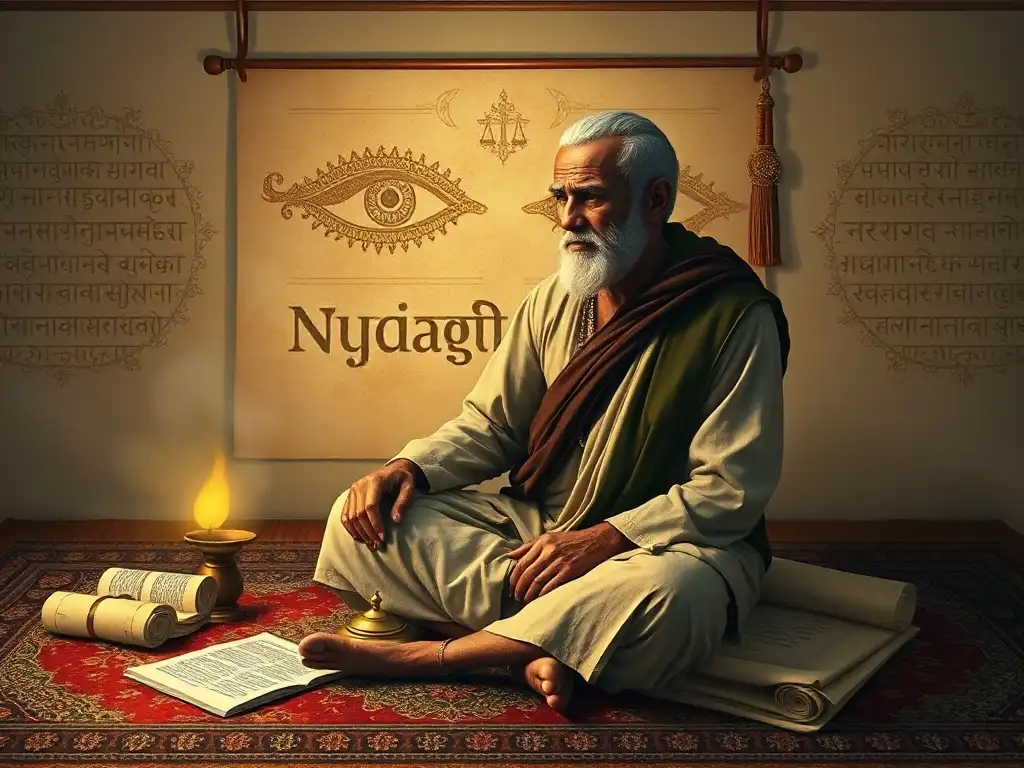
Nyaya's Impact on Medieval Indian Philosophy
Nyaya philosophy, with its rigorous approach to logic and epistemology, laid the groundwork for significant developments in medieval Indian thought. The Nyaya Sutras, attributed to the philosopher Gautama, emphasize the importance of reasoning and debate in the pursuit of truth. This method influenced subsequent philosophical schools, including the Mimamsa and Vedanta, which integrated Nyaya's logical frameworks into their own discourses.
- Mimamsa, focusing on ritual and dharma, adopted Nyaya's principles to clarify the meanings of texts, thereby enhancing its interpretative rigor.
- Vedanta, on the other hand, utilized Nyaya's logical tools to defend its metaphysical claims about the nature of reality and the self, thus ensuring a robust dialectical engagement with rival schools.
The integration of Nyaya's analytical techniques also gave rise to a rich tradition of commentary in medieval philosophy. Notable figures, such as Udayana and Vachaspati Mishra, utilized Nyaya's methods to critique and refine the arguments of rival philosophical systems, showcasing its enduring relevance in Indian thought.
Influence on Western Philosophical Traditions
The influence of Nyaya philosophy extends beyond the borders of India, impacting Western philosophical traditions as well. The systematic approach to logic and epistemology found in Nyaya can be seen as a precursor to later developments in Western philosophy, particularly during the Renaissance and the Enlightenment periods.
- Logical Structure: The Nyaya framework of inference (anumana) and its classification of different types of knowledge (prama) resonate with the works of Western logicians such as Aristotle and Descartes.
- Debate and Discourse: The emphasis on debate and dialectical reasoning in Nyaya has parallels in the Socratic method, which prioritizes critical questioning as a means of uncovering truth.
- Empiricism: Elements of Nyaya's empirical approach to knowledge can be traced in the works of John Locke and David Hume, who argued for the importance of sensory experience in the formation of knowledge, echoing Nyaya's insistence on pratyaksha (perception) as a valid means of knowing.
This cross-pollination of ideas illustrates the universal quest for truth that transcends cultural boundaries, showcasing how Nyaya philosophy has left a mark on global intellectual traditions.
Continuing Relevance of Nyaya Principles Today
The principles of Nyaya philosophy continue to resonate in contemporary discussions on logic, ethics, and the philosophy of science. Its emphasis on clarity of thought and rigorous argumentation is increasingly relevant in today's world, where misinformation and subjective claims abound.
- Critical Thinking: Nyaya promotes a structured method of reasoning that can be applied to modern-day critical thinking skills, allowing individuals to assess arguments and evidence effectively.
- Ethical Deliberation: The Nyaya framework encourages ethical deliberation by advocating for justice and fairness in judgment, principles that are crucial in today's debates surrounding social justice and human rights.
- Philosophy of Science: In the realm of science, Nyaya's principles of inference and verification are echoed in contemporary scientific methods, emphasizing the need for empirical evidence and logical consistency.
As we navigate complex issues in society, the enduring legacy of Nyaya philosophy serves as a valuable tool for fostering clarity, fairness, and a deeper understanding of truth in our collective discourse. Its relevance today underscores the timeless nature of its teachings, inviting both scholars and practitioners to engage with its principles in diverse fields.
Conclusion: The Legacy of Nyaya Philosophy in Ancient India

Summary of Key Contributions to Philosophy
Nyaya philosophy, one of the six orthodox schools of Indian philosophy, has made significant contributions to the understanding of logic, epistemology, and ethics. Its foundational texts, primarily the "Nyaya Sutras" authored by Gautama (or Gotama), laid the groundwork for systematic reasoning and debate in ancient Indian thought. The key contributions can be summarized as follows:
- Logical Framework: Nyaya introduced the concept of tarka (argumentation) as a method for philosophical inquiry. This systematic approach to logic emphasized the importance of valid inference and deductive reasoning.
- Epistemology: The Nyaya school categorized knowledge into four types: perception ( pratyaksha), inference ( anumana), comparison ( upamana), and verbal testimony ( shabda). This categorization provided a comprehensive framework for understanding how knowledge is acquired and validated.
- Definition of Truth: Nyaya philosophers posited that truth is objective and can be discovered through rigorous analysis and logical reasoning. The quest for truth remains a central theme in Nyaya philosophy, influencing subsequent philosophical discussions in both Indian and global contexts.
- Ethical Implications: The emphasis on rationality and truth-seeking in Nyaya has ethical implications, promoting a culture of inquiry and intellectual honesty among its practitioners. The moral dimensions of truth-seeking are explored through various philosophical debates within the tradition.
The Enduring Quest for Truth in Nyaya Thought
The pursuit of truth is not merely an abstract concept in Nyaya philosophy; it is a practical endeavor that shapes ethical behavior and social interactions. Nyaya thinkers argue that the pursuit of truth is essential for achieving moksha (liberation) and understanding the nature of reality.
- Practical Applications: The principles of Nyaya have been applied in various fields, from jurisprudence to education, emphasizing reasoned argument and critical thinking. The methodology encourages individuals to question assumptions and seek evidence, fostering a culture of intellectual rigor.
- Influence on Other Schools: The dialogue between Nyaya and other philosophical traditions, such as Advaita Vedanta and Buddhism, has enriched the philosophical landscape of ancient India. The debates and discussions have not only preserved the legacy of Nyaya but have also led to the evolution of new ideas and perspectives.
- Modern Relevance: In contemporary discussions on logic, ethics, and philosophy, the principles laid out by the Nyaya school continue to resonate. The emphasis on rational discourse and empirical validation remains relevant in today's quest for truth across various domains, including science and philosophy.
Nyaya philosophy in ancient India represents a profound and enduring quest for truth that has shaped philosophical discourse for centuries. Its rigorous approach to logic and inquiry continues to inspire scholars and thinkers, underscoring the timeless relevance of its principles in understanding the complexities of knowledge and existence.
Further Reading on Nyaya Philosophy in Ancient India
Recommended Books and Articles
To deepen your understanding of Nyaya philosophy in ancient India, several seminal works and articles are invaluable. Here is a curated list of essential readings:
- "Nyaya Sutras" by Gautama
- This foundational text of the Nyaya school provides insight into the principles of logic and epistemology. It is a must-read for anyone interested in the original formulations of Nyaya thought.
- "An Introduction to Nyaya Philosophy" by B. K. Matilal
- Matilal's work offers a comprehensive overview of Nyaya philosophy, emphasizing its logical structure and its role in Indian philosophical discourse.
- "The Nyaya Theory of Knowledge" by A. N. D. S. Raghunathan
- This book delves into the epistemological aspects of Nyaya, exploring its theories of perception, inference, and testimony.
- "Indian Philosophy: A Very Short Introduction" by Sue Hamilton
- Although covering a broad range of Indian philosophical traditions, this book includes relevant discussions on Nyaya, making it a good starting point for newcomers.
- "Logic and Epistemology in Nyaya Philosophy" by G. J. R. Raghavan
- This article examines the intricate relationship between logic and knowledge within the Nyaya framework, providing a critical analysis of its methodologies.
Online Resources for Exploring Nyaya Philosophy
The internet is a treasure trove of information for those wishing to explore Nyaya philosophy in ancient India further. Here’s a selection of reputable online resources:
-
Stanford Encyclopedia of Philosophy
An in-depth entry on Nyaya philosophy, covering its historical context, key figures, and central concepts. A reliable academic source for philosophical studies.
Link to Stanford Encyclopedia -
Internet Archive
A vast collection of texts related to Nyaya philosophy, including translations of ancient texts and modern interpretations.
Link to Internet Archive -
Academia.edu
A platform where scholars publish papers, including numerous articles on Nyaya philosophy. You can find research papers that discuss various aspects of Nyaya thought.
Link to Academia.edu -
Indian Philosophy Blog
This blog features discussions and articles on various Indian philosophical traditions, including Nyaya. It’s an excellent resource for contemporary interpretations and ongoing scholarly debates.
Link to Indian Philosophy Blog -
YouTube Lectures and Talks
Several universities and scholars have uploaded lectures discussing Nyaya philosophy. Search for videos that cover specific topics or provide an overview of the Nyaya school.
By engaging with these resources, readers can gain a deeper appreciation of the nuances and intricacies of Nyaya philosophy, enriching their understanding of its contributions to ancient Indian thought.
References
Nyaya philosophy in ancient India has been pivotal in shaping the discourse on logic, epistemology, and metaphysics. To fully appreciate its depth and implications, one must engage with a variety of key texts and scholarly interpretations that form the backbone of this philosophical school.
Key Texts of Nyaya Philosophy
The foundational texts of Nyaya philosophy are critical for understanding its principles and methodologies. Here are some of the most significant works:
- Nyaya Sutras: Authored by Gautama (also known as Akshapada), the Nyaya Sutras serve as the cornerstone of Nyaya philosophy. This text, composed in sutra form, outlines the epistemological and logical tenets of Nyaya, focusing on the processes of inference, perception, and testimony.
- Bhashya on Nyaya Sutras: The commentaries on the Nyaya Sutras, particularly those by Vatsyayana, provide essential insights into the interpretations of the original text. His commentary is instrumental in elucidating the sutras and bridging gaps in understanding.
- Tattva Chintamani: Written by Gangesha Upadhyaya, this work expands on Nyaya principles and integrates them with the broader philosophical discourse in India. It addresses various philosophical problems and offers a systematic approach to understanding reality.
- Nyaya Vartika: Composed by Uddyotakara, this text serves as a commentary on the Nyaya Sutras, exploring logical proofs and refutations of rival philosophical schools. This work is notable for its rigorous analytical approach.
- Nyaya Sidhanta: This text by Raghunatha Siromani synthesizes Nyaya with other Indian philosophies, such as Vedanta, and offers a comprehensive overview of Nyaya thought. It is crucial for understanding the evolution of Nyaya philosophy over time.
Important Scholars and Commentators on Nyaya
The development and dissemination of Nyaya philosophy were significantly influenced by various scholars and commentators throughout history. Below are some of the most notable figures:
- Gautama (Akshapada): The founder of Nyaya philosophy, Gautama's contributions laid the foundation for logical reasoning and epistemic inquiry.
- Vatsyayana: His commentary on the Nyaya Sutras is essential for understanding the nuances of Gautama's teachings and their implications in philosophical discussions.
- Gangesha Upadhyaya: A leading figure in the Nyaya school, Gangesha's works are pivotal in connecting Nyaya to other philosophical traditions, demonstrating its relevance across various discourses.
- Uddyotakara: Renowned for his logical acumen, Uddyotakara's writings critically engage with contemporary philosophical debates, enhancing the analytical rigor of Nyaya philosophy.
- Raghunatha Siromani: His synthesis of Nyaya with other schools of thought exemplifies the adaptability and enduring legacy of Nyaya philosophy in the Indian intellectual landscape.
Engagement with these texts and scholars provides a comprehensive understanding of Nyaya philosophy in ancient India, allowing for a deeper exploration of its principles and contributions to the broader philosophical discourse.
Frequently Asked Questions
What is Nyaya philosophy in ancient India?
Nyaya philosophy is a school of thought that emphasizes logic and reasoning as essential tools for understanding the nature of reality and the pursuit of truth. It originated in ancient India around the 6th century BCE.
How does Nyaya differ from other Indian philosophies?
Unlike other philosophies that may focus on metaphysics or spirituality, Nyaya primarily focuses on epistemology—how knowledge is acquired and validated through logical inference and debate.
What are the key principles of Nyaya philosophy?
The key principles include the four sources of knowledge: perception, inference, comparison, and testimony. These principles guide practitioners in evaluating arguments and discovering truths about the world.
How did Nyaya influence Indian culture?
Nyaya philosophy has had a significant impact on Indian logic, ethics, and jurisprudence. Its methodologies are still relevant in contemporary discussions on critical thinking and rational discourse.
What is the relevance of Nyaya philosophy today?
Nyaya's emphasis on critical analysis and debate is increasingly relevant in today's world, where understanding truth and reasoning are vital in various fields, including science, politics, and education.
Final Reflection: The Enduring Legacy of Nyaya Philosophy in the Pursuit of Truth
Nyaya philosophy in ancient India remains profoundly relevant today, as it emphasizes the importance of logical reasoning and critical thinking in our quest for truth. In a world increasingly driven by misinformation and subjective narratives, the principles of Nyaya challenge us to seek clarity and understanding through rigorous analysis. The pursuit of truth is not merely an academic exercise; it is a vital necessity for personal growth and societal progress.
The influence of Nyaya extends beyond its historical context, shaping contemporary discourse in ethics, law, and even technology. As we navigate complex moral dilemmas and the rapid evolution of digital communication, the foundational ideas of Nyaya remind us that sound reasoning and evidence-based conclusions are essential. The truth is not always the same as the majority opinion.
This quote encapsulates the essence of Nyaya, urging us to question prevailing beliefs and strive for a deeper understanding of reality.
As we reflect on the teachings of Nyaya, let us embrace the challenge to cultivate our own critical thinking skills and engage in thoughtful dialogue. I invite you to explore the principles of Nyaya in your daily life, questioning assumptions and seeking truth with an open mind. By doing so, we not only honor the wisdom of ancient philosophers but also contribute to a more informed and enlightened society.
Embrace the Journey to Truth and Justice!
Thank you for diving into the profound principles of Nyaya with us! We hope this exploration has sparked your interest in the timeless quest for truth and justice in ancient Indian philosophy. Now, let’s put that inspiration into action!
Here are a few practical steps you can take to deepen your understanding and engage with this vital topic:
- Join a discussion group focused on ancient philosophies where you can share insights and learn from others who are equally passionate about these principles.
- Read literature or watch documentaries that explore Nyaya and its influence on contemporary legal systems—this will further enrich your perspective.
- Share this article with friends or on social media to initiate conversations about the significance of truth in today's society.
What challenges do you think modern society faces in achieving justice and truth, and how can philosophies like Nyaya provide guidance in addressing these issues?