
Sankhya in the Context of Global Philosophy: Bridging Cultures and Ideas

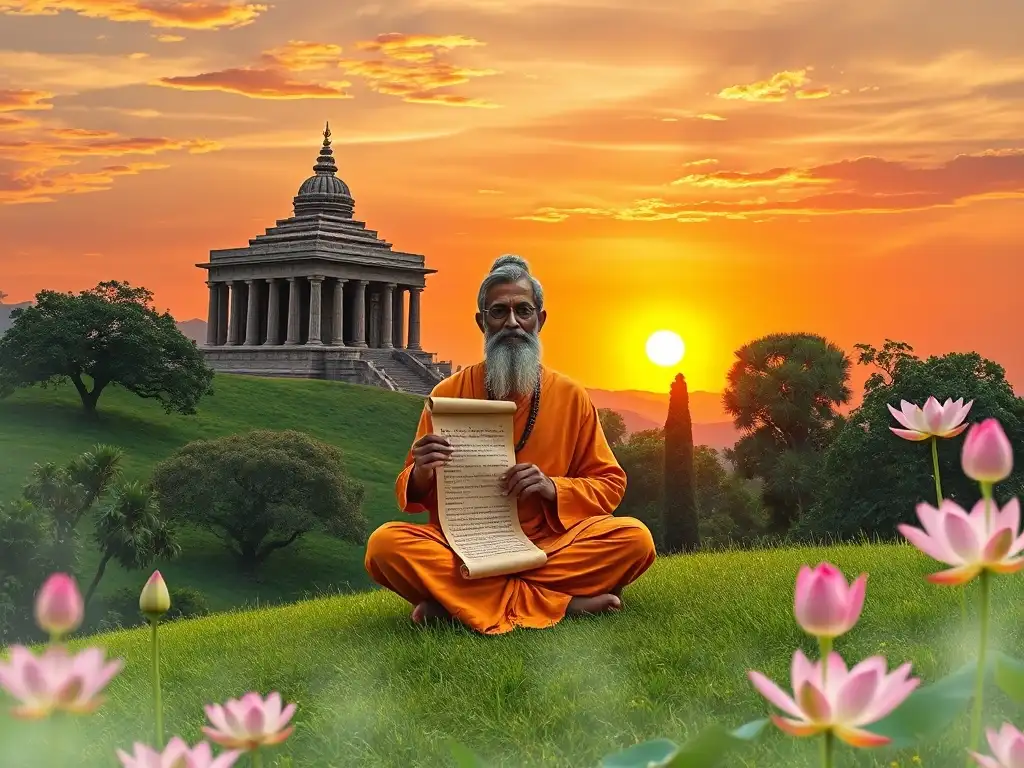
Welcome to Ancient India History, where we embark on a fascinating journey through the rich tapestry of India's past, uncovering the remarkable civilizations that shaped our world. In this exploration, we delve into Sankhya philosophy in ancient India, a profound system of thought that not only offers insights into the Indian philosophical landscape but also serves as a bridge connecting diverse cultural ideas across the globe.
Prepare to ignite your curiosity as we unravel the layers of this ancient wisdom and its relevance in today's philosophical discourse. Join us as we dive deeper into the captivating world of Sankhya and discover its enduring legacy!
- Introduction to Sankhya Philosophy in Ancient India
- Core Principles of Sankhya Philosophy
- Sankhya Philosophy and Its Cultural Impact
- Comparative Analysis: Sankhya and Other Philosophical Systems
- Modern Interpretations of Sankhya Philosophy
- Conclusion: The Legacy of Sankhya Philosophy in Ancient India
- References and Further Reading on Sankhya Philosophy in Ancient India
- Frequently Asked Questions
- Final Reflection: Sankhya Philosophy as a Bridge Between Cultures
- Unveil a World of Knowledge: Explore Sankhya’s Impact Today!
Introduction to Sankhya Philosophy in Ancient India
Sankhya philosophy holds a significant place in the rich tapestry of ancient Indian thought, representing one of the six orthodox schools of Hindu philosophy. Rooted in profound metaphysical concepts, it offers a dualistic framework that seeks to understand the nature of reality through the interplay of consciousness and matter. This article will delve into the intricacies of Sankhya philosophy, exploring its definitions, historical context, and its remarkable influence on global philosophical discourse. By examining Sankhya’s contributions, we can appreciate how this ancient school of thought not only shaped Indian philosophy but also bridged cultural and intellectual ideas across civilizations.
Defining Sankhya Philosophy
Sankhya, derived from the Sanskrit word meaning "number," emphasizes the enumeration of principles underlying existence. At its core, Sankhya posits two fundamental realities: Purusha (consciousness) and Prakriti (matter). This dualism is essential for understanding the nature of existence and the mechanisms of the universe.
Key concepts within Sankhya philosophy include:
- The Gunas: These are the three fundamental qualities— Sattva (goodness), Rajas (passion), and Tamas (ignorance)—that characterize all matter and influence human behavior.
- The Evolution of the Universe: Sankhya describes a systematic process of evolution where Prakriti manifests into the diverse forms of the universe through a series of transformations influenced by the Gunas.
- Liberation (Moksha): The ultimate goal in Sankhya is to achieve liberation through knowledge, understanding the distinction between Purusha and Prakriti, and recognizing the transient nature of the material world.
This philosophical framework not only serves as a foundation for various aspects of Indian philosophy and spirituality but also invites comparisons with other philosophical traditions worldwide.
Historical Context of Sankhya in Ancient India
The origins of Sankhya philosophy can be traced back to ancient texts, particularly the Sankhya Sutras attributed to the sage Kapila, believed to be written around the 6th century BCE. Over the centuries, Sankhya has evolved, influencing and being influenced by other schools of thought, including Yoga and Vedanta.
- Influenced by Vedic Thought: Sankhya draws heavily from the Vedic texts, integrating their metaphysical ideas and ethical considerations.
- The Classical Period: During the early centuries of the Common Era, Sankhya philosophy flourished alongside other philosophical traditions, asserting its relevance in discussions about the nature of existence and the self.
- Integration with Other Philosophies: The interplay between Sankhya and Buddhist philosophy, particularly in discussions on impermanence and consciousness, showcases the rich intellectual climate of ancient India.
This historical context not only highlights the significance of Sankhya within Indian philosophy but also positions it as a crucial player in the broader narrative of global philosophy.
Importance of Sankhya in Global Philosophy
Sankhya philosophy's influence extends beyond the borders of ancient India, resonating with various philosophical traditions around the world.
- Dualism and Metaphysics: The dualistic nature of Purusha and Prakriti has parallels in Western philosophical traditions, particularly in the works of Plato and Descartes, who also grappled with the nature of consciousness and reality.
- Impact on Modern Thought: Contemporary philosophers have drawn upon Sankhya's insights, particularly in discussions about the mind-body problem and the nature of existence.
- Cross-Cultural Exchanges: The principles of Sankhya have sparked interest in comparative philosophy, leading to dialogues between Eastern and Western philosophies and fostering a deeper understanding of universal truths.
The rich tapestry of Sankhya philosophy not only exemplifies the depth of ancient Indian thought but also serves as a vital bridge connecting diverse cultures and ideas, underscoring its enduring legacy in the realm of global philosophy.
Core Principles of Sankhya Philosophy
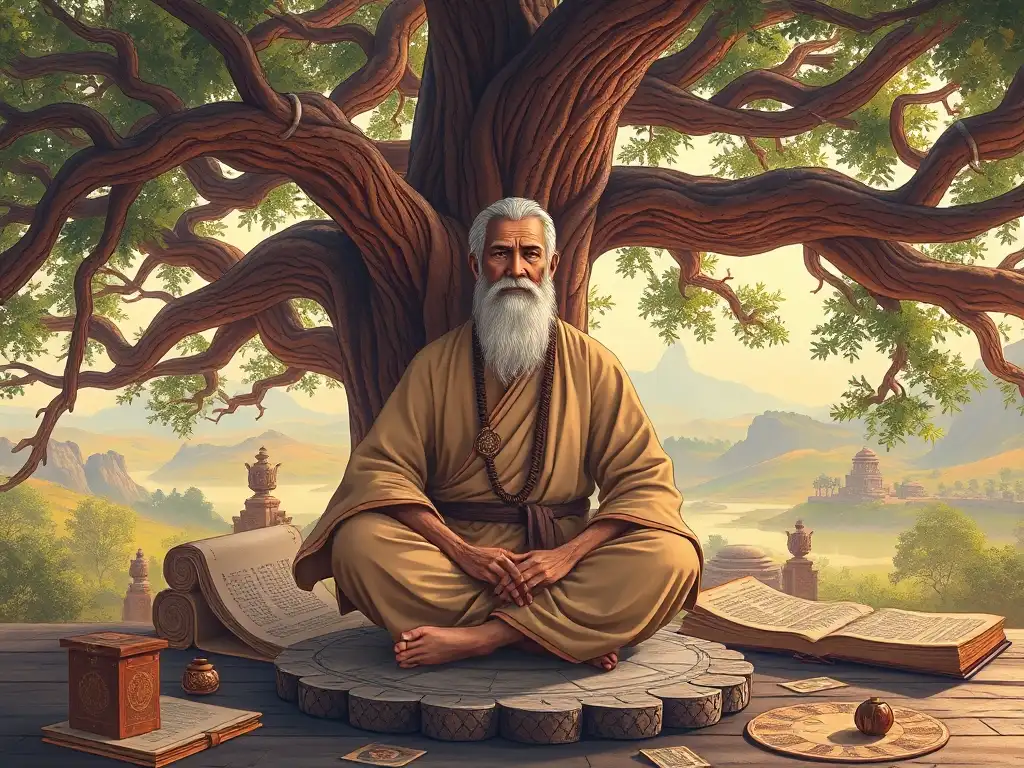
Sankhya philosophy in ancient India is one of the earliest systems of thought that fundamentally shaped the philosophical landscape of the subcontinent. Its core principles revolve around the duality of existence, the nature of reality, and the path to liberation (moksha). At its heart, Sankhya offers a comprehensive framework that elucidates the relationship between consciousness and matter, providing insights into the workings of the universe and the self.
Central to Sankhya is the assertion that true knowledge leads to liberation. This philosophy emphasizes the importance of discernment (viveka) between the eternal and the temporal, guiding practitioners toward an understanding of their true nature beyond the physical realm. The philosophy is not merely theoretical; it provides practical tools for individuals seeking to transcend suffering and attain self-realization.
The Duality of Purusha and Prakriti
The fundamental concept in Sankhya philosophy is the dualism of Purusha and Prakriti.
- Purusha refers to the eternal, unchanging consciousness or the true self. It is the observer, the essence of being that exists beyond the physical realm. Purusha is considered pure awareness, devoid of any qualities or attributes.
- Prakriti, on the other hand, is the material world, characterized by change, evolution, and diversity. It is the source of all physical forms and experiences, including the mind and senses. Prakriti is often described as the dynamic principle that manifests in three fundamental qualities (gunas):sattva (purity), rajas (activity), and tamas (inertia).
The interaction between Purusha and Prakriti is crucial in understanding existence. According to Sankhya, the confusion arises when individuals identify themselves with Prakriti rather than recognizing their true nature as Purusha. This misidentification leads to suffering and bondage. The philosophical goal is to achieve liberation by realizing the distinction between the two, thereby transcending the limitations imposed by the material world.
Understanding the 24 Tattvas (Principles)
Sankhya philosophy outlines a systematic framework that is encapsulated in 24 Tattvas (principles), which delineate the evolution of the universe from the unmanifest to the manifest.
- Purusha (1) - The eternal conscious self.
- Prakriti (1) - The primal matter or the source of all creation.
- Mahat (Buddhi) (1) - The principle of intelligence or cosmic intelligence.
- Ahamkara (1) - The ego or sense of individuality.
- Manas (1) - The mind, which processes sensory information.
- Five Jnanendriyas (5) - The senses of perception (sight, hearing, touch, taste, smell).
- Five Karmendriyas (5) - The senses of action (speech, grasping, locomotion, excretion, reproduction).
- Five Tanmatras (5) - The subtle elements corresponding to the senses (sound, touch, form, taste, smell).
- Five Mahabhutas (5) - The gross elements (earth, water, fire, air, space).
This systematic breakdown illustrates how the unmanifest (Prakriti) evolves into the manifest world through these principles. The Tattvas serve as a guide for understanding the nature of reality and the process through which the universe unfolds.
The Role of Knowledge (Jnana) in Sankhya
In Sankhya philosophy, Jnana (knowledge) is paramount. It is through knowledge that one can discern the nature of Purusha and Prakriti, leading to liberation from the cycle of birth and death (samsara).
- Types of Knowledge: Sankhya recognizes two fundamental types of knowledge:
- Paroksha Jnana (indirect knowledge) - Knowledge derived from hearsay or external sources.
- Aparoksha Jnana (direct knowledge) - Self-realization or direct experience of the self (Purusha).
- The Path to Liberation: The pursuit of knowledge in Sankhya is not merely intellectual; it involves a transformative process. Through practices such as meditation, self-inquiry, and disciplined living, one can cultivate a deeper understanding of the self and its relationship with the material world.
Sankhya philosophy in ancient India presents a profound exploration of existence through its core principles, the duality of Purusha and Prakriti, the detailed understanding of the 24 Tattvas, and the essential role of knowledge. This philosophical framework continues to influence various schools of thought and remains relevant in contemporary discussions on consciousness and reality.
Sankhya Philosophy and Its Cultural Impact
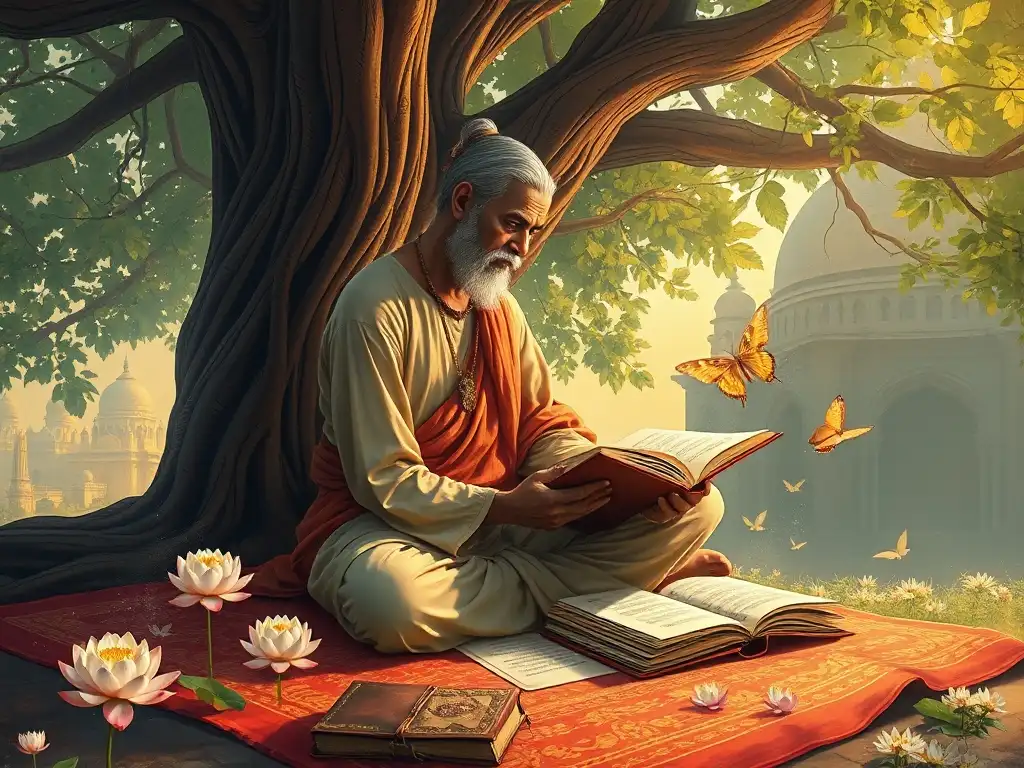
Sankhya philosophy in ancient India represents one of the foundational schools of thought that has significantly influenced various aspects of Indian culture and philosophy. Rooted in the Vedic tradition, this dualistic system of thought emphasizes the distinction between consciousness (Purusha) and matter (Prakriti). Its systematic approach to understanding the nature of reality has shaped not only philosophical discourse but also the spiritual practices and ethical frameworks within Indian civilization.
The core tenets of Sankhya philosophy advocate for a comprehensive understanding of the universe through enumeration and categorization. This analytical method has paved the way for various philosophical inquiries, leading to a rich tapestry of ideas that permeate Indian thought, including yoga, meditation, and metaphysics. As a result, Sankhya has not only contributed to the intellectual landscape of ancient India but has also provided a framework for subsequent philosophical developments.
Influence on Other Indian Philosophical Schools
Sankhya philosophy has left an indelible mark on several other Indian philosophical traditions. Its impact can be observed in the following ways:
- Yoga Philosophy:
- The Yoga Sutras of Patanjali incorporate Sankhya concepts, particularly the distinction between Purusha (the self) and Prakriti (the material world).
- The practice of yoga aims at realizing the separation of the self from the fluctuations of the mind and body, echoing Sankhya's emphasis on duality.
- Nyaya and Vaisheshika Schools:
- These schools of thought adopted Sankhya's analytical framework, particularly the categorization of reality into various entities.
- Nyaya focuses on epistemology and logic, while Vaisheshika emphasizes the nature of existence and atomic theory, both of which were influenced by Sankhya's systematic approach.
- Buddhism:
- Although Buddhism and Sankhya diverge in certain beliefs, the Buddhist concept of the 'no-self' (Anatta) can be seen as a reaction to the dualism of Sankhya.
- The emphasis on understanding the nature of suffering and the self in Buddhist philosophy reflects the influence of Sankhya's analytical methods.
In essence, the foundational ideas of Sankhya have woven through the philosophical fabric of ancient India, contributing to the development and evolution of various schools of thought.
Bridging Sankhya with Western Philosophical Ideas
The dialogue between Sankhya philosophy and Western philosophical traditions offers a unique perspective on the universal quest for understanding reality. Some notable connections include:
- Dualism:
- Sankhya's dualistic framework resonates with Cartesian dualism, where Descartes posits a clear distinction between mind and body.
- Both philosophies grapple with the relationship between consciousness and the material world, although their conclusions differ significantly.
- Empiricism and Rationalism:
- The systematic enumeration and categorization in Sankhya align with Western empiricist traditions, which emphasize knowledge derived from sensory experience.
- Sankhya's analytical approach complements rationalist ideas by providing a structured methodology to explore metaphysical concepts.
- Existentialism:
- The exploration of existence in Sankhya parallels existentialist inquiries about being and consciousness, as seen in the works of philosophers like Sartre and Heidegger.
- The emphasis on self-awareness in Sankhya encourages a profound examination of personal existence, akin to existentialist themes.
By bridging these philosophical traditions, a richer understanding of the human experience emerges, highlighting the interconnectedness of thought across cultures.
The Role of Sankhya in Indian Spiritual Traditions
Sankhya philosophy has profoundly influenced Indian spiritual traditions, shaping practices and beliefs in several ways:
- Meditative Practices:
- The understanding of Purusha and Prakriti encourages practitioners to engage in meditation aimed at self-realization and inner peace.
- Techniques derived from Sankhya promote detachment from the material and focus on the spiritual essence.
- Ethical Framework:
- Sankhya's insights into the nature of reality inform ethical considerations in various spiritual practices, advocating for a lifestyle that aligns with the understanding of the self and its relationship with the universe.
- The concept of karma is often interpreted through the lens of Sankhya, emphasizing the consequences of actions in relation to the dual nature of existence.
- Integration with Other Traditions:
- Sankhya's principles have been integrated into various spiritual traditions, including Hinduism and Jainism, influencing their cosmological narratives and practices.
- For instance, the Bhagavad Gita draws on Sankhya ideas to elucidate the nature of the self and duty (dharma), reinforcing its relevance in spiritual discourse.
Sankhya philosophy in ancient India has not only contributed to the intellectual landscape but has also played a crucial role in shaping the spiritual practices and ethical frameworks that define Indian civilization. Its enduring legacy continues to inspire philosophical inquiry and spiritual exploration across cultures.
Comparative Analysis: Sankhya and Other Philosophical Systems
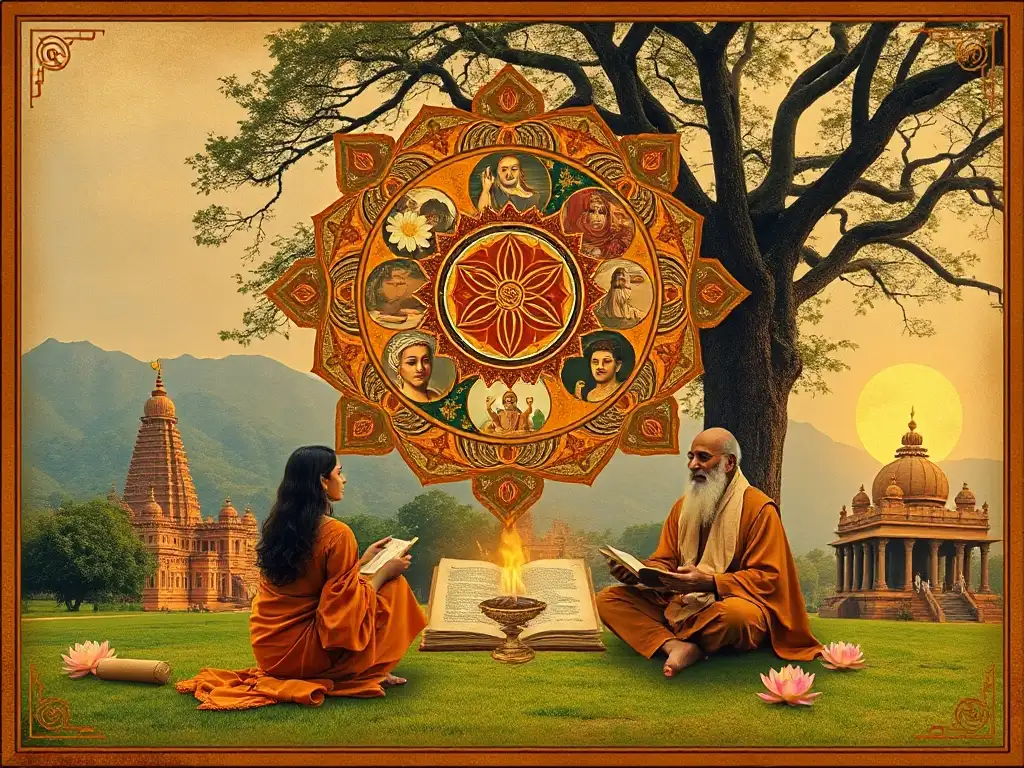
Sankhya vs. Yoga: Similarities and Differences
Sankhya philosophy in ancient India, one of the six orthodox schools of Indian philosophy, often finds itself juxtaposed with Yoga, another prominent school. Both systems share a common cultural and philosophical heritage, yet they diverge in significant ways.
- Ontology and Cosmology:
- Sankhya posits a dualistic framework, consisting of Prakriti (matter) and Purusha (consciousness). The interplay between these two principles is key to understanding the nature of existence.
- Yoga, particularly as outlined in the Yoga Sutras by Patanjali, aligns closely with Sankhya’s ontology but emphasizes the practical application of this understanding for achieving liberation (moksha).
- Methods of Realization:
- Sankhya relies heavily on intellectual analysis and understanding the nature of reality. It promotes a cognitive path to liberation, encouraging practitioners to discern the distinction between the self and the material world.
- Conversely, Yoga emphasizes experiential practices, including meditation and physical postures (asanas), which cultivate a direct experience of the self beyond the mind and body.
- Goal of Practice:
- While both systems aim for liberation, Sankhya primarily seeks knowledge (jnana) as a means to liberation.
- Yoga, on the other hand, integrates various practices (like devotion, meditation, ethical conduct) to facilitate a holistic transformation of the practitioner.
Sankhya and Buddhism: Philosophical Intersections
The interaction between Sankhya philosophy and Buddhism presents a fascinating study of cross-cultural philosophical development. Although Buddhism emerged as a response to the prevailing Vedic traditions, it shares certain conceptual frameworks with Sankhya.
- Concept of Suffering:
- Both traditions acknowledge the ubiquitous nature of suffering (dukkha). While Sankhya attributes suffering to the entanglement of Purusha with Prakriti, Buddhism articulates suffering through the Four Noble Truths, emphasizing the impermanence of all things.
- Liberation:
- In Sankhya, liberation is attained through knowledge and the realization of the distinction between Purusha and Prakriti. Conversely, Buddhism advocates for the cessation of suffering through the Eightfold Path, which includes ethical conduct, meditation, and wisdom.
- Non-Self Doctrine:
- A critical divergence lies in the concept of self. Sankhya maintains a dualistic view of the self (Purusha) as an eternal observer, whereas Buddhism promotes the concept of Anatta or non-self, denying any permanent self-entity.
The Relationship Between Sankhya and Vedanta
Sankhya and Vedanta, while both integral to the fabric of Indian philosophy, offer distinct pathways to understanding ultimate reality.
- Metaphysical Foundations:
- Sankhya is grounded in a dualistic framework, asserting that reality comprises two independent principles: Purusha and Prakriti. This perspective contrasts with Vedanta, which is predominantly idealistic and often espouses a non-dualistic view where Brahman (the ultimate reality) is the only truth, and everything else is an illusion (Maya).
- Epistemology:
- In Sankhya, knowledge is derived through introspection and rational inquiry. The focus is on accumulating knowledge to discern the true nature of self and reality.
- Vedanta emphasizes revelation (Shruti) and scriptural authority, focusing on texts like the Upanishads to guide understanding toward the ultimate truth.
- Path to Liberation:
- Both philosophies ultimately aspire for liberation but present different paths. Sankhya emphasizes knowledge as the route to liberation, while Vedanta often incorporates devotion (Bhakti) and meditation as crucial practices for realizing the oneness with Brahman.
The comparative analysis of Sankhya philosophy in ancient India with other philosophical systems reveals both shared foundations and key distinctions, contributing to a rich tapestry of thought that continues to influence philosophical discourse across cultures.
Modern Interpretations of Sankhya Philosophy
Sankhya philosophy, one of the six orthodox systems of Indian philosophy, has evolved significantly from its ancient roots, influencing modern thought across various disciplines. Its dualistic framework, which distinguishes between Purusha (consciousness) and Prakriti (matter), continues to resonate with contemporary philosophical inquiries and scientific discussions. As scholars delve deeper into its tenets, they find parallels with modern theories in psychology, metaphysics, and even quantum physics, demonstrating its enduring relevance.
Relevance of Sankhya in Contemporary Thought
In today's context, Sankhya philosophy offers a unique lens through which to examine consciousness and existence. Its emphasis on the interplay between the observer and the observed aligns with modern philosophical debates around perception and reality.
- Mind-Body Dualism: Sankhya's dualistic approach prefigures Western philosophical discussions on mind-body dualism, notably those articulated by René Descartes. The separation of consciousness from the material world invites critical examination of how these entities interact, a question still central to contemporary philosophy.
- Holistic Understanding: The Sankhya framework encourages a holistic understanding of existence, advocating for a balance between the material and spiritual realms. This perspective is increasingly important in a world where materialism often dominates discourse.
- Influence on Eastern and Western Philosophies: The dialogue between Eastern philosophies, particularly Sankhya, and Western philosophical traditions has led to enriched discourses in ethics, metaphysics, and epistemology, prompting a re-evaluation of foundational concepts such as self, reality, and knowledge.
Sankhya Philosophy in Modern Psychology
The principles of Sankhya have also found their way into modern psychological paradigms, particularly in the areas of cognitive psychology and mindfulness practices. Its insights into the nature of consciousness and the self have been instrumental in shaping therapeutic approaches.
- Understanding Consciousness: The Sankhya notion of Purusha corresponds with modern explorations of consciousness in psychology. This aligns with theories that consider consciousness as a fundamental aspect of human experience, influencing behavior and perception.
- Mindfulness and Wellbeing: Sankhya's emphasis on self-awareness and the distinction between the self and the mind parallels modern mindfulness practices. Techniques derived from ancient Indian philosophies, including Sankhya, are now widely adopted in therapeutic settings to enhance mental health and emotional wellbeing.
- Integration in Psychotherapy: Integrating Sankhya’s principles into psychotherapy can provide a framework for understanding the complexities of human experience—facilitating a greater awareness of the self and promoting psychological resilience.
Global Perspectives on Sankhya: A Cross-Cultural Dialogue
The relevance of Sankhya philosophy transcends geographical boundaries, fostering a rich dialogue between cultures. As scholars and practitioners globally explore its teachings, they contribute to a broader understanding of human experience.
- Comparative Philosophy: By comparing Sankhya with other philosophical traditions, such as Stoicism and Buddhism, scholars highlight universal themes of existence, suffering, and the nature of reality. Such comparisons enrich philosophical discourse and promote cross-cultural understanding.
- Interdisciplinary Approaches: Sankhya's integration into disciplines such as philosophy, psychology, and even environmental studies underscores its versatility. The dialogue between these fields can lead to innovative solutions to contemporary issues, such as climate change, by fostering a deeper understanding of human-nature interactions.
- Global Mindfulness Movements: The global rise of mindfulness and wellness practices can be traced back to ancient philosophies, including Sankhya. This resurgence of interest reflects a growing recognition of the importance of introspection and self-awareness in navigating the complexities of modern life.
In summary, Sankhya philosophy in ancient India serves as a foundational pillar that continues to influence various spheres of modern thought. Its principles not only foster a deeper understanding of consciousness and existence but also invite an enriching dialogue across cultures, affirming its lasting legacy in the global philosophical landscape.
Conclusion: The Legacy of Sankhya Philosophy in Ancient India
The legacy of Sankhya philosophy in ancient India stands as a testament to its profound impact on the development of philosophical thought, not only within Indian traditions but also in the broader context of global philosophy. This ancient school of thought, attributed to the sage Kapila, has contributed significantly to the understanding of metaphysics, epistemology, and ethics. Its dualistic framework, distinguishing between Purusha (consciousness) and Prakriti (matter), laid foundational principles that resonate through various philosophical and spiritual discourses across cultures.
Sankhya's emphasis on the enumeration of principles—its name itself meaning "number"—highlights the systematic approach it advocates for understanding reality. This analytical nature has influenced various other schools of Indian philosophy, including Yoga and Vedanta, as well as modern philosophical inquiries into the nature of existence and consciousness. As we delve into the key contributions of Sankhya, we find a rich tapestry of ideas that continue to inspire and inform philosophical debates today.
Summary of Key Contributions of Sankhya
Sankhya philosophy offers several essential contributions that have shaped both Indian and global philosophical thought:
- Dualism of Reality:
- The Sankhya system delineates a clear distinction between the material world ( Prakriti) and the spiritual essence ( Purusha). This dualistic perspective has provided a framework for understanding the relationship between consciousness and matter, influencing various metaphysical theories.
- Theory of Evolution:
- Sankhya introduces a unique understanding of evolution, describing how the universe unfolds from the interaction of Purusha and Prakriti. This idea predates and parallels modern evolutionary theories, showcasing a sophisticated grasp of change and development.
- Practical Philosophy:
- The teachings of Sankhya extend beyond metaphysics into practical philosophy, offering insights into ethics, self-realization, and the path to liberation ( moksha). The focus on self-inquiry encourages individuals to explore their true nature, fostering a deep introspective practice.
- Influence on Other Schools:
- Sankhya has profoundly influenced other philosophical systems in India, particularly Yoga, which integrates Sankhya’s metaphysical insights into its practices. This interplay between different schools exemplifies the dynamic nature of Indian philosophy.
- Integration with Western Thought:
- Recent scholarship has begun to explore how Sankhya can bridge Eastern and Western philosophies. Concepts such as the nature of consciousness and the mind-body problem resonate with contemporary philosophical debates, inviting cross-cultural dialogues.
Future Directions for Research in Sankhya Philosophy
The exploration of Sankhya philosophy in ancient India is far from complete; several avenues for future research promise to deepen our understanding and appreciation of this rich intellectual tradition:
- Comparative Philosophy:
- Further comparative studies between Sankhya and Western philosophical traditions, such as existentialism and phenomenology, can reveal insights into the nature of consciousness and existence.
- Interdisciplinary Approaches:
- Integrating findings from cognitive science, psychology, and physics can shed light on the relevance of Sankhya's dualistic framework in contemporary discussions about consciousness and reality.
- Historical Contextualization:
- Investigating the historical context in which Sankhya developed can provide a richer understanding of its evolution and its interactions with other philosophical schools and cultural movements.
- Sankhya and Modern Science:
- Examining parallels between Sankhya philosophy and modern scientific paradigms, particularly in fields like quantum physics, can offer new perspectives on the nature of reality and the observer.
- Revival and Application:
- Research into the practical applications of Sankhya philosophy in modern life, including mental health and wellness, can help reinvigorate interest in its teachings and practices.
The exploration of Sankhya philosophy in ancient India holds immense potential for uncovering new insights and connections across cultures and disciplines, ensuring that this ancient wisdom continues to resonate in contemporary philosophical discourse.
References and Further Reading on Sankhya Philosophy in Ancient India
Key Texts on Sankhya Philosophy
Sankhya philosophy in ancient India is primarily articulated through several foundational texts that serve as essential resources for understanding its principles and doctrines. The most notable among these texts include:
- Sankhya Karika: Written by Ishvara Krishna, this is the principal text of the Sankhya school, summarizing its core tenets and metaphysics. The work delineates the duality of Purusha (consciousness) and Prakriti (matter), laying the groundwork for various philosophical discussions.
- Brahma Sutras: Though primarily associated with Vedanta, the Brahma Sutras address Sankhya concepts, particularly in the context of the relationship between the self and the material world. This text is significant for its systematic treatment of philosophical ideas and its influence on later interpretations.
- Yoga Sutras of Patanjali: While focusing on yoga, Patanjali’s Yoga Sutras reference Sankhya philosophy extensively, particularly in delineating the nature of consciousness and the process of liberation (moksha). The interplay between these two schools of thought enhances the understanding of spiritual practices in ancient India.
- Mahabharata and Puranas: These ancient scriptures incorporate Sankhya ideas within their narratives, offering insights into how these philosophies were integrated into the cultural and spiritual life of ancient India.
The study of these texts provides a comprehensive understanding of the evolution and application of Sankhya philosophy within the broader context of Indian thought.
Recommended Scholarly Articles and Resources
For those looking to explore Sankhya philosophy in ancient India further, the following scholarly articles and resources are invaluable:
- "Sankhya Philosophy: A Historical Overview": - This article discusses the historical development of Sankhya thought, tracing its evolution from the Vedic period to its influence on later philosophical traditions.
- "The Dualism of Sankhya: An Analytical Perspective": - An in-depth analysis that examines the dualistic nature of the Sankhya system, focusing on the distinction between Purusha and Prakriti, and its implications for understanding consciousness.
- "Sankhya and the Formation of Indian Philosophy" - This resource explores how Sankhya philosophy contributed to the formation of Indian philosophical thought, particularly its interaction with other schools like Yoga and Vedanta.
- "Comparative Study of Sankhya and Western Philosophies" - A scholarly article that positions Sankhya philosophy within the global philosophical landscape, comparing its principles with those of Western philosophical traditions.
- Encyclopedia of Indian Philosophy - This reference work provides comprehensive entries on various aspects of Sankhya philosophy, including key figures, texts, and concepts, making it an essential resource for both students and scholars.
These resources will not only deepen your understanding of Sankhya philosophy in ancient India but also illustrate its significance in the global philosophical dialogue, bridging cultures and ideas across time.
Frequently Asked Questions
What is Sankhya philosophy in ancient India?
Sankhya philosophy is a dualistic system that emphasizes a distinction between purusha (consciousness) and prakriti (matter), playing a crucial role in Indian metaphysical thought.
How does Sankhya differ from other Indian philosophies?
Unlike Advaita Vedanta, which promotes non-duality, Sankhya's dualism allows for a separate understanding of mind and matter, influencing various schools of Indian philosophy.
What are the key contributions of Sankhya to global philosophy?
Sankhya's concepts of duality and cosmology have significantly impacted not only Indian thought but also global philosophical discussions, including modern interpretations of consciousness.
How does Sankhya relate to the practice of yoga?
Sankhya philosophy provides a theoretical foundation for yoga, particularly in its understanding of liberation and the nature of self, guiding practitioners towards self-realization.
In what ways has Sankhya influenced modern thought?
Sankhya's ideas resonate in contemporary philosophical discourse and contribute to discussions on mind-body dualism, significantly influencing fields like psychology and cognitive science.
Final Reflection: Sankhya Philosophy as a Bridge Between Cultures
In an increasingly interconnected world, the Sankhya philosophy in ancient India serves as a vital link between diverse cultural and intellectual traditions. This ancient system of thought not only offers profound insights into the nature of reality and consciousness but also resonates with contemporary philosophical inquiries. As we navigate the complexities of modern life, the principles of Sankhya remind us that understanding the self and the universe is a timeless pursuit that transcends geographical and temporal boundaries.
The influence of Sankhya philosophy extends far beyond its historical roots, shaping the cultural and social landscape of both Eastern and Western thought. Its dualistic framework encourages a dialogue between material and spiritual realms, fostering a holistic understanding of existence. As we explore the intersections of various philosophies, we find that Sankhya's emphasis on discernment and balance is increasingly relevant. The greatest wisdom is to know that we know nothing.
– Socrates. This quote encapsulates the essence of Sankhya's teachings, inviting us to embrace humility in our quest for knowledge and understanding.
As we reflect on the lessons of Sankhya, let us consider how we can incorporate its wisdom into our daily lives. Take a moment to ponder your own journey of self-discovery and the ways in which you can bridge cultural divides in your personal and professional interactions. By embracing the insights of Sankhya philosophy, we can cultivate a deeper awareness of ourselves and others, fostering a more harmonious and interconnected world.
Unveil a World of Knowledge: Explore Sankhya’s Impact Today!
Thank you for diving into the fascinating world of Sankhya and its global significance! You've likely uncovered deep insights into how this ancient philosophy connects diverse cultures and ideas. Now, it's time to take that knowledge further and actively engage with it.
Here are some exciting ways to continue your journey:
- Dive Deep: Read comprehensive commentaries on Sankhya to enhance your understanding. Seek out resources that illustrate its principles through real-world applications.
- Engage with Others: Participate in online forums or social media groups focused on philosophy and ancient wisdom to exchange insights and learn from different perspectives.
- Start a Conversation: Organize a discussion evening with friends or family to explore how Sankhya influences contemporary thought and culture.
What aspect of Sankhya do you find most compelling, and in what ways do you think it can reshape our understanding of today's global philosophies?