
Vaisheshika's Influence on Indian Education Systems in Ancient Times


Welcome to Ancient India History, where we embark on a captivating journey through the vibrant tapestry of India's past. Here, we delve into the profound impact of ancient civilizations, exploring their rich cultures and remarkable contributions. In our featured article, "Vaisheshika's Influence on Indian Education Systems in Ancient Times," we uncover how the Vaisheshika philosophy shaped educational practices and thought processes in its time.
Prepare to be intrigued as we reveal the philosophical foundations that have influenced generations, inviting you to explore the depths of India's intellectual heritage. Join us as we unlock the secrets of ancient wisdom and its enduring legacy!
- Introduction to Vaisheshika Philosophy in Education
- Core Principles of Vaisheshika Philosophy
- Influence of Vaisheshika on Ancient Indian Education Systems
- Key Figures in Vaisheshika and Their Contributions to Education
- Comparison of Vaisheshika with Other Philosophical Schools
- Case Studies of Vaisheshika in Educational Practices
- Conclusion: Legacy of Vaisheshika Philosophy in Education
- References
-
Frequently Asked Questions
- What is Vaisheshika philosophy?
- How did Vaisheshika philosophy influence ancient Indian education?
- What are the key contributions of Vaisheshika to science and education?
- How does Vaisheshika relate to other Indian philosophical schools?
- Why is the study of Vaisheshika philosophy in education important today?
- Final Reflection: The Enduring Legacy of Vaisheshika Philosophy in Education
- Embrace the Wisdom of Vaisheshika in Your Life!
Introduction to Vaisheshika Philosophy in Education
The Vaisheshika philosophy, one of the six orthodox schools of Indian philosophy, has significantly influenced the framework of education in ancient India. Rooted in the teachings of the sage Kanada, this philosophical system emphasizes the importance of categorizing knowledge and understanding the nature of reality through observation and analysis.
The principles of Vaisheshika not only shaped philosophical discourse but also provided a foundational basis for educational methodologies that focused on logic, empirical evidence, and systematic inquiry. This article delves into the role of Vaisheshika philosophy in shaping the educational systems of ancient India, examining its historical context, core concepts, and lasting impact on Indian thought.
Overview of Vaisheshika Philosophy
The Vaisheshika school is primarily concerned with the nature of existence and the categorization of substances. It posits that the universe is composed of distinct entities, each with unique characteristics. The core tenets of Vaisheshika can be summarized as follows:
- Categories of Reality: Vaisheshika identifies six categories (padarthas) that define the nature of reality: substance, quality, action, generality, particularity, and inherence. Understanding these categories aids in logical reasoning and critical thinking.
- Epistemology: The philosophy emphasizes the importance of perception (pratyaksha) and inference (anumana) as primary means of acquiring knowledge. This epistemological framework encourages a methodical approach to learning, fostering analytical skills.
- Atomism: Vaisheshika presents an early form of atomism, suggesting that all matter consists of indivisible particles (anu). This concept not only influenced philosophical thought but also laid the groundwork for scientific inquiry in later periods.
Through these principles, Vaisheshika philosophy promotes a comprehensive understanding of the world, encouraging learners to engage with their environment critically and thoughtfully.
Historical Context of Education in Ancient India
Education in ancient India was deeply intertwined with philosophical thought and cultural practices. The Gurukul system, where students lived with their teachers (gurus), played a crucial role in imparting knowledge and values. Here are key aspects of this historical context:
- Role of Gurus: Gurus were not just teachers; they were spiritual guides who imparted wisdom and knowledge across various subjects, including philosophy, mathematics, astronomy, and ethics.
- Curriculum: The curriculum was diverse and included the study of scriptures, literature, arts, and sciences. The emphasis was on holistic development, integrating practical knowledge with philosophical inquiry.
- Influence of Philosophy: Various philosophical schools, including Vaisheshika, contributed significantly to educational practices. Their teachings encouraged critical thinking and a systematic approach to learning.
This educational framework allowed for the transmission of knowledge across generations, ensuring that philosophical insights, like those of Vaisheshika, were integrated into the broader educational landscape.
Importance of Vaisheshika in Indian Educational Thought
The influence of Vaisheshika philosophy on Indian education extends beyond its historical context. Its emphasis on logic and empirical understanding has left a lasting legacy on various aspects of learning. Key points include:
- Critical Thinking: Vaisheshika's focus on categorization and analysis encourages students to approach problems methodically, fostering a culture of inquiry and skepticism that is essential for higher learning.
- Integration of Knowledge: By emphasizing the interconnectedness of various fields of study, Vaisheshika promotes a multidisciplinary approach that is increasingly relevant in modern education.
- Foundation for Future Philosophies: The principles of Vaisheshika have influenced later philosophical schools and educational reforms, shaping the trajectory of Indian thought and learning.
The Vaisheshika philosophy not only enriched the educational systems of ancient India but also laid the groundwork for a robust intellectual tradition that continues to inspire contemporary thought and education.
Core Principles of Vaisheshika Philosophy

Vaisheshika philosophy, originating in ancient India, is one of the six orthodox schools of Hindu philosophy. Founded by the sage Kanada, it primarily emphasizes the nature of reality, categorizing existence into various types and exploring the interactions between them. The core principles of Vaisheshika philosophy are deeply rooted in atomism, which posits that everything in the universe is composed of indivisible particles (atoms). This foundational idea not only contributes to metaphysics but also extends its influence to various fields, including education.
Atomism and its Relevance to Knowledge
Atomism in Vaisheshika philosophy asserts that all material objects are made up of tiny, indivisible particles. This concept can be seen as a precursor to modern scientific thought, as it encourages a systematic approach to understanding the natural world. In the context of education, atomism underscores the importance of breaking down complex ideas into simpler, more manageable units.
- Educational Implications:
- Modular Learning: Just as atoms combine to form different substances, educational content can be divided into modules, allowing learners to grasp foundational concepts before progressing to more complex ideas.
- Analytic Thinking: Encouraging students to analyze information at its most basic level fosters critical thinking skills. This approach aligns closely with the scientific method, where hypotheses are tested through observation and experimentation.
The idea of atomism fosters a structured learning environment in which students can build their understanding incrementally, mirroring the process of scientific discovery.
Categories of Existence and Their Educational Implications
The Vaisheshika system categorizes existence into specific categories, which include substances, qualities, actions, generality, particularity, and inherence. Each category serves a unique purpose in understanding the universe and has significant implications for educational frameworks.
- Substances: This category includes tangible entities, such as earth, water, fire, air, and space. In education, recognizing different types of substances can enhance the study of natural sciences.
- Qualities: These are attributes that substances possess, such as color, taste, and smell. Teaching students about qualities can enrich their observational skills.
- Actions: This category involves the dynamics of change and motion, which is crucial for subjects like physics and chemistry.
By integrating these categories into the curriculum, educators can provide a more holistic understanding of subjects, allowing students to see the interconnectedness of different fields of study.
The Role of Perception and Inference in Learning
According to Vaisheshika philosophy, knowledge can be obtained through two primary means: perception (pratyaksha) and inference (anumana). These two methods form the backbone of the learning process in ancient education systems.
- Perception: Direct sensory experience is fundamental to acquiring knowledge. In ancient Indian educational practices, firsthand observation was emphasized, enabling students to learn through experience.
- Inference: This involves drawing conclusions based on observations. For instance, if a student observes that the sun rises in the east, they can infer that it will rise there again tomorrow.
The integration of perception and inference into educational methodologies encourages students to engage actively with their learning. It promotes a culture of inquiry where students are not merely passive recipients of information, but active participants in the learning process.
The principles of Vaisheshika philosophy, particularly its focus on atomism, categorization of existence, and the interplay of perception and inference, profoundly shaped the educational systems of ancient India. By embracing these concepts, educators can cultivate a deeper understanding and appreciation of knowledge among students, fostering critical thinking and analytical skills essential for their intellectual development.
Influence of Vaisheshika on Ancient Indian Education Systems

The Vaisheshika philosophy, a prominent school of thought in ancient India, plays a crucial role in shaping educational systems during its time. Rooted in the teachings of sage Kanada, this philosophy emphasizes the importance of categorization and analysis, which profoundly influenced various aspects of education. The focus on empirical observation and logical reasoning became foundational principles in educational frameworks, ultimately leading to a more structured approach to knowledge dissemination.
The influence of Vaisheshika can be observed in the way educational institutions were formed, the curriculum that was developed, and the methodologies employed in teaching. This philosophy encouraged a system that valued inquiry and critical thinking, paving the way for a more comprehensive educational experience. As we delve deeper into the specifics, it becomes evident how the Vaisheshika perspective not only contributed to philosophical discussions but also provided a practical framework for education in ancient India.
Integration of Vaisheshika in Educational Institutions
The integration of Vaisheshika philosophy into educational institutions was a transformative process that led to the establishment of specialized centers for learning, often referred to as Gurukuls. These institutions were not merely places for rote learning; they focused on a holistic approach to education, incorporating various disciplines grounded in the principles of Vaisheshika.
- Curricular Structure:
- Educational institutions adopted a curriculum that included subjects such as philosophy, logic, mathematics, and natural sciences, reflecting the analytical nature of Vaisheshika.
- The study of the Padarthas (categories of reality) became a focal point, instilling a methodical way of thinking in students.
- Role of Gurus:
- Gurus, or teachers, were expected to embody the principles of Vaisheshika, engaging students in discussions that promoted critical thinking and inquiry.
- These educators were trained in the nuances of Vaisheshika thought, ensuring that the teachings were relevant and applicable.
- Student Engagement:
- Students were encouraged to participate actively in their learning process, often through debates and discussions that reflected the Vaisheshika emphasis on logical reasoning.
- This collaborative environment fostered an atmosphere of inquiry, where students learned to analyze concepts deeply rather than passively absorb information.
Curriculum Development Based on Vaisheshika Thought
The curriculum developed around Vaisheshika philosophy was comprehensive and multifaceted, reflecting the intricate understanding of the world espoused by this school of thought.
- Focus Areas:
- The curriculum included metaphysics, epistemology, and ethics, providing a well-rounded education that addressed both theoretical and practical aspects of knowledge.
- Subjects such as grammar and rhetoric were also incorporated, ensuring students understood the intricacies of language and expression, vital for philosophical discourse.
- Interdisciplinary Approach:
- Vaisheshika encouraged an interdisciplinary approach, integrating sciences with philosophy. For example, students studied astronomy alongside philosophical implications of celestial phenomena, highlighting the interconnectedness of knowledge.
- Practical Applications:
- Emphasis was placed on practical applications of knowledge, with students engaging in activities that required them to apply their learning to real-world scenarios, such as agriculture and medicine.
Teaching Methodologies Inspired by Vaisheshika Philosophy
Teaching methodologies inspired by Vaisheshika philosophy were innovative and progressive, focusing on interactive and experiential learning.
- Socratic Method:
- The use of the Socratic method, characterized by dialogue and questioning, was prevalent. This method encouraged students to explore concepts deeply and arrive at conclusions through logical reasoning.
- Empirical Learning:
- Vaisheshika’s emphasis on observation and experience influenced teaching methods that prioritized empirical learning. For instance, students engaged in experiments to understand natural phenomena, which reinforced their theoretical knowledge.
- Collaborative Learning:
- Group discussions and debates were common, fostering a collaborative learning environment where students could challenge each other’s ideas and refine their understanding.
- This approach not only enhanced critical thinking but also built communication skills essential for philosophical inquiry.
The Vaisheshika philosophy in education significantly shaped the ancient Indian educational landscape, promoting a system that valued inquiry, empirical observation, and logical reasoning. Its legacy is evident in the structured approach to learning that characterized educational institutions of the time, setting a foundation for future generations to build upon.
Key Figures in Vaisheshika and Their Contributions to Education

The Vaisheshika school of thought, one of the six orthodox systems of Indian philosophy, has profoundly impacted the educational landscape of ancient India. Key figures in this tradition played crucial roles in shaping its educational principles and practices, which emphasized logic, inquiry, and the categorization of knowledge. This section explores the influential figures within the Vaisheshika philosophy and their contributions to education.
Kanada: The Founder and His Educational Impact
Kanada, also known as Kashyapa, is revered as the founder of the Vaisheshika school of philosophy. His seminal work, the Vaisheshika Sutras, lays the foundation for understanding the nature of reality through a systematic approach to categorizing the material world.
- Philosophical Contributions: Kanada introduced the concept of anu (atom) and paramaṇu (subatomic particles), which not only influenced metaphysical thought but also encouraged a scientific method of inquiry. This analytical framework became a cornerstone in Indian education, particularly in the fields of science and logic.
- Educational Impact: Kanada's emphasis on observation and reasoning fostered an environment of critical thinking. His teachings encouraged students to engage in dialogues and debates, promoting an interactive form of education that was prevalent in ancient Indian gurukuls (traditional schools).
- Influence on Curriculum: The curriculum inspired by Kanada's philosophy incorporated subjects such as logic (tarka), metaphysics, and ethics. This well-rounded approach aimed at developing a comprehensive understanding of the universe and one's place within it.
Successors of Kanada and Their Educational Works
Following Kanada, several philosophers and scholars further developed the Vaisheshika thought, expanding its educational reach and significance.
- Gautama (also known as Aksapada):
- Contributions: Gautama is notable for articulating the principles of logic and epistemology in his work, the Nyaya Sutras, which complement the Vaisheshika philosophy.
- Educational Influence: His integration of logic in understanding reality paved the way for a more structured educational methodology, encouraging students to dissect arguments and develop critical thinking skills.
- Uddyotakara:
- Contributions: Uddyotakara, in his commentary on the Vaisheshika Sutras, further refined the teachings of Kanada. His work emphasized the importance of perception and inference in gaining knowledge.
- Educational Influence: By focusing on these methods, Uddyotakara's interpretations became a guide for educators, promoting rigorous training in logical reasoning and analytical skills.
- Vatsyayana:
- Contributions: Vatsyayana’s Nyaya Sutras elaborated on the nature of knowledge and its sources, reinforcing the role of education in achieving knowledge.
- Educational Influence: His emphasis on the necessity of a guru (teacher) in the learning process highlighted the traditional Indian educational system's reliance on mentorship and personal guidance.
- Prashastapada:
- Contributions: As a commentator on the Vaisheshika Sutras, Prashastapada provided clarity on complex philosophical concepts, making them accessible to students.
- Educational Influence: His works encouraged a more nuanced understanding of the material world, which was integral for students engaged in scientific studies and philosophical debates.
The contributions of these key figures in the Vaisheshika school not only enriched the philosophical discourse of their time but also laid the groundwork for a robust educational system that emphasized critical inquiry, logical reasoning, and a comprehensive understanding of the universe. This legacy continues to resonate in contemporary discussions on the role of philosophy in education.
Comparison of Vaisheshika with Other Philosophical Schools
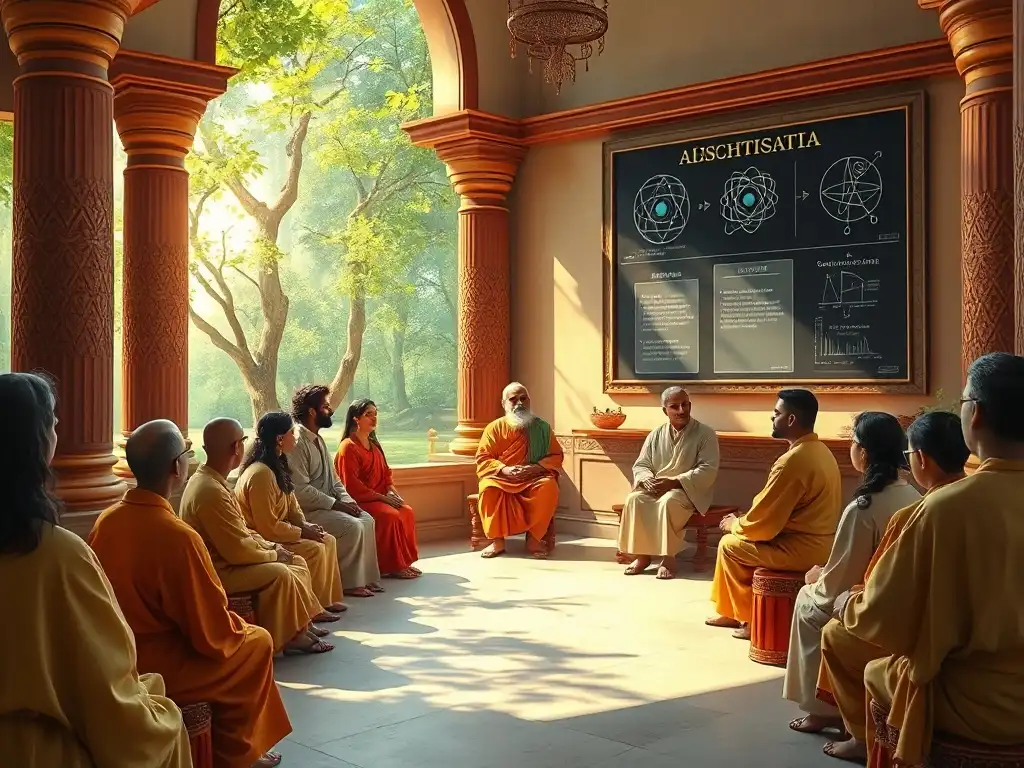
When examining the Vaisheshika philosophy in education, it is essential to compare it with other influential philosophical schools of thought in ancient India. This comparison not only highlights the unique aspects of Vaisheshika but also demonstrates its interconnectedness with the broader discourse on knowledge and education in ancient Indian philosophy.
Vaisheshika vs. Nyaya: Approaches to Knowledge
The Vaisheshika and Nyaya schools are often discussed in tandem, as both contribute significantly to the understanding of epistemology in ancient Indian philosophy. While both places a strong emphasis on logic and metaphysics, their approaches and educational implications differ.
- Epistemological Foundations:
- Vaisheshika focuses on a distinct categorization of reality, positing that knowledge arises from the perception of particular entities (padārthas) and their qualities (guna). This categorization supports a scientific approach to understanding the natural world.
- Nyaya, on the other hand, emphasizes the importance of logical inference (anumana) and debate. It lays out a systematic methodology for acquiring knowledge through reasoning and argumentation.
- Educational Implications:
- In the Vaisheshika framework, education is centered around understanding the nature and properties of objects. Students are encouraged to engage in observational practices and categorize their experiences, fostering a sense of empirical inquiry.
- The Nyaya school promotes argumentative skills and critical thinking. Its educational methods emphasize dialectics and the ability to dissect arguments, preparing students for philosophical debates and discussions.
The interplay between these two schools illustrates a rich tapestry of educational methodologies. While Vaisheshika leans towards empirical categorization, Nyaya emphasizes logical reasoning, shaping the overall landscape of ancient Indian education.
Vaisheshika vs. Samkhya: Educational Perspectives
While the Samkhya school primarily focuses on metaphysical dualism and the interplay between purusha (consciousness) and prakriti (matter), its educational perspectives offer a contrasting yet complementary view to that of Vaisheshika.
- Metaphysical Framework:
- Vaisheshika centers on the physical world and its categorization, advocating for a systematic study of nature’s elements. Knowledge, in this context, is derived from observing the interactions and properties of these elements.
- Samkhya provides a philosophical backdrop that prioritizes introspection and understanding of the self. It emphasizes the experiential understanding of the duality between consciousness and matter, advocating for a more internalized approach to education.
- Educational Methods:
- In the Vaisheshika approach, education is pragmatic, focusing on tangible elements and their classifications. Students are encouraged to observe and analyze the world around them, fostering a scientific mindset.
- In contrast, Samkhya promotes a reflective educational process, where students engage in self-inquiry and meditation. This approach allows for personal development and understanding of one’s place within the cosmos.
The divergence in educational perspectives between Vaisheshika and Samkhya illustrates the multifaceted nature of ancient Indian philosophy. While Vaisheshika encourages a worldly, scientific approach, Samkhya invites introspection and personal exploration, enriching the educational landscape of the time.
Vaisheshika’s Influence on Later Philosophical Thought
The influence of Vaisheshika philosophy in education extends beyond its immediate context, shaping later philosophical thought and educational structures in significant ways.
- Integration into Medieval Philosophy:
- Vaisheshika's categorization of knowledge and emphasis on empirical observation laid the groundwork for later philosophical developments. Its ideas were integrated into the educational systems during the medieval period, influencing thinkers like Madhva and Rāmānuja, who incorporated these concepts into their own philosophical frameworks.
- Impact on Science and Technology:
- The Vaisheshika approach to categorizing natural phenomena has been recognized as an early precursor to scientific methods. Its emphasis on observation, analysis, and classification can be seen as foundational to the development of scientific inquiry and education in subsequent Indian intellectual traditions.
- Continued Relevance:
- The principles established by the Vaisheshika school continue to resonate in modern educational philosophies that value critical thinking, scientific inquiry, and empirical evidence. The legacy of Vaisheshika philosophy in education is evident in contemporary discussions around the importance of a structured and systematic approach to knowledge acquisition.
The Vaisheshika philosophy has not only contributed significantly to the ancient Indian education system but has also left a lasting imprint on later philosophical and educational traditions. Its emphasis on categorization, observation, and logical reasoning remains relevant in today’s educational discourse.
Case Studies of Vaisheshika in Educational Practices
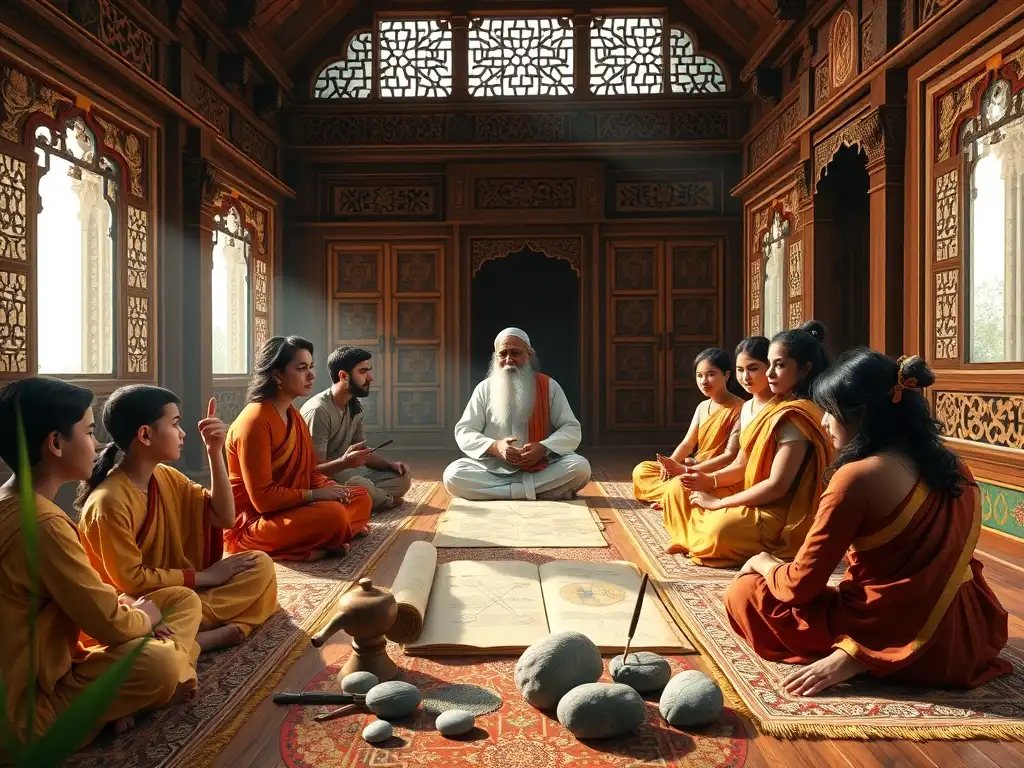
The Vaisheshika philosophy, established by sage Kanada in the 2nd century BCE, significantly influenced the educational practices of ancient India. This philosophy, rooted in atomism and the categorization of reality, provided a systematic approach to knowledge acquisition that permeated various learning centers and educational systems. Understanding the practical applications of Vaisheshika in education sheds light on its enduring legacy.
Examples of Vaisheshika in Ancient Learning Centers
Ancient Indian learning centers, such as Takshashila and Nalanda, exemplified the integration of Vaisheshika philosophy into their curricula.
- Takshashila (Taxila):
- Curriculum: The curriculum included subjects like philosophy, logic, medicine, and mathematics, where students were introduced to Vaisheshika concepts. The emphasis was on understanding the nature of substances and their properties.
- Instruction Methods: Teachers employed dialogues and debates, encouraging students to explore atomic theory and categorization in a collaborative environment.
- Nalanda University:
- Multidisciplinary Approach: Nalanda's educational model embodied the essence of Vaisheshika by integrating various disciplines. The study of metaphysics, ethics, and logic was essential, promoting a holistic understanding of knowledge.
- Philosophical Debates: The presence of scholars from diverse philosophical traditions facilitated discussions on the principles of Vaisheshika, thereby enriching the academic fabric of the institution.
The application of Vaisheshika philosophy in these centers underscores its role in shaping critical thinking and analytical skills among students, fostering a deeper understanding of the world around them.
Impact of Vaisheshika on the Gurukul System
The Gurukul system, a traditional form of education in ancient India, was profoundly influenced by the principles of Vaisheshika. This system emphasized personalized instruction in a residential setting, where students lived with their teacher (guru) and engaged in a rigorous academic environment.
- Individualized Learning: The Vaisheshika approach to atomism and classification encouraged individualized learning paths. Gurus tailored instruction based on each student's grasp of concepts, facilitating deeper comprehension of subjects like natural philosophy and ethics.
- Interdisciplinary Integration: The Gurukul curriculum often included the study of Vaisheshika alongside other philosophical schools, such as Nyaya. This cross-pollination of ideas fostered a rich intellectual culture that nurtured critical analysis and reasoning.
- Practical Application: Students were encouraged to apply Vaisheshika principles in practical contexts, whether in agriculture, medicine, or governance. The emphasis on empirical observation and logical reasoning prepared students for real-world challenges.
The integration of Vaisheshika philosophy in ancient educational practices, particularly within renowned learning centers and the Gurukul system, laid the groundwork for a comprehensive educational framework. This framework not only advanced philosophical thought but also contributed to the overall intellectual richness of ancient Indian civilization.
Conclusion: Legacy of Vaisheshika Philosophy in Education

The Vaisheshika philosophy, originating in ancient India, has left a profound legacy that continues to shape the educational landscape. Its holistic approach to knowledge, emphasizing empirical observation and logical reasoning, laid the groundwork for a systematic exploration of the natural world and human intellect. The principles of Vaisheshika not only influenced the curriculum of ancient educational institutions but also fostered an environment where inquiry and analysis were paramount.
This philosophical framework encouraged students to engage with various subjects, from metaphysics to ethics, and instilled an appreciation for the interconnectedness of different fields of study. By promoting critical thinking and a rigorous methodology, the Vaisheshika school contributed significantly to the development of a structured educational system in ancient India.
Lasting Impact on Modern Indian Education
The impact of Vaisheshika philosophy on modern Indian education can be seen in several ways:
- Critical Thinking and Inquiry-Based Learning:
- Modern educational practices emphasize critical thinking and inquiry, principles deeply rooted in Vaisheshika philosophy.
- Educational frameworks today encourage students to ask questions, seek evidence, and draw conclusions based on observation and reasoning.
- Interdisciplinary Approach:
- Vaisheshika's holistic perspective promotes an interdisciplinary approach in education, fostering connections between different fields such as science, philosophy, and arts.
- This is reflected in contemporary curricula that integrate subjects, allowing students to explore the relationships between various domains of knowledge.
- Empirical Methodology:
- The empirical methods advocated by the Vaisheshika school are evident in the scientific approaches adopted in modern education.
- Students are encouraged to engage in experiments, observations, and practical applications, echoing the philosophical underpinnings of ancient scholarship.
- Ethical and Moral Education:
- The emphasis on ethics and morality in Vaisheshika philosophy finds relevance in character education initiatives today.
- Modern educational systems aim to nurture not only the intellect but also the moral character of students, reflecting the values promoted by ancient philosophies.
Relevance of Vaisheshika Philosophy in Contemporary Teaching Methods
In contemporary teaching methods, the relevance of Vaisheshika philosophy can be distilled into several key areas:
- Constructivist Learning:
- Vaisheshika philosophy supports constructivist learning, where students actively construct their understanding through experiences and interactions.
- This aligns with modern pedagogical strategies that prioritize student engagement and active participation in the learning process.
- Encouragement of Debate and Discussion:
- The Vaisheshika tradition encourages debate, discussion, and dialogue among students, fostering a classroom environment where diverse viewpoints are explored.
- Contemporary classrooms often utilize group discussions and collaborative learning, reflecting this ancient practice.
- Focus on Individual Learning Styles:
- Recognizing the uniqueness of each learner is a principle highlighted in Vaisheshika philosophy, which advocates for personalized approaches to education.
- Modern teaching methods increasingly incorporate differentiated instruction to cater to varying learning preferences and styles.
- Integration of Technology:
- The principles of observation and analysis inherent in Vaisheshika can be complemented by technology in education today.
- Digital tools and resources provide new avenues for exploration and inquiry, enhancing the educational experience and aligning with the philosophy’s core tenets.
The Vaisheshika philosophy in education has not only shaped ancient learning practices but continues to influence modern educational systems. Its legacy of critical thinking, interdisciplinary study, and ethical considerations remains a cornerstone of effective teaching methods, ensuring that the teachings of ancient Indian philosophers resonate in contemporary education.
References
The study of Vaisheshika philosophy and its impact on education in ancient India is enriched by a variety of texts and scholarly articles. These references provide a deeper understanding of how this philosophical school influenced educational practices and thought during its time.
Key Texts on Vaisheshika Philosophy
- Vaisheshika Sutra by Kanada: This foundational text, attributed to the sage Kanada, outlines the core principles of Vaisheshika philosophy. It discusses metaphysics, epistemology, and the nature of reality, providing a basis for further development in educational thought.
- Vijnanabhiksu's Commentary: Vijnanabhiksu's elucidations on the Vaisheshika Sutras offer insights into the practical applications of the philosophy, particularly in the context of knowledge acquisition and pedagogy.
- Prashastapada's "Vivaran": This commentary elaborates on the nuances of Vaisheshika thought and includes discussions on the categorization of knowledge, which is crucial for understanding its educational implications.
- Medieval Commentaries: Various medieval scholars contributed to the interpretation and application of Vaisheshika principles in education, reflecting the evolving nature of the philosophy and its relevance in teaching methodologies.
Scholarly Articles on Education in Ancient India
- "Educational Practices in Ancient India: A Vaisheshika Perspective": This article explores how Vaisheshika philosophy shaped educational practices, emphasizing the importance of empirical observation and logical reasoning in the learning process.
- "The Role of Philosophy in Ancient Indian Education": This paper discusses the overarching influence of various philosophical schools, including Vaisheshika, on the curricular structure and pedagogical methods of ancient Indian education.
- "Knowledge and Learning in the Vaisheshika Tradition": An in-depth analysis of how Vaisheshika philosophy conceptualized knowledge, learning, and their implications for the educational system of ancient India.
- "Intersections of Vaisheshika and Education: Historical Perspectives": This scholarly work examines the historical context in which Vaisheshika philosophy influenced educational systems, providing case studies of ancient institutions that embodied these principles.
These references collectively contribute to a nuanced understanding of the role of Vaisheshika philosophy in shaping educational frameworks in ancient India, reflecting its enduring legacy in the field of education.
Frequently Asked Questions
What is Vaisheshika philosophy?
Vaisheshika is one of the six classical schools of Indian philosophy, emphasizing atomism and the categorization of reality. It plays a significant role in understanding the nature of existence and knowledge.
How did Vaisheshika philosophy influence ancient Indian education?
The Vaisheshika philosophy introduced a systematic approach to education, focusing on logical reasoning and empirical observation, which shaped the curricula of ancient universities like Nalanda and Taxila.
What are the key contributions of Vaisheshika to science and education?
Vaisheshika contributed to the understanding of natural sciences, particularly in areas like physics and chemistry, influencing educational methods that prioritized experimentation and analysis.
How does Vaisheshika relate to other Indian philosophical schools?
Vaisheshika, along with Nyaya, forms a synergistic relationship, where Nyaya provides the tools of logic and debate, while Vaisheshika offers a framework for understanding the material world.
Why is the study of Vaisheshika philosophy in education important today?
Studying Vaisheshika philosophy in education helps us appreciate the foundational principles of logical thinking and systematic inquiry that continue to be relevant in modern educational practices.
Final Reflection: The Enduring Legacy of Vaisheshika Philosophy in Education
The exploration of Vaisheshika philosophy in education reveals its profound relevance in today's educational discourse. As we navigate a world increasingly defined by rapid technological advancements and diverse pedagogical approaches, the principles of Vaisheshika remind us of the importance of a systematic and analytical framework in learning. This ancient philosophy not only laid the groundwork for critical thinking but also emphasized the interconnectedness of knowledge, urging us to appreciate the holistic nature of education.
The influence of Vaisheshika extends far beyond its historical context, shaping the cultural and social landscape of Indian education systems. Its emphasis on empirical observation and logical reasoning continues to resonate in contemporary educational practices. The teachings of Vaisheshika encourage learners to engage with the world around them, fostering a spirit of inquiry and innovation. As the philosopher Kanada once stated, Knowledge is the foundation of all progress.
This sentiment underscores the ongoing relevance of Vaisheshika in inspiring generations to seek wisdom through exploration and understanding.
As we reflect on the lessons imparted by Vaisheshika, let us embrace the call to cultivate a deeper appreciation for knowledge in our own lives. Consider how you can apply the principles of analytical thinking and empirical inquiry in your daily learning experiences. By doing so, you not only honor the legacy of Vaisheshika but also contribute to a more thoughtful and informed society. Together, let us strive to embody the spirit of this ancient philosophy, ensuring that education remains a transformative journey for all.
Embrace the Wisdom of Vaisheshika in Your Life!
Thank you for exploring the profound influence of Vaisheshika on the ancient Indian education systems. By delving into this rich heritage, you've uncovered invaluable insights into knowledge, logic, and the pursuit of truth. Now, it's time to bring this inspiration into your daily life!
Here are some practical steps you can take today:
- Engage with Philosophy: Start a study group focusing on ancient Indian philosophies. Dive deep into classical texts and share perspectives with friends or peers.
- Explore Nature: Take a moment to reflect on your surroundings. Apply the principles of observation and analysis, as emphasized in Vaisheshika, to appreciate the beauty and complexity of the world around you.
- Share Your Insights: Join a community forum dedicated to ancient philosophies and education. Contribute your understanding and learn from others' interpretations to deepen your knowledge.
How will embracing the principles of Vaisheshika redefine your approach to knowledge and education in your life?