
Sankhya vs. Other Philosophical Schools: What Sets It Apart?

Welcome to Ancient India History, where we delve into the rich tapestry of ancient civilizations that shaped the Indian subcontinent. Today, we invite you to embark on a fascinating journey through the lens of Sankhya philosophy, a cornerstone of Indian thought that not only distinguishes itself from other philosophical schools but also offers profound insights into the nature of reality and existence. As we explore "Sankhya vs. Other Philosophical Schools: What Sets It Apart?
", prepare to uncover the intricacies that make Sankhya truly unique. Join us as we unravel the depths of this philosophical tradition and its enduring impact on the world.
- Introduction to Sankhya Philosophy in Ancient India
- Key Concepts of Sankhya Philosophy
- Comparison of Sankhya Philosophy with Other Philosophical Schools
- Unique Features that Set Sankhya Apart
- Historical Context of Sankhya Philosophy
- Conclusion: The Legacy of Sankhya Philosophy in Ancient India
- Frequently Asked Questions
- Final Reflection: The Enduring Legacy of Sankhya Philosophy in Ancient India
- Unveil the Wisdom of Sankhya and Discover Your Path!
Introduction to Sankhya Philosophy in Ancient India
Sankhya philosophy, one of the foundational schools of thought in ancient Indian philosophy, offers a profound exploration into the nature of reality, consciousness, and the principles governing existence. Originating around the same time as other philosophical traditions such as Buddhism and Jainism, Sankhya is characterized by its dualistic framework, which posits a distinction between the material and the spiritual.
This article delves into the intricate nuances of Sankhya philosophy, comparing it with other philosophical schools to illuminate what sets it apart in the rich tapestry of ancient Indian thought. By examining its core tenets and significance within the broader Indian philosophical landscape, we aim to provide a comprehensive understanding of this influential school.
Overview of Sankhya Philosophy
Sankhya philosophy, attributed to the sage Kapila, is one of the six orthodox schools (Darshanas) of Hindu philosophy and is best known for its systematic approach to categorizing and explaining the universe. At its core, Sankhya is rooted in the idea of Purusha (consciousness) and Prakriti (matter), proposing that the interplay between these two fundamental principles gives rise to the diversity of the cosmos.
Key concepts of Sankhya philosophy include:
- Dualism: The distinction between Purusha and Prakriti.
- Twenty-five Tattvas: The enumeration of the fundamental principles that constitute reality, including the five elements, the mind, and the senses.
- Karma and Rebirth: The belief in the law of cause and effect as it pertains to the cycle of birth and rebirth.
This philosophical framework not only provides insights into existential questions but also serves as a basis for various practices, including yoga and meditation. The clarity and logical structure of Sankhya have allowed it to influence many other philosophical traditions, making it a vital component of Indian philosophical discourse.
Significance of Sankhya in Indian Philosophical Tradition
The significance of Sankhya philosophy extends beyond its foundational principles; it plays a crucial role in shaping the discourse of Indian philosophy and spirituality. Here are several points highlighting its importance:
- Influence on Other Schools: Sankhya's concepts have profoundly influenced various schools such as Yoga, Vedanta, and even Buddhism, providing a metaphysical foundation for their teachings.
- Integration with Yoga: The Sankhya philosophy's dualistic perspective complements the practice of yoga, particularly in the context of understanding the mind and achieving liberation (moksha).
- Philosophical Dialogue: By engaging with other philosophical schools, Sankhya has contributed to a rich intellectual dialogue, allowing for a diversity of thought and interpretations within Indian philosophy.
- Contemporary Relevance: In modern times, the principles of Sankhya are being revisited and integrated into contemporary discussions on psychology, metaphysics, and environmental ethics.
Sankhya philosophy is not merely a historical artifact; it remains a vibrant and relevant part of the philosophical landscape, offering insights that resonate with both ancient and contemporary thinkers. This exploration of Sankhya philosophy reveals the intricate relationship between its foundational concepts and the broader themes present in ancient Indian thought, underscoring its enduring legacy.
Key Concepts of Sankhya Philosophy
Dualism: Purusha and Prakriti
Sankhya philosophy is fundamentally rooted in the dualistic framework of Purusha and Prakriti. This dualism represents the distinction between consciousness (Purusha) and matter (Prakriti).
- Purusha is the eternal, unchanging, and passive observer. It embodies pure consciousness and is the true self that transcends the physical realm.
- Prakriti, on the other hand, is the dynamic, active principle that constitutes the material universe. It is characterized by three qualities, known as Gunas: Sattva (purity, harmony), Rajas (activity, chaos), and Tamas (inertia, darkness). The interplay of these Gunas gives rise to the myriad forms of existence.
In Sankhya, the relationship between Purusha and Prakriti is essential to understanding the nature of reality. While Purusha remains detached and unaffected, Prakriti is in a constant state of flux, giving rise to the physical world and experiences. This dualism sets Sankhya apart from other schools of thought, such as Advaita Vedanta, which emphasizes non-dualism and the oneness of reality.
The Theory of Evolution: From Prakriti to the Manifested World
The Sankhya school's explanation of the evolution of the universe is a systematic process that traces the emergence of the manifested world from Prakriti.
- Emanation of the Mahat: The process begins with the awakening of the Mahat (the great principle), which represents cosmic intelligence. This is the first manifestation of Prakriti and serves as the source of all subsequent evolutions.
- Ahamkara (Ego): From Mahat arises Ahamkara, the ego or individuality, which differentiates the self from the rest of existence. This leads to the formation of the individual mind and the sense of self.
- The Five Elements: The evolution continues with the manifestation of the five great elements (Pancha Mahabhuta): Earth, Water, Fire, Air, and Ether. These elements form the basis of the physical world and are experienced through the senses.
The Sankhya model emphasizes that this evolutionary process is not linear but cyclical, displaying a continuous cycle of creation and dissolution. Each stage in this evolution is a reflection of the interplay between the Gunas of Prakriti, contributing to the diversity of life and phenomena observed in the material world.
The Role of Knowledge and Ignorance in Sankhya
In the framework of Sankhya philosophy, knowledge (Vidya) and ignorance (Avidya) play crucial roles in the journey toward liberation (Moksha). Understanding the distinctions between these two concepts is essential for grasping the purpose of Sankhya.
- Avidya: This refers to ignorance or misunderstanding of the true nature of Purusha and Prakriti. Avidya leads individuals to mistakenly identify with their physical bodies and the material world, resulting in attachment and suffering.
- Vidya: Knowledge, in contrast, is the realization of the separation between Purusha and Prakriti. It involves understanding that the self is distinct from the body and mind, leading to a state of liberation from the cycles of birth and death.
Sankhya asserts that through self-inquiry and the cultivation of knowledge, individuals can transcend ignorance. This process allows one to recognize the eternal nature of Purusha, ultimately achieving liberation from the entanglements of Prakriti. The emphasis on knowledge as a path to liberation underscores the importance of intellectual and philosophical inquiry in Sankhya, distinguishing it from other philosophical traditions that may prioritize ritual or devotion.
Comparison of Sankhya Philosophy with Other Philosophical Schools
Sankhya vs. Yoga: Similarities and Differences
Sankhya philosophy and Yoga are two prominent schools of thought in ancient Indian philosophy, each offering unique perspectives on existence, consciousness, and the path to liberation. While they share common roots, they diverge significantly in their methodologies and objectives.
Focus on Knowledge vs. Practice
At the core of Sankhya philosophy is a profound emphasis on knowledge (jnana) as the means to attain liberation (moksha). The Sankhya school posits that understanding the duality of Purusha (consciousness) and Prakriti (matter) is essential for enlightenment. This knowledge leads to the realization of the self's true nature, allowing individuals to detach from worldly experiences.
In contrast, Yoga primarily focuses on practice (abhyasa) as a means of achieving spiritual growth. The Yoga Sutras, attributed to Patanjali, outline a systematic approach to self-discipline, meditation, and ethical living. While knowledge plays a role in Yoga, particularly in understanding the nature of the self and the universe, the practical application through asanas (postures) and meditation is paramount.
| Feature | Sankhya Philosophy | Yoga |
|---|---|---|
| Primary Focus | Knowledge (jnana) | Practice (abhyasa) |
| Goal | Liberation through understanding | Union with the divine via practice |
| Methodology | Analytical and theoretical | Practical and experiential |
The Role of Meditation in Yoga Compared to Sankhya
Meditation holds a central place in Yoga, serving as a critical practice for achieving self-realization and inner peace. Patanjali emphasizes the importance of meditation (dhyana) in quieting the mind and transcending the fluctuations of consciousness. This practice fosters a direct experience of the self and the ultimate reality.
Sankhya, however, does not emphasize meditation in the same way. While it acknowledges the value of contemplative practices, its primary focus remains on intellectual inquiry and understanding. Meditation in Sankhya is often viewed as a complementary tool to knowledge rather than a primary path to liberation.
Sankhya vs. Vedanta: Contrasting Views on Reality
Sankhya and Vedanta are two significant schools in Indian philosophy that address the nature of reality but arrive at fundamentally different conclusions. Their philosophical frameworks provide contrasting views on existence, consciousness, and the ultimate goal of life.
Understanding Brahman and the Self
In Vedanta, particularly in the Advaita (non-dual) tradition, Brahman is regarded as the ultimate reality, an all-encompassing consciousness that transcends individual existence. The self (Atman) is considered identical to Brahman, leading to the core teaching of "Tat Tvam Asi" (That Thou Art). Liberation in Vedanta involves realizing this non-duality and understanding that the individual self is not separate from the universal consciousness.
On the other hand, Sankhya philosophy maintains a dualistic perspective. It asserts that Purusha and Prakriti are distinct entities. Purusha represents pure consciousness, while Prakriti encompasses all material forms and phenomena. Liberation in Sankhya involves the realization of this separation, leading to the cessation of suffering through knowledge rather than union with a singular reality.
| Aspect | Sankhya Philosophy | Vedanta |
|---|---|---|
| Nature of Reality | Dualism: Purusha and Prakriti | Non-dualism: Atman is Brahman |
| Liberation Concept | Realization of separation | Realization of unity |
Epistemology in Sankhya and Vedanta
The epistemological approaches of Sankhya and Vedanta also differ significantly. Sankhya emphasizes three primary means of knowledge: perception (pratyaksha), inference (anumana), and testimony (shabda). This framework underscores a rational and analytical approach to understanding existence and is rooted in empirical observation.
Vedanta, however, expands the epistemological framework, placing a strong emphasis on scriptural knowledge (shabda) as the highest form of knowledge. The Upanishads, considered authoritative texts in Vedanta, are viewed as guiding principles that reveal the nature of reality and the self. While both schools value knowledge, Sankhya leans towards intellectual and analytical methods, whereas Vedanta integrates scriptural wisdom into its understanding.
The exploration of Sankhya philosophy in relation to other philosophical schools like Yoga and Vedanta reveals intricate contrasts and similarities, enriching our understanding of ancient Indian thought. Each school contributes uniquely to the broader discourse on existence, knowledge, and the path to enlightenment.
Sankhya vs. Jainism: Perspectives on Liberation
Sankhya philosophy presents a unique perspective on liberation (moksha) when compared to Jainism. Both schools of thought seek to address the human condition and offer paths toward spiritual emancipation, yet they diverge significantly in their foundational beliefs, methods, and interpretations of key concepts. While Sankhya emphasizes a dualistic understanding of reality, delineating between purusha (consciousness) and prakriti (matter), Jainism offers a more comprehensive moral framework that focuses on the liberation of the soul through ethical living and self-discipline.
At the core of both philosophies is the concept of liberation, but they perceive the nature of the soul and the process of achieving moksha through different lenses. Sankhya posits that liberation is attained through knowledge and understanding of the true nature of reality, ultimately leading to the realization of the self as separate from the material world. Jainism, on the other hand, integrates an ethical code, emphasizing non-violence (ahimsa), truthfulness (satya), and ascetic practices as vital to purifying the soul and achieving liberation.
Concept of Karma in Jainism vs. Sankhya
The concept of karma is central to both Jainism and Sankhya, yet their interpretations and implications differ significantly. In Jainism, karma is viewed as a material substance that attaches to the soul based on one's actions, thoughts, and intentions. This accumulated karma determines the soul's trajectory through various cycles of birth and rebirth (samsara). Jains believe that to achieve liberation, one must purify the soul by shedding accumulated karma, which is done through strict adherence to ethical conduct and ascetic practices.
In contrast, Sankhya philosophy incorporates a more abstract understanding of karma. While it recognizes the existence of karma and its impact on the cycle of birth and rebirth, Sankhya does not ascribe a material nature to karma. Instead, it emphasizes the role of ignorance (avidya) in perpetuating the cycle of suffering and rebirth. Knowledge and discernment are seen as the paths to liberation, allowing individuals to understand the distinction between purusha and prakriti and ultimately transcend the binding effects of karma.
The Path to Liberation: Different Approaches
The paths to liberation outlined by Jainism and Sankhya reflect their distinct philosophical underpinnings. Jainism advocates a rigorous ethical lifestyle that includes the practice of non-violence, truthfulness, and self-discipline. The three jewels of Jainism—right belief, right knowledge, and right conduct—serve as guiding principles for followers, emphasizing the need for both moral and intellectual development. The Jain path to liberation is often characterized by ascetic practices, including fasting and renunciation of worldly pleasures, to purify the soul and eliminate karmic bonds.
In contrast, Sankhya philosophy emphasizes the importance of knowledge and insight as the primary means to liberation. It asserts that through the cultivation of wisdom and understanding of the dual nature of existence, individuals can achieve a state of liberation that transcends the material limitations of the world. This philosophical school does not prescribe a specific set of ethical practices but rather encourages self-inquiry and contemplation to realize the inherent distinction between the self and the external world.
While both Jainism and Sankhya offer pathways to liberation, they do so through markedly different lenses—Jainism through ethical conduct and asceticism, and Sankhya through intellectual discernment and knowledge. Each path reflects the rich diversity of thought within ancient Indian philosophy, highlighting the complex interplay between ethics, metaphysics, and the quest for spiritual freedom.
Unique Features that Set Sankhya Apart
Emphasis on Rationalism and Analytical Thinking
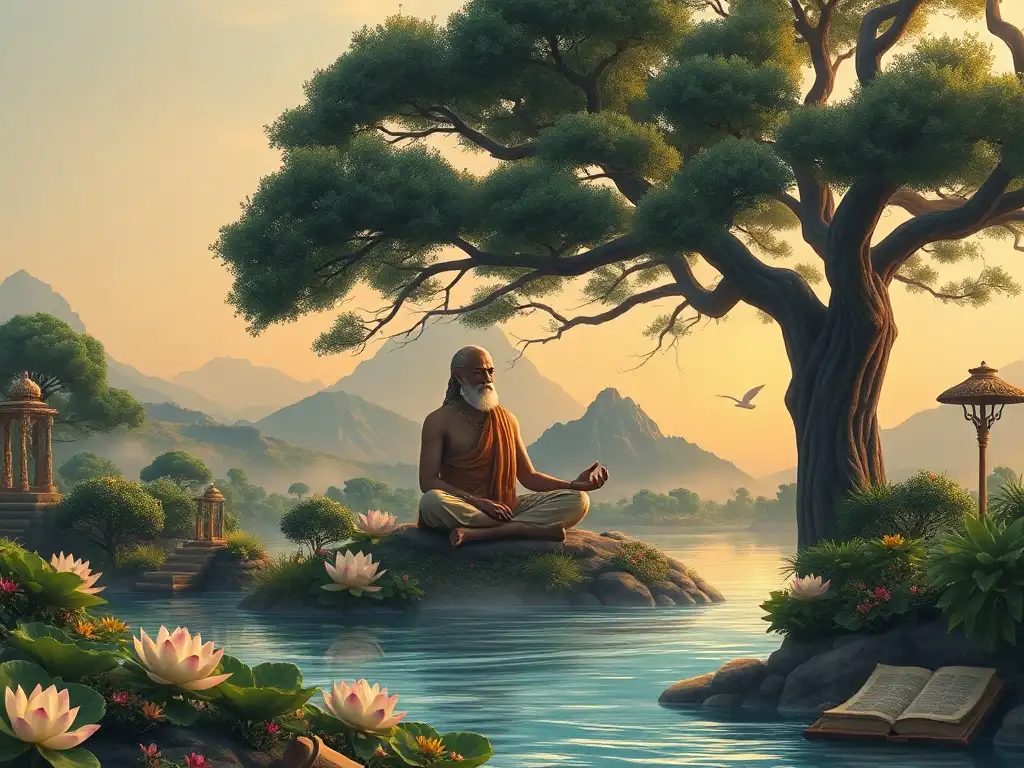
Sankhya philosophy in ancient India is distinguished by its rigorous rationalism and analytical approach to understanding reality. Unlike other philosophical schools that may rely more heavily on religious texts or mystical experiences, Sankhya emphasizes a systematic analysis of the nature of existence. This philosophical framework is rooted in two primary principles: Purusha (consciousness) and Prakriti (matter).
- Dualism: Sankhya posits a dualistic framework, where Purusha represents the unchanging, eternal consciousness, while Prakriti embodies the dynamic, ever-changing physical universe. This dualism encourages a methodical examination of how these two aspects interact and influence one another.
- Categorization of Reality: Sankhya further categorizes reality into 25 principles (tattvas), which include aspects like the intellect (buddhi), ego (ahankara), and the five elements (earth, water, fire, air, and space). This detailed categorization facilitates a clear and logical exploration of the universe, making it a unique contribution to Indian philosophy.
- Empirical Observation: The school advocates for the use of empirical observation and reasoning as tools for gaining knowledge. Sankhya scholars believed that through careful observation, one could arrive at truths about existence, thus setting it apart from philosophies that prioritize revelation or tradition over individual reasoning.
Influence on Other Indian Philosophical Schools
The impact of Sankhya philosophy extends beyond its own doctrines, significantly influencing various other schools of thought within ancient Indian philosophy.
- Yoga: The Yoga school, particularly the system articulated by Patanjali, draws heavily from Sankhya's metaphysical framework. The concept of the duality of Purusha and Prakriti serves as a foundational element for understanding the practice of meditation and the goal of achieving liberation (moksha) through self-realization.
- Nyaya and Vaisheshika: These schools, known for their logical rigor and epistemological inquiries, were also influenced by the analytical methods established in Sankhya. The emphasis on categorization and logical reasoning in Sankhya is echoed in their methodologies, which seek to establish valid means of knowledge (pramanas).
- Advaita Vedanta: While fundamentally different in its non-dualistic approach, Advaita Vedanta acknowledges the Sankhya system's contributions, particularly in its discussions of consciousness and the nature of reality. The debates between these schools have enriched the philosophical landscape of ancient India, demonstrating the foundational role of Sankhya.
Contributions to Science and Psychology
Sankhya philosophy's analytical nature has laid the groundwork for various fields, including science and psychology, making it a pioneering force in ancient Indian thought.
- Scientific Methodology: The emphasis on observation and categorization in Sankhya can be seen as a precursor to the scientific method. By establishing a framework for analyzing the physical world, it encouraged a systematic approach to inquiry that would later inform various scientific disciplines.
- Psychology: The Sankhya categorization of the mind and its functions has significantly influenced the development of psychology in India. Concepts such as the distinction between the intellect (buddhi) and the ego (ahankara) provide a nuanced understanding of human consciousness and behavior. This early exploration of psychological concepts has parallels in modern psychological theories, showcasing Sankhya's relevance beyond its historical context.
- Holistic Health Practices: The philosophical insights of Sankhya have also permeated holistic health practices, including Ayurveda and Yoga. The understanding of the interplay between mind and body in Sankhya philosophy contributes to the holistic approaches that emphasize balance and harmony in both physical and mental health.
The unique features of Sankhya philosophy, marked by its rationalist approach, significant influence on other philosophical schools, and contributions to science and psychology, highlight its importance in the broader context of ancient Indian thought. Its legacy continues to inspire contemporary discussions in various fields, affirming its enduring relevance.
Historical Context of Sankhya Philosophy
Origins and Development in Ancient India
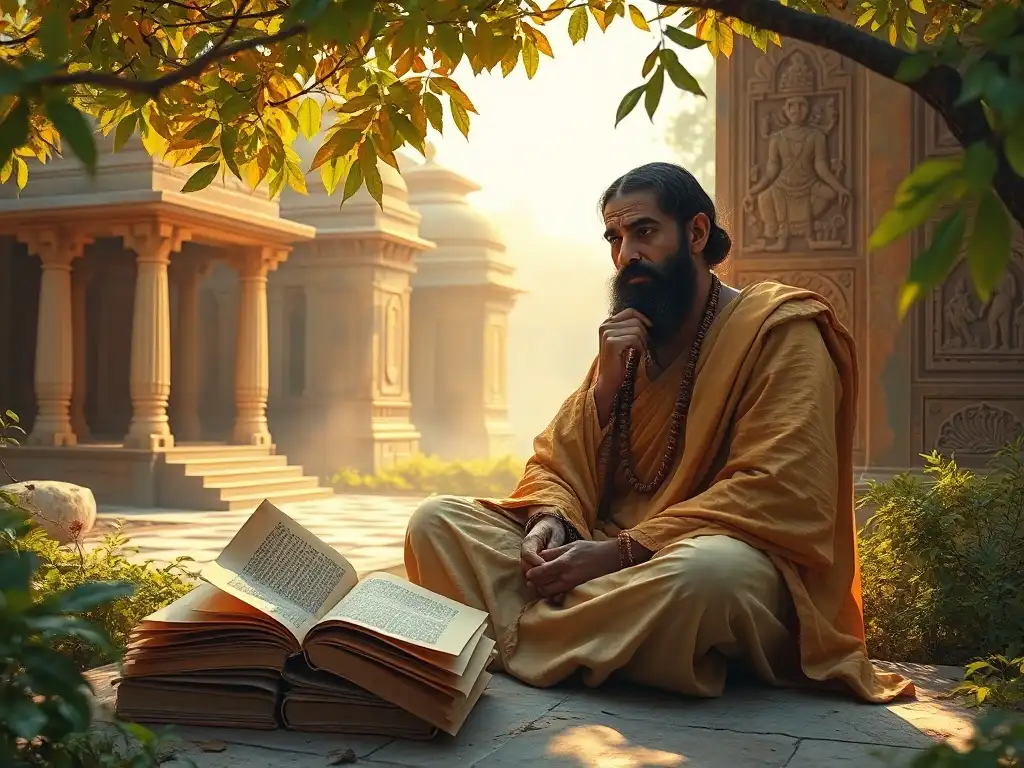
Sankhya philosophy, one of the six orthodox schools of Indian philosophy, has its roots deeply embedded in the ancient intellectual traditions of India. Emerging around the 1st millennium BCE, Sankhya can be traced back to the Vedic texts, particularly the Upanishads, which laid the groundwork for metaphysical inquiries and abstract thinking.
The term "Sankhya" derives from the Sanskrit word "sankhya," meaning "number" or "enumeration," reflecting the school's focus on categorizing and understanding the universe through a systematic approach. The philosophy is characterized by its dualistic ontology, positing a fundamental distinction between Purusha (consciousness) and Prakriti (matter). This dualism is essential for understanding the nature of existence and the process of liberation (moksha).
Sankhya philosophy underwent significant development over the centuries, influenced by various cultural and philosophical shifts. The early formulations of Sankhya were primarily concerned with cosmology, metaphysics, and the nature of reality. However, as the philosophical landscape evolved, Sankhya began to intersect with other schools, such as Yoga, which integrated Sankhya's metaphysical insights into practical methodologies for achieving spiritual liberation.
Influential Figures in the Evolution of Sankhya
Several key figures contributed to the evolution and consolidation of Sankhya philosophy, shaping its doctrines and expanding its influence across different philosophical traditions.
- Kapila: Often regarded as the founder of Sankhya philosophy, Kapila is a legendary figure whose teachings form the basis of the school. He is credited with systematizing the principles of Sankhya in his text, the Sankhya Sutras. While the exact historical context of Kapila remains ambiguous, his contributions are pivotal in establishing the framework for subsequent interpretations of Sankhya.
- Ishvara Krishna: Another significant figure, Ishvara Krishna, is known for his work Sankhya Karika, which serves as a comprehensive exposition of Sankhya philosophy. His commentary clarified and expanded upon Kapila's original teachings, particularly regarding the nature of suffering and the path to liberation.
- Gaudapada and Adi Shankaracharya: These philosophers played a crucial role in the later development of Sankhya, particularly in its interactions with Advaita Vedanta. Gaudapada's Mandukya Karika and Shankaracharya's commentaries emphasized the interplay between Sankhya and non-dualism, further enriching the philosophical discourse.
- Vyasa: The legendary sage Vyasa, traditionally credited with compiling the Mahabharata and the Puranas, also contributed to the dissemination of Sankhya thought. His interpretations and teachings helped integrate Sankhya principles into the broader tapestry of Indian philosophy.
Key Texts and Scriptures of Sankhya Philosophy
The foundation of Sankhya philosophy is articulated through several key texts that not only define its doctrines but also provide insight into its historical context and evolution.
| Text | Description |
|---|---|
| Sankhya Sutras | Attributed to Kapila, this foundational text outlines the core principles and concepts of Sankhya philosophy. |
| Sankhya Karika | A critical commentary by Ishvara Krishna that elaborates on the concepts introduced in the Sankhya Sutras, emphasizing the nature of suffering and liberation. |
| Yoga Sutras | While primarily a text of the Yoga school, it draws extensively on Sankhya concepts, particularly in its understanding of mind and consciousness. |
| Mahabharata | Contains references to Sankhya philosophy, particularly in discussions of ethics, duty, and the nature of reality. |
| Puranas | These texts often incorporate Sankhya ideas, particularly in their cosmological narratives and discussions of creation. |
The combination of these texts provides a rich tapestry of thought that illustrates the depth and complexity of Sankhya philosophy in ancient India. Each work contributes to the understanding of not only the metaphysical aspects of Sankhya but also its practical implications for achieving spiritual liberation.
Conclusion: The Legacy of Sankhya Philosophy in Ancient India
Sankhya philosophy, one of the oldest schools of thought in ancient India, has left a profound legacy that continues to influence various domains of knowledge even today. Rooted in the Vedic tradition, it focuses on the duality of purusha (consciousness) and prakriti (matter), providing a framework for understanding the universe and the nature of existence. This philosophical approach not only shaped the spiritual discourse of its time but also laid the groundwork for various subsequent philosophical movements, including Yoga and Vedanta.
The core teachings of Sankhya, particularly its enumeration of the twenty-five principles, have served as a basis for exploring metaphysical questions regarding the self, reality, and the relationship between the material and spiritual worlds. This structured analysis not only distinguishes Sankhya from other philosophical schools but also underscores its systematic nature, which appeals to scholars and practitioners alike. The lasting impact of Sankhya philosophy can be seen in the way it has been integrated into various spiritual practices and its influence on modern philosophical debates.
Continuing Relevance of Sankhya Philosophy Today
Sankhya philosophy remains relevant in contemporary discussions on metaphysics, psychology, and even science. Its analytical approach provides a valuable perspective in understanding complex issues such as consciousness and the mind-body relationship.
- Psychological Insights: The distinction between purusha and prakriti has been instrumental in developing psychological frameworks that address the nature of human experience. Concepts of self-awareness, mindfulness, and the importance of understanding one's mental processes reflect Sankhya's influence.
- Interdisciplinary Connections: Modern disciplines such as cognitive science and philosophy of mind often echo the dualistic themes of Sankhya, prompting discussions about the nature of consciousness—an area that continues to fascinate both scientists and philosophers.
- Spiritual Practices: The principles of Sankhya are foundational to various yogic practices that emphasize self-realization and detachment from the material world. Many contemporary spiritual movements draw on these teachings, highlighting their timeless nature.
As such, the relevance of Sankhya philosophy extends beyond historical study; it actively informs modern thought, bridging the gap between ancient wisdom and contemporary inquiry.
Final Thoughts on the Distinctiveness of Sankhya in the Philosophical Landscape
The distinctiveness of Sankhya philosophy lies in its unique epistemological framework and its analytical approach to understanding the universe. Unlike other philosophical schools that may rely on religious texts or sensory experiences, Sankhya emphasizes a rational and systematic method of inquiry. This methodological rigor is one of the key factors that set it apart from contemporaneous schools such as Buddhism and Jainism.
Moreover, Sankhya's contribution to the classification of knowledge and the nature of reality has paved the way for future philosophical discourse. Its influence is evident in various philosophical traditions, both within and outside of Indian philosophy.
- Comparative Analysis: When compared to schools like Advaita Vedanta, which emphasizes non-duality, Sankhya’s dualistic framework offers a contrasting yet complementary perspective, enriching the philosophical landscape of ancient India.
- Cultural Impact: The principles of Sankhya have permeated various aspects of Indian culture, including art, literature, and spiritual practices, reinforcing its status as a cornerstone of Indian philosophical thought.
The legacy of Sankhya philosophy is not only a testament to its foundational role in ancient Indian thought but also a reflection of its enduring relevance in contemporary discourse. Its analytical depth and unique approach to understanding existence set it apart as a significant philosophical tradition that continues to inspire and challenge thinkers to this day.
Frequently Asked Questions
What is Sankhya philosophy?
Sankhya is an ancient Indian philosophical system that focuses on the dualism of purusha (consciousness) and prakriti (matter). It is considered one of the six orthodox schools of Indian philosophy.
How does Sankhya differ from other philosophical schools?
Sankhya is distinct due to its emphasis on enumeration and categorization of reality, particularly in its analysis of the eighteen elements of existence. Unlike schools like Buddhism, it maintains a theistic perspective.
What are the main contributions of Sankhya philosophy?
Sankhya has significantly influenced yoga, Vedanta, and other schools of thought by providing a framework for understanding the nature of reality and liberation (moksha). Its concepts are foundational in many Indian philosophical discussions.
How does Sankhya philosophy address the concept of liberation?
In Sankhya, liberation (or moksha) is achieved through the discrimination between purusha and prakriti, leading to the realization of the self's true nature and freedom from the cycle of birth and rebirth.
Is Sankhya philosophy still relevant today?
Yes, Sankhya philosophy remains relevant in contemporary discussions about consciousness, existence, and self-realization. Its principles continue to inspire modern philosophical and psychological thought, as well as spiritual practices.
Final Reflection: The Enduring Legacy of Sankhya Philosophy in Ancient India
Sankhya philosophy stands as a testament to the profound intellectual heritage of ancient India, illustrating the timeless quest for understanding the nature of reality and consciousness. In a world increasingly driven by materialism and rapid technological advancement, the insights offered by Sankhya remind us of the importance of introspection and the duality of existence. This ancient framework not only enriches our understanding of the self but also challenges us to consider the deeper connections between mind, body, and the universe.
Sankhya's influence extends far beyond its historical context, shaping various aspects of contemporary thought and practice. From yoga to modern psychology, the principles of Sankhya continue to resonate, encouraging individuals to explore the interplay between the material and the spiritual. As Carl Jung once said, Who looks outside, dreams; who looks inside, awakes.
This quote encapsulates the essence of Sankhya, urging us to turn our gaze inward to discover the truths that lie within, fostering a culture of self-awareness and personal growth.
As we reflect on the teachings of Sankhya, let us embrace the invitation to explore our own consciousness and the nature of our existence. Consider how the principles of Sankhya can guide you in your daily life, encouraging a balance between action and contemplation. By integrating these ancient insights into our modern lives, we can cultivate a deeper understanding of ourselves and our place in the cosmos, paving the way for a more harmonious existence.
Unveil the Wisdom of Sankhya and Discover Your Path!
Thank you for diving into the fascinating world of Sankhya philosophy! You've gained valuable insights into how this school of thought stands apart from others, enriching our understanding of existence and consciousness. Now, it’s time to put that knowledge into action!
Here are a few empowering steps you can take to deepen your exploration of Sankhya:
- Deepen your understanding by exploring a classic text on Sankhya philosophy, such as the Sankhya Karika. Challenge yourself to reflect on its teachings and their relevance to contemporary life.
- Engage with a community by joining online forums or local discussion groups that focus on Indian philosophies. Share your thoughts and learn from others!
- Document your reflections in a journal, considering how the principles of Sankhya resonate with your personal experiences.
What insights from Sankhya challenge your existing beliefs or inspire new perspectives? Share your thoughts below, and let’s spark a meaningful conversation!