
Sankhya's Role in the Development of Indian Logic and Epistemology


Welcome to Ancient India History, where we embark on a fascinating journey through the rich tapestry of India's past. Here, we delve into the profound contributions of ancient civilizations that have shaped not only a nation but also the realm of human thought.
In our featured article, we explore the Sankhya philosophy in Indian logic, revealing its pivotal role in the evolution of epistemology and the intricate ways it influences contemporary philosophical discourse. As you navigate through our site, prepare to uncover the layers of wisdom and cultural heritage that await, sparking your curiosity to learn more about this remarkable journey through time.
- Introduction to Sankhya Philosophy in Indian Logic
- Historical Context of Sankhya Philosophy
- Fundamental Concepts of Sankhya Philosophy
- Sankhya's Influence on Indian Logic
- The Relationship Between Sankhya and Epistemology
- Critical Reception of Sankhya Philosophy
- Conclusion
- Frequently Asked Questions
- Final Reflection: The Enduring Legacy of Sankhya Philosophy in Indian Logic
- Unleash Your Curiosity: Dive Deeper into Sankhya Philosophy!
Introduction to Sankhya Philosophy in Indian Logic
The Sankhya school of thought is one of the most significant philosophical traditions in ancient India, particularly renowned for its contributions to logic and epistemology. As a dualistic system, Sankhya presents a unique perspective on the nature of reality, distinguishing between the material world (Prakriti) and the conscious self (Purusha). This framework not only laid the groundwork for later philosophical developments but also influenced various aspects of Indian thought, including yoga and other schools of philosophy.
In the context of Indian logic, Sankhya philosophy plays a pivotal role in shaping the methodologies and frameworks employed by scholars to understand perception, inference, and knowledge. By examining the principles of Sankhya, one can gain insights into how ancient Indian thinkers approached questions of existence, reality, and cognition. This article aims to explore the nuances of Sankhya philosophy in relation to Indian logic, highlighting its enduring relevance and impact on subsequent philosophical discourse.
Overview of Sankhya Philosophy
Sankhya philosophy, attributed to the sage Kapila, is one of the six classical schools of Indian philosophy. It is characterized by a rigorous analytical approach, categorizing knowledge into 24 Tattvas (elements) that explain the structure of the universe and the nature of human experience.
Key aspects of Sankhya philosophy include:
- Dualism: The fundamental distinction between Purusha (consciousness) and Prakriti (matter).
- Epistemology: The school outlines various means of acquiring knowledge, including:
- Pratyaksha (perception)
- Anumana (inference)
- Shabda (verbal testimony)
- Cosmology: Sankhya explains the evolution of the universe through the interaction of Purusha and Prakriti, leading to the manifestation of the physical and mental realms.
Sankhya's methodical approach to categorizing and analyzing knowledge set the stage for further developments in Indian logic, influencing other philosophical schools such as Nyaya and Vedanta.
Importance of Logic and Epistemology in Ancient India
Logic and epistemology were crucial to the philosophical landscape of ancient India. Scholars engaged in rigorous debates concerning the nature of knowledge, perception, and reality, making significant contributions to the field of logic. The importance of these disciplines can be summarized as follows:
- Foundation of Philosophical Inquiry: Logic served as the backbone for philosophical discussions, enabling thinkers to systematically approach complex ideas.
- Development of Formal Logic: Schools like Nyaya built upon Sankhya principles, developing formal systems of logic that were used to scrutinize arguments and refine epistemological concepts.
- Cultural and Intellectual Exchange: The interplay between different philosophical traditions in ancient India facilitated a rich dialogue, leading to a more comprehensive understanding of epistemological issues.
The exploration of Sankhya philosophy in relation to Indian logic reveals a sophisticated and nuanced understanding of knowledge that continues to resonate in contemporary philosophical discussions. Through this analysis, we can appreciate the depths of ancient Indian thought and its lasting impact on the development of logic and epistemology.
Historical Context of Sankhya Philosophy
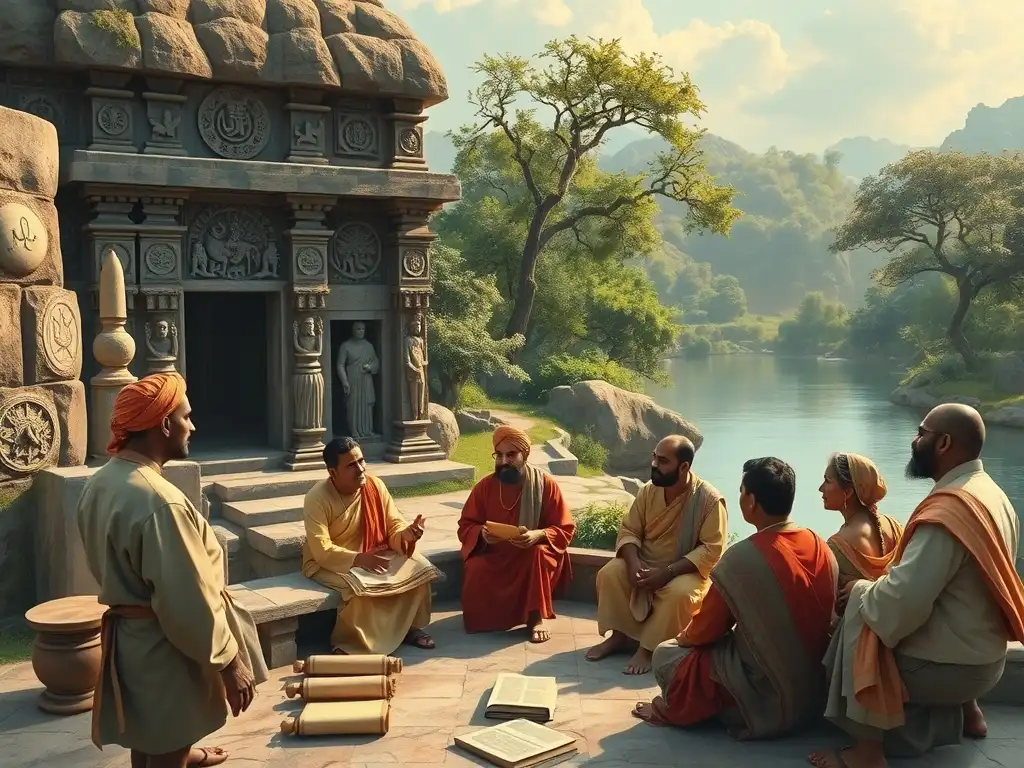
The Sankhya philosophy, one of the six orthodox schools (Darshanas) of Indian thought, plays a pivotal role in the development of Indian logic and epistemology. It is often viewed as a foundational system that laid the groundwork for various philosophical inquiries and debates. This section delves into the historical context of Sankhya philosophy, exploring its origins and key figures who contributed to its evolution.
Origins of the Sankhya School of Thought
The origins of the Sankhya school can be traced back to the early texts of Indian philosophy, particularly the Upanishads, which date back to around 800-400 BCE. The term "Sankhya" itself means "number" or "count," and it reflects the school's emphasis on categorization and analytical reasoning.
Sankhya philosophy is traditionally attributed to Kapila, a sage mentioned in various ancient texts. However, the precise historical timeline of Kapila and the formalization of Sankhya is debated among scholars. Here are some key points regarding its origins:
- Predecessors: Sankhya emerged as a response to the metaphysical inquiries posed by earlier philosophical systems, such as Vedic and Upanishadic thought. It sought to provide a systematic approach to understanding reality, distinguishing between the material and the spiritual.
- Dualism: Central to Sankhya philosophy is its dualistic framework, which posits two fundamental realities: Purusha (the conscious self) and Prakriti (the material world). This dualism influences later Indian philosophical schools, particularly those concerned with epistemology and the nature of knowledge.
- Textual Contributions: The foundational text of Sankhya is the Sankhya Karika, attributed to Ishvara Krishna in the 4th century CE. This text outlines the metaphysical principles and epistemological methods of Sankhya, marking a significant development in Indian logic.
Key Figures in the Development of Sankhya Philosophy
Throughout its history, several prominent figures have shaped the evolution of Sankhya philosophy, contributing to its doctrines and interpretations. Here are some notable philosophers:
- Kapila:
- Often regarded as the original founder of Sankhya, Kapila's teachings emphasize the distinction between Purusha and Prakriti. His thoughts laid the groundwork for later interpretations and expansions of the Sankhya system.
- Ishvara Krishna:
- A crucial figure in the formalization of Sankhya philosophy, Ishvara Krishna authored the Sankhya Karika, which serves as a key text for understanding the principles of Sankhya. His work provided a systematic approach to the concepts of evolution, causation, and liberation.
- Gaudapada:
- Though primarily associated with the Advaita Vedanta school, Gaudapada incorporated and critiqued Sankhya concepts in his writings. His dialogues highlight the interplay between Sankhya and other Indian philosophical traditions, particularly regarding the nature of reality and the self.
- Vijnanabhikshu:
- A later commentator on Sankhya, Vijnanabhikshu synthesized various philosophical ideas, enriching the discourse on Sankhya's epistemological framework. His contributions emphasize the relevance of Sankhya in understanding perception and cognition.
- Raja Yoga:
- The synthesis of Sankhya and Yoga philosophy is exemplified in the Yoga Sutras of Patanjali. This integration showcases how Sankhya's metaphysical insights complement practical approaches to knowledge and self-realization.
The contributions of these key figures not only shaped the trajectory of Sankhya philosophy but also influenced the broader landscape of Indian philosophy, particularly in the realms of logic and epistemology. Their insights and discussions continue to resonate, underscoring the enduring legacy of Sankhya in the philosophical tradition of ancient India.
Fundamental Concepts of Sankhya Philosophy
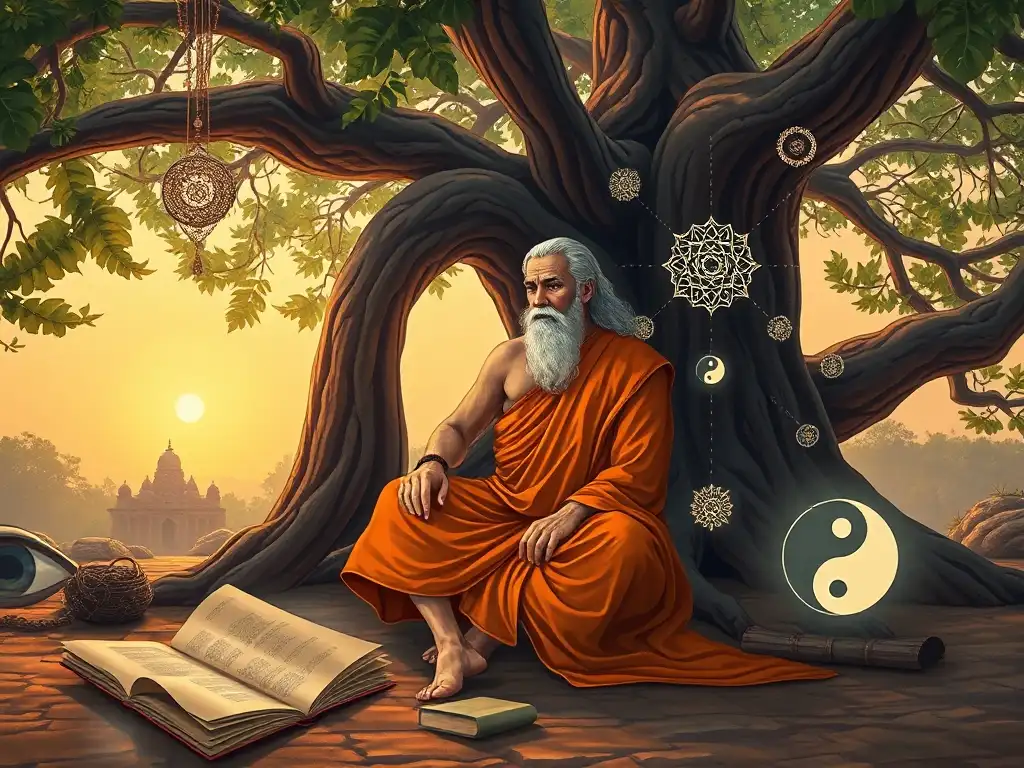
Sankhya philosophy is one of the six orthodox schools of Indian philosophy, renowned for its systematic approach to understanding reality and knowledge. At its core, it presents a dualistic framework that distinguishes between two fundamental entities: Purusha (the conscious self) and Prakriti (the material world). This distinction is essential for comprehending the principles that govern existence and consciousness.
The Sankhya system is characterized by its emphasis on enumeration and categorization, often breaking down reality into discrete elements or categories. This analytical approach sets the stage for a rigorous epistemological inquiry that explores the nature of knowledge and perception. The philosophy is primarily articulated through the Sankhya Karika, composed by Ishvara Krishna, which serves as a foundational text that outlines its key tenets and doctrines.
The Dualism of Purusha and Prakriti
In Sankhya philosophy, the duality of Purusha and Prakriti forms the bedrock of its metaphysical framework.
- Purusha: Representing pure consciousness, Purusha is unchanging, eternal, and beyond the physical realm. It is the witness of all experiences but remains unaffected by the fluctuations of the material world. Each individual consciousness is considered a unique Purusha, contributing to the diversity of experience in the universe.
- Prakriti: In contrast, Prakriti encompasses all material phenomena, including the physical universe, mental processes, and the senses. It is dynamic, subject to change, and composed of three fundamental qualities known as gunas: Sattva (purity, harmony), Rajas (activity, passion), and Tamas (inertia, darkness). The interplay of these gunas shapes the behavior and characteristics of all entities within the material world.
The interaction between Purusha and Prakriti leads to the manifestation of the cosmos and all living beings. As consciousness (Purusha) interacts with matter (Prakriti), it experiences the duality of life, leading to the cycle of birth, death, and rebirth (samsara). Understanding this dualism is crucial for grasping how Sankhya philosophy informs Indian logic, as it frames the discourse on the nature of reality and existence.
The Role of Gunas in Understanding Reality
The concept of gunas is pivotal in Sankhya philosophy, serving as a framework for explaining the diversity of experiences and phenomena in the world.
- Sattva: Associated with qualities such as knowledge, light, and harmony, Sattva promotes clarity of thought and purity of action. It is the quality that fosters understanding and intellectual pursuits, making it essential for attaining higher knowledge and wisdom.
- Rajas: Characterized by activity and passion, Rajas drives individuals towards action and engagement with the world. While it can lead to creativity and dynamism, excessive Rajas can result in restlessness and attachment, clouding one's perception of reality.
- Tamas: Representing inertia and darkness, Tamas correlates with ignorance and lethargy. It can hinder spiritual growth and understanding, trapping individuals in a cycle of delusion and confusion.
The interplay and balance of these three gunas determine one's psychological state, behavior, and perception of the world. In the context of Indian logic, recognizing the influence of gunas on cognition and understanding enables a deeper grasp of how knowledge is constructed and perceived. It illustrates that knowledge is not merely an abstract concept but is intricately linked to the qualities of the mind and the material world.
The Epistemological Framework of Sankhya
Sankhya philosophy presents a distinct epistemological framework that addresses the nature and sources of knowledge. It posits that knowledge arises from three primary means of cognition:
- Pratyaksha (Perception): Direct sensory experience forms the foundation of knowledge. In Sankhya, perception is considered a reliable source of information about the external world, provided it is untainted by the influence of the gunas.
- Anumana (Inference): Inference plays a crucial role in Sankhya's epistemology, allowing individuals to draw conclusions based on observable phenomena. This logical reasoning is essential for understanding causality and the relationships between different elements in the universe.
- Shabda (Testimony): The acceptance of authoritative statements or scriptures serves as a source of knowledge in Sankhya philosophy. This recognizes the importance of tradition and collective wisdom in shaping understanding.
Through this tripartite framework, Sankhya philosophy articulates a comprehensive approach to knowledge construction, emphasizing the need for clarity and discernment when navigating the complexities of reality. This framework not only contributes to Indian logic but also influences subsequent philosophical developments in India, integrating the principles of Sankhya into a broader discourse on knowledge and consciousness.
Sankhya's Influence on Indian Logic

Sankhya philosophy has played a pivotal role in shaping the landscape of Indian logic and epistemology. Rooted in ancient Indian thought, Sankhya presents a dualistic framework that outlines the relationship between consciousness and matter. This philosophical system not only lays the groundwork for understanding the nature of reality but also provides a methodological approach to reasoning and knowledge acquisition.
At its core, Sankhya emphasizes the importance of discernment (Viveka) between Purusha (consciousness) and Prakriti (matter). This distinction is crucial for logical reasoning, as it guides practitioners to analyze and categorize experiences and phenomena systematically. The Sankhya school's framework promotes clarity and precision in thought, which has significantly influenced subsequent philosophical inquiries in India.
Moreover, Sankhya's enumeration of the twenty-five principles (tattvas) offers a comprehensive categorization of reality, enabling a structured approach to logical analysis. These principles serve as the foundation for reasoning processes, allowing scholars to develop arguments based on a well-defined ontology. Consequently, Sankhya philosophy has provided essential insights that have enriched the field of Indian logic.
The Contribution of Sankhya to Logical Reasoning
Sankhya philosophy contributes to logical reasoning through its systematic approach to knowledge. The following elements highlight its significance:
- Categorization of Knowledge: The twenty-five principles of Sankhya categorize all aspects of existence, creating a framework for logical discourse. This categorization helps in understanding complex philosophical debates by breaking them down into digestible components.
- Method of Inquiry: Sankhya employs a methodical approach to inquiry, emphasizing observation and analysis. By prioritizing empirical evidence, scholars can construct logical arguments that are grounded in reality.
- Concept of Cause and Effect: The Sankhya school introduces a nuanced understanding of causality, distinguishing between different types of causes (efficient, material, and final). This distinction enhances logical reasoning by clarifying how phenomena are related.
- Role of Doubt and Certainty: Sankhya acknowledges the role of doubt in the pursuit of knowledge. By critically examining beliefs and assumptions, philosophers can refine their understanding and develop more robust logical frameworks.
In essence, the contributions of Sankhya to logical reasoning are vital for the evolution of Indian epistemology, influencing later philosophical schools and enriching the discourse on knowledge.
Comparison with Other Indian Philosophical Schools
The Sankhya school stands out in Indian philosophy, particularly in its logical approach. By comparing Sankhya with other philosophical schools, we gain deeper insights into its unique contributions and methodologies.
Sankhya vs. Nyaya: Epistemological Approaches
The Nyaya school, known for its rigorous methodology in logic and epistemology, differs significantly from Sankhya's approach. Here are key distinctions:
- Epistemological Foundations: While Nyaya relies heavily on perception (pratyaksha) and inference (anumana) as valid means of knowledge, Sankhya emphasizes the need for discernment between Purusha and Prakriti, focusing on an ontological understanding of reality.
- Logical Framework: Nyaya employs a formalized logical structure, including syllogisms and propositions, to validate knowledge claims. In contrast, Sankhya does not follow a strict formalism, instead advocating for a more intuitive understanding of reality based on its foundational principles.
- Nature of Reality: Nyaya posits a more pluralistic view of reality, allowing for a multitude of categories, whereas Sankhya maintains a dualistic framework that simplifies the understanding of existence into two fundamental entities.
Sankhya vs. Vaisheshika: Differences in Logic
The Vaisheshika school, with its focus on atomism and categorization of substances, presents another contrasting perspective to Sankhya. Important comparisons include:
- Ontology: Vaisheshika emphasizes the classification of physical substances, positing a more materialistic ontology. Conversely, Sankhya's focus on the metaphysical distinction between consciousness and matter highlights a dualistic understanding of reality.
- Method of Logic: Vaisheshika employs a more empirical approach, often relying on sensory experience and observation to draw conclusions about substances. Sankhya, on the other hand, emphasizes metaphysical inquiry and the importance of discernment in understanding existence.
- Nature of Knowledge: While Vaisheshika seeks to understand the world through a detailed analysis of its components, Sankhya's epistemology is directed towards achieving liberation through knowledge of the self, thus prioritizing spiritual over material knowledge.
By examining these differences, we can appreciate how Sankhya philosophy in Indian logic offers a unique lens through which to interpret reality, setting the stage for further philosophical exploration in the Indian tradition.
The Relationship Between Sankhya and Epistemology
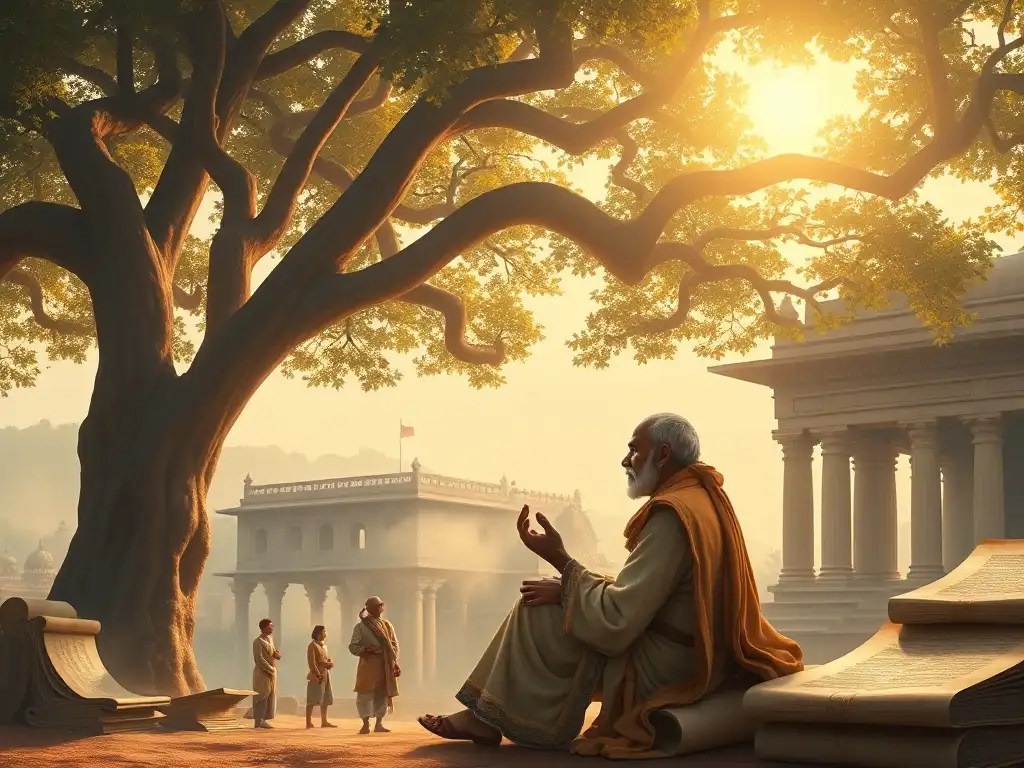
Sankhya philosophy plays a pivotal role in shaping Indian logic and epistemology, providing foundational insights into the nature of knowledge and reality. As one of the six orthodox schools of Indian philosophy, Sankhya delineates a dualistic framework that distinguishes between purusha (consciousness) and prakriti (matter). This distinction is crucial for understanding how knowledge is perceived and acquired within this philosophical system.
Sankhya's epistemological framework is primarily concerned with the nature of knowledge (jnana) and how it relates to reality (tattva). It emphasizes the importance of direct perception (pratyaksha), inference (anumana), and reliable testimony (shabda) as valid means of acquiring knowledge. This triadic approach not only highlights the methods of knowledge acquisition but also establishes a systematic way to analyze and verify philosophical concepts.
By categorizing knowledge into various types—such as empirical, conceptual, and intuitive—Sankhya offers a nuanced understanding of how humans engage with the world. This categorization is essential for developing logical reasoning and epistemic inquiry in Indian philosophy, influencing subsequent schools such as Nyaya and Vedanta.
How Sankhya Defines Knowledge and Reality
In Sankhya philosophy, knowledge (jnana) is defined as the correct understanding of reality (tattva). This understanding is not merely theoretical; it has practical implications for liberation (moksha). According to Sankhya, true knowledge leads to the realization of the distinction between purusha and prakriti, which is essential for overcoming ignorance (avidya) and achieving liberation.
Sankhya posits that reality is composed of two fundamental principles:
- Purusha: The eternal, unchanging consciousness that is the true self.
- Prakriti: The ever-changing material world, which includes the mind, body, and the external environment.
The interplay between these two principles is crucial for understanding the nature of knowledge. Knowledge arises when the purusha recognizes its separation from prakriti, leading to a deeper comprehension of existence. This recognition is facilitated through self-inquiry and meditation, allowing individuals to transcend empirical knowledge and attain higher states of awareness.
The Sankhya system further categorizes knowledge into three types:
- Paroksha (Indirect Knowledge): Knowledge derived from inference or testimony.
- Pratyaksha (Direct Knowledge): Knowledge acquired through direct experience and perception.
- Aparoksha (Immediate Knowledge): Knowledge that is self-evident and does not require external validation.
This classification underscores the importance of direct experience in the pursuit of knowledge, aligning with the episteme that emphasizes experiential learning.
The Process of Knowledge Acquisition in Sankhya Philosophy
The process of knowledge acquisition in Sankhya philosophy is systematic and reflective. It involves several stages that facilitate the transition from ignorance to enlightenment. The following steps outline this process:
- Observation: Engaging with the world through the senses, leading to empirical knowledge.
- Reflection: Analyzing and contemplating the observations to draw inferences.
- Intuition: Developing an intuitive understanding that transcends rational thought, allowing for direct insight into the nature of reality.
- Self-Realization: Achieving a profound awareness of the distinction between purusha and prakriti, resulting in liberation from the cycles of birth and death.
In Sankhya, the role of the intellect (buddhi) is crucial in this process, acting as a mediator between the senses and the higher self. The intellect helps discern the truth from illusion, guiding practitioners towards a clearer understanding of their existence.
Furthermore, Sankhya emphasizes the importance of meditative practices as a means to enhance knowledge acquisition. Through meditation, individuals can quiet the fluctuations of the mind, allowing for deeper insights into their true nature. This process not only cultivates self-awareness but also aligns the seeker with the ultimate principles of reality.
Sankhya philosophy significantly contributes to Indian logic by providing a robust framework for understanding knowledge and reality. Its systematic approach to knowledge acquisition and its emphasis on empirical and intuitive methods have influenced the development of epistemological thought in India, establishing Sankhya as a cornerstone of philosophical inquiry.
Critical Reception of Sankhya Philosophy

The reception of Sankhya philosophy has evolved significantly over the centuries, influencing Indian thought and logic while also facing critiques from various schools of philosophy. Its dualistic nature, systematic approach, and emphasis on epistemology have garnered both admiration and scrutiny. Understanding this critical reception is essential for grasping the role of Sankhya philosophy in Indian logic and its broader implications in the philosophical landscape of ancient India.
Historical Critiques of Sankhya in Indian Philosophy
Sankhya philosophy, which posits a dualism between purusha (consciousness) and prakriti (matter), has been a subject of critique from several prominent philosophical schools in ancient India. Notably, the Nyaya school, which emphasizes logic and epistemology, raised concerns regarding the epistemic validity of Sankhya's categories.
- Nyaya Criticism: The Nyaya philosophers critiqued Sankhya's reliance on the notion of inherent existence of the categories of reality. They argued that Sankhya's definitions of purusha and prakriti lacked sufficient clarity and empirical backing. The Nyaya school emphasized the necessity of pramanas (valid means of knowledge) to substantiate philosophical claims, which they believed were inadequately addressed by the Sankhya framework.
- Buddhist Perspective: The Buddhists, who advocated for a more radical form of analysis concerning the self and reality, challenged the Sankhya assertion of a permanent purusha. They argued that the concept of an eternal self contradicted the impermanent and interdependent nature of reality. This critique highlighted the differences between the two schools regarding the nature of existence and consciousness.
- Advaita Vedanta Opposition: Within the Advaita Vedanta tradition, Sankhya's dualism was criticized for promoting a form of metaphysical distinction that Advaita philosophers deemed illusory. They maintained that the ultimate reality is non-dual and that the division between purusha and prakriti is a misunderstanding arising from ignorance (avidya).
While Sankhya philosophy has significantly shaped Indian logic and epistemology, it has faced historical critiques that challenge its foundational premises and ontological claims. These critiques have not only fostered dialogue among philosophical schools but have also enriched the understanding of metaphysical and epistemological issues in ancient Indian thought.
Modern Interpretations and Relevance of Sankhya
In contemporary discourse, the relevance of Sankhya philosophy is being reassessed, particularly in the realms of logic, psychology, and epistemology. Scholars and philosophers are increasingly recognizing the contributions of Sankhya to modern philosophical inquiries.
- Interdisciplinary Applications: Modern interpretations of Sankhya philosophy have found applications in various fields such as psychology, cognitive science, and even quantum physics. The dualistic perspective of consciousness and matter resonates with contemporary discussions on the mind-body problem, opening avenues for interdisciplinary research.
- Influence on Indian Logic: Sankhya's systematic approach to categorizing reality has influenced modern Indian logic, particularly in the formulation of arguments and the structure of philosophical discourse. The emphasis on the analytical method in Sankhya has led to a deeper understanding of logic as it relates to epistemology, demonstrating its lasting impact on the development of Indian thought.
- Global Philosophical Dialogue: As global philosophical dialogues expand, Sankhya philosophy is increasingly referenced as a significant contributor to discussions on metaphysics and epistemology. Its principles resonate with various philosophical traditions, fostering cross-cultural exchanges and enriching the global understanding of consciousness and existence.
The modern interpretations of Sankhya philosophy underscore its enduring relevance and adaptability in contemporary philosophical contexts. As scholars continue to explore its principles, Sankhya philosophy's role in shaping Indian logic remains a vital area of inquiry.
Conclusion
Summary of Sankhya's Contributions to Indian Logic and Epistemology
Sankhya philosophy, one of the six orthodox schools of Indian philosophy, has significantly influenced the development of Indian logic and epistemology. Its dualistic approach, distinguishing between purusha (consciousness) and prakriti (matter), provides a framework for understanding the nature of knowledge and reality.
-
Epistemological Framework: Sankhya introduces a nuanced epistemological framework that categorizes knowledge into three primary forms:
- Pratyaksha (perception)
- Anumana (inference)
- Shabda (verbal testimony)
This tripartite classification not only serves as a foundation for epistemology in Indian philosophy but also aligns closely with later developments in logic.
-
Causation and Logic: The Sankhya system's exploration of causation, particularly through the concept of hetu (cause), influences logical reasoning in Indian traditions. By establishing conditions for causation, Sankhya lays the groundwork for rigorous analytical thought, which would later be elaborated upon by logicians like Dharmakirti.
-
Enumeration of Tattvas: Sankhya's enumeration of the 25 tattvas (principles) provides a structured way to analyze reality. This systematic categorization aids in the logical deduction of arguments and enhances clarity in philosophical discourse.
-
Influence on Other Schools: The concepts of Sankhya have been absorbed and adapted by other philosophical schools, such as Yoga and Vedanta. The emphasis on discernment and analytical inquiry within Sankhya philosophy has paved the way for more sophisticated logical methodologies.
The Legacy of Sankhya Philosophy in Contemporary Thought
The legacy of Sankhya philosophy extends beyond classical Indian thought and continues to resonate in contemporary discussions on logic and epistemology.
- Modern Philosophy: The dualistic nature of Sankhya has parallels in modern philosophical debates about the mind-body problem. Its emphasis on an objective reality shaped by subjective experience invites comparisons with contemporary theories in epistemology and metaphysics.
- Cognitive Science: Insights from Sankhya regarding perception and inference have found relevance in cognitive science, where understanding consciousness and its relationship with the material world is a central theme. The Sankhya framework encourages a multidisciplinary approach, bridging philosophy, psychology, and neuroscience.
- Educational Frameworks: The structured approach of Sankhya towards knowledge and understanding informs educational philosophies today. By promoting critical thinking and analysis, it encourages learners to engage with diverse methodologies, fostering an environment conducive to intellectual growth.
- Cultural Resonance: As globalization fosters a renewed interest in ancient philosophies, Sankhya's contributions to logic and epistemology are increasingly appreciated in various fields, including ethics, politics, and environmental studies, where its principles can offer valuable insights into contemporary issues.
The rich heritage of Sankhya philosophy not only shaped the landscape of Indian logic and epistemology but continues to inspire and inform modern philosophical inquiry and interdisciplinary research. Its emphasis on systematic analysis and classification remains relevant, bridging ancient wisdom with contemporary thought.
Frequently Asked Questions
What is Sankhya philosophy?
Sankhya philosophy is one of the six classical schools of Indian philosophy. It emphasizes the dualism of consciousness and matter, providing a framework for understanding reality through a systematic categorization of elements.
How did Sankhya influence Indian logic?
Sankhya played a significant role in the development of Indian logic by introducing concepts of reasoning and epistemology. Its analytical approach helped shape subsequent philosophical discourse in ancient India.
What are the main contributions of Sankhya to epistemology?
Sankhya contributes to epistemology by outlining different forms of knowledge, such as perception, inference, and testimony. It distinguishes between true knowledge and illusion, enhancing the philosophical understanding of truth.
How does Sankhya compare to other Indian philosophies?
Unlike Advaita Vedanta, which emphasizes non-duality, Sankhya promotes a dualistic perspective. This distinction has profound implications for logic and metaphysics, influencing various schools of thought in ancient Indian philosophy.
Why is Sankhya considered important in the study of Indian thought?
Sankhya is crucial for understanding the foundations of Indian philosophy and logic. Its methodologies and ideas have left a lasting impact on both philosophical inquiry and practical applications in various fields, including spirituality and ethics.
Final Reflection: The Enduring Legacy of Sankhya Philosophy in Indian Logic
Sankhya philosophy remains a cornerstone in the evolution of Indian logic and epistemology, illuminating our understanding of knowledge and reality. In a world increasingly driven by empirical evidence and rational thought, the principles laid out by Sankhya continue to resonate, offering profound insights into the nature of existence and the processes of cognition. The relevance of Sankhya in contemporary discussions about knowledge systems and philosophical inquiry cannot be overstated; it serves as a bridge connecting ancient wisdom with modern intellectual pursuits.
The influence of Sankhya philosophy extends beyond mere academic discourse; it shapes cultural narratives and social paradigms. The dualistic framework of Sankhya, which delineates between purusha (consciousness) and prakriti (matter), invites us to explore the complexities of human experience and the interplay between the mind and the material world. This philosophical inquiry is echoed in the words of the great philosopher Adi Shankaracharya, who said, The world is a play of consciousness, and understanding this play is the essence of wisdom.
Such insights encourage us to reflect on our own perceptions and the ways in which they inform our understanding of reality.
As we contemplate the teachings of Sankhya, let us embrace the invitation to deepen our engagement with these philosophical principles in our daily lives. Consider how the insights from Sankhya can inform your own journey of knowledge and self-discovery. Whether through meditation, study, or dialogue, integrating these timeless concepts can enrich our understanding of ourselves and the world around us. In doing so, we not only honor the legacy of Sankhya but also empower ourselves to navigate the complexities of modern existence with clarity and purpose.
Unleash Your Curiosity: Dive Deeper into Sankhya Philosophy!
Thank you for exploring the fascinating world of Sankhya and its significant contributions to Indian logic and epistemology. You've taken the first step in understanding how this ancient philosophy has shaped intellectual discussions and frameworks in India.
Now, it’s time to take action! Here are some practical steps you can follow to enrich your knowledge further:
- Engage with Literature: Explore books focused on Sankhya or broader Indian philosophy to deepen your understanding—look for titles that examine its historical context and development over time.
- Join a Discussion Group: Become active in online platforms or local gatherings where you can exchange insights and engage in debates about Sankhya and its relevance in contemporary society.
- Share Your Insights: Disseminate this article among friends or on social media to spark conversations about the significance of philosophical thought in shaping culture and knowledge.
As you continue your journey into the depths of Indian philosophy, consider this: How can the principles of Sankhya influence modern logical thinking and problem-solving in your daily life? Your reflections could lead to an engaging dialogue!