
The Art of War: Military Strategies of Southern Indian Kingdoms

Welcome to Ancient India History, where we embark on a fascinating journey through the rich tapestry of India's past! Today, we delve into “The Art of War: Military Strategies of Southern Indian Kingdoms,” exploring the ingenious tactics and innovations that shaped the battlefield of ancient India. From the strategic brilliance of the Chola dynasty to the formidable defenses of the Pandya rulers, uncover how these military strategies not only defined regional power but also influenced the very course of Indian history. Prepare to be captivated as we unravel the layers of warfare that echo through time—your exploration begins here!
The history of ancient India is rich and multifaceted, with the southern kingdoms standing out for their unique military strategies and tactics. Understanding the military strategies of ancient India, particularly those employed by the southern kingdoms such as the Cholas, Pandyas, and Cheras, offers valuable insights into the political and cultural dynamics of the time. These kingdoms not only excelled in warfare but also integrated their military strategies with their economic and diplomatic approaches, creating a robust framework that supported their expansion and influence across the Indian subcontinent.
From the formidable naval power of the Chola dynasty to the guerilla tactics of the Pandyas, each kingdom developed distinct methods of warfare that reflected their environments, resources, and social structures. The interplay of geography, technology, and socio-political factors significantly shaped these strategies, allowing these kingdoms to thrive amidst challenges from rival states and foreign invasions. In this article, we will delve into the intricate military strategies of these southern Indian kingdoms, exploring how they shaped their legacies and contributed to the larger narrative of ancient Indian history.
- Introduction to Military Strategies of Ancient India
- Historical Context of Southern Indian Kingdoms
- Key Military Strategies of Southern Indian Kingdoms
- Notable Military Campaigns and Their Strategies
- Innovations in Warfare and Technology
- Influence of Geography on Military Strategies
- Cultural Aspects of Warfare in Southern India
- Conclusion: Legacy of Military Strategies in Ancient India
- References
-
Frequently Asked Questions
- What were the primary military strategies used by Southern Indian kingdoms?
- How did geography influence military tactics in ancient Southern India?
- What role did elephants play in ancient Indian warfare?
- How did the military strategies of the Gupta Empire differ from those of Southern Indian kingdoms?
- What were some notable battles that showcased these military strategies?
- Final Reflection: The Enduring Legacy of Military Strategies in Ancient India
- Unveil the Strategic Wisdom of Ancient India!
Introduction to Military Strategies of Ancient India
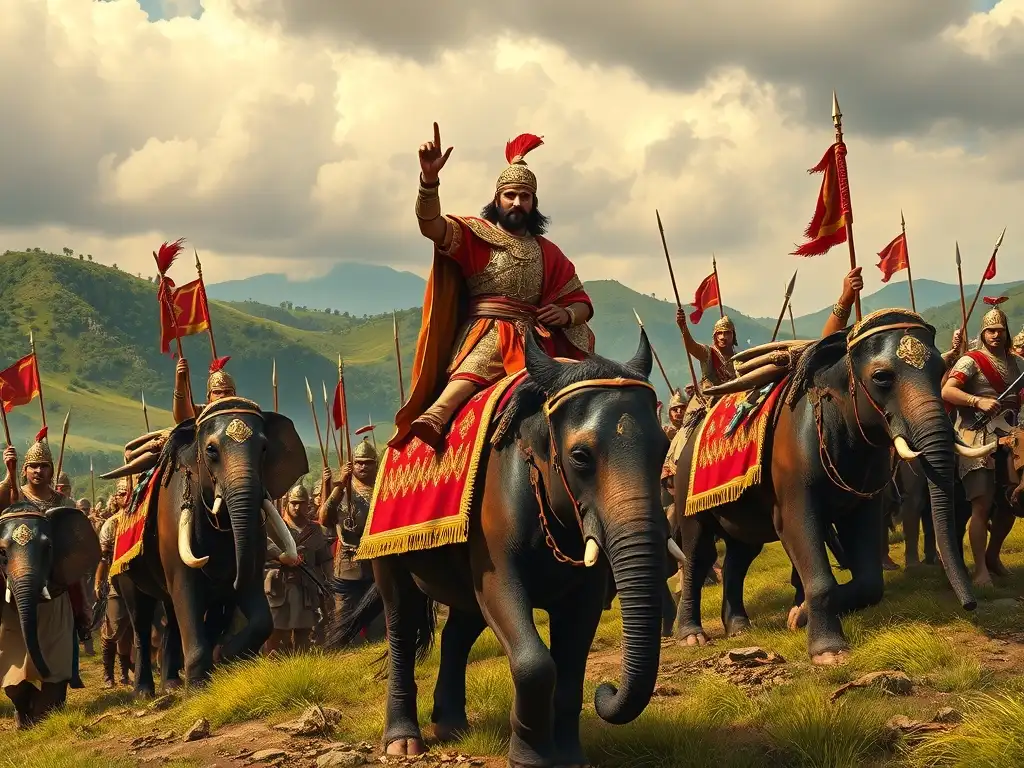
Military strategies in ancient India were not only a reflection of the tactical prowess of various kingdoms but also an embodiment of their cultural values, political ambitions, and geographical challenges. From the early Vedic period through the sophisticated militaristic approaches observed in kingdoms such as the Cholas, Pandyas, and Cheras, the art of war played a pivotal role in shaping the history and territorial dynamics of the region. In Southern India, where diverse landscapes and strategic trade routes converged, military strategies evolved uniquely, adapting to both internal conflicts and external threats.
Overview of Ancient Indian Warfare
Ancient Indian warfare was characterized by a combination of conventional tactics, philosophical underpinnings, and technological innovations. Key elements of ancient Indian military strategies included:
- Formation and Tactics:
- Ancient armies often employed formations such as the Chakra Vyuha and Mandala, which were designed to maximize defense and offense during battles.
- The use of cavalry, chariots, infantry, and war elephants was prevalent, with each playing a crucial role depending on the battlefield context.
- Use of Terrain:
- Knowledge of geography allowed commanders to exploit natural advantages, such as utilizing rivers and mountains for defensive purposes or ambushing enemies in narrow passes.
- The Southern Indian kingdoms capitalized on the dense forests and hilly terrains to launch surprise attacks against larger, more organized forces.
- Siege Warfare:
- Fortifications were significant in ancient Indian military strategy. Kings like Rajendra Chola constructed formidable forts that not only served as defensive structures but also as bases for launching military campaigns.
- Naval Power:
- Southern Indian kingdoms, particularly the Cholas, recognized the importance of naval supremacy. They established powerful fleets that enabled them to control trade routes across the Indian Ocean and launch expeditions to Southeast Asia.
Importance of Military Strategies in Southern Indian Kingdoms
The military strategies of the Southern Indian kingdoms were critical for several reasons:
- Political Stability and Expansion:
- Successful military campaigns enabled kingdoms like the Chola and Pandya to expand their territories, solidifying their power and influence over neighboring regions. Warfare was often a means to secure alliances and subdue rivals, thus ensuring political stability.
- Cultural Exchange:
- Military expeditions often led to cultural exchanges with neighboring regions. For example, the Chola expeditions to Southeast Asia not only expanded their territory but also facilitated the spread of Indian culture, religion, and art across the seas.
- Economic Prosperity:
- Control over trade routes through military might directly impacted the economic prosperity of Southern Indian kingdoms. Securing trade routes meant access to wealth, resources, and the ability to maintain a strong military.
- Adaptation and Innovation:
- The constant threat of invasions pushed Southern Indian kingdoms to innovate their military strategies continually. This adaptability is evident in their incorporation of new technologies and tactics, such as the use of gunpowder in later periods.
The military strategies of ancient India, particularly in the Southern kingdoms, were complex and multifaceted. They not only shaped the political landscape but also influenced cultural dynamics and economic trajectories. Understanding these strategies provides valuable insights into the resilience and ingenuity of ancient Indian civilizations.
Historical Context of Southern Indian Kingdoms
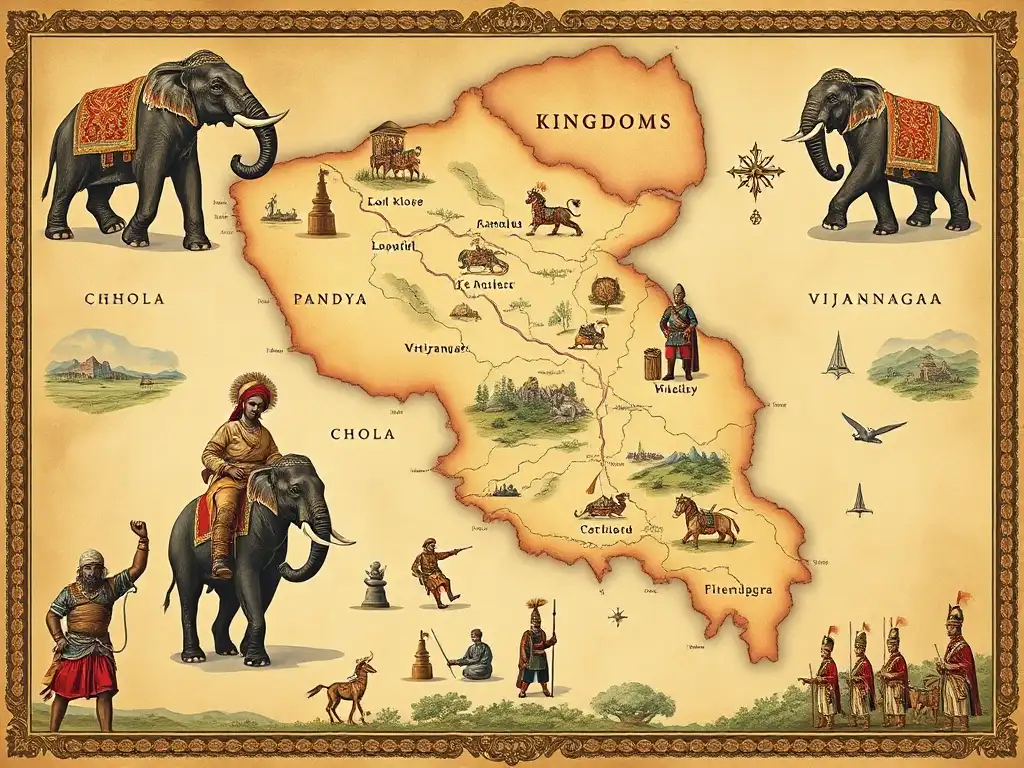
The southern part of India has a rich tapestry of history intertwined with the art of war and military strategies. From ancient times, various kingdoms emerged, each contributing unique tactics and innovations to warfare. The military strategies of ancient India, particularly in the southern regions, were shaped by geographical factors, cultural influences, and the socio-political climate of the time.
The southern kingdoms primarily developed their military strategies around three major themes: aggression, defense, and alliances. The formidable challenges posed by terrain, climate, and neighboring powers required that these kingdoms adopt flexible and adaptive military strategies. Their experiences in warfare not only influenced their territorial expansion but also played a role in shaping the cultural and economic landscape of the region.
Major Kingdoms in Southern India
The Chola Dynasty
The Chola Dynasty, one of the longest-ruling dynasties in southern India, thrived from the 9th to the 13th centuries CE. Their military strategies were characterized by:
- Naval Power: The Cholas are renowned for their naval supremacy. They established a formidable navy that controlled the seas, enabling them to conduct overseas expeditions. This naval strength was instrumental during the conquest of Sri Lanka and parts of Southeast Asia.
- Centralized Command: The Chola military was well-organized under a centralized command, allowing for quick mobilization and strategic planning. The king often led the troops, embodying the concept of Kshatriya or warrior leadership.
- Innovative Tactics: The Chola armies employed a combination of infantry, cavalry, and archers, using formations that allowed for flexibility in battle. Their battle formations were often adapted to exploit the weaknesses of their enemies.
The Pandya Dynasty
The Pandya Dynasty, flourishing around the 6th century BCE to the 17th century CE, was known for its strategic prowess in land and sea warfare. Key aspects of their military strategies include:
- Guerrilla Tactics: The Pandyas often utilized guerrilla warfare, leveraging their local knowledge of the terrain to conduct surprise attacks against larger forces. This adaptability allowed them to effectively counteract invasions.
- Diplomatic Alliances: The Pandya rulers often formed alliances with neighboring kingdoms and local chieftains, which bolstered their military strength and provided crucial support in conflicts.
- Cavalry and Elephants: Pandya armies were renowned for their cavalry units and war elephants, which played a vital role in traditional battles, intimidating foes and breaking enemy lines.
The Vijayanagara Empire
The Vijayanagara Empire, existing from the 14th to the 17th centuries, was a significant power in southern India. The military strategies of this empire were marked by:
- Fortifications: The Vijayanagara rulers built extensive fortifications around their cities, employing strong defensive strategies that included walls, gates, and watchtowers to protect against invasions.
- Artillery Usage: They were pioneers in the use of artillery in South India. Cannons and gunpowder played a crucial role in their military engagements, enhancing their combat capabilities.
- Resource Mobilization: The empire emphasized the efficient mobilization of resources, maintaining a well-supplied military that could sustain prolonged campaigns.
Socio-Political Factors Influencing Military Tactics
The military strategies of ancient Indian kingdoms in the south were not developed in isolation but were deeply influenced by various socio-political factors:
- Geographical Diversity: The varied geography of Southern India, including mountains, plains, and coastal regions, necessitated different military approaches. For instance, coastal kingdoms focused on naval strategies while inland powers emphasized cavalry and infantry tactics.
- Cultural Influences: The cultural backdrop of each kingdom played a significant role in shaping military practices. Rituals, religious beliefs, and the concept of dharma influenced how wars were waged and justified.
- Inter-Kingdom Rivalries: Constant power struggles among the various kingdoms led to the evolution of sophisticated military strategies. The need to defend territory against rivals often spurred innovation in tactics and technology.
- Economic Resources: The wealth of a kingdom, derived from agriculture, trade, and tribute, directly impacted its military capabilities. Rich kingdoms could afford better training, equipment, and larger armies, which influenced their approach to warfare.
The military strategies of ancient India, particularly in the southern regions, were a complex interplay of historical context, geographical advantages, and socio-political factors. These elements combined to forge powerful military traditions that would leave a lasting impact on the history of the region.
Key Military Strategies of Southern Indian Kingdoms
The military strategies of ancient Southern Indian kingdoms were characterized by a blend of innovative tactics and adaptation to the geographical and cultural landscape of the region. These strategies were crucial in establishing and maintaining power, as well as in defending against external threats. The kingdoms, such as the Cholas, Pandyas, and Cheras, employed a variety of offensive and defensive techniques that showcased their military prowess.
Offensive Strategies in Southern Indian Warfare
Offensive strategies were vital for conquering territories and expanding influence. Southern Indian kingdoms developed distinctive approaches that utilized their unique resources and geographic advantages.
Use of Cavalry and Elephants
Cavalry units played a pivotal role in the military strategies of Southern Indian kingdoms. The use of well-trained horses allowed for rapid movement and the ability to outmaneuver enemy forces. Notably, the Chola dynasty excelled in cavalry tactics, employing light cavalry to flank and harass opponents.
Elephants, on the other hand, were a symbol of power and strength in warfare. They served multiple roles on the battlefield, from charging enemy lines to carrying warriors into combat. The integration of elephants into military formations provided both psychological and physical advantages, often causing panic among opposing troops.
| Feature | Cavalry | Elephants |
|---|---|---|
| Speed | High | Moderate |
| Maneuverability | Excellent | Limited |
| Impact on Enemy | Flanking and harassment | Charges causing disruption |
| Training | Specialized horsemen | Extensive elephant training |
Siege Warfare Techniques
Siege warfare was another critical aspect of military strategy in Southern India. Kingdoms often faced fortified cities and strongholds, necessitating the development of sophisticated siege techniques.
- Blockades: Southern kingdoms would often surround a city to cut off supplies, forcing surrender through starvation and attrition.
- Siege Engines: The deployment of battering rams, catapults, and other siege engines allowed armies to breach walls. The Cholas, for instance, were known for their effective use of such machinery.
- Psychological Warfare: The use of intimidation tactics, such as loud war cries and displaying captured foes, was common to demoralize defenders.
The combination of these techniques allowed Southern Indian kingdoms to effectively lay siege to and conquer fortified positions.
Defensive Strategies Employed by Southern Kingdoms
In addition to offensive tactics, Southern Indian kingdoms developed robust defensive strategies to protect their territories from invasions.
Fortifications and Defensive Architecture
Defensive architecture was paramount in safeguarding kingdoms against attacks. Southern Indian rulers invested heavily in constructing formidable fortifications.
- Fortresses: Many kingdoms built strongholds on elevated terrains, leveraging natural landscapes for defense. Notable examples include the forts of Gingee and Madurai.
- Walls and Moats: Thick walls and protective moats were standard features, designed to withstand sieges and slow down enemy advances.
- Watchtowers: These structures allowed for early warning systems, enabling kingdoms to prepare for incoming attacks.
The strategic placement of these fortifications not only provided physical barriers but also served as symbols of power and resilience.
Guerrilla Warfare Tactics
Guerrilla warfare became a significant element in the military strategies of Southern Indian kingdoms, especially when facing stronger enemies.
- Hit-and-Run Tactics: Smaller, mobile units would engage in quick strikes against larger, stationary forces, capitalizing on their knowledge of the terrain.
- Ambushes: Utilizing dense forests and rugged landscapes, Southern armies would set up ambushes to surprise and overwhelm invading forces.
- Local Support: Southern kingdoms often garnered support from local populations, utilizing their knowledge and resources to stage effective resistance against invaders.
These tactics allowed the Southern Indian kingdoms to level the playing field against larger armies, demonstrating their ingenuity and adaptability in warfare.
The military strategies of ancient Southern Indian kingdoms reflect a rich tapestry of innovation, resilience, and tactical expertise. From the effective use of cavalry and elephants to the construction of formidable fortifications and the implementation of guerrilla tactics, these strategies not only shaped the outcomes of battles but also contributed to the cultural legacy of the region.
Notable Military Campaigns and Their Strategies
The military history of Southern India is marked by several notable campaigns that exemplify the strategic ingenuity and martial prowess of its kingdoms. These campaigns not only shaped the regional dynamics but also contributed significantly to the broader history of military strategies of ancient India. Below, we delve into three pivotal campaigns: the Chola Expedition to Southeast Asia, the Vijayanagara Campaigns against Deccan Sultanates, and the Pandya Wars.
The Chola Expedition to Southeast Asia
The Chola dynasty, renowned for its naval prowess, embarked on significant military expeditions to Southeast Asia, particularly during the reign of Rajaraja Chola I and his son Rajendra Chola I.
- Objective: The primary aim was to expand trade networks and exert influence over the lucrative maritime routes.
- Strategy: The Cholas utilized their advanced naval technology, including well-constructed ships and a formidable navy, to project power across the Bay of Bengal and into the Malacca Strait.
- Key Campaigns:
- Invasion of Srivijaya: Rajendra Chola I's campaign against the Srivijaya Empire in present-day Indonesia is one of the most notable military undertakings. The Cholas effectively employed a combination of land and naval forces to conquer key ports and territories.
- Battle Tactics: The Chola army was known for its use of elephants and cavalry, coupled with disciplined infantry formations. The ability to rapidly deploy troops via naval fleets allowed them to surprise their enemies and capture strategic locations swiftly.
The success of these expeditions not only secured economic benefits through trade but also established the Chola dynasty as a dominant maritime power.
The Vijayanagara Campaigns Against Deccan Sultanates
The Vijayanagara Empire, flourishing from the 14th to the 17th century, faced continuous threats from the Deccan Sultanates. Their military campaigns against these rival states illustrate a sophisticated understanding of both offensive and defensive strategies.
- Objective: The primary goal was to consolidate power in South India and defend against incursions from the Sultanates, while also expanding their territory.
- Strategy: The Vijayanagara rulers employed a combination of advanced military technologies, including artillery, and tactical innovations.
- Key Campaigns:
- Battle of Talikota (1565): This pivotal engagement against the combined forces of the Deccan Sultanates showcased the Vijayanagara army's strength. Despite their initial successes, strategic errors and underestimation of the enemy's coordination led to a significant defeat.
- Fortress Strategy: The empire fortified key regions with stronghold fortresses, utilizing geography to their advantage. This defensive posture allowed them to protect vital trade routes and resources.
Vijayanagara's military strategy emphasized mobility and adaptability, often employing guerrilla tactics to disrupt enemy movements and supply lines.
The Pandya Wars and Their Strategic Approaches
The Pandya dynasty, one of the oldest ruling families in South India, engaged in numerous military campaigns that not only focused on territorial expansion but also defense against foreign invasions.
- Objective: The Pandyas aimed to reclaim territories lost to rival kingdoms and maintain control over the rich trade routes of the Southern seas.
- Strategy: The Pandyas were known for their use of alliances, diplomacy, and guerrilla tactics to outmaneuver stronger foes.
- Key Campaigns:
- Confrontation with the Cholas: The Pandyas' wars against the Chola dynasty involved a mix of direct confrontation and strategic withdrawals, leveraging local knowledge and terrain to mount effective resistance.
- Naval Influence: Similar to the Chola dynasty, the Pandyas also recognized the importance of naval power, conducting raids along the coasts of Sri Lanka and the Malabar region, thus securing their maritime interests.
The Pandya wars illustrate the complexities of warfare in ancient India, showcasing the interplay between military strategy, diplomacy, and regional politics.
The military strategies of ancient India, particularly those employed by the Southern kingdoms, reflect a rich tapestry of tactical innovation, adaptability, and strategic foresight. These campaigns not only shaped the political landscape of the time but also left a lasting legacy on the military history of the region.
Innovations in Warfare and Technology
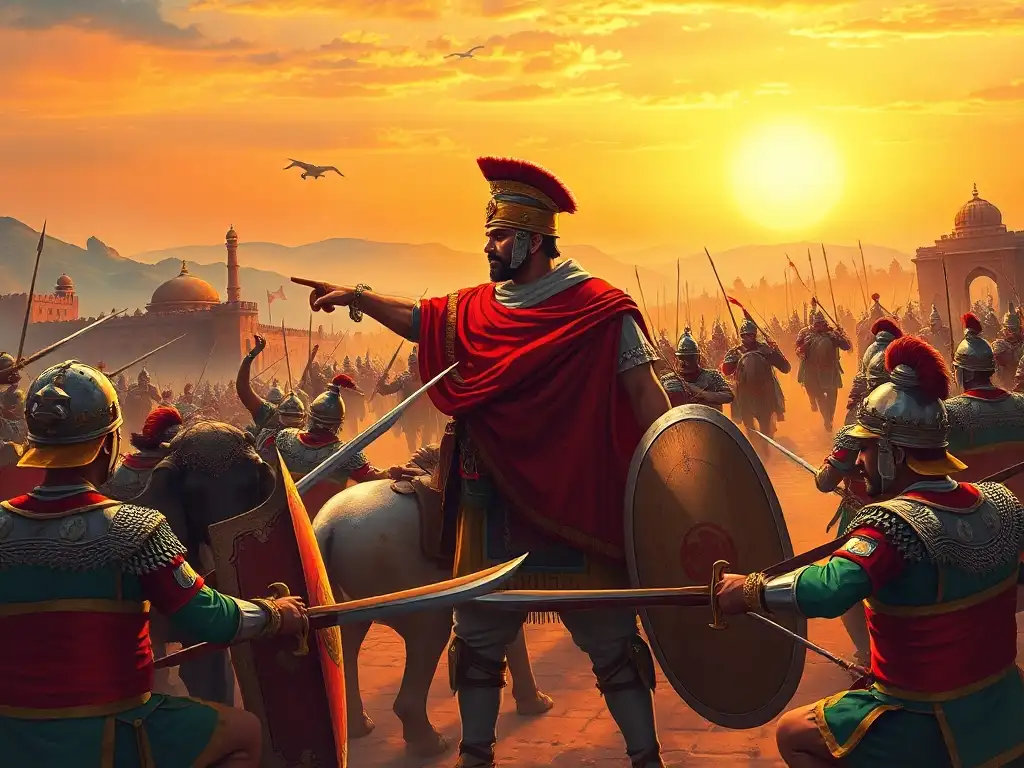
The military strategies of ancient India, particularly in the southern kingdoms, were characterized by significant innovations in warfare and technology. This evolution was influenced by various factors, including geographical conditions, cultural exchanges, and the necessity of adapting to new combat scenarios. The ingenuity of these kingdoms in developing effective military tactics and technologies played a crucial role in their ability to defend their territories and expand their influence.
Development of Weaponry and Armor
The southern Indian kingdoms, such as the Cholas, Cheras, and Pandyas, showcased remarkable advancements in weaponry and armor that were pivotal in their military strategies.
- Types of Weapons: Ancient texts and archaeological findings reveal a diverse array of weapons used by these kingdoms:
- Swords (Kris and Katti): These were often crafted with intricate designs and were made from high-quality steel, providing durability and effectiveness in combat.
- Spears and Lances: Used primarily for both offensive and defensive maneuvers, these weapons allowed soldiers to engage enemies from a distance.
- Bows and Arrows: Archery played a vital role in warfare, with specially designed bows that enhanced range and accuracy.
- Armor and Shielding: The evolution of armor was equally important:
- Metal Armor: Crafted from iron and bronze, these armors provided substantial protection for foot soldiers and cavalry alike.
- Shields: Often made from wood and reinforced with metal, shields were designed to be lightweight yet sturdy, allowing for mobility in battle.
The development of these weapons and armor not only reflects the technological prowess of the southern kingdoms but also their strategic focus on both offense and defense, allowing them to adapt to various battlefield conditions.
Naval power was a defining aspect of the military strategies employed by ancient southern Indian kingdoms. The geographical advantage provided by the extensive coastline of regions like Tamil Nadu and Kerala facilitated the development of robust naval forces.
- Trade and Military Expeditions: The navies of the Chola dynasty, in particular, were instrumental in securing trade routes across the Indian Ocean. This not only enabled economic prosperity but also allowed the kingdom to project military power beyond its shores.
- Naval Battles: Notable naval confrontations, such as those against the Srivijaya Empire, illustrate the strategic significance of naval forces. The Chola navy was equipped with advanced warships that could engage enemy vessels effectively.
- Shipbuilding Techniques: Innovations in shipbuilding contributed significantly to the effectiveness of naval power.
- Vessels: Ships were designed for both cargo and combat, featuring designs that allowed for quick navigation and maneuverability in coastal waters.
- Ramming and Boarding Tactics: Tactics such as ramming enemy ships and boarding them for hand-to-hand combat were employed, showcasing the tactical versatility of the southern naval forces.
The innovations in warfare and technology within the southern Indian kingdoms were not only a reflection of their military capabilities but also a testament to their adaptability in a dynamic historical landscape. The development of weaponry, armor, and naval power formed the backbone of their military strategies, contributing to their lasting influence in the region.
Influence of Geography on Military Strategies
Terrain and Its Impact on Warfare
The geographical landscape of Southern India has played a pivotal role in shaping the military strategies of its ancient kingdoms. Characterized by its diverse terrain, which includes coastal plains, mountain ranges, and expansive forests, the region's topography has influenced both defensive and offensive military tactics.
- Coastal Advantages: The kingdoms of Southern India, such as the Cholas and the Pandyas, utilized their coastal geography for naval supremacy. The proximity to the sea enabled these kingdoms to develop powerful fleets that could engage in trade and warfare. The Chola navy, for instance, was instrumental in expanding their influence across Southeast Asia, allowing them to control maritime trade routes effectively.
- Mountainous Terrain: The Western Ghats and Eastern Ghats provided natural barriers that impacted military movements. For instance, during the conflicts between the Pallavas and the Chalukyas, the mountainous terrain was used strategically for ambushes, making it difficult for invading forces to navigate. The rugged landscape allowed smaller armies to leverage guerrilla tactics, utilizing their knowledge of the terrain to outmaneuver larger forces.
- Forests as Tactical Hiding Places: The dense forests of Southern India also played a significant role in warfare. Armies would often take advantage of these areas for camouflage and surprise attacks. The use of local guides who understood the intricacies of the forest allowed ancient generals to execute ambushes and outflank their enemies effectively.
Resources and Supply Lines in Southern India
The abundance of natural resources in Southern India not only supported military campaigns but also dictated the logistics of warfare. Understanding the availability and management of resources was crucial for sustaining prolonged military engagements.
- Agricultural Wealth: The fertile plains of the Kaveri River basin provided ample food supplies for armies. Kingdoms like the Chola and Pandya were able to sustain large military forces due to their agrarian surplus. This agricultural abundance allowed for the establishment of supply chains that were critical during extended campaigns.
- Mineral Resources: Southern India was rich in minerals, particularly iron and gold, which were essential for crafting weapons and armor. The ability to produce high-quality weapons gave these kingdoms a significant advantage in battles. For example, the iron from the region was used to manufacture superior swords and arrowheads, contributing to the effectiveness of their military tactics.
- Trade Routes: The strategic positioning of Southern Indian kingdoms along important trade routes facilitated the supply of resources. Control over these routes ensured the flow of not only food and weaponry but also vital information regarding enemy movements. Kingdoms would often fortify key trade cities to protect these supply lines, thereby securing their military and economic interests.
The interplay between geography and military strategy in Southern India is evident through the adaptation of terrain features, resource management, and logistical planning. Understanding these factors is essential for comprehending the military prowess of ancient Indian kingdoms and their ability to navigate the complexities of warfare effectively.
Cultural Aspects of Warfare in Southern India
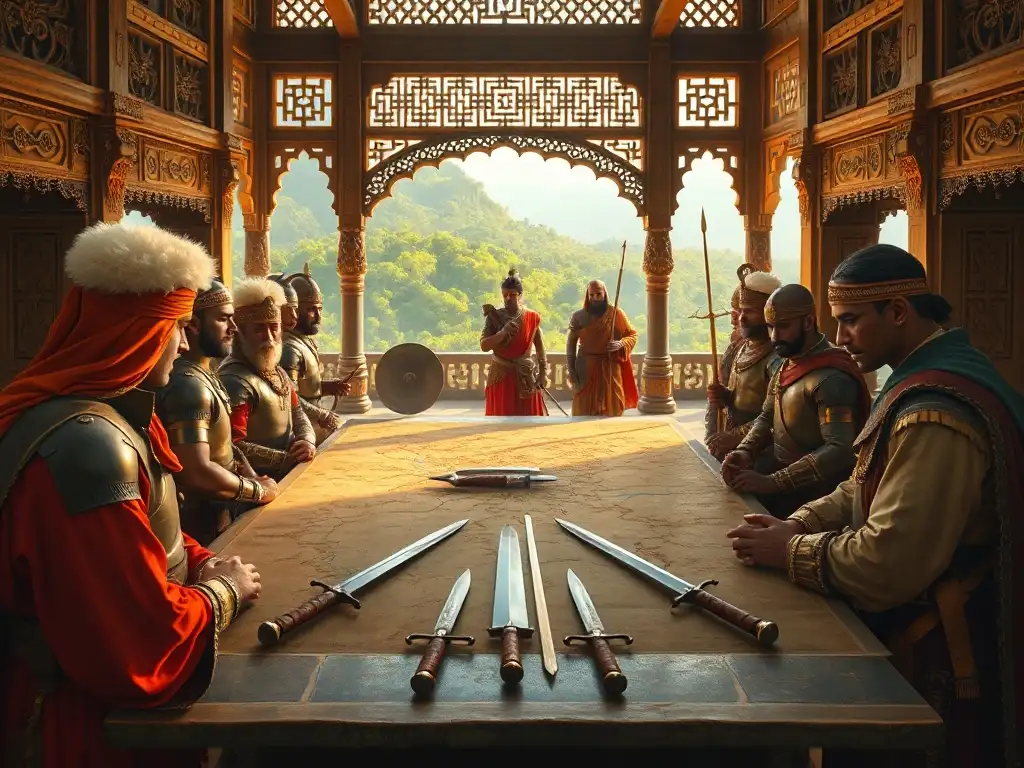
Role of Religion and Mythology in Military Strategies
In ancient Southern India, military strategies were deeply intertwined with religious beliefs and mythological narratives. The rulers and warriors often drew inspiration from the divine, believing that their successes on the battlefield were reflections of divine favor. The integration of religion into military practices can be observed in various aspects:
- Divine Sanction: Kings often sought blessings from deities before embarking on military campaigns. For instance, the Chola dynasty revered deities like Murugan, whose blessings were believed to ensure victory. This connection between divine favor and military success was a powerful motivator for the troops.
- Mythological Symbolism: The use of mythological imagery in warfare was prevalent. Warriors were often likened to gods or heroes from epics such as the Mahabharata and Ramayana. This not only boosted morale but also instilled a sense of purpose among soldiers, who saw themselves as part of a larger cosmic battle between good and evil.
- Rituals and Sacrifices: Pre-battle rituals were common, including sacrifices to appease the gods. These practices were believed to secure victory and protect soldiers from harm. The significance of such rituals is evident in inscriptions and temple records of the time, which document the elaborate ceremonies conducted by kings before significant military expeditions.
Influence of Art and Literature on Warfare Tactics
Art and literature played a crucial role in shaping the military strategies of ancient Southern Indian kingdoms. They served not only as tools for propaganda but also as sources of knowledge and inspiration for commanders and warriors.
- Epic Literature: Texts like the Sangam literature and the works of poets such as Kambar provided insights into the values and virtues of warriors. The glorification of heroism and valor in these texts encouraged a culture of bravery and strategic thinking among the military leaders of the time. For example, the portrayal of the legendary hero Karikala Chola emphasized both tactical acumen and personal valor, influencing future generations of warriors.
- Artistic Depictions: Sculptures and paintings often depicted battle scenes, showcasing various tactics and formations. These artistic representations served as visual manuals for military training, illustrating the importance of cavalry, infantry, and chariots in warfare. Temples, such as those built by the Pallavas and Cholas, often featured intricate carvings that celebrated military victories and strategic prowess.
- Strategic Manuals: Some ancient texts, including treatises on statecraft, provided detailed analyses of warfare. These texts discussed various aspects of military strategies, including troop formations, siege tactics, and psychological warfare. The wisdom contained in these writings influenced the planning and execution of military campaigns, emphasizing the need for adaptability and foresight in the face of changing circumstances.
The cultural aspects of warfare in Southern India were significantly shaped by religious beliefs, mythological narratives, and the influence of art and literature. These elements not only inspired military strategies but also created a rich tapestry of values that defined the warrior ethos of ancient Indian civilizations.
Conclusion: Legacy of Military Strategies in Ancient India
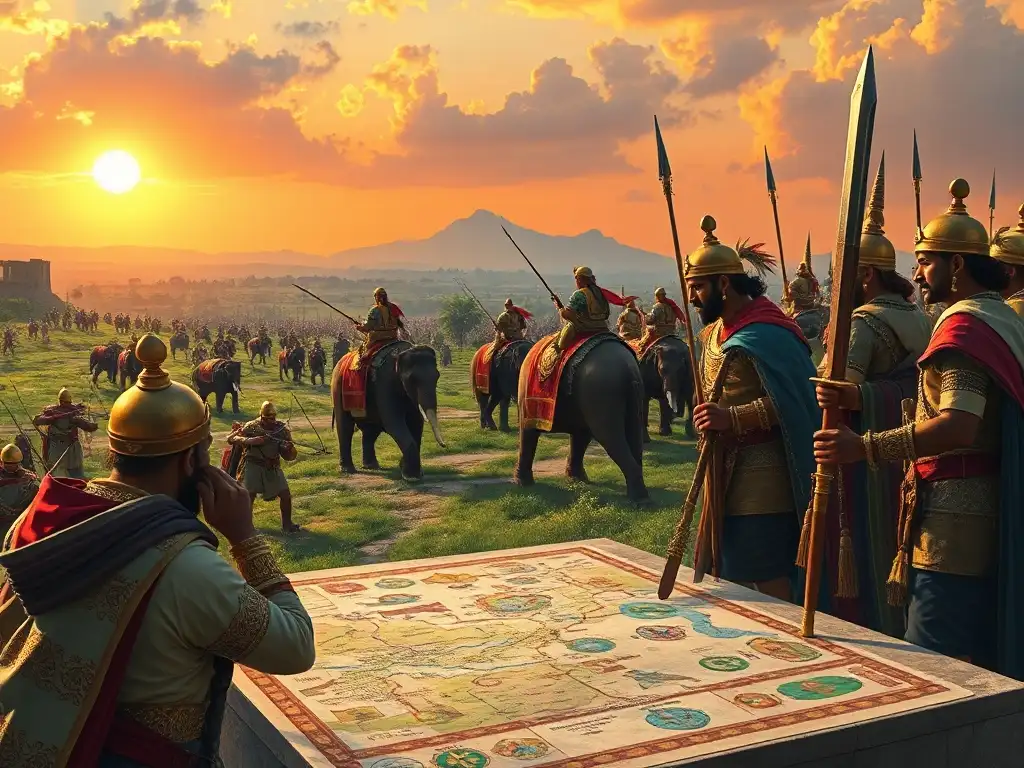
The military strategies employed by the Southern Indian kingdoms have left an indelible mark on the history of warfare in the Indian subcontinent. These strategies were not only innovative in their time but also reflected the socio-political and geographical contexts of the regions. From intricate fortifications to sophisticated battlefield tactics, the Southern kingdoms showcased a blend of adaptability and resilience that shaped the military landscape of ancient India.
The legacy of these military strategies can be traced through various historical periods, influencing both contemporary and later forms of warfare. The use of elephants in battle, for instance, became a hallmark of Indian armies, a practice rooted in the early tactics of Southern India. Moreover, the focus on guerrilla warfare and strategic alliances laid the groundwork for future military doctrines across the subcontinent.
Lasting Impact on Subsequent Indian Warfare
The military strategies of ancient Southern Indian kingdoms like the Cholas, Pandyas, and Cheras have had a profound influence on subsequent Indian warfare. Key elements that persist in later military practices include:
- Fortification Techniques: The architectural innovations in fort construction seen in Southern India, particularly by the Cholas, set standards for defensive structures in later periods. The use of natural landscapes and water bodies to enhance fort defenses became a common practice.
- Naval Power: The Chola dynasty, renowned for its naval prowess, established trade routes and exerted influence over maritime regions, which was pivotal for both military campaigns and economic expansion. This emphasis on naval strength influenced later Indian kingdoms and their approach to sea warfare.
- Tactical Flexibility: The emphasis on adapting strategies to local geography and enemy tactics laid the groundwork for a more fluid approach to warfare in India. The ability to switch between open-field battles and guerrilla tactics became a staple for future Indian armies.
- Coalitions and Alliances: The Southern kingdoms often formed strategic alliances to counter larger threats. This practice of coalition-building has been echoed throughout Indian history, demonstrating the importance of diplomacy alongside military might.
Lessons from Southern Indian Military Strategies for Modern Context
The military strategies of ancient Southern Indian kingdoms offer valuable lessons that remain relevant in today's military and geopolitical environments:
- Adaptability: The ability to adapt strategies based on changing circumstances and environments is crucial. Modern military leaders can learn from how ancient commanders assessed their surroundings, leveraging terrain and local resources to their advantage.
- Logistics and Supply Chains: The logistical expertise evident in the Southern kingdoms, especially in managing supplies during campaigns, is essential in contemporary warfare. Efficient supply chains can determine the success or failure of military operations.
- Integration of Technology: Just as the Southern kingdoms innovated with military technologies—such as advanced weaponry and war elephants—modern militaries must continually integrate new technologies to maintain strategic advantages.
- Psychological Warfare: The use of psychological tactics, including propaganda and misinformation, was a common strategy in ancient warfare. Understanding and utilizing psychological elements in modern military operations can enhance effectiveness.
- Collaboration and Alliances: The significance of forming alliances, as practiced by ancient kingdoms, is equally applicable today. Building coalitions and partnerships can enhance military capabilities and promote stability in volatile regions.
The military strategies of ancient Southern Indian kingdoms not only shaped the historical narrative of warfare in India but also provide enduring lessons that can inform contemporary military practices. By studying these strategies, modern military leaders can draw insights that remain applicable in an ever-evolving landscape of warfare.
References
Understanding the military strategies of ancient Indian kingdoms, particularly those of Southern India, requires a deep dive into various historical texts, archaeological findings, and scholarly analyses. Here, we compile a selection of references that provide insight into the military dynamics of these civilizations.
Suggested Reading on Military Strategies of Ancient India
-
"The Art of War in Ancient India" by R. S. Sharma
This book delves into the military doctrines that shaped ancient Indian warfare, focusing on strategic principles and their applications in various battles.
-
"War and Society in Ancient India" by A. K. Bhattacharya
Bhattacharya explores the relationship between warfare and societal structures, highlighting how military strategies evolved alongside political and social changes.
-
"Ancient Indian Warfare: History and Historiography" by A. R. Khan
This comprehensive analysis discusses the historiography of ancient Indian warfare, providing a critical overview of how military strategies have been perceived and interpreted over time.
-
"Martial Traditions of South India" by S. R. Rao
Focusing specifically on Southern India, Rao examines the unique martial traditions that influenced the military tactics of various kingdoms.
-
"The Kalinga War: A Study in Ancient Indian Warfare" by P. S. Reddy
Reddy's work offers a detailed account of the Kalinga War, showcasing the military strategies employed and their significance in the broader context of ancient Indian history.
Academic Sources on Southern Indian Kingdoms
-
"The Early Chola Kings: A Historical Survey" by K. N. Chattopadhyay
This academic source provides in-depth research on the military strategies used by the Chola dynasty, emphasizing their naval power and territorial expansion.
-
"Military History of South India: From the Mauryas to the Vijayanagara Empire" by V. S. N. Iyer
Iyer traces the evolution of military tactics in South India, detailing how different kingdoms adapted their strategies based on regional challenges.
-
"The Vijayanagara Empire: A Historical Overview" by B. K. Suryanarayana
This work explores the military innovations during the Vijayanagara period, including the use of artillery and cavalry, and their strategic implications.
-
"The Role of Fortifications in Southern Indian Warfare" by C. R. Rao
Rao discusses the significance of fortifications in the military strategies of Southern Indian kingdoms, analyzing how geography influenced their defensive tactics.
-
"Armies of Ancient India: Strategy and Organization" by M. P. Sharma
This source examines the organizational structure and strategic planning of ancient Indian armies, providing insights into the military frameworks that supported Southern Indian kingdoms.
These references serve as a foundational understanding for anyone interested in the military strategies of ancient India, particularly those that emerged from the rich historical tapestry of Southern Indian kingdoms. Each source contributes uniquely to the comprehension of warfare's role in shaping the political and cultural landscape of ancient India.
Frequently Asked Questions
What were the primary military strategies used by Southern Indian kingdoms?
The Southern Indian kingdoms employed a variety of military strategies, including guerrilla warfare, fortification of cities, and alliances with neighboring states to enhance their defensive and offensive capabilities.
How did geography influence military tactics in ancient Southern India?
The rugged terrain and dense forests of Southern India allowed kingdoms to utilize ambush tactics and hit-and-run strategies, making it difficult for larger armies to engage effectively in direct combat.
What role did elephants play in ancient Indian warfare?
War elephants were a significant asset in battle, providing intimidation, mobility, and the ability to break enemy lines. They were often used as a symbol of power and prestige by Southern Indian rulers.
How did the military strategies of the Gupta Empire differ from those of Southern Indian kingdoms?
The Gupta Empire focused more on organized infantry and cavalry tactics, while Southern kingdoms often relied on local terrain and alliances. This difference reflected their unique resources and geographical challenges.
What were some notable battles that showcased these military strategies?
Key battles such as the Battle of Kalinga and various conflicts between the Chola and Pandya dynasties exemplified the effectiveness of Southern Indian military strategies, showcasing their tactical ingenuity and adaptability in warfare.
Final Reflection: The Enduring Legacy of Military Strategies in Ancient India
The military strategies of ancient India, particularly those employed by the Southern kingdoms, resonate profoundly in today's world. As we navigate complex geopolitical landscapes, the lessons drawn from these historical tactics remind us of the importance of adaptability, innovation, and strategic foresight in overcoming challenges. The wisdom of the past continues to illuminate our path forward, underscoring the timeless relevance of these ancient practices.
The influence of these military strategies extends beyond the battlefield, shaping cultural narratives and national identities. The Southern Indian kingdoms exemplified a blend of diplomacy, intelligence, and warfare that has left an indelible mark on the region's history. As historian K. A. Nilakanta Sastri noted, The history of South India is a story of the rise and fall of great kingdoms, each leaving behind a legacy of resilience and strategy.
This enduring legacy serves as a reminder of the intricate interplay between warfare and statecraft, and how these elements continue to inform contemporary military and political strategies.
As we reflect on the military strategies of ancient India, let us draw inspiration from their ingenuity and adaptability. Consider how these lessons can be applied in your own life—whether in personal challenges, professional endeavors, or community engagement. Embrace the spirit of strategic thinking and resilience that characterized these great kingdoms, and allow their legacy to guide you in navigating the complexities of the modern world. The art of war is not merely a historical study; it is a call to action for all of us to engage thoughtfully and purposefully with the challenges we face today.
Unveil the Strategic Wisdom of Ancient India!
Thank you for diving into the captivating world of the Southern Indian kingdoms and their remarkable military strategies! You've uncovered valuable insights that not only showcase their historical prowess but also enrich your understanding of ancient warfare. Now, it's time to take what you've learned and put it into action!
Here are some engaging steps you can take right now:
- Explore Further: Dive deeper into historical texts or documentaries on military strategies in various ancient civilizations to broaden your perspective.
- Share Your Knowledge: Discuss what you’ve learned about Southern Indian military strategies with friends or on social media to spark engaging conversations!
- Join a Community: Become a part of online forums or local history groups to interact with fellow enthusiasts and exchange valuable insights.
What aspect of Southern Indian military strategies resonates with you the most, and how do you think these lessons can be applied in today's world?