
The Trade Routes of Eastern India: Connecting Cultures and Civilizations


Welcome to Ancient India History, where we embark on a fascinating journey through the rich tapestry of India's past. In this exploration, we delve into the ancient Indian trade routes history, uncovering how these vital pathways not only facilitated commerce but also interwove diverse cultures and civilizations. Join us as we unveil the stories behind the trade routes of Eastern India, revealing the connections that shaped an entire region. Curiosity awaits—let's dive deeper into the intricate web of history that defines our heritage!
The trade routes of Eastern India played a pivotal role in shaping the social, economic, and cultural landscape of ancient Indian civilizations. From the bustling markets of the Indus Valley to the flourishing trade centers during the Gupta Empire, these routes facilitated not only the exchange of goods but also the transfer of ideas, religions, and cultures.
Understanding the history of these ancient Indian trade routes reveals the interconnectedness of societies and the vibrant tapestry of interactions that defined Eastern India. As we journey through the various pathways that crisscrossed this region, we will uncover how trade influenced the development of cities, the spread of innovations, and the establishment of diplomatic ties with neighboring civilizations.
The Historical Context of Trade in Eastern India
Eastern India has a rich history characterized by its strategic geographical position, which made it a nexus for trade routes connecting various regions. The fertile plains of the Ganges, the coastal access to the Bay of Bengal, and the proximity to Southeast Asia established Eastern India as a pivotal hub for commerce.
- Indus Valley Civilization (c. 3300–1300 BCE): The early urban centers like Harappa and Mohenjo-Daro were among the first to engage in trade, utilizing rivers for transportation and establishing trade links with Mesopotamia.
- Mauryan Empire (c. 322–185 BCE): Under the Mauryan rule, trade flourished with state support, leading to the establishment of well-defined routes, including the Grand Trunk Road, facilitating commerce across vast distances.
Key Trade Routes and Their Significance
The ancient trade routes of Eastern India were characterized by their diverse paths, which connected various regions and cultures. Some of the most significant routes included:
- The Silk Route:
- Connected India with Central Asia and beyond, facilitating the exchange of silk, spices, and precious stones.
- Enhanced cultural exchanges, bringing Buddhism to various regions along the route.
- The Maritime Trade Routes:
- Linked Eastern India with Southeast Asia, including modern-day Indonesia and Malaysia.
- Promoted the exchange of goods like textiles, spices, and agricultural products, significantly impacting local economies.
- Overland Trade Routes:
- Facilitated trade with northern regions, including Tibet and China.
- Enabled the flow of goods, culture, and ideas, strengthening diplomatic ties and cultural interactions.
Cultural Exchanges Along the Trade Routes
The trade routes of Eastern India were not just conduits for goods; they were vital channels for cultural exchange. This dynamic interaction led to:
- The spread of Buddhism and Hinduism across Asia.
- The introduction of new agricultural techniques and crops, enriching local diets and farming practices.
- The adoption of artistic styles and architectural influences seen in temples and monuments across the region.
Conclusion
The ancient Indian trade routes of Eastern India were instrumental in connecting cultures and civilizations, fostering economic prosperity, and facilitating the spread of ideas. As we delve deeper into the specifics of these routes and their impact on history, we will uncover the intricate web of connections that shaped the rich legacy of Eastern India.
- The Historical Context of Trade in Eastern India
- Key Trade Routes and Their Significance
- Cultural Exchanges Along the Trade Routes
- Conclusion
Introduction to Ancient Indian Trade Routes History
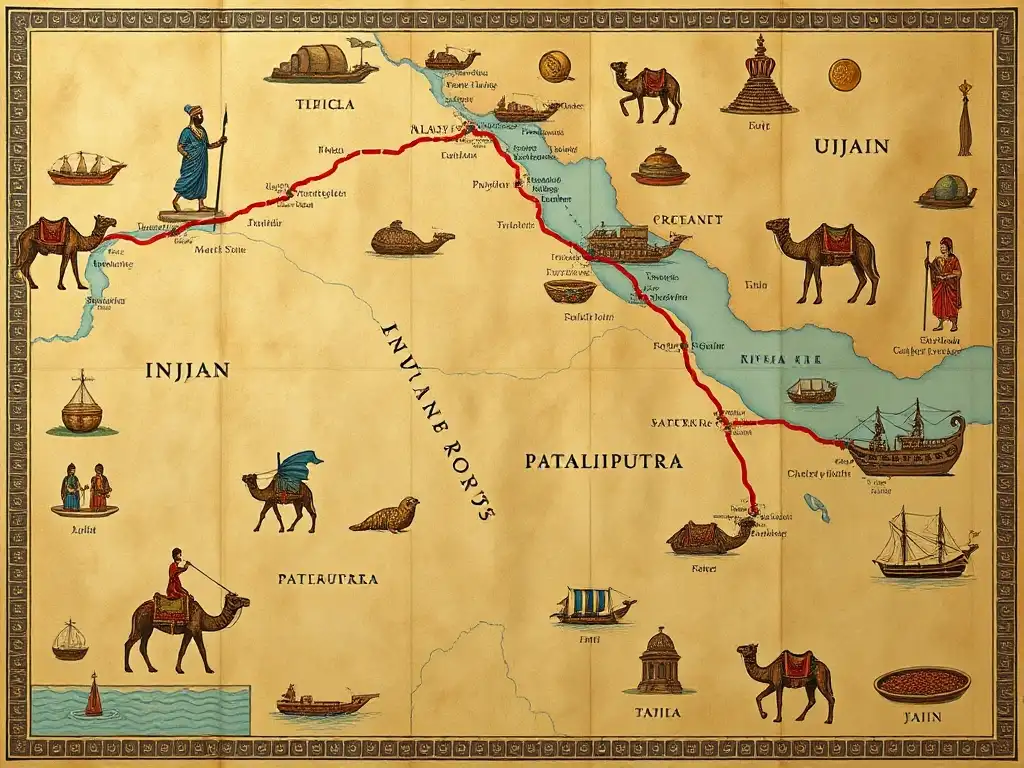
The trade routes of ancient India played a pivotal role in shaping the history and culture of the region. These routes were not mere pathways for the exchange of goods; they served as vital arteries connecting diverse civilizations, facilitating the flow of ideas, culture, and technology. Understanding the history of ancient Indian trade routes allows us to appreciate the intricate network of commerce that existed long before the advent of modern globalization.
Overview of Trade Routes in Ancient India
Ancient Indian trade routes can be categorized into terrestrial and maritime pathways, each with its unique characteristics and significance. The Silk Road and Spice Route are among the most famous terrestrial trade routes, connecting India with regions as far as the Mediterranean and the Far East.
- Terrestrial Trade Routes:
- Grand Trunk Road: One of the oldest roads in Asia, facilitating trade from Bengal to Central Asia.
- Southern Cross Road: Connecting the southern regions of India with the northern territories.
- Uttarapatha: Linking the eastern and western parts of India, essential for trade with regions beyond India, including Persia and Central Asia.
- Maritime Trade Routes:
- Indian Ocean Trade: This route connected Indian ports with those in East Africa, the Arabian Peninsula, and Southeast Asia. Key ports such as Lothal, Kaveripattinam, and Tamralipti emerged as crucial hubs for maritime commerce.
- Bay of Bengal Route: Facilitated trade with Southeast Asia, fostering cultural exchanges with nations such as Indonesia and Malaysia.
The evidence of these trade routes can be found in archaeological excavations, ancient texts, and inscriptions, which indicate the flow of goods such as spices, textiles, metals, and precious stones. The Indus Valley Civilization, known for its advanced urban planning, also showcased early examples of trade with Mesopotamia, highlighting the significance of these routes.
Importance of Trade in Cultural Exchange
Trade in ancient India was not solely an economic endeavor; it was instrumental in fostering cultural exchange and interaction among various civilizations. Through these trade routes, merchants and travelers carried not only goods but also ideas, religions, and technological innovations.
- Cultural Interactions: The convergence of diverse groups along trade routes led to the blending of cultures and traditions. For instance, the introduction of Buddhism into regions such as Central Asia and beyond was facilitated by traders who traveled along the Silk Road.
- Religious Influences: Trade routes served as conduits for the spread of various religious beliefs and practices. Hinduism, Buddhism, and later Islam found their way into different regions, significantly influencing local cultures and societies.
- Technological Exchanges: Innovations such as metallurgy, agricultural practices, and architectural styles were shared along these routes. The exchange of knowledge contributed to advancements in various fields, enhancing the quality of life in numerous civilizations.
- Linguistic and Artistic Flourishing: The interaction between traders from different backgrounds led to the development of new languages and artistic expressions. The influence of Indian art can be seen in the temples and sculptures of Southeast Asia, showcasing the impact of cultural exchanges facilitated by trade.
The ancient Indian trade routes played a crucial role in connecting cultures and civilizations, leaving a lasting legacy that shaped the historical landscape of Eastern India and beyond. Understanding the intricate web of these routes provides valuable insights into the rich tapestry of ancient Indian trade routes history.
Historical Context of Eastern India Trade Routes
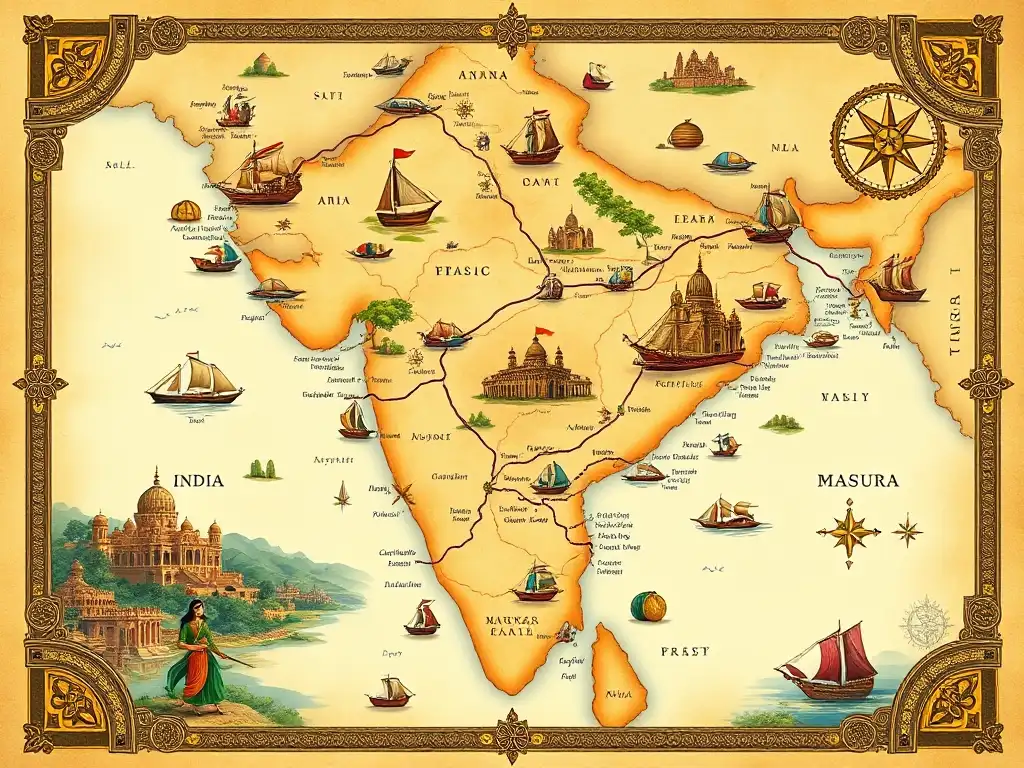
The trade routes of Eastern India boast a rich tapestry woven from the diverse cultures and civilizations that flourished along them. These routes facilitated not only the exchange of goods but also the transfer of ideas, religions, and technologies, playing a pivotal role in the region's historical narrative. Understanding the historical context of these trade routes is essential for grasping how ancient Indian trade routes history intertwines with the broader spectrum of Indian civilization.
Geography and Its Influence on Trade
Eastern India is characterized by its unique geography, which significantly influenced its trade dynamics. The region comprises a variety of landscapes including fertile plains, dense forests, and river systems that served as natural highways for trade. Key geographical features include:
- The Ganges River: This river is a vital artery for trade, enabling the transportation of goods between the northern plains and the eastern coastal regions.
- The Bay of Bengal: Serving as a gateway for maritime trade, the Bay facilitated connections with Southeast Asia and beyond.
- The Eastern Ghats: These mountains provided both a barrier and a route for trade, with passes that enabled the movement of goods and ideas.
The confluence of these geographical elements created a favorable environment for the establishment of trade routes. The presence of natural resources such as spices, textiles, and precious metals further enhanced the trade potential of Eastern India.
Major Civilizations and Their Contributions to Trade
Several major civilizations emerged in Eastern India, each contributing uniquely to the region's trade routes:
- The Maurya Empire (322-185 BCE):
- The Maurya Empire established a vast network of trade routes that connected Eastern India with the western regions and beyond.
- Under Emperor Ashoka, trade flourished as Buddhism spread, linking trade with spiritual and cultural exchanges.
- The Gupta Empire (circa 240-550 CE):
- Known as the Golden Age of India, the Gupta period saw advancements in trade practices and the development of a monetized economy.
- The Guptas fostered trade with Southeast Asia, particularly through maritime routes, enhancing cultural exchanges.
- The Pala Empire (750-1174 CE):
- The Pala Empire is notable for its Buddhist monastic centers that became hubs for trade and learning.
- The Palas engaged in extensive trade with Tibet and Central Asia, exporting textiles and religious artifacts.
- The Chola Dynasty (circa 300 BCE-1279 CE):
- The Cholas were instrumental in maritime trade, establishing trade links with Southeast Asia, including regions like present-day Indonesia and Malaysia.
- Their naval prowess enabled them to protect trade routes and expand their influence over maritime commerce.
These civilizations not only contributed to the economic landscape of Eastern India but also facilitated the exchange of cultural practices, languages, and technologies, enriching the tapestry of ancient Indian trade routes history.
The trade routes of Eastern India were shaped by its geography and the contributions of various civilizations. This historical context highlights the significance of trade in connecting cultures and facilitating the growth of Eastern Indian society.
Key Trade Routes of Eastern India
The Silk Route and Its Impact on Eastern India
The Silk Route, an ancient network of trade paths that connected the East and West, played a pivotal role in the economic and cultural exchange for Eastern India. Spanning thousands of miles, this route facilitated not only the movement of goods but also the exchange of ideas, cultures, and technologies.
- Economic Significance:
- The Silk Route enabled the transport of valuable commodities, including silk, spices, and precious stones, from Eastern India to regions like Central Asia, Persia, and beyond.
- Eastern Indian cities such as Pataliputra and Tamralipti emerged as bustling trade hubs, benefiting from their strategic locations along these routes.
- Cultural Exchange:
- The interactions along the Silk Route fostered a rich cultural amalgamation. Buddhist missionaries traveled along these pathways, spreading Buddhism to Central Asia and influencing artistic and architectural styles.
- The adoption of various crafts and techniques from different cultures enriched local traditions, leading to a unique blend of art and architecture in Eastern India.
- Historical Evidence:
- Numerous historical texts, including accounts from travelers like Xuanzang, highlight the significance of the Silk Route in connecting Eastern India with other civilizations. These accounts provide insights into the vibrant trade activities and cultural exchanges that occurred.
Maritime Trade Routes and Coastal Connectivity
Eastern India's extensive coastline facilitated significant maritime trade, which was crucial for connecting various civilizations through the Indian Ocean.
- Trade Ports:
- Ports like Bharukachchha (modern-day Bharuch) and Tamralipti were vital centers for maritime trade. They served as gateways for foreign traders from regions like Southeast Asia, Arabia, and Africa.
- The establishment of trade networks allowed for the exchange of local products such as textiles, rice, and fish, which were highly sought after in international markets.
- Cultural Interactions:
- The maritime routes promoted cultural interactions between Eastern India and other civilizations. Artifacts found in archaeological sites indicate influences from Roman, Greek, and Southeast Asian cultures.
- The exchange of ideas and practices through maritime routes contributed to the development of trade-related skills and technologies in Eastern India.
- Strategic Importance:
- The strategic location of Eastern India along these maritime routes allowed it to become an integral part of the global trade network. This prominence brought wealth and prosperity, fostering the growth of regional economies.
Overland Trade Routes: Pathways to Prosperity
Overland trade routes in Eastern India are often overlooked but were essential for the economic prosperity of the region.
- Major Routes:
- The Grand Trunk Road and various lesser-known routes facilitated the movement of goods from the eastern hinterlands to the northern plains and beyond.
- These routes were instrumental in linking Eastern India with the broader Indian subcontinent, enhancing trade and commerce.
- Goods and Commodities:
- Essential goods such as textiles, agricultural products, and handicrafts were transported along these overland routes, contributing to the economic stability of the region.
- Notably, the trade of salt and iron, which were crucial for daily life, flourished along these pathways.
- Impact on Society:
- The flourishing trade along these routes led to the rise of merchant communities, which played a significant role in shaping the social and economic fabric of Eastern India.
- The wealth generated from trade allowed for the patronage of art, architecture, and education, contributing to the overall cultural development of the region.
The various trade routes of Eastern India, including the Silk Route, maritime pathways, and overland routes, were instrumental in fostering trade, cultural exchange, and economic prosperity. The "ancient Indian trade routes history" reveals a complex web of interactions that shaped not only Eastern India but also influenced neighboring civilizations, marking a significant chapter in the region's rich historical narrative.
Cultural Interactions Facilitated by Trade
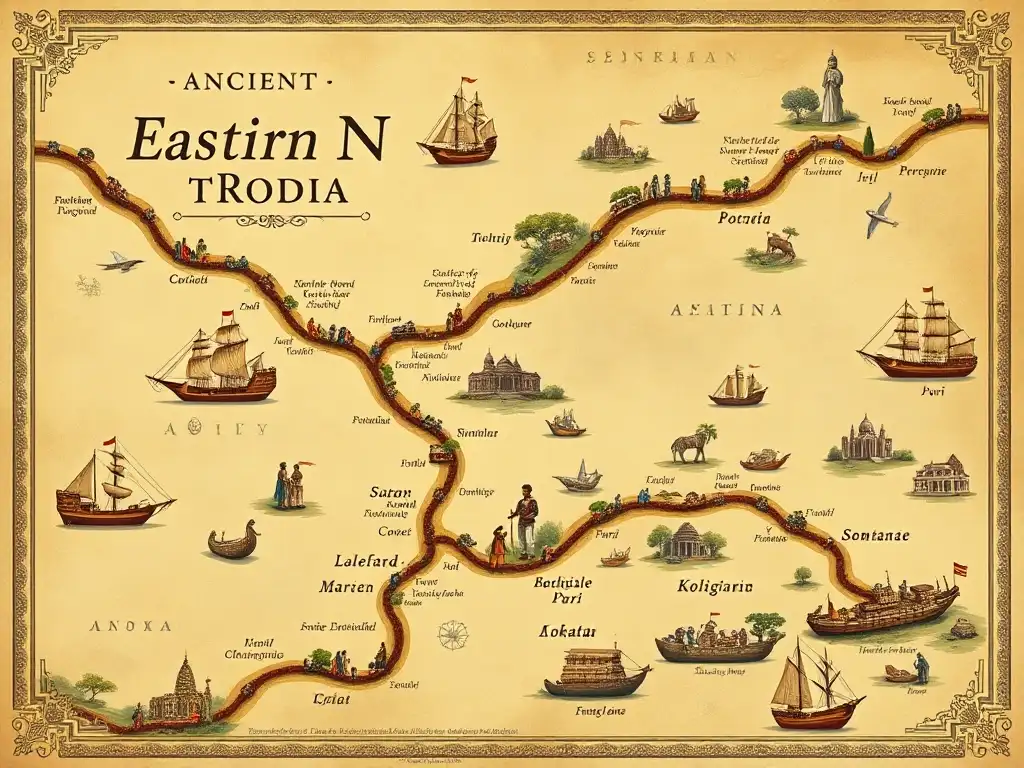
The ancient Indian trade routes served as vital arteries for economic, cultural, and social exchanges between diverse civilizations. Through these routes, Eastern India became a melting pot where various cultures interacted, leading to a rich tapestry of shared practices, beliefs, and commodities. The significance of these interactions cannot be overstated, as they shaped not only local societies but also influenced distant regions.
Exchange of Goods: Spices, Textiles, and Precious Commodities
The heart of ancient Indian trade routes was the remarkable exchange of goods, particularly spices, textiles, and precious commodities. Eastern India, known for its fertile lands and skilled artisans, became a hub for various goods that were in high demand across the globe.
- Spices: The cultivation of spices like black pepper, cardamom, and turmeric attracted traders from far and wide. These spices were not only essential for culinary purposes but also held medicinal properties. The Spice Route facilitated the exchange of these valuable commodities, contributing to the wealth of coastal cities like Calcutta and Puri.
- Textiles: Eastern India was renowned for its textiles, particularly fine cotton and silk fabrics. The intricate designs and vibrant colors made Indian textiles highly sought after in markets across Asia and Europe. The export of textiles fostered economic prosperity and encouraged the exchange of artistic techniques and styles.
- Precious Commodities: The trade in precious stones, metals, and other commodities also flourished. The availability of diamonds, gold, and silver in the region attracted traders, leading to significant wealth accumulation and the establishment of trade networks that extended to the Middle East and beyond.
The resulting economic interactions not only enriched the local economy but also fostered relationships between diverse cultures, leading to a blend of traditions and practices.
Influence of Trade on Language and Art
The thriving trade routes significantly influenced the languages and artistic expressions of the regions involved. As traders and merchants interacted, they exchanged not only goods but also ideas and cultural practices.
- Language: The constant interaction among different cultures led to the emergence of new dialects and languages. The influence of trade on linguistic development can be seen in the adoption of loanwords and phrases from various languages, enriching the vocabulary of local languages. For instance, terms relating to trade, navigation, and commerce were incorporated into local dialects, reflecting the multicultural nature of trade interactions.
- Art: The artistic expressions of Eastern India evolved as a result of cross-cultural exchanges. The motifs and techniques found in sculptures, pottery, and textiles were influenced by the artistic styles of traders and travelers. For example, the intricate designs found in Bengal's textiles often incorporate motifs from foreign cultures, showcasing the impact of trade on local artistry.
The synthesis of languages and art forms created a unique cultural landscape, where diverse influences coexisted and flourished.
Religion and Philosophy: Cross-Cultural Dialogues
Trade routes were not only conduits for goods but also for ideas, particularly in the realms of religion and philosophy. The movement of traders facilitated the spread of religious beliefs and philosophical concepts across regions.
- Buddhism and Hinduism: Eastern India was a significant center for the spread of Buddhism. As traders traveled along established routes, they carried Buddhist teachings and texts, leading to the establishment of monasteries and stupas in various regions. This exchange of religious ideas contributed to the growth of Buddhism in Southeast Asia, as merchants often acted as missionaries.
- Philosophical Exchanges: The interactions along trade routes also encouraged philosophical dialogues. The convergence of diverse cultures allowed for the sharing of ideas about morality, ethics, and governance. The synthesis of Indian philosophical thought with foreign ideas led to the development of new schools of thought that enriched the intellectual landscape of ancient India.
The ancient Indian trade routes were pivotal in facilitating cultural interactions that shaped the history of Eastern India. Through the exchange of goods, the influence on language and art, and the dialogues in religion and philosophy, these routes created a dynamic environment where cultures thrived and evolved, leaving a lasting legacy in the region's history.
The Role of Major Ports and Cities in Trade
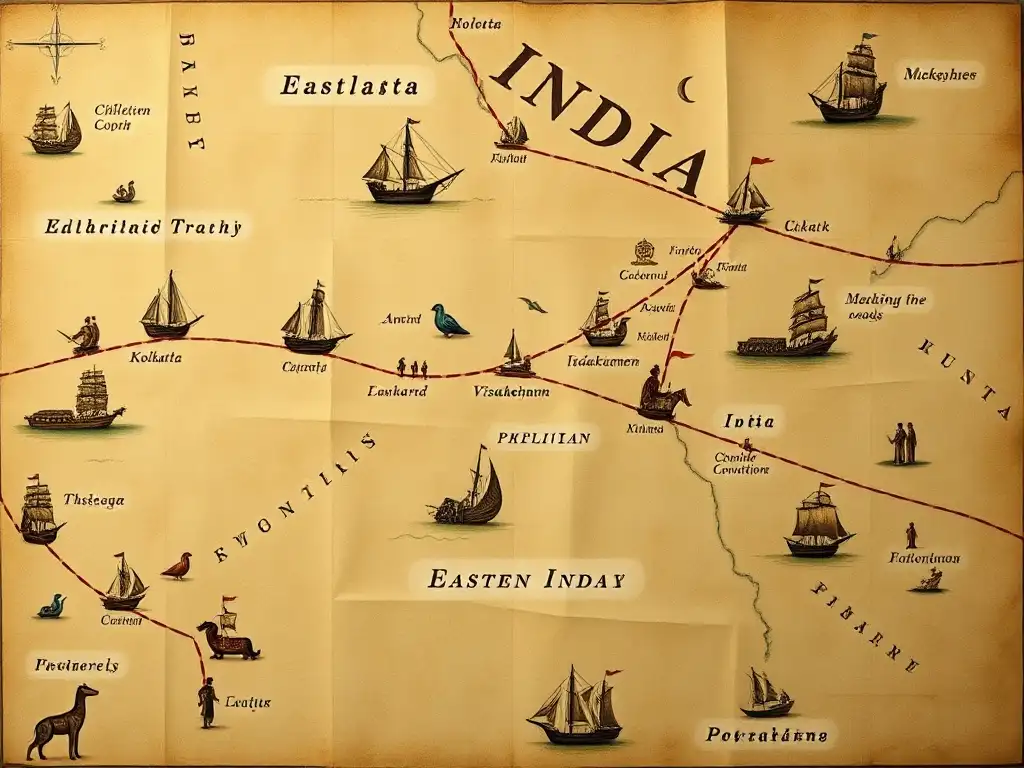
Overview of Key Trading Ports in Eastern India
Eastern India was historically characterized by a network of significant trading ports that facilitated commerce and cultural exchange. Key ports such as Kalinga (modern-day Odisha) and Tamralipti (near present-day Tamluk, West Bengal) played pivotal roles in ancient Indian trade routes history.
- Kalinga
- Located on the eastern coast, Kalinga was a bustling port known for its strategic location along the Bay of Bengal.
- It served as a gateway for trade with Southeast Asia, particularly with regions like Southeast Asia and China.
- The export of textiles, spices, and precious stones from Kalinga significantly influenced trade dynamics.
- Tamralipti
- This ancient port was crucial for maritime trade, especially during the Mauryan and Gupta periods.
- Tamralipti was not only a center for trade but also a cultural hub, with traders from various regions converging here.
- The port facilitated trade with both eastern and western empires, including Rome and Southeast Asian kingdoms.
- Other Notable Ports
- Port of Chandraketugarh: Located near Kolkata, it was essential for inland trade routes.
- Visakhapatnam: Serving as a modern counterpart, this port has historical roots that trace back to ancient maritime activities.
The Significance of Ancient Cities in Trade Networks
Ancient cities in Eastern India were more than just urban centers; they were vital nodes in the vast trade networks that connected different cultures and civilizations. The significance of these cities can be illustrated through the following points:
- Economic Hubs: Cities like Kalinga and Puri were known for their bustling markets where goods from various regions were exchanged. This created a vibrant economy that attracted traders from distant lands.
- Cultural Exchange: The influx of traders from different parts of the world led to a rich exchange of ideas, religions, and cultures. For instance, the spread of Buddhism and Hinduism was significantly influenced by trade interactions.
- Infrastructure Development: The growth of trade necessitated the development of infrastructure, including roads and ports, facilitating smoother and more efficient trade routes.
- Political Influence: The wealth generated from trade often translated into political power. Regions that controlled trade routes, such as Kalinga, became influential in regional politics, further shaping the history of Eastern India.
Case Study: Trade Dynamics of Puri
Puri, known for its historical significance, was a crucial trading center along the eastern coast. Its trade dynamics can be examined through several aspects:
- Maritime Trade: Puri's proximity to the sea made it an ideal port for maritime trade. Goods such as textiles, seafood, and handicrafts were commonly traded, attracting merchants from Southeast Asia.
- Land Routes: In addition to its maritime significance, Puri was connected to major land routes that facilitated trade across India. This dual connectivity enhanced its role in the broader ancient Indian trade routes history.
- Cultural Melting Pot: The continuous flow of traders and travelers turned Puri into a melting pot of cultures. Festivals and trade fairs in the city often showcased diverse cultural practices and goods, further enriching its social fabric.
- Impact on Local Economy: The trade activities in Puri not only supported local artisans and traders but also contributed to the overall prosperity of the region. The influx of wealth led to advancements in art, architecture, and education during various periods, particularly during the Medieval Ages.
The major ports and cities of Eastern India played a crucial role in shaping the trade routes of ancient India, fostering connections that transcended geographical boundaries and contributed significantly to cultural and economic exchanges.
Decline and Transformation of Trade Routes
Factors Leading to the Decline of Trade Routes in Eastern India
The decline of ancient Indian trade routes, particularly in Eastern India, can be attributed to a confluence of various factors. Some of the most significant include:
- Political Instability: Frequent invasions and changes in ruling dynasties disrupted established trade networks. The rise of regional powers often led to conflict, making trade routes unsafe for merchants. For example, the invasions by the Huns in the 5th century CE significantly impacted trade continuity.
- Economic Shifts: The global economic landscape was changing, with the rise of new trading centers in Southeast Asia and the Middle East. This shift diverted trade away from Eastern India, as merchants sought more profitable routes.
- Environmental Changes: Natural disasters, such as floods and famines, adversely affected agricultural productivity, leading to a decline in surplus production that could be traded. Consequently, the local economy weakened, reducing the demand for external goods.
- Decline of Urban Centers: Cities that once thrived as trading hubs began to decline. For instance, the fall of Pataliputra diminished its role as a major center for commerce, leading to a cascading effect on nearby trade routes.
The Impact of Political Changes on Trade Dynamics
Political changes had a profound impact on the trade dynamics of Eastern India. Key aspects include:
- Rise and Fall of Empires: The Mauryan and Gupta Empires initially fostered trade through stability and infrastructure development. However, as these empires declined, the fragmentation of power led to localized governance that often imposed heavy taxes or trade restrictions, discouraging merchants from using these routes.
- Regional Conflicts: The emergence of regional kingdoms, often engaged in warfare, posed risks to traders. For instance, the constant rivalry between the Palas and the Senas in Bengal created an environment of uncertainty, leading to merchants opting for safer, alternative routes.
- Cultural Exchanges: Political changes also brought cultural shifts. The influx of new rulers introduced different customs and trade practices, which sometimes clashed with established norms. This cultural friction could lead to resistance from local traders, further complicating trade dynamics.
- Redistribution of Trade Power: As new political entities gained control, they often redirected trade routes to favor their own cities and ports. This shift diminished the significance of traditional trade centers in Eastern India, altering the landscape of commerce.
Revitalization of Trade Routes in Later Periods
Despite the earlier decline, trade routes in Eastern India witnessed revitalization in subsequent periods, driven by several key factors:
- Resurgence of Maritime Trade: The revival of maritime trade networks in the 7th century CE, especially with Southeast Asia, reinvigorated Eastern India's trade routes. Ports like Tamralipti became bustling centers of commerce, facilitating the exchange of goods like spices, textiles, and precious stones.
- Cultural Renaissance: The rise of new dynasties, such as the Cholas and later the Mughals, prioritized trade as a means of enhancing their economic power. This led to improved infrastructure, including the construction of roads and ports, making trade more accessible and efficient.
- Integration into Global Trade Networks: Eastern India began to reestablish connections with global trading networks, including the Silk Road and maritime routes to the Middle East and beyond. This integration allowed for a flourishing exchange of ideas, goods, and technologies, enriching the region's cultural fabric.
- Emergence of New Trading Classes: A new merchant class emerged, eager to exploit the revitalized trade opportunities. These merchants played a crucial role in reinvigorating trade routes, establishing networks that transcended regional boundaries.
The transformation of ancient Indian trade routes reflects a complex interplay of factors, illustrating how political, economic, and cultural dynamics shaped the commerce landscape in Eastern India. Understanding these changes provides valuable insights into the region's rich historical tapestry and its interactions with neighboring civilizations.
Legacy of Ancient Indian Trade Routes
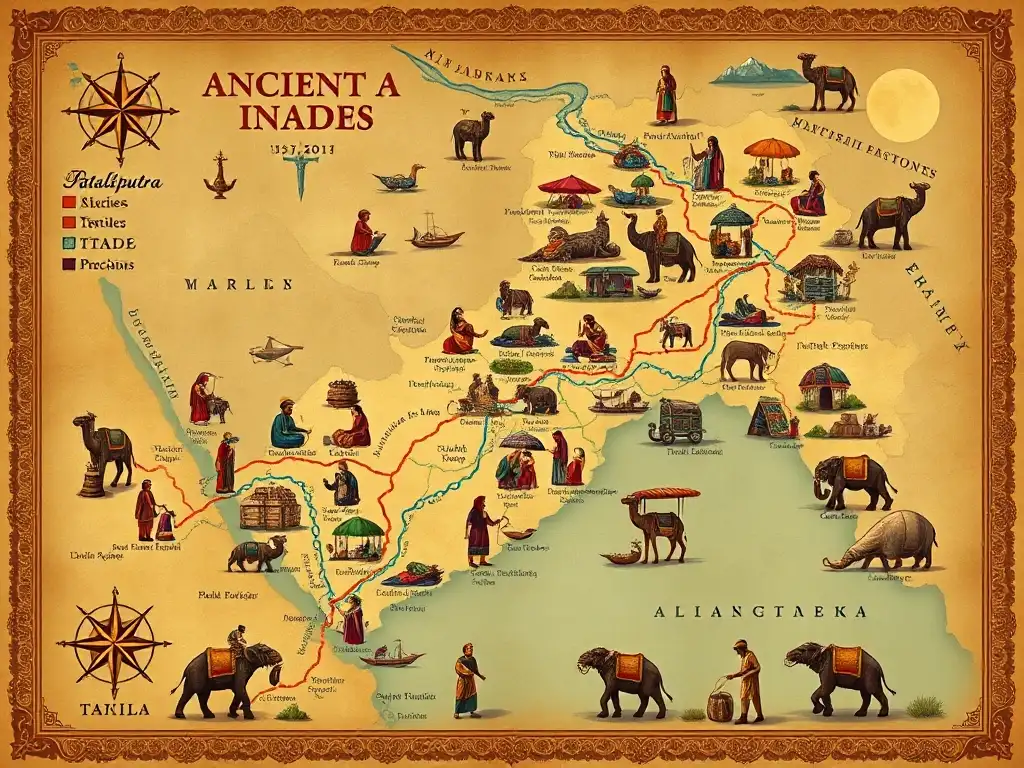
The legacy of ancient Indian trade routes is a fascinating tapestry woven with the threads of commerce, culture, and connectivity. These routes, which flourished from the early civilizations of the Indus Valley to the height of the Gupta Empire, not only facilitated the exchange of goods but also acted as conduits for the dissemination of ideas, technologies, and cultural practices.
Continuing Influence on Modern Trade Practices
The ancient Indian trade routes have left an indelible mark on modern trade practices. Many contemporary trade networks echo the pathways established by ancient traders, illustrating a continuity of commerce that spans centuries. For instance, the Silk Road and its connections to Indian ports like Lothal and Sopara were pivotal in establishing trade links between India, the Middle East, and beyond.
- Key commodities traded:
- Spices
- Textiles
- Precious stones
- Metalwork
The influence of these routes can also be seen in modern logistics and supply chain management, where principles of efficient transport and trade learned from ancient practices continue to inform current methodologies. Today's globalized economy, with its emphasis on interconnectivity, can trace its roots back to the vibrant networks established by ancient traders who navigated both land and sea.
Preservation of Cultural Heritage Through Trade
Trade was not merely an economic endeavor in ancient India; it was also a vital mechanism for cultural exchange and heritage preservation. The interaction between diverse cultures along trade routes fostered a rich dialogue that influenced art, language, religion, and social customs.
- Cultural exchanges included:
- The spread of Buddhism and Jainism to Southeast Asia
- The introduction of Indian numerals and mathematics to the Arab world
- The fusion of culinary traditions leading to the diversity of regional cuisines
These interactions helped preserve and propagate Indian culture across borders, making it a vital component of global heritage. Trade routes were instrumental in transmitting knowledge, leading to advancements in various fields such as astronomy, medicine, and philosophy, which continue to resonate in modern societies.
Lessons from Ancient Trade Routes for Contemporary Society
The ancient Indian trade routes offer valuable lessons for contemporary society. As globalization continues to shape the world, the principles of cooperation, mutual respect, and sustainable practices evident in ancient trade can serve as guiding ideals.
- Key lessons include:
- Sustainability: The ancient traders often relied on local resources and practices, emphasizing sustainable trade that respected the environment.
- Cultural sensitivity: The ability to navigate diverse cultures with respect and understanding is crucial in today’s interconnected world.
- Innovation through collaboration: The blending of ideas and technologies among traders led to significant innovations, a reminder of the importance of collaboration in driving progress.
Incorporating these lessons into modern trade practices can enhance not only economic relations but also foster a deeper understanding of cultural heritage and global interconnectedness. The ancient trade routes of India serve as a testament to the enduring power of commerce as a vehicle for cultural exchange and mutual growth.
Conclusion: The Enduring Impact of Ancient Indian Trade Routes History
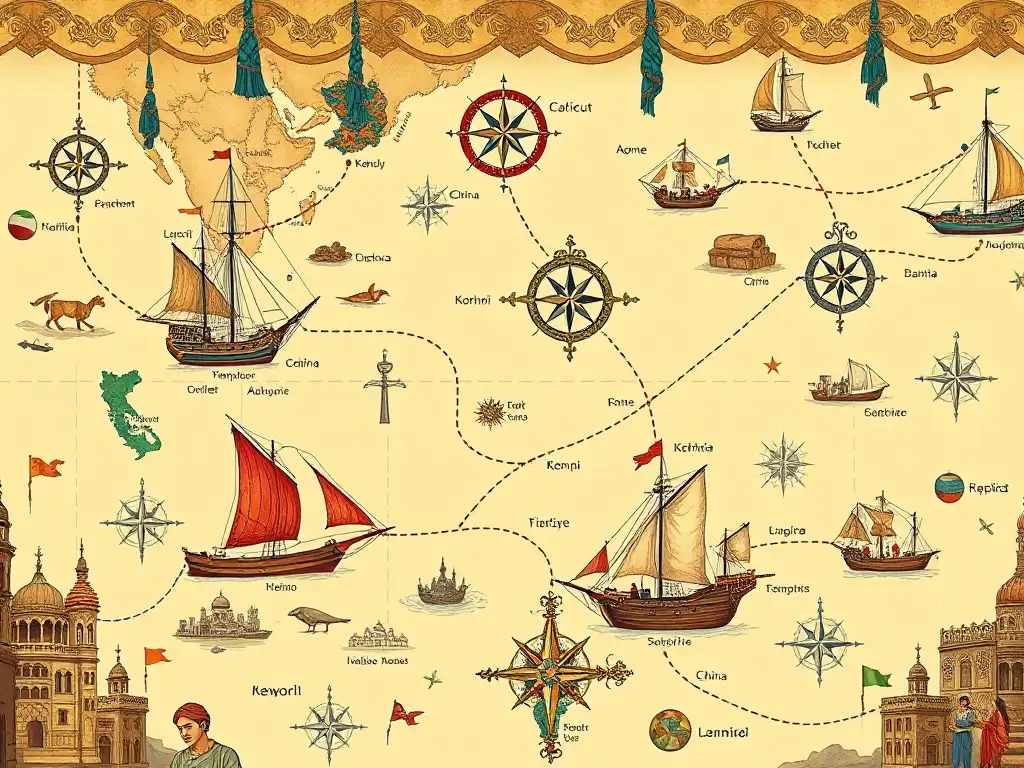
The trade routes of Eastern India played a pivotal role in shaping not only the economic landscape but also the cultural and social dynamics of ancient civilizations. These routes facilitated the exchange of goods, ideas, and traditions, weaving a rich tapestry of interconnected cultures across the region. Understanding the intricate web of these trade routes provides invaluable insights into the historical development of Eastern India and its influence on neighboring regions.
Summary of Key Insights on Cultural Connectivity
The ancient Indian trade routes were more than mere pathways for commerce; they served as vital conduits for cultural exchange. Here are some key insights:
- Diverse Commodities: The trade routes enabled the exchange of a wide array of commodities, including textiles, spices, and precious metals. This trade not only enriched the economy but also introduced new goods and technologies to various regions.
- Cultural Exchange: Merchants and traders acted as cultural ambassadors, sharing local customs, religious beliefs, and artistic expressions. For instance, the spread of Buddhism along trade routes significantly influenced the cultures of regions such as Southeast Asia.
- Urbanization: Trade centers emerged along these routes, fostering urban development. Cities like Pataliputra and Nalanda became bustling hubs of commerce and culture, attracting scholars, artisans, and traders from far and wide.
- Diplomatic Relations: The trade routes also facilitated diplomatic exchanges, leading to alliances and partnerships between different kingdoms. This fostered a sense of unity and collaboration among diverse cultures.
By examining these aspects, we can appreciate how the ancient Indian trade routes contributed to a vibrant cultural mosaic that shaped the identity of Eastern India.
The Importance of Understanding Trade in Ancient Civilizations
Understanding the role of trade in ancient civilizations is crucial for several reasons:
- Economic Insights: Trade routes offer a lens through which we can analyze the economic strategies of ancient societies. The flow of goods and resources reveals much about the priorities and capabilities of these civilizations.
- Cultural Heritage: Recognizing the interconnectedness of ancient cultures helps us appreciate the complexity of historical narratives. This understanding is essential for preserving cultural heritage and promoting awareness of shared histories.
- Lessons for Modern Trade: The dynamics of ancient trade can inform contemporary economic practices. By studying historical trade interactions, modern societies can glean lessons on negotiation, collaboration, and the impact of trade on cultural identity.
- Interdisciplinary Approaches: Investigating ancient trade routes encourages collaboration across various fields, such as archaeology, anthropology, and history. This interdisciplinary approach can lead to a more comprehensive understanding of human development.
The ancient Indian trade routes were instrumental in shaping the cultural, economic, and social fabric of Eastern India. Their legacy continues to resonate, underscoring the enduring importance of trade in the evolution of civilizations.
References and Further Reading
Suggested Books and Articles on Ancient Indian Trade Routes
-
"The Ancient Indian Trade Routes" by R.K. Sharma
This comprehensive book delves into the historical significance of trade routes in ancient India, including detailed maps and analyses of trade practices from the Indus Valley civilization through the Gupta Empire.
-
"Trade and Traders in Ancient India" by R. S. Sharma
This work examines the socio-economic aspects of trade in ancient India, exploring the role of merchants and the impact of trade on cultural exchanges.
-
"The Silk Route: A New History" by Frances Wood
Although primarily focused on the broader Silk Route, this book provides valuable insights into how ancient Indian trade routes interconnected with international trade networks.
-
"India's Ancient Trade Routes" by Upinder Singh
This article offers a detailed study of the major trade routes that linked Eastern India to other regions, emphasizing the cultural and economic exchanges that occurred along these paths.
-
"Maritime Trade and Cultural Exchanges in Ancient India" by K. R. Subramanian
An exploration of the maritime trade routes that facilitated exchanges with Southeast Asia and beyond, highlighting the significance of Eastern India's coastal trade.
Online Resources for Exploring Eastern India’s Trade History
-
Digital South Asia Library
This online resource provides access to a wealth of primary documents and secondary literature related to the history of trade in South Asia, including maps, trade records, and economic data.
-
Indus Valley Civilization Research Network
A collaborative platform that offers articles, research papers, and discussions focusing on the trade practices of the Indus Valley civilization and its influence on subsequent cultures in Eastern India.
-
South Asian Studies Association
This website features journals, articles, and conference proceedings that discuss various aspects of South Asian history, including trade routes and cultural exchanges.
-
Ancient India: A Historical Atlas
An interactive online atlas that maps out ancient trade routes, cities, and archaeological sites, providing visual context to the historical narrative of trade in Eastern India.
-
Archaeological Survey of India
The official website of the Archaeological Survey of India offers resources, excavation reports, and findings related to ancient trade routes and their cultural significance.
These references and resources provide a solid foundation for further exploration into the ancient Indian trade routes history, emphasizing the interconnectedness of cultures and civilizations throughout Eastern India.
Frequently Asked Questions
What were the main trade routes in ancient India?
The main trade routes in ancient India included the Silk Road and coastal maritime routes, facilitating trade between India, China, and Southeast Asia. These routes played a significant role in the exchange of goods and cultures.
How did trade impact ancient Indian civilization?
Trade significantly impacted ancient Indian civilization by fostering economic growth and cultural exchange. It led to the spread of ideas, religions, and technologies, enriching the social fabric of the region.
What goods were commonly traded along Eastern India's routes?
Commonly traded goods included spices, textiles, gemstones, and metals. Eastern India, particularly, was known for its silks and rice, which were highly sought after in other regions.
How did the Gupta Empire influence trade routes?
The Gupta Empire enhanced trade by establishing a stable political environment. This stability encouraged merchants to use the routes, leading to increased commercial activity and cultural interaction.
What role did maritime routes play in ancient Indian trade?
Maritime routes were crucial for connecting India with far-off lands. They allowed for the transportation of bulk goods and facilitated trade with Arabia, Africa, and beyond, contributing to the economic prosperity of ancient India.
Final Reflection: The Enduring Legacy of Ancient Indian Trade Routes
The intricate web of ancient Indian trade routes not only facilitated the exchange of goods but also served as vital conduits for cultural and intellectual exchange. Today, as we navigate a world increasingly defined by globalization, the lessons from these historical pathways remind us of the importance of connectivity and collaboration across cultures. The trade routes of Eastern India stand as a testament to the power of commerce in shaping civilizations, illustrating that trade is not merely an economic activity but a bridge that unites diverse peoples and ideas.
The influence of these ancient trade routes continues to resonate in our modern society, shaping our understanding of cultural identity and heritage. The rich tapestry of interactions that occurred along these paths fostered a spirit of innovation and mutual respect that is still relevant today. As we reflect on the past, we can draw inspiration from the words of Mahatma Gandhi, who said, "> A nation's greatness is measured by how it treats its weakest members." This sentiment echoes the interconnectedness that trade routes fostered, reminding us that our cultural exchanges should uplift and empower all communities.
As we look toward the future, let us embrace the lessons of the ancient trade routes and strive to create our own connections in a world that often feels divided. I invite you to reflect on how you can foster understanding and collaboration in your own life, whether through cultural exchanges, supporting local artisans, or engaging in meaningful dialogues. By honoring the legacy of these historical pathways, we can contribute to a more inclusive and interconnected world, ensuring that the spirit of trade and cultural exchange continues to thrive for generations to come.
Unlock the Wonders of Eastern India's Trade Legacy!
Thank you for joining us on this fascinating journey through the trade routes of Eastern India! We hope you gained valuable insights into how these routes bridged cultures and civilizations, enhancing historical connections that shaped the region.
Now it's time to take your newfound knowledge to the next level. Here are a few powerful ways you can dive deeper:
- Explore a local museum to discover artifacts related to Eastern Indian trade; you might uncover hidden histories right in your community!
- Join an online discussion group or forum focused on Indian trade history—sharing perspectives enriches our understanding even further.
- Consider starting a blog or social media page to highlight your favorite aspects of Eastern India's trade routes and inspire others!
Which trading culture or historical figure intrigues you the most, and how do you think their legacy continues to influence us today? Let’s spark a discussion in the comments below!