
The Role of Women in Ancient Indian Surgery and Medicine

Welcome to Ancient India History, where we embark on a fascinating journey through time to uncover the rich tapestry of India's past. In this exploration, we shine a light on a remarkable yet often overlooked aspect: Women in Ancient Indian Medicine. Discover how these pioneering figures shaped the fields of surgery and healing, contributing to a legacy that resonates even today.
As you dive into our main article, you'll unveil the profound impact these women had on medical practices of ancient civilizations. Join us as we delve deeper into their stories and the vibrant culture that surrounded them, and let your curiosity guide you through the annals of history.
Introduction to Women in Ancient Indian Medicine
The history of medicine in ancient India is a fascinating tapestry woven with the threads of diverse cultures, profound knowledge, and remarkable contributions. Among the many significant aspects of this rich narrative is the pivotal role women played in the field of medicine and surgery. From the early days of the Indus Valley Civilization through the illustrious eras of the Maurya and Gupta Empires, women in ancient Indian society were not just passive recipients of medical knowledge but active practitioners and innovators.
Their contributions were integral to the development of medical practices and surgical techniques, challenging contemporary perceptions of gender roles in the medical field. In this article, we will delve into the various aspects of women in ancient Indian medicine, exploring their historical significance and the legacy they left behind.
Overview of Ancient Indian Medicine
Ancient Indian medicine, often referred to as Ayurveda, is a holistic system that emphasizes balance in the body, mind, and spirit. This system of healing, which dates back thousands of years, is characterized by its unique approaches to health, treatment, and the understanding of disease. Key elements include:
- Herbal Remedies: The use of plants and herbs for healing.
- Surgical Techniques: Advanced surgical methods, including those for cataract surgery and cesarean sections.
- Philosophical Foundations: Incorporation of spiritual and philosophical beliefs into medicine.
Women were instrumental in this system, not only as practitioners but also as custodians of knowledge passed down through generations.
Importance of Women in Historical Context
In the context of ancient Indian society, women held a unique position. While often relegated to domestic roles, many were also revered as healers and medicinal practitioners. Their contributions are essential to understanding the evolution of medical practices:
- Cultural Perceptions: Women were often seen as caregivers and nurturers, roles that naturally extended to healing.
- Social Structures: In some communities, women were more empowered, allowing them to take on roles as healers and medical advisors.
This duality of perception presents a complex picture of women's roles, showcasing both limitations and opportunities that shaped their involvement in medicine.
Historical Background of Women in Medicine
Early References to Women Healers
Historical texts and inscriptions provide evidence of women serving as healers in ancient Indian societies. Notable mentions can be found in texts such as the Sushruta Samhita, which, while primarily authored by male physicians, acknowledges the role of women in medicine. Women like Vaidya and Dai were common, often known for their expertise in herbal medicine and childbirth practices.
Women in the Vedic Period
During the Vedic period, women were recognized for their knowledge of healing arts. Texts from this era suggest that women not only practiced medicine but also participated in philosophical discussions about health and wellness. The Rigveda references female figures, such as the goddess Saraswati, who embodies wisdom and knowledge, implicitly endorsing the role of women in healing practices.
Contributions during the Maurya and Gupta Empires
The Maurya and Gupta Empires marked a golden age for Indian medicine, and women continued to play a vital part. Historical records indicate that women were involved in:
- Training and Education: Many women trained as physicians and surgeons, passing down their knowledge to future generations.
- Surgical Practices: Evidence suggests that women participated in surgical procedures, contributing to the development of techniques that would later influence medical practices.
Through these contributions, women not only enriched the field of medicine but also helped lay the groundwork for future advancements in healthcare.
The examination of women in ancient Indian medicine reveals their essential role in shaping medical practices and contributing to the rich tapestry of Indian history. Their legacy is a testament to their resilience, intelligence, and ability to navigate the complexities of their societal roles.
Roles and Responsibilities of Women in Ancient Indian Surgery
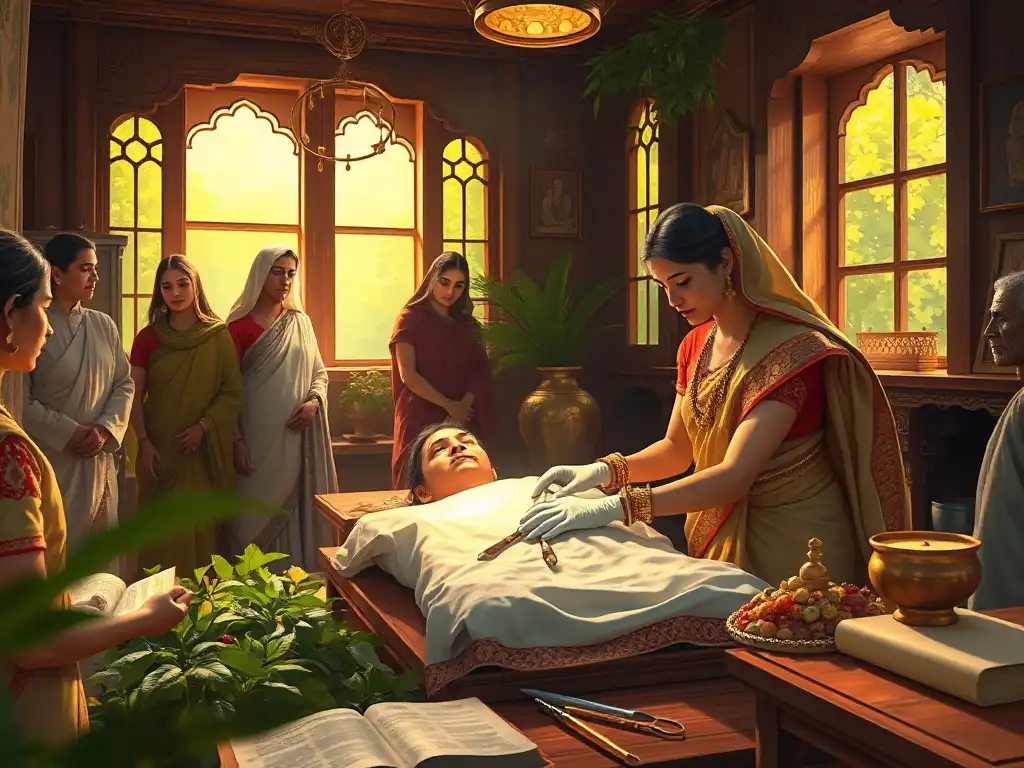
In ancient Indian society, women played a significant role in the field of surgery and medicine, often assuming responsibilities that were integral to the health and well-being of their communities. Their contributions were multifaceted, ranging from direct patient care to the practice of surgical procedures. Women not only acted as healers but also served as educators within their communities, passing down valuable knowledge about herbal remedies and surgical techniques. Their involvement in medicine was crucial, especially in times when male practitioners were less accessible or when women preferred to consult other women for medical issues.
Women in ancient India were often entrusted with the care of female patients, addressing gender-specific health needs that male practitioners may have been ill-equipped to handle. This specialization allowed women to develop unique expertise in areas such as obstetrics and gynecology, where their understanding of female anatomy and physiology was paramount. Furthermore, the roles of women in these medical practices were not only accepted but, in many cases, revered, showcasing the essential position they held in maintaining the health of families and communities.
Women as Surgeons and Practitioners
Historical texts and archaeological findings suggest that women were recognized as skilled surgeons and practitioners in ancient India. They were known to perform a variety of surgical procedures, including suturing wounds, managing fractures, and conducting procedures related to childbirth. One prominent figure in this field was the legendary physician Sushruta, who, in his texts, acknowledged the contributions of female surgeons. Although the majority of medical texts were authored by men, references to women practitioners indicate that their skills were respected and sought after.
It is believed that women often inherited their medical knowledge through family lineage, with skills passed down from mothers to daughters. This familial transmission of knowledge ensured that women could maintain and refine their surgical techniques across generations. Notably, women were also involved in the preparation of surgical instruments and the formulation of medications, further solidifying their role in ancient medical practices.
Training and Education of Female Healers
The training and education of female healers in ancient India were conducted through informal apprenticeship systems within families or communities. Young girls learned from their mothers or elder female relatives, gaining firsthand experience in both herbal medicine and surgical techniques. Some historical accounts suggest that women may have also attended schools or participated in gatherings where medical knowledge was shared, albeit to a lesser extent than their male counterparts.
The curriculum for these female practitioners typically included the study of medicinal plants, anatomy, and surgical methods. Practical training was paramount, as hands-on experience allowed them to develop their skills effectively. While formal education may not have been widely accessible, the strong tradition of oral knowledge ensured that many women emerged as competent healers and surgeons.
Types of Surgical Procedures Performed by Women
Women in ancient Indian medicine were known to perform a variety of surgical procedures, many of which were vital to the health of women and children. Among the key types of surgeries attributed to women were:
- Obstetric Procedures: Assisting in childbirth, managing labor, and performing cesarean sections when necessary.
- Minor Surgeries: Treating wounds, abscesses, and fractures through stitching and setting broken bones.
- Gynecological Treatments: Addressing conditions related to women's health, such as menstrual disorders and reproductive issues.
- Cauterization: Utilizing heat to treat wounds or remove abnormal growths, a technique known in ancient surgical practices.
These procedures highlight the diverse capabilities of women in ancient Indian surgery, showcasing their integral role in the healthcare system of their time.
Cultural Perceptions of Women in Medicine
The cultural perceptions of women in ancient Indian medicine were complex and varied across different regions and periods. While women were often celebrated for their healing abilities, societal norms and religious beliefs sometimes restricted their roles within the medical field. Understanding these cultural dynamics is essential to appreciating the status and contributions of women in ancient surgery and medicine.
Societal Views on Gender Roles in Ancient India
Gender roles in ancient India were deeply entrenched in societal norms that dictated the behavior and responsibilities of men and women. While men predominantly occupied public spheres, women were often confined to domestic roles. However, within the context of medicine, women were granted a certain level of respect and autonomy, especially as caregivers and healers. Their ability to provide care for other women and children positioned them as vital figures in the household and community.
Despite their significant contributions, women faced limitations imposed by patriarchal structures. The perception of women as caregivers often translated into their exclusion from formal medical education and higher-status positions within medical institutions. Nonetheless, the recognition of their skills in surgery and medicine allowed many women to carve out respected roles for themselves, challenging some prevailing gender norms.
Religious Texts and Their Influence on Women in Medicine
Religious texts played a crucial role in shaping societal attitudes toward women in medicine. Ancient scriptures, including texts from Hinduism, Buddhism, and Jainism, often reflected the ambivalence toward women's roles. Some religious texts highlighted the importance of women as nurturers and healers, while others reinforced the idea of female inferiority in comparison to men.
For instance, the Ayurvedic texts attributed significant importance to the role of women in health and wellness, often portraying them as knowledgeable practitioners. These texts also contained references to female deities who were associated with healing and medicine, which elevated the perception of women's contributions in this field. However, the interpretations of these texts varied, and some reinforced the limitations placed on women’s roles in society.
Women’s Status in Ancient Medical Communities
Within ancient medical communities, the status of women often fluctuated based on cultural, geographic, and temporal factors. In some areas, women were regarded as essential contributors to medical knowledge and practices, while in others, they faced significant barriers. In urban centers, where formal medical practices were more established, women could attain greater recognition as skilled practitioners. Conversely, in more rural settings, their roles might have been primarily limited to informal healing practices.
The establishment of female-only healing circles or communities further illustrates the support women received from one another. These groups allowed women to share knowledge, develop their skills, and cultivate a sense of identity as practitioners in a predominantly male-dominated field. Ultimately, the status of women in ancient medical communities was a reflection of broader societal attitudes towards gender and healing, showcasing the complexities of their roles in ancient Indian medicine.
Notable Women in Ancient Indian Surgery and Medicine
In the context of ancient Indian medicine, several women emerged as notable figures, contributing significantly to the field despite the societal constraints of their time. While historical records primarily highlight male practitioners, evidence suggests that women played crucial roles as healers and practitioners of medicine. Women like Vaidya Vatsala, a renowned herbalist, and Sushruta's daughter, who is often credited with assisting in surgical practices, exemplify the contributions of women in this domain.
Moreover, the texts of the Ayurveda tradition include references to female practitioners who were known for their knowledge in herbal medicine and surgical techniques. These women often inherited their knowledge through familial lines, learning from their mothers and grandmothers, thus ensuring a continuity of medicinal practices. The contributions of these women, though often overlooked, were vital in shaping the medical landscape of ancient India.
Case Study: Dhanvantari and the Role of Female Healers
Dhanvantari, often regarded as the god of Ayurveda, plays a pivotal role in understanding the historical context of medicine in ancient India. Although primarily associated with male practitioners, female healers were significant in the dissemination and practice of Ayurvedic principles. Female practitioners often worked alongside male physicians, providing essential support in both surgical procedures and patient care.
For instance, women were frequently involved in childbirth and maternal care, employing traditional techniques that had been passed down through generations. Dhanvantari's teachings, while not directly attributed to female healers, set the foundation for practices that women would adapt and utilize in their care. This collaboration between genders in healthcare reflects a more inclusive approach to medicine, with women serving as vital caretakers and practitioners in their communities.
Contributions of Charaka and Sushruta in Ancient Texts
The ancient texts of Charaka Samhita and Sushruta Samhita are foundational to the practice of medicine in ancient India. Charaka, known for his work in internal medicine, emphasized holistic healing and the importance of understanding the patient's body and mind. Though these texts primarily focus on male practitioners, they also highlight the indispensable role of women in health care, particularly in pharmacology and midwifery.
Sushruta, often referred to as the father of surgery, documented various surgical techniques and procedures that were, in many instances, performed by both male and female practitioners. The presence of women in these texts signifies their involvement in surgical practices and patient care. These contributions illustrate that women were integral to the evolution of medical practices, despite their often unrecognized roles in historical narratives.
Legacy of Women Healers in Ancient Indian Medical Practices
The legacy of women healers in ancient India is profound and enduring. Although much of their work has been overshadowed by male counterparts, the influence of these women can still be felt today. The tradition of herbal medicine, passed down through generations, has roots in the practices of ancient female healers who utilized natural remedies for various ailments.
Modern practitioners of traditional medicine often draw inspiration from these ancient practices, acknowledging the importance of women in the medical field. The continued respect for herbalists and midwives in rural communities today highlights the lasting impact of women in ancient Indian medicine, ensuring that their contributions are not forgotten but celebrated.
Comparison of Women’s Roles in Medicine Across Ancient Civilizations
The roles of women in ancient medicine varied significantly across different civilizations, each influenced by cultural, social, and religious contexts. In ancient India, women were often seen as caretakers and practitioners, particularly in maternal and herbal medicine. This contrasts with other ancient civilizations, where women's roles were sometimes more restricted.
Women in Medicine in Ancient Egypt vs. India
In ancient Egypt, women held a relatively prominent position in the medical field, with documented cases of female physicians such as Peseshet, who served as a chief physician. Egyptian women had more opportunities to practice medicine, often engaging in surgical procedures and being recognized for their contributions.
Conversely, while women in ancient India were integral to medical practices, they were often relegated to roles within the home as herbalists or midwives, with less formal recognition in medical texts. The societal norms in ancient India sometimes limited their visibility in the broader medical community, even as they played crucial roles in healthcare.
Similarities and Differences in Practices and Recognition
Despite the differences in recognition and societal roles, there were notable similarities in the practices of women in medicine across ancient civilizations. Both Egyptian and Indian women utilized herbal remedies and were often involved in childbirth and maternal care. They relied on traditional knowledge that was passed through generations, emphasizing the importance of natural healing.
However, the acknowledgment and documentation of their contributions varied significantly. In Egypt, women achieved a higher degree of formal recognition, while in India, although their roles were vital, they often remained in the shadows of their male counterparts. This disparity highlights the need for further exploration and appreciation of women's contributions to ancient medical practices across cultures.
Challenges Faced by Women in Ancient Medical Fields
The role of women in ancient Indian surgery and medicine was profoundly affected by various challenges that limited their involvement and recognition. Despite their contributions, women faced substantial barriers that impacted their ability to participate fully in medical practices. These challenges were deeply rooted in societal norms, patriarchal structures, and historical perceptions that evolved over time.
Societal Barriers and Limitations
In ancient India, societal norms dictated the roles and responsibilities of women, often confining them to domestic spheres. The primary societal barriers included:
- Cultural Expectations: Women were primarily seen as caregivers within the home, which overshadowed their potential in professional fields such as medicine. The expectation to prioritize family over individual aspirations limited their opportunities for education and training in medical practices.
- Access to Education: Formal education for women was often restricted, especially in the realms of science and medicine. While some women may have received informal training from family members, the lack of institutional support hampered their ability to gain recognized qualifications.
- Economic Constraints: Many women lacked financial independence, which was necessary for pursuing medical practices. Dependence on male family members further limited their ability to engage in professional activities outside the home.
These barriers not only restricted women's participation but also contributed to the perception that they were unfit for serious medical roles, which persisted for centuries.
Impact of Patriarchy on Women’s Medical Practice
Patriarchal structures in ancient Indian society played a significant role in shaping the landscape of medicine. The following points illustrate this impact:
- Dominance of Male Practitioners: The medical field was predominantly male-dominated, with men occupying most positions of authority and recognition. This not only marginalized women’s contributions but also reinforced the belief that medical knowledge was inherently male.
- Gender Bias in Practice: Women who ventured into medicine often faced skepticism and were subject to greater scrutiny than their male counterparts. Their practices and knowledge were frequently undervalued, limiting their ability to gain respect and credibility in the field.
- Legal and Religious Restrictions: Certain texts and laws reinforced the notion that women should not practice medicine. Religious doctrines often propagated the idea that women were spiritually or intellectually inferior, further discouraging them from pursuing medical careers.
These patriarchal influences created an environment where women's contributions to medicine were either overlooked or misattributed, leading to a significant underrepresentation of their achievements in historical records.
Historical Changes and Shifts in Perception
Over time, there were gradual shifts in the perception of women in medicine, influenced by broader social changes and notable individual contributions. Key developments included:
- Emergence of Female Healers: Women like Sushruta's disciples or practitioners in later periods began to gain recognition for their roles in healing and surgery. Their successes challenged the prevailing stereotypes and began to open doors for other women.
- Documented Contributions: Historical texts, such as the Sushruta Samhita and Charaka Samhita, occasionally acknowledged female practitioners, highlighting their skills and knowledge. This documentation was crucial in validating women's roles in ancient medical practices.
- Cultural Evolution: As Indian society evolved, especially during the later Vedic and Gupta periods, there was a gradual acceptance of women's contributions to various fields, including medicine. This cultural shift allowed for a more nuanced understanding of gender roles and capabilities.
These changes laid the groundwork for future generations, creating a legacy that would influence women's roles in medicine well beyond ancient times.
Conclusion: The Lasting Impact of Women in Ancient Indian Medicine
The legacy of women in ancient Indian medicine is significant, reflecting both their challenges and contributions. Despite the barriers they faced, many women played crucial roles in the development of medical practices and knowledge.
Summary of Contributions and Innovations
Women in ancient Indian medicine contributed to various aspects, including:
- Herbal Knowledge: Many women served as herbalists, utilizing their knowledge of plants for healing, which formed the basis of traditional medicine practices.
- Surgical Techniques: Some women were involved in surgical practices, often as assistants or apprentices to male surgeons, contributing to the development of techniques that would later be documented in ancient texts.
- Cultural Healers: Women often acted as community healers, relying on traditional knowledge passed down through generations, which enriched the medical practices of their time.
These contributions highlight the significant yet often unrecognized role women played in shaping the foundation of ancient Indian medicine.
The Relevance of Women’s Roles in Modern Medicine
The historical presence of women in ancient Indian medicine offers valuable lessons for modern medical practices. Today, as we strive for gender equality in healthcare, the recognition of women’s historical contributions can inspire a more inclusive approach. Key points include:
- Empowerment through Education: The importance of accessible education for women in medicine remains crucial. Learning from the past encourages the current movement towards supporting women's education and professional development in healthcare.
- Recognition of Diversity: Acknowledging the diverse contributions of women in ancient medicine can enhance our understanding of medical history and promote a holistic view of healthcare practices.
- Inspiration for Future Generations: The stories of women who overcame societal barriers to practice medicine serve as powerful motivators for aspiring female healthcare professionals today.
In essence, the legacy of women in ancient Indian medicine is not just a historical footnote; it is a testament to resilience and innovation that continues to resonate in contemporary discussions about gender and medicine.
References and Further Reading
The study of women in ancient Indian medicine and surgery reveals a rich tapestry of contributions, practices, and cultural contexts. For those looking to delve deeper into this fascinating subject, the following references and further reading materials provide essential insights and scholarly perspectives.
Key Texts on Ancient Indian Medicine
-
Sushruta Samhita
The foundational text of ancient Indian surgery, attributed to the physician Sushruta, outlines surgical techniques and practices prevalent during the time. It includes discussions on the roles of various practitioners, including women.
-
Charaka Samhita
A key text in Ayurveda, the Charaka Samhita emphasizes holistic practices in medicine. It provides insights into the medical knowledge of the time, including the contributions of female practitioners.
-
Ashtanga Hridaya
This Ayurvedic text integrates the principles of various medical traditions and highlights the significance of women in healthcare practices, both as patients and practitioners.
-
History of Medicine in India
This comprehensive work details the evolution of medical practices in India, with sections dedicated to the roles of women in various capacities within the healthcare system.
-
Women in Ancient India
A scholarly exploration of women's roles across different societal domains in ancient India, this book provides context on their contributions to medicine and surgery.
Notable Research on Women’s Contributions in History
-
"Women Healers in Ancient India: Historical Evidence and Modern Implications" by Dr. Aditi Sharma
This article examines the historical evidence of women as healers and their practices in ancient India, shedding light on their contributions and societal roles.
-
"The Forgotten Surgeons: Women's Role in Ancient Indian Medicine" by Dr. Priya Desai
This research paper discusses the impact of women in surgical practices, highlighting their training, skills, and the challenges they faced within a male-dominated field.
-
"Revisiting Ancient Indian Medical Texts: Women as Practitioners" by Dr. Rina Gupta
This study analyzes ancient medical texts, addressing how women were depicted as practitioners and the significance of their roles in the medical field.
-
"Gender Roles in Ayurveda: A Historical Perspective" by Dr. Neelam Verma
This article explores gender dynamics within Ayurveda, focusing on the contributions of women and how their roles have evolved over time.
-
"The Healing Touch: Women's Contributions to Ancient Indian Surgery" by Dr. Kavita Mehta
This comprehensive research highlights specific case studies of women who practiced surgery and healing techniques, documenting their achievements and societal status.
These texts and research studies provide invaluable resources for understanding the significant yet often overlooked contributions of women in ancient Indian medicine and surgery. Engaging with these materials enables a deeper appreciation of the role women played in shaping medical practices and healthcare in ancient India.
- Introduction to Women in Ancient Indian Medicine
- Overview of Ancient Indian Medicine
- Importance of Women in Historical Context
- Historical Background of Women in Medicine
- Roles and Responsibilities of Women in Ancient Indian Surgery
- Cultural Perceptions of Women in Medicine
- Notable Women in Ancient Indian Surgery and Medicine
- Comparison of Women’s Roles in Medicine Across Ancient Civilizations
- Challenges Faced by Women in Ancient Medical Fields
- Conclusion: The Lasting Impact of Women in Ancient Indian Medicine
- References and Further Reading
- What was the significance of women in ancient Indian medicine?
- Did women hold any formal positions in ancient Indian medical systems?
- What contributions did women make to surgical practices in ancient India?
- How were women's roles in medicine viewed in ancient Indian society?
- Are there any notable female figures in ancient Indian medicine?
Frequently Asked Questions
What was the significance of women in ancient Indian medicine?
Women played a crucial role in ancient Indian medicine, especially in surgery and healthcare practices, often serving as physicians and healers within their communities.
Did women hold any formal positions in ancient Indian medical systems?
Yes, women could hold formal positions in ancient medical systems, such as physicians and nurses, contributing significantly to the practice of medicine alongside their male counterparts.
What contributions did women make to surgical practices in ancient India?
Women were involved in various surgical practices, often specializing in areas like gynecology and pediatrics, and contributed to techniques that are still recognized today.
How were women's roles in medicine viewed in ancient Indian society?
Women in medicine were often respected and held in high regard, as their expertise was essential for the healthcare of families and communities, bridging cultural gaps in medical knowledge.
Are there any notable female figures in ancient Indian medicine?
Yes, there are several notable female figures, such as Sushruta's female disciples, who contributed to surgical knowledge and practices, highlighting the importance of women in the medical field.
Final Reflection: The Enduring Legacy of Women in Ancient Indian Medicine
The contributions of women in ancient Indian surgery and medicine are not just historical footnotes; they are vital threads in the tapestry of healthcare that resonate with us today. As we navigate a world increasingly focused on gender equality and representation, the remarkable achievements of women in this field remind us that their influence has shaped medical practices and philosophies that persist in contemporary society. The recognition of these pioneering figures is essential, as it challenges the traditional narratives that often overlook women's roles in history.
The impact of women in ancient Indian medicine extends far beyond their time, influencing cultural perceptions and practices in healthcare that continue to evolve. Their expertise and knowledge laid the groundwork for future generations, fostering a rich tradition of healing that is still relevant today.
As we reflect on this legacy, we are reminded of the words of the renowned physician Sushruta, who stated, "> A physician who is not a woman is like a garden without flowers." This sentiment underscores the integral role women played in shaping medical practices, emphasizing that their contributions were not merely supplementary but foundational to the evolution of medicine.
As we look to the future, let us honor the lessons learned from the remarkable women of ancient Indian medicine by advocating for inclusivity and representation in all fields, especially in healthcare. I invite you to reflect on how you can contribute to this ongoing narrative, whether by supporting women in medicine today or by sharing their stories to inspire future generations. Together, we can ensure that the legacy of these trailblazing women continues to flourish, enriching our understanding of medicine and the vital role of women within it.
Explore the Legacy of Ancient Indian Women in Medicine!
Thank you for taking the time to delve into the remarkable contributions of women in ancient Indian surgery and medicine. Your interest in this rich history not only highlights the invaluable roles these pioneering figures played but also empowers us to carry their legacy forward.
Now, it’s time to take action and further connect with this inspiring narrative:
- Research a prominent female figure in ancient Indian medicine and share your findings in the comments!
- Join an online community or forum dedicated to discussing the historical contributions of women across various disciplines.
- Consider visiting a local museum that features exhibits on ancient medical practices and their pioneers; it’s a fantastic way to experience history firsthand!
What inspires you most about the role of women in ancient medicine, and how do you think their contributions can influence modern practices?