
Ancient Indian Commerce: A Catalyst for Cultural Innovation


Welcome to Ancient India History, where we embark on a fascinating journey through time to uncover the rich tapestry of ancient Indian civilizations. In our featured article, “Ancient Indian Commerce: A Catalyst for Cultural Innovation,” we delve into the pivotal role that trade played in shaping the cultural and economic landscape of the subcontinent. Discover how the vibrant exchanges of goods and ideas not only fueled prosperity but also sparked innovations that resonated through history.
Prepare to be captivated as we explore the myriad contributions of ancient Indian commerce—an adventure that promises to illuminate the profound connections between trade, culture, and civilization. Join us as we unlock the secrets of the past!
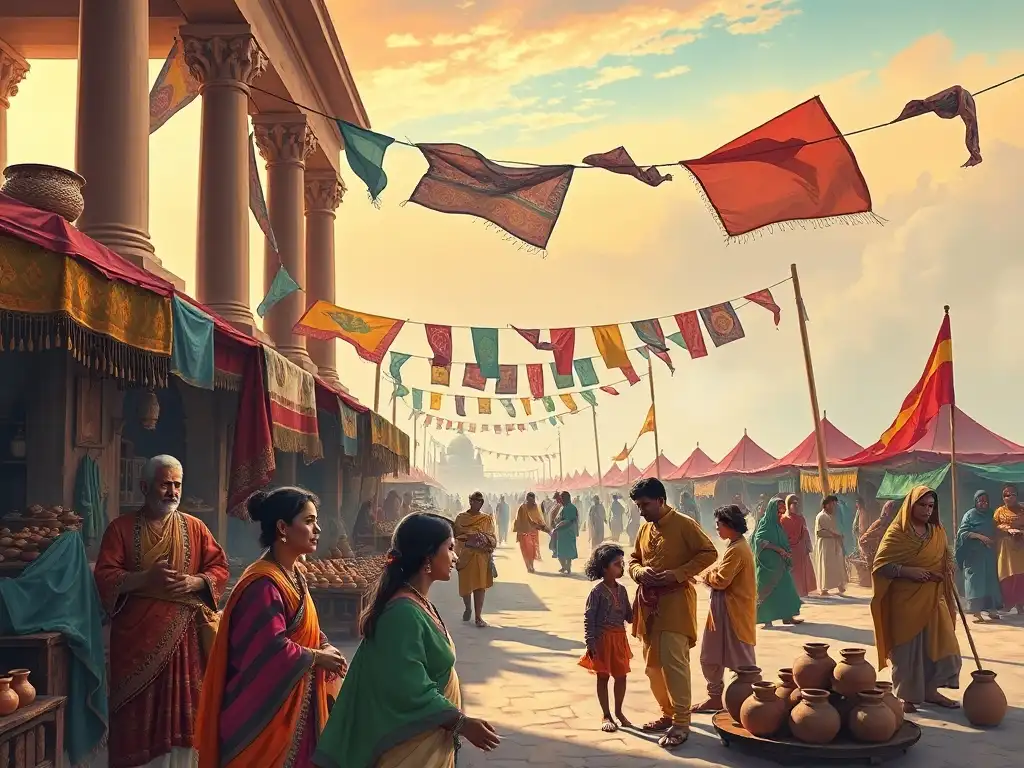
Introduction to Ancient Indian Commerce Contributions
Ancient Indian commerce played a pivotal role in shaping the cultural and economic landscape of the region, demonstrating a complex interplay of trade, innovation, and societal development. Spanning from the Indus Valley Civilization to the Gupta Empire, the contributions of ancient Indian commerce were not limited to mere exchanges of goods; they fostered cultural interactions, technological advancements, and economic prosperity that resonated throughout Asia and beyond.
The merchant routes established during this period facilitated not only the movement of commodities like spices, textiles, and precious metals but also ideas, art, and religious beliefs, thus enriching the cultural tapestry of the Indian subcontinent. In this article, we will explore the multifaceted contributions of ancient Indian commerce, examining its evolution and the key trading centers that served as hubs of economic activity and cultural exchange.
The Evolution of Trade in Ancient India
The evolution of trade in ancient India is marked by significant developments that reflect the changing dynamics of society and economy. From the early agrarian communities to sophisticated urban centers, the methods and practices of trade transformed in response to both internal innovations and external influences.
Overview of Early Trading Practices
In the earliest days of civilization, trade was primarily conducted through barter systems, where goods and services were exchanged directly. The Indus Valley Civilization (circa 3300–1300 BCE) showcased advanced urban planning and craftsmanship, with evidence of trade routes extending to Mesopotamia and beyond. Some notable features of early trading practices include:
- Local Barter Systems: Communities relied on direct exchanges of goods, often involving agricultural products, pottery, and textiles.
- Standardized Weights and Measures: The introduction of weights and measures facilitated fair trading, as evidenced by archaeological findings of stone weights.
- Craft Specialization: Artisans began to specialize in specific crafts, creating high-quality goods that attracted trade from distant lands.
These early practices laid the groundwork for more sophisticated trading systems that emerged in subsequent periods.
Key Trading Centers in Ancient India
As trade flourished, several key centers emerged that became critical nodes of commerce within ancient India. These cities not only facilitated trade but also became melting pots of culture and ideas, influencing the surrounding regions. Some of the most notable trading centers include:
| Trading Center | Description |
|---|---|
| Taxila | A major hub for trade routes from Central Asia, known for its universities and cultural exchanges. |
| Pataliputra | The capital of the Maurya Empire, it became a thriving marketplace for goods from across the subcontinent and beyond. |
| Ujjain | An important center for trade in textiles and spices, Ujjain also hosted various religious and cultural events. |
| Kanchipuram | Renowned for its silk weaving, Kanchipuram attracted traders from far and wide, contributing to its economic and cultural significance. |
These trading centers were instrumental in the growth of ancient Indian commerce, fostering economic prosperity and cultural innovation that would leave a lasting impact on the region's history.
Influences of Ancient Indian Commerce on Cultural Innovation
Ancient Indian commerce played a pivotal role in shaping the cultural landscape of the subcontinent. The extensive trade networks established by Indian merchants facilitated not just economic exchanges but also cultural interactions that led to significant innovations. These interactions fostered the diffusion of ideas, technologies, and artistic expressions, resulting in a rich tapestry of cultural development.
The integration of various cultural elements through commerce can be observed in the spread of religions such as Buddhism and Hinduism along trade routes. Merchants often acted as cultural ambassadors, sharing philosophical ideas and artistic styles with different regions. This exchange fostered a synthesis of local traditions with Indian practices, leading to unique cultural manifestations in far-flung areas. Moreover, ancient Indian commerce encouraged the adoption of new agricultural practices and technologies, enhancing local economies and contributing to regional cultural growth.
The Role of Trade Routes in Cultural Exchange
Trade routes, such as the Silk Road and the maritime routes connecting India with Southeast Asia, were instrumental in facilitating cultural exchange. These routes served as arteries for not only goods but also ideas, customs, and innovations. For instance, the Silk Road connected India with China, Persia, and the Mediterranean, enabling the exchange of not only silk and spices but also scientific knowledge and religious philosophies.
As merchants traveled these routes, they established trading posts and cities that became melting pots of cultures. Cities like Taxila and Alexandria were known for their vibrant cultural exchanges, where traders from different backgrounds interacted, leading to the fusion of languages, art, and local traditions. The role of these trade routes was crucial in disseminating knowledge, such as advancements in mathematics and astronomy, which were later adopted and adapted by other civilizations.
Impact of Commerce on Art and Architecture
The influence of commerce on art and architecture in ancient India is profound. The wealth generated from trade enabled the patronage of artisans and architects, leading to the creation of magnificent structures and artworks. Temples, stupas, and palaces often reflected the confluence of various artistic traditions brought in by foreign traders.
For example, the intricate carvings on the walls of ancient temples often depict scenes from trade life, mythology, and daily life, showcasing the cultural synthesis that commerce facilitated. Additionally, the introduction of new materials and techniques from abroad enriched Indian art forms. The use of foreign motifs and styles in Indian sculptures and paintings is a testament to the cultural dialogues initiated by trade.
Major Commodities in Ancient Indian Trade
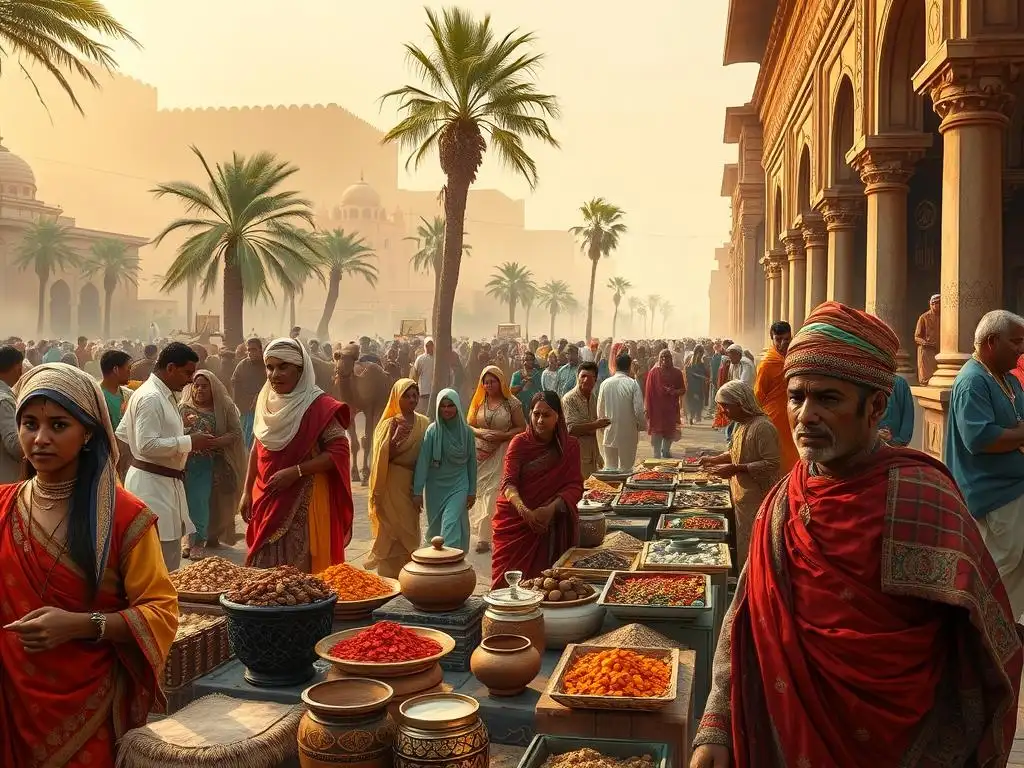
The economic prowess of ancient India was significantly bolstered by its diverse array of commodities that were traded both locally and internationally. The exchange of these goods not only enhanced the economy but also played a crucial role in cultural interactions with other civilizations.
Spices and Their Global Impact
Spices were among the most coveted commodities traded by ancient Indians. India was known as the "land of spices," and products like black pepper, cardamom, and cinnamon were highly sought after in markets across Europe, the Middle East, and Asia. The demand for Indian spices not only enriched the Indian economy but also sparked curiosity and explorations from foreign traders.
The global impact of spices extended beyond commerce; they influenced culinary traditions worldwide and played a vital role in the development of trade routes. The pursuit of spices motivated explorers like Vasco da Gama to seek direct sea routes to India, leading to significant historical shifts, including the Age of Discovery.
Textiles: The Fabric of Ancient Indian Economy
Textiles were another cornerstone of ancient Indian commerce. The Indian subcontinent was renowned for its high-quality fabrics, including silk, cotton, and wool. The intricate craftsmanship of Indian weavers and dyers attracted traders from across the globe, with textiles becoming one of the primary export commodities.
The textile trade also led to cultural exchanges, as different regions adopted Indian weaving techniques and styles. The vivid colors and patterns of Indian textiles influenced fashion in various cultures, contributing to a broader appreciation of Indian craftsmanship. Furthermore, the establishment of the Indian textile industry laid the groundwork for future economic developments in the region.
Precious Metals and Gems in Trade
The trade of precious metals and gems was integral to ancient Indian commerce. India was often referred to as the "golden bird," highlighting its wealth in gold, silver, and gemstones. The demand for Indian diamonds, rubies, and emeralds led to prosperous trade with various civilizations, including the Romans, Persians, and later, European powers.
The influx of wealth from these trades not only enriched Indian kingdoms but also encouraged the development of sophisticated jewelry-making techniques. The legacy of Indian craftsmanship in precious metals and gems continues to be celebrated today, reflecting the historical significance of these commodities in shaping both the economy and the culture of ancient India.
Ancient Indian Trade Networks and Their Significance
Ancient Indian trade networks were extensive and complex, serving as vital conduits for economic exchange and cultural interaction. These networks connected India not just within its own borders but also with distant lands across Asia, Africa, and the Mediterranean. The significance of these trade routes cannot be overstated, as they facilitated not only the movement of goods but also the exchange of ideas, technology, and culture.
Trade networks such as the Silk Road and maritime routes were instrumental in linking India with major civilizations. Indian merchants traded spices, silk, textiles, and precious stones, which were highly sought after in foreign markets. In return, India received silver, gold, glassware, and other luxury items, enriching its economy and cultural tapestry. The flourishing of these trade networks also led to the establishment of vibrant urban centers, where commerce thrived and diverse cultures converged, ultimately shaping the socio-economic landscape of ancient India.
Land Routes: The Silk Road and Beyond
The Silk Road was one of the most important land routes connecting India with Central Asia, the Middle East, and beyond. This trade route was not just a single path but a network of interconnected roads that facilitated the exchange of goods over vast distances. Indian merchants played a crucial role in the Silk Road trade, transporting valuable commodities such as spices, textiles, and indigo.
Beyond the Silk Road, other significant land routes included the Grand Trunk Road, which facilitated trade between the eastern and western parts of the Indian subcontinent. These routes enabled the movement of goods and ideas, with caravans traveling for months to reach their destinations. The establishment of caravanserais—roadside inns—along these routes provided merchants with necessary rest and resources, enhancing the efficiency of trade.
Maritime Trade: Ports of Ancient India
Maritime trade was equally significant in ancient Indian commerce, with bustling ports along the coasts facilitating trade with foreign lands. Key ports such as Lothal, Sopara, and Arikamedu served as hubs for maritime trade, where goods were exchanged with traders from Persia, Arabia, and Southeast Asia. The proximity of these ports to key shipping routes allowed for the efficient transport of goods and fostered vibrant trade relationships.
Ships laden with spices, textiles, and precious stones ventured across the Arabian Sea to reach markets in Africa and the Mediterranean. In exchange, Indian ports received goods such as glass, wine, and exotic animals. These maritime trade routes not only contributed to India's economy but also enabled cultural exchanges, as traders brought with them ideas, religions, and technologies that influenced Indian society.
Cross-Cultural Interactions through Trade
The dynamics of ancient Indian commerce fostered rich cross-cultural interactions that were pivotal in shaping the region's history. As merchants from various cultures converged in Indian markets, they exchanged not just goods but also philosophies, religious beliefs, and cultural practices. This interaction led to the syncretism of various cultural elements, enriching the Indian way of life.
For instance, the trade with Southeast Asia facilitated the spread of Hinduism and Buddhism, as merchants carried these religions to new lands. Similarly, the influence of Persian and Greek cultures can be seen in Indian art, architecture, and cuisine. The exchange of knowledge, particularly in mathematics and astronomy, also flourished during this time, highlighting the intellectual cross-pollination that took place through trade.
The Influence of Foreign Cultures on Ancient Indian Commerce
Ancient Indian commerce was profoundly influenced by foreign cultures, which left an indelible mark on its economic practices and societal norms. As Indian traders engaged with other civilizations, they adopted various foreign goods, practices, and ideas that shaped the commercial landscape of the subcontinent.
Adoption of Foreign Goods and Practices
The influx of foreign goods introduced new tastes and preferences among Indian consumers. Items such as glassware from Persia, silk from China, and spices from the Islands of Southeast Asia became staples in Indian markets. The demand for these goods led to the establishment of trade networks that prioritized their availability, demonstrating how foreign imports could transform local economies.
Moreover, the adoption of foreign business practices, such as coinage and standardized weights and measures, facilitated trade. These innovations allowed for smoother transactions and increased commercial efficiency, reflecting the adaptability of Indian commerce in response to external influences.
The Role of Foreign Traders in Indian Markets
Foreign traders played a significant role in ancient Indian commerce, often serving as intermediaries between Indian merchants and distant markets. They brought with them not only goods but also knowledge of trade techniques and market demands from their respective regions. This influx of foreign traders contributed to the cosmopolitan nature of Indian port cities, where diverse cultures mingled, creating vibrant commercial environments.
The presence of foreign traders also encouraged the establishment of trading communities and guilds, which were pivotal in regulating trade practices and protecting merchants’ interests. These organizations fostered a sense of security and trust, allowing commerce to flourish amidst the complexities of cross-cultural interactions.
Cultural Syncretism through Commerce
The intersection of commerce and culture in ancient India led to significant cultural syncretism, where elements from different traditions blended to create a unique Indian identity. The trade routes facilitated the exchange of artistic styles, religious practices, and culinary traditions, enriching the cultural fabric of the subcontinent.
For example, the introduction of Persian motifs in Indian art and architecture, as well as the fusion of culinary practices from various regions, exemplifies this cultural blending. Religious syncretism also emerged, with the incorporation of foreign deities and rituals into local practices. This cultural dynamism highlights the transformative power of commerce in shaping ancient Indian society, fostering an environment where diversity was celebrated and innovation thrived.
Case Studies of Ancient Indian Commerce Contributions
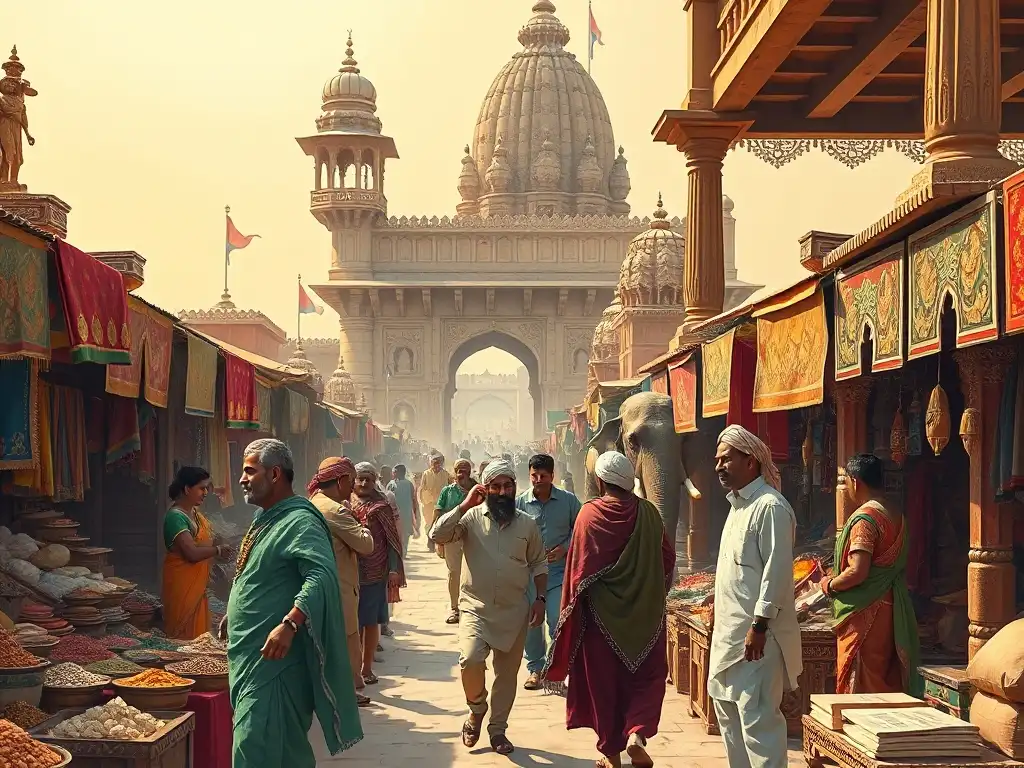
Ancient Indian commerce played a pivotal role in shaping the cultural and economic landscape of the region, influencing trade routes, practices, and innovations that extended beyond its borders. The following case studies highlight significant contributions from three prominent periods in ancient Indian history: the Indus Valley Civilization, the Maurya Empire, and the Gupta Empire. Each of these civilizations not only excelled in trade but also fostered cultural innovations that echoed through history.
The Indus Valley Civilization: Trade and Innovation
The Indus Valley Civilization, flourishing around 2500 BCE, is renowned for its advanced urban planning and sophisticated trade networks. Cities like Harappa and Mohenjo-Daro were strategically positioned along the Indus River, facilitating trade with neighboring regions and cultures. The civilization engaged in extensive commerce, exporting goods such as textiles, pottery, and semi-precious stones, while importing materials like copper and precious metals.
Trade during this period was characterized by the use of standardized weights and measures, which indicates a sophisticated understanding of commerce. The Indus Valley people utilized seals for trade transactions, most notably the steatite seals inscribed with Indus script, which may have served both as markers of ownership and as a means of communication.
Moreover, the discovery of trade routes connecting the Indus Valley with Mesopotamia illustrates the cultural exchange that occurred through commerce. This interaction led to significant innovations in metallurgy and crafts, as well as the introduction of new agricultural practices, ultimately enriching the cultural fabric of ancient India.
The Maurya Empire: Economic Policies and Trade Expansion
The Maurya Empire, which thrived from 322 to 185 BCE, marked a significant advancement in ancient Indian commerce through the establishment of a centralized administration and robust economic policies. Under Emperor Ashoka, the Mauryan state implemented a series of trade reforms that facilitated internal and external trade.
The empire established a vast network of roads, including the famous Grand Trunk Road, which connected major cities and trade hubs. This infrastructure not only improved transportation but also enhanced communication across the empire, allowing for more efficient trade practices. The Maurya Empire also engaged in international trade with regions such as Persia, Southeast Asia, and the Mediterranean, exporting textiles, spices, and precious stones.
Furthermore, the Mauryan administration promoted the use of coinage, which simplified transactions and encouraged commerce. The introduction of standardized coins facilitated trade across diverse regions, leading to increased economic interaction and cultural exchange. The Mauryan period exemplifies how state policies can significantly impact trade and commerce, fostering an environment conducive to economic growth.
The Gupta Empire: A Golden Age of Commerce and Culture
The Gupta Empire, often referred to as a golden age of ancient India, flourished from approximately 320 to 550 CE. This period is marked by significant advancements in trade, arts, and sciences, which were deeply intertwined with commerce. The Gupta rulers encouraged trade through favorable policies and the promotion of artisans and merchants, leading to a flourishing of local and international commerce.
During this period, trade routes expanded significantly, connecting India to regions such as China, Southeast Asia, and the Mediterranean. Indian merchants engaged in maritime trade, transporting goods like silk, spices, and gems across vast distances. The establishment of trading cities and ports along the coasts facilitated greater economic interaction and cultural diffusion.
Culturally, the Gupta Empire was a period of profound innovation, with advancements in mathematics, astronomy, and literature. The wealth generated from trade allowed for the patronage of artists and scholars, resulting in masterpieces such as the works of Kalidasa and the mathematical concepts of Aryabhata. The Gupta Empire exemplifies how commerce can act as a catalyst for cultural innovation, enriching both the economy and the arts.
Conclusion: The Lasting Legacy of Ancient Indian Commerce
The contributions of ancient Indian commerce have left a lasting legacy that continues to influence contemporary trade practices and cultural exchanges. The case studies from the Indus Valley, Maurya, and Gupta Empires illustrate how commerce served as a bridge between diverse cultures, fostering innovation and growth.
Summary of Key Contributions to Global Trade
Ancient Indian commerce contributed significantly to global trade through the establishment of extensive trade networks, the use of standardized weights and measures, and the introduction of coinage. The export of goods such as textiles, spices, and gemstones not only enriched the Indian economy but also influenced trade practices in other regions, facilitating cultural exchange and economic development.
Moreover, the innovations in urban planning, infrastructure, and agricultural practices during these periods set the foundation for future civilizations. The legacy of ancient Indian commerce is evident in the continued importance of trade as a vehicle for cultural interaction and economic prosperity.
Reflections on the Cultural Innovations Spawned by Commerce
The interplay between commerce and culture in ancient India highlights the profound impact of economic activities on societal development. The wealth generated through trade enabled the patronage of arts, sciences, and philosophy, leading to remarkable cultural achievements.
As merchants traveled along trade routes, they exchanged not only goods but also ideas, beliefs, and practices, fostering a rich tapestry of cultural interaction. This legacy of cultural innovation, instigated by commerce, has shaped the identity of modern India and continues to resonate in its diverse cultural landscape. The history of ancient Indian commerce serves as a reminder of the interconnectedness of trade, culture, and civilization.
Further Reading on Ancient Indian Commerce Contributions
To gain a deeper understanding of ancient Indian commerce contributions and its impact on cultural innovation, a variety of sources, including historical texts and online resources, can provide valuable insights. These materials not only highlight the economic aspects of ancient India but also illustrate how trade facilitated cultural exchanges that shaped the civilization's development.
Recommended Sources and Historical Texts
-
"The Indus Civilization: A Contemporary Perspective" by Gregory Possehl
This book offers a comprehensive look at the Indus Valley Civilization, including its trade practices and economic structures. Possehl discusses how commerce played a crucial role in the civilization’s growth and interactions with neighboring regions.
-
"Ancient India: From the Earliest Times to the Present" by R. C. Majumdar
This extensive overview of Indian history includes detailed sections on trade and commerce from ancient times. Majumdar elaborates on the trade routes, goods exchanged, and the economic policies that influenced cultural innovations within the subcontinent.
-
"Trade and Traders in Ancient India" by R. S. Sharma
Sharma’s work focuses specifically on the commercial practices in ancient India, highlighting how traders contributed to the economy and cultural exchanges. The book provides case studies of various trading communities and their significance in the ancient economy.
-
"The Economic History of India in the Victorian Age" by Romesh Chunder Dutt
Although primarily focused on the later period of British colonial rule, Dutt's analysis includes reflections on earlier economic systems and trade practices, linking ancient commerce to later developments in Indian history.
-
"Silk Roads: Highways of Culture and Commerce" edited by Xinru Liu
This compilation of essays explores the broader Silk Road trade networks, emphasizing the role of India in facilitating exchanges between East and West. It discusses not only trade goods but also the cultural innovations that emerged from these interactions.
Online Resources for Exploring Ancient Trade and Economy
-
Digital South Asia Library (DSAL)
A valuable resource for researchers, the DSAL offers access to a variety of texts, maps, and images related to South Asian history, including trade practices and economic structures in ancient India.
-
The Ancient India and Iran Trust
This organization provides a range of resources, including articles, videos, and images that focus on the ancient connections between India and Persia, highlighting the influence of trade on cultural exchanges.
-
The Archaeological Survey of India (ASI)
The ASI’s website contains reports and publications related to archaeological findings in ancient trade routes and sites, offering insights into commerce and its cultural implications.
-
Internet Archive
A digital library offering free access to a vast collection of historical texts on ancient Indian trade and commerce. Searching for specific keywords can yield valuable primary and secondary sources.
-
Google Scholar
This platform enables users to find scholarly articles, theses, and books on ancient Indian commerce contributions. Researchers can use specific search terms to uncover academic discussions and findings related to their interests.
By exploring these recommended sources and online resources, readers can enrich their understanding of how ancient Indian commerce was not merely an economic activity but a significant catalyst for cultural innovation that shaped the subcontinent's history.
- Introduction to Ancient Indian Commerce Contributions
- The Evolution of Trade in Ancient India
- Influences of Ancient Indian Commerce on Cultural Innovation
- Major Commodities in Ancient Indian Trade
- Ancient Indian Trade Networks and Their Significance
- The Influence of Foreign Cultures on Ancient Indian Commerce
- Case Studies of Ancient Indian Commerce Contributions
- Conclusion: The Lasting Legacy of Ancient Indian Commerce
- Further Reading on Ancient Indian Commerce Contributions
Frequently Asked Questions
What were the major contributions of ancient Indian commerce?
Ancient Indian commerce significantly contributed to trade networks that connected various civilizations, facilitating the exchange of goods, culture, and ideas.
How did ancient Indian commerce influence cultural innovation?
Commerce acted as a catalyst for cultural exchange, leading to the spread of art, technology, and religious practices across regions, enriching both local and foreign cultures.
What goods were commonly traded in ancient India?
Ancient India was known for trading spices, textiles, gemstones, and metals, which were highly valued in both domestic and international markets.
How did the geography of ancient India impact its commerce?
The diverse geography, including rivers and trade routes, enabled ancient India to become a hub for trade, linking it with other civilizations like Mesopotamia and China.
What role did ancient Indian empires play in commerce?
Empires like the Maurya and Gupta facilitated trade through infrastructure development, such as roads and ports, and established market regulations, boosting economic prosperity.
Final Reflection: The Enduring Legacy of Ancient Indian Commerce
The contributions of ancient Indian commerce are not merely relics of the past; they are vibrant threads woven into the fabric of our modern world. Today, as we navigate an increasingly interconnected global economy, the principles of trade, cultural exchange, and innovation that flourished in ancient India resonate more than ever. The legacy of these early commercial practices serves as a reminder of how trade can transcend borders, fostering not only economic growth but also cultural enrichment and understanding.
The impact of ancient Indian commerce on our cultural and social landscape is profound and ongoing. From the intricate trade routes that linked distant lands to the exchange of ideas that sparked innovations in art, science, and philosophy, the echoes of this rich history continue to shape our contemporary society. As the renowned historian K.N. Chaudhuri once said, "> The history of trade is the history of civilization itself." This sentiment underscores the vital role that commerce has played in the advancement of human culture and the interconnectedness of our global community.
As we reflect on the lessons of ancient Indian commerce, let us embrace the spirit of innovation and collaboration that it embodies. Consider how you can apply these principles in your own life—whether through fostering connections, sharing knowledge, or engaging in trade that promotes cultural understanding. The past offers us invaluable insights, and it is our responsibility to carry forward this legacy, ensuring that commerce remains a catalyst for cultural innovation and unity in our ever-evolving world.
Unveil the Rich Tapestry of Ancient Commerce!
Thank you for diving into the fascinating world of ancient Indian commerce! By exploring this article, you've gained insights into how trade paved the way for cultural innovation and shaped societies. Now, let’s take that knowledge and turn it into action!
- Discover local initiatives or organizations focused on preserving ancient trade routes and cultural heritage—your support can make a significant impact!
- Engage with our community by sharing your thoughts on how commerce has influenced your own culture—let's create a meaningful dialogue!
- Explore historical trade goods or techniques in your own life—consider incorporating ancient Indian spices or craftsmanship into your daily routine.
What aspect of ancient Indian commerce intrigues you the most, and how do you think it can inspire modern innovations? We invite you to share your ideas below!