
The Role of Ports in Ancient Indian Maritime Trade

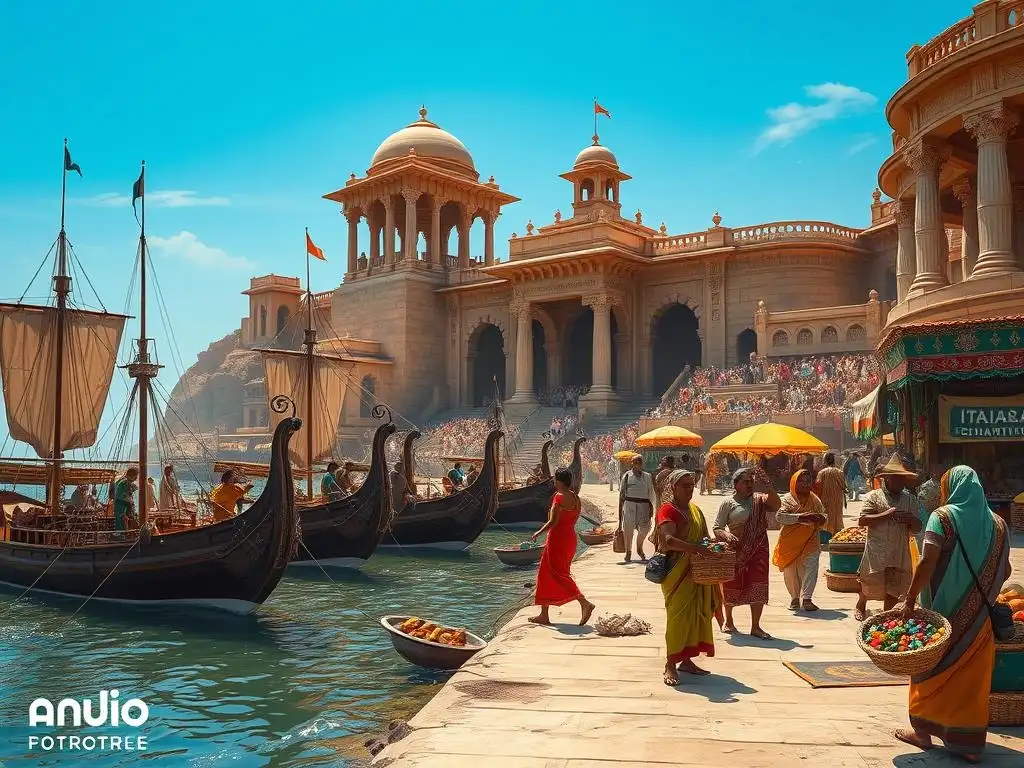
Welcome to Ancient India History, where we embark on a fascinating journey through the rich tapestry of ancient Indian civilizations. From the bustling streets of the Indus Valley to the grandeur of the Gupta Empire, our exploration reveals the profound cultural and economic contributions that shaped a vibrant society. In this article, we dive into the intriguing world of ancient Indian maritime trade ports—vital hubs that connected distant lands and facilitated the exchange of goods and ideas.
Discover how these ports not only thrived on commerce but also played a pivotal role in the cultural tapestry of the region. Are you ready to set sail into this captivating chapter of history?
Introduction to Ancient Indian Maritime Trade
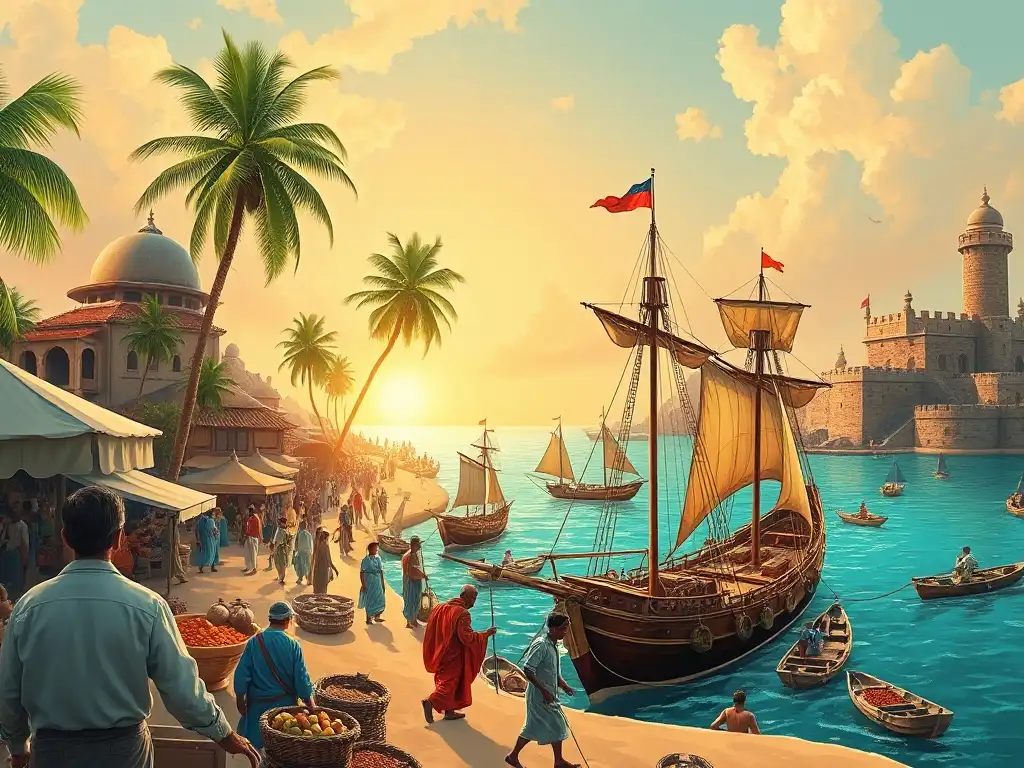
Ancient Indian maritime trade ports played a pivotal role in shaping the economic landscape of the Indian subcontinent and facilitating cultural exchanges with distant civilizations. With a coastline that stretched over 7,500 kilometers, India was strategically positioned to engage in extensive maritime trade across the Indian Ocean, connecting it to regions such as Southeast Asia, the Middle East, and even Africa. This article delves into the significance of these ports, examining their contributions to trade networks, cultural interactions, and the overall economy of ancient India.
Overview of Maritime Trade in Ancient India
The maritime trade of ancient India can be traced back to as early as 3000 BCE, with the Indus Valley Civilization showcasing advanced trading practices. Over the centuries, various dynasties utilized ports to trade goods like spices, textiles, and precious stones, enhancing India’s reputation as a commercial hub. Notable trade routes included:
- The Arabian Sea Route: Connecting India with the Arabian Peninsula and East Africa.
- The Bay of Bengal Route: Linking India with Southeast Asia, particularly through the ports of Tamralipti and Puhar.
- The Indian Ocean Trade Network: Facilitating trade with regions as far as Rome and China.
These routes not only facilitated the exchange of goods but also ideas, technologies, and cultural practices.
Importance of Ports in Trade Networks
Ports served as vital nodes in the complex web of trade networks that crisscrossed ancient India. They enabled:
- Efficient Transportation: Ports provided the necessary infrastructure for the loading and unloading of goods, which was crucial for large-scale trade.
- Cultural Exchange: The bustling activity at ports attracted merchants, travelers, and scholars from various regions, fostering cross-cultural interactions that enriched Indian society.
- Economic Growth: The revenues generated from maritime trade contributed to the prosperity of port cities, leading to the development of thriving urban centers.
The ports of ancient India were indispensable to the functioning of maritime trade, significantly impacting the region's economy and cultural landscape.
Major Ancient Indian Maritime Trade Ports
Key Ports of Ancient India
Several ports emerged as key players in ancient Indian maritime trade, each with its unique contributions:
- Lothal:
- Part of the Indus Valley Civilization, Lothal is renowned for its well-planned dockyard, which facilitated trade with Mesopotamia.
- Significance: This port was crucial for the export of beads, textiles, and pottery.
- Tamralipti:
- Located in present-day West Bengal, Tamralipti was a major hub for trade with Southeast Asia and China.
- Significance: It facilitated the transportation of spices, silk, and other luxury goods.
- Puhar (Kaveripattinam):
- Situated on the southeastern coast, Puhar was integral to trade with the Roman Empire.
- Significance: It was known for its trade in textiles and gems.
- Cochin (Kochi):
- This port became prominent in the medieval period but has roots tracing back to ancient trade activities.
- Significance: It served as a critical center for the spice trade.
These ports not only underpinned the economic prosperity of their regions but also played a significant role in establishing India's maritime identity in the ancient world.
Functions of Ancient Indian Ports
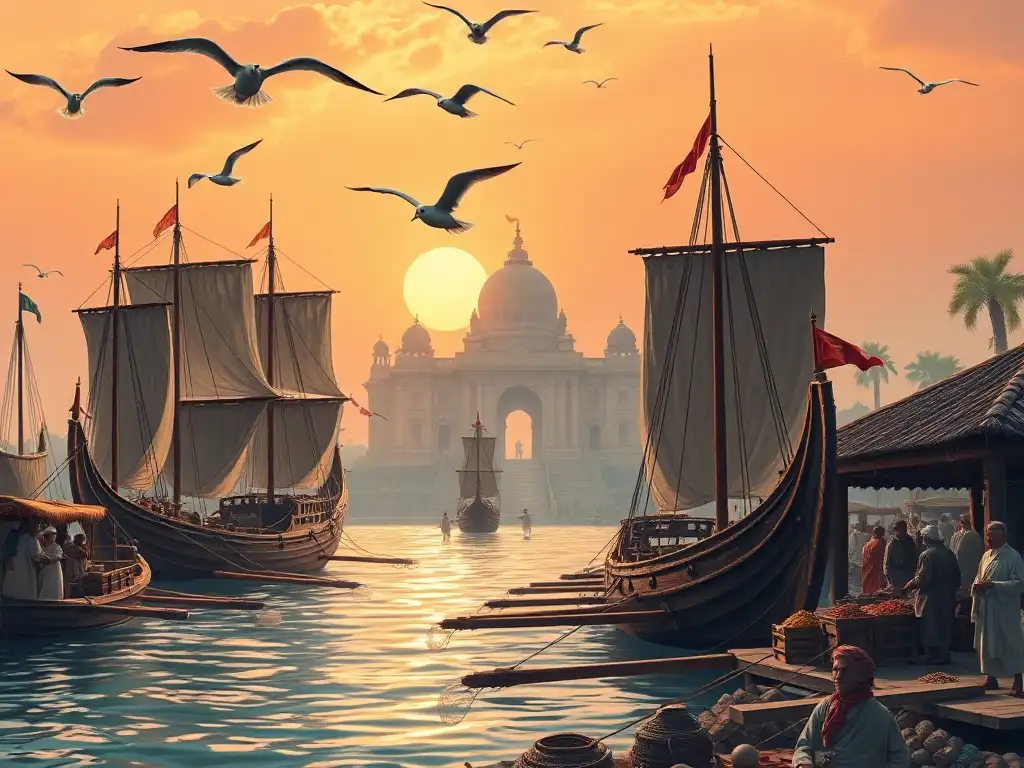
Ancient Indian ports served multifaceted functions that were pivotal to the development of maritime trade and the overall economy. These ports were not merely transit points; they played a crucial role in facilitating commerce, cultural exchanges, and strategic military movements. The integration of various functions enabled these ports to thrive and significantly contributed to the prosperity of ancient Indian civilizations.
Economic Functions of Ports in Maritime Trade
The economic functions of ancient Indian ports were central to their operation. Ports such as Lothal, Sopara, and Muziris were vital hubs for trade, connecting India with distant lands like Mesopotamia, Egypt, and Southeast Asia. They facilitated the export of goods and the import of valuable commodities, which enriched local economies.
Key economic functions included:
- Trade Facilitation: Ports enabled the seamless exchange of goods, serving as marketplaces where merchants could negotiate and transact.
- Revenue Generation: Through customs duties and taxes on goods, ports contributed significantly to state revenues, which were crucial for funding public works and maintaining governance.
- Craftsmanship and Industry: Many ports became centers for specialized crafts. For instance, Murshidabad became known for its silk production, while the coastal city of Calicut was famous for spices.
- Employment Opportunities: The bustling activities at ports created job opportunities not only in maritime trade but also in related sectors such as shipbuilding, warehousing, and transportation.
Cultural and Social Roles of Ports
Beyond their economic significance, ancient Indian ports also served cultural and social functions that enriched the fabric of society. They acted as melting pots where diverse cultures and traditions converged, leading to vibrant exchanges of ideas and customs.
- Cultural Exchange: Ports facilitated interactions between different civilizations, leading to the exchange of art, religion, and philosophy. For example, the spread of Buddhism and Hinduism along trade routes was significantly influenced by maritime connections.
- Social Integration: The influx of foreign traders and travelers contributed to the cosmopolitan nature of port cities. This diversity fostered social integration and the development of new cultural practices and cuisines.
- Religious Influence: Many ports had temples and shrines that attracted pilgrims and traders alike, leading to the proliferation of religious practices and the establishment of trade guilds linked to specific deities.
Strategic Importance of Ports in Trade Routes
The strategic importance of ancient Indian ports cannot be overstated. Their locations along vital maritime routes enabled them to control trade flows and exert political influence over surrounding regions.
- Geopolitical Significance: Ports like Kalyan and Bharukachchha were strategically positioned along the Arabian Sea, allowing them to dominate trade with the Middle East and beyond. This control often translated into political power.
- Military Logistics: Ports served as bases for naval operations and military logistics, enabling quick mobilization of troops and resources during conflicts. The Mauryan Empire, for instance, utilized ports for naval expeditions.
- Facilitation of Long-Distance Trade: The location of ports along trade routes meant they were critical points for the transfer of goods between land and sea trade networks, enhancing the reach of Indian merchants.
Trade Goods and Commodities
The trade conducted through ancient Indian ports was characterized by a diverse array of goods and commodities, both exported and imported. The strategic positioning of these ports allowed them to become vital components of international trade networks.
Key Exports from Ancient Indian Ports
Ancient Indian ports were notable for exporting a variety of goods that were highly sought after in international markets. The following items were commonly traded:
- Spices: India was renowned for its spices, particularly black pepper, cardamom, and cinnamon, which were among its most lucrative exports.
- Textiles: The export of fine textiles, including cotton and silk, established India as a major player in the global textile market.
- Precious Stones and Metals: Indian ports facilitated the export of diamonds, pearls, and gold, which were highly prized by foreign markets.
- Medicinal Herbs: The export of herbal products and medicines also played a significant role, as Indian knowledge of herbal remedies was advanced for its time.
Imports through Maritime Trade
In addition to exports, ancient Indian ports were crucial points for the import of various goods that complemented local demands and industries. Significant imports included:
- Metals: Precious and semi-precious metals, such as gold and silver, were frequently imported to support the flourishing local economy and jewelry industry.
- Luxury Goods: Items like silk from China and glassware from the Roman Empire were imported, catering to the tastes of the affluent class in India.
- Cultural Artifacts: The influx of artworks, religious artifacts, and manuscripts enriched the cultural landscape of Indian society.
- Foodstuffs: Commodities such as wine and certain grains were also imported, diversifying the diet of local populations.
Through these intricate trade networks, ancient Indian maritime trade ports not only fostered economic prosperity but also facilitated cultural exchanges that shaped the subcontinent's historical trajectory.
Trade Routes and Their Connectivity
Ancient Indian maritime trade ports played a pivotal role in establishing and maintaining trade routes that connected various civilizations. The strategic locations of these ports allowed them to serve as vital hubs for the exchange of goods, ideas, and cultures. Major ports such as Lothal, Bharukachcha (modern Bharuch), and Sopara facilitated trade not only within the Indian subcontinent but also extended to regions across the Arabian Sea, the Persian Gulf, and beyond to Southeast Asia and East Africa.
The connectivity offered by these trade routes was instrumental in the flow of goods such as spices, textiles, and precious stones. In return, India received various commodities, including gold, silver, and luxury items from other regions. The efficiency of these maritime routes fostered economic interdependence and cultural exchanges between diverse civilizations, making them a cornerstone of ancient Indian maritime trade.
Major Maritime Trade Routes from Ancient Indian Ports
Several key maritime trade routes emerged from ancient Indian ports, enhancing connectivity with various regions. The most significant routes included:
- The Arabian Sea Route: This route connected the ports of western India with the Arabian Peninsula and East Africa. Goods such as Indian textiles and spices were traded for gold and ivory from Africa and the Middle East.
- The Bay of Bengal Route: This route facilitated trade between eastern Indian ports and Southeast Asia. Ports like Tamralipti served as gateways for Indian goods to reach markets in present-day Myanmar, Thailand, and Indonesia.
- The Indian Ocean Route: This extensive trade network linked Indian ports with the distant shores of the Red Sea and the Persian Gulf. It catered to a vast exchange of goods, including precious stones and aromatic spices, and established India as a key player in the Indian Ocean trade.
These routes were not only essential for economic transactions but also allowed for the exchange of cultural and technological innovations, fostering a rich tapestry of interactions across regions.
The Impact of Ports on Ancient Indian Civilization
The establishment and development of ports significantly influenced ancient Indian civilization, contributing to its economic, cultural, and political landscape. Ports acted as catalysts for growth, enabling the flourishing of trade and commerce, which in turn shaped various aspects of life in ancient India.
Economic Growth and Prosperity
Ports were instrumental in driving economic growth in ancient India. By facilitating maritime trade, they created numerous job opportunities in shipbuilding, navigation, and port management. The influx of wealth generated through trade led to the rise of prosperous merchant classes and contributed to the overall prosperity of coastal regions.
Trade taxes and tariffs collected at these ports were vital for local economies, funding public infrastructure, and enhancing the quality of life for inhabitants. The economic prosperity spurred by maritime trade also encouraged agricultural advancements, as surplus goods could be traded for imports, ensuring a more robust economy.
Cultural Exchanges through Maritime Trade
The maritime trade routes established by ancient Indian ports served as conduits for cultural exchanges. As traders and sailors moved across the seas, they brought with them not only goods but also ideas, beliefs, and traditions. This exchange enriched the cultural tapestry of ancient India, leading to the integration of diverse influences.
For instance, the spread of Buddhism and Hinduism across Southeast Asia can be attributed to the interactions facilitated by maritime trade. Similarly, Indian art, architecture, and literature were influenced by the myriad cultures encountered through these trade networks, creating a unique blend of styles and practices that characterized ancient Indian civilization.
Political Implications of Port Control
The control of ports was not only an economic advantage but also held significant political implications. Dominance over strategic maritime routes allowed rulers to exert power and influence over trade and commerce, leading to territorial expansion and increased political leverage.
Ancient Indian kingdoms often engaged in naval power struggles to secure control over key ports. For example, the Chola dynasty's naval supremacy in the Indian Ocean during the 9th to 12th centuries enabled it to establish a vast empire and facilitate trade with regions such as Southeast Asia. The ability to control ports also meant that rulers could dictate trade terms, impacting the wealth and stability of rival kingdoms.
The control and development of ancient Indian maritime trade ports were crucial for shaping the economic, cultural, and political landscape of ancient India, leaving a legacy that would influence future generations.
Decline of Ancient Indian Maritime Trade Ports
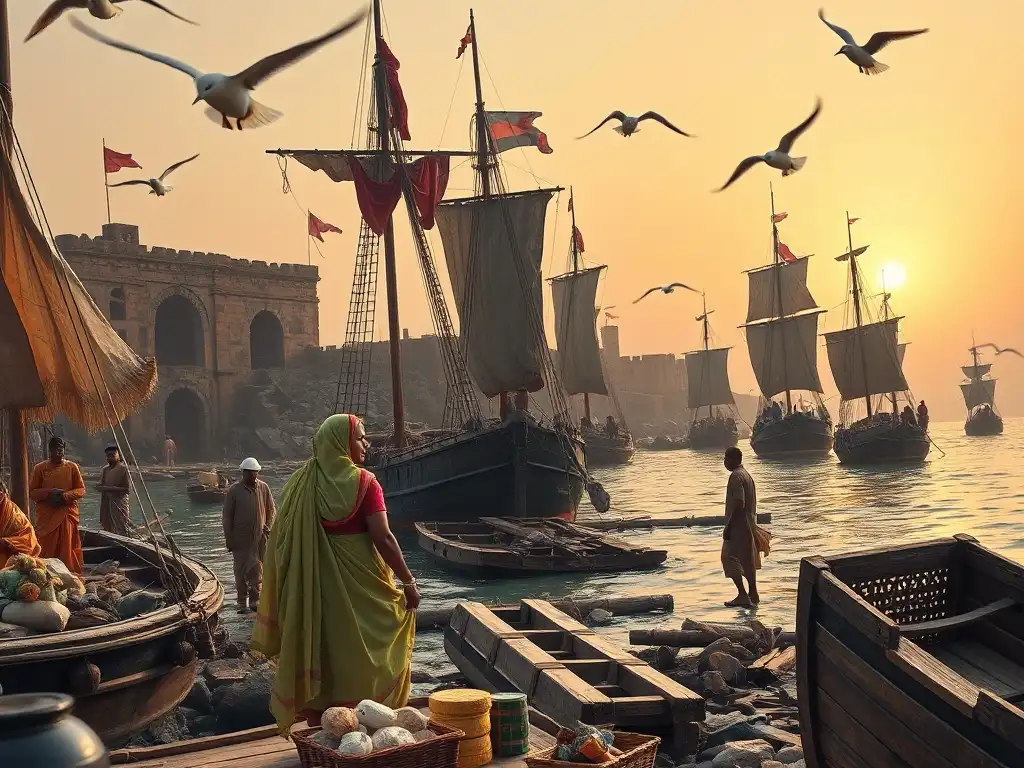
The decline of ancient Indian maritime trade ports marks a significant shift in the trade dynamics of the region, reflecting broader socio-economic and political changes. By the late first millennium CE, several key ports, such as Lothal, Bharukachchha, and Sopara, which once thrived as bustling centers of commerce, experienced a downturn that ultimately diminished their roles in international trade networks.
Several factors contributed to this decline, including changing trade routes, political instability, and environmental shifts that affected port accessibility and maritime capabilities.
Factors Leading to the Decline
- Changing Trade Routes:
- The emergence of new maritime routes, particularly during the rise of the Islamic empires, shifted trade focus to the Arabian Sea and further westward. This resulted in a diversion of trade away from Indian ports to more strategically located ports in the Arabian Peninsula and East Africa.
- Political Instability:
- The political fragmentation of the Indian subcontinent during the medieval period led to instability, making it difficult for ports to operate effectively. Frequent invasions and changing regimes disrupted trade practices and diminished the safety of maritime commerce.
- Environmental Factors:
- Geological and climatic changes, such as siltation of river mouths and alterations in monsoon patterns, adversely impacted the accessibility of several ports. For instance, Lothal, once a thriving port of the Indus Valley Civilization, became increasingly less navigable, leading to its decline.
- Economic Competition:
- The rise of other trading powers, particularly the Chinese and Southeast Asian kingdoms, created competition that challenged the dominance of Indian ports. As these regions developed their maritime capabilities, Indian ports lost their competitive edge in trade.
Historical Context and Consequences
The decline of these ports did not occur in isolation; it was intertwined with the larger historical context of the Indian subcontinent. The fall of the Gupta Empire in the 6th century CE and subsequent invasions led to a fragmented political landscape, which stifled economic growth in many regions.
The consequences were far-reaching:
- Economic Impact: The decline of ports resulted in a significant reduction in maritime trade, leading to a downturn in local economies that relied heavily on trade for sustenance and development.
- Cultural Exchange: As maritime trade diminished, so too did the cultural exchanges that had flourished through trade. The infusion of ideas, art, and technology from various cultures into India dwindled, affecting the cultural richness of the period.
- Shift in Trade Center: With the decline of Indian maritime ports, trading activities began to concentrate in regions beyond India, notably the Middle East and Southeast Asia, which would later influence global trade patterns.
Conclusion: Legacy of Ancient Indian Maritime Trade Ports
The legacy of ancient Indian maritime trade ports is multifaceted, reflecting the complex interplay of commerce, culture, and connectivity. Despite their decline, the historical significance of these ports remains evident in the cultural and economic fabric of the region.
Lasting Impact on Modern Trade Practices
The ancient Indian maritime trade ports laid the groundwork for modern trade practices through their sophisticated systems of commerce, navigation, and maritime law. Contemporary trade networks still reflect certain principles established centuries ago, such as:
- Cultural Integration: The ancient practices of cultural exchange continue to influence modern trade relationships, fostering a spirit of collaboration among nations.
- Trade Routes: Many of today's trade routes echo the ancient pathways, demonstrating the long-lasting impact of historical trade networks on global commerce.
- Port Development: The engineering and infrastructural advancements initiated during ancient times have informed the development of modern ports, emphasizing the importance of accessibility and trade efficiency.
Reflections on Ancient Indian Maritime Heritage
The heritage of ancient Indian maritime trade ports serves as a reminder of the rich historical tapestry that shaped the subcontinent. It highlights the role of commerce in fostering connections among diverse cultures and civilizations, ultimately contributing to the development of a global trade framework.
Today, as we reflect on this legacy, it becomes clear that the ancient Indian maritime trade ports were not merely centers of economic activity but also vital hubs of cultural exchange and innovation. Their contributions continue to resonate, reminding us of the interconnectedness of our world and the enduring significance of trade in shaping human history.
References and Further Reading
The study of ancient Indian maritime trade ports is enriched by a variety of scholarly resources that offer insights into historical practices, economic systems, and cultural exchanges. Below, we explore recommended books, articles, and online resources that provide a deeper understanding of the subject.
Recommended Books and Articles on Ancient Indian Maritime Trade
-
"The Ancient Maritime Trade of India" by D. P. Chattopadhyaya
This book delves into the historical significance of maritime trade in ancient India, covering various ports and trade routes, and highlighting their economic impact on Indian society.
-
"India's Maritime Heritage" by K. K. Sharma
A comprehensive examination of India's maritime history, this work provides detailed descriptions of major ports, trade practices, and the influence of maritime activities on Indian civilization.
-
"Trade and Traders in the Roman Empire" by M. H. W. McDonald
Although focused on the Roman Empire, this book discusses the interconnectedness of trade routes, including those involving ancient Indian ports, offering a broader perspective on maritime commerce.
-
"The Archaeology of Ancient Indian Ports" by F. A. Khan
This article presents archaeological findings related to significant ports in ancient India, discussing their roles in trade and cultural exchange.
-
"Maritime Trade and Cultural Exchange in Ancient India" by R. S. Sharma
This scholarly article highlights the cultural implications of maritime trade, emphasizing how ports facilitated exchanges that shaped ancient Indian society.
Online Resources for Further Exploration of Ports and Trade
-
Digital South Asia Library
An extensive collection of resources related to the history of South Asia, this library includes maps, texts, and images pertaining to ancient maritime trade routes.
-
Harvard University’s Indian Ocean Trade Project
This project provides a wealth of information on trade networks in the Indian Ocean, including the role of Indian ports in maritime trade.
-
National Archives of India - Maritime History
The archives contain documents and materials related to maritime trade, including records of ports, trade agreements, and economic data from ancient times.
-
Ancient Indian Maritime Trade - A YouTube Series
This educational series presents visual content discussing the significance of ports in maritime trade, featuring expert interviews and archaeological insights.
-
Online Journals and Databases
Access to journals such as the Journal of Indian Ocean Studies and databases like JSTOR can provide peer-reviewed articles and research papers focusing on ancient Indian maritime trade.
These resources collectively contribute to a richer understanding of the ancient Indian maritime trade ports and their vital role in the economic and cultural landscapes of the time. Whether through academic texts or digital archives, there are numerous avenues for further exploration in this fascinating area of study.
- Introduction to Ancient Indian Maritime Trade
- Overview of Maritime Trade in Ancient India
- Importance of Ports in Trade Networks
- Major Ancient Indian Maritime Trade Ports
- Functions of Ancient Indian Ports
- Trade Goods and Commodities
- Trade Routes and Their Connectivity
- The Impact of Ports on Ancient Indian Civilization
- Decline of Ancient Indian Maritime Trade Ports
- Conclusion: Legacy of Ancient Indian Maritime Trade Ports
- References and Further Reading
Frequently Asked Questions
What were the major ports in ancient Indian maritime trade?
Ancient India had several important ports such as Lothal, Kalyan, and Tamralipti that facilitated trade with distant lands through maritime routes.
How did ancient Indian ports contribute to trade?
These ports served as hubs for commerce, allowing for the exchange of goods like spices, textiles, and precious stones, thereby enhancing India's economic prosperity.
What role did the Indus Valley Civilization play in maritime trade?
The Indus Valley Civilization is known for its advanced port cities, particularly Lothal, which had a well-planned dockyard that enabled trade with Mesopotamia and other regions.
How did the Gupta Empire influence maritime trade?
During the Gupta Empire, maritime trade flourished due to political stability and the establishment of trade agreements, leading to increased interactions with Southeast Asia.
What were the key goods traded through ancient Indian maritime ports?
Ancient Indian maritime trade primarily involved cotton textiles, spices, silk, and metals, which were highly sought after in international markets.
Final Reflection: The Enduring Legacy of Ancient Indian Maritime Trade Ports
The exploration of ancient Indian maritime trade ports reveals their pivotal role in shaping not only the economy of their time but also the cultural exchanges that resonate through history. Today, as global trade continues to evolve, the lessons from these ancient ports remind us of the interconnectedness of societies and the importance of fostering relationships across borders. The legacy of these bustling hubs of commerce serves as a testament to human ingenuity and the relentless pursuit of progress.
The impact of ancient Indian maritime trade ports extends far beyond their historical significance; they continue to influence our cultural and social landscapes in profound ways. These ports were not merely points of trade; they were melting pots of ideas, traditions, and innovations that enriched civilizations. As we navigate a world that often feels divided, we can draw inspiration from the spirit of collaboration and exchange that characterized these ancient trading networks. Trade is not just about goods; it is about the exchange of ideas and cultures that shape our world.
As we reflect on the lessons learned from the ancient Indian maritime trade ports, I invite you to consider how you can apply these insights in your own life. Embrace the spirit of connection and collaboration in your personal and professional endeavors. Whether it’s through fostering relationships, sharing knowledge, or exploring new cultures, let the legacy of these ancient ports inspire you to build bridges in today’s world. The past offers us a roadmap, and it is up to us to navigate our future with the wisdom gleaned from those who came before us.
Thank you for immersing yourself in the fascinating world of ancient Indian maritime trade! You've uncovered the vital role that ports played in connecting diverse cultures and economies. With this newfound knowledge, it's time to take action and delve deeper into this captivating history.
Here are a few ways you can continue your journey:
- Explore further: Visit a local museum or library to discover artifacts and narratives related to ancient Indian trade.
- Join a community: Connect with fellow history enthusiasts, either online or in your local area, to discuss findings and share perspectives on the significance of maritime trade.
- Engage with others: Share this article with friends on social media to spark discussions about how ancient practices continue to shape modern trade.
Which aspect of ancient Indian ports intrigues you the most, and how do you think they influenced today's maritime trade?