
Trade and Economy in Ancient India: A Comparative Study


Welcome to Ancient India History, where we embark on a mesmerizing journey through the tapestry of time, exploring the rich and diverse history of ancient Indian civilizations. In our featured article, "Trade and Economy in Ancient India: A Comparative Study," we delve into the intricate networks of ancient Indian trade and how they shaped not only local economies but also influenced far-reaching cultures.
What secrets lie within the bustling markets of the Indus Valley or the bustling ports of the Gupta Empire? Join us as we uncover the fascinating stories behind the commerce that connected these remarkable societies and laid the groundwork for a thriving economy, igniting your curiosity to explore more!
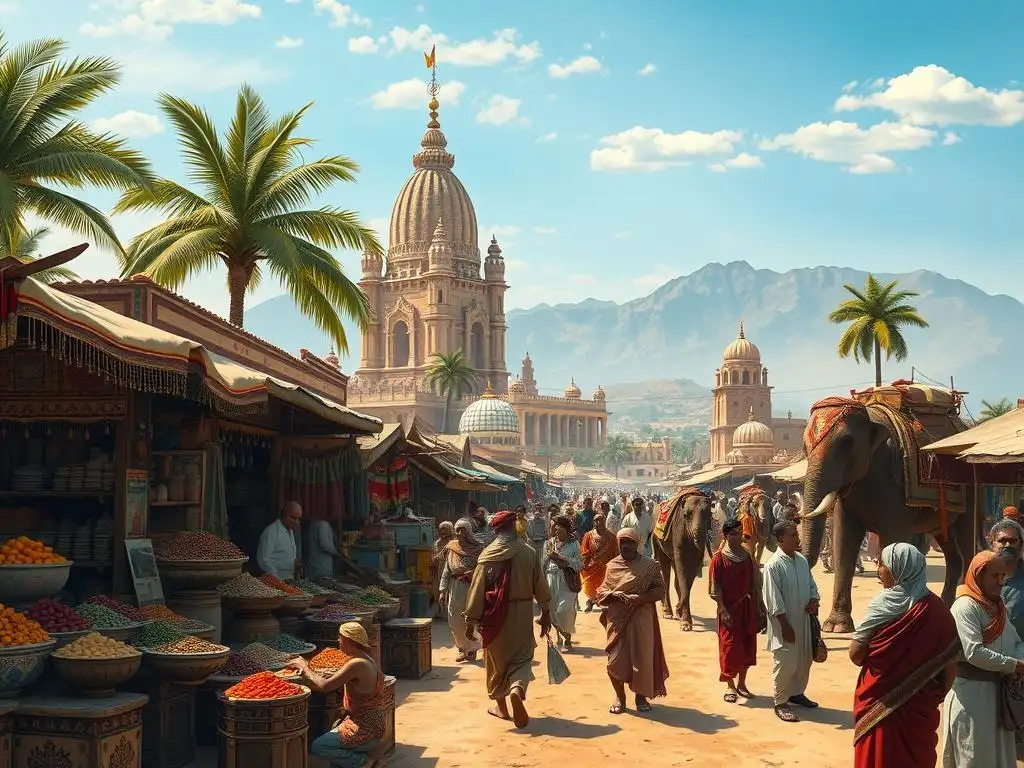
Introduction to Ancient Indian Trade and Economy
Ancient India boasts a vibrant and complex history of trade and economic practices that significantly contributed to its cultural and social development. From the bustling markets of the Indus Valley Civilization to the thriving commerce during the Gupta Empire, trade was not merely a means of exchanging goods; it was a vital lifeline that connected diverse regions, facilitated cultural exchanges, and fostered economic prosperity.
This article delves into the multifaceted aspects of ancient Indian trade and economy, exploring major trade routes, practices, and their implications on society. By understanding these elements, we can appreciate the rich tapestry of interactions that shaped ancient Indian civilization.
Overview of Trade Practices in Ancient India
Trade in ancient India involved a variety of goods, including spices, textiles, precious stones, and metals. Merchants and traders played a crucial role, often organized into guilds that regulated trade practices. The use of weights and measures, the development of coinage, and the establishment of trade regulations further facilitated smooth transactions. Notably, ancient Indian trade was characterized by:
- Barter System: Goods were exchanged directly without the use of money.
- Emergence of Coinage: The introduction of coins, such as the punch-marked coins of the Mauryan period, simplified transactions.
- Trade Guilds: These organizations protected merchants' interests, ensuring fair trade practices.
Importance of Trade in Ancient Indian Society
The significance of trade in ancient Indian society extends beyond mere economics. It was instrumental in shaping social structures, cultural exchanges, and even political dynamics. Key aspects include:
- Cultural Exchange: Trade routes facilitated the spread of ideas, religions, and art forms, enriching Indian culture.
- Economic Prosperity: Trade contributed to the wealth of cities, resulting in urbanization and the growth of infrastructure.
- Political Alliances: Economic ties often led to strategic political partnerships, enhancing stability and security.
Major Trade Routes in Ancient India
Ancient India was strategically located along several major trade routes that connected it to various parts of the world. These routes not only enabled the exchange of goods but also facilitated cultural and technological exchanges.
The Silk Road and its Impact on Indian Trade
The Silk Road was one of the most significant trade networks that linked India with China, Persia, and beyond. This route allowed for the exchange of silk, spices, and other luxury goods. Its impact on Indian trade can be summarized as follows:
- Increased Trade Volume: Indian merchants engaged with traders from diverse cultures, expanding their markets.
- Cultural Diffusion: The Silk Road facilitated the spread of Buddhism from India to Central Asia and China.
- Technological Exchange: Innovations such as the use of the astrolabe and advancements in navigation were shared along this route.
The Maritime Trade Routes of Ancient India
In addition to overland routes, ancient India also had extensive maritime trade networks connecting it with regions across the Indian Ocean. Major features of these routes include:
- Trade with Southeast Asia: Indian traders exchanged textiles and spices for gold and luxury items from regions like present-day Indonesia and Malaysia.
- Ports and Infrastructure: Cities like Lothal and Arikamedu served as critical ports, enhancing maritime trade efficiency.
- Cultural Interactions: Indian seafarers not only traded goods but also spread their culture and religions along the coasts.
Regional Trade Networks within the Indian Subcontinent
Within the Indian subcontinent itself, regional trade networks flourished, connecting various kingdoms and communities. This internal trade system was characterized by:
- Local Markets: Towns and villages had markets where local goods were exchanged, fostering community relations.
- Agricultural Trade: Surplus agricultural products were traded between regions, contributing to food security and economic stability.
- Inter-kingdom Alliances: Trade routes often led to alliances and rivalries among local kingdoms, influencing political landscapes.
By examining the intricate web of trade and economic practices in ancient India, we can gain a deeper understanding of how these factors contributed to the civilization's resilience and richness. The exploration of trade routes, both overland and maritime, reveals the interconnectedness of ancient India with the broader world, laying the groundwork for future economic and cultural developments.
Comparative Analysis of Trade Practices
Trade practices in ancient India evolved significantly over time, reflecting the changing socio-economic landscapes, technological advancements, and cultural exchanges with neighboring regions. In the early periods, such as during the Indus Valley Civilization, trade was primarily local and facilitated through barter systems, involving goods produced within the region. As civilizations progressed, particularly during the Maurya and Gupta Empires, trade expanded in scale and complexity. The establishment of major trade routes, such as the Silk Road, allowed for the exchange of not only goods but also ideas, cultures, and technologies.
The Maurya Empire marked a pivotal shift towards organized trade, with state involvement and the establishment of standardized weights and measures. This period saw the emergence of urban centers that served as trade hubs, enhancing long-distance trade with regions as far as the Mediterranean and Southeast Asia. Conversely, during the Gupta Empire, trade flourished even more, benefiting from political stability and economic prosperity. This era was characterized by a vibrant marketplace culture and the flourishing of crafts, leading to increased exports.
Ancient Indian trade practices transitioned from localized barter systems to complex networks of commerce influenced by political, economic, and cultural factors, highlighting the adaptability and resilience of Indian civilizations.
Trade Practices in the Indus Valley Civilization
The Indus Valley Civilization (circa 3300–1300 BCE) is recognized for its advanced urban planning and sophisticated trade practices. Archaeological evidence reveals that the people of this civilization engaged in extensive local and regional trade, primarily using a barter system. Key trade items included agricultural products, such as wheat and barley, as well as crafted goods like pottery, jewelry, and seals.
Trade networks extended across the Indian subcontinent and beyond, with findings indicating connections to Mesopotamia and the Persian Gulf. The use of standardized weights and measures, as evidenced by the discovery of uniform stone weights, facilitated trade transactions and promoted economic stability. Additionally, the presence of dockyards in places like Lothal highlights the significance of maritime trade, where goods were transported via the Arabian Sea.
Overall, the trade practices of the Indus Valley Civilization laid the groundwork for future economic systems in ancient India, showcasing a blend of local production and long-distance trade.
Trade and Economy during the Maurya Empire
The Maurya Empire (322–185 BCE) represented a transformative period in ancient Indian trade and economy. Under the leadership of Chandragupta Maurya and later Ashoka, the empire established a centralized administration that significantly influenced trade practices. The state played an active role in regulating trade routes, ensuring the safety of merchants, and imposing certain taxes, which contributed to the empire's economic prosperity.
During this period, trade expanded significantly, with major cities like Pataliputra emerging as bustling commercial hubs. The empire's extensive road networks, including the Grand Trunk Road, connected different regions and facilitated the movement of goods across vast distances. The Mauryan economy was diverse, dealing in various commodities, including textiles, spices, and medicinal plants.
Moreover, the Maurya Empire's strategic location allowed for trade with foreign nations, including the Hellenistic kingdoms, fostering cultural exchanges and international relations. The introduction of coinage, particularly the use of punch-marked coins, streamlined trade and made transactions more efficient, marking a pivotal shift in economic practices.
Gupta Empire: A Golden Age of Trade
The Gupta Empire (circa 240–550 CE) is often referred to as a golden age of ancient Indian history, characterized by remarkable advancements in art, science, and trade. This period witnessed the flourishing of commerce, driven by political stability and economic prosperity. The Gupta rulers promoted trade by maintaining infrastructure, such as roads and marketplaces, which facilitated both domestic and international trade.
The trade networks during the Gupta Empire expanded to include significant connections with regions such as Southeast Asia, the Middle East, and beyond. Indian merchants actively engaged in maritime trade, exporting goods like spices, textiles, and precious stones to foreign markets. The Gupta period is notable for the establishment of trade guilds, which organized craftsmen and merchants, ensuring quality control and fair practices in trade.
Additionally, the exchange of ideas and cultural practices thrived during this time, with Indian goods influencing foreign art and culture and vice versa. The Gupta Empire not only solidified India's economic position on the global stage but also left a lasting legacy in the realms of science, philosophy, and culture.
Key Goods and Commodities in Ancient Indian Trade
Ancient Indian trade was marked by a diverse array of goods and commodities that were highly sought after both locally and globally. The rich agricultural landscape, skilled craftsmanship, and abundant natural resources contributed to the production of various trade items that defined ancient Indian commerce.
Spices: The Backbone of Ancient Indian Trade
Spices were among the most coveted commodities in ancient Indian trade, often referred to as the backbone of the economy. India was renowned for its rich variety of spices, including black pepper, cardamom, cinnamon, and turmeric, which not only enhanced culinary experiences but also had medicinal properties.
The global demand for Indian spices led to extensive trade relationships with regions like the Roman Empire, the Middle East, and Southeast Asia. Spice trade routes were established, with merchants transporting these precious goods over land and sea, often facing significant challenges. The spice trade not only contributed to India's wealth but also played a crucial role in cultural exchanges, as spices became integral to the cuisines of various cultures.
Textiles and Handicrafts: The Cultural Signature of India
Textiles and handicrafts were another vital aspect of ancient Indian trade, showcasing the rich cultural heritage and craftsmanship of the subcontinent. India was famed for its high-quality cotton, silk, and woolen fabrics, which were intricately designed and dyed using traditional methods. Major centers of textile production, such as Varanasi, Ahmedabad, and Madurai, became significant hubs for trade.
The demand for Indian textiles extended far beyond the subcontinent, with traders exporting these goods to regions such as Persia, China, and Europe. Handicrafts, including pottery, metalwork, and jewelry, also played a significant role in trade, reflecting the artistry and skills of Indian artisans. The exchange of textiles and handicrafts not only boosted the economy but also facilitated intercultural dialogues, as these goods carried stories and traditions across borders.
Precious Metals and Stones: Economic Value and Trade
Precious metals and stones held immense economic value in ancient Indian trade, significantly contributing to the wealth of various civilizations. Gold and silver were not only used as currency but also for crafting exquisite jewelry and ceremonial items, making them highly desirable in both domestic and international markets.
India was also known for its rich deposits of gemstones, including diamonds, rubies, and emeralds, which attracted merchants from far and wide. The trade of these precious commodities was often conducted through intricate networks, connecting India to distant lands such as the Middle East and Europe. The high demand for Indian gems and metals fostered trade relationships and cultural exchanges, showcasing India's role as a significant player in the global economy of ancient times.
The trade of spices, textiles, handicrafts, and precious materials not only enriched the ancient Indian economy but also played a vital role in the cultural and social exchanges that shaped the history of the region.
The Role of Currency in Ancient Indian Trade

Currency played a pivotal role in shaping the trade dynamics of ancient India. As trading practices evolved, the necessity for a standardized medium of exchange became increasingly apparent. Currency facilitated smoother transactions, eliminated the inefficiencies of barter, and allowed for greater economic complexity. The adoption of currency not only streamlined trade but also enhanced trust among merchants, as it provided a uniform measure of value that could be easily recognized and accepted across diverse regions.
Evolution of Currency in Ancient India
The evolution of currency in ancient India can be traced back to the use of commodity money, such as grains, cattle, and precious metals, which served as a means of trade. Over time, with the growth of urban centers and increased trade interactions, the need for more standardized forms of currency arose. The earliest coins, known as "punch-marked coins," appeared during the 6th century BCE. These coins, made of silver and stamped with various symbols, represented a significant advancement in facilitating trade.
Subsequently, the introduction of gold coins, such as the "dinara," provided an even more reliable form of currency, especially for larger transactions. By the time of the Maurya and Gupta empires, a sophisticated monetary system was in place, characterized by a range of denominations and a well-established minting process. This evolution of currency not only facilitated domestic trade but also positioned ancient India as a vital player in international trade networks.
Barter System vs. Currency Trade
The barter system, which involved the direct exchange of goods and services, was the primary method of trade in ancient societies. However, it had significant limitations, such as the double coincidence of wants—both parties needing to desire what the other offered. As trade networks expanded and the economy grew more complex, these limitations became increasingly problematic.
Currency trade, on the other hand, allowed for greater flexibility and efficiency. With currency, merchants could conduct transactions without needing to find a direct match for their goods. This shift not only simplified trade but also led to the emergence of more specialized professions, as individuals could trade their surplus goods for currency and use that currency to purchase what they needed. Consequently, the transition from barter to currency-based trade was instrumental in fostering economic growth and expanding trading networks across ancient India.
Impact of Currency on Trade Expansion
The introduction of currency had a profound impact on the expansion of trade in ancient India. As merchants began to use coins, trade routes flourished, connecting various regions within India and beyond. Currency enabled traders to travel greater distances, as they no longer relied solely on local exchanges. This led to the establishment of significant trade routes, such as the Silk Road and the maritime routes to Southeast Asia, facilitating not only the exchange of goods but also ideas, culture, and technology.
Moreover, the standardization of currency allowed for the establishment of markets and trade centers, further stimulating economic activity. The ability to conduct trade more efficiently encouraged the growth of towns and cities, which became hubs of commerce and cultural exchange. Ultimately, the impact of currency on trade expansion laid the foundation for a more integrated and dynamic economy in ancient India.
Comparative Influence of Trade on Ancient Indian Civilizations
Trade significantly influenced the development and prosperity of ancient Indian civilizations, acting as a catalyst for economic growth, cultural exchange, and urbanization. Each civilization leveraged its geographical advantages and resources to establish trade networks that not only enhanced their wealth but also facilitated interactions with other cultures.
Economic Growth and Cultural Exchange
The extensive trade networks established by ancient Indian civilizations fostered economic growth and cultural exchange. Goods such as spices, textiles, and precious stones were highly sought after in both domestic and international markets. This demand drove production and innovation, as artisans and merchants sought to meet the needs of consumers.
As trade flourished, so did cultural interactions. The exchange of goods was often accompanied by the exchange of ideas, religions, and customs. For instance, the spread of Buddhism and Jainism across trade routes illustrates how commerce served as a medium for cultural diffusion. This exchange enriched Indian culture, contributing to a diverse tapestry of beliefs, practices, and artistic expressions that characterized ancient Indian society.
Trade as a Catalyst for Urbanization
The growth of trade in ancient India was a significant factor in the urbanization of various regions. As trade routes expanded, towns and cities emerged as centers of commerce, drawing in merchants, artisans, and laborers. These urban centers became vibrant hubs of economic activity, where goods from different regions converged, and cultural exchanges flourished.
Cities like Pataliputra, Ujjain, and Taxila thrived due to their strategic locations along major trade routes. The influx of wealth and population led to advancements in infrastructure, including roads, marketplaces, and public buildings. This urbanization not only transformed the economic landscape but also contributed to social and political developments, laying the groundwork for the rise of powerful kingdoms and empires in ancient India.
Long-term Impact on Modern Indian Economy
The legacy of ancient Indian trade and economy continues to resonate in modern India. The foundations laid by ancient trade practices have evolved, shaping contemporary economic structures and trade relationships. The historical emphasis on trade has fostered a culture of entrepreneurship and innovation, which remains a hallmark of the Indian economy today.
Moreover, the ancient trade routes established connections with regions that still influence India’s economic landscape, including the Middle East, Southeast Asia, and beyond. The rich tradition of trade has also contributed to India’s reputation as a global player in sectors such as textiles, technology, and information services. Understanding the historical context of ancient Indian trade and economy provides valuable insights into the enduring impact of these early practices on India's modern economic framework.
Conclusion: The Legacy of Ancient Indian Trade and Economy
The trade and economy of ancient India represent a complex and vibrant tapestry woven through centuries of interactions and exchanges. From the bustling marketplaces of the Indus Valley to the thriving trade routes that connected India with distant lands, such as the Silk Road, the economic practices of ancient Indian civilizations laid the groundwork for a rich legacy that continues to influence modern economic systems.
The comparative study of ancient Indian trade reveals not only the sophistication of trade networks but also the cultural exchanges that occurred alongside economic transactions. The integration of various goods, ideas, and technologies from diverse regions facilitated not just commerce but also the diffusion of knowledge and cultural practices. This exchange contributed significantly to the development of the arts, sciences, and philosophies that characterize India's historical narrative.
As we reflect on the legacy of ancient Indian trade and economy, it becomes evident that these practices were not merely limited to material exchanges but were deeply intertwined with the social and cultural fabric of the time. The resilience and adaptability of ancient trade routes and practices underscore a legacy that continues to resonate in contemporary India.
Summary of Key Findings in the Comparative Study
- Diverse Trade Networks: Ancient Indian trade was characterized by a variety of networks, including land and maritime routes, facilitating trade with regions such as the Middle East, Southeast Asia, and beyond. These networks were crucial for the exchange of goods like spices, textiles, and precious stones.
- Economic Systems: The economic systems of ancient India were marked by both barter and monetary exchanges. The use of standardized weights and measures, as well as the introduction of coins, played a significant role in streamlining trade practices.
- Cultural Exchanges: Trade routes served as conduits for cultural and intellectual exchanges. The spread of religions, philosophies, and art forms can be traced back to interactions facilitated by trade, highlighting the interconnectedness of ancient civilizations.
- Agricultural Foundations: The economy of ancient India was primarily agrarian, with agriculture providing the backbone for trade. Surplus production allowed for the growth of markets and urban centers, which became hubs of commercial activity.
- Influence of Geography: The geographical diversity of India significantly influenced trade patterns. Coastal cities thrived on maritime trade, while inland trade routes connected various regions, enabling the flow of goods and ideas across vast distances.
The Lasting Influence of Ancient Trade Practices on Contemporary India
The practices and principles of ancient Indian trade have left an indelible mark on contemporary India's economic landscape. Modern India continues to benefit from its historical position as a hub of trade and commerce. Key aspects of ancient trade that endure today include:
- Entrepreneurial Spirit: The entrepreneurial mindset fostered during ancient times persists in modern Indian culture, where trade and commerce are viewed as vital components of economic life.
- Cultural Heritage: The rich tapestry of cultural influences that arose from ancient trade routes is evident in contemporary Indian arts, cuisine, and traditions, showcasing a blend of indigenous and foreign elements.
- Global Trade Relationships: India remains an active participant in global trade, with its historical connections facilitating contemporary trade agreements and partnerships with nations across the world.
- Market Diversity: The legacy of diverse trading practices has contributed to India's dynamic market environment, where a wide array of products and services are exchanged, reflecting both traditional crafts and modern innovations.
References
Key Sources for Further Reading on Ancient Indian Trade and Economy
- "The Indus Valley Civilization: A Contemporary Perspective": by Jane McIntosh – An exploration of the economic practices of the Indus Valley civilization, including trade and craft specialization.
- "Trade and Traders in Ancient India" by Anirudh Deshpande – A comprehensive study of the various trade routes and the role of traders in ancient Indian society.
- "India: A History": by John Keay – A detailed narrative of Indian history that includes discussions on the economic systems and trade practices throughout various periods.
- "The Spice Route: A History": by John Keay – This book delves into the historical significance of spice trade and its impact on global commerce, with a focus on India.
- Journal of Ancient Indian History – An academic journal featuring articles and research studies that explore different facets of ancient Indian history, including trade and economy.
This collection of resources provides valuable insights into the rich history of ancient Indian trade and economy, ideal for those looking to deepen their understanding of this fascinating subject.
- Introduction to Ancient Indian Trade and Economy
- Major Trade Routes in Ancient India
- Comparative Analysis of Trade Practices
- Key Goods and Commodities in Ancient Indian Trade
- The Role of Currency in Ancient Indian Trade
- Comparative Influence of Trade on Ancient Indian Civilizations
- Conclusion: The Legacy of Ancient Indian Trade and Economy
- References
Frequently Asked Questions
What were the main features of ancient Indian trade?
Ancient Indian trade was characterized by extensive networks that connected various regions. Key features included overland and maritime routes, trade with distant civilizations, and the exchange of goods like spices, textiles, and precious metals.
How did the economy function in ancient India?
The economy in ancient India was primarily agricultural, supported by craftsmanship and trade. It involved various production systems, including farming and handicrafts, which facilitated trade and contributed to the wealth of civilizations like the Maurya and Gupta Empires.
What role did currency play in ancient Indian trade?
Currency in ancient India evolved from barter systems to the use of metal coins, which standardized trade. The introduction of currency simplified transactions, encouraged commerce, and facilitated economic growth across different regions.
How did ancient Indian trade influence cultural exchanges?
Trade in ancient India was not just about goods; it also led to significant cultural exchanges. This interaction resulted in the spread of religions, languages, and art forms, enriching the cultural tapestry of India and neighboring regions.
What were the impacts of foreign trade on ancient Indian economy?
Foreign trade significantly impacted the ancient Indian economy by introducing new products and technologies. It fostered economic prosperity, enhanced cultural interactions, and established India as a crucial player in the global market of the ancient world.
Final Reflection: The Enduring Legacy of Ancient Indian Trade and Economy
The intricate tapestry of ancient Indian trade and economy remains profoundly relevant today, as it highlights the foundational principles of commerce, cultural exchange, and economic resilience. In an era where globalization shapes our interactions, understanding the historical context of trade practices in ancient India offers invaluable insights into the dynamics of modern economies. The lessons learned from the past not only illuminate our current economic frameworks but also remind us of the interconnectedness of societies throughout history.
The influence of ancient Indian trade and economy extends far beyond mere historical interest; it has shaped cultural identities and social structures that persist in contemporary society. The vibrant trade routes and economic systems established centuries ago fostered a spirit of innovation and collaboration that continues to inspire modern entrepreneurs and policymakers.
As Mahatma Gandhi once said, "> The best way to find yourself is to lose yourself in the service of others." This sentiment echoes the cooperative nature of ancient trade, where mutual benefit and respect were paramount, urging us to reflect on the importance of community in our economic endeavors today.
As we contemplate the rich legacy of ancient Indian trade and economy, I invite you to consider how these historical insights can inform your personal and professional life. Reflect on the values of collaboration, resilience, and cultural appreciation that characterized ancient trade practices. How can you apply these principles in your own interactions and decisions? By embracing the lessons of the past, we can forge a more connected and compassionate future, ensuring that the spirit of ancient Indian trade and economy continues to thrive in our modern world.
Unleash Your Curiosity about Ancient India's Trade!
Thank you for diving into the fascinating world of trade and economy in ancient India! We hope you gained valuable insights into how commerce shaped societies and cultures. Now, it’s time to take that knowledge further and explore the intriguing connections between history and the present.
Here are a few simple yet impactful steps you can take right now:
- Dive Deeper: Explore our related articles on ancient trade routes and their influence on contemporary economies.
- Share the Knowledge: Discuss this topic with friends or family, or share this article on social media to spark conversations about history.
- Join Our Community: Participate in our forum to connect with fellow history enthusiasts and engage in vibrant discussions about trade practices in ancient civilizations.
What aspect of ancient trade intrigues you the most, and why? We invite you to share your thoughts below!