
The Transition from Barter to Currency: Ancient India’s Economic Revolution


Welcome to Ancient India History, where we embark on a fascinating journey through the rich tapestry of ancient Indian civilizations. In our featured article, "The Transition from Barter to Currency: Ancient India’s Economic Revolution," we delve into the pivotal economic transformation that reshaped society, trade, and cultural practices. Discover how the evolution from barter systems to currency not only facilitated commerce but also laid the foundation for an interconnected world.
Prepare to explore the intricate dynamics of trade and economy that flourished during this remarkable era, and uncover the profound impacts that resonate to this day. Dive in and let your curiosity lead the way!
Introduction to Ancient India Economic Transformation
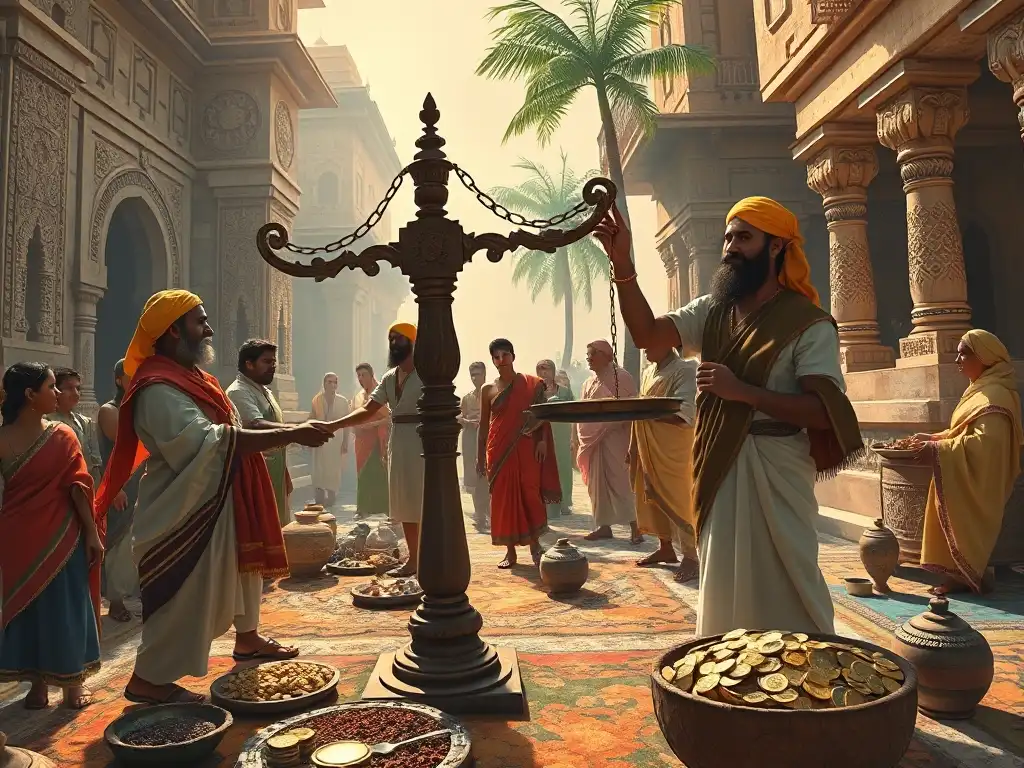
The evolution of economic systems is a pivotal aspect of human civilization, and ancient India provides a fascinating case study in this regard. The transition from barter to currency marked a significant economic transformation in ancient India, paving the way for more complex trade networks and stimulating economic growth. This shift not only facilitated easier transactions but also laid the groundwork for the development of sophisticated financial practices that would influence later civilizations. Understanding this transition reveals the intricate relationship between economic practices and cultural development in ancient India, illustrating how economic systems shaped societal structures and interactions.
Overview of Barter System in Ancient India
The barter system served as the foundational economic practice in ancient India, where goods and services were exchanged directly without the use of money. This system relied heavily on mutual agreement and the double coincidence of wants, meaning that both parties had to desire what the other had to offer. For instance, a farmer might exchange surplus grain for pottery from a craftsman, creating a localized economy based on direct trade.
- Limitations of Barter:
- Difficulty in finding trading partners.
- Lack of standardization in value assessment.
- Inefficiency in storing wealth over time.
Despite these challenges, the barter system thrived in various forms across ancient Indian societies, from rural villages to bustling urban centers, as it fostered community ties and local economies.
Significance of Currency in Economic Development
The introduction of currency revolutionized the economic landscape of ancient India. With the emergence of standardized coins, trade became more efficient, allowing for a clearer valuation of goods and services. Currency facilitated:
- Increased Trade Volume:
- Expanding trade routes and interactions with other cultures.
- Economic Specialization:
- Encouraging artisans and merchants to focus on specific trades, enhancing productivity and innovation.
- Wealth Accumulation:
- Enabling individuals and states to store wealth more effectively, leading to investment in infrastructure and culture.
The shift to currency was not merely a change in medium; it represented a broader transformation in economic thought and practice, influencing governance, social structures, and even philosophical perspectives on wealth and value.
Historical Context of Economic Practices in Ancient India
The economic practices in ancient India cannot be fully understood without considering the historical context in which they evolved. From the sophisticated urban planning of the Indus Valley Civilization to the vibrant trade routes established during the Mauryan Empire, these practices were shaped by geography, culture, and technological advancements.
Economic Systems in the Indus Valley Civilization
The Indus Valley Civilization (c. 3300–1300 BCE) is often hailed as one of the earliest urban societies, showcasing advanced economic practices that predate the widespread use of currency. Archaeological findings suggest a highly organized system of trade and resource distribution.
- Key Features:
- Standardized weights and measures for trade.
- Evidence of trade with distant regions, including Mesopotamia.
- Use of seals for identification in commercial transactions.
These elements indicate a complex economic system where goods were exchanged and regulated, setting the stage for future economic transformations.
The Role of Trade in Early Indian Societies
Trade played a crucial role in shaping the economic landscape of early Indian societies. As communities grew and interacted, trade networks expanded both domestically and internationally.
- Trade Routes:
- Major routes connected India to Central Asia, the Mediterranean, and beyond, facilitating the exchange of goods such as spices, textiles, and precious metals.
- Cultural Exchange:
- Trade not only involved material goods but also led to the exchange of ideas, art, and technology, enriching Indian civilization.
- Formation of Marketplaces:
- The rise of urban centers led to the establishment of marketplaces, which became hubs of economic, social, and cultural activity.
As trade flourished, it became increasingly clear that a more efficient medium for transactions was necessary, ultimately culminating in the transition from barter to currency and marking a significant milestone in the ancient India economic transformation.
The Limitations of Barter System in Ancient India
The barter system, while functional in its time, presented several limitations that hindered the economic growth of ancient Indian civilizations. One of the primary challenges was the double coincidence of wants; for a successful trade to occur, both parties had to desire what the other offered. This made transactions cumbersome, leading to inefficiencies in trade.
Additionally, the lack of a standardized measure of value created discrepancies in trade. For instance, how much grain equated to a certain quantity of cloth? This ambiguity often resulted in disputes and dissatisfaction among traders. Furthermore, perishability posed a significant issue; goods like fruits and vegetables had limited shelf lives, making them less reliable as trade items.
Moreover, the barter system was heavily localized, restricting trade to specific regions. This limitation prevented the broader economic interaction necessary for fostering trade networks, resulting in isolated economies that could not benefit from the diversification of goods and services.
Challenges Faced by Barter Transactions
The barter system faced numerous challenges that affected its effectiveness. Key issues included:
- Lack of Standardization: Without a common unit of exchange, trades were subject to personal valuations, leading to inconsistency.
- Storage and Perishability: Many barter goods were perishable or difficult to store, complicating long-term trade planning.
- Limited Reach: Traders were often confined to local markets, leading to a lack of variety in available goods and services.
- Transaction Costs: The time and effort spent in finding a suitable trading partner increased transaction costs significantly.
These challenges ultimately necessitated a shift towards a more efficient system, paving the way for the introduction of currency.
Impact on Trade and Economic Growth

The limitations of the barter system had profound implications for trade and economic growth in ancient India. The inefficiencies inherent in barter transactions restricted the volume and frequency of trade, stunting the development of larger markets. Additionally, the inability to store value effectively meant that individuals were less likely to save or invest, hindering capital accumulation.
As a result, economic growth was primarily restricted to subsistence levels. The complexity of trade networks was limited, preventing the exchange of diverse goods and services across different regions. This situation ultimately created an economic stagnation that could not support the burgeoning populations and urban centers of ancient India.
The Emergence of Currency in Ancient India
The emergence of currency marked a significant turning point in ancient India's economic landscape. This transition facilitated trade by providing a common medium of exchange, resolving many of the inefficiencies associated with bartering. The introduction of currency allowed for easier valuation of goods and services, enabling traders to engage in more complex economic activities.
Introduction of Metal Coins and Their Significance
The introduction of metal coins in ancient India, around the 6th century BCE, revolutionized economic interactions. Coins made from precious metals such as gold, silver, and copper provided a standardized medium of exchange that was durable and widely accepted.
Coins were not only portable but also easily divisible, allowing traders to conduct transactions of varying sizes without complications. The adoption of metal coins facilitated long-distance trade, as they could be transported easily and exchanged for goods across different regions. This innovation also encouraged the growth of markets and urban centers, fostering economic development and cultural exchange.
Key Players in the Transition to Currency
Several key players contributed to the transition from barter to currency in ancient India.
- Rulers and Monarchs: Various kings and emperors, such as the Mahajanapadas and later the Mauryan Empire, played a crucial role in minting coins, thereby establishing a standardized currency system.
- Merchants and Traders: In response to the limitations of barter, merchants began advocating for and adopting coins, facilitating trade across regions.
- Artisans: Skilled artisans contributed to the production of coins, enhancing the economic infrastructure necessary for a currency-based economy.
These players collectively contributed to the establishment of a robust economic system that laid the foundation for future trade and commerce in ancient India, paving the way for the flourishing of civilizations that would follow.
The Impact of Currency on Ancient Indian Economy
The transition from barter to currency marked a significant turning point in ancient India's economy, catalyzing profound changes across various dimensions. Currency introduced a standard medium of exchange, simplifying trade and commerce. This shift allowed for greater efficiency in transactions, as goods and services no longer needed to be directly exchanged in a barter system, which often involved complicated negotiations and mismatched needs.
With currency, traders could engage in commerce over larger distances and with a broader range of goods. This facilitated the growth of markets, which began to emerge as centers of economic activity. The use of coins, especially, standardized transactions and boosted the volume of trade. As a result, economies became more diversified, leading to specialization in various crafts and trades. The introduction of currency also stimulated the development of banking practices, as merchants sought to securely manage their wealth and engage in lending.
Furthermore, the use of currency in ancient India paved the way for increased taxation, as governments could levy taxes in a standardized form. This revenue became crucial for funding public works and maintaining armies, ultimately leading to the establishment of more organized and centralized states. In essence, the impact of currency on ancient Indian economy was transformative, laying the groundwork for future economic systems.
Changes in Trade Practices and Market Dynamics
The introduction of currency revolutionized trade practices in ancient India. Markets, which had previously relied on barter, experienced dramatic shifts. With currency, transactions became more straightforward, allowing for quicker exchanges and reducing the need for complex barter negotiations. This change led to an increase in the volume and frequency of trade, as merchants could now trade in goods without having to find direct counterparts with matching needs.
Currency also facilitated the emergence of new market dynamics. Prices could be standardized, enabling clearer comparisons of value between different goods and services. Merchants could now set prices based on supply and demand, leading to more competitive marketplaces. The establishment of fixed prices reduced uncertainty and risk for traders, which in turn encouraged more participants to engage in commerce.
Additionally, the growing importance of currency led to the rise of specialized markets, where specific goods could be bought and sold. For example, certain markets became known for textiles, while others specialized in spices or metals. This specialization not only enhanced trade efficiency but also promoted the exchange of cultural and economic ideas across different regions of India, ultimately contributing to a more integrated economy.
Influence on Social and Economic Structures
The shift to a currency-based economy significantly influenced the social and economic structures of ancient India. As trade flourished, the rise of a merchant class became evident. This class gained prominence and wealth, challenging the traditional social hierarchy, which had been predominantly agrarian. The newfound economic power of merchants allowed them to secure positions of influence within society, often leading to a reconfiguration of social dynamics.
Additionally, the accumulation of wealth through trade and currency created new opportunities for social mobility. Individuals could rise in status based on their economic success rather than their birthright. This shift fostered a more dynamic and fluid social structure, where merit and economic prowess began to play a critical role.
On an economic level, the reliance on currency also led to the establishment of more complex financial systems. Banking practices emerged to manage the flow of currency, enabling lenders and borrowers to engage in more sophisticated financial transactions. The development of credit systems allowed for investments and loans, further stimulating economic growth. Overall, the influence of currency on social and economic structures was profound, reshaping ancient Indian society in critical ways.
Case Studies of Currency Use in Ancient Indian Kingdoms
The evolution of currency in ancient India can be exemplified through various kingdoms, notably the Maurya and Gupta Empires. Each of these empires showcased innovative approaches to currency use, trade practices, and economic organization, highlighting the diverse applications of currency in ancient Indian society.
The Maurya Empire: Economic Innovations
The Maurya Empire, which flourished from 322 to 185 BCE, is often recognized for its economic innovations, particularly in the realm of currency. Under the rule of Chandragupta Maurya and his grandson Ashoka, the empire developed a standardized currency system that facilitated trade across vast territories.
The Mauryan economy featured various forms of currency, including coins made of silver, gold, and copper. These coins often bore inscriptions and symbols that signified their value and origin, making them widely recognizable and trusted by merchants. This standardization not only simplified trade but also enhanced tax collection, as the government could impose taxes in a consistent monetary form.
Moreover, the Mauryan Empire established state-controlled markets and regulated prices, which played a crucial role in stabilizing the economy. The promotion of trade routes, including those connecting to the Silk Road, further amplified economic exchanges, transforming the Maurya Empire into a thriving hub of commerce.
The Gupta Empire: Flourishing Trade and Currency Systems
The Gupta Empire, which lasted from around 320 to 550 CE, is often regarded as a golden age of ancient Indian civilization, marked by significant advancements in arts, science, and economics. During this period, currency systems continued to evolve, leading to increased trade and economic prosperity.
The Gupta Empire is known for its extensive use of gold coins, known as "dinara," which were intricately designed and widely accepted across regions. These coins not only facilitated domestic trade but also established connections with foreign traders, including those from regions such as Central Asia and Southeast Asia. The flourishing trade networks during the Gupta period led to the exchange of not just goods but also cultural ideas, contributing to the richness of Indian civilization.
Additionally, the Gupta Empire saw the emergence of sophisticated banking practices, including the use of promissory notes and bills of exchange. These innovations allowed merchants to conduct transactions over long distances with greater security and efficiency. The vibrant economy of the Gupta Empire exemplified the transformative power of currency, reinforcing its role as a cornerstone of ancient India's economic development.
The Legacy of Ancient India Economic Transformation
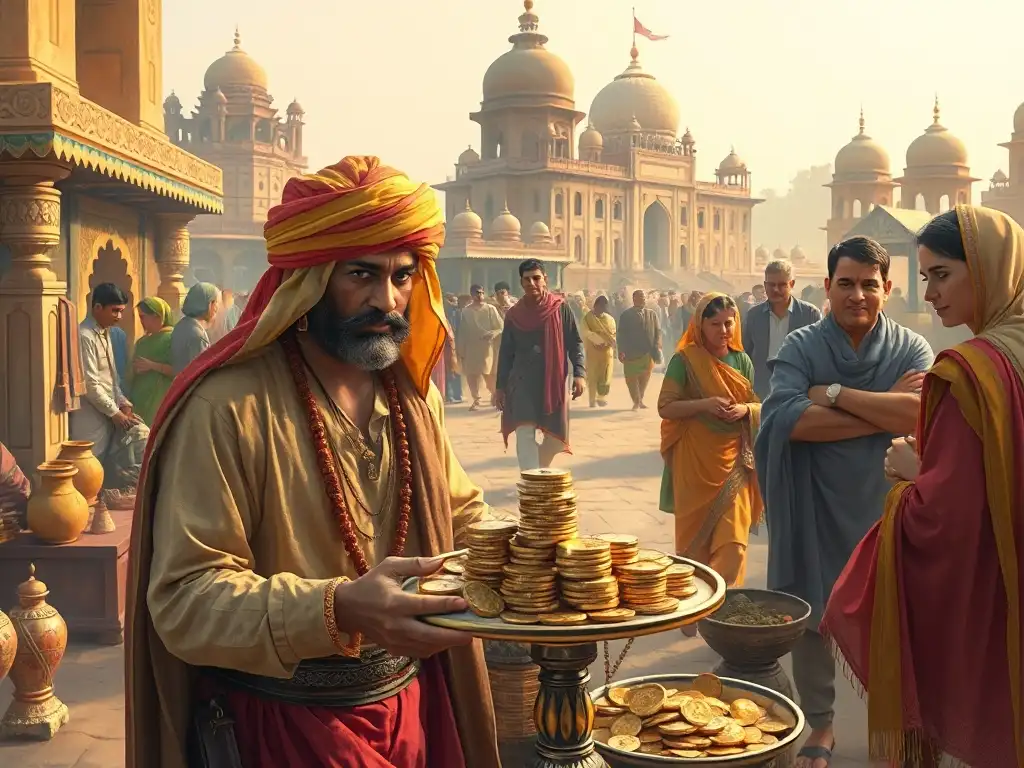
The economic transformation from barter to currency in ancient India marks a significant turning point in the region's history, establishing foundational practices that would influence not just the civilizations of the time but also the future trajectory of India's economic landscape. This transformation laid the groundwork for complex trade networks, fostering connections between various regions and cultures. The adoption of currency facilitated trade, enabling merchants to engage in transactions with greater efficiency, which in turn led to the expansion of markets and an increase in the production of goods.
One notable legacy of this economic evolution is the introduction of standardized weights and measures, which became crucial for ensuring fair trade practices. The emergence of various forms of currency, from cowrie shells to metal coins, helped to simplify transactions and reduce the inefficiencies associated with barter. This transition also encouraged the growth of banking systems, as merchants sought safe places to store their wealth and conduct transactions, leading to the establishment of early financial institutions.
Long-term Effects on Indian Economy
The shift from barter to currency had several long-term effects on the Indian economy that are still evident today. First, it stimulated agricultural development by providing farmers with the means to buy seeds and tools, enhancing productivity. Increased agricultural output supported population growth and urbanization, as surplus production allowed more people to engage in non-agricultural occupations.
Additionally, the concept of currency paved the way for the rise of trade routes, which connected India with other civilizations such as the Persian Empire and the Roman Empire. These interactions not only boosted trade but also led to cultural exchanges that enriched Indian society. The establishment of markets and trade centers became instrumental in facilitating commerce, giving rise to a vibrant economy characterized by specialization and division of labor.
Moreover, the economic practices developed during this period influenced the structure of Indian society, as wealth accumulation led to the emergence of new social classes. Merchants and traders gained prominence, which altered the traditional power dynamics within communities.
Influence on Modern Economic Practices in India
The ancient economic transformation has had a lasting influence on modern economic practices in India. Today, the legacy of currency as a medium of exchange is evident in the country’s sophisticated banking system and financial markets. The principles established during ancient times, such as the need for standardized currency and trade regulations, form the backbone of contemporary economic policies.
Moreover, the historical emphasis on trade and commerce has continued to thrive in modern India, with cities like Mumbai and Delhi serving as major economic hubs. The spirit of entrepreneurship that was cultivated during the ancient period remains strong, with a vibrant startup ecosystem emerging in various sectors, including technology, agriculture, and services.
The historical transition also instilled a sense of economic interdependence among regions, which is reflected in today's globalized economy. India’s participation in international trade continues to draw on the ancient pathways established centuries ago, showcasing the enduring relevance of those early economic practices.
Conclusion: Understanding Ancient India’s Economic Revolution
The transition from barter to currency in ancient India represents a monumental economic revolution that reshaped the society, culture, and economy of the region. Understanding this transformation is crucial for comprehending the complexities of ancient Indian civilization and its contributions to global economic history.
Reflection on the Transition from Barter to Currency
Reflecting on this transition highlights the ingenuity of ancient Indian societies in developing systems that addressed the limitations of barter. The move towards currency not only simplified transactions but also fostered greater economic cooperation and interaction among diverse groups. This evolution reflects a broader human tendency to seek efficiency and innovation in economic practices, which remains relevant today.
The Continuing Relevance of Ancient Economic Practices
The principles and practices established during ancient India’s economic transformation continue to resonate in modern economic systems. Concepts such as trade networks, banking, and currency usage are foundational elements that persist in contemporary economies. By acknowledging and studying these ancient practices, we gain valuable insights into the development of economic systems and the interconnections that shape our world today. The legacy of ancient India’s economic practices serves as a testament to the enduring nature of human economic ingenuity and adaptability.
- Introduction to Ancient India Economic Transformation
- Historical Context of Economic Practices in Ancient India
- The Limitations of Barter System in Ancient India
- Challenges Faced by Barter Transactions
- Impact on Trade and Economic Growth
- The Emergence of Currency in Ancient India
- The Impact of Currency on Ancient Indian Economy
- Case Studies of Currency Use in Ancient Indian Kingdoms
- The Legacy of Ancient India Economic Transformation
- Long-term Effects on Indian Economy
- Influence on Modern Economic Practices in India
- Conclusion: Understanding Ancient India’s Economic Revolution
- What was the primary form of trade in ancient India before currency?
- How did the introduction of currency impact ancient Indian society?
- What role did the Indus Valley civilization play in ancient India's economy?
- How did the Gupta Empire contribute to the economic transformation of ancient India?
- What were some key goods traded in ancient India?
Frequently Asked Questions
What was the primary form of trade in ancient India before currency?
Before the introduction of currency, the primary form of trade in ancient India was barter, where goods and services were exchanged directly without the use of money.
How did the introduction of currency impact ancient Indian society?
The introduction of currency significantly transformed economic interactions, making trade more efficient and allowing for greater commercial activities and economic growth across various regions.
What role did the Indus Valley civilization play in ancient India's economy?
The Indus Valley civilization was instrumental in establishing early trade networks, showcasing advanced urban planning and market systems that laid the foundation for later economic development in ancient India.
How did the Gupta Empire contribute to the economic transformation of ancient India?
The Gupta Empire promoted trade through standardized currency, improved infrastructure, and cultural advancements, which led to a flourishing of commerce and increased prosperity during this period.
What were some key goods traded in ancient India?
Ancient India was known for trading a variety of goods, including spices, textiles, metals, and jewelry, which were highly sought after and played a crucial role in its economic transformation.
Final Reflection: The Enduring Legacy of Ancient India's Economic Transformation
The transition from barter to currency in ancient India is not just a historical milestone; it is a profound testament to human ingenuity and adaptability. As we navigate the complexities of modern economies, the lessons learned from this ancient economic transformation resonate with contemporary relevance. The shift to currency facilitated trade, fostered economic growth, and laid the groundwork for the intricate financial systems we rely on today. This evolution underscores the importance of innovation in overcoming the limitations of previous systems, reminding us that progress is often born from necessity.
Cultural and social landscapes have been shaped significantly by this economic revolution. The introduction of currency not only revolutionized trade but also transformed societal structures, enabling greater connectivity and interaction among diverse communities. This transition paved the way for the flourishing of arts, sciences, and philosophies, enriching the tapestry of ancient Indian civilization. As Mahatma Gandhi once said, "> The future depends on what you do today." This sentiment captures the essence of how past transformations continue to influence our present and future, urging us to recognize the interconnectedness of economic systems and societal development.
As we reflect on the lessons from ancient India's economic transformation, let us embrace the spirit of innovation and adaptability in our own lives. Consider how you can apply these insights to your personal or professional journey. Whether it’s fostering collaboration in your community, embracing new technologies, or rethinking traditional practices, the call to action is clear: we must be willing to evolve and transform in the face of change. By doing so, we honor the legacy of those who came before us and contribute to a future that values progress and interconnectedness.
Unleash the Power of Ancient Trades: Dive into Currency Evolution!
Thank you for exploring the fascinating journey of economic evolution in Ancient India! You've discovered how the transition from barter to currency shaped trade and commerce. Now it's time to take that knowledge further and connect with this remarkable history in your own way.
Here are a few impactful ways you can engage with this topic:
- Explore local markets in your area that still embody the spirit of barter. Consider how these practices relate to the modern usage of currency.
- Share your insights! Discuss the implications of currency in today’s society on social media or in community groups to spark lively conversations.
- Uncover more by researching how various cultures transitioned from barter to currency. How did this shift shape their economies?
What do you believe is the most significant impact of currency on society today? Let’s discuss your thoughts!