
The Impact of Religion on Women’s Roles in Ancient Indian Society

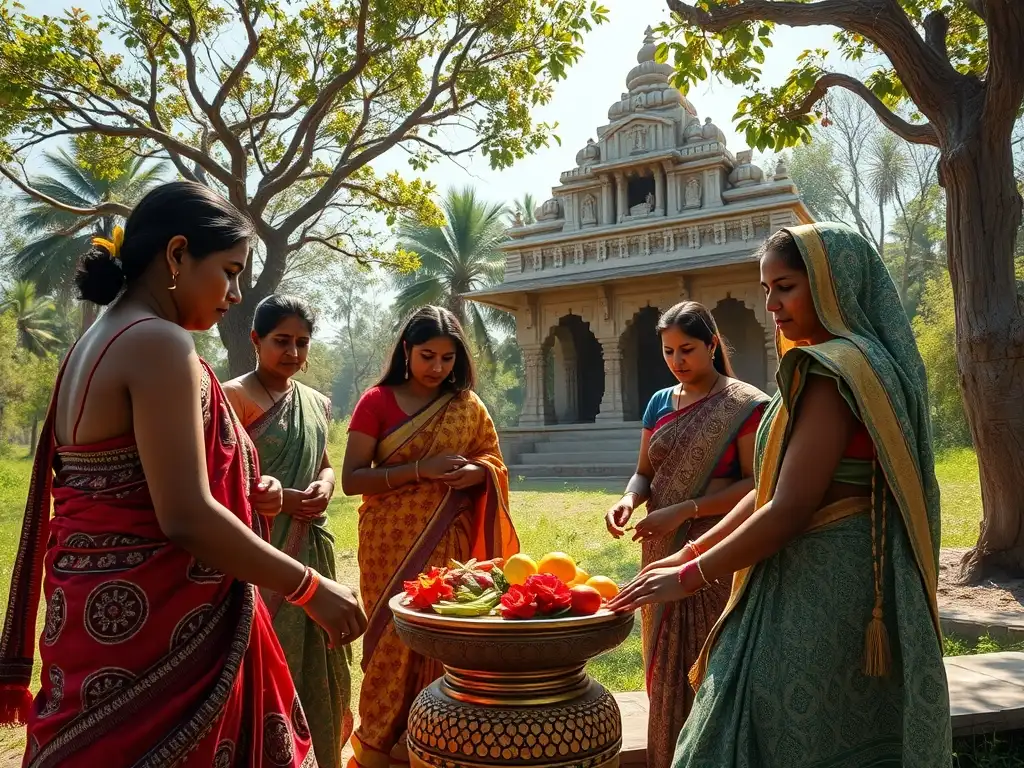
Welcome to Ancient India History, where we embark on a captivating journey through the rich tapestry of ancient Indian civilizations. In this exploration, we delve into the profound topic of "Religion's Influence on Ancient Indian Women," uncovering how spiritual beliefs shaped the roles, responsibilities, and identities of women in society. As we navigate through the sacred texts and historical narratives, you'll discover the intricate dynamics that defined women's contributions from the Indus Valley to the Gupta Empire. Ready to unravel the layers of history that reveal the powerful impact of religion on women's lives? Let’s dive in!
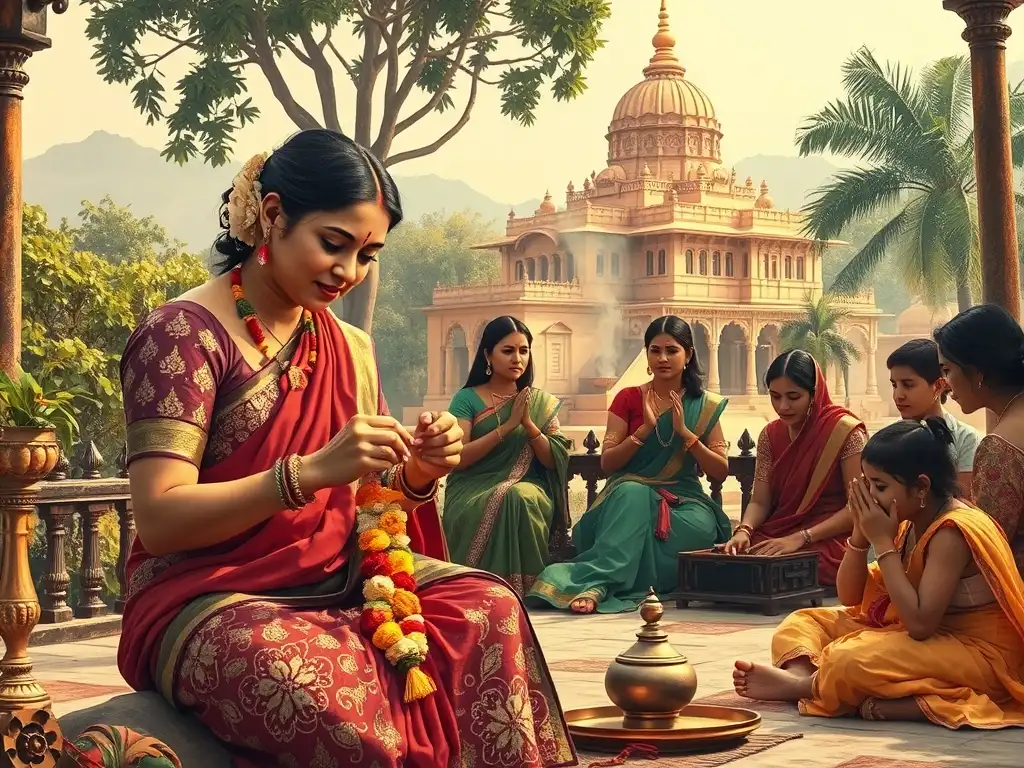
In exploring the intricate tapestry of ancient Indian society, it becomes evident that religion played a pivotal role in shaping the lives and roles of women. From the spiritual teachings that permeated daily life to the societal norms dictated by religious texts and traditions, the influence of religion on women's status and responsibilities is profound and multifaceted.
Understanding this influence not only sheds light on the historical context of women's roles but also highlights the interplay between gender and spirituality in a civilization renowned for its rich cultural heritage. This article delves into the complex dynamics of how various religions, including Hinduism, Buddhism, and Jainism, impacted women's lives, offering insights into their spiritual, social, and familial roles throughout ancient Indian history.
Understanding Religion's Influence on Ancient Indian Women
Overview of Ancient Indian Society and Religion
Ancient Indian society was a mosaic of diverse beliefs and practices, heavily influenced by the prevailing religions. Hinduism, as the dominant religion, established various societal norms that dictated women's roles, often intertwining their identity with family and religious duties. In contrast, Buddhism and Jainism offered alternative perspectives on women's spiritual potential, promoting ideas of equality and personal liberation.
- Key Aspects of Ancient Indian Society:
- Caste System: Defined social hierarchies that influenced women's status.
- Family Structure: Patriarchal norms shaped women's roles primarily as caregivers and homemakers.
- Religious Practices: Rituals and ceremonies often placed women in central roles, yet within specific constraints.
Women navigated their identities through the lens of these religious teachings, which provided both empowerment and limitation, often dictating their social mobility, educational opportunities, and rights.
The Intersection of Religion and Gender Roles
The intersection of religion and gender roles in ancient India created a complex narrative for women, where spiritual beliefs often defined societal expectations.
- Influential Factors:
- Religious Texts: Scriptures like the Vedas and Upanishads contained references that shaped women's roles, with some texts advocating for women's education and others reinforcing traditional domestic roles.
- Ritual Participation: Women frequently played significant roles in religious rituals, which allowed them a degree of agency within the confines of their prescribed societal roles.
- Spiritual Leadership: Some women emerged as spiritual leaders or ascetics, challenging traditional gender roles and offering alternative pathways to empowerment.
Despite the limitations imposed by patriarchal structures, religion provided women with a framework through which they could assert their identities and influence their communities.
Historical Context of Religion in Ancient India
Major Religions in Ancient India: Hinduism, Buddhism, and Jainism
Ancient India was characterized by a rich tapestry of religious beliefs, with Hinduism, Buddhism, and Jainism emerging as the three predominant religions that shaped societal values and norms.
- Hinduism:
- Enshrined a complex system of beliefs and practices, where women's roles were often linked to duty (dharma) and devotion (bhakti).
- Important goddesses like Durga and Saraswati represented powerful feminine ideals, providing women with divine figures to aspire to.
- Buddhism:
- Advocated for the potential of all individuals, regardless of gender, to achieve enlightenment, leading to a more egalitarian view of spiritual practice.
- The establishment of nunneries allowed women to pursue religious life independently.
- Jainism:
- Emphasized non-violence and asceticism, offering women opportunities for spiritual advancement through monastic life.
- Jain texts often depicted women as capable of achieving liberation (moksha).
The Role of Spirituality in Shaping Women’s Lives
Spirituality in ancient India served as a cornerstone for women's roles, providing them with a space for personal growth and community involvement.
- Empowerment through Spirituality:
- Participation in spiritual practices offered women a sense of belonging and purpose.
- Some women became influential spiritual leaders, promoting teachings that emphasized equality and moral conduct.
- Community Impact:
- Women's involvement in religious activities fostered community ties and social cohesion, allowing them to play vital roles in cultural and spiritual perpetuation.
The study of religion’s influence on ancient Indian women reveals a dynamic interplay between spiritual beliefs and societal roles, illustrating how these elements collectively shaped the lives of women across various dimensions, from personal identity to community engagement.
Religion has historically played a pivotal role in shaping the social status of women in ancient Indian society. The intertwining of religious beliefs and social norms significantly influenced how women were perceived and the roles they were expected to fulfill. In many instances, religious doctrines served to reinforce patriarchal structures, often dictating women's responsibilities primarily as caretakers and homemakers. However, various religious traditions also provided avenues for women's empowerment, allowing them to participate in spiritual practices and community life.
The status of women varied across different regions and periods, often influenced by the prevailing religious practices. In some contexts, women enjoyed considerable autonomy and were recognized for their contributions as spiritual leaders, while in others, they faced restrictions that limited their rights and freedoms. The duality of religious influence reflects the complex and multifaceted nature of women's roles throughout ancient Indian history.
Religious Texts and Their Depictions of Women
Religious texts from ancient India, including the Vedas, Upanishads, Puranas, and epics such as the Mahabharata and Ramayana, provide crucial insights into the roles and status of women. These texts often embody the cultural values and societal norms of their time, depicting women in various lights—ranging from idealized figures to subservient roles.
In the Vedic literature, women are sometimes portrayed as learned and respected, participating in rituals and possessing knowledge of sacred texts. Figures like Gargi and Maitreyi exemplify this intellectual engagement. However, as time progressed, later texts reflected a shift towards more restrictive views, emphasizing women's roles as wives and mothers primarily focused on domestic duties.
Moreover, the interpretations of these texts have evolved over the centuries, with modern scholars and feminists advocating for a reassessment of women's roles as depicted in these ancient scriptures. By examining these texts critically, it becomes possible to uncover the nuanced and often contradictory depictions of women in ancient Indian religious thought.
The Impact of Rituals and Ceremonies on Women's Roles
Rituals and ceremonies in ancient Indian society were deeply ingrained in religious life and had a profound impact on women's roles. Women often played crucial roles in domestic rituals, such as marriage ceremonies, childbirth rites, and daily worship practices, which were central to maintaining family and societal harmony.
Participation in these rituals allowed women to assert their influence within the household and the community. For instance, the saat phere or seven circumambulations performed during Hindu weddings symbolize the couple's commitment, with women actively participating as equal partners in the spiritual union.
However, the expectations surrounding these rituals could also reinforce traditional gender roles. Women were often tasked with the responsibility of preserving religious customs and practices, which sometimes limited their personal freedoms and aspirations. The dual nature of these roles—both empowering and constraining—highlights the complexity of women's experiences in religious contexts.
Women's Rights and Responsibilities in Religious Contexts
In ancient Indian society, women's rights and responsibilities were often delineated by religious doctrines. The Dharma Shastras, or texts on law and ethics, outlined the duties of women, primarily focusing on their roles within the family unit. While women were granted certain rights, such as the right to inherit property and participate in religious rituals, these rights were frequently contingent upon their relationships with male family members.
The responsibilities assigned to women encompassed a range of activities, from managing household affairs to participating in religious observances. In some communities, women were also involved in the preservation of oral traditions and the transmission of sacred knowledge, highlighting their vital role in cultural continuity.
However, as the societal framework shifted towards more rigid patriarchal norms, women's rights began to diminish. The evolving interpretations of religious texts often reinforced restrictive practices, such as purdah (veiling) and limitations on mobility. This dynamic interplay between rights and responsibilities continues to be a critical area of study in understanding women's roles in ancient Indian society.
Case Studies of Women in Religious Texts
Exemplary Women in Hindu Epics
The Hindu epics, particularly the Ramayana and Mahabharata, feature numerous exemplary women who serve as role models and embody various virtues. Characters like Sita, the wife of Lord Rama, represent ideals of devotion and sacrifice, while Draupadi, a central figure in the Mahabharata, exemplifies strength and resilience in the face of adversity.
These narratives often reflect the complexities of women's roles, showcasing their agency and influence within the context of their relationships. Sita's unwavering loyalty and Draupadi's fierce defiance against injustice highlight the diverse attributes ascribed to women in these texts, offering a more nuanced perspective on their social status.
The portrayals of these women have inspired generations, contributing to the cultural and religious identity of Hindu society. Their stories continue to be celebrated and retold, emphasizing the enduring legacy of women in ancient Indian narratives.
The Role of Women in Buddhist Communities
In Buddhist communities of ancient India, women held a significant yet often ambivalent position. Texts such as the Pali Canon provide evidence of women participating in the monastic community (sangha) and achieving spiritual enlightenment. Figures like Mahapajapati Gotami, the Buddha's aunt and the first female disciple, played a crucial role in establishing the Bhikkhuni Sangha, thereby facilitating women's access to religious life.
Despite these advancements, the overall status of women in Buddhist contexts varied widely, influenced by regional practices and interpretations of Buddhist teachings. While some sects embraced gender equality, others maintained traditional views that relegated women to subordinate roles. The duality of women's experiences in Buddhism reflects broader societal attitudes towards gender, illustrating both opportunities for empowerment and persistent challenges.
Jain Women and Their Spiritual Contributions
Jainism, another influential religious tradition in ancient India, offered unique perspectives on women's roles. Jain texts often celebrate women as spiritually capable individuals, emphasizing the importance of non-violence and asceticism. Women like Siddhārtha's mother, who is revered for her virtuous life, exemplify the high regard for female figures within the Jain tradition.
Jain women actively participated in religious practices, including rituals, philanthropy, and community service. Their contributions to the preservation of Jain teachings and values are noteworthy, as many women became influential patrons of religious institutions.
The recognition of women's spiritual agency in Jainism contrasts with the more restrictive views found in other religious traditions, highlighting the diversity of women's roles in ancient Indian society. This complexity underscores the importance of examining specific religious contexts to understand the diverse experiences of women throughout history.
The Evolution of Women's Roles through Religious Changes
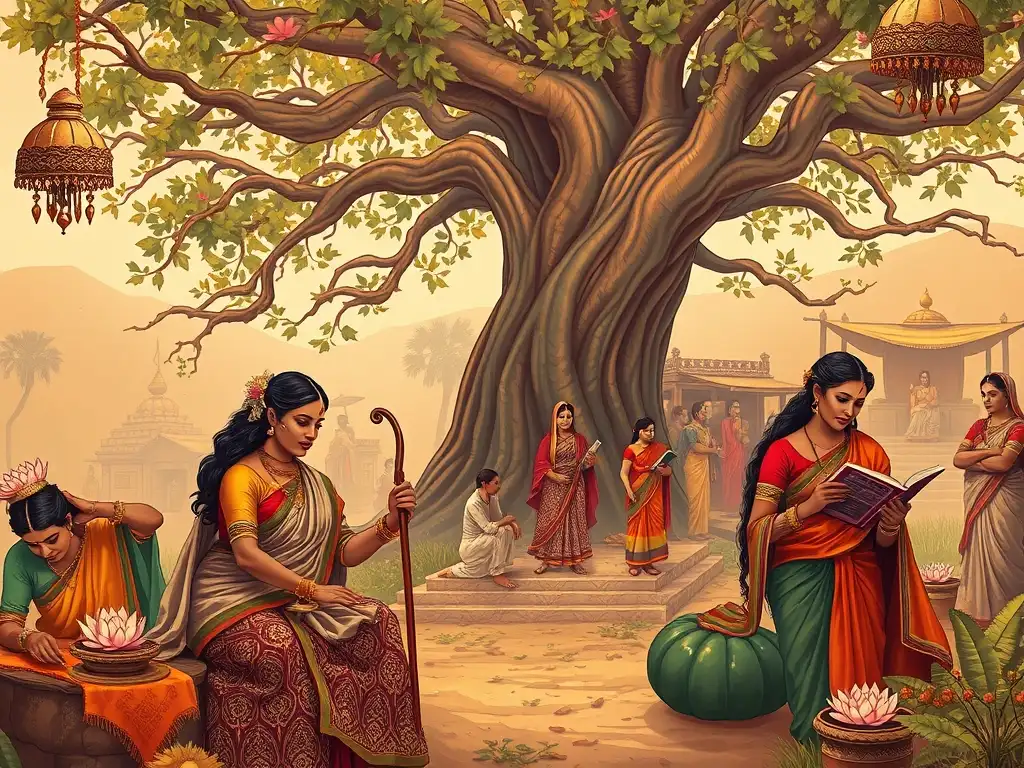
The evolution of women's roles in ancient Indian society is profoundly intertwined with the shifts in religious practices and beliefs. From the early Vedic period, where women enjoyed significant rights and freedoms, including education and participation in rituals, there was a gradual transformation influenced by the growing prominence of patriarchal ideologies supported by various religious texts.
With the advent of Buddhism and Jainism, there was an initial wave of empowerment for women, as both religions preached equality and offered women opportunities for spiritual growth. However, as Hinduism solidified its social structures through the establishment of dharma (duty) and varna (class) systems, women's roles became more restricted. The religious texts, particularly the Manusmriti, emphasized the subservience of women, framing their primary duties around household roles and obedience to male figures in the family.
This evolution highlights a complex interaction between religion and gender, where religious doctrines were often interpreted in ways that reinforced existing societal norms, leading to a more confined status for women over time.
Shifts in Women’s Roles with the Rise of Different Religious Practices
The rise of different religious practices in ancient India brought about notable shifts in women's roles. In the early Vedic period, women participated in rituals and were considered equals in both spiritual and social contexts. However, as Hindu practices evolved, particularly during the later Vedic period, the notion of patriarchy became more pronounced.
Buddhism emerged as an alternative during this period, advocating for women's rights and offering them the chance to enter monastic life, which was a significant departure from Hindu traditions. The establishment of Buddhist nunneries allowed women to attain spiritual authority and independence, even as society remained largely patriarchal.
In contrast, during the Gupta period, the resurgence of Hinduism introduced stricter codes regarding women's behavior and roles. The purdah system began to take shape, reinforcing ideas of modesty and seclusion, which were justified through religious interpretations. This period saw a complex interplay between religious tenets and societal expectations that shaped women's experiences in profound ways.
The Influence of Religious Leaders on Women’s Status
Religious leaders and figures have historically played a crucial role in shaping the status of women within ancient Indian society. Figures such as Buddha and Mahavira promoted egalitarian principles, directly challenging the status quo that relegated women to subordinate roles. Their teachings encouraged the inclusion of women in spiritual practices and emphasized moral and ethical equality.
Conversely, the interpretations of sacred texts by later religious authorities often reinforced patriarchal norms. As religious leaders sought to define and regulate social order, their interpretations led to restrictions on women's rights, particularly concerning property ownership, education, and social participation.
The complex legacy of these religious leaders highlights the dual nature of religion as both a source of empowerment and a mechanism for control, significantly impacting the societal perceptions of women throughout ancient Indian history.
Challenges and Limitations Faced by Women
The challenges and limitations faced by women in ancient Indian society were largely dictated by the religious contexts that shaped their lives. These challenges were not only social but also deeply entrenched in religious doctrines that prescribed specific roles for women.
Societal Norms and Religious Restrictions
Societal norms in ancient India were heavily influenced by religious beliefs, which often dictated the roles and behaviors deemed acceptable for women. These restrictions manifested in various forms, such as limitations on education, participation in public life, and autonomy in personal choices.
Religious texts often emphasized the idea of pativratā (devotion to one's husband), which established a framework wherein a woman's identity and worth were tied to her relationship with male figures. This led to societal expectations that prioritized marriage and motherhood over individual aspirations or rights.
Moreover, religious practices like sati (the practice of a widow self-immolating on her husband's funeral pyre) emerged, reflecting extreme manifestations of these societal norms, where a woman's life was often seen as expendable in the context of her husband's death.
The Dichotomy of Power and Subservience in Religion
The dichotomy of power and subservience in religion significantly shaped women's experiences in ancient Indian society. While certain religious traditions, such as Shaktism, worshipped the divine feminine and celebrated women's power, the predominant narratives often depicted women as subservient to male authority.
In Hinduism, the portrayal of goddesses offered a semblance of power; however, this was often juxtaposed with the reality of women's roles in everyday life, which were largely confined to the domestic sphere. The reverence for feminine deities did not translate into social empowerment for women, leading to a complex and often contradictory experience of gender roles within religious contexts.
This dichotomy highlights the multifaceted nature of women's roles, where they could be revered in spiritual contexts yet marginalized in social structures, creating a legacy of both empowerment and limitation that continues to influence the understanding of gender in modern India.
Conclusion: The Lasting Impact of Religion on Women’s Roles in Ancient Indian Society
The intricate relationship between religion and the roles of women in ancient Indian society remains a significant area of study, revealing how deeply intertwined these aspects were. From the Vedic texts to the epics like the Mahabharata and Ramayana, religion not only shaped the spiritual landscape of ancient India but also dictated the societal norms and expectations for women. The influence of religious beliefs and practices extended into various facets of life, including family dynamics, social status, and personal freedoms.
As observed, the Vedic period showcased a duality in women's roles, where they were revered as knowledgeable figures and yet confined within domestic spheres. The subsequent rise of various religious traditions, including Hinduism, Buddhism, and Jainism, introduced diverse perspectives on femininity and spirituality. Women were often celebrated as embodiments of divine qualities but simultaneously faced restrictions that reflected patriarchal values. The devotional movements, while promoting accessibility to spirituality, also highlighted the complexities of women's experiences in the religious domain.
Ultimately, the legacy of these ancient religious influences is evident in the continuing discourse around gender roles in contemporary Indian society. Understanding the historical context allows for a more nuanced appreciation of the ongoing struggles and advancements made by women in India today.
Summary of Key Findings
- Religious Texts and Women’s Roles: Ancient religious texts provided a framework that both empowered and restricted women. While some texts celebrated women's wisdom and contributions, others imposed limitations on their social engagement and rights.
- Varied Religious Traditions: Different religious movements offered contrasting views on women's roles. For instance, while Hinduism often placed women in traditional roles, Buddhism and Jainism provided more egalitarian perspectives, allowing women to attain spiritual enlightenment.
- Cultural Practices: Rituals and customs influenced by religious beliefs shaped societal expectations of women, dictating their responsibilities within the family and community.
- Patriarchal Structures: Despite the reverence for female deities and figures in scriptures, societal norms often reflected a patriarchal structure that limited women's autonomy and agency.
- Continuing Legacy: The historical interplay of religion and women's roles has lasting implications, influencing contemporary discussions on gender equality and women's rights in India.
Reflection on Modern Implications of Ancient Religious Influences on Women
The historical context of religion's influence on women in ancient India has profound implications for understanding modern gender dynamics. Today, discussions surrounding women's empowerment, rights, and societal roles are still shaped by long-standing religious traditions and cultural norms.
- Cultural Resilience: Many practices that originated in ancient times persist today, often influencing women’s roles in family and society. For example, the reverence for motherhood and domesticity remains strong, affecting perceptions of women's value and contributions beyond the household.
- Legal and Social Reforms: The historical context of women's roles has necessitated legal reforms and social movements aimed at addressing gender inequality. By examining the past, activists and policymakers can better understand the roots of contemporary issues and challenge oppressive structures.
- Spiritual Empowerment: The spiritual legacies of ancient Indian religions continue to empower women in modern times. Many women are reclaiming religious narratives to foster personal empowerment and leadership within their communities.
- Interfaith Dialogue: The diverse religious landscape of ancient India invites modern dialogues around gender and spirituality. By exploring various traditions, there is potential for fostering inclusive approaches to women’s roles in society today.
The examination of religion's influence on ancient Indian women provides critical insights into the evolution of gender roles and continues to resonate in contemporary discussions surrounding women's rights and societal contributions.
- Understanding Religion's Influence on Ancient Indian Women
- Historical Context of Religion in Ancient India
- Religion's Influence on Women's Social Status
- Case Studies of Women in Religious Texts
- The Evolution of Women's Roles through Religious Changes
- Challenges and Limitations Faced by Women
- Conclusion: The Lasting Impact of Religion on Women’s Roles in Ancient Indian Society
- What role did religion play in the lives of ancient Indian women?
- How did the caste system affect women's religious practices?
- Were there any notable female figures in ancient Indian religions?
- How did the Gupta Empire impact women's rights and religious roles?
- In what ways did religious texts shape perceptions of women?
Frequently Asked Questions
What role did religion play in the lives of ancient Indian women?
Religion significantly influenced women's roles in ancient India, often defining their social status and responsibilities within the family and society.
How did the caste system affect women's religious practices?
The caste system imposed restrictions on women's religious participation, often limiting their access to certain rituals and spiritual practices based on their social class.
Were there any notable female figures in ancient Indian religions?
Yes, figures such as Gargi and Maitreyi are celebrated for their contributions to philosophy and spirituality, showcasing women's intellectual influence in ancient Indian religions.
How did the Gupta Empire impact women's rights and religious roles?
During the Gupta Empire, women's rights saw some improvement, allowing for greater participation in religious ceremonies and community life, though traditional roles remained prevalent.
In what ways did religious texts shape perceptions of women?
Religious texts like the Vedas and Manusmriti often established norms and expectations for women, influencing societal views on their roles as wives, mothers, and practitioners of religion.
Final Reflection: Understanding Religion's Influence on Ancient Indian Women
The exploration of religion's influence on ancient Indian women reveals a complex tapestry of empowerment and restriction that remains relevant today. As we navigate the modern world, the echoes of these historical roles continue to shape contemporary discussions about gender, spirituality, and societal expectations. The intricate relationship between faith and femininity in ancient India serves as a powerful reminder of how deeply intertwined our identities are with the belief systems we inherit.
Clearly, the impact of religion on women's roles in ancient Indian society has left an indelible mark on our cultural and social landscape. From the revered status of goddesses to the constraints imposed by patriarchal interpretations of sacred texts, the duality of women's experiences is a reflection of broader societal values. As we consider this ongoing influence, we are reminded of the words of Mahatma Gandhi: The true measure of any society can be found in how it treats its most vulnerable members.
This quote resonates profoundly as we reflect on the historical and current challenges faced by women, urging us to recognize the importance of equitable treatment in all spheres of life.
As we conclude this exploration, I invite you to reflect on your own beliefs and the roles they play in shaping your understanding of gender and society. Consider how the lessons from ancient Indian women's experiences can inspire you to advocate for equality and justice in your own community.
By acknowledging the past and its lessons, we can actively participate in creating a future where every woman is empowered to define her own role, free from the constraints of outdated beliefs. Let us carry forward the legacy of those who came before us, ensuring that their voices continue to resonate in our pursuit of a more inclusive world.
Unveil the Power of Women's Voices in Ancient India!
Thank you for embarking on this profound journey into the impact of religion on women's roles in ancient Indian society. We hope you have gained valuable insights into how faith shaped women's identities and their contributions throughout history. Now, it's time to take action and delve even deeper!
Here are some steps you can take to continue uncovering these impactful narratives:
- Explore further: Investigate how specific texts and rituals influenced women's rights and social standing in ancient cultures. You may be surprised by the revelations you uncover!
- Join the conversation: Share this article with friends and family, or post it on social media to raise awareness of women's historical contributions in ancient societies.
- Engage with our community: Leave a comment below about your favorite discovery from this article, or pose questions to encourage further discussion!
Which insights about women's roles in ancient Indian religion have inspired you to rethink your understanding of history?