
The Role of Women in Gupta Religion and Spiritual Practices

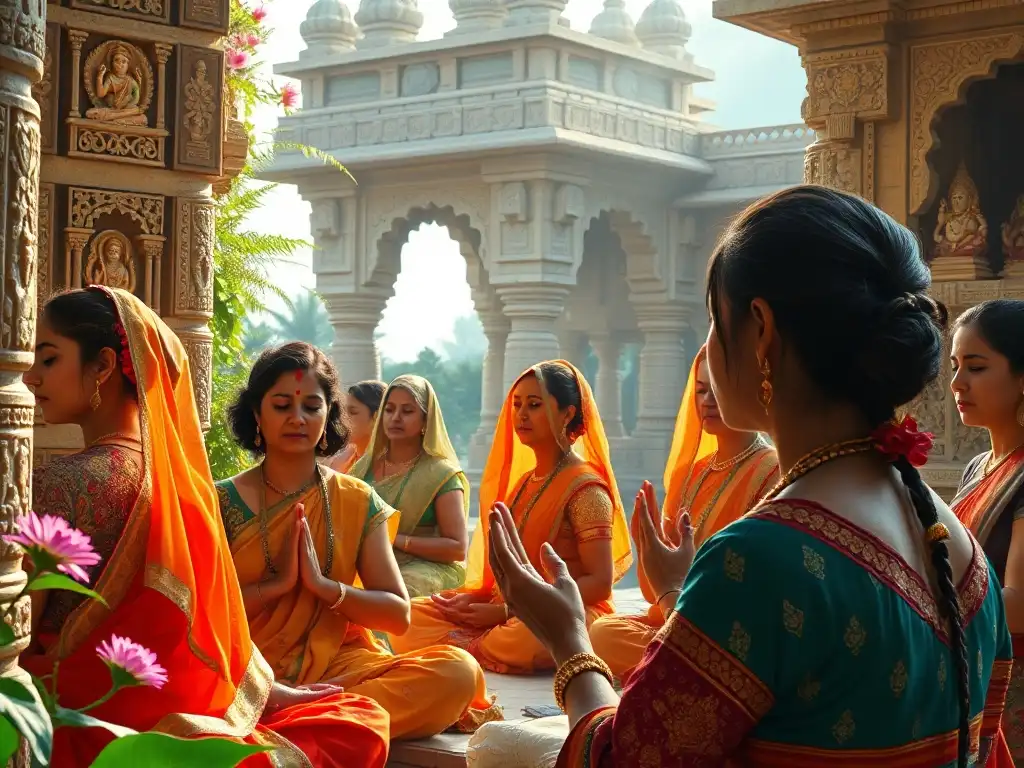
Welcome to Ancient India History, where we embark on a fascinating journey through the rich tapestry of ancient Indian civilizations. Our exploration today shines a spotlight on a remarkable aspect of societal dynamics: the role of women in Gupta religion and spiritual practices. As we delve into this captivating topic, you'll uncover the profound contributions and unique spiritual experiences of women during one of India's most influential eras.
What secrets do the rituals, beliefs, and practices hold about their lives and legacies? Join us as we unravel these stories and invite you to discover the hidden narratives that shaped the spiritual landscape of ancient India.
- Introduction to Women in Gupta Religion
- Historical Context of Women in Gupta Religion
- Key Spiritual Practices Involving Women in Gupta Religion
- Notable Figures: Women in Gupta Religious History
- The Intersection of Gender and Religion in Gupta Society
- Comparative Analysis: Women in Gupta Religion vs. Other Ancient Indian Civilizations
- The Legacy of Women in Gupta Religion
- Conclusion
-
Frequently Asked Questions
- What was the status of women in Gupta religion?
- How did women's roles in spirituality manifest during the Gupta period?
- Were there any notable female figures in Gupta religious practices?
- How did Gupta religion impact women's rights and roles?
- What contributions did women make to Gupta spiritual literature?
- Final Reflection: Embracing the Legacy of Women in Gupta Religion
- Unveil the Impact of Women in Gupta Spirituality!
Introduction to Women in Gupta Religion
The Gupta Empire, often referred to as the Golden Age of India, represents a period of remarkable advancements in art, science, literature, and religion. Among the many facets of this era, the role of women in Gupta religion is particularly noteworthy.
Understanding this role not only sheds light on the spiritual practices of the time but also highlights the significant contributions of women to the cultural and religious landscape of ancient India. This exploration reveals the complexities of women's participation in religious rituals, their status in society, and the ways in which they influenced spiritual practices during the Gupta period.
Overview of Gupta Empire and Its Cultural Significance
The Gupta Empire, which flourished from approximately 320 to 550 CE, is recognized for its substantial contributions to various fields, including mathematics, astronomy, and philosophy. This period was marked by a resurgence of Hinduism alongside the coexistence of Buddhism and Jainism, creating a rich tapestry of religious practices and cultural expressions.
- Key Features of the Gupta Empire:
- Political Stability: The Gupta rulers, such as Chandragupta I and Samudragupta, established a strong central authority that fostered trade, commerce, and cultural exchanges.
- Patronage of Arts and Sciences: The Guptas were known for their patronage of scholars and artists, leading to advancements in literature and the visual arts.
- Religious Pluralism: The period was characterized by a blend of various religious traditions, with Hinduism seeing a renaissance alongside the continued prominence of Buddhism and Jainism.
Women during this time occupied a multifaceted role, often participating in spiritual practices and religious rituals, which were vital to the cultural fabric of Gupta society. Their involvement extended beyond household boundaries, influencing both domestic and public religious life.
Importance of Women in Ancient Indian Spiritual Practices
Women in Gupta society were not merely passive observers of religious life; they played active roles in spiritual practices and rituals. Their participation can be seen in various forms, including:
- Ritual Participation: Women often took part in daily rituals at home, performing pujas (worship rituals) and making offerings to deities, which were essential for maintaining family and societal harmony.
- Cultural Transmission: They were instrumental in passing down religious traditions and teachings to future generations, ensuring the continuity of spiritual practices.
- Influence on Religious Texts: Some women are believed to have contributed to the creation of religious literature, enriching the spiritual discourse of the time.
The role of women in Gupta religion illustrates their integral place within the spiritual and cultural dynamics of the era, showcasing their contributions to the richness of ancient Indian religious life.
Historical Context of Women in Gupta Religion
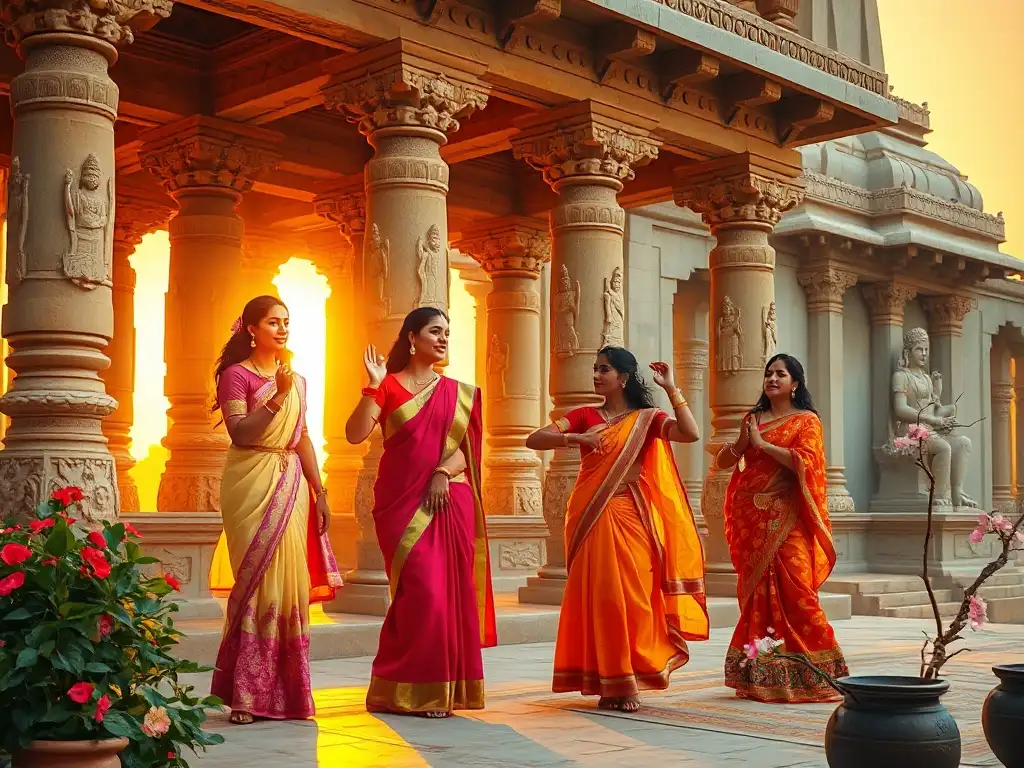
The Gupta Empire, often referred to as the Golden Age of India, flourished from approximately 320 to 550 CE. This period was marked by significant advancements in various fields, including art, science, and philosophy. However, the role of women during this era, particularly in religious and spiritual contexts, is a crucial aspect that deserves closer examination. Women in Gupta religion experienced a complex interplay of social, cultural, and religious factors that shaped their identities and contributions.
In Gupta society, the status of women was largely influenced by the prevailing cultural norms and religious beliefs. While some women enjoyed relatively high status and respect, others faced significant restrictions. Here are some key aspects that defined the social status of women during this period:
- Family Structure and Roles: The patriarchal family structure dominated Gupta society. Women were primarily seen as caretakers and homemakers, responsible for managing household affairs and raising children. Marriages were typically arranged, and a woman's social mobility was often tied to her marital status.
- Education and Literacy: Education for women was not uniformly accessible. While some elite women had the opportunity to be educated, especially in families of scholars and priests, the majority remained illiterate. Texts from the period indicate that educated women could engage in intellectual discourse, but such instances were exceptions rather than the norm.
- Religious Participation: Women actively participated in religious rituals and practices, albeit within the constraints of societal norms. They were involved in family worship and could perform certain rites, particularly those related to domestic deities. However, their roles in public religious life were often limited.
- Legal Rights: Women in Gupta society had limited legal rights. While they could inherit property, they depended heavily on male guardians for legal matters. The Manusmriti, a significant legal text of the time, stipulated various restrictions on women's rights, reinforcing their subordinate status.
Despite these restrictions, women played a significant role in preserving and transmitting religious and cultural traditions, which was central to the Gupta Empire's identity.
Role of Women in Religious Activities during the Gupta Period
The religious landscape of the Gupta Empire was characterized by a blend of Hinduism, Buddhism, and Jainism, each offering women various avenues for participation in spiritual practices. Below are some notable roles women undertook in religious activities:
- Patronage of Religious Institutions: Many women from affluent families contributed to the patronage of temples and religious institutions. They provided financial support for the construction of temples and the performance of rituals, enhancing their influence in religious spheres.
- Participation in Festivals: Women actively participated in religious festivals, often organizing and leading communal rituals. Festivals such as Navaratri and Diwali saw significant female involvement, where women engaged in singing, dancing, and ritualistic offerings.
- Spiritual Leadership: Some women emerged as spiritual leaders or gurus, guiding their communities in religious practices. Texts from the period reference female ascetics who gained respect for their spiritual knowledge and practices.
- Roles in Literature and Arts: Women contributed to religious literature and artistic expressions, including devotional poetry and temple art. Their involvement in these areas helped shape the religious narratives and artistic traditions of the time.
The contributions of women in Gupta religion reveal a rich tapestry of spiritual engagement and cultural expression. While their roles were often limited by societal norms, women in Gupta religion navigated these constraints to leave a lasting impact on the spiritual landscape of ancient India.
The examination of Women in Gupta Religion highlights their vital contributions and complex roles within the broader context of Gupta society, emphasizing the need for a nuanced understanding of their experiences and influences during this remarkable period in ancient Indian history.
Key Spiritual Practices Involving Women in Gupta Religion
Participation of Women in Rituals and Ceremonies
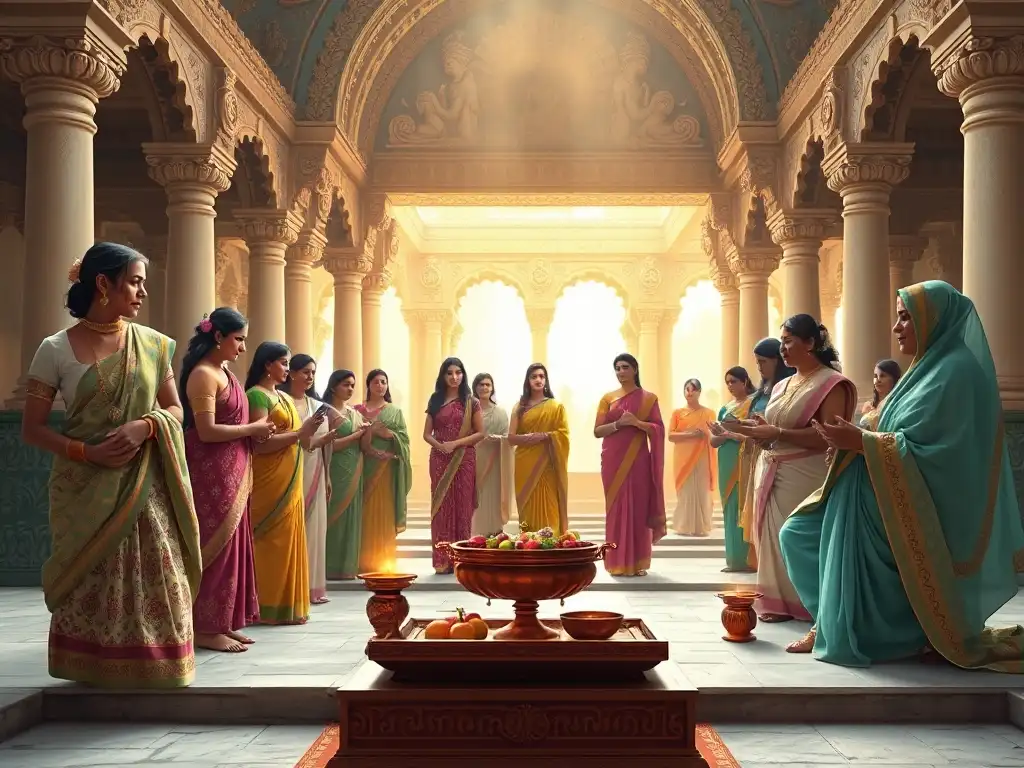
During the Gupta Empire, women's involvement in religious rituals and ceremonies was both significant and multifaceted. The spiritual landscape of the time emphasized the importance of communal practices, and women played crucial roles in various religious observances.
- Household Rituals: Women were primarily responsible for the maintenance of domestic rituals, which included daily prayers, offerings, and the celebration of festivals. These practices not only facilitated personal piety but also strengthened family and community bonds. For instance, during festivals like Diwali and Navaratri, women would engage in specific rituals to honor deities, reflecting their vital role in upholding religious traditions.
- Public Ceremonies: Women also participated in public religious ceremonies, such as yajnas (sacrificial rites). Historical texts indicate that women would often assist in preparations and may even partake in the rituals themselves, highlighting their active engagement in public worship.
- Role of Priestesses: Certain women served as priestesses in temples, particularly in goddess worship. These priestesses would conduct rituals, offer prayers, and perform ceremonies, thereby holding a position of respect within the religious community. The reverence for feminine divinity during this era often resulted in women taking on these spiritual roles.
In essence, the spiritual practices of the Gupta period were enriched by the active participation of women, who not only fulfilled traditional roles but also contributed to the evolving landscape of Gupta religion.
Women as Practitioners of Spirituality and Religion
Women in the Gupta Empire were not merely passive participants in religious life; they were also practitioners of spirituality in their own right. Their contributions to Gupta religion can be categorized into several key areas:
- Spiritual Leadership: Some women emerged as spiritual leaders or gurus, guiding others in religious practices and philosophies. Their insights into spirituality were often sought after, and their teachings contributed to the broader religious discourse of the time.
- Literary Contributions: Women also made notable literary contributions that reflected their understanding of spirituality and religion. Texts and treatises written by women—though often less documented—played a vital role in shaping religious thought. For example, the writings of female poets and scholars of the Gupta period often included themes of devotion, philosophy, and the nature of the divine.
- Monastic Life: Evidence suggests that some women chose to enter monastic life, dedicating themselves to spiritual pursuits. This path allowed them to engage deeply with religious texts, meditation, and ascetic practices, thereby establishing their own spiritual authority. The existence of female monastic communities during this period illustrates the acceptance and encouragement of women seeking spiritual enlightenment.
- Community Engagement: Women's roles in community-based spiritual practices were essential for fostering a collective religious identity. By organizing communal prayers and participating in local festivals, women helped maintain and propagate the spiritual traditions of the Gupta period.
Overall, the role of women as practitioners of spirituality in Gupta religion was diverse and impactful, allowing them to contribute significantly to the religious and cultural fabric of their society. Their engagement in spiritual practices not only affirmed their positions within their families and communities but also underscored the importance of women's voices in the religious narrative of ancient India.
Notable Figures: Women in Gupta Religious History
Influential Women in Gupta Spiritual Practices
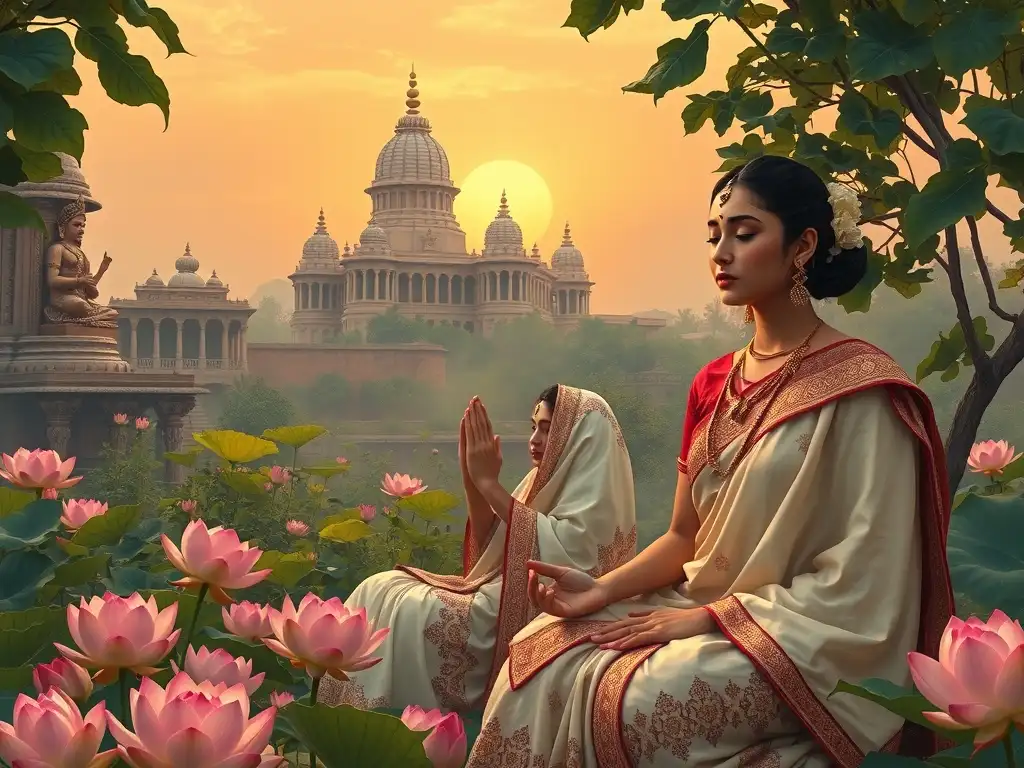
During the Gupta Empire, which is often referred to as the Golden Age of India, women played a pivotal role in the religious and spiritual landscape. Their influence extended beyond mere participation; they were active contributors to spiritual practices and held significant positions in various religious traditions.
-
Patronage of Temples
Many women from royal families and affluent backgrounds were known to have been patrons of temples. They financed the construction and embellishment of temples dedicated to deities such as Vishnu, Shiva, and Devi. These temples not only served as places of worship but also as centers for cultural and social gatherings, thus enhancing the communal aspect of spirituality.
-
Participation in Rituals
Women actively participated in religious rituals, which included daily pujas (worship), festivals, and special rites of passage. Their involvement was essential in maintaining the sanctity and continuity of these traditions. Notably, the presence of women in ritualistic practices signified their integral role in the spiritual life of the community.
-
Spiritual Leadership
Some women emerged as spiritual leaders and were respected figures within their communities. They often provided guidance on spiritual matters and played key roles in the dissemination of religious teachings. Their wisdom and insight contributed to the spiritual education of both men and women, ensuring a broad understanding of Gupta religious practices.
Contributions of Women to Religious Texts and Scholarship
Women in the Gupta Empire were not only active participants in religious activities but also made significant contributions to religious texts and scholarship. Their intellectual endeavors shaped the theological landscape of the period.
-
Authorship of Texts
Although many texts from the Gupta period are attributed to male authors, certain works are believed to have been authored or influenced by women. These texts often addressed themes of devotion, morality, and the roles of women in society, reflecting a nuanced understanding of spirituality that encompassed both genders.
-
Preservation of Oral Traditions
Women were crucial in preserving oral traditions, which were vital in transmitting religious narratives and teachings. Through storytelling and recitation, they ensured that religious knowledge was passed down through generations, keeping the cultural heritage alive.
-
Engagement in Philosophical Discourse
Women participated in philosophical discussions and debates, challenging the existing theological paradigms. Their contributions to discussions on dharma (duty), karma (action), and moksha (liberation) were instrumental in shaping the philosophical landscape of Gupta religion.
The role of women in Gupta religion was multifaceted, encompassing spiritual leadership, participation in rituals, and contributions to religious scholarship. Their influence helped to enrich the religious tapestry of the Gupta Empire, affirming the importance of women in shaping the religious and cultural identity of ancient India.
The Intersection of Gender and Religion in Gupta Society
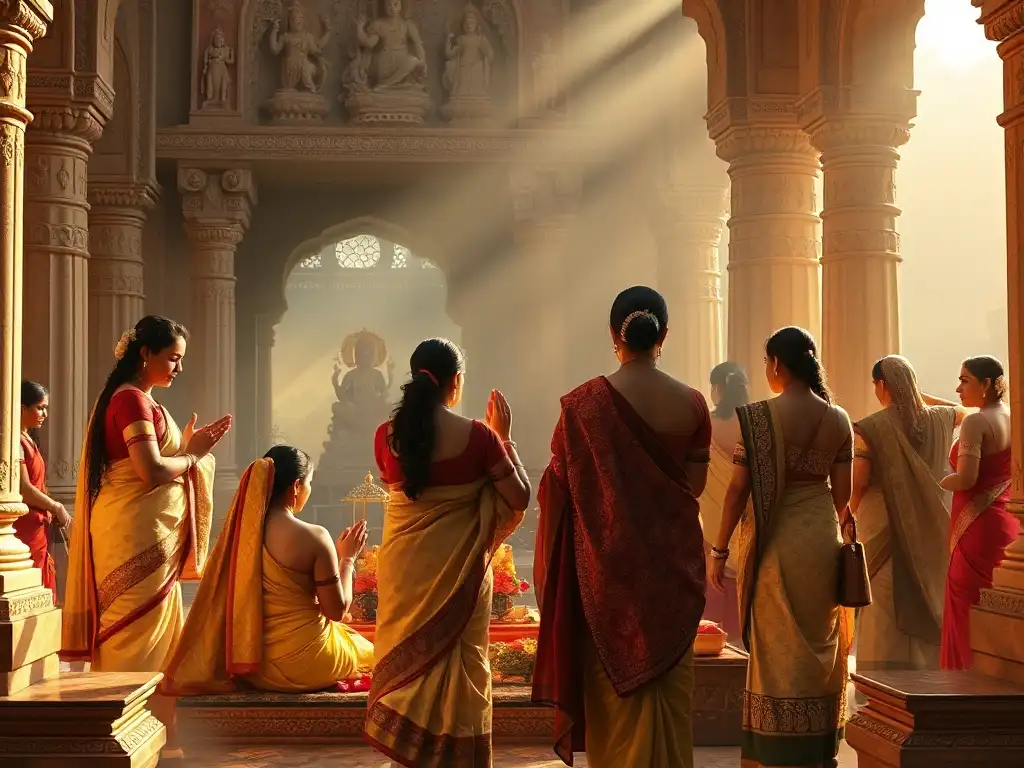
The Gupta Empire, often hailed as the Golden Age of India, was characterized by remarkable advancements in art, science, and philosophy. One of the less explored yet significant aspects of this period is the role of women in religion and spiritual practices. Women in Gupta religion were not merely passive observers; they played active roles in various religious contexts, influencing spiritual practices and community gatherings.
Gender Roles in Religious Contexts
In Gupta society, gender roles were intricately woven into the fabric of religious life. Women participated in rituals, festivals, and religious ceremonies, often as primary actors in domestic spaces. Their roles were underscored by the belief that women held the power to influence the spiritual well-being of their families through their participation in religious practices.
- Ritual Participation: Women were often responsible for performing household rituals, which were crucial in maintaining the family's dharma (moral order). This included daily pujas (worship) and participating in important festivals, such as Diwali or Makar Sankranti, where their involvement was seen as essential to inviting divine blessings.
- Sacred Texts and Education: While formal education was predominantly male-oriented, some women had access to sacred texts and scriptures. Evidence suggests that women were knowledgeable about religious texts, enabling them to contribute to discussions on spirituality. This knowledge further empowered women to lead domestic rituals and educate their children about religious traditions.
- Patronage of Religious Institutions: Women of higher social standing were known to engage in the patronage of temples and religious institutions. This involvement not only provided them with a degree of social agency but also positioned them as key figures in the religious landscape of their communities.
Spiritual Leadership: Women as Gurus and Spiritual Guides
The Gupta period also saw instances of women stepping into spiritual leadership roles. While the notion of female gurus may seem uncommon, historical records indicate that some women achieved recognition as spiritual leaders and guides.
- Guruship and Spiritual Authority: Certain women, often from affluent families, emerged as spiritual leaders, guiding both men and women in their spiritual journeys. These women were revered for their wisdom and understanding of spiritual practices, often establishing their own followings. They played a pivotal role in transmitting religious knowledge and practices, thereby influencing the spiritual life of the community.
- Literary Contributions: Women also contributed to religious literature during the Gupta period. Texts attributed to female authors, although limited, provide insights into women's perspectives on spirituality and religious life. These texts often emphasized themes of devotion, morality, and the importance of spiritual practice in everyday life.
- Cultural Representations: The representation of women in religious iconography during the Gupta period further underscores their significant role in spirituality. Sculptures and paintings from this era frequently depict women in various religious contexts, symbolizing their integral place in the spiritual realm.
The role of women in Gupta religion was multifaceted, encompassing ritual participation, spiritual leadership, and contributions to religious literature. Their active involvement not only shaped the religious practices of their time but also laid the groundwork for future generations to engage with spirituality in profound ways. Understanding these roles provides a richer perspective on the cultural and religious dynamics of the Gupta Empire.
Comparative Analysis: Women in Gupta Religion vs. Other Ancient Indian Civilizations
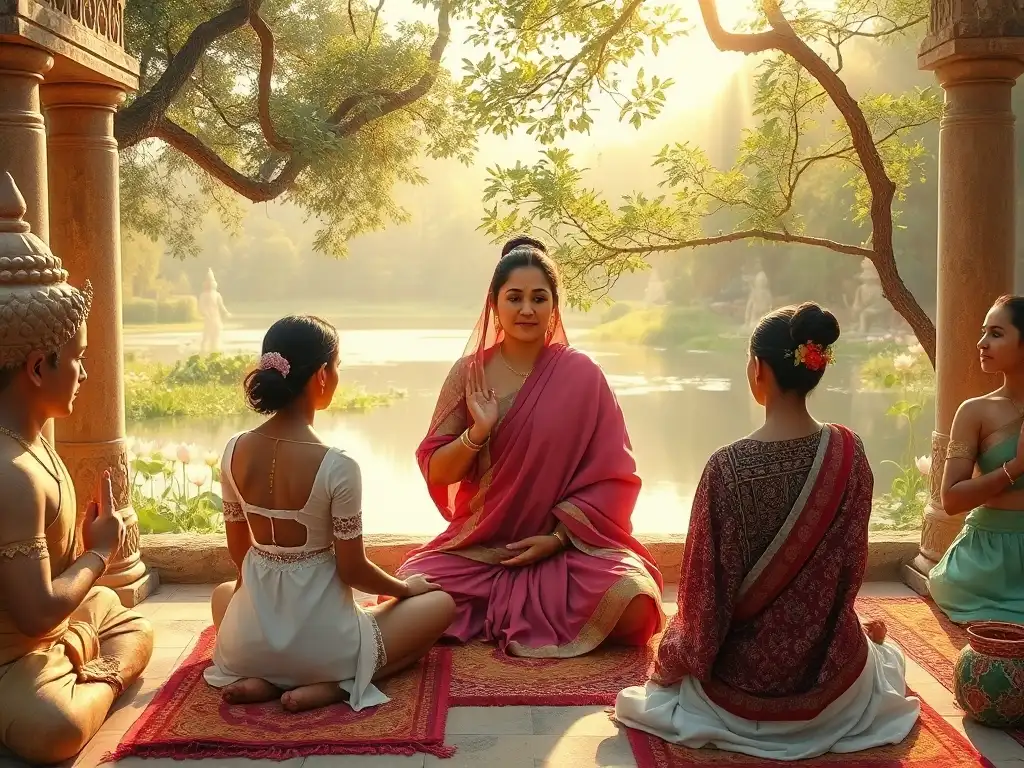
Similarities and Differences in Spiritual Roles
In the context of Women in Gupta Religion, it is essential to explore how their spiritual roles compared to those in preceding and contemporary ancient Indian civilizations, such as the Indus Valley Civilization and Vedic society.
- Spiritual Leadership:
- In both the Gupta period and earlier civilizations, women often held significant roles in spiritual practices. For instance, during the Vedic period, women were referred to as rishikas, and they contributed to the composition of hymns. Similarly, during the Gupta era, women continued to participate in rituals and were respected figures in household religious practices.
- However, the extent of their leadership varied; while Vedic women had notable influence, the Gupta period saw a more pronounced patriarchal structure that often limited women's formal roles in public religious authority.
- Ritual Practices:
- Rituals performed by women in both eras emphasized domesticity and familial well-being. In Gupta society, women participated in pujas (worship rituals) at home, reflecting continuity from earlier traditions.
- Conversely, in other ancient Indian civilizations, especially during the Indus Valley period, evidence suggests that women may have participated in community rituals more openly, indicating a possible shift in roles by the Gupta era.
- Literary Depictions:
- Texts from the Gupta period, such as the Kamasutra and various Sanskrit dramas, often depict women as central figures in the domestic sphere, emphasizing their role as wives and mothers. This contrasts with earlier texts, where women were frequently portrayed in more varied spiritual roles.
Influence of Religion on Gender Dynamics Across Civilizations
The intersection of religion and gender dynamics during the Gupta Empire illustrates a complex evolution influenced by various social, cultural, and religious factors.
- Religious Texts and Gender Norms:
- The Manusmriti and other Dharmashastras from the Gupta period codified strict gender roles, reinforcing the idea of women primarily as caretakers of the home and family. These texts served to legitimize existing patriarchal structures, often relegating women's spiritual roles to the private sphere.
- In contrast, earlier traditions allowed for greater fluidity in gender roles, with women participating in public religious life and having access to spiritual knowledge.
- Cultural Practices:
- Various cultural practices, such as the celebration of festivals, reflected the evolving status of women. In Gupta society, festivals often centered around household deities, with women playing crucial roles in these observances, which reinforced their importance within the family unit.
- However, the emphasis on domesticity also meant that women's visibility in larger religious gatherings diminished compared to earlier periods, where their roles were more public.
- Regional Variations:
- The influence of local customs and regional practices also shaped the roles of women in religion. For instance, in some areas, women maintained more influential positions within local temples or as spiritual leaders, contrasting with the more generalized trends observed in Gupta society.
- This regional diversity highlights the adaptability of women's roles in response to both spiritual and sociopolitical changes across various ancient Indian civilizations.
While women in Gupta religion shared similarities with their counterparts in other ancient Indian civilizations, distinct differences emerged, particularly regarding the consolidation of patriarchal norms and the emphasis on domestic roles. The evolution of these dynamics underscores the complexity and richness of women's contributions to spirituality and religion during this historically significant period.
The Legacy of Women in Gupta Religion
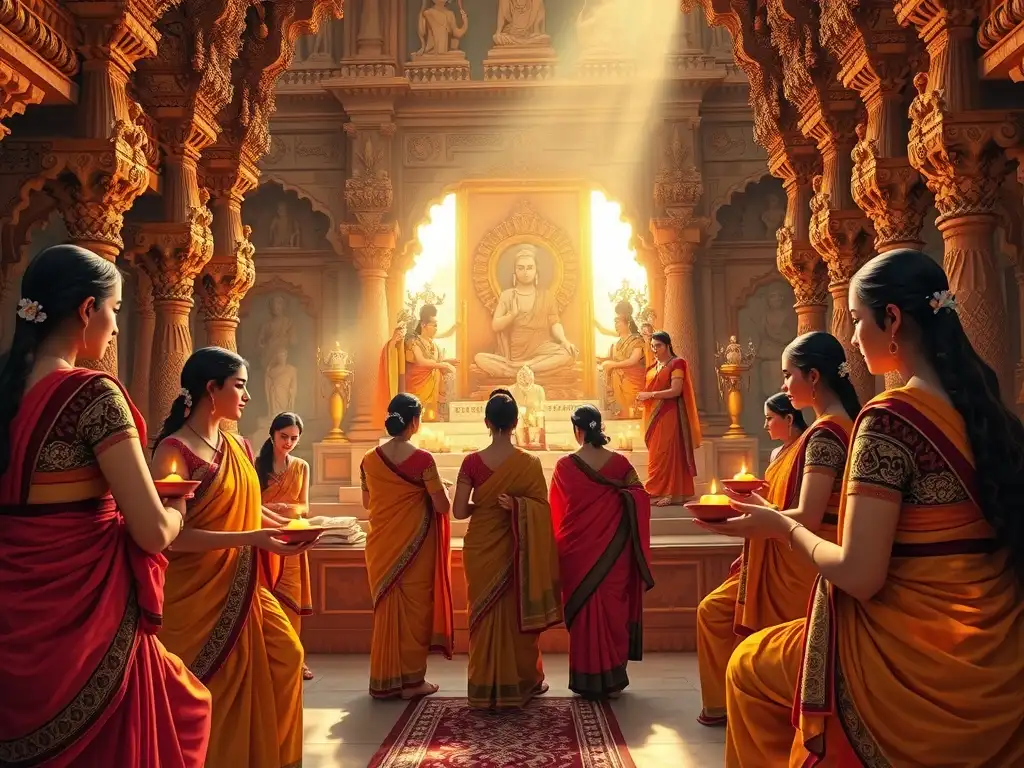
Lasting Impact on Later Indian Spiritual Practices
The role of women in Gupta religion was not only significant during the Gupta Empire but also left a lasting impact on subsequent Indian spiritual practices. Women were integral to religious rituals and were often depicted in art and literature as embodiments of virtue and devotion. The Gupta period saw the flourishing of various sects, including Hinduism and Buddhism, where women participated actively in both domestic and public religious life.
- Participation in Rituals: Women played crucial roles in family rituals, including pujas and festivals. Their participation was essential for the successful conduction of these practices, illustrating their significance in maintaining the spiritual sanctity of the household. In texts such as the Manusmriti, women’s roles were often outlined in the context of their duties towards family and spirituality.
- Spiritual Texts and Literature: Women were not only passive recipients of religious practices but also contributors to spiritual literature. Several female poets and saints emerged during this time, whose works influenced the religious landscape. For example, the Bhakti movement, which started gaining ground during the Gupta period, saw women expressing their devotion through poetry and song, emphasizing love and personal connection with the divine.
- Representation in Art: Gupta art often showcased women in religious contexts, depicting them as devotees, goddesses, or celestial beings. This representation underscored their revered status in spiritual practices. Temples and sculptures from this era frequently illustrate women engaging in worship, suggesting their integral role in religious life.
The influence of women in Gupta religion continued to resonate in later Indian spiritual practices, shaping the roles and expectations of women in subsequent eras. Their active participation laid the foundation for future generations to explore and define their spiritual identities.
Modern Interpretations of Women's Roles in Gupta Religion
Understanding the role of women in Gupta religion today involves a nuanced exploration of historical texts, archaeological findings, and contemporary interpretations. Modern scholars have begun to reassess the traditional narratives surrounding women’s roles in ancient India, recognizing their contributions and agency in spiritual matters.
- Feminist Perspectives: Recent feminist scholarship has focused on highlighting the voices of women in ancient texts and practices. This approach seeks to uncover the complexities of women's experiences beyond the patriarchal frameworks that have often dominated historiography. Scholars argue that women were not merely confined to domestic spheres but actively shaped religious practices and beliefs.
- Interdisciplinary Research: By employing interdisciplinary methodologies that combine archaeology, anthropology, and religious studies, researchers are uncovering new dimensions of women's roles. Excavations of ancient sites and the analysis of artifacts have revealed evidence of women's participation in rituals, challenging previous assumptions about their marginalization.
- Cultural Reinterpretation: Modern interpretations often reflect on the significance of women’s spiritual roles in the context of contemporary society. Discussions around women's empowerment and spiritual leadership in modern Hinduism and Buddhism draw parallels to the active participation of women during the Gupta period, inspiring a re-evaluation of their contributions.
Through these lenses, the legacy of women in Gupta religion is being rediscovered and celebrated, ensuring that their vital roles in the spiritual landscape of ancient India are recognized and honored in contemporary discourse.
Conclusion
Summary of Key Points Regarding Women in Gupta Religion
The role of women in Gupta religion was multifaceted, reflecting both societal norms and spiritual practices of the time. Here are some key points highlighting their significance:
- Religious Participation: Women actively participated in religious rituals and festivals, often taking on roles that were critical for the preservation of cultural and spiritual traditions. Their involvement was not limited to domestic spheres; they were seen in public rituals and ceremonies, making their contributions visible and essential.
- Spiritual Authority: Certain women held significant spiritual authority, serving as priestesses or mediators in religious practices. This authority allowed them to influence the spiritual lives of their families and communities, showcasing a degree of autonomy within the religious framework.
- Literary Contributions: Women in Gupta society also contributed to religious literature and philosophical discourse. Works attributed to female authors or those that featured women’s perspectives indicate their engagement with and influence on spiritual thought during this period.
- Patronage of Temples: Wealthy women often engaged in the patronage of temples and religious institutions, donating resources for the construction and maintenance of sacred spaces. This patronage not only reflects their economic power but also their commitment to religious life.
- Cultural Symbols: In art and literature, women were often depicted as symbols of fertility and prosperity, indicating their revered status in religious contexts. Such representations underscore the integral role of women in the spiritual and cultural narratives of the Gupta Empire.
Reflection on the Importance of Understanding Women’s Roles in Ancient Spiritual Practices
Understanding the roles of women in Gupta religion is crucial for several reasons:
- Challenging Historical Narratives: Traditionally, historical narratives have often overlooked or marginalized women’s contributions. By examining their roles in spirituality and religion, we can construct a more nuanced understanding of ancient Indian society that recognizes the complexity of gender dynamics.
- Cultural Insights: Women’s participation in religious practices provides insights into the broader cultural and social frameworks of the Gupta Empire. It reveals how spirituality was intertwined with daily life and societal norms, enriching our comprehension of the era.
- Legacy of Spiritual Authority: The presence of women in positions of spiritual authority during the Gupta period can inspire contemporary discussions about gender roles in spirituality and religion. Recognizing their historical contributions can empower current and future generations to explore and assert their spiritual identities.
- Interdisciplinary Connections: The study of women in Gupta religion encourages interdisciplinary research, bridging history, gender studies, and religious studies. This intersectional approach can foster a deeper appreciation of the diverse experiences of women throughout history.
By delving into the roles of women in Gupta religion, we not only acknowledge their contributions but also reflect on the evolving nature of gender and spirituality across time. This understanding enriches our knowledge of ancient Indian history and the cultural legacies that continue to influence modern society.
Frequently Asked Questions
What was the status of women in Gupta religion?
Women in Gupta religion enjoyed greater freedoms compared to previous eras, participating in rituals and religious practices while also having access to education.
How did women's roles in spirituality manifest during the Gupta period?
Women played an important role in spiritual practices, often serving as caretakers of household deities and participating in community rituals, thus enhancing their spiritual significance.
Were there any notable female figures in Gupta religious practices?
Yes, there were several notable women who made significant contributions to religion and culture, including philosophers and poets who influenced spiritual thought during the Gupta period.
How did Gupta religion impact women's rights and roles?
The Gupta period saw a blend of traditional values and new opportunities, allowing women to engage more actively in religious life while still facing societal constraints.
What contributions did women make to Gupta spiritual literature?
Women contributed to Gupta spiritual literature through their writings and teachings, often reflecting diverse perspectives on faith and morality, which enriched the religious landscape of the time.
Final Reflection: Embracing the Legacy of Women in Gupta Religion
**The exploration of women's roles in Gupta religion highlights their profound influence on spiritual practices and societal structures, revealing that the contributions of women are often overlooked yet essential to understanding the full tapestry of history. Today, as we navigate a world still grappling with gender equality, the lessons from the Gupta period resonate more than ever, reminding us of the strength and resilience women have exhibited throughout time.
Delving into the spiritual and religious practices of the Gupta era, we see how women's involvement shaped cultural narratives and religious traditions. Their roles were not merely supportive but foundational, as they participated in rituals, maintained sacred spaces, and passed down spiritual knowledge. Women are the architects of society, shaping its values and beliefs through their unwavering spirit.
This enduring influence underscores the importance of recognizing and honoring women's contributions in all spheres of life, as their legacies continue to inspire and empower future generations.
As we reflect on the insights gleaned from the Gupta period, I invite you to consider how you can honor the legacy of women in your own life. Take a moment to recognize the women who have shaped your beliefs and values, and think about how you can contribute to a more equitable world.
Whether through advocacy, education, or simply sharing stories, each of us has the power to amplify the voices of women and ensure that their roles in history are celebrated and remembered. Together, let us commit to fostering an environment where the contributions of women are acknowledged and cherished, paving the way for a brighter, more inclusive future.
Unveil the Impact of Women in Gupta Spirituality!
Thank you for taking the time to explore the significant role of women in Gupta religion and spiritual practices. Your understanding of this rich historical perspective is invaluable! Now, let's take the next step in deepening your connection to this fascinating topic.
Here are a few ways you can engage further with the legacy of women in Gupta spirituality:
- Dive deeper: Read additional resources or books about the contributions of women to religious practices during the Gupta period and beyond.
- Join the conversation: Share your thoughts and insights on social media or in the comments below. Discuss how these historical practices influence modern spiritual experiences.
- Explore your own spirituality: Reflect on how the lessons from Gupta practices can be integrated into your life today.
What aspect of women's roles in spiritual practices intrigues you the most, and how could it reshape your understanding of spirituality in contemporary times?