
How Ancient Indian Commerce Influenced Global Trade Patterns

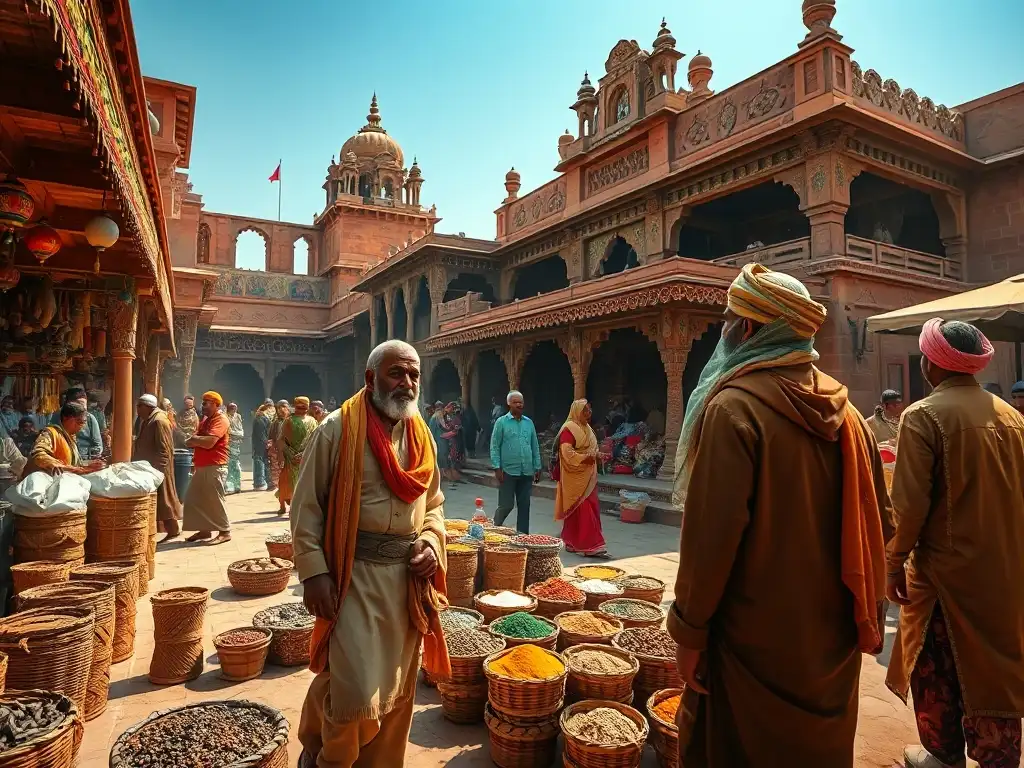
Welcome to Ancient India History, where we embark on an exhilarating journey through the tapestry of time, unraveling the remarkable narratives of ancient Indian civilizations. In this exploration, we delve into the intriguing topic of Ancient Indian trade influence, shining a light on how the vibrant commerce of the past shaped global trade patterns in ways you might not expect. Prepare to be captivated as we unveil the connections that transcended borders and eras, revealing the profound impact of ancient Indian trade on the world. Dive in, and let your curiosity lead the way!
- Introduction to Ancient Indian Trade Influence
- Historical Context of Ancient Indian Trade
- Key Commodities of Ancient Indian Trade
- Cultural Exchange Through Trade
- Ancient Indian Trade Influence on Global Trade Patterns
- Legacy of Ancient Indian Commerce
- Conclusion: The Enduring Impact of Ancient Indian Trade Influence
-
Frequently Asked Questions
- What was the significance of Ancient Indian trade in global commerce?
- How did the Indus Valley Civilization contribute to trade?
- What were the primary goods traded by ancient Indian merchants?
- How did the Silk Road impact ancient Indian trade?
- In what ways did the Gupta Empire influence trade practices?
- Final Reflection: The Enduring Legacy of Ancient Indian Trade Influence
- Unveil the Impact of Ancient Indian Commerce on Today’s Trade!
Introduction to Ancient Indian Trade Influence
Ancient India was not only a cradle of civilization but also a vital hub of trade and commerce that significantly influenced global trade patterns. Spanning from the flourishing cities of the Indus Valley to the prosperous realms of the Gupta Empire, ancient Indian commerce facilitated the exchange of goods, ideas, and cultures across vast distances.
The intricate networks of trade established during this period played a crucial role in connecting India with various regions, including the Middle East, Africa, and Southeast Asia. This article delves into the profound influence of ancient Indian trade on global commerce, examining the mechanisms, commodities, and cultural exchanges that shaped interactions between ancient societies.
Overview of Ancient Indian Commerce
Ancient India’s trading systems were remarkably advanced for their time, characterized by a variety of mechanisms and routes that connected local markets to international trade networks. The key features of ancient Indian commerce include:
- Trade routes: India was situated at the crossroads of major trade routes, including the Silk Road and maritime pathways, which facilitated the movement of goods and ideas.
- Key commodities: Indian merchants traded a diverse array of products, such as spices, textiles, precious stones, and metals. Notably, the demand for Indian spices and textiles in foreign markets was immense, leading to the establishment of trade relations with various civilizations.
- Merchant guilds: The presence of organized merchant guilds played a crucial role in regulating trade practices, ensuring fair practices, and providing support to traders in navigating complex trade environments.
The impact of ancient Indian commerce was profound, as it not only contributed to the economy but also fostered cultural exchange and technological advancements.
Importance of Trade in Ancient Indian Civilizations
Trade was a cornerstone of ancient Indian civilizations, shaping their economic structures and societal dynamics. Here are some key aspects highlighting its importance:
- Economic prosperity: Trade generated substantial wealth for ancient Indian states, enabling them to fund public works, military campaigns, and cultural endeavors. This economic prosperity laid the foundation for advancements in art, architecture, and science.
- Cultural exchange: Through trade, ancient India became a melting pot of cultures. The interactions between Indian merchants and foreign traders facilitated the exchange of ideas, religions, and customs, enriching the social fabric of Indian society. For instance, the spread of Buddhism and Hinduism across Asia was significantly influenced by trade interactions.
- Technological advancements: The demands of trade led to innovations in navigation, shipbuilding, and agricultural practices. Indian traders developed sophisticated methods for sea navigation and engaged in maritime trade, enhancing their capabilities to reach distant markets.
- Political alliances: Trade often served as a catalyst for political alliances and diplomatic relations between ancient Indian kingdoms and foreign powers. These alliances were crucial for maintaining peace and fostering mutual economic interests.
The influence of ancient Indian trade on global trade patterns is both profound and multifaceted. By examining the intricacies of commerce in ancient India, we can better understand the historical context that shaped the interactions between diverse civilizations.
Historical Context of Ancient Indian Trade
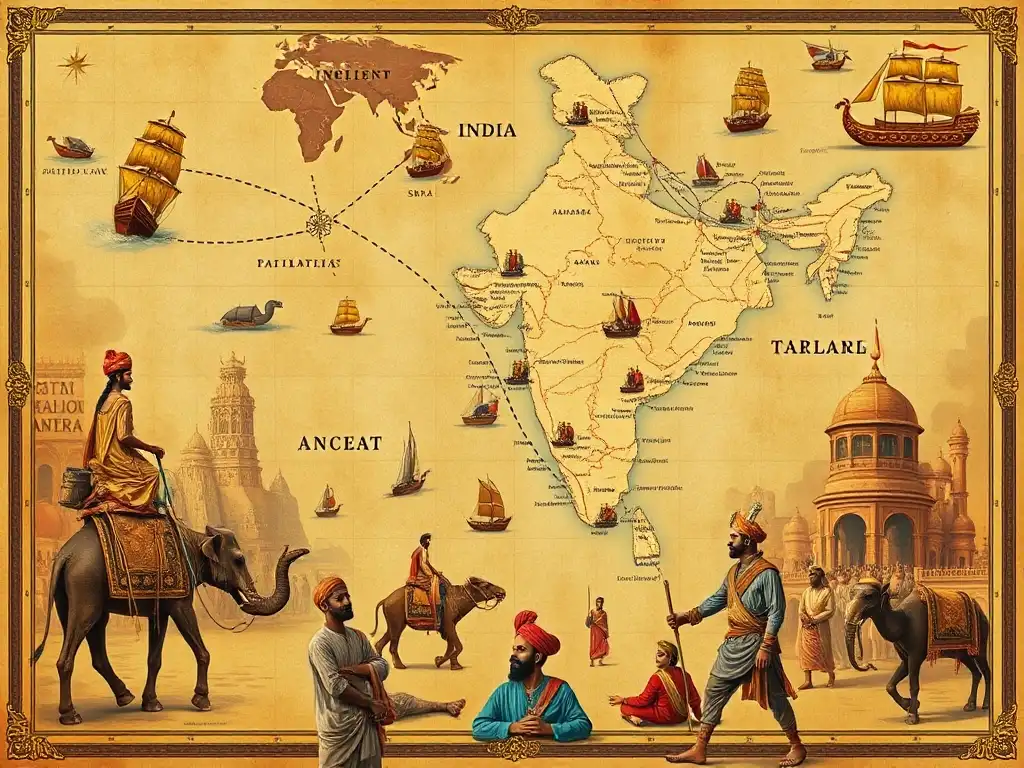
Trade Routes in Ancient India
Ancient Indian trade was characterized by a complex network of routes that facilitated the exchange of goods, cultures, and ideas. The geography of India, with its vast landmass and access to multiple oceans, allowed for both overland and maritime trade.
The Silk Road and India
The Silk Road was a vital conduit for trade, connecting the East and West. Stretching from China through Central Asia and into the Mediterranean, this network of trade routes significantly impacted ancient Indian commerce. Indian merchants played a crucial role in the Silk Road, supplying a variety of goods such as spices, textiles, and precious stones.
- Trade Goods:
- Spices (e.g., black pepper, cardamom)
- Textiles (e.g., silk, cotton)
- Gems and jewelry (e.g., diamonds, emeralds)
Indian cities like Taxila and Pataliputra emerged as key trading hubs, benefiting from their strategic locations along these routes. The cultural exchanges fostered by the Silk Road also contributed to the spread of Indian philosophy, religion, and art throughout Asia.
Maritime Trade Routes
In addition to overland routes, ancient India was a significant player in maritime trade, particularly through the Indian Ocean.
- Key Ports:
- Lothal
- Sopara
- Muziris
These ports facilitated trade with regions such as the Arabian Peninsula, East Africa, and Southeast Asia. Indian ships carried goods like spices, textiles, and precious stones, while importing items such as gold, ivory, and exotic woods. The monsoon winds aided navigation, allowing traders to travel efficiently across the ocean.
Key Periods of Trade Development
Ancient Indian trade evolved through various stages, each marked by significant developments in commerce and economic practices.
The Indus Valley Civilization
The Indus Valley Civilization (circa 3300–1300 BCE) is one of the earliest examples of urban planning and commerce in ancient India.
- Trade Practices:
- Use of standardized weights and measures
- Evidence of trade with Mesopotamia and Persia
Artifacts such as seals and pottery indicate that the people engaged in trade of goods like cotton textiles and agricultural products. The sophistication of the Indus Valley cities, such as Harappa and Mohenjo-Daro, showcases the importance of trade in their economy.
The Maurya Empire
The Maurya Empire (circa 322–185 BCE) marked a period of significant expansion and consolidation of trade networks.
- Key Features:
- Establishment of a centralized administration that regulated trade
- Development of trade routes linking India to regions like Persia and Greece
Under rulers like Chandragupta Maurya and Ashoka, trade flourished, with the government promoting commerce through infrastructure improvements like roads and rest houses. The spread of Buddhism during this period also facilitated cultural exchanges along trade routes.
The Gupta Empire
The Gupta Empire (circa 240–550 CE) is often referred to as the Golden Age of India, during which trade reached new heights.
- Economic Prosperity:
- Growth of urban centers that became bustling trade hubs
- Increased production of high-demand commodities like textiles and metalwork
The Guptas expanded trade networks, both overland and maritime, leading to increased cultural and economic interactions with regions such as China and Southeast Asia. This era not only enhanced India's economic status but also its influence on global trade patterns, making it a significant player in ancient commerce.
Through these historical contexts and key periods, it becomes evident that ancient Indian trade influence played a crucial role in shaping global trade patterns, with lasting impacts that resonate in today's economic frameworks.
Key Commodities of Ancient Indian Trade
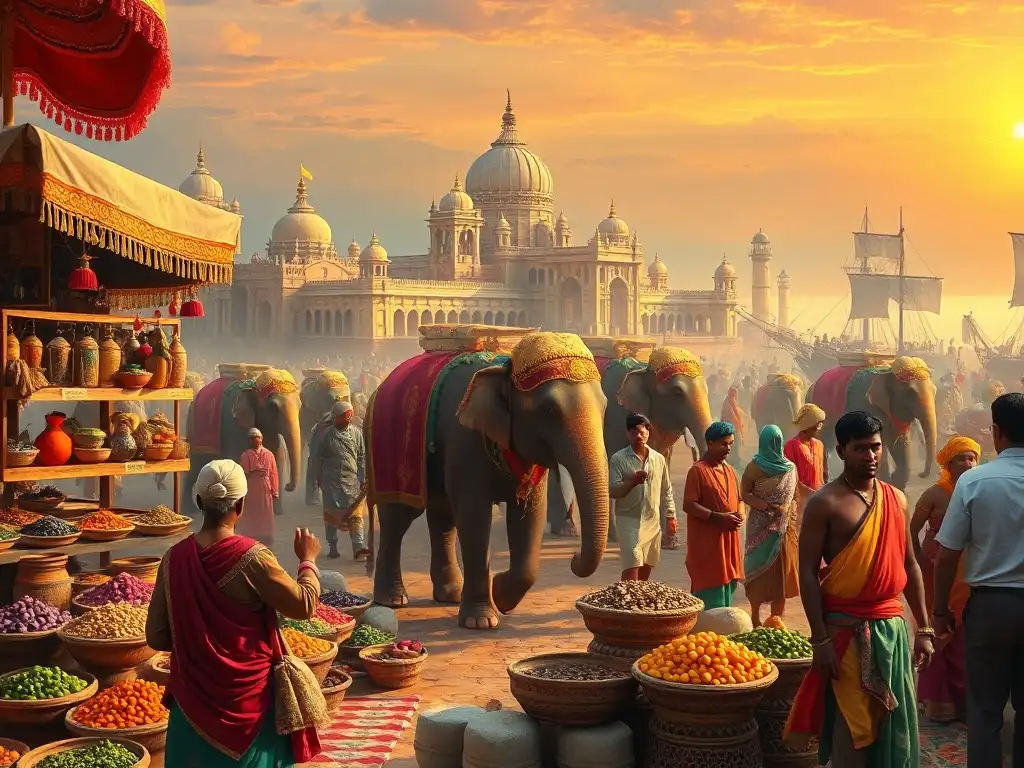
Spices and Their Global Demand
Spices were one of the most significant commodities in ancient Indian trade, with a history that dates back thousands of years. The demand for spices such as black pepper, cardamom, and cinnamon was not only high in India but also across various regions, including the Roman Empire and later, the Arabian Peninsula.
The allure of Indian spices can be traced to their unique flavors and preservatives, which were essential for enhancing food and preserving it in the ancient world. Trade routes such as the Silk Road and maritime pathways facilitated the movement of these spices, making them highly sought after. For instance, black pepper was often referred to as "black gold," and its trade contributed significantly to India's economy.
Here are some key points related to spices:
- Historical Significance: Spices were often used in religious rituals, medicinal practices, and culinary traditions.
- Global Trade Networks: Indian merchants established extensive trade links with regions in Europe, Africa, and Asia.
- Cultural Exchanges: The trade of spices led to cultural interactions, influencing cuisines worldwide.
The influence of ancient Indian spice trade is a testament to how these commodities shaped global trade patterns, establishing India as a critical player in the ancient economy.
Textiles: Cotton and Silk
Textiles, particularly cotton and silk, were another cornerstone of ancient Indian commerce. India was known for its exquisite textiles, with cotton being cultivated for thousands of years. The quality of Indian cotton and silk textiles was unmatched, leading to a strong demand in both domestic and international markets.
The trade in textiles can be broken down as follows:
- Cotton Textiles: The production of cotton textiles in India dates back to the Indus Valley Civilization. By the time of the Maurya and Gupta Empires, these textiles were being exported to regions as far as Rome and China.
- Silk Production: Ancient India was also a significant producer of silk, which was highly prized and often traded along the Silk Road. The intricate designs and vibrant colors of Indian silk made them popular among nobility in various cultures.
- Trade Routes: Textiles were commonly transported via both land and maritime routes, with Indian ports being bustling hubs of activity.
The impact of ancient Indian textile trade significantly influenced global fashion and textile industries, establishing a legacy that continues to resonate in contemporary trade practices.
Precious Stones and Metals
Precious stones and metals formed another pivotal aspect of ancient Indian trade, with India's rich mineral resources contributing to its standing in global commerce. Gems such as diamonds, rubies, emeralds, and sapphires were highly valued, and India was often referred to as the "Land of Gems."
Key details about precious stones and metals include:
- Mining and Craftsmanship: Ancient Indians were skilled in mining and gem-cutting, producing some of the finest gemstones. The art of gemstone crafting was not only a trade but also a cultural expression.
- International Trade: Precious stones were exported to various regions, including the Middle East and Europe. The trade created a demand that led to the establishment of specialized markets for these commodities.
- Economic Impact: The trade of precious metals like gold and silver significantly bolstered the ancient Indian economy, promoting wealth accumulation and influencing trade dynamics.
The legacy of ancient Indian trade in precious stones and metals has left an indelible mark on global markets, showcasing India’s historical significance in influencing trade patterns across civilizations.
Other Notable Goods Traded
In addition to the widely recognized commodities such as spices and textiles, ancient Indian trade was characterized by a diverse array of goods that significantly contributed to its economic prosperity and influenced global trade patterns. These other notable goods included:
1. Metals and Minerals
Ancient India was rich in various metals and minerals, which were integral to trade. Key exports included:
- Gold and Silver: Often used for crafting jewelry and currency. Indian artisans were renowned for their intricate designs, making these metals highly sought after in foreign markets.
- Iron: The production of high-quality iron tools and weapons was a significant aspect of ancient Indian metallurgy. The Wootz steel, known for its durability and sharpness, was particularly famous and exported to various regions.
2. Agricultural Products
The fertility of the Indian subcontinent allowed for the cultivation of diverse agricultural products:
- Rice and Wheat: Staple foods that were not only consumed locally but also exported to neighboring regions.
- Sugar and Jaggery: Derived from sugarcane, these sweeteners gained popularity and were traded extensively, influencing culinary practices beyond India's borders.
3. Gems and Jewelry
India was a primary source of precious and semi-precious stones, which played a crucial role in trade:
- Diamonds, Rubies, and Sapphires: The subcontinent was renowned for its high-quality gemstones, attracting traders from the Middle East and beyond.
- Jewelry: Crafted from these gems, Indian jewelry was favored for its craftsmanship and artistry, making it a valuable commodity in international markets.
4. Medicinal Herbs and Fragrances
The knowledge of herbal medicine and the production of fragrances were also notable aspects of ancient Indian trade:
- Ayurvedic Herbs: Used for medicinal purposes, these herbs were traded across Asia and the Mediterranean, contributing to the development of herbal medicine in various cultures.
- Incense and Perfumes: Sourced from various plants, these products were highly valued in religious and cultural practices around the world.
5. Textiles Beyond Cotton
While cotton textiles are well-known, ancient Indian commerce also included other fabrics:
- Silk: The production of silk, particularly in regions like Bengal, was a major part of trade. The famous silk routes facilitated the exchange of Indian silk with the Chinese and Middle Eastern markets.
- Wool: Woolen textiles, particularly from regions like Kashmir, were traded extensively, enhancing the diversity of textile offerings.
These goods not only enriched the local economies but also created a web of trade networks that extended across continents, fostering cultural exchanges and influencing global trade dynamics. Through their diverse offerings, ancient Indian traders played a pivotal role in shaping the markets and consumption patterns of various civilizations.
Cultural Exchange Through Trade
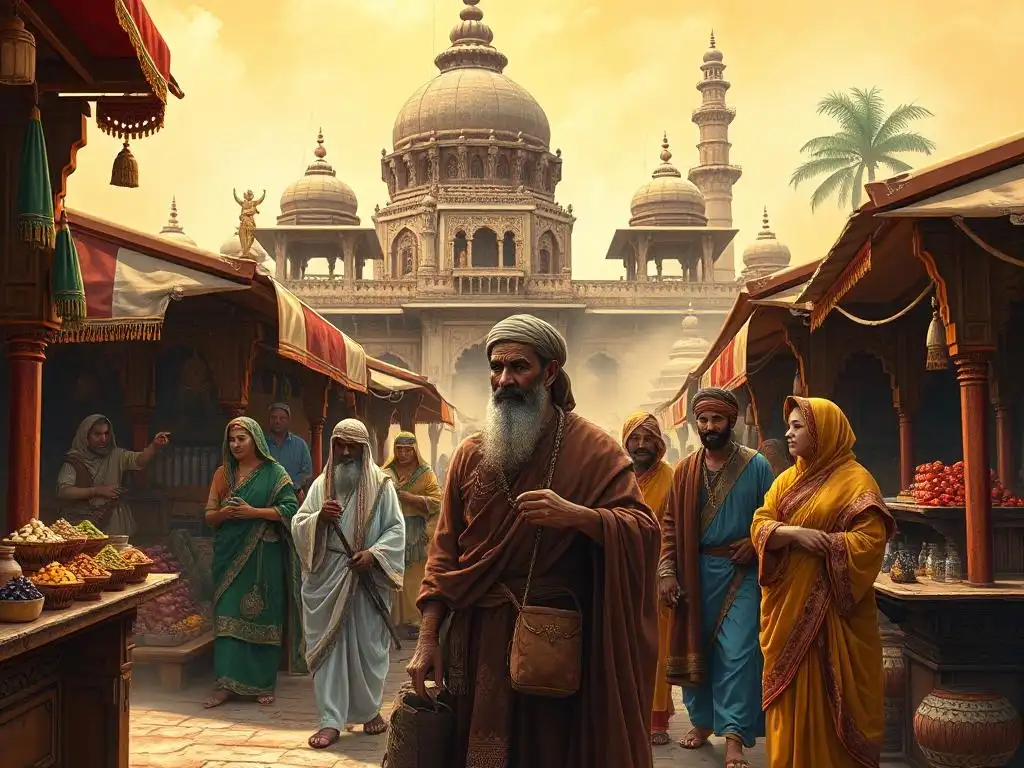
Ancient Indian trade was not merely a means of economic exchange; it was a catalyst for cultural interactions that shaped the identities of various civilizations. As merchants traversed the vast trade routes, they brought not only goods but also ideas, artistic expressions, and philosophical doctrines. This dynamic exchange significantly influenced cultures across Asia, Africa, and even Europe, resulting in a rich tapestry of shared heritage.
Influence on Art and Architecture
The art and architecture of ancient India were profoundly impacted by its trade connections. The flow of goods such as textiles, spices, and precious stones facilitated the exchange of artistic techniques and styles. For example:
- Sculptural Techniques: Indian artisans were influenced by Hellenistic art following trade interactions with the Greeks after Alexander the Great’s invasion. The fusion of Greek and Indian techniques gave rise to the Gandhara school of art, characterized by its unique style of Buddhist sculptures.
- Architectural Styles: Trade routes also allowed for the cross-fertilization of architectural ideas. The stupas of ancient India, such as the Sanchi Stupa, exhibited influences from Persian and Central Asian designs, resulting in a hybrid architectural form that was both locally significant and globally relevant.
- Decorative Arts: The intricate designs found in Indian textiles, pottery, and metalwork were influenced by motifs from distant cultures. For instance, the use of geometric patterns and floral designs in Indian textiles can be traced back to interactions with Islamic and Persian artisans.
The impact of ancient Indian trade on art and architecture underscores the importance of commerce as a vehicle for cultural diffusion, enriching societies with diverse artistic expressions.
Spread of Religions and Philosophies
Trade routes served as conduits for the spread of religions and philosophies, significantly shaping belief systems across regions. Key points include:
- Buddhism: Originating in India, Buddhism spread along trade routes to Central Asia, China, and beyond. Merchants played a vital role in disseminating Buddhist teachings, leading to the establishment of monasteries and schools in various regions. The Silk Road, in particular, became a significant corridor for the exchange of Buddhist texts and ideas.
- Hinduism: Similarly, Hinduism found its way into Southeast Asia through trade interactions, influencing local cultures and leading to the establishment of Hindu kingdoms in regions such as Indonesia and Cambodia. Temples like Angkor Wat reflect this cultural integration, showcasing the architectural grandeur influenced by Indian religious practices.
- Jainism: Jain merchants were also instrumental in spreading Jain philosophies across trade routes, promoting principles of non-violence and ethical conduct. This led to the establishment of significant Jain communities in various parts of Asia.
The interaction between commerce and religion highlights how ancient Indian trade influence extended far beyond material goods, leaving a lasting legacy on spiritual and philosophical thought across the world.
Language and Cultural Interactions
The ancient trade networks significantly contributed to language development and cultural exchanges. The following points illustrate this impact:
- Linguistic Borrowings: Through trade, languages such as Sanskrit and Prakrit influenced neighboring regions. Words and phrases from Indian languages entered into Southeast Asian languages, reflecting the cultural intermingling that occurred along trade routes.
- Script and Writing Systems: The spread of Indian writing systems, particularly the Brahmi script, had far-reaching consequences. As Indian traders and scholars traveled, they brought their scripts, which influenced local writing systems in Southeast Asia. For example, the Khmer script in Cambodia is derived from Brahmi.
- Cultural Practices: Trade interactions also led to the exchange of cultural practices, such as festivals and rituals. The celebration of certain Hindu festivals in Southeast Asia, for instance, can be traced back to ancient trade connections, demonstrating the enduring influence of Indian culture.
The linguistic and cultural interactions fostered by ancient Indian trade influence contributed to a rich tapestry of shared heritage, highlighting the interconnectedness of civilizations throughout history.
Ancient Indian Trade Influence on Global Trade Patterns
Impact on Neighboring Regions
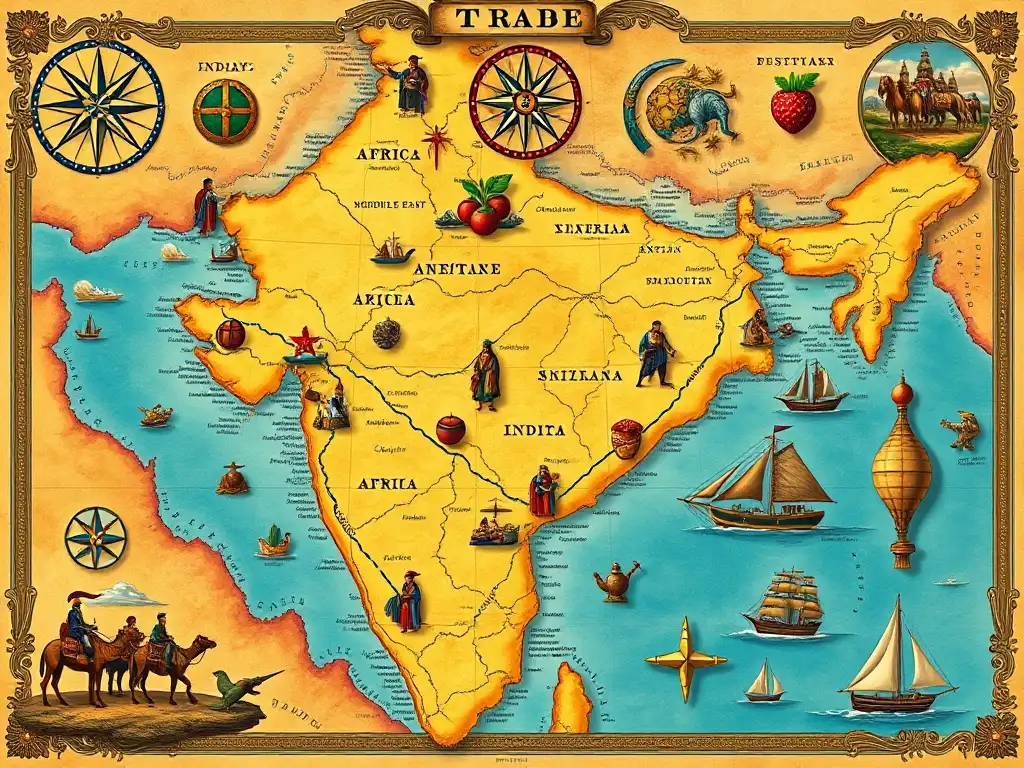
Ancient Indian trade influence extended far beyond its borders, shaping the economic landscapes of neighboring regions through extensive commerce and cultural exchanges. The Indian subcontinent's strategic location and rich resources allowed it to play a vital role in connecting various trade routes, especially along the Silk Road and maritime paths.
Southeast Asia
The influence of ancient Indian trade on Southeast Asia is profound and multifaceted. Indian merchants established thriving trade networks in regions such as present-day Indonesia, Malaysia, Thailand, and the Philippines. This interaction facilitated not only the exchange of goods but also the dissemination of cultural and religious practices.
- Goods Traded: Spices, textiles, precious stones, and metals were among the primary commodities exchanged. Indian spices, particularly pepper and cardamom, became highly sought after in Southeast Asian markets.
- Cultural Exchange: The arrival of Indian traders led to the spread of Hinduism and Buddhism in the region, significantly impacting local cultures and societies. The establishment of Indianized kingdoms, such as Srivijaya and Khmer, showcased this cultural assimilation.
Through maritime trade routes, Indian influence can still be observed in the languages, arts, and religious practices of Southeast Asia, illustrating the long-lasting effects of ancient Indian commerce.
The Middle East
The Middle East was another crucial area affected by ancient Indian trade influence. Indian merchants actively engaged with Middle Eastern traders, exchanging a variety of goods and ideas that enriched both regions.
- Silk Route Connection: Indian goods reached the bustling markets of Persia and Arabia, where items such as textiles and gemstones were highly valued. In return, India imported luxury goods like silk and glassware from the Middle East.
- Cultural Interactions: The interactions facilitated by trade led to the exchange of knowledge, particularly in fields such as mathematics, astronomy, and medicine. Indian numerals and concepts made their way into the Arab world, significantly impacting future developments in mathematics and science.
The symbiotic relationship between Indian and Middle Eastern traders laid the groundwork for extensive commercial ties that would evolve over centuries, influencing trade practices and cultural exchanges across the region.
Influence on European Trade Practices
The influence of ancient Indian trade on European practices became particularly evident during the medieval period as European nations sought direct access to the wealth of the East.
- Trade Routes: European traders began to explore new routes to India, notably through the sea. The Portuguese and later the Dutch and British established sea routes that circumvented traditional overland paths dominated by Middle Eastern traders, allowing them to access Indian goods directly.
- Commodities: The demand for Indian textiles, spices, and precious stones in Europe surged, leading to the establishment of trade companies such as the British East India Company. This not only transformed European consumer habits but also sparked competition among European powers for control over Indian trade.
The impact of ancient Indian trade on European practices is an essential chapter in the history of global commerce, as it set the stage for the Age of Exploration and the subsequent colonial endeavors that reshaped global trade dynamics. The legacy of this influence continues to be felt in modern trade practices and relationships.
Case Studies of Trade Influence
Throughout history, ancient Indian trade has played a pivotal role in shaping global commerce and cultural exchanges. Several case studies illustrate how trade networks established by Indian merchants influenced not only local economies but also international trade patterns. One prominent example is the flourishing trade between the Indian subcontinent and Southeast Asia during the early centuries CE. Indian merchants, utilizing maritime routes, facilitated the exchange of spices, textiles, and precious stones with regions like the Malay Archipelago, which in turn led to the spread of Indian culture and religion, particularly Hinduism and Buddhism.
Another significant case study is the trade between India and the Roman Empire. The Silk Road and maritime routes allowed Indian goods, such as silk, gemstones, and spices, to reach Roman markets. This relationship not only contributed to the wealth of both civilizations but also established a precedent for long-distance trade, which would later influence European exploration and colonial pursuits.
Furthermore, the trade influence of ancient India can be seen in the interactions with the Persian Empire. Indian merchants engaged in extensive trade with Persia, exchanging cotton textiles, rice, and handicrafts for silver and luxury goods. This exchange not only enriched both economies but also fostered cultural exchanges that would leave a lasting impact on art, architecture, and literature across regions.
The Role of Indian Merchants
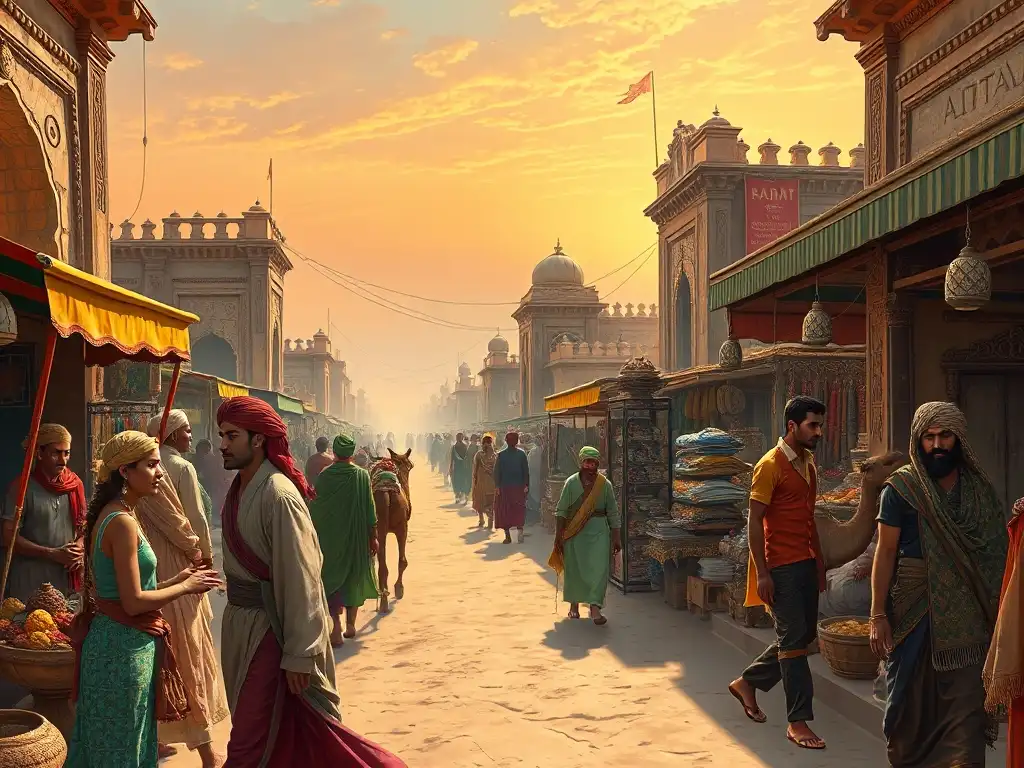
Indian merchants were instrumental in the establishment and expansion of trade networks that connected various parts of the world. Renowned for their skills in navigation and commerce, these traders often traveled vast distances, traversing land and sea to engage in trade. The merchants of the ancient Indian civilization were not only adept at trade but also at diplomacy, often forging relationships with local rulers to facilitate smoother transactions.
Prominent merchant guilds, such as the Shreshthins in the north and Nagarathars in the south, played crucial roles in organizing trade activities. These guilds provided a framework for commerce, setting standards for quality and establishing trust among traders. Their influence extended beyond mere trade; they were also involved in community welfare, supporting local infrastructure and contributing to the cultural fabric of the regions they operated in.
Moreover, the diverse range of goods that Indian merchants traded—ranging from spices and textiles to precious stones and metalwork—highlighted India's position as a central hub in global trade. Their ability to adapt to different cultures and markets allowed them to thrive and establish long-lasting trade relationships, influencing not just the flow of goods but also ideas and technologies across civilizations.
Trade Agreements and Alliances
Trade agreements and alliances were fundamental to the success of ancient Indian commerce. These agreements often facilitated smoother trading processes and provided mutual benefits for the involved parties. For instance, the Silk Road not only connected India to China but also involved various states and kingdoms along the route, fostering collaborations that enhanced trade efficiency.
One of the notable alliances was between Indian states and the Mauryan Empire, which established a vast network of trade routes. The Mauryan rulers, particularly Emperor Ashoka, promoted trade by ensuring the safety of merchants and providing incentives for commerce, which significantly boosted economic activity. This alliance not only opened up domestic markets but also encouraged international trade, extending to regions like the Hellenistic world.
Additionally, Indian merchants entered into agreements with foreign powers, such as the Persians and Romans, to secure favorable trading terms. These alliances often included agreements on tariffs, protection for merchants, and shared access to trade routes. Such arrangements not only benefited the economies involved but also led to cultural exchanges that enriched both Indian and foreign societies.
The strategic trade agreements and alliances established by ancient Indian merchants were crucial in shaping the dynamics of global trade. They not only facilitated the flow of goods but also fostered cultural interactions that shaped the world’s history.
Legacy of Ancient Indian Commerce
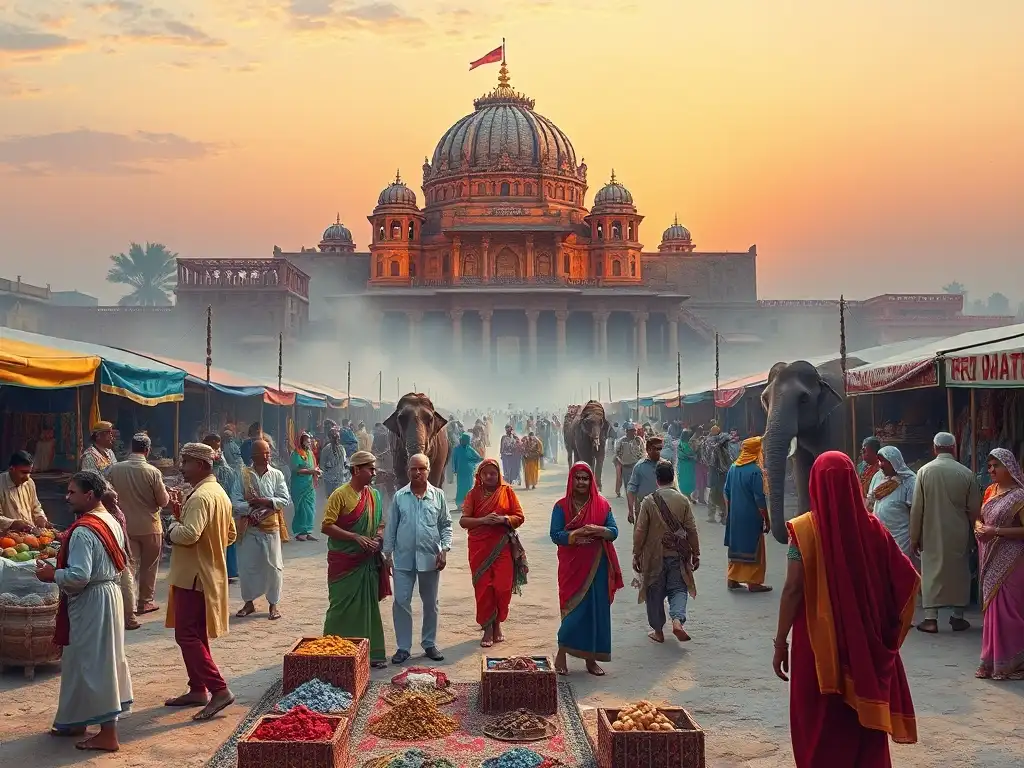
The legacy of ancient Indian commerce is profound and multifaceted, shaping not only the economic landscape of the Indian subcontinent but also leaving a lasting impact on global trade patterns. From the bustling markets of the Indus Valley Civilization to the flourishing trade routes established during the Maurya and Gupta empires, ancient Indian trade played a pivotal role in the exchange of goods, culture, and ideas.
Long-Term Effects on Modern Trade
Ancient Indian trade influence can be seen in various facets of modern commerce. The intricate networks of trade routes established by ancient merchants laid the groundwork for contemporary global trade systems. Notably, the Silk Road and maritime routes facilitated the movement of not just goods but also technologies, religions, and cultural practices.
- Cultural Exchange: The trade routes enabled the exchange of spices, textiles, and precious stones, which are still significant in today's global market. For instance, Indian spices remain highly sought after and drive substantial trade volumes worldwide.
- Trade Practices: Techniques such as barter systems evolved into more complex trade practices, including currency exchange and credit systems, which are foundational to modern economies.
- Market Integration: The concept of market integration that began in ancient India can be observed in today's globalized economy, where goods from various countries are traded seamlessly.
The long-term effects of ancient Indian commerce have laid the foundations for modern trade practices, influencing economic policies and trade agreements across the globe.
Continuing Influence of Ancient Trade Practices
The influence of ancient trade practices continues to resonate in various industries today. Many traditional practices from ancient India have been adapted and integrated into modern business strategies:
- Sustainable Trade: Ancient Indian traders practiced sustainability by utilizing local resources and maintaining ecological balance, principles that are gaining traction in contemporary discussions about sustainable commerce.
- Artisanal Techniques: Craftsmanship in textiles, pottery, and metalwork, rooted in ancient techniques, continues to thrive. Modern artisans often draw inspiration from ancient methods, ensuring that traditional skills are preserved while adapting to current market demands.
- Trade Festivals: Events such as the Pushkar Camel Fair and the International Trade Fair in Delhi can be traced back to ancient trade fairs, signifying their importance in fostering economic exchange and cultural interactions.
The ongoing relevance of these practices reflects a deep connection to heritage, demonstrating how ancient methods can inform and enhance modern commerce.
Preservation of Trade Knowledge and Techniques
The preservation of ancient trade knowledge and techniques has been crucial in maintaining the continuity of commerce in India. Various factors contribute to this preservation:
- Oral Traditions: Knowledge passed down through generations in the form of oral traditions has kept alive the practices of ancient trade. These narratives often include techniques, methods of negotiation, and market strategies that remain pertinent today.
- Literary Works: Ancient texts, such as the Arthashastra by Kautilya, provide insights into trade policies, economic strategies, and the role of merchants in society. These works serve as foundational texts for understanding ancient trade dynamics.
- Cultural Festivals: The celebration of trade-related festivals has not only preserved ancient practices but has also promoted them in modern contexts, ensuring that these traditions continue to thrive in contemporary society.
The commitment to preserving ancient trade knowledge ensures that future generations can learn from the past, enriching the current landscape of commerce while honoring the contributions of ancient civilizations.
Conclusion: The Enduring Impact of Ancient Indian Trade Influence
Summary of Key Points
The influence of ancient Indian trade on global commerce is profound and multifaceted. Key points that underline this impact include:
- Trade Routes: Ancient India was strategically located along critical trade routes such as the Silk Road and the Indian Ocean trade network. These routes facilitated the exchange of goods, ideas, and cultures between East and West.
- Diverse Commodities: Indian merchants traded a variety of goods, including spices, textiles, precious stones, and metals. The demand for Indian spices, particularly, shaped culinary practices globally and initiated significant trade exchanges.
- Cultural Exchange: Trade was not just about material goods; it also fostered cultural interactions. The spread of religions like Buddhism and Hinduism, along with art and literature, can be traced through trade interactions.
- Innovations in Trade Practices: Ancient Indian traders developed advanced techniques in navigation, accounting, and maritime trade that influenced trade practices in other civilizations.
- Economic Influence: The wealth generated from trade contributed to the prosperity of ancient Indian kingdoms, allowing them to invest in infrastructure, arts, and sciences, further enhancing their global standing.
Reflection on the Importance of Ancient Commerce in Global History
The legacy of ancient Indian trade serves as a cornerstone in understanding the evolution of global commerce. It highlights how interconnected the ancient world was, long before the advent of modern globalization.
Cultural Bridges: The establishment of trade routes created cultural bridges that allowed for the exchange of ideas and innovations. This not only enriched Indian culture but also the cultures of its trading partners. For instance, the introduction of Indian numerals and mathematics significantly impacted the development of science and commerce in the Islamic world and later, Europe.
Economic Foundations: The economic practices established during ancient times laid the groundwork for future trade systems. Concepts such as barter, credit, and the use of standardized weights and measures originated in ancient India, influencing subsequent civilizations.
Historical Significance: Understanding ancient Indian trade influence is crucial for historians and economists alike. It provides insight into how early trade networks operated and their role in shaping the political and economic landscapes of various regions.
The ancient Indian trade influence not only shaped the economic trajectories of its own civilization but also played a pivotal role in the development of global trade patterns, making it an essential area of study for comprehending the complexities of historical trade dynamics.
Frequently Asked Questions
What was the significance of Ancient Indian trade in global commerce?
Ancient Indian trade played a crucial role in establishing trade routes that connected Asia, Europe, and Africa, influencing global commerce through the exchange of goods, ideas, and cultures.
How did the Indus Valley Civilization contribute to trade?
The Indus Valley Civilization established advanced trade systems, including urban planning and standardized weights, which facilitated efficient trade with neighboring regions and laid the groundwork for future commerce.
What were the primary goods traded by ancient Indian merchants?
Ancient Indian merchants traded a variety of goods, including spices, textiles, precious stones, and metals, which were highly sought after in international markets, enhancing India's economic stature.
How did the Silk Road impact ancient Indian trade?
The Silk Road served as a vital artery for trade, enabling the flow of Indian goods to the West while also allowing cultural exchanges that significantly influenced both Indian and foreign societies.
In what ways did the Gupta Empire influence trade practices?
The Gupta Empire promoted trade through political stability and advancements in infrastructure, which fostered commerce and established India as a key player in regional and global trade networks.
Final Reflection: The Enduring Legacy of Ancient Indian Trade Influence
The intricate web of ancient Indian commerce has not only shaped the economic landscape of its time but continues to resonate in today's global trade dynamics. The exchange of goods, ideas, and cultures facilitated by ancient Indian traders laid the groundwork for interconnectedness that we often take for granted in our modern world. This historical legacy reminds us that trade is not merely a transaction; it is a bridge that connects diverse civilizations, fostering mutual understanding and collaboration.
The influence of ancient Indian trade is palpable in contemporary society, as it has woven itself into the very fabric of global commerce and cultural exchange. From the spices that tantalize our taste buds to the philosophies that inspire our thoughts, the impact of these early trade routes is profound. As Mahatma Gandhi once said, “A nation’s greatness is measured by how it treats its weakest members.” This sentiment echoes the importance of equitable trade practices that honor the contributions of all cultures, a principle that can be traced back to the values upheld by ancient Indian merchants.
As we reflect on the lessons of ancient Indian trade influence, let us consider how we can apply these insights in our own lives. How can we foster connections that transcend borders and promote understanding in our increasingly globalized world? I invite you to explore the richness of cultural exchanges in your community, support fair trade practices, and engage with diverse perspectives. By doing so, we honor the legacy of those ancient traders who paved the way for a more interconnected and compassionate world.
Unveil the Impact of Ancient Indian Commerce on Today’s Trade!
Thank you for taking the time to explore how ancient Indian commerce has shaped global trade patterns. Your interest in this rich history is vital, and you’ve gained insights into the profound influence this ancient civilization had on economic interactions worldwide. Now, it’s time to take that knowledge further!
Here are some actionable steps you can take to deepen your understanding and engage with this fascinating topic:
- Dive Deeper: Research the trade routes used by ancient Indian merchants and their contributions to cultural exchanges. Consider exploring books, documentaries, or academic articles for a richer perspective.
- Share the Knowledge: Discuss your insights with friends or on social media. Engage your network by sharing this article and inviting them to learn about the historical connections between ancient commerce and modern economies.
- Join the Conversation: Become part of a community interested in ancient history. Look for online forums, local meetups, or history clubs to connect with others who share your passion.
What aspect of ancient Indian commerce do you find most fascinating, and how do you think it influences our current trade practices?