
Upanishads and Their Interpretations: A Historical Perspective

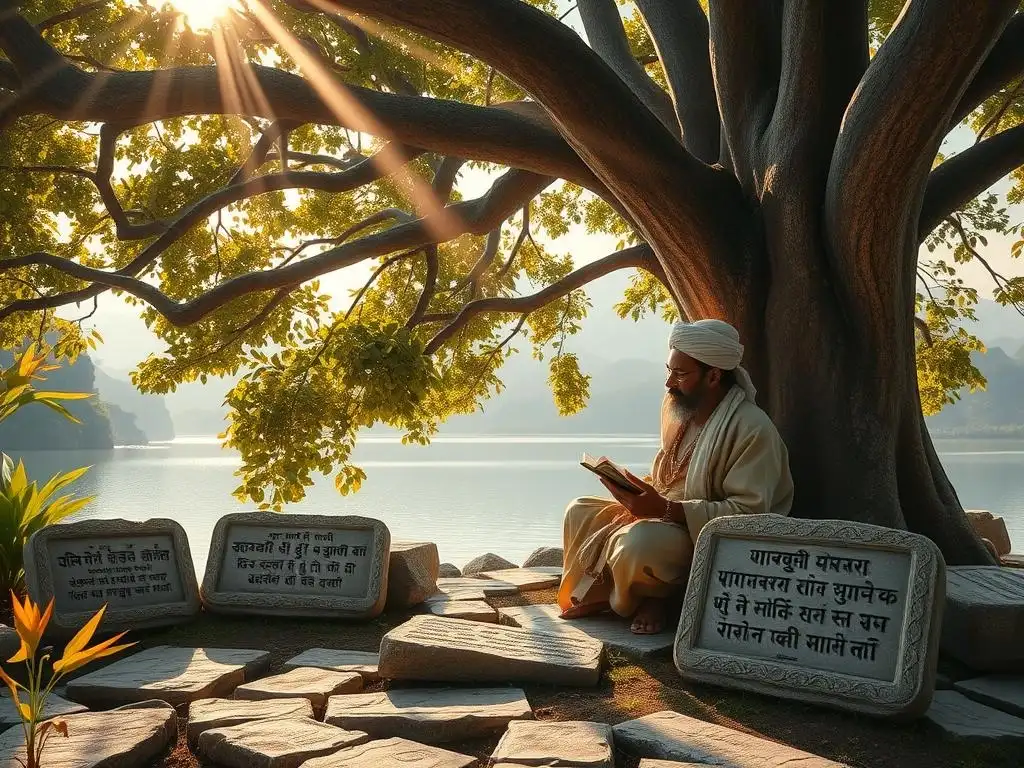
Welcome to Ancient India History, where we delve into the rich tapestry of ancient Indian civilizations that have shaped our world. Today, we invite you to embark on a journey through the intriguing exploration of the Upanishads—the philosophical texts that hold profound historical significance in India. What wisdom do these ancient writings impart, and how have they influenced not just spiritual practices but the very essence of Indian culture?
Uncover the layers of interpretation and meaning as you navigate through our latest article, "Upanishads and Their Interpretations: A Historical Perspective." Prepare to be captivated by the depth of thought and the cultural contributions that define this remarkable era in history. Your exploration starts here!
- Introduction to the Upanishads and Their Historical Significance in India
- Historical Context of the Upanishads
- Interpretations of the Upanishads: A Historical Perspective
- The Impact of Upanishads on Indian Culture and Philosophy
- Conclusion: The Lasting Legacy of Upanishads in Ancient India
-
Frequently Asked Questions
- What are the Upanishads in ancient Indian history?
- How do the Upanishads reflect the historical significance of ancient India?
- What contributions did the Upanishads make to later Indian philosophy?
- How did the Upanishads impact the cultural development of India?
- Why are the Upanishads considered crucial for understanding ancient Indian civilization?
- Final Reflection: The Enduring Legacy of the Upanishads in India's Historical Narrative
- Unveil the Wisdom of the Upanishads Today!
Introduction to the Upanishads and Their Historical Significance in India

The Upanishads hold a pivotal place in the landscape of ancient Indian philosophy and spirituality. As a collection of texts that explore the nature of reality, the self, and the cosmos, they represent the culmination of Vedic thought and mark a significant shift in the intellectual traditions of ancient India. Emerging around the end of the Vedic period (circa 800 to 400 BCE), the Upanishads are not merely religious scriptures; they embody a profound quest for knowledge and truth, influencing various aspects of Indian culture, philosophy, and spirituality.
Their historical significance is vast, as they have shaped the very foundations of Hinduism and continue to resonate in contemporary spiritual practices and philosophical discussions. Understanding the Upanishads is essential for anyone interested in the evolution of Indian thought and the rich tapestry of its historical narrative.
Definition and Overview of Upanishads
The term "Upanishad" derives from the Sanskrit roots "upa" (near), "ni" (down), and "shad" (to sit), signifying a sitting down near a teacher to receive instruction. This reflects the pedagogical nature of these texts, where knowledge is imparted through dialogues and discourses. The Upanishads, numbering over 200, are primarily concerned with metaphysical questions and the ultimate nature of reality. They delve deep into concepts such as:
- Brahman: The ultimate, unchanging reality, which is the source of all existence.
- Atman: The individual self or soul, which is considered to be identical to Brahman in its true essence.
- Moksha: The liberation from the cycle of birth and rebirth (samsara), which is the ultimate goal of human life.
These texts combine philosophical inquiry with spiritual practice, advocating for meditation, ethical living, and introspection as means to attain wisdom and enlightenment.
Importance of Upanishads in Hinduism
The Upanishads are often referred to as the 'end of the Vedas', highlighting their role as a culmination of Vedic thought. Their significance in Hinduism can be understood through various dimensions:
- Philosophical Foundations: They lay the groundwork for many philosophical systems within Hinduism, including Vedanta, which interprets the Upanishadic texts to understand the relationship between Atman and Brahman.
- Spiritual Practices: The Upanishads advocate for meditation and self-realization, encouraging individuals to seek inner knowledge and experience divine consciousness.
- Cultural Influence: Their teachings have permeated various aspects of Indian culture, including art, literature, and rituals, influencing countless generations.
- Interfaith Dialogue: The universal themes of the Upanishads resonate beyond Hinduism, making them a cornerstone for comparative studies in philosophy and spirituality across different faiths.
The enduring relevance and profound insights of the Upanishads continue to inspire seekers of truth, making them a cornerstone of not only Hindu philosophy but also the broader spectrum of world spiritual traditions.
Historical Context of the Upanishads

The Upanishads represent a pivotal evolution in ancient Indian thought, marking the transition from ritualistic practices of the Vedic texts to profound philosophical inquiries. These texts, composed between 800 BCE and 200 BCE, encapsulate a transformative period in Indian history where spirituality began to focus more on personal experience and introspection rather than mere adherence to ritualistic traditions.
Origins of the Upanishads
The Upanishads originated as a response to the limitations of the earlier Vedic scriptures, which primarily focused on rituals and sacrifices. The term "Upanishad" itself is derived from the Sanskrit roots "upa" (near), "ni" (down), and "shad" (to sit), literally translating to “sitting down near” — indicative of a teacher-student relationship. This suggests a shift towards philosophical discourse and the pursuit of knowledge through direct learning.
The earliest Upanishads, known as the "Principal Upanishads," include texts such as the Isha, Kena, Katha, Prashna, and Mundaka. These texts explore fundamental questions regarding the nature of reality, the self (Atman), and the ultimate reality (Brahman). They are characterized by their metaphysical inquiries and the quest for understanding the interconnectedness of all existence.
The Upanishadic philosophy emphasizes concepts such as:
- Brahman: The ultimate reality that is the source of all existence.
- Atman: The individual soul or self, which is ultimately identical to Brahman.
- Moksha: The liberation from the cycle of birth and rebirth (samsara) achieved through self-realization.
Timeline: Key Historical Periods in Upanishadic Literature
The development of Upanishadic literature can be segmented into distinct historical periods that reflect the evolving philosophical landscape of ancient India:
| Period | Approximate Dates | Key Features |
|---|---|---|
| Early Vedic Period | 1500 - 1000 BCE | Composition of the earliest Vedic texts, focus on rituals. |
| Later Vedic Period | 1000 - 600 BCE | Emergence of philosophical thought; first Upanishads composed. |
| Classical Period | 600 - 200 BCE | Consolidation of Upanishadic philosophy; commentaries and interpretations arise. |
Each of these periods contributed to the richness of Upanishadic thought, reflecting changes in societal values, religious practices, and philosophical inquiries. The later Upanishads, often referred to as the "post-Vedic" Upanishads, delve deeper into metaphysical concepts and ethical considerations, indicating a maturation of spiritual thought.
Upanishads within the Vedic Tradition
The Upanishads are intrinsically linked to the Vedic tradition, serving as a bridge between ritualistic practices and philosophical exploration. While the earlier Vedic texts, such as the Rigveda and Yajurveda, focus on hymns and sacrifices, the Upanishads shift the emphasis toward internal contemplation and the quest for knowledge.
Key aspects of the Upanishadic relationship with the Vedic tradition include:
- Philosophical Expansion: The Upanishads expand upon Vedic cosmology and theology, introducing concepts that challenge and refine prior beliefs.
- Ritual Reinterpretation: They reinterpret Vedic rituals not just as external actions but as symbolic representations of inner spiritual truths.
- Integration of Knowledge: The synthesis of knowledge from various schools of thought within the Vedic corpus, leading to a more holistic understanding of existence.
The historical significance of the Upanishads lies in their ability to articulate complex ideas about existence, consciousness, and the universe while maintaining a connection to their Vedic roots. They laid the groundwork for subsequent philosophical systems, including those explored in later Hindu, Buddhist, and Jain traditions. By highlighting the shift from ritualistic practice to philosophical inquiry, the Upanishads mark a significant milestone in the intellectual history of India.
Interpretations of the Upanishads: A Historical Perspective

The Upanishads, a collection of ancient Indian texts that form the philosophical basis of Hinduism, have been subject to various interpretations throughout history. These interpretations have evolved in response to changing cultural, religious, and philosophical contexts, highlighting the historical significance of the Upanishads in India. This section explores the classical and medieval interpretations, focusing on their impact on philosophical discourse, regional variations, and the influence of movements like Bhakti.
Classical Interpretations of Upanishads
The classical interpretations of the Upanishads emerged primarily during the period when these texts were composed, around 800 to 400 BCE. Scholars and philosophers sought to understand the profound spiritual insights presented in these texts, leading to the development of several schools of thought.
Philosophical Schools Influenced by Upanishads
- Advaita Vedanta:
- Founded by Adi Shankaracharya in the 8th century CE, this school emphasizes the non-dualistic nature of reality. Shankaracharya interpreted the Upanishads to advocate that the individual soul (Atman) is identical to the ultimate reality (Brahman). His commentaries on texts like the Brahma Sutras and the Bhagavad Gita reflect this profound philosophical stance.
- Dvaita Vedanta:
- In contrast to Advaita, Madhvacharya established this dualistic perspective in the 13th century. He argued that the individual soul and Brahman are distinct entities. His interpretations of the Upanishads emphasized devotion and the importance of a personal god.
- Vishishtadvaita:
- Rāmānuja, in the 11th century, proposed a qualified non-dualism. He believed in the unity of Atman and Brahman, while still acknowledging their differences. His works, such as the Sri Bhashya, drew extensively from the Upanishadic teachings.
Key Thinkers and Their Contributions
- Yajnavalkya: A significant figure in the Upanishadic texts, Yajnavalkya's dialogues in the Brihadaranyaka Upanishad explore metaphysical questions, establishing him as a key thinker in Indian philosophy.
- Gautama Buddha: Though critical of the Vedic tradition, his thoughts reflect an engagement with Upanishadic concepts, particularly regarding the nature of suffering and enlightenment.
- Ramanuja and Shankara: Their extensive commentaries on the Upanishads not only preserved the texts but also provided nuanced interpretations that influenced subsequent generations.
Medieval Interpretations of Upanishads
The medieval period saw a resurgence of interest in the Upanishads, particularly with the rise of devotional movements across India. This era brought forth new interpretations that integrated Bhakti ideals with Upanishadic philosophy.
Influence of Bhakti Movement on Upanishadic Thought
The Bhakti movement, which emerged between the 7th and 12th centuries CE, emphasized personal devotion to a deity. This movement significantly influenced the interpretation of the Upanishads by:
- Integrating devotional aspects: Thinkers like Kabir and Mirabai interpreted Upanishadic teachings to emphasize love and devotion (Bhakti) as paths to understanding Brahman.
- Promoting accessibility: The Bhakti poets often used the themes of the Upanishads to make philosophical ideas more relatable to the common people, thus democratizing spirituality and philosophy.
Regional Interpretations and Variations
The Upanishads have also been interpreted differently across various regions in India, leading to a rich tapestry of philosophical thought:
- South India: The Vaishnavite tradition has its unique interpretations of the Upanishads, often aligning them with the teachings of the Alvars and later thinkers like Ramanuja.
- Maharashtra: The Sant tradition, with figures like Dnyaneshwar, incorporated Upanishadic themes into their works, emphasizing personal experience and devotion.
- Bengal: The Bengali renaissance in the 19th century revived interest in the Upanishads, with figures like Rabindranath Tagore interpreting them in the context of modern spirituality.
The diverse interpretations of the Upanishads throughout history reflect their enduring relevance and adaptability in Indian philosophy. Their historical significance in shaping various philosophical schools and movements remains a vital aspect of understanding ancient Indian thought.
Modern Interpretations of Upanishads
The Upanishads, ancient texts that form the philosophical backbone of Hinduism, have undergone various interpretations in modern times. These interpretations reflect not only the evolving understanding of spirituality but also the socio-political contexts in which they are studied. Modern scholars often approach the Upanishads through different lenses—philosophical, historical, and even psychological—leading to a rich tapestry of interpretations that resonate with contemporary audiences.
In the 20th century, the global interest in Eastern philosophies surged, prompting many Western thinkers and philosophers to delve into the teachings of the Upanishads. This engagement has led to a re-examination of concepts such as the nature of reality (Brahman), the self (Atman), and the relationship between the two. Modern interpretations often emphasize the universality of these ideas, suggesting that the Upanishads offer insights relevant to humanity's existential questions.
Furthermore, the advent of new technologies and the accessibility of knowledge have facilitated a broader dissemination of Upanishadic teachings, allowing individuals from diverse backgrounds to explore their philosophical depths. This democratization of knowledge has resulted in the emergence of various interpretations that challenge traditional views, integrating them into the global philosophical discourse.
Western Engagement with Upanishadic Philosophy
The West's engagement with Upanishadic philosophy can be traced back to the late 18th and early 19th centuries, when scholars such as Arthur Schopenhauer and Ralph Waldo Emerson began to highlight the significance of these texts. Schopenhauer, in particular, revered the Upanishads for their profound insights into the nature of reality and suffering, viewing them as a counterpoint to Western materialism. His emphasis on the will as the essence of existence mirrored the Upanishadic idea of Brahman as the ultimate reality.
This engagement sparked a wider interest in Eastern philosophies, leading to the establishment of various movements that sought to incorporate Upanishadic concepts. The Transcendentalist movement in America, represented by thinkers like Emerson and Thoreau, drew heavily from these texts, advocating for self-reliance, nature, and the pursuit of spiritual truth.
In the 20th century, the rise of the New Age movement further popularized Upanishadic teachings in the West. Many contemporary spiritual seekers have embraced the concepts of meditation and self-realization found within these texts, often blending them with other philosophical traditions. This appropriation, however, has led to discussions about cultural sensitivity and the authentic understanding of these ancient teachings.
Contemporary Indian Scholars and Their Perspectives
In India, contemporary scholars have approached the Upanishads with a renewed vigor, analyzing them in light of modern issues such as identity, gender, and social justice. Scholars like R.adhakrishnan and Swami Vivekananda have played crucial roles in interpreting the Upanishads for modern audiences, emphasizing their relevance in addressing contemporary societal concerns.
R.adhakrishnan, in particular, emphasized the ethical and moral implications of Upanishadic teachings, advocating for a synthesis of Eastern and Western philosophies. He argued that the Upanishads provide a framework for understanding the self in relation to society, promoting values of compassion and harmony. This perspective has encouraged modern Indian thinkers to explore how Upanishadic philosophy can contribute to discussions on human rights and social equity.
Moreover, the rising prominence of women scholars in the field has led to fresh interpretations that challenge patriarchal readings of the texts. Scholars such as Uma Chakravarti and Nivedita Menon have critically examined the Upanishads, exploring themes of gender and power dynamics, thereby enriching the discourse around these ancient scriptures.
The modern interpretations of the Upanishads reflect a dynamic interplay between tradition and contemporary thought. By engaging with these texts through various lenses, scholars continue to unveil the profound historical significance of the Upanishads in India and their enduring impact on philosophy and spirituality worldwide.
The Impact of Upanishads on Indian Culture and Philosophy
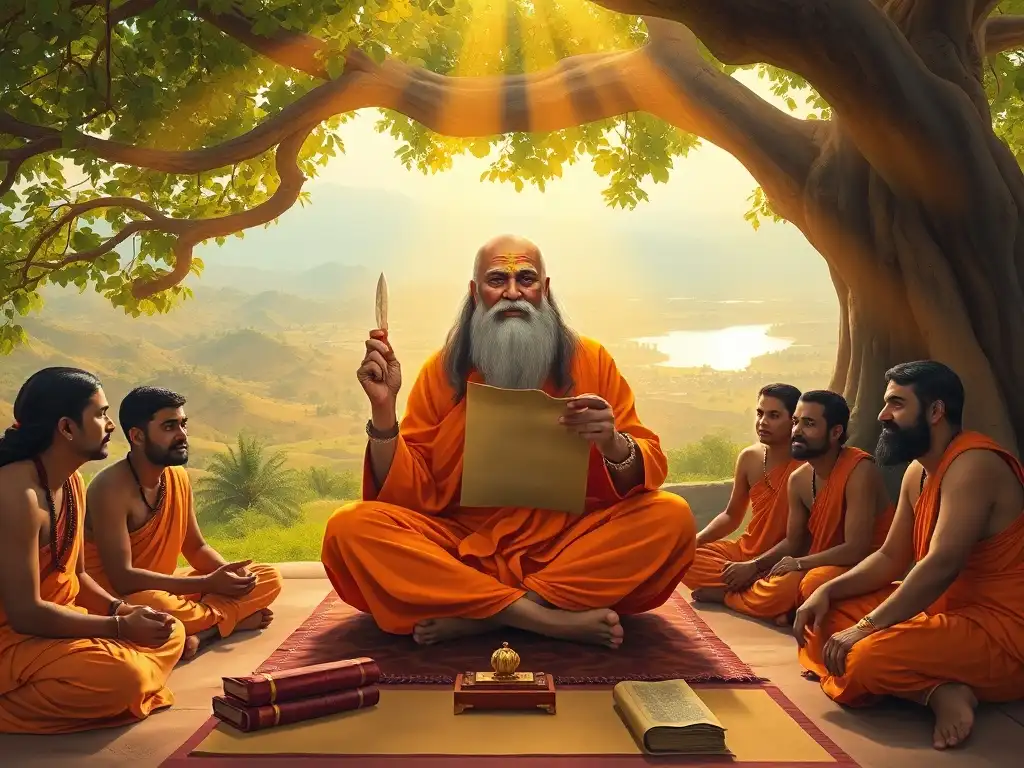
The Upanishads, revered as a profound philosophical foundation in ancient India, have played a pivotal role in shaping the cultural and spiritual landscape of the subcontinent. Their teachings transcend mere religious doctrine, offering insights into the nature of reality, self, and the cosmos. This rich textual tradition has influenced various aspects of Indian life, from philosophy and spirituality to literature and the arts, marking their historical significance in India.
Influence on Indian Philosophy and Thought
The philosophical discourse in the Upanishads has been instrumental in laying the groundwork for numerous schools of thought within Indian philosophy. Central to their teachings is the concept of Brahman (the ultimate reality) and Atman (the individual self), which are intricately connected. This relationship has sparked extensive discussions among scholars and philosophers throughout history.
- Advaita Vedanta: The non-dualistic school of thought, primarily formulated by Adi Shankaracharya, draws heavily from the Upanishadic texts. It posits that the individual self (Atman) is fundamentally identical to the universal consciousness (Brahman).
- Samkhya and Yoga: Concepts of dualism and the nature of existence expounded in the Upanishads influenced the development of the Samkhya philosophy and later the Yoga school, which emphasizes self-realization and liberation (moksha).
- Ethical Framework: The Upanishads also provide an ethical framework that emphasizes the interconnectedness of all beings. This has led to the development of principles such as ahimsa (non-violence) and satya (truth), which have permeated various aspects of Indian life.
The philosophical discussions initiated in these ancient texts continue to resonate in contemporary debates, reflecting their enduring relevance and significance in India’s intellectual tradition.
Upanishads and Their Role in Shaping Spiritual Practices
The Upanishads have profoundly influenced spiritual practices in India, contributing to the development of various rituals, meditative techniques, and philosophical contemplations. Their teachings on meditation and self-inquiry have inspired a range of spiritual traditions.
- Meditation Techniques: The Upanishadic texts articulate various forms of meditation, advocating for inward reflection and the pursuit of self-knowledge. This has led to the emergence of numerous meditative practices that are foundational in Hinduism and have been adopted by various spiritual pathways.
- Ritual Practices: While the Upanishads emphasize philosophical inquiry, they also address the significance of rituals, presenting them as means to attain spiritual knowledge. This dual focus has shaped the ritualistic practices observed in Hindu worship today.
- Influence on Bhakti Movement: The emphasis on personal devotion and direct experience of the divine in the Upanishads laid the groundwork for the later Bhakti movement, which sought to democratize spirituality through emotional devotion and accessibility.
The integration of Upanishadic teachings into the fabric of spiritual practices has not only enriched the spiritual landscape of India but also fostered a diverse array of traditions that continue to flourish.
Contribution of Upanishads to Literature and Arts
The impact of the Upanishads extends beyond philosophy and spirituality; they have also made significant contributions to literature and the arts in ancient India. Their poetic and philosophical depth has inspired countless works across various artistic forms.
- Literary Influence: The Upanishads have inspired a vast body of literature, both sacred and secular. Their themes of existential inquiry, metaphysical exploration, and the quest for ultimate truth resonate in the verses of poets and playwrights throughout Indian history.
- Artistic Expressions: The vivid imagery and philosophical concepts in the Upanishads have found expression in various art forms, including sculpture, painting, and dance. Artists have drawn upon the rich narratives and motifs from these texts to create works that explore spiritual themes.
- Cultural Narratives: The stories and parables within the Upanishads have been woven into the cultural fabric of India, influencing folk tales, regional narratives, and oral traditions. This has helped preserve and propagate the teachings of the Upanishads across generations.
The literary and artistic contributions of the Upanishads underscore their historical significance in shaping the cultural identity of India, demonstrating their enduring legacy in the realms of art and literature.
Conclusion: The Lasting Legacy of Upanishads in Ancient India
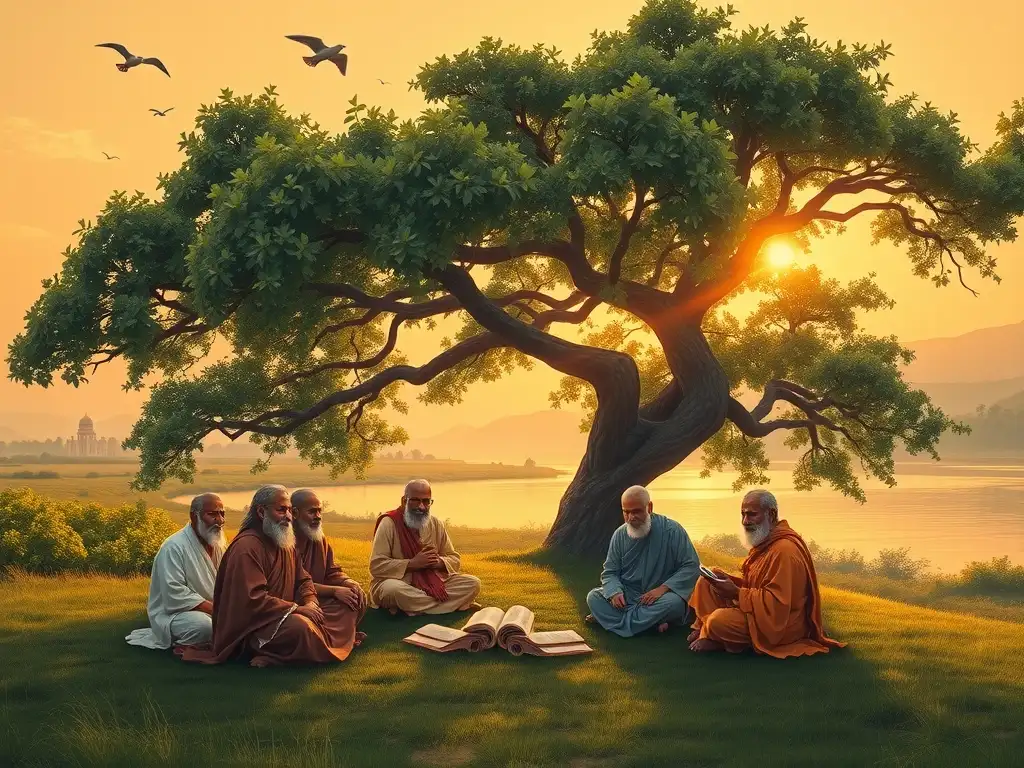
The Upanishads, a collection of philosophical texts that form the concluding part of the Vedas, hold a profound place in the historical and spiritual landscape of ancient India. Their teachings have not only influenced religious thought but have also shaped various aspects of Indian culture and society. Through intricate discussions on metaphysics, ethics, and spirituality, the Upanishads have provided a framework for understanding the nature of reality and the self, which continues to resonate across centuries.
Summary of Upanishads' Historical Significance
The historical significance of the Upanishads in India can be examined through several key dimensions:
- Philosophical Foundations: The Upanishads introduced concepts such as Brahman (the ultimate reality) and Atman (the self), which have become central to Indian philosophy. These ideas laid the groundwork for various schools of thought, including Vedanta and Samkhya.
- Influence on Hinduism: As a crucial part of Hindu scripture, the Upanishads have significantly influenced the religious practices and beliefs of millions. They provided a spiritual context that transcends ritualistic practices, emphasizing personal experience and introspection.
- Cultural Integration: The teachings of the Upanishads permeated various facets of Indian culture, including art, literature, and music. Their philosophical narratives inspired poets, playwrights, and artists, leading to a rich tapestry of cultural expressions throughout Indian history.
- Historical Context: Composed between 800 BCE and 200 BCE, the Upanishads emerged during a transformative period in India known as the Axial Age, when diverse philosophical ideas began to flourish. This era saw the questioning of traditional Vedic rituals and the emergence of new spiritual paradigms, which the Upanishads encapsulated.
- Cross-Cultural Impact: The philosophical inquiries of the Upanishads have also found resonance beyond India, influencing Buddhist thought and later philosophical traditions in the West. Their exploration of existential questions has made them a subject of interest for scholars across cultures.
Future Directions for Upanishadic Studies in Historical Context
As interest in the Upanishads continues to grow, several future directions for research and interpretation can be identified:
- Interdisciplinary Approaches: Scholars are encouraged to adopt interdisciplinary methodologies, integrating insights from philosophy, history, anthropology, and comparative religion to provide a holistic understanding of the Upanishads' impact.
- Contextual Studies: Future research could delve deeper into the socio-political and economic contexts in which the Upanishads were composed. Understanding the historical backdrop may reveal how these texts responded to the challenges of their time.
- Translation and Interpretation: With ongoing efforts to translate and interpret the Upanishads into various languages, there remains a need for critical editions that address the nuances of the original Sanskrit texts. This can facilitate a broader appreciation and understanding of their philosophical depth.
- Modern Relevance: Investigating the contemporary relevance of Upanishadic thought is crucial. How can these ancient teachings inform modern ethical dilemmas, environmental concerns, and social justice issues?
- Technological Integration: The use of digital humanities tools can enhance Upanishadic studies by enabling scholars to analyze texts in new ways, track interpretations over time, and reach wider audiences through online platforms.
The Upanishads not only represent a pivotal moment in ancient Indian history but also continue to inspire and challenge contemporary thought. Their enduring legacy is a testament to their profound significance in shaping spiritual and philosophical discourse in India and beyond.
Frequently Asked Questions
What are the Upanishads in ancient Indian history?
The Upanishads are a collection of philosophical texts that form the core of Hindu thought, exploring ideas about the self, universe, and ultimate reality.
How do the Upanishads reflect the historical significance of ancient India?
The Upanishads represent a shift towards spiritual introspection and metaphysical inquiry, illustrating the intellectual evolution of ancient Indian civilization.
What contributions did the Upanishads make to later Indian philosophy?
The Upanishads laid the groundwork for Advaita Vedanta and other philosophical schools, influencing Buddhism and Jainism through their ideas on non-dualism and consciousness.
How did the Upanishads impact the cultural development of India?
The Upanishads promoted concepts of dharma, karma, and moksha, which became fundamental in shaping the cultural and ethical frameworks of Indian society.
Why are the Upanishads considered crucial for understanding ancient Indian civilization?
The Upanishads provide insights into ancient Indian spirituality, social dynamics, and intellectual traditions, making them essential for comprehending the cultural heritage of India.
Final Reflection: The Enduring Legacy of the Upanishads in India's Historical Narrative
The Upanishads stand as a cornerstone of Indian philosophy and spirituality, their teachings echoing through centuries and continuing to shape contemporary thought. In today's fast-paced world, where the quest for meaning often feels overshadowed by material pursuits, the profound insights of the Upanishads remind us of the importance of introspection and the search for truth. Their historical significance in India is not merely a relic of the past; it is a living tradition that continues to inspire and guide individuals on their spiritual journeys.
The influence of the Upanishads extends far beyond their textual origins, permeating the cultural and social fabric of India. Their teachings have fostered a deep sense of interconnectedness among diverse communities, promoting values of unity and compassion. As we navigate the complexities of modern society, the wisdom encapsulated in these ancient texts remains relevant. The Upanishads are the essence of all knowledge, the foundation upon which the edifice of Indian thought is built.
This quote encapsulates the ongoing impact of the Upanishads, serving as a reminder of their role in shaping not only individual lives but also the collective consciousness of a nation.
As we reflect on the teachings of the Upanishads, let us embrace their call to self-discovery and enlightenment. I invite you to explore the depths of your own consciousness and consider how the principles found within these texts can be woven into your daily life. Whether through meditation, contemplation, or simply engaging with the world around you, the Upanishads offer a pathway to understanding oneself and the universe. In doing so, we honor their historical significance and ensure that their wisdom continues to illuminate our paths for generations to come.
Unveil the Wisdom of the Upanishads Today!
Thank you for diving into the rich tapestry of the Upanishads and their fascinating interpretations throughout history. Your engagement with this profound topic opens the door to deeper understanding and spiritual exploration. Now, let's take meaningful steps towards applying that knowledge:
- Explore further: Delve into additional readings on the diverse interpretations of the Upanishads to find a version that resonates with your beliefs and experiences.
- Share insights: Discuss your newfound understanding by sharing this article with friends or on social media—let's spread the wisdom together!
- Join the conversation: Engage in online forums or local groups centered around Indian philosophy to exchange ideas and broaden your perspective.
As you reflect on these actions, consider this: How have the teachings of the Upanishads shaped your view on life and spirituality?