
How the Maurya Empire Facilitated Trade Across Asia


Welcome to Ancient India History, where we embark on a captivating journey through the rich tapestry of ancient Indian civilizations. Today, we delve into the intricate web of trade routes that flourished during the Maurya Empire, revealing how this remarkable civilization not only transformed commerce but also connected diverse cultures across Asia. Curious about how the Maurya Empire developed these routes and their impact on trade? Join us as we uncover the fascinating dynamics of ancient trade and economy, and discover how these routes shaped the course of history. Your exploration starts here!
- Introduction to the Maurya Empire and Its Trade Influence
- Major Trade Routes Established by the Maurya Empire
- Role of the Maurya Empire in Facilitating Trade
- Economic Contributions of the Maurya Empire to Asia
- The Decline of Maurya Empire Trade Networks
- Conclusion
-
Frequently Asked Questions
- What were the primary trade routes used during the Maurya Empire?
- How did the Maurya Empire contribute to economic growth in Asia?
- What goods were commonly traded across these routes?
- How did the Maurya Empire influence cultural exchanges?
- What role did the Maurya Empire play in the history of trade?
- Final Reflection: The Enduring Legacy of the Maurya Empire's Trade Routes
- Ignite Your Passion for Ancient Trade!
Introduction to the Maurya Empire and Its Trade Influence
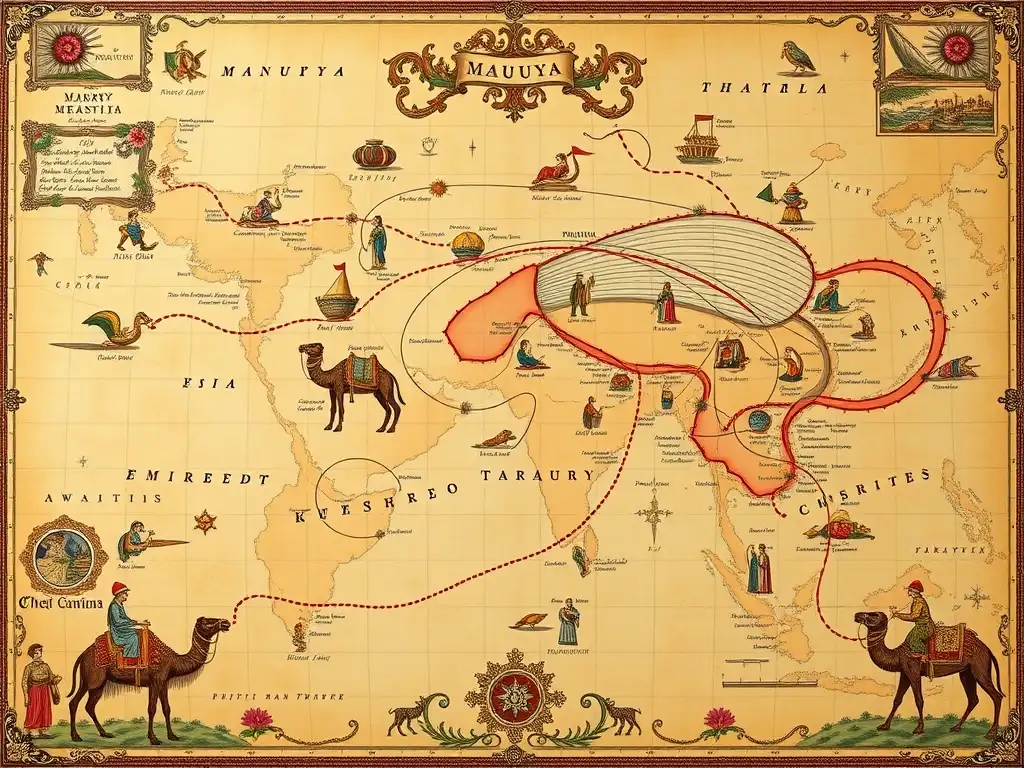
The Maurya Empire, one of the most influential and expansive empires in ancient India, played a pivotal role in shaping trade dynamics across Asia. Established in 322 BCE by Chandragupta Maurya, the empire reached its zenith under the leadership of Emperor Ashoka, becoming a significant political and cultural powerhouse.
This article delves into how the Maurya Empire facilitated trade routes and contributed to the intricate web of commerce that connected various regions of Asia. By examining the empire's strategic location, robust administration, and economic policies, we can glean insights into the profound impact the Maurya Empire had on trade and its lasting legacy in the context of ancient commerce.
Overview of the Maurya Empire
The Maurya Empire emerged as a dominant force in the Indian subcontinent, stretching from the northwestern regions of India to parts of present-day Afghanistan and Bangladesh. Under Chandragupta Maurya, the empire adopted a centralized governance structure, which was further refined under Ashoka's rule. Notable features of the Maurya Empire include:
- Political Unity: The empire fostered political stability, which was instrumental for trade growth.
- Administrative Innovations: A structured administration enabled efficient tax collection and regulation of trade activities.
- Cultural Exchange: The empire's embrace of Buddhism under Ashoka facilitated not only religious but also cultural exchanges along trade routes.
The Maurya Empire's influence extended beyond its immediate borders, as it engaged in trade with regions as far as the Mediterranean, thereby enriching its economy and spreading cultural ideas.
Importance of Trade in Ancient India
Trade was the lifeblood of ancient Indian civilization, contributing to its economic prosperity and cultural richness. Key aspects of trade in ancient India include:
- Diverse Products: India was known for its spices, textiles, gemstones, and other commodities that attracted traders from various parts of the world.
- Cultural Interactions: Trade routes acted as conduits for cultural exchanges, leading to the spread of ideas, religions, and philosophies.
- Economic Development: The wealth generated from trade allowed for advancements in infrastructure, arts, and sciences.
The Maurya Empire capitalized on these trade dynamics, enhancing its economic stature and fostering relationships with other civilizations.
Connection Between the Maurya Empire and Trade Routes in Asia
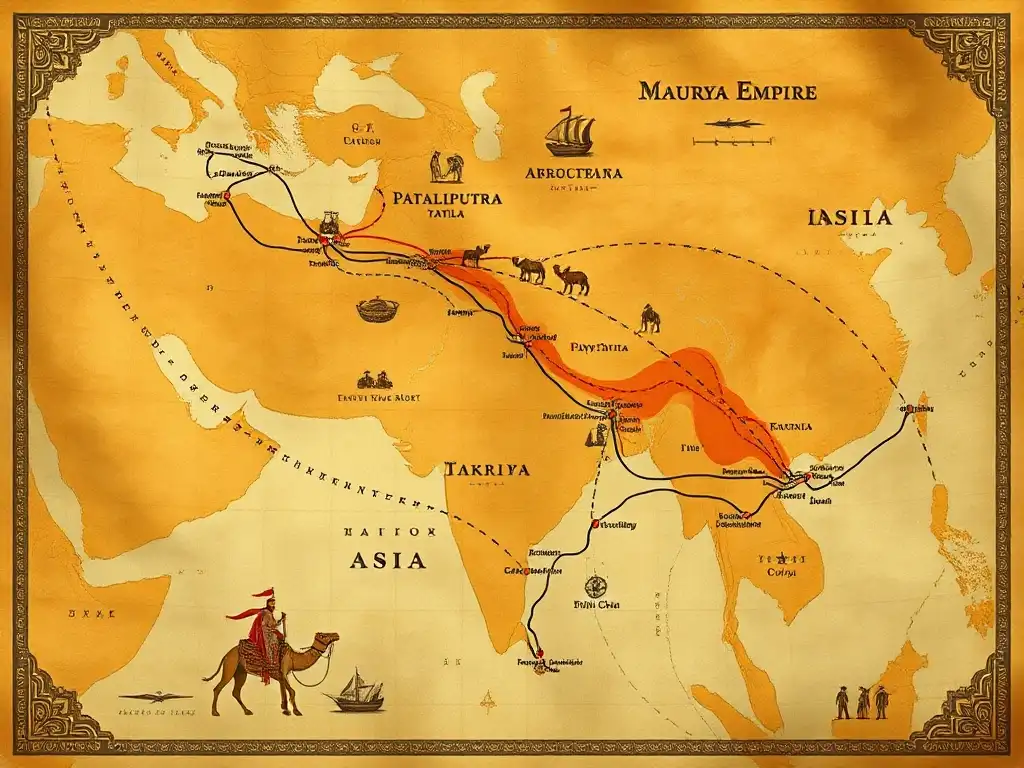
The Maurya Empire's strategic location made it a central hub for major trade routes, including:
- Silk Road: This legendary route connected the East to the West, facilitating the exchange of silk, spices, and other luxury goods.
- Maritime Routes: The empire's proximity to the coast enabled maritime trade with regions like Southeast Asia and the Arabian Peninsula, enhancing economic interactions.
- Land Routes: Well-maintained roads facilitated overland trade, allowing merchants to travel safely and efficiently.
Through these connections, the Maurya Empire not only enriched its own economy but also played a crucial role in the broader context of Asian trade, highlighting its significance in the historical narrative of commerce across the continent.
Major Trade Routes Established by the Maurya Empire
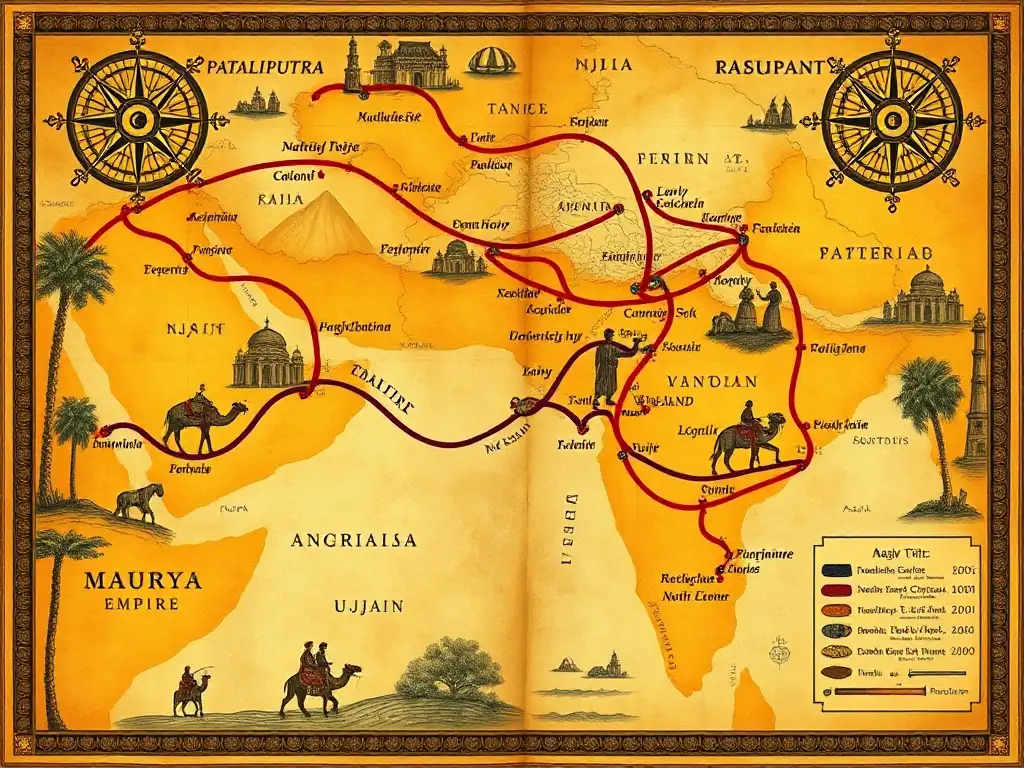
The Silk Road and Its Significance
The Maurya Empire, which flourished from 322 to 185 BCE, played a pivotal role in the establishment and expansion of trade routes, particularly the Silk Road. This ancient network of trade routes connected various civilizations, enabling the exchange of goods, culture, and ideas across Asia and beyond.
The significance of the Silk Road during the Maurya period can be attributed to several key factors:
- Cultural Exchange: The Silk Road facilitated not only the trade of goods but also the exchange of cultural practices and philosophies. For instance, Buddhism spread extensively along these routes, reaching Central Asia and eventually China.
- Goods Traded: Major commodities traded included silk, spices, precious metals, and textiles. Indian merchants were particularly known for their high-quality textiles, which were sought after in distant markets.
- Economic Growth: The trade along the Silk Road contributed to the economic prosperity of the Maurya Empire. It enabled the accumulation of wealth and the flourishing of cities that served as trade hubs, such as Pataliputra.
The Maurya Empire's strategic location allowed it to act as a bridge between the East and West, enhancing its influence in global trade networks.
Maritime Trade Routes and Their Impact on Commerce
In addition to the overland Silk Road, the Maurya Empire also developed maritime trade routes that significantly impacted commerce across Asia. These sea routes connected India to regions such as Southeast Asia, the Arabian Peninsula, and East Africa.
- Key Ports: Important ports during this period included Bharukaccha (modern-day Bharuch) and Lothal, which served as crucial centers for maritime trade. Lothal, in particular, is known for its advanced dockyard, which facilitated the docking of ships for trade.
- Goods and Exchanges: Indian merchants exported spices, textiles, and precious stones while importing gold, silver, and luxury items from foreign lands. The exchange of goods fostered a vibrant trade culture and encouraged maritime navigation.
- Cultural Interactions: Maritime trade routes also allowed for cultural interactions and the spread of religions, including Hinduism and Buddhism. This exchange enriched the cultural tapestry of the regions involved.
The establishment of these maritime routes not only enhanced economic ties but also contributed to the spread of Indian culture and influence across vast distances.
Land Trade Routes Connecting India to Central Asia
The Maurya Empire established several crucial land trade routes that connected India to Central Asia, facilitating the movement of goods and ideas between these regions. These routes were integral to the empire's economic strategy and its interactions with neighboring civilizations.
- Routes to Central Asia: The primary land routes included the North-West Frontier, which connected India to the Persian Empire and Central Asian kingdoms. These routes were essential for the movement of silk, spices, and other commodities.
- Influence on Trade: The Mauryan administration actively promoted trade by providing security for merchants traveling these routes. This protection encouraged the flow of goods and minimized the risks associated with long-distance trade.
- Cultural and Economic Impact: The interactions along these routes led to significant cultural exchanges, including the introduction of new technologies and ideas. The Maurya Empire's trade connections with Central Asia also laid the groundwork for future trade networks, which would flourish in later centuries.
The land trade routes established by the Maurya Empire were vital in shaping the economic landscape of ancient Asia, fostering trade relations that would endure long after the empire's decline.
Role of the Maurya Empire in Facilitating Trade
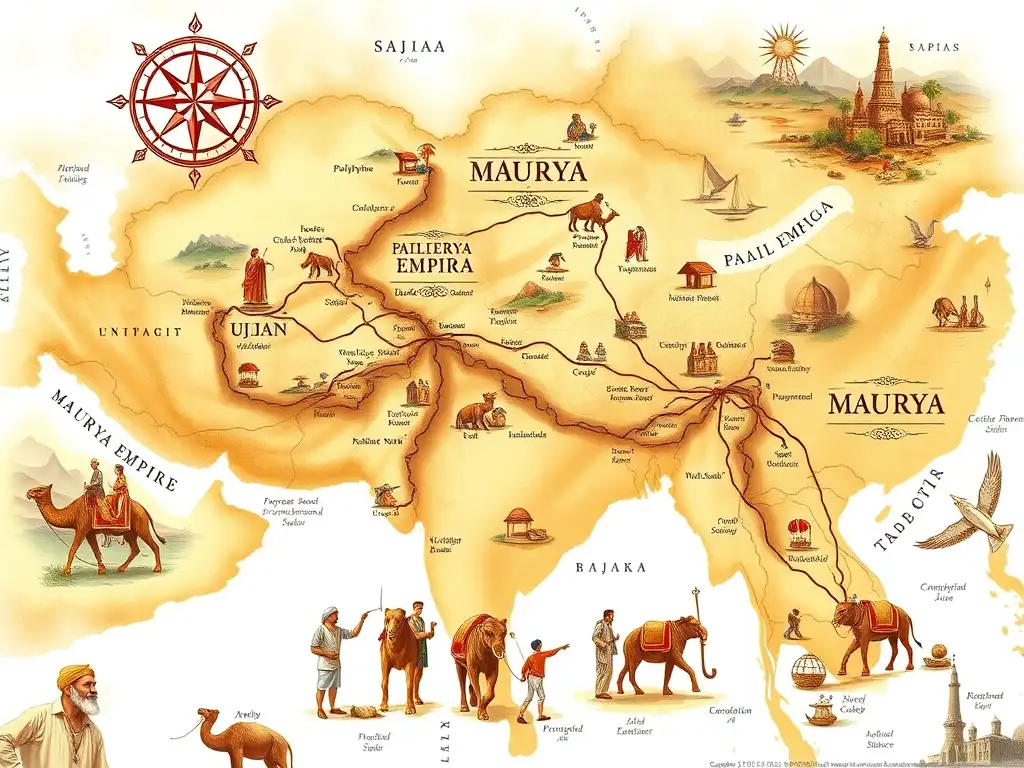
The Maurya Empire, which flourished from 322 BCE to 185 BCE, played a pivotal role in establishing and enhancing trade routes across Asia. This period was marked by significant economic growth, driven by strategic political decisions, infrastructure developments, and administrative policies that collectively facilitated trade. The Mauryan rulers, particularly Chandragupta Maurya and his grandson Ashoka, recognized the importance of trade for the empire's prosperity and took measures to ensure its development.
Political Stability and Its Effect on Trade
One of the most significant contributions of the Maurya Empire to trade was the establishment of political stability across the Indian subcontinent. Before the rise of the Mauryan Empire, the region was often fragmented, with various kingdoms engaged in conflict. However, the unification of these territories under a central authority provided a secure environment for trade to flourish.
- Security of Trade Routes: The Maurya Empire implemented a strong military presence along critical trade routes, ensuring the safety of merchants and travelers. This security encouraged trade by reducing the risks associated with long-distance travel.
- Standardization of Currency: The introduction of a standardized currency under the Mauryan rule simplified transactions and fostered economic exchange, making it easier for traders to conduct business across vast distances.
- Diplomatic Relations: The Maurya Empire established diplomatic ties with neighboring states, which facilitated trade agreements and mutual cooperation. This network of alliances helped promote economic interactions that extended beyond the empire's borders.
Infrastructure Developments: Roads and Ports
The Maurya Empire made significant investments in infrastructure, which were crucial for enhancing trade activities. The construction of roads, ports, and other facilities allowed for more efficient movement of goods and people.
- Royal Roads: The Mauryan rulers built an extensive network of roads that connected major cities and trade hubs. These roads were well-maintained, allowing merchants to travel swiftly and safely. Key routes included:
- The Grand Trunk Road, which linked the eastern and western parts of the empire.
- Roads leading to ports on the eastern coast, such as Tamralipti, facilitating maritime trade.
- Ports and Harbors: The development of ports along the Indian coastline, particularly on the eastern and western shores, opened up maritime trade routes. These ports became bustling trade centers where goods from various regions converged, enabling the export of Indian products like spices, textiles, and precious stones.
- Rest Stops and Caravanserais: To support long-distance trade, the Maurya Empire established rest stops and caravanserais along major trade routes. These facilities provided shelter and resources for traveling merchants, further enhancing trade efficiency.
Administrative Policies Supporting Trade Activities
The Maurya Empire implemented several administrative policies that actively supported and regulated trade activities, contributing to the overall economic prosperity.
- Taxation Policies: The empire instituted fair taxation on trade goods, which helped generate revenue without discouraging trade. The tax system was designed to be transparent and predictable, facilitating long-term planning for traders.
- Trade Regulations: The Mauryan administration established rules and regulations to ensure fair practices in trade. This included measures to prevent fraud and protect consumers, thereby fostering trust among traders and consumers alike.
- Promotion of Guilds: The Maurya Empire encouraged the formation of trade guilds, which served as associations for merchants. These guilds played a vital role in regulating trade practices, setting standards for quality, and providing mutual protection for their members.
- Support for Artisans and Craftsmen: The empire recognized the importance of local craftsmanship and supported artisans by providing them access to markets and trade networks. This not only encouraged local production but also enhanced the diversity of goods available for trade.
The Maurya Empire's strategic approach to trade through political stability, infrastructure development, and supportive administrative policies played a crucial role in establishing and enhancing trade routes across Asia. The legacy of these trade practices can still be observed in the modern economic landscape of the Indian subcontinent.
Economic Contributions of the Maurya Empire to Asia
The Maurya Empire, which flourished from 322 to 185 BCE, played a pivotal role in shaping the economic landscape of ancient Asia. By establishing a robust network of trade routes, the empire facilitated not only the exchange of goods but also the flow of ideas and culture across vast distances. The strategic positioning of the Maurya Empire, with its capital at Pataliputra (modern-day Patna), enabled it to connect with other prominent civilizations, including those in Central Asia, the Middle East, and Southeast Asia.
Trade Goods Exchanged Along the Routes
The Maurya Empire was instrumental in the exchange of a wide variety of goods, which significantly enriched the economies of the regions involved. Key trade goods included:
- Spices: India was renowned for its spices, particularly black pepper, cardamom, and cinnamon. These spices were highly sought after in markets across Asia and beyond, making them a significant export.
- Textiles: The empire was famous for its fine textiles, including silk and cotton. The quality of Indian textiles attracted traders from regions such as Persia and the Mediterranean.
- Metals: Gold, silver, copper, and iron were traded extensively. The Mauryan Empire had access to rich mineral resources, making metal goods valuable trade commodities.
- Agricultural Products: Grains, fruits, and medicinal herbs were also traded, contributing to the diet and health of distant populations.
| Trade Goods | Regions of Exchange |
|---|---|
| Spices | Central Asia, Middle East |
| Textiles | Persia, Mediterranean |
| Metals | Southeast Asia, China |
| Agricultural Products | East Asia, Arabian Peninsula |
These goods flowed through various routes, including the well-known Silk Road, which connected India with China, facilitating a complex web of trade that extended across continents.
Influence of Mauryan Currency on Trade Practices
The Maurya Empire introduced a standardized currency system that revolutionized trade practices in the region. Coins minted during this period, known as punch-marked coins, were made of silver, copper, and gold, featuring various symbols and inscriptions. This standardization brought several advantages:
- Facilitated Transactions: The use of a common currency simplified trade, allowing merchants to engage in transactions without the complexities of barter, thus encouraging commercial activity across different regions.
- Increased Trade Volume: A standardized currency helped in the valuation of goods and services, leading to an increase in the volume of trade. Merchants could now travel greater distances with confidence in the currency's acceptance.
- Economic Integration: The introduction of currency fostered greater economic integration within the empire and with neighboring regions, laying the groundwork for a more interconnected economy.
The Mauryan currency system not only boosted trade within the empire but also influenced neighboring cultures, leading to the adoption of similar practices in other regions.
Cultural Exchange: Ideas, Religion, and Technologies
The trade routes established during the Maurya Empire were not solely conduits for goods; they also facilitated a rich exchange of culture, ideas, and technologies. This cultural diffusion had a profound impact on the civilizations involved:
- Religious Exchange: As traders traversed the routes, they carried their beliefs with them. Buddhism, which gained prominence during the Maurya period under Emperor Ashoka, spread across Asia. The missionaries traveled along trade routes, establishing Buddhist monasteries and influencing local cultures.
- Technological Innovations: The exchange of technologies, such as metallurgy and agricultural techniques, was significant. Knowledge of irrigation practices and crop rotation traveled along these routes, enhancing agricultural productivity.
- Philosophical Ideas: The interaction of various cultures led to the exchange of philosophical thoughts and artistic expressions. The Maurya Empire’s embrace of diverse ideas contributed to the rich tapestry of Indian philosophy that emerged during and after this period.
The Maurya Empire's trade routes served as vital arteries of economic and cultural exchange, profoundly influencing the development of trade practices, currency systems, and the dissemination of ideas across Asia. The legacy of these exchanges continues to resonate in the cultural and economic landscapes of the regions involved.
The Decline of Maurya Empire Trade Networks
Factors Leading to the Decline of Trade Routes
The decline of the Maurya Empire trade routes can be attributed to several interconnected factors that emerged during the latter years of the empire. These factors not only affected internal trade but also had significant implications for trade relations across Asia.
- Political Instability:
- Following the reign of Ashoka, the Maurya Empire faced a series of weak successors who struggled to maintain control over the vast territories. This political fragmentation led to instability and insecurity, making trade routes less safe for merchants.
- Regional powers began to assert their independence, creating competing trade networks that fragmented the once-unified Mauryan routes.
- Economic Decline:
- The heavy taxation imposed during the empire's expansion created discontent among local populations. As a result, a decline in agricultural productivity and a reduction in trade taxes significantly affected the empire's revenue.
- Increased costs of trade due to the need for protection against banditry further dissuaded merchants from using traditional routes.
- External Invasions:
- The invasions by the Indo-Greeks and later by the Scythians disrupted existing trade networks, creating uncertainty and fear among traders. These invasions often led to the destruction of trade centers and loss of goods, making routes less appealing.
- Cultural Shifts:
- As Buddhism spread under Ashoka's reign, the focus shifted towards non-material values, which may have contributed to a decline in commercial activities. The prioritization of spiritual over economic pursuits played a role in diminishing the emphasis on trade.
Impact of the Fall of the Maurya Empire on Asian Trade
The fall of the Maurya Empire in the 2nd century BCE had profound repercussions on trade across Asia. The once-thriving trade routes were significantly altered, leading to both immediate and long-term effects.
- Disruption of Trade Networks:
- With the decline of centralized control, merchants found it increasingly difficult to navigate the fragmented political landscape. Trade routes became less reliable, leading to increased costs and risks.
- Key trade cities, such as Pataliputra, saw a decline in their prosperity, which in turn affected surrounding regions that relied on trade.
- Shift in Trade Dynamics:
- The fall led to the rise of new powers, such as the Kushan Empire, which began to dominate trade across Central Asia. This shift in power dynamics altered the flow of goods, with new routes and trading partners emerging.
- The Silk Road became increasingly prominent as a vital trade artery, connecting India to China, Persia, and beyond, often overshadowing earlier Mauryan routes.
- Cultural Exchange:
- The decline of the Maurya Empire also resulted in a shift in cultural exchange. While the Mauryan period was marked by the spread of Buddhism along trade routes, the subsequent fragmentation allowed for the introduction of diverse cultural practices and goods from various regions.
- This cultural diffusion laid the groundwork for future interactions between civilizations, fostering a rich tapestry of exchange that would define later historical periods.
Legacy of the Maurya Empire Trade Routes in Later Civilizations
Despite the decline of the Maurya Empire trade routes, their legacy continued to influence later civilizations in several significant ways.
- Foundation for Future Trade Networks:
- The infrastructure established during the Mauryan period, including roads and way stations, provided a framework for subsequent empires such as the Kushans and the Gupta Empire. These civilizations built upon the existing routes, enhancing trade across Asia.
- The Mauryan emphasis on trade and economic policies served as a model for future rulers, who recognized the importance of commerce in establishing and maintaining power.
- Cultural and Economic Exchange:
- The trade routes initiated by the Maurya Empire facilitated the exchange of ideas, religions, and goods, which persisted long after the empire's fall. This exchange enriched the cultural landscapes of regions connected by these routes.
- Key commodities, such as silk, spices, and precious stones, continued to flow along these pathways, influencing the economies of later civilizations.
- Influence on International Relations:
- The economic relationships established during the Mauryan Empire set the stage for future diplomatic interactions between Indian kingdoms and neighboring powers. These trade routes became vital conduits for diplomacy, cultural exchange, and conflict resolution in the centuries that followed.
While the Maurya Empire's trade networks faced decline due to various internal and external factors, their legacy shaped the economic and cultural landscapes of Asia for generations to come. The interconnectivity established during this period played a pivotal role in the development of trade routes that defined the historical trajectory of the region.
Conclusion

Summary of the Maurya Empire's Role in Trade Across Asia
The Maurya Empire, which flourished from approximately 322 to 185 BCE, played a pivotal role in facilitating trade across Asia. Central to this empire was Chandragupta Maurya, the founder, who established a vast political and economic framework that promoted commerce. The Mauryan capital, Pataliputra, became a bustling hub of trade, strategically located at the confluence of major trade routes, making it a melting pot of cultures and goods.
The Maurya Empire's trade routes were not merely pathways for goods; they represented a complex network that connected various regions of Asia. The empire engaged in extensive trade with regions such as Central Asia, the Middle East, and even parts of Southeast Asia. Key commodities traded included spices, textiles, precious stones, and metalwork, which were highly sought after in foreign markets. The Mauryans also exported their rich cultural heritage, including ideas, art, and religion, enhancing cultural exchanges along these routes.
Moreover, the Maurya Empire's infrastructure, including well-maintained roads and safe caravan routes, significantly contributed to the efficiency of trade. This was complemented by a stable political environment, which reduced the risks associated with long-distance trade. The establishment of a unified currency further facilitated transactions, enabling smoother trade operations across vast distances.
Lasting Effects on Future Trade Networks and Economic Development
The legacy of the Maurya Empire's trade routes extended far beyond its temporal boundaries, influencing future trade networks and economic development across Asia. The routes established during the Mauryan period laid the groundwork for later trade networks, including the Silk Road, which would come to prominence in subsequent centuries.
The interconnectedness fostered by the Maurya Empire encouraged the exchange of not only goods but also ideas and cultural practices. For instance, the spread of Buddhism, which gained prominence during the Mauryan reign under Ashoka, traversed these trade routes, leading to profound cultural exchanges and the establishment of Buddhist centers across Asia.
Economically, the trade networks initiated by the Maurya Empire contributed to the prosperity of subsequent empires and kingdoms. The commercial practices and trade agreements developed during this time set precedents that would influence economic policies in later centuries. The emphasis on trade and commerce helped regions develop their economies, leading to urbanization and increased cultural sophistication.
The Maurya Empire's role in shaping trade routes across Asia was not only significant during its existence but also laid the foundational structures for future trade networks, impacting economic development and cultural exchanges for centuries to come. The strategic planning, infrastructure, and diplomatic relations established by the Mauryas continue to resonate in the rich tapestry of Asian trade history.
Frequently Asked Questions
What were the primary trade routes used during the Maurya Empire?
The Maurya Empire utilized several key trade routes that connected India to regions in Asia, facilitating the exchange of goods, culture, and ideas.
How did the Maurya Empire contribute to economic growth in Asia?
The Maurya Empire's strategic control over trade routes not only enhanced its own economic growth but also stimulated the economies of neighboring regions through increased trade and commerce.
What goods were commonly traded across these routes?
Key goods traded included spices, silks, and precious metals, showcasing the diverse resources of the Maurya Empire and its importance in the broader Asian trade network.
How did the Maurya Empire influence cultural exchanges?
The extensive trade routes established by the Maurya Empire fostered significant cultural exchanges, allowing for the spread of religions, languages, and artistic influences across Asia.
What role did the Maurya Empire play in the history of trade?
The Maurya Empire was pivotal in shaping the history of trade in Asia by establishing a framework for commercial activities that would influence future civilizations and their economic practices.
Final Reflection: The Enduring Legacy of the Maurya Empire's Trade Routes
The Maurya Empire's trade routes across Asia were not merely pathways for goods; they were vital arteries of cultural exchange and economic prosperity that resonate profoundly in today's globalized world. As we navigate an era marked by rapid globalization, the lessons from the Maurya Empire remind us of the importance of interconnectedness and collaboration across borders. The legacy of these ancient trade routes continues to shape our understanding of commerce and cultural exchange in contemporary society.
The influence of the Maurya Empire on trade and cultural interactions has left an indelible mark on the social fabric of Asia. The sophisticated network established during this period fostered not only economic growth but also the sharing of ideas, religions, and technologies that enriched civilizations. As historian Romila Thapar aptly stated, Trade is not merely an economic activity; it is a means of cultural exchange that shapes societies.
This observation underscores the ongoing relevance of the Maurya Empire's trade routes, as they laid the groundwork for the vibrant exchanges that continue to define our world today.
As we reflect on the significance of the Maurya Empire's trade routes, let us consider how we can apply these lessons in our own lives. Embrace the spirit of connection and collaboration, recognizing that our actions can contribute to a more interconnected and harmonious world. Whether through fostering relationships across cultures or supporting local and global trade initiatives, each of us has the power to honor the legacy of the Maurya Empire by promoting understanding and cooperation in our communities. The past offers us a roadmap; it is up to us to navigate the future with intention and purpose.
Ignite Your Passion for Ancient Trade!
Thank you for diving deep into the fascinating world of the Maurya Empire and its pivotal role in facilitating trade across Asia! We hope you’ve discovered the rich tapestry of connections that shaped ancient commerce and cultural exchange.
Now it’s time to take that knowledge further and explore the impact of trade in shaping civilizations! Here are a few ways you can engage with this exciting topic:
- Join a local history group or online forum dedicated to discussing ancient civilizations to share insights and expand your understanding.
- Read more about significant trade routes
- Share this article with friends or on social media to inspire others to learn about the vital role of trade in history.
As you reflect on the legacy of the Maurya Empire, consider this: How do you think ancient trade networks continue to influence globalization today? We’d love to hear your thoughts!