
The Contributions of Asanga: A Founder of Yogacara Buddhism


Welcome to Ancient India History, where we embark on a fascinating journey through the rich tapestry of ancient civilizations that shaped India’s cultural and spiritual landscape. In our exploration today, we delve into the contributions of Asanga to Yogacara Buddhism, a pivotal figure whose insights transformed the understanding of consciousness and reality.
As you navigate through this captivating article, prepare to uncover the profound impact of his teachings and how they reverberate through time, influencing not just Buddhism but the broader realm of philosophical thought. Dive in and discover the legacy of a visionary who bridged the ancient and the modern!

Introduction to Asanga and Yogacara Buddhism
Asanga, a pivotal figure in the development of Buddhist philosophy, is best known for founding the Yogacara school of thought, which significantly shaped the trajectory of Mahayana Buddhism. Born in the 4th century CE in ancient India, Asanga's contributions to Yogacara Buddhism are profound, offering innovative insights into the nature of consciousness and the path to enlightenment.
His work not only established foundational doctrines but also influenced subsequent generations of Buddhist scholars and practitioners. This article delves into Asanga's life, his philosophical contributions, and the broader historical context in which he worked, illuminating the impact of his teachings on the evolution of Buddhist thought.
Overview of Yogacara Buddhism
Yogacara, often referred to as the "Yoga Practice" school, emphasizes the role of the mind in the experience of reality. The core tenet of Yogacara is the assertion that all phenomena are a manifestation of consciousness. This perspective posits that understanding the nature of the mind is crucial for attaining enlightenment. Key concepts in Yogacara include:
- Cognition: The analysis of how perceptions and mental processes shape our understanding of the world.
- Alaya-Vijnana: The concept of a foundational consciousness that underlies all experiences and is the source of karmic seeds.
- Transformation of Consciousness: The practice aimed at transforming ordinary perception into a state of enlightenment.
Asanga's teachings were instrumental in articulating these ideas, leading to a richer understanding of the interplay between mind and reality in Buddhist practice.
Significance of Asanga in Buddhist Philosophy
Asanga's significance in Buddhist philosophy cannot be overstated. His writings, particularly the Yogacarabhumi and Mahayana-samgraha, lay the groundwork for many central themes in Mahayana thought. He introduced critical distinctions within consciousness, enabling a deeper exploration of the nature of reality and the self. His ideas on:
- Bodhicitta: The altruistic intention to achieve enlightenment for the benefit of all sentient beings.
- Emptiness (Shunyata): The understanding that all phenomena are devoid of inherent existence, allowing for a flexible approach to reality.
These concepts have resonated throughout Buddhist traditions, influencing not only philosophical discourse but also practical meditation techniques.
Historical Context of Asanga's Contributions
To fully appreciate Asanga's contributions, it is essential to understand the historical and cultural milieu of ancient India during his time. The 4th century CE marked a period of significant transformation in Indian society, with the rise of various religious traditions, including Hinduism and Jainism, alongside Buddhism.
The Era of Asanga: A Timeline
- 3rd Century CE: The decline of the Mauryan Empire leads to a fragmentation of political power, fostering diverse philosophical thought.
- 4th Century CE: Asanga emerges as a key figure in Buddhist philosophy, founding the Yogacara school.
- 5th Century CE: Asanga's influence spreads, leading to the establishment of his teachings across various regions of Asia.
This timeline highlights the dynamic interplay between political changes and the evolution of religious thought, setting the stage for Asanga's impactful contributions.
The Cultural and Religious Landscape of Ancient India
The cultural and religious landscape of ancient India during Asanga's lifetime was characterized by a rich tapestry of beliefs and practices. The coexistence of various schools of thought encouraged dialogue and exchange, with Buddhism, in particular, experiencing a renaissance. Key elements of this landscape included:
- Pilgrimage Sites: Centers of learning and spiritual practice emerged, attracting scholars and practitioners from across the region.
- Royal Patronage: Rulers began to support Buddhist institutions, facilitating the spread of Asanga's teachings.
- Intellectual Exchange: The interactions between different philosophical traditions fostered a climate of inquiry and innovation.
This vibrant environment provided fertile ground for Asanga's ideas to flourish, shaping the future of Buddhism in profound ways. Through this exploration, we can better understand the lasting legacy of Asanga and the Yogacara movement within the broader context of ancient Indian religions.
Key Contributions of Asanga to Yogacara Buddhism
Asanga, a pivotal figure in the development of Yogacara Buddhism, made significant contributions that shaped the philosophical landscape of Mahayana Buddhism. His teachings and writings laid the groundwork for a profound understanding of consciousness and the nature of reality. Asanga's philosophy emphasized the importance of mental processes and subjective experience, which became central to Yogacara thought. His insights not only enriched Buddhist doctrine but also influenced various aspects of spiritual practice, meditation, and ethical conduct within the Mahayana tradition.
Development of Yogacara Philosophy
Asanga played a crucial role in the establishment of the Yogacara school of thought, which focuses on the nature of consciousness and perception. He proposed that the mind is the primary agent in the creation of reality, positing that all phenomena arise from mental constructs. This view contrasts with earlier Buddhist concepts that emphasized external reality.
His exploration of the "storehouse consciousness" (ālaya-vijñāna) is particularly noteworthy. Asanga argued that this deeper level of consciousness serves as a repository for all experiences and karmic imprints, influencing an individual's perceptions and actions. This foundational idea has had lasting implications for how practitioners understand the interplay between mind and reality, fostering a more introspective approach to meditation and ethical behavior.
Asanga’s Texts and Their Impact
Asanga's literary contributions are instrumental in disseminating Yogacara philosophy. His most renowned works, such as the Yogācārabhūmi and the Mahāyānasaṃgraha, systematically outline the principles of Yogacara thought and provide practical guidance for practitioners. These texts delve into topics such as the nature of consciousness, the path to enlightenment, and the practices that cultivate wisdom and compassion.
The Mahāyānasaṃgraha, in particular, serves as an accessible introduction to Mahayana concepts, bridging the gap between philosophical inquiry and practical application. Asanga's writings not only established a framework for understanding Buddhist teachings but also provided a platform for later scholars and practitioners to build upon, ensuring the continued relevance of Yogacara philosophy throughout subsequent centuries.
Asanga's Influence on Later Buddhist Thought
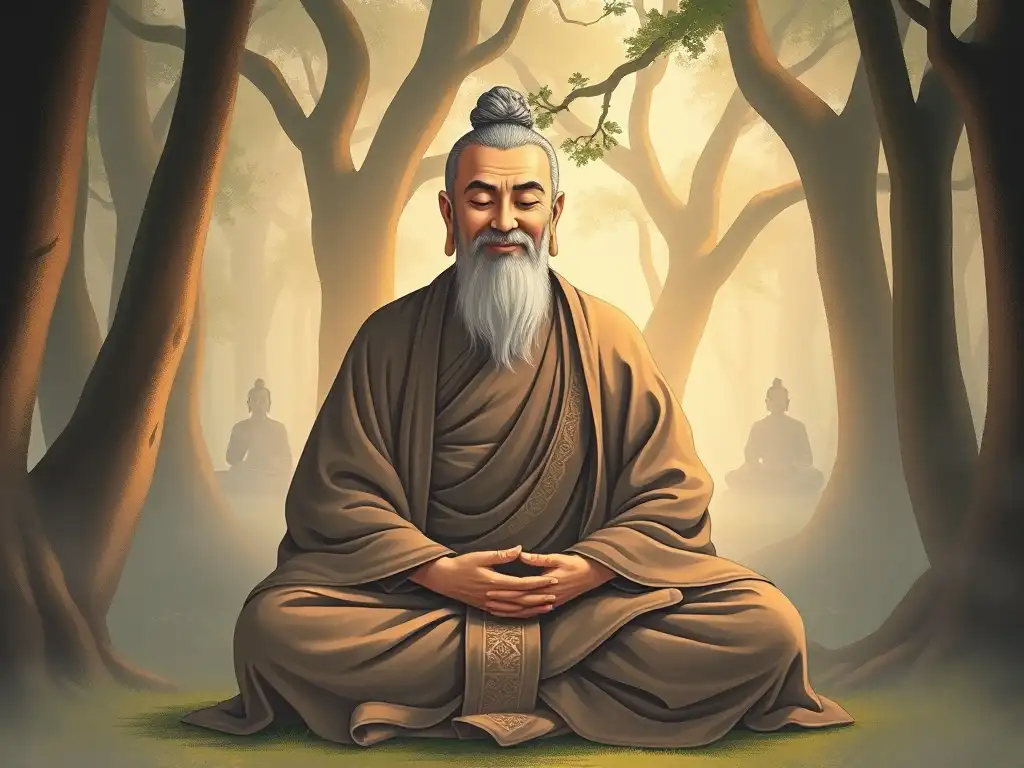
Asanga's contributions had a profound and lasting impact on the evolution of Buddhist thought, particularly within the Mahayana tradition. His teachings shaped the understanding of key concepts like emptiness (śūnyatā) and the nature of enlightenment, influencing a wide array of Buddhist schools and practices that followed.
The Role of Asanga in the Mahayana Tradition
Within the Mahayana tradition, Asanga is revered as a fundamental figure who helped define the path to enlightenment. His emphasis on compassion and the bodhisattva ideal resonated with the aspirations of Mahayana practitioners, advocating for the liberation of all sentient beings.
Asanga's interpretation of the bodhisattva path encouraged a shift from individual enlightenment to a collective pursuit of spiritual awakening, fostering a sense of community and interconnectedness among practitioners. This focus on altruism and the welfare of others became a hallmark of Mahayana Buddhism, shaping its ethical framework and devotional practices.
Impact on Subsequent Buddhist Scholars and Schools
The influence of Asanga’s teachings can be seen in the works of later Buddhist scholars, such as Vasubandhu, his half-brother, who expanded upon Asanga's ideas and contributed significantly to the development of the Abhidharma tradition. Schools such as the Tibetan Buddhist traditions and the Chinese Huayan school also draw heavily from Asanga's insights, integrating his concepts into their own philosophical frameworks.
Moreover, Asanga's ideas about consciousness and perception have influenced not only Buddhist thought but also engaged dialogues with other philosophical systems, fostering cross-cultural exchanges. His legacy endures in contemporary discussions on consciousness and cognitive science, where his insights continue to resonate, demonstrating the timeless relevance of Asanga's contributions to Yogacara Buddhism and beyond.
Asanga's Legacy in Modern Buddhism
Asanga, a pivotal figure in the development of Yogacara Buddhism, has left an indelible mark on various schools of thought within modern Buddhism. His teachings, particularly those surrounding the nature of consciousness and the transformative power of the mind, resonate deeply with contemporary practitioners and scholars alike. The foundational texts attributed to Asanga, such as the Yogācārabhūmi and the Abhidharma-samuccaya, continue to be widely studied and revered, serving as essential resources for understanding the complexities of Buddhist philosophy.
Asanga's contributions to the understanding of the mind, perception, and reality have fostered a rich dialogue within modern interpretations of Buddhism. His emphasis on the potential for enlightenment inherent in every individual encourages a personalized approach to spiritual practice, emphasizing meditation, mindfulness, and ethical living. This legacy can be seen in various contemporary Buddhist movements, which often integrate Asanga's insights into their teachings and practices.
Relevance of Asanga's Teachings Today
The relevance of Asanga's teachings extends beyond historical significance; they offer profound insights into the nature of reality and consciousness that are increasingly applicable in today's world. In an age where mental health and well-being are paramount, the Yogacara emphasis on the transformation of consciousness through introspective practices provides valuable tools for personal growth and healing. Asanga's assertion that our perceptions shape our reality encourages individuals to engage in self-reflection and cultivate awareness, which is crucial for navigating the complexities of modern life.
Furthermore, Asanga’s teachings on compassion and altruism resonate strongly within contemporary social movements that advocate for justice and equity. His insistence on the interconnectedness of all beings highlights the importance of empathy and communal responsibility, principles that align with the values of many modern societies striving for inclusivity and harmony.
Contemporary Interpretations of Yogacara Buddhism
In recent years, there has been a resurgence of interest in Yogacara Buddhism, with various contemporary interpretations emerging. Scholars and practitioners have sought to adapt Asanga’s teachings to align with current philosophical discussions and psychological frameworks. For instance, some modern interpretations draw parallels between Yogacara concepts and contemporary cognitive psychology, exploring how mindfulness and meditation can reshape mental patterns and promote well-being.
Additionally, the integration of Yogacara principles into various Buddhist traditions worldwide has led to a rich tapestry of practices that reflect Asanga's original insights while addressing the unique cultural contexts in which they are practiced. This adaptability ensures that Asanga's legacy remains vibrant and relevant, allowing new generations to explore the depths of his wisdom.
Conclusion
Summary of Asanga’s Contributions to Yogacara Buddhism
Asanga's contributions to Yogacara Buddhism represent a significant evolution in Buddhist thought, particularly regarding the understanding of consciousness and the mind. His works laid the groundwork for a comprehensive philosophical framework that emphasizes the transformative potential of mindfulness and meditation. Asanga's teachings not only shaped the development of Yogacara but also influenced various Buddhist schools and practices that followed, establishing him as a key figure in the history of Buddhism.
The Enduring Influence of Asanga in the History of Buddhism
The enduring influence of Asanga in the history of Buddhism is evidenced by the continued exploration and application of his teachings in diverse contexts. His insights into the nature of reality and the mind have transcended time and culture, inspiring countless practitioners and scholars across the globe.
Asanga’s legacy is not merely a historical artifact; it is a living tradition that continues to inform and enrich the spiritual journeys of individuals seeking deeper understanding and connection in their lives. Through the lens of Yogacara Buddhism, Asanga's contributions remain a vital part of the broader narrative of Buddhism, highlighting the profound interplay between ancient wisdom and contemporary practice.
- Introduction to Asanga and Yogacara Buddhism
- Historical Context of Asanga's Contributions
- Key Contributions of Asanga to Yogacara Buddhism
- Asanga's Influence on Later Buddhist Thought
- Asanga's Legacy in Modern Buddhism
- Conclusion
Frequently Asked Questions
What is Yogacara Buddhism?
Yogacara Buddhism is a major school of Mahayana Buddhism that emphasizes the role of consciousness and perception in understanding reality, proposing that our experiences are shaped by our mental frameworks.
Who was Asanga?
Asanga was a significant philosopher and monk from ancient India, known for his foundational role in developing Yogacara Buddhism and for his influential texts that explore the nature of consciousness.
What are the key contributions of Asanga to Yogacara Buddhism?
Asanga contributed to Yogacara through his writings, particularly the "Yogacarabhumi Shastra," which outlines practices for achieving enlightenment and the concept of mind-only (cittamatra).
How did Asanga's teachings influence later Buddhist thought?
Asanga's teachings laid the groundwork for later Mahayana developments, influencing schools such as Tibetan Buddhism, which incorporated his ideas into their practices and philosophies.
Why is Asanga considered a founder of Yogacara Buddhism?
Asanga is considered a founder of Yogacara because he systematized its doctrines and practices, providing a comprehensive framework for understanding the mind and its role in the Buddhist path to enlightenment.
Final Reflection: Embracing the Legacy of Asanga in Yogacara Buddhism
Asanga's contributions to Yogacara Buddhism resonate profoundly in today's world, where the quest for understanding the mind and consciousness is more relevant than ever. In an era marked by rapid change and increasing mental health challenges, Asanga's teachings offer a pathway to inner peace and clarity. His insights into the nature of perception and reality encourage us to explore the depths of our own consciousness, reminding us that the journey inward is as vital as any external pursuit.
Culturally and socially, the impact of Asanga's work continues to shape contemporary discussions around mindfulness and the nature of existence. His emphasis on the interconnectedness of all beings fosters a sense of compassion and empathy that is essential in our increasingly fragmented society. As the philosopher Alan Watts once said, We do not see things as they are, we see them as we are.
This perspective encourages us to reflect on our own biases and perceptions, urging us to cultivate a more profound understanding of ourselves and others through the lens of Yogacara.
As we move forward, I invite you to reflect on the teachings of Asanga and consider how they can be integrated into your daily life. Embrace the opportunity to deepen your understanding of your own mind and the world around you. By applying the principles of Yogacara Buddhism, you can foster a more compassionate and mindful existence, ultimately contributing to a more harmonious society. Let Asanga's legacy inspire you to embark on your own journey of self-discovery and transformation.
Unveil the Wisdom of Asanga: Take Your Next Steps in Yogacara!
Thank you for exploring the profound contributions of Asanga, a pivotal figure in shaping Yogacara Buddhism. We hope this article has illuminated his teachings and inspired you to delve deeper into this rich philosophical tradition. Now, let’s take action to expand your understanding of Yogacara and its impact on modern spirituality.
Here are a few steps you can take today:
- Dive deeper into Yogacara: Seek out books or online courses that delve into Asanga’s teachings and the principles of Yogacara. Create a reading list and dedicate some time each week to enhance your knowledge.
- Join a discussion group: Connect with fellow enthusiasts of Yogacara. Look for local meetups or online communities where you can share insights and learn from one another.
- Share your thoughts: Write a reflection or a personal blog post about how Asanga's teachings resonate in your life today. This can be a meaningful way to internalize knowledge and engage with others.
What aspect of Asanga’s teachings do you find most compelling, and how might it influence your personal journey in Buddhism?