
The Influence of Hinduism and Buddhism on Mauryan Political Ideology


Welcome to Ancient India History, where we embark on a fascinating journey through the rich tapestry of India's past. Here, you will uncover the profound influence of Hinduism and Buddhism on Mauryan political ideology, revealing how these ancient philosophies shaped the governance and culture of one of history's greatest empires.
As you dive into our articles, prepare to explore the intricate connections between spirituality and statecraft that defined the Mauryan era, and let your curiosity guide you through the remarkable stories of resilience and innovation that continue to inspire today. Join us as we illuminate the legacies of ancient Indian civilizations!
The Mauryan Empire, one of the most significant and expansive empires in ancient Indian history, thrived from 322 to 185 BCE. This period marked a profound transformation in the political landscape of the Indian subcontinent, influenced heavily by the philosophical and spiritual tenets of Hinduism and Buddhism. Both religions, with their rich doctrines and ethical frameworks, played pivotal roles in shaping the political ideology of the Mauryan rulers, particularly under the reign of Emperor Ashoka.
Hinduism, with its established traditions and social hierarchy, provided a framework for governance that emphasized dharma (righteousness) and the duties of a ruler. Conversely, Buddhism introduced ideals of compassion, non-violence, and moral governance, significantly impacting Ashoka’s policies after his conversion. The interplay of these two philosophies not only influenced the governance of the Mauryan Empire but also set a precedent for future political ideologies in India. This article delves into the intricate relationship between Hinduism, Buddhism, and Mauryan political thought, exploring how these religious influences shaped the empire's administration, laws, and societal values.
Through a detailed examination of historical texts, archaeological findings, and the socio-political context of the time, we aim to uncover the nuances of this significant cultural synthesis. By understanding the influence of Hinduism and Buddhism on Mauryan political ideology, we can gain deeper insights into how these ancient beliefs continue to resonate in contemporary Indian society.
- Introduction to Mauryan Political Ideology
- Understanding Hinduism and Buddhism
- The Intersection of Hinduism and Buddhism in the Mauryan Empire
- The Role of Ashoka the Great in Merging Religious Ideologies
- Key Elements of Hinduism and Buddhism Influencing Mauryan Political Structure
- Impact of Hinduism and Buddhism on Mauryan Administration
- The Lasting Legacy of Hinduism and Buddhism on Indian Political Philosophy
- Conclusion: The Enduring Influence of Hinduism and Buddhism on Mauryan Political Ideology
- References
-
Frequently Asked Questions
- What was the Mauryan Empire known for in terms of political ideology?
- How did Hinduism influence the Mauryan political ideology?
- What role did Buddhism play in shaping the Mauryan Empire?
- How did the Mauryan Empire promote the teachings of Hinduism and Buddhism?
- What were the long-term effects of Hinduism and Buddhism on Mauryan influence in India?
- Final Reflection: The Enduring Legacy of Hinduism and Buddhism in Mauryan Political Ideology
- Unleash the Power of Ancient Wisdom!
Introduction to Mauryan Political Ideology
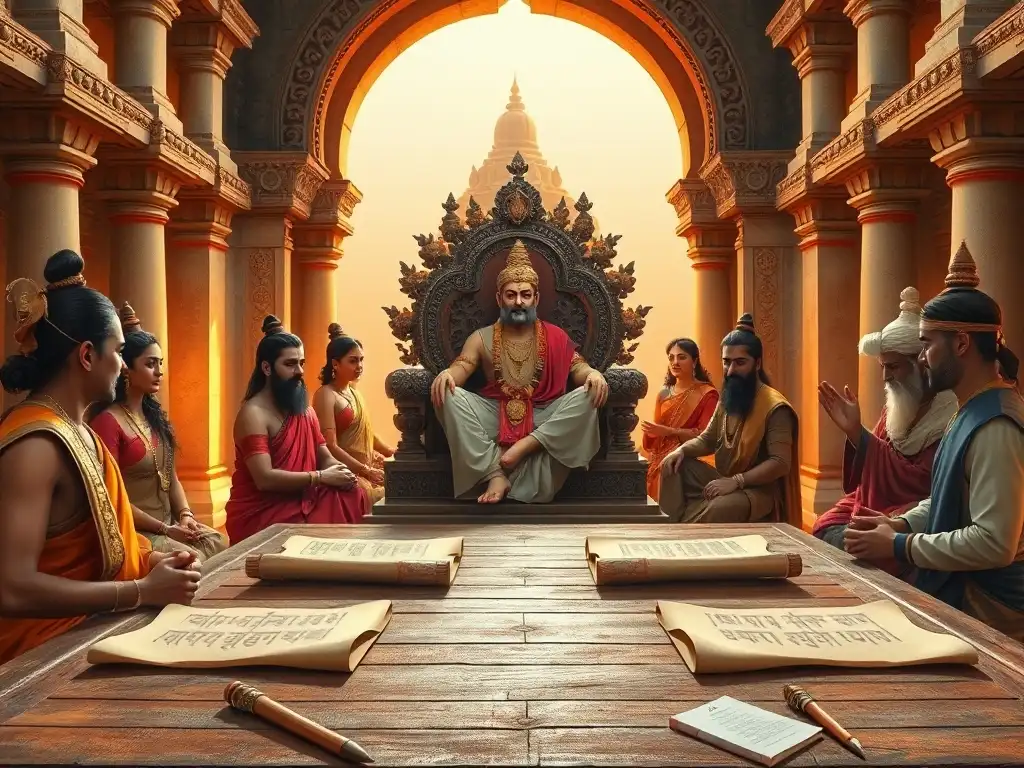
The Mauryan Empire, which flourished from 322 to 185 BCE, is one of the most significant periods in ancient Indian history. Its political ideology was profoundly influenced by the prevailing religious and philosophical traditions, notably Hinduism and Buddhism. This interplay created a unique governance style that integrated spiritual principles with practical statecraft, shaping the socio-political landscape of ancient India.
Overview of the Mauryan Empire
The Mauryan Empire emerged after the decline of the Nanda Dynasty, with Chandragupta Maurya as its founder. Under his leadership, the empire expanded rapidly, covering a vast territory that included most of the Indian subcontinent. Chandragupta established a centralized administrative system that was efficient and far-reaching. His grandson, Ashoka the Great, is particularly notable for his contributions to the empire's political ideology, especially through his embrace of Buddhism after the Kalinga War.
- Key Features of the Mauryan Empire:
- Centralized Administration: The Mauryan Empire was characterized by a strong central authority, with a well-organized bureaucracy that managed various aspects of governance, including taxation, law, and military affairs.
- Diverse Cultural Integration: The empire encompassed a variety of cultures and ethnicities, which necessitated a political ideology that promoted tolerance and integration among different groups.
- Economic Prosperity: The Mauryan economy thrived on agriculture, trade, and craftsmanship, enabling the government to maintain a powerful military and support public welfare initiatives.
The influence of Hinduism and Buddhism on Mauryan political ideology is evident in the laws and edicts established by Ashoka, particularly his emphasis on Dharma (moral law) as a guiding principle for governance.
Importance of Political Ideology in Ancient India
Political ideology in ancient India was not merely a reflection of governance but also intertwined with the cultural, religious, and ethical fabric of society. The Mauryan Empire exemplified this relationship, where Hinduism and Buddhism served as foundational elements in shaping political thought and action.
- Moral and Ethical Governance:
- Both Hinduism and Buddhism advocate for moral principles that were integral to Mauryan governance. The concept of Dharma in Hinduism emphasizes duty, righteousness, and ethical conduct, while Buddhism promotes compassion and non-violence.
- Legitimacy and Authority:
- Political leaders often derived their legitimacy from their adherence to these religious principles. Ashoka's conversion to Buddhism and his subsequent policies illustrated how a ruler could seek moral authority through spiritual alignment, ultimately enhancing his governance and public support.
- Social Cohesion and Stability:
- The integration of religious principles into political ideology fostered social harmony. The edicts of Ashoka, inscribed on rocks and pillars, communicated messages of peace, tolerance, and moral responsibility, which helped maintain stability across the diverse populations of the empire.
The Hinduism Buddhism Mauryan influence is a critical aspect of understanding the political ideology of the Mauryan Empire. The blending of these religions into the empire's governance not only shaped its internal policies but also left a lasting legacy on the political landscape of ancient India.
Understanding Hinduism and Buddhism
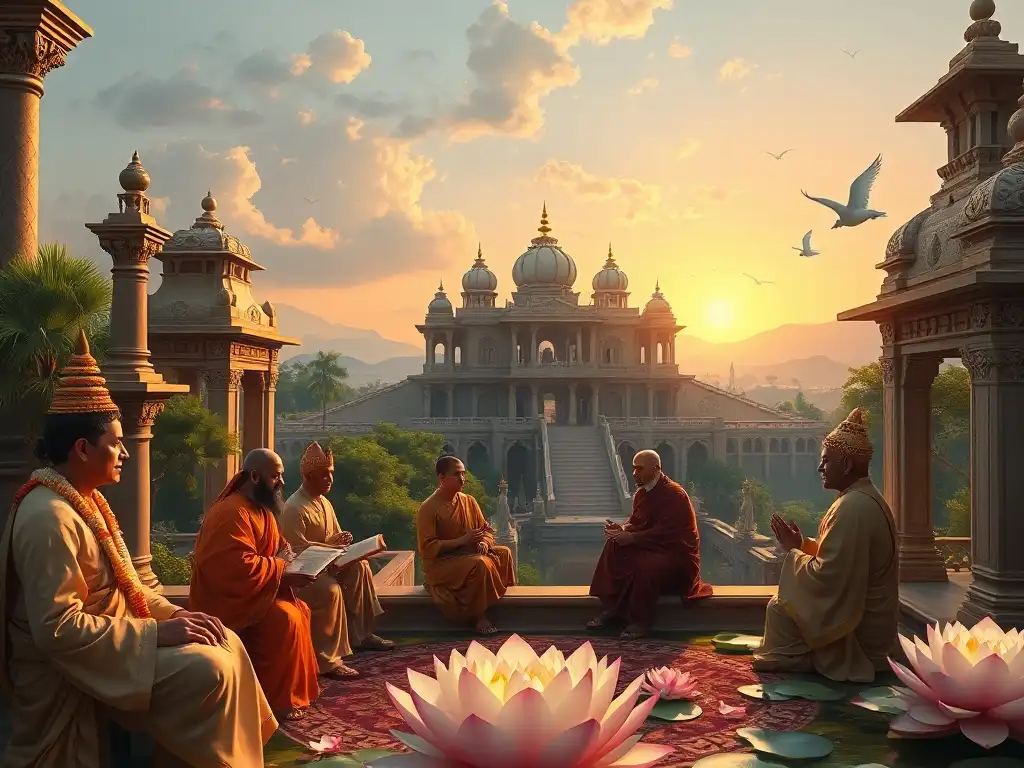
Core Principles of Hinduism
Hinduism, one of the world's oldest religions, is characterized by a rich tapestry of beliefs, practices, and philosophies that have significantly shaped the political landscape of ancient India, particularly during the Mauryan Empire. Central to Hinduism are several core principles that influenced governance, social order, and moral conduct.
The Concept of Dharma in Hinduism
Dharma, often translated as "duty" or "righteousness," is a fundamental tenet in Hindu philosophy. It encompasses moral laws, duties, and ethical conduct that govern an individual's actions within society. In the context of the Mauryan political ideology, Dharma served as a guiding principle for rulers, who were expected to uphold righteousness and justice.
- Social Order: The Mauryan rulers, particularly Ashoka, emphasized the importance of Dharma in maintaining social harmony. This included respecting the roles of different classes (varnas) and ensuring that each individual fulfilled their societal responsibilities.
- Legal Framework: Dharma influenced the legal system, promoting laws that aligned with moral values, thus ensuring that justice was not just punitive but restorative.
- Public Welfare: Rulers were seen as caretakers of societal Dharma, which led to initiatives aimed at public welfare, such as the establishment of hospitals and educational institutions.
The Role of Karma and Reincarnation
The concepts of Karma and Reincarnation are deeply intertwined in Hindu thought, providing a framework that influences ethical behavior and social responsibility.
- Karma: The idea that actions have consequences impacts both individual behavior and statecraft. A ruler's just actions lead to a prosperous kingdom, while unjust actions can lead to turmoil and strife.
- Reincarnation: This belief reinforces the notion of accountability across lifetimes, encouraging individuals to act righteously in their current life to ensure a better rebirth. This idea permeated the political ideology of the Mauryan Empire, motivating leaders to create a just society as a means to attain positive Karma for themselves and their subjects.
Core Principles of Buddhism
Buddhism, founded by Siddhartha Gautama (the Buddha), introduced a contrasting yet complementary set of principles that further shaped the political ideologies of the Mauryan Empire, particularly under Emperor Ashoka.
The Four Noble Truths
At the heart of Buddhist teachings are the Four Noble Truths, which outline the nature of suffering and the path to its cessation.
- Dukkha (Suffering): Recognizing that suffering is an inherent part of existence.
- Samudaya (Origin of Suffering): Understanding that attachment and desire lead to suffering.
- Nirodha (Cessation of Suffering): Realizing that it is possible to end suffering.
- Magga (Path to Cessation): Following the Eightfold Path to achieve enlightenment and liberation.
In the context of Mauryan political ideology, these truths encouraged leaders to reflect on the nature of governance and the impact of their decisions on the populace. By addressing societal suffering, rulers could cultivate a more harmonious state.
The Eightfold Path and its Political Implications
The Eightfold Path, consisting of Right Understanding, Right Intent, Right Speech, Right Action, Right Livelihood, Right Effort, Right Mindfulness, and Right Concentration, offers a comprehensive ethical framework not only for personal development but also for governance.
- Ethical Governance: Mauryan rulers, particularly Ashoka, embraced these principles as a foundation for ethical governance. By promoting Right Action and Right Speech, they aimed to foster a culture of honesty and integrity within the administration.
- Social Welfare Policies: The emphasis on Right Livelihood encouraged rulers to implement policies that supported the welfare of all citizens, leading to initiatives like the establishment of public amenities and support for the impoverished.
- Promotion of Peace: The teachings of Buddhism, particularly the rejection of violence, influenced Ashoka's policies towards non-violence (ahimsa) and tolerance, shaping a political ideology that sought to minimize suffering and conflict within and beyond the empire.
The interplay between Hinduism and Buddhism significantly influenced the political ideologies of the Mauryan Empire, particularly through the concepts of Dharma, Karma, the Four Noble Truths, and the Eightfold Path. These philosophies not only informed the moral and ethical conduct of rulers but also shaped the broader societal structure, creating a legacy that would resonate throughout Indian history.
The Intersection of Hinduism and Buddhism in the Mauryan Empire
Historical Context of Hinduism and Buddhism during the Mauryan Period
During the Mauryan Empire (c. 322-185 BCE), both Hinduism and Buddhism emerged as significant religious and philosophical systems in ancient India. The historical context of this period is essential for understanding how these two faiths interacted and influenced the political ideology of the Mauryan rulers.
Hinduism, with its roots tracing back to the Vedic texts, had evolved over centuries, incorporating various local traditions and practices. By the time of the Mauryan Empire, it was characterized by a complex pantheon of deities and a rich tapestry of rituals and philosophical discourse. The caste system was integral to Hindu society, influencing social and political structures.
In contrast, Buddhism, founded by Siddhartha Gautama (the Buddha) in the 5th century BCE, represented a reformative response to the existing religious order. It emphasized the Four Noble Truths and the Eightfold Path, advocating for a life of moderation and ethical conduct. The appeal of Buddhism transcended social classes, attracting both followers from the lower strata of society and disillusioned members of the higher castes.
The Mauryan Empire, particularly under Emperor Ashoka, played a pivotal role in the proliferation of both religions. Ashoka’s conversion to Buddhism after the Kalinga War marked a significant shift in imperial policy. His reign is notable for promoting Buddhist principles while simultaneously upholding aspects of Hindu tradition, demonstrating a unique blend of the two. This era saw the establishment of stupas, monasteries, and inscriptions that detailed Ashoka's edicts promoting moral governance.
The Synthesis of Hindu and Buddhist Ideologies in Governance
The Mauryan political ideology was significantly shaped by the synthesis of Hindu and Buddhist principles, which offered a dual framework for governance. This intersection of ideologies can be seen in Ashoka's policies, which reflected both religious traditions.
- Moral Governance: Ashoka's commitment to Dharma (moral law) was influenced by both Hindu and Buddhist teachings. In Hinduism, Dharma encompasses duty and righteousness, while in Buddhism, it relates to ethical conduct and compassion. Ashoka's edicts emphasized non-violence ( Ahimsa), tolerance, and the welfare of all beings, resonating with both religious philosophies.
- Statecraft and Ethics: The Mauryan rulers integrated the concept of righteous kingship from Hindu texts like the Arthashastra, which advocated for a king's duty to maintain order and justice. Concurrently, Buddhist texts emphasized the importance of ethical leadership. The amalgamation of these ideas influenced Ashoka's policies, resulting in a governance model that prioritized social welfare and moral responsibility.
- Public Welfare Initiatives: Ashoka’s initiatives, such as the establishment of hospitals, wells, and rest houses, were grounded in the Buddhist tenet of compassion. However, these actions also aligned with the Hindu ideal of a king as a protector of his subjects. This dual approach not only solidified the legitimacy of the Mauryan rule but also promoted a sense of unity among diverse religious communities.
- Cultural Patronage: The Mauryan Empire became a crucible for cultural exchange, with both Hinduism and Buddhism influencing art, architecture, and literature. Ashoka's support for Buddhist monastic institutions paralleled patronage of Hindu temples, showcasing a political strategy that embraced diversity to maintain stability.
The influence of Hinduism and Buddhism on Mauryan political ideology reflects a sophisticated synthesis that shaped the governance of one of India's most significant empires. This interplay not only defined the Mauryan political landscape but also laid the groundwork for the enduring legacy of these religions in Indian culture.
The Role of Ashoka the Great in Merging Religious Ideologies
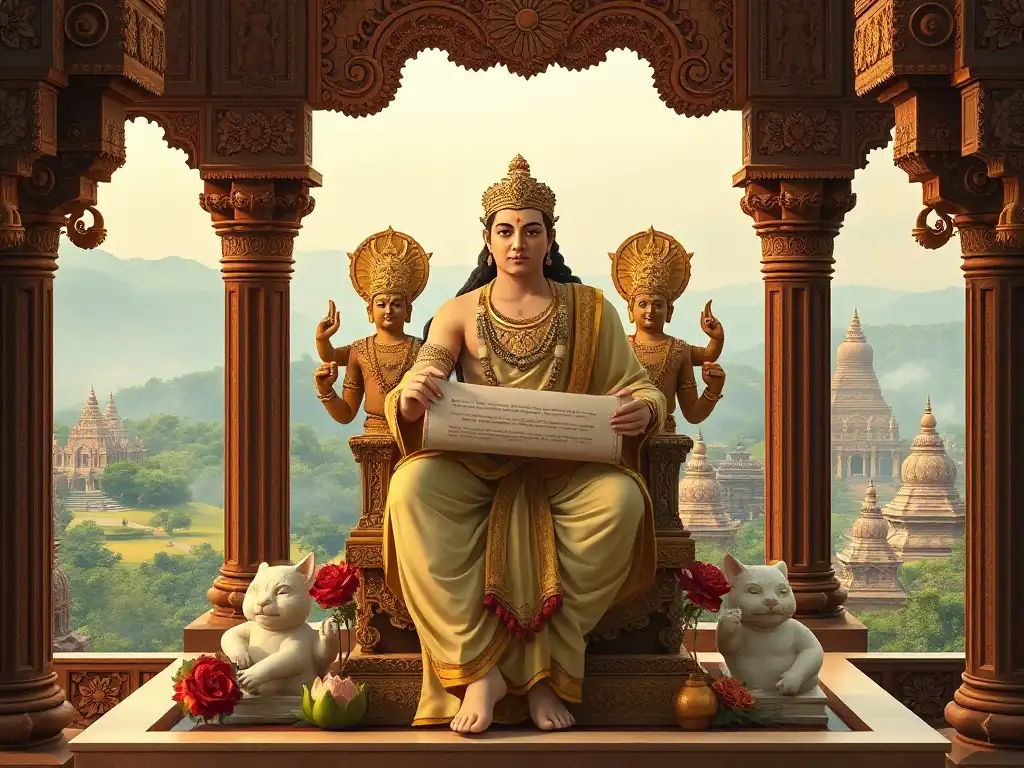
Ashoka's Conversion to Buddhism
Ashoka the Great, the third Mauryan emperor, is often regarded as one of the most important figures in the history of India, particularly for his role in the propagation and influence of Buddhism. His conversion to Buddhism around 263 BCE, following the Kalinga War, marked a significant shift not only in his personal beliefs but also in the political landscape of the Maurya Empire.
The Kalinga War was a brutal conflict that caused immense suffering and loss of life, deeply impacting Ashoka’s conscience. Witnessing the devastation led him to embrace the principles of ahimsa (non-violence) and dharma (moral duty), which aligned closely with Buddhist teachings. This transformation from a warrior king to a proponent of peace highlights the profound impact that religious ideology can have on governance.
Ashoka's commitment to Buddhism subsequently influenced his policies and administrative practices, which aimed to promote moral governance and welfare for all subjects, regardless of their religious affiliation. His reign thus represents a critical intersection of religious ideology and political authority, paving the way for the integration of Buddhist principles into the Mauryan political structure.
Policies Promoting Religious Tolerance
Under Ashoka's reign, the Mauryan Empire witnessed a significant emphasis on religious tolerance and ethical governance, stemming from his Buddhist beliefs. He understood that a diverse population required an inclusive approach to maintain harmony and order.
To promote this ethos, Ashoka implemented several policies:
- Promotion of Dharma: Ashoka encouraged the practice of dharma, which emphasized ethical behavior, compassion, and respect for all living beings. His vision was to create a society where individuals adhered to moral principles, irrespective of their religious backgrounds.
- Interfaith Dialogue: Ashoka actively fostered dialogue between different religious communities, ensuring that Hinduism, Buddhism, and other faiths coexisted peacefully. He appointed officers known as Dharma Mahamatras to oversee and promote religious harmony.
- Support for All Religions: While Ashoka was a devout Buddhist, he also patronized Hinduism and other sects, demonstrating that the state was not aligned with any single religion. This inclusivity helped to cultivate a sense of unity among the diverse populations of his empire.
- Public Works and Welfare: Ashoka invested in infrastructure and public welfare projects, such as the construction of hospitals, roads, and irrigation systems, accessible to all, regardless of their faith. This initiative reinforced the idea that a ruler's duty was to ensure the well-being of every citizen.
These policies not only established a framework for governance based on compassion and ethical principles but also allowed Ashoka to unify various cultural and religious groups under the Mauryan banner, thereby enhancing the stability of the empire.
The Edicts of Ashoka and Their Philosophical Underpinnings
The Edicts of Ashoka consist of a series of inscriptions carved on rocks and pillars throughout the Mauryan Empire, serving as public declarations of his policies and ideologies. These edicts are significant artifacts that illustrate the philosophical underpinnings of his rule, particularly concerning the influence of Buddhism and Hinduism on governance.
- Moral and Ethical Guidance: The edicts emphasize concepts like non-violence, truthfulness, and compassion, reflecting Buddhist teachings. For instance, one edict states, "All living beings should be treated with compassion," highlighting Ashoka's dedication to ahimsa.
- Social Welfare: Many edicts advocate for social justice, animal welfare, and the care of the elderly and sick. This aligns with Buddhist principles of compassion and care for all beings, but also resonates with Hindu concepts of dharma and righteous conduct.
- Religious Inclusivity: Ashoka’s edicts promote respect for all religions, urging his subjects to honor their own beliefs while being open to others. This is particularly evident in edicts that encourage the understanding and appreciation of diverse religious practices, thereby reinforcing the idea of coexistence.
- Legal and Ethical Governance: The philosophical foundations laid out in the edicts served as guidelines for the administration of justice, encouraging rulers and subjects alike to engage in ethical behavior and to uphold the law fairly and justly.
The Edicts of Ashoka stand as a testament to how religious ideologies such as Hinduism and Buddhism profoundly influenced Mauryan political ideology, promoting a governance model that prioritized ethical behavior, social welfare, and religious tolerance. This approach not only shaped the Mauryan Empire during Ashoka's reign but also left a lasting legacy on the political and cultural landscape of ancient India.
Key Elements of Hinduism and Buddhism Influencing Mauryan Political Structure
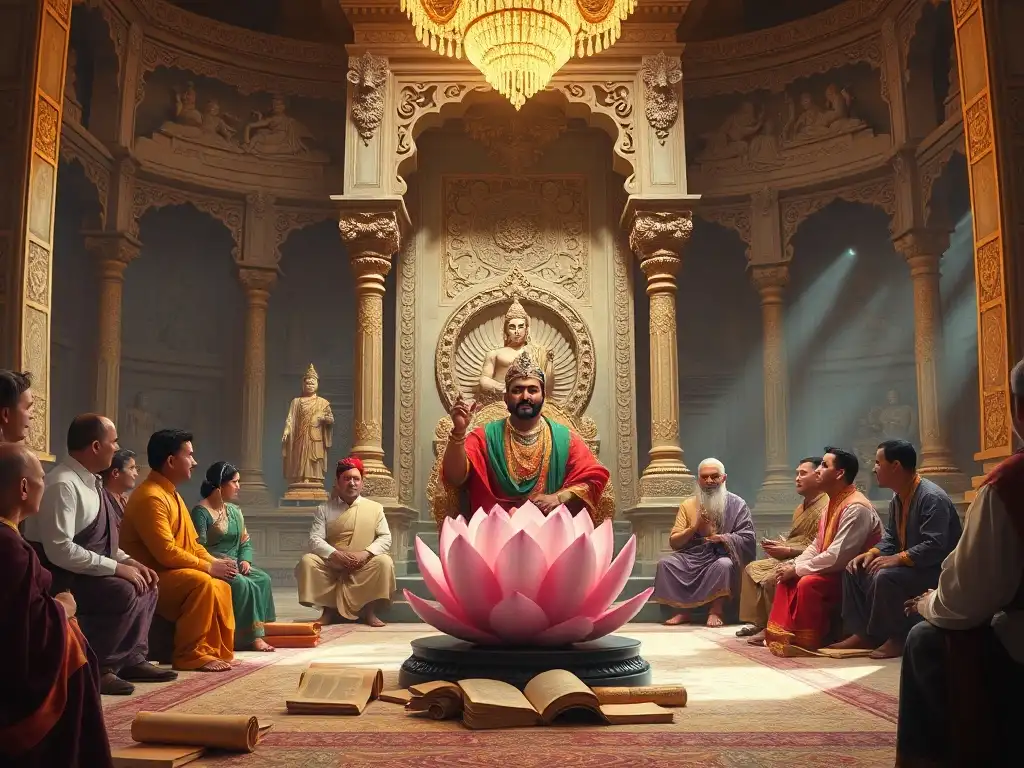
Concepts of Righteous Rule (Dharma) in Hinduism
The concept of Dharma, or righteous duty, plays a pivotal role in Hindu political ideology and significantly influenced the political framework of the Mauryan Empire. In Hinduism, Dharma encompasses a set of moral and ethical principles guiding individuals in their roles within society. For rulers, adherence to Dharma meant governing with justice, truth, and moral integrity.
- King as a Dharma Raja: The Mauryan rulers, particularly Emperor Ashoka, embraced the idea of the Dharma Raja, positioning themselves as guardians of righteousness. This concept mandated that the king's authority was not merely derived from conquest or lineage but was fundamentally tied to his ability to uphold Dharma.
- Policy Implications: The establishment of policies that favored the welfare of the subjects reflected the king's commitment to Dharma. Laws and governance were framed to ensure social harmony and justice, promoting the idea that rulers were accountable to their people.
- Cultural Integration: The teachings of various Hindu scriptures, such as the Mahabharata and Bhagavad Gita, served as philosophical underpinnings for the state's operations, reinforcing the need for ethical governance.
Buddhist Influence on Non-Violence and Compassion in Governance
Buddhism, emerging around the same time as the Mauryan Empire, introduced potent ideals of non-violence (Ahimsa) and compassion that greatly influenced Mauryan political thought, especially under Ashoka's reign.
- Ashoka's Edicts: After his conversion to Buddhism, Ashoka implemented the principles of Ahimsa across his empire. His edicts, inscribed on pillars and rocks, emphasized non-violence, encouraging his subjects to embrace compassion towards all living beings. This shift marked a significant departure from the traditional militaristic approaches of earlier rulers.
- Social Justice and Welfare: Ashoka's governance included the establishment of hospitals and shelters for both humans and animals, reflecting the Buddhist principle of compassion in action. This approach not only improved the quality of life for subjects but also portrayed the emperor as a benevolent ruler deeply concerned about the welfare of his people.
- Diplomatic Relations: The promotion of non-violence extended to foreign policy, where Ashoka sought peaceful relations with neighboring states, often opting for diplomacy over warfare. This unique approach fostered a stable political environment conducive to trade and cultural exchanges.
The interplay between political power and spiritual authority was a defining characteristic of the Mauryan political landscape, shaped by the philosophies of both Hinduism and Buddhism.
- Divine Right vs. Moral Authority: While traditional Hindu thought often emphasized the divine right of kings, the Buddhist perspective introduced a moral dimension to authority. The fusion of these views created a nuanced understanding of governance where rulers were expected to exercise power with wisdom and ethical consideration.
- Role of Advisors and Monks: The Mauryan emperors frequently consulted spiritual leaders and monks, blending political decision-making with spiritual guidance. This collaboration ensured that governance was not solely a matter of political maneuvering but also reflected spiritual wisdom.
- Legacy of Governance Models: The Mauryan Empire's unique political structure established a model where rulers were held accountable to both divine and moral standards. This balance influenced subsequent Indian dynasties and contributed to the development of governance theories that prioritized ethics alongside authority.
The integration of Hinduism and Buddhism into the Mauryan political ideology created a sophisticated framework that emphasized righteousness, compassion, and the balance of power, leaving a lasting legacy in the history of ancient Indian governance.
Impact of Hinduism and Buddhism on Mauryan Administration
Administrative Practices Reflecting Hindu and Buddhist Values
The Mauryan Empire, which flourished from 322 to 185 BCE, was significantly shaped by the religious ideologies of Hinduism and Buddhism. Both religions emphasized principles that deeply influenced administrative practices, leading to a government structure that espoused moral governance and welfare.
- Dharma: Central to both Hindu and Buddhist teachings is the concept of dharma, or righteousness. Mauryan rulers, notably Ashoka, adopted dharma as a guiding principle, integrating it into governance. This commitment to dharma fostered policies that aimed to ensure social justice and welfare.
- Welfare Programs: Ashoka's reign is marked by an emphasis on welfare, which aligns with Buddhist ideals of compassion ( karuna) and non-violence ( ahimsa). He established hospitals, rest houses, and irrigation systems, which reflected his belief in the duty of rulers to care for their subjects.
- Decentralization of Power: The influence of these religions also led to a more decentralized form of administration. Local governance structures were encouraged, allowing communities to implement dharma in ways that suited their unique cultural and social contexts. This decentralized approach helped to balance authority and foster local engagement.
The Role of Ministers and Advisors in Shaping Policy
In the Mauryan political framework, ministers and advisors played a crucial role in shaping policies that were influenced by Hindu and Buddhist philosophies. Their advice was instrumental in ensuring that the administration aligned with the moral and ethical teachings of these religions.
- Brahmin Advisors: Hindu traditions placed great emphasis on the role of Brahmins as advisors to kings. These advisors provided counsel on state affairs, emphasizing the need to govern according to shastras (sacred texts) that advocate for moral leadership and ethical governance. Their influence ensured that policies often reflected Hindu values.
- Buddhist Influence: Similarly, with the rise of Buddhism, many ministers embraced Buddhist principles. The promotion of ahimsa led to policies that discouraged violence, influenced military strategies, and encouraged peaceful relations with neighboring states.
- Council of Ministers: The Mauryan administration included a council of ministers, known as the Mantriparishad. This council was composed of individuals from diverse backgrounds, including both Brahmins and Buddhist monks. Their collective input was essential in formulating policies that balanced the religious and political needs of the empire.
Legal and Ethical Framework Influenced by Religious Teachings
The legal and ethical framework of the Mauryan Empire was heavily influenced by the teachings of Hinduism and Buddhism, which provided a moral foundation for governance.
- Edicts of Ashoka: One of the most significant contributions to legal structure from this influence was the issuance of the Edicts of Ashoka. These edicts, inscribed on pillars and rocks throughout the empire, articulated laws that were grounded in Buddhist principles, such as non-violence, tolerance, and respect for all living beings.
- Hindu Legal Texts: Alongside Buddhist influence, Hindu legal texts such as the Manusmriti provided guidelines on ethics, social order, and justice. These texts shaped the legal framework, ensuring that laws were reflective of societal values and duties.
- Judicial Administration: The judiciary under the Mauryan Empire operated with an ethical compass derived from these religious teachings. Judges were expected to uphold dharma in their rulings, ensuring that justice was not only a legal obligation but also a moral one. This blend of legal and ethical principles created a unique system of governance that prioritized the welfare of the people while adhering to the spiritual tenets of the time.
The intersection of Hinduism and Buddhism within the Mauryan administration led to a governance model that was not only effective but also rooted in ethical and moral values, showcasing the profound influence of these religions on political ideology during this pivotal period in ancient Indian history.
The Lasting Legacy of Hinduism and Buddhism on Indian Political Philosophy

The integration of Hinduism and Buddhism into the political ideologies of ancient Indian civilizations, particularly during the Mauryan Empire, has left a profound and lasting impact on the political landscape of India. The Mauryan rulers, especially Emperor Ashoka, exemplified how religious and philosophical principles shaped governance and administrative practices.
Hinduism, with its emphasis on Dharma (righteousness) and the moral duties of rulers, influenced the Mauryan political ideology by promoting a just and ethical governance model. The concept of Dharma encouraged rulers to prioritize the welfare of their subjects, ensuring that their rule was aligned with moral and ethical standards. This principle became foundational for subsequent Indian political thought, as leaders across empires sought to maintain legitimacy through righteous governance.
Buddhism introduced the notion of Ahimsa (non-violence) and compassion, which further enriched the political discourse of the time. Ashoka's conversion to Buddhism marked a significant shift in Mauryan policies, as he advocated for the welfare of all beings and the importance of peaceful coexistence. This led to a unique blend of governance that prioritized the ethical treatment of subjects, promoting social harmony within a diverse society.
Influence on Subsequent Indian Empires
The political ideologies established during the Mauryan Empire served as a template for future Indian empires, including the Gupta Empire. The principles of Dharma and Ahimsa continued to resonate in the political strategies of later rulers. For example, Gupta rulers adopted the concept of righteous kingship, ensuring their governance reflected both Hindu and Buddhist values.
- Dharma in Governance:
- Subsequent empires emphasized the importance of Dharma as a guiding principle for rulers.
- Rulers were often depicted as guardians of Dharma, responsible for maintaining social order and justice.
- Ahimsa and Diplomacy:
- The practice of Ahimsa influenced diplomatic relations, promoting peaceful negotiations and avoiding unnecessary conflicts.
- This approach allowed empires to expand their influence without resorting to violence, fostering trade and cultural exchange.
- Cultural Synthesis:
- The fusion of Hindu and Buddhist philosophies led to a rich cultural environment, influencing art, literature, and philosophy.
- This cultural synthesis became a hallmark of subsequent Indian empires, enhancing their legacy.
The enduring influence of Hinduism and Buddhism on Mauryan political ideology not only shaped the governance of the time but also laid the groundwork for the political philosophies of future Indian empires, ensuring that these principles remained integral to Indian civilization.
The Evolution of Political Thought in Ancient India
The political thought in ancient India evolved significantly, influenced by the foundational ideas of Hinduism and Buddhism. As the Mauryan Empire established a framework for governance, this evolution can be traced through various themes:
- Moral Governance:
- The idea that rulers should act morally and justly became more pronounced, with texts like the Arthashastra by Kautilya emphasizing the necessity of ethical leadership.
- Philosophical Underpinnings:
- The philosophical dialogues between Hindu and Buddhist scholars contributed to an enriched political discourse, highlighting the importance of ethics in governance.
- Debates on Karma and its implications for leadership further shaped the understanding of accountability among rulers.
- Administrative Innovations:
- The Mauryan Empire also introduced administrative reforms that integrated these philosophical principles into governance.
- The establishment of Dhamma Mahamatras (officials responsible for promoting Dharma) exemplified the administrative commitment to ethical governance.
- Legacy of Political Texts:
- Ancient texts reflecting the political ideologies of the Mauryan period influenced subsequent rulers and scholars, ensuring the continuity of these ideas.
- The works of later philosophers and rulers often referenced the principles established during the Mauryan era as a benchmark for effective governance.
The intersection of Hinduism and Buddhism during the Mauryan Empire not only shaped its political ideology but also significantly influenced the evolution of political thought in ancient India. These enduring principles continue to resonate in the political landscape of the region, reflecting the rich and diverse heritage of Indian civilization.
Conclusion: The Enduring Influence of Hinduism and Buddhism on Mauryan Political Ideology
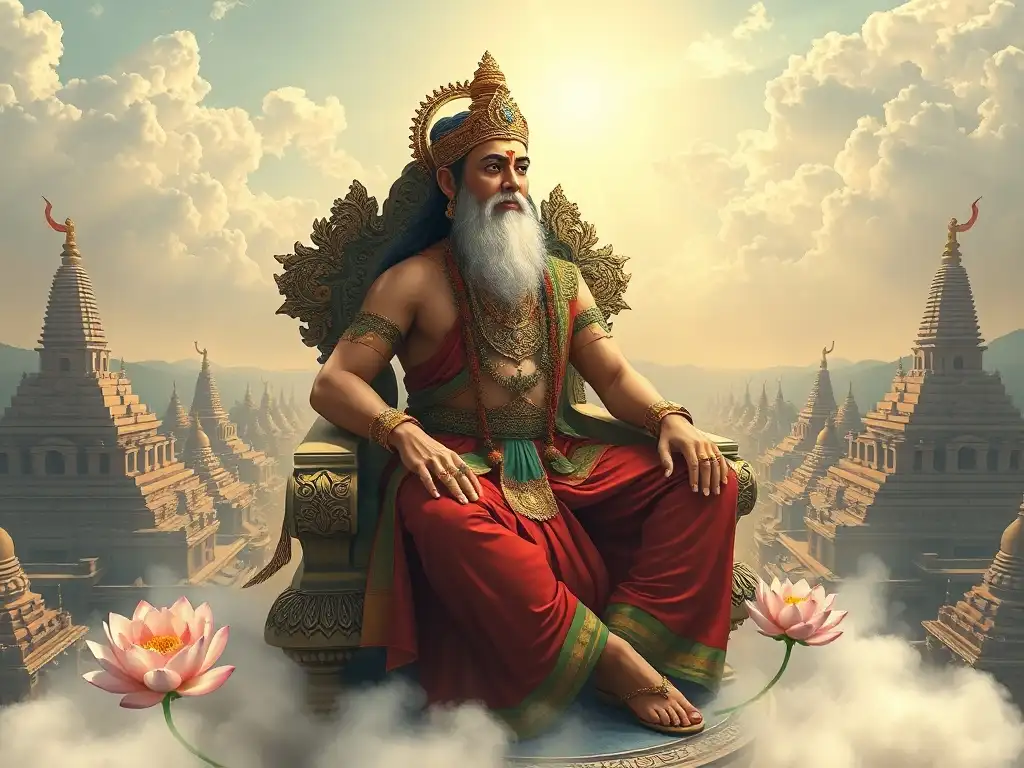
Summary of Key Points
The Mauryan Empire, one of the most significant ancient Indian civilizations, was profoundly shaped by the philosophies of Hinduism and Buddhism. These religions not only influenced the spiritual practices of the time but also played a crucial role in shaping the political ideology of the Mauryan rulers. Key points reflecting this influence include:
- Integration of Religious Principles: Hindu concepts such as Dharma (righteousness) were integral to governance, creating a moral framework that guided rulers like Chandragupta Maurya and his grandson Ashoka. These principles emphasized ethical leadership and social responsibility.
- Buddhist Influence on Non-Violence: Ashoka's conversion to Buddhism marked a pivotal shift in Mauryan political ideology. His promotion of Ahimsa (non-violence) and the dissemination of Buddhist teachings through edicts and pillars influenced statecraft, encouraging peaceful coexistence and welfare policies.
- Cultural Synthesis: The Mauryan Empire was characterized by a synthesis of Hindu and Buddhist ideals, leading to a unique political culture that respected diverse beliefs while promoting unity. This cultural amalgamation fostered a sense of identity among the populace.
- Administrative Reforms: Both religions contributed to administrative practices, with Buddhist monastic institutions providing education and support to the state, while Hindu rituals legitimized the authority of the rulers.
Reflections on the Cultural and Political Legacy of the Mauryan Empire
The enduring legacy of the Mauryan Empire lies significantly in its ability to intertwine religious beliefs with political authority. The influence of Hinduism and Buddhism has shaped not only the political landscape of ancient India but also laid the groundwork for future governance models.
- Long-term Impacts on Governance: The model established by the Mauryan rulers regarding the importance of moral governance can still be seen in contemporary discussions on ethical leadership. The emphasis on Dharma continues to resonate within Indian legal and political frameworks.
- Cultural Continuity: The Mauryan era set a precedent for the integration of diverse cultural practices within governance. This legacy is evident in modern India, where multiple religions coexist and contribute to the societal fabric.
- Philosophical Contributions: The philosophical discussions initiated during the Mauryan period on governance, ethics, and societal welfare remain relevant. The concepts of Dharma and Ahimsa have been adopted and adapted in various movements throughout history, influencing socio-political thought both in India and worldwide.
The Mauryan Empire's political structure was deeply enriched by the influences of Hinduism and Buddhism, creating a complex tapestry of governance that prioritizes ethical leadership and cultural pluralism. This legacy continues to inform discussions on governance and societal values in contemporary India, underscoring the timeless relevance of these ancient philosophies.
References
Suggested Reading on Hinduism and Buddhism's Influence on Politics
-
"Hinduism and the Politics of Religious Identity"
This book explores the intricate relationship between Hinduism and the political landscape of ancient India, illustrating how religious beliefs shaped governance and societal structures within the Mauryan Empire.
-
"Buddhism and Political Theory"
A comprehensive analysis of how Buddhist principles influenced political thought and governance during the Mauryan period, particularly under the rule of Emperor Ashoka.
-
"The Mauryan Empire: A Historical Overview"
This text delves into the political structures of the Mauryan Empire and evaluates how Hindu and Buddhist ideologies interplayed to form a unique governance model.
-
"Religious Ideologies in Ancient India"
This book examines the broader implications of Hindu and Buddhist teachings on statecraft and the moral obligations of rulers in ancient Indian society.
-
"Ashoka: The Forgotten Emperor"
A detailed biography of Emperor Ashoka, highlighting his conversion to Buddhism and its impact on his political strategies and policies, including the promotion of dharma.
Academic Sources on Mauryan Political Ideology
-
"The Mauryan Administration: A Study in Political Ideology"
This scholarly article provides an in-depth look at the administrative practices of the Mauryan Empire and how they were influenced by both Hindu and Buddhist philosophies.
-
"Political Thought in Ancient India: The Mauryan Context"
An exploration of the political theories that emerged during the Mauryan period, focusing on the synthesis of Hindu and Buddhist ideas in shaping governance.
-
"Ashoka and the Evolution of Political Ideology in Ancient India"
This paper discusses Ashoka's unique approach to governance, emphasizing how Buddhist principles transformed the political landscape of the Mauryan Empire.
-
"The Role of Dharma in Mauryan Politics"
An analysis of how the concept of dharma, rooted in Hinduism and Buddhism, was integral to the political ideology of the Mauryan rulers.
-
"Religion and Statecraft in Ancient India"
This academic source examines the intersection of religion and politics during the Mauryan era, illustrating how both Hindu and Buddhist traditions informed the rulers' governance strategies.
Frequently Asked Questions
What was the Mauryan Empire known for in terms of political ideology?
The Mauryan Empire is renowned for its centralized governance and the influence of Hinduism and Buddhism on its political framework, promoting ethical governance and social welfare.
How did Hinduism influence the Mauryan political ideology?
Hinduism contributed to the caste system and the concept of dharma, which guided rulers in their moral responsibilities and just governance during the Mauryan period.
What role did Buddhism play in shaping the Mauryan Empire?
Buddhism emphasized non-violence and compassion, which influenced Ashoka's policies and his commitment to social justice and religious tolerance throughout the empire.
How did the Mauryan Empire promote the teachings of Hinduism and Buddhism?
The Mauryan Empire established monuments and public works, such as stupas and pillars inscribed with edicts, which disseminated the values of both Hinduism and Buddhism to the populace.
What were the long-term effects of Hinduism and Buddhism on Mauryan influence in India?
The Hindu-Buddhist syncretism during the Mauryan era laid the foundation for cultural unity and philosophical discourse in India, influencing subsequent dynasties and shaping the spiritual landscape of the region.
Final Reflection: The Enduring Legacy of Hinduism and Buddhism in Mauryan Political Ideology
The exploration of Hinduism and Buddhism's profound influence on Mauryan political ideology reveals not only the historical significance of these religions but also their enduring relevance in contemporary society. As we examine the intricate ways in which these belief systems shaped governance and social structures during the Mauryan Empire, we uncover a striking reminder of how spiritual philosophies can inform political thought and action. The lessons drawn from this historical interplay resonate powerfully today, urging us to consider how our own beliefs shape the frameworks of power and governance in our lives.
The impact of Hinduism and Buddhism extends far beyond ancient history; it continues to mold the cultural and social landscapes of modern India and beyond. The principles of dharma and ahimsa, rooted in these religions, echo through time, influencing contemporary discussions on justice, ethics, and leadership. As Mahatma Gandhi once articulated, The best way to find yourself is to lose yourself in the service of others.
This sentiment reflects the ongoing relevance of these ancient teachings, reminding us that the values of compassion and duty remain crucial in guiding our actions and decisions in today's complex world.
As we conclude this exploration, I invite you to reflect on the lessons of Hinduism and Buddhism and their implications for your own life. How can the principles of these ancient traditions inspire you to engage with the world around you? Consider the ways in which you can embody the ideals of compassion, justice, and service in your daily interactions. By embracing these teachings, we can contribute to a more harmonious society and carry forward the legacy of the Mauryan influence into the future.
Unleash the Power of Ancient Wisdom!
Thank you for diving into the fascinating world of Mauryan political ideology shaped by Hinduism and Buddhism. Your engagement with this rich history empowers us to better understand the profound impact of these philosophies on governance and society.
Now, it's time to take your learning further! Here are some action steps to deepen your connection with this topic:
- Explore the writings of Emperor Ashoka by reading his edicts; these documents reveal a ruler deeply influenced by Buddhist principles.
- Join the discussion: Share your thoughts on how these teachings can apply to modern political systems in the comments section!
- Challenge yourself to visit a local museum or historical site that showcases the art and culture of the Mauryan period.
What aspect of Mauryan political ideology do you find most compelling, and how do you think it resonates with today's world?