
From Canals to Tanks: The Evolution of Irrigation in Ancient India

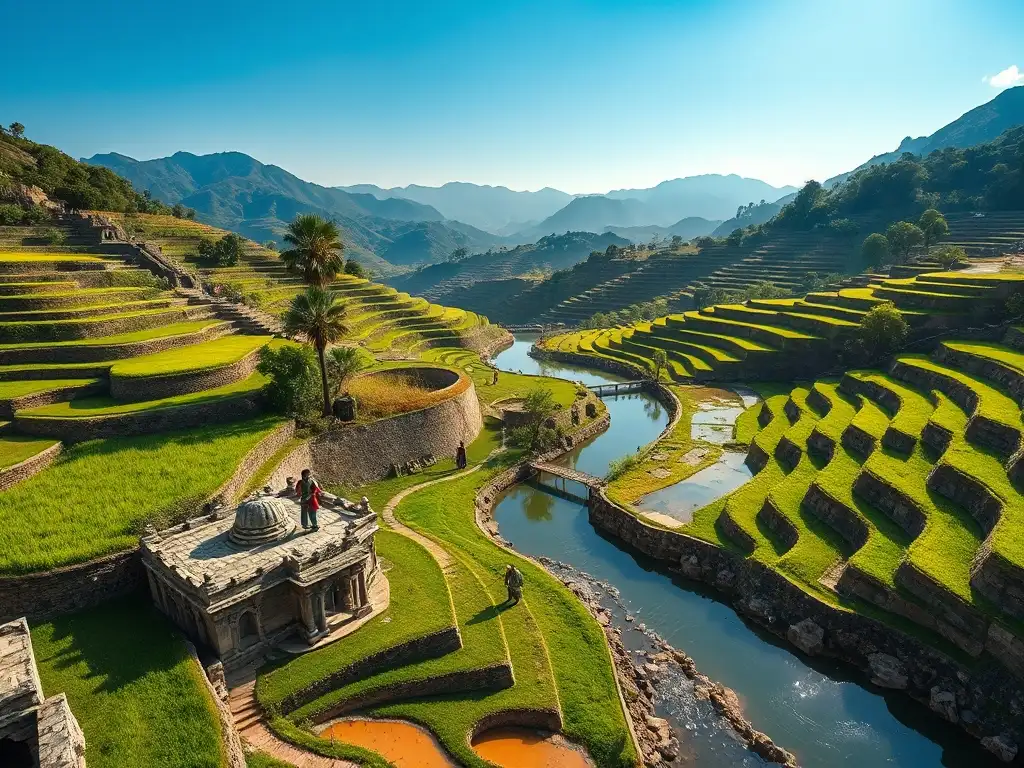
Welcome to Ancient India History, where we delve into the captivating tapestry of India's past! In this exploration, we uncover the remarkable ancient Indian irrigation systems that not only transformed agriculture but also shaped the very fabric of society. From intricate canals to sophisticated tanks, the ingenuity of these systems played a crucial role in sustaining civilizations from the Indus Valley to the Gupta Empire. Curious to learn how these innovations fueled economic prosperity and cultural development? Join us as we journey through time to discover the vital contributions of ancient Indian civilizations to the world of agriculture!
- Introduction to Ancient Indian Irrigation Systems
- The Origins of Irrigation in Ancient India
- Evolution of Irrigation Methods
- Regional Variations in Irrigation Practices
- Technological Innovations in Ancient Indian Irrigation
- Socio-Economic Impact of Ancient Indian Irrigation Systems
- Conclusion: Legacy of Ancient Indian Irrigation Systems
- References and Further Reading on Ancient Indian Irrigation Systems
-
Frequently Asked Questions
- What were the primary irrigation systems used in ancient India?
- How did the Indus Valley civilization contribute to irrigation techniques?
- What role did agriculture play in ancient Indian societies?
- How did the Gupta Empire influence irrigation practices?
- Are there modern implications of ancient Indian irrigation systems?
- Final Reflection: The Enduring Legacy of Ancient Indian Irrigation Systems
- Embrace the Legacy: Transform Your Understanding of Ancient Irrigation!
Introduction to Ancient Indian Irrigation Systems
Irrigation has played a pivotal role in shaping the agricultural landscape of ancient India, facilitating the growth of civilizations that thrived on the fertile plains and river basins. As one of the earliest civilizations to develop sophisticated irrigation practices, ancient India showcased a remarkable ability to harness water resources, which was crucial for sustaining its agrarian economy.
From the sophisticated canal systems of the Indus Valley Civilization to the intricate tank networks established during the later periods, the evolution of irrigation in ancient India reflects a deep understanding of hydrology, engineering, and resource management. By exploring these ancient Indian irrigation systems, we can gain insights into the agricultural innovations that supported economic prosperity, social structure, and cultural advancements throughout Indian history.
Overview of Irrigation in Ancient India
The history of irrigation in ancient India is marked by various innovative techniques and structures that evolved over millennia. The earliest evidence of irrigation can be traced back to the Indus Valley Civilization (c. 3300–1300 BCE), where archaeologists have uncovered remnants of extensive canal systems. These canals were essential for diverting river water to arid fields, enabling the cultivation of crops such as wheat, barley, and cotton.
As time progressed, different regions developed unique irrigation methods tailored to their environmental conditions. For instance:
- Canal Systems: Primarily seen in the Indus Valley, these were constructed to transport water from rivers to agricultural lands.
- Tanks and Reservoirs: In regions with less rainfall, communities constructed tanks to store rainwater, which was then utilized during dry seasons.
- Wells and Stepwells: Developed in arid regions, these provided a reliable source of groundwater for irrigation.
The combination of these systems illustrates a diverse approach to managing water resources, ensuring that agricultural practices could thrive in varying climatic conditions.
Importance of Irrigation for Agricultural Development
Irrigation systems were essential for the agricultural development of ancient India, providing numerous benefits that contributed to the prosperity of its civilizations. Here are some key points highlighting their significance:
- Enhanced Crop Yields: By providing a consistent water supply, irrigation allowed farmers to cultivate crops throughout the year, leading to increased productivity and surplus food.
- Economic Growth: The surplus generated from agricultural activities supported trade and commerce, enabling the rise of urban centers and contributing to the overall economic development of ancient Indian societies.
- Social Structure: The management of irrigation systems often required collective effort and organization, fostering social cooperation and community development.
- Cultural Advancements: The stability provided by reliable agricultural output allowed civilizations to invest in the arts, science, and philosophy, leading to significant cultural achievements.
- Environmental Adaptation: As ancient Indian societies faced climatic challenges, the development of irrigation technologies demonstrated their remarkable adaptability and ingenuity in resource management.
Through these irrigation systems, ancient Indian civilizations not only sustained their agricultural practices but also laid the groundwork for a thriving economy and rich cultural heritage that continues to influence modern India.
The Origins of Irrigation in Ancient India
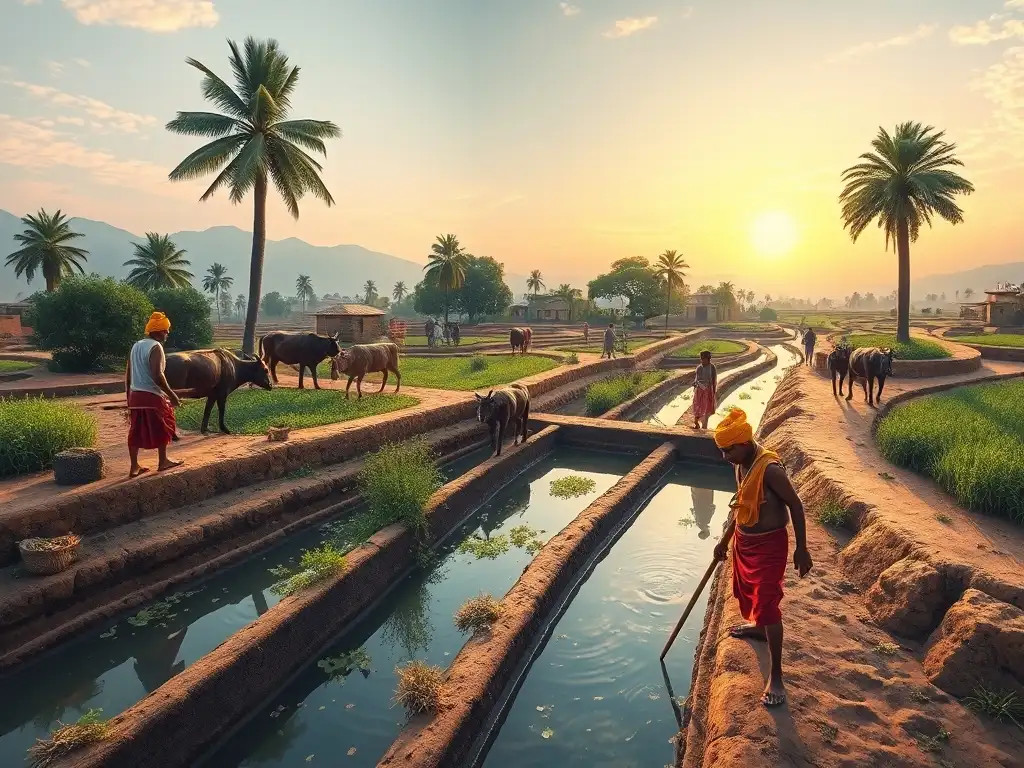
Irrigation in ancient India has a profound history that dates back thousands of years, showcasing the ingenuity and resourcefulness of early Indian civilizations. The need for effective water management arose primarily due to the diverse climatic conditions across the subcontinent, which ranged from arid regions to fertile river valleys. As agriculture became the backbone of society, the development of irrigation systems became essential for sustaining food production and supporting growing populations.
Early Water Management Techniques
The earliest water management techniques in ancient India involved simple methods that utilized gravity and local topography to divert water from rivers and streams to agricultural fields. Techniques included:
- Floodplain Cultivation: Early farmers relied heavily on the natural flooding of rivers, such as the Ganges and Yamuna, to irrigate their fields. The annual floods deposited nutrient-rich silt, enhancing soil fertility.
- Basin Irrigation: This method involved creating small basins or depressions in the fields to retain floodwater. Farmers would plant crops in these basins, where the water would be available for extended periods.
- Channel Systems: Early civilizations constructed channels to direct water from rivers to nearby fields. These channels were often lined with stones or mud to prevent erosion and to maintain water flow.
Innovations in these early techniques laid the groundwork for more sophisticated irrigation systems in later periods, demonstrating the adaptability of ancient Indian societies to their environment.
Evidence from the Indus Valley Civilization
The Indus Valley Civilization (c. 3300 – 1300 BCE) showcases one of the most advanced early irrigation systems in ancient India. Archaeological findings reveal a well-planned urban layout, where water management played a crucial role in the civilization's success. Key features of their irrigation practices include:
- Well-Designed Drainage Systems: The cities of Harappa and Mohenjo-Daro featured intricate drainage systems with covered drains and soak pits to manage wastewater and excess rainwater effectively.
- Water Reservoirs: Large reservoirs were constructed to store rainwater, allowing for irrigation during dry spells. These reservoirs were ingeniously designed to maximize water retention.
- Agricultural Fields: Evidence suggests that fields were strategically placed near rivers, coupled with small canals to ensure adequate water supply for crops. The cultivation of wheat and barley indicates the effectiveness of their irrigation methods.
The sophistication of the Indus Valley irrigation systems reflects a deep understanding of hydrology and agriculture, contributing significantly to the civilization's prosperity.
Role of Natural Water Bodies in Agriculture
Natural water bodies played a vital role in supporting agriculture across ancient India. Rivers, lakes, and ponds were not only sources of irrigation but also influenced cultural and economic practices. Key aspects include:
- River Flooding: Seasonal flooding of rivers provided essential nutrients to the soil, enabling farmers to grow multiple crops annually. This natural irrigation cycle was crucial for sustaining large populations.
- Ponds and Tanks: Local communities often constructed ponds and tanks for water storage, which served as a backup during dry periods. These structures also supported fish farming and other aquatic resources, enhancing food security.
- Cultural Significance: Water bodies were central to religious and cultural practices, often associated with fertility and prosperity. Rituals and festivals celebrated the importance of water, reinforcing its role in agriculture and community life.
The symbiotic relationship between agriculture and natural water bodies highlights the adaptive strategies employed by ancient Indian civilizations to harness available resources effectively, ensuring their survival and growth.
Ancient Indian irrigation systems evolved through innovative techniques, advanced engineering, and the effective use of natural water sources, laying a foundation for agricultural practices that would thrive for centuries.
Evolution of Irrigation Methods
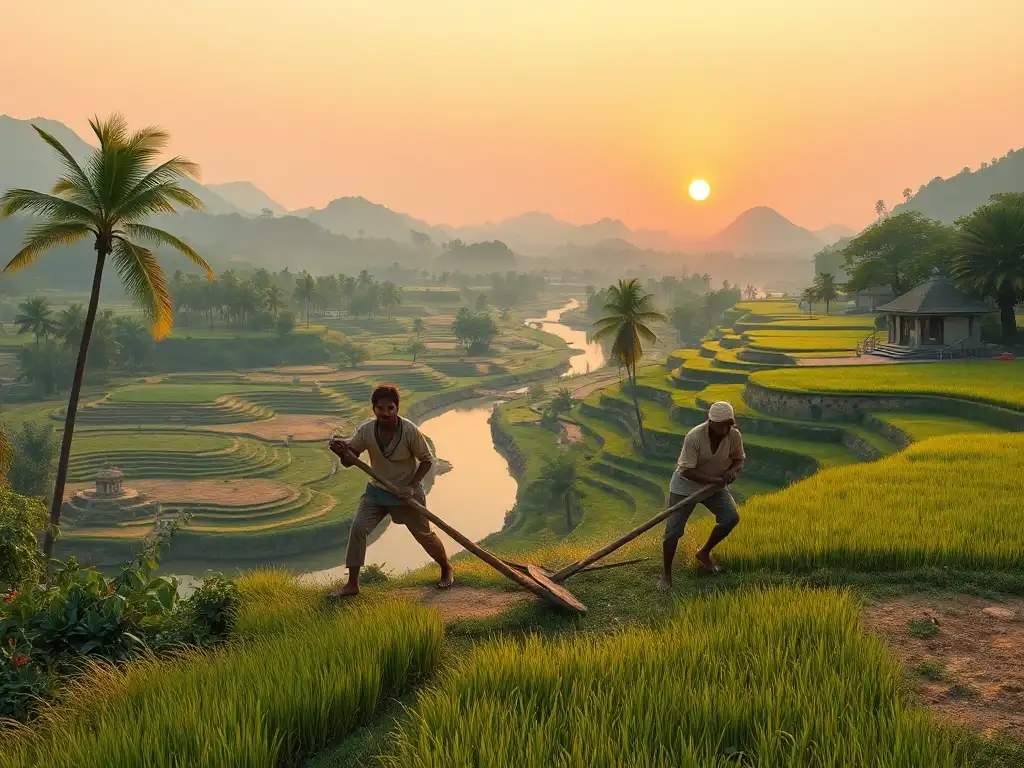
From Canals to Tanks: A Historical Perspective
The evolution of irrigation methods in ancient India showcases a remarkable journey from rudimentary systems to sophisticated networks that supported agriculture and sustained civilizations. The earliest forms of irrigation can be traced back to the Indus Valley Civilization, where evidence suggests the use of simple canals to direct river water for farming. These early innovations laid the groundwork for more complex systems that emerged in subsequent centuries.
As agrarian societies developed, so did the need for efficient water management. The geographical diversity of India—ranging from the arid deserts of Rajasthan to the fertile plains of the Ganges—necessitated a variety of irrigation techniques tailored to local conditions. This adaptability is evident in the transition from canal systems to the introduction of tanks, which played a crucial role in water conservation and agricultural productivity.
Throughout history, the design and construction of irrigation systems were influenced by advances in engineering and the socio-political landscape. Notably, the Mauryan and Gupta empires saw significant improvements in irrigation infrastructure, driven by centralized governance and agricultural policies that promoted water management. These developments not only facilitated crop yields but also encouraged population growth and urbanization.
The Development of Canal Systems in Ancient India
Canal systems emerged as one of the earliest irrigation methods in ancient India, primarily during the Indus Valley Civilization (circa 3300–1300 BCE). Excavations at sites like Harappa and Mohenjo-Daro have revealed an extensive network of canals that were used to divert water from the Indus River for agricultural purposes. These canals were constructed with remarkable engineering precision, often featuring raised banks to prevent flooding and facilitate drainage.
The significance of canal irrigation can be summarized as follows:
- Agricultural Efficiency: By directing river water to fields, farmers could cultivate larger areas and support diverse crops.
- Sustainable Practices: Canals enabled the storage of excess water, allowing for irrigation during dry spells.
- Community Collaboration: The construction and maintenance of canals often required collective efforts, fostering social cooperation among communities.
As time progressed, the design of canal systems evolved. The Mauryan Empire (322–185 BCE) made significant strides in enhancing these networks. Historical texts indicate that the Mauryan rulers implemented systematic canal construction, linking rivers to agricultural fields throughout their territories. This facilitated a more organized approach to irrigation, which was crucial for sustaining the agricultural demands of a growing population.
The Introduction and Impact of Tank Irrigation
Tank irrigation became a prominent method in ancient India, particularly in regions where rainfall was sporadic and rivers were not easily accessible. Tanks, or reservoirs, were constructed to collect and store rainwater, serving as a crucial source of irrigation during dry periods. This method was especially prevalent in southern and eastern India, where the terrain was conducive to the creation of earthen embankments.
The impact of tank irrigation can be understood through several key factors:
- Water Conservation: Tanks allowed for the effective capture and storage of rainwater, significantly reducing wastage and ensuring a reliable water supply for crops.
- Crop Diversification: With the availability of stored water, farmers could experiment with various crops, thereby enhancing food security and supporting local economies.
- Cultural Significance: Tanks often held cultural and religious importance, serving as community gathering sites and influencing settlement patterns. Many ancient texts reference tanks as vital to both sustenance and spiritual practices.
The evolution of tank irrigation reached its zenith during the Chola dynasty (circa 300 BCE–1279 CE), which is renowned for its advanced hydraulic engineering. The Cholas constructed an extensive network of tanks, some of which remain functional even today. This system not only transformed the agricultural landscape but also contributed to the prosperity of urban centers, enabling the flourishing of trade and commerce.
The evolution of irrigation methods in ancient India—from the initial canal systems to the sophisticated tank irrigation—reflects the ingenuity and adaptability of Indian civilizations in the face of diverse environmental challenges. These ancient Indian irrigation systems not only supported agricultural productivity but also played a pivotal role in shaping the socio-economic landscape of the region.
Regional Variations in Irrigation Practices
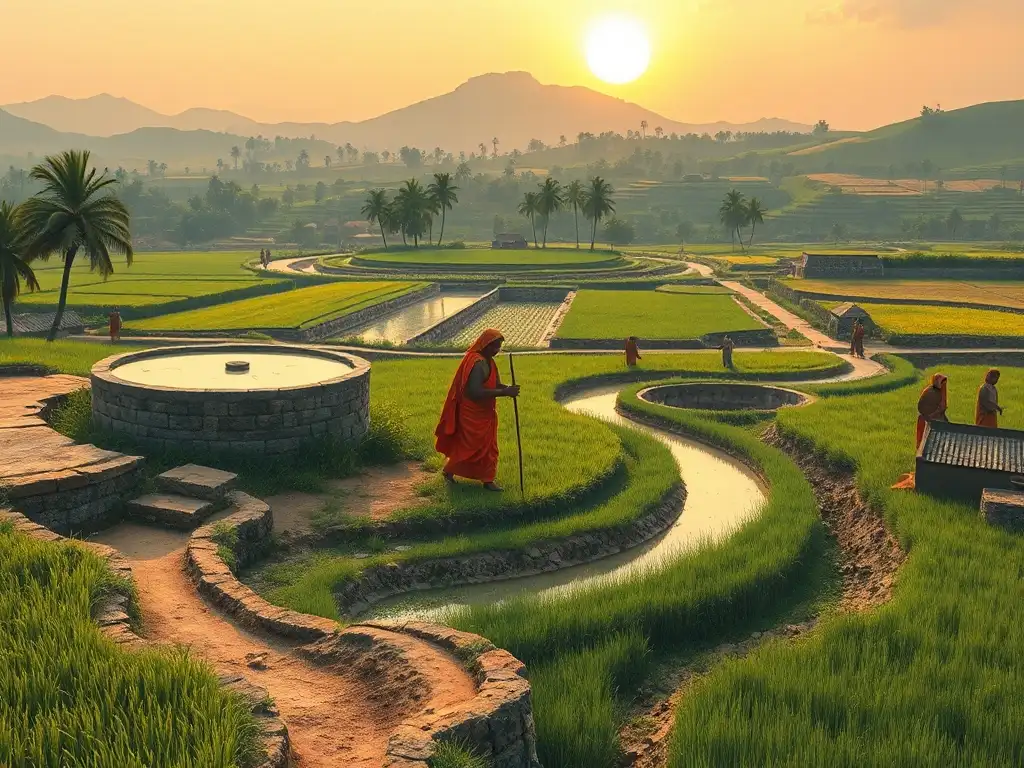
Northern India: The Ganges River Basin
The Ganges River Basin has historically been one of the most fertile and agriculturally productive regions in ancient India. The river's annual flooding deposited nutrient-rich silt on the surrounding lands, making it ideal for agriculture. To optimize the use of water resources, ancient Indian irrigation systems in this region developed advanced techniques.
- Canal Systems:
- The use of canals was prominent, with ancient civilizations constructing extensive networks to divert water from the river for agricultural use.
- Notable examples include the Ganga Canal, initiated during the British colonial period, which traces its roots back to earlier practices.
- Floodplain Agriculture:
- Farmers adapted to the seasonal floods by practicing floodplain agriculture, where crops were planted in anticipation of the floodwaters.
- This method allowed for multiple cropping cycles each year, significantly enhancing agricultural output.
- Innovative Water Management:
- Techniques such as bunding (creating embankments) were employed to control water flow and prevent soil erosion.
- The use of wells for irrigation was also common, particularly in areas where canal systems were not feasible, ensuring a consistent water supply during dry periods.
Southern India: The Deccan Plateau and Its Tanks
In contrast to Northern India, the Deccan Plateau presents a diverse topography characterized by its rocky terrain and varying rainfall patterns. Ancient Indian irrigation systems here relied heavily on the construction of tanks and reservoirs to store and manage water resources.
- Tank Irrigation:
- The tanks of Southern India, such as the Karnataka and Tamil Nadu tanks, were ingeniously designed to capture and store rainwater.
- These tanks not only provided water for irrigation but also for livestock and domestic use, playing a pivotal role in the agrarian economy.
- Community Participation:
- The maintenance and management of these tanks were often community-driven, fostering a sense of collective responsibility among villagers.
- This practice ensured sustainability and equitable distribution of water resources, which was crucial in times of drought.
- Crop Diversity:
- The reliable water supply from tanks allowed for the cultivation of diverse crops, including rice, pulses, and millets, adapting to local climatic conditions.
- Farmers practiced crop rotation and intercropping, maximizing land use and soil fertility.
Western India: The Use of Stepwells and Wells
Western India, particularly in regions like Gujarat and Rajasthan, developed unique irrigation practices suited to its arid climate and scarcity of surface water. The innovation of stepwells and deep wells became critical for agricultural sustainability.
- Stepwells:
- Stepwells, known as baolis or vavs, were architectural marvels designed to access groundwater.
- These structures allowed for easy access to water, especially during the dry season, and were often elaborately constructed, showcasing intricate carvings and designs.
- Well Irrigation:
- The use of deep wells enabled farmers to tap into groundwater resources, facilitating the irrigation of fields even in arid conditions.
- The introduction of persian wheels enhanced the efficiency of water lifting from wells, making it easier to irrigate larger areas.
- Crop Adaptation:
- Farmers in this region adapted to the harsh climate by cultivating drought-resistant crops such as bajra (pearl millet) and jowar (sorghum).
- The focus on these crops ensured food security and resilience against climatic variations.
The regional variations in ancient Indian irrigation systems reflect the adaptability and ingenuity of civilizations, showcasing how environmental factors shaped agricultural practices across the subcontinent. Each region's unique approach contributed significantly to the overall agricultural output, establishing a foundation for the flourishing economies of ancient India.
Technological Innovations in Ancient Indian Irrigation
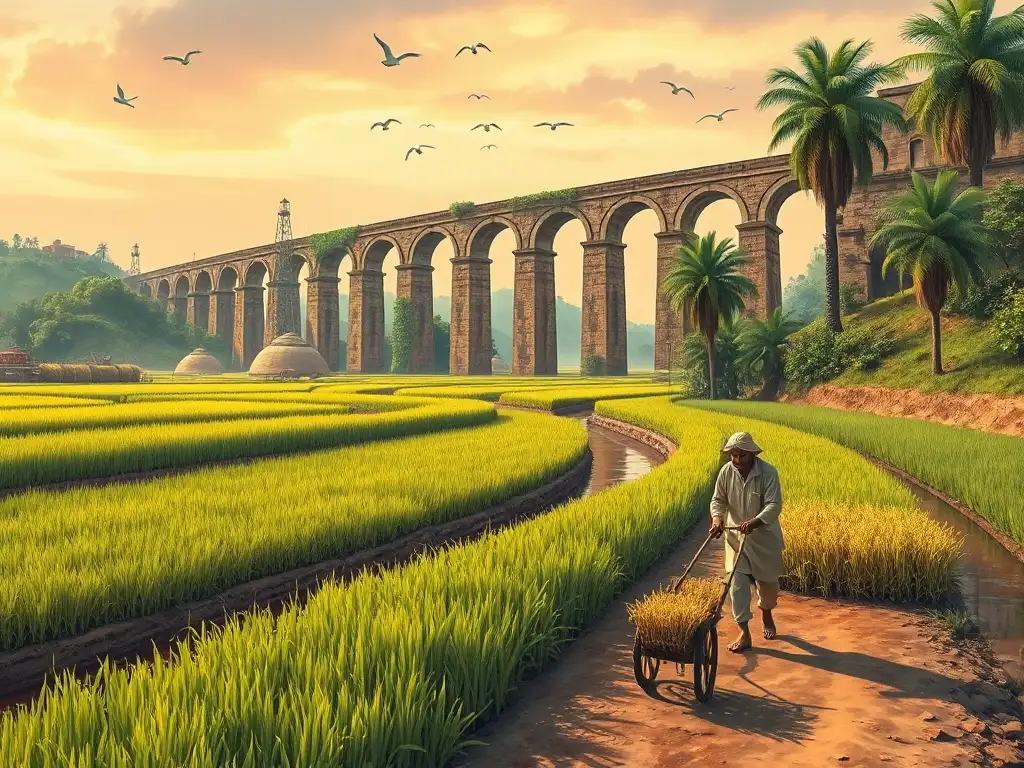
Tools and Techniques Used by Ancient Farmers
Ancient Indian irrigation systems were remarkably sophisticated and showcased a variety of tools and techniques that enabled farmers to harness water resources effectively. Some notable methods included:
- Canal Systems: The use of canals was prevalent, especially in regions like the Indus Valley. Canals diverted river water to fields, significantly expanding arable land. The engineering of these canals involved intricate planning and construction, often lined with stones to prevent erosion.
- Wells and Stepwells: In arid regions, farmers dug wells to access groundwater. Stepwells, a unique architectural feature, allowed for the collection and storage of water. These structures not only served practical purposes but also reflected the community's social and cultural life.
- Rainwater Harvesting: Ancient texts suggest that farmers implemented rainwater harvesting techniques, where they constructed storage tanks or reservoirs to collect runoff during the monsoon season. This practice ensured a steady water supply during dry spells.
- Sluices and Dikes: To control water flow, ancient farmers built sluices and dikes. These structures directed water to specific areas, preventing flooding and ensuring even distribution across fields.
The Role of Traditional Knowledge in Irrigation Management
The management of irrigation systems in ancient India heavily relied on traditional knowledge, passed down through generations. This indigenous wisdom included:
- Crop Rotation: Farmers practiced crop rotation, which helped maintain soil fertility and optimize water use. Understanding the water needs of different crops allowed for efficient irrigation scheduling.
- Soil Conservation Techniques: Techniques such as mulching, contour plowing, and the use of organic fertilizers were employed to enhance soil health and reduce the need for excessive irrigation.
- Community Engagement: Local communities often collaborated to maintain irrigation infrastructure. This collective effort ensured that everyone benefited from the available water resources and promoted sustainable practices.
- Seasonal Adaptations: Ancient farmers were adept at adjusting their irrigation strategies based on seasonal variations. They monitored rainfall patterns and modified their practices accordingly, showcasing their deep understanding of local climatic conditions.
Innovations During Major Dynasties: Maurya to Gupta
The evolution of irrigation systems in ancient India saw significant innovations during major dynasties, particularly from the Maurya to the Gupta period. Key developments included:
- Mauryan Period (c. 322–185 BCE): The Mauryan Empire marked a turning point in irrigation practices. Emperor Ashoka is noted for promoting agricultural development, establishing extensive canal systems, and promoting sustainable water management practices.
- Post-Mauryan Innovations: Following the Mauryas, the introduction of advanced hydraulic engineering techniques allowed for more effective irrigation. The use of large tanks and reservoirs became common, improving water storage capabilities.
- Gupta Empire (c. 320–550 CE): The Gupta period is often referred to as the Golden Age of India, where agriculture flourished due to innovations in irrigation. The construction of large-scale irrigation works facilitated the expansion of agriculture, thereby boosting the economy.
| Dynasty | Key Innovations | Impact on Agriculture |
|---|---|---|
| Mauryan | Canal systems, water management policies | Enhanced crop production |
| Post-Mauryan | Hydraulic engineering, large tanks | Improved water storage and accessibility |
| Gupta | Large-scale irrigation works | Economic prosperity through agriculture |
These advancements in irrigation systems not only transformed agricultural practices but also played a crucial role in sustaining ancient Indian civilizations, fostering economic growth and societal development. By understanding these innovations, we gain insight into the ingenuity and adaptability of ancient Indian farmers in the face of environmental challenges.
Socio-Economic Impact of Ancient Indian Irrigation Systems
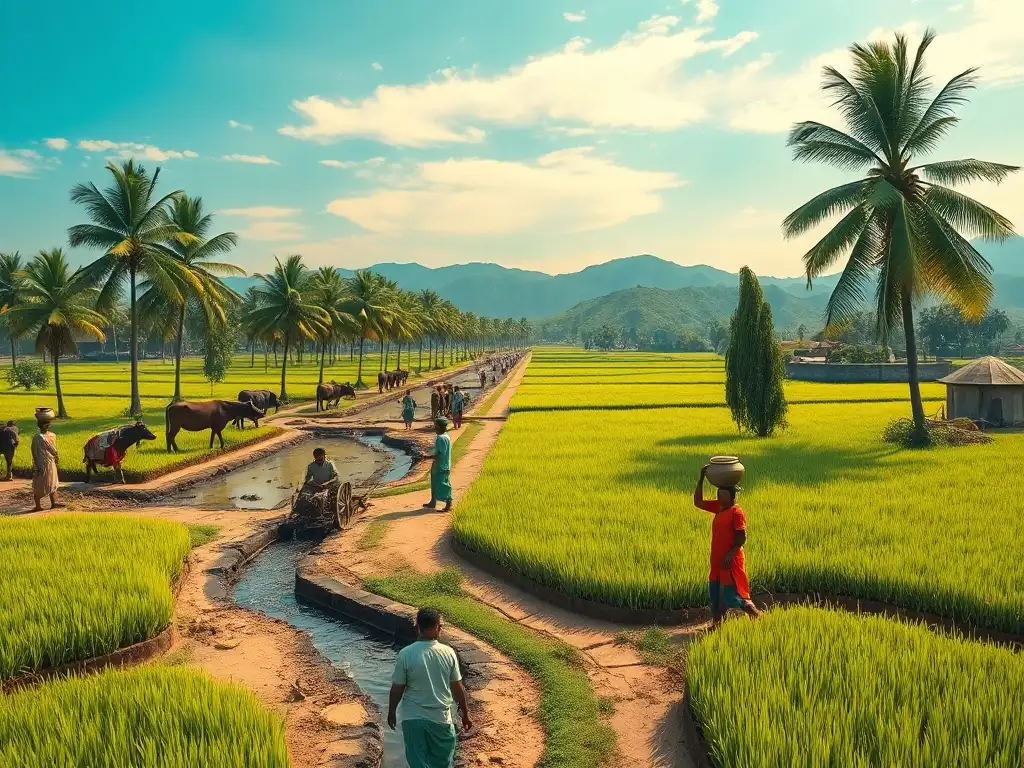
Influence on Agricultural Productivity and Food Security
Ancient Indian irrigation systems played a pivotal role in enhancing agricultural productivity and ensuring food security across various regions. By enabling the controlled distribution of water, these systems allowed farmers to cultivate a broader range of crops, leading to increased yields. The construction of canals, wells, and tanks, particularly during the Indus Valley Civilization and later periods, demonstrated advanced engineering techniques that maximized water utilization.
- Diverse Crop Cultivation: With reliable irrigation, farmers could grow multiple crops annually, including staples such as rice, wheat, and pulses, as well as cash crops like cotton and sugarcane.
- Mitigation of Drought: Irrigation systems acted as a buffer against the seasonal irregularities of monsoon rains, thus reducing the risk of crop failure and famine. This resilience was crucial for sustaining large populations, particularly in arid and semi-arid regions.
- Technological Innovations: The development of various irrigation techniques, such as the use of the Persian wheel and step wells, showcased the ingenuity of ancient Indian engineers. These innovations not only enhanced water access but also contributed to agricultural diversification.
The impact of these systems on food security was profound, leading to surplus production that supported urbanization and the growth of complex societies.
Effects on Trade and Economic Development
The robust irrigation systems significantly influenced trade and economic development in ancient India. By facilitating agricultural surplus, they directly contributed to the rise of trade networks and markets.
- Increased Surplus Production: With higher agricultural yields, communities were able to produce more than they consumed, creating surpluses that could be traded. This surplus was vital for the growth of local and regional economies.
- Market Expansion: As irrigation enhanced productivity, the emergence of markets became inevitable. Farmers could trade their excess crops in local markets, leading to the establishment of trade routes that connected various regions, including the famous Silk Road.
- Cultural Exchange: The flourishing trade networks fostered interactions between different cultures, allowing not only economic transactions but also the exchange of ideas, technologies, and cultural practices. This contributed to a vibrant economic landscape that spurred innovation and growth.
Overall, the economic implications of these irrigation systems were vast, laying the groundwork for a thriving agrarian economy that supported urban centers and provided for an increasingly complex society.
The implementation of irrigation systems in ancient India had significant repercussions on social structures and settlement patterns. The ability to control water resources influenced where and how communities formed and developed.
- Settlement Development: Irrigation systems often dictated the location of settlements. Areas with efficient irrigation were more likely to attract populations due to the availability of arable land and water resources, leading to the establishment of villages and towns.
- Social Hierarchies: The management of irrigation systems required organized labor and planning, which contributed to the emergence of social hierarchies. Those with expertise in irrigation techniques often gained status and influence, leading to the formation of specialized roles within the community.
- Community Cooperation: The collective efforts needed to maintain and operate irrigation systems fostered a sense of community. This cooperation was essential for managing shared resources and conflicts over water allocation, strengthening social bonds among residents.
Ancient Indian irrigation systems were not merely technical solutions for water management; they shaped social dynamics, influenced settlement patterns, and contributed to the overall organization of society.
Conclusion: Legacy of Ancient Indian Irrigation Systems

The irrigation systems developed in ancient India have left an indelible mark on agricultural practices and water management techniques that continue to influence modern systems. The ingenuity and adaptability demonstrated by ancient Indian civilizations in harnessing water resources for agriculture were pivotal in sustaining their economies, enhancing food security, and fostering social organization. From the sophisticated canals of the Indus Valley Civilization to the elaborate tank systems of the Southern kingdoms, these innovations laid the foundation for future advancements in irrigation.
Lasting Influence on Modern Irrigation Practices
Ancient Indian irrigation systems have provided a wealth of knowledge that informs contemporary practices. Modern irrigation techniques, such as drip and sprinkler systems, often draw inspiration from the principles established by ancient engineers. For instance:
- Water Conservation: Ancient methods emphasized the importance of conserving water, a principle that resonates with today's focus on sustainability. Techniques such as rainwater harvesting were commonplace and are now being revived in response to increasing water scarcity.
- Community Involvement: The collaborative approach seen in ancient irrigation projects, where local communities worked together to build and maintain systems, is mirrored in current participatory irrigation management models. This communal effort not only enhances efficiency but also fosters a sense of ownership among users.
- Adaptation to Local Conditions: Ancient irrigation systems were designed with a deep understanding of local geography and climate, a practice that modern irrigation strategies continue to adopt. Tailoring irrigation solutions to specific environmental conditions ensures optimal water usage and crop yield.
The rich heritage of ancient Indian irrigation practices, characterized by innovation, sustainability, and community involvement, serves as a template for modern agricultural practices that aim to address the challenges posed by climate change and population growth.
The Importance of Preserving Ancient Techniques
Preserving ancient irrigation techniques is crucial for several reasons:
- Cultural Heritage: The knowledge embedded in these systems represents a vital aspect of India's cultural heritage. By safeguarding these practices, we not only honor the ingenuity of our ancestors but also ensure the transmission of this knowledge to future generations.
- Sustainable Practices: Many ancient techniques are inherently sustainable, using minimal resources while maximizing agricultural output. For instance, the use of traditional tank systems and canals can mitigate the impacts of drought and promote efficient water management.
- Biodiversity and Ecosystem Health: Ancient irrigation systems often supported diverse ecosystems by maintaining wetland areas and promoting biodiversity. The preservation of these techniques can contribute to ecosystem health and resilience.
- Educational Opportunities: Reviving and integrating ancient irrigation practices into modern systems can provide educational opportunities for farmers and communities, fostering a deeper understanding of water management and sustainable agriculture.
To ensure the legacy of ancient Indian irrigation systems endures, it is imperative to combine traditional knowledge with modern technology, creating a holistic approach that respects historical wisdom while addressing contemporary agricultural challenges. By recognizing the value of these systems, we can promote sustainable practices that benefit both the environment and society as a whole.
References and Further Reading on Ancient Indian Irrigation Systems
Suggested Books and Articles
-
"The Indus Civilization: A Contemporary Perspective" by Gregory L. Possehl
This book provides an in-depth analysis of the Indus Valley Civilization, including insights into their sophisticated irrigation practices. The author explores archaeological findings that demonstrate the advanced water management systems that supported agriculture in this ancient society.
-
"Agricultural History of India" by S. P. Gupta
A comprehensive overview of agricultural practices throughout Indian history, this book offers extensive details on irrigation systems, including their evolution and impact on crop yields and overall economy. The author discusses various methods, from ancient canals to more advanced systems.
-
"Water Management in Ancient India" by R. S. Sharma
This work focuses on the various water management strategies employed across different regions in ancient India. It details the socio-economic implications of these irrigation systems and how they influenced settlement patterns.
-
"The Role of Irrigation in Ancient Indian Agriculture" by S. K. Shukla
This article examines the significance of irrigation in the development of agriculture in ancient India, providing case studies that highlight specific irrigation techniques used in different periods and regions.
-
"Ancient Indian Agriculture and Irrigation Systems" by R. N. Mishra
A detailed exploration of the agricultural practices in ancient India, this book discusses how irrigation systems evolved and adapted to varying geographic and climatic conditions, shaping the agricultural landscape.
Online Resources for Further Exploration
-
Digital South Asia Library (DSAL)
A rich repository of resources related to South Asian history, including documents and research materials on ancient irrigation systems in India. The library provides access to maps, photographs, and historical texts.
-
The Archaeological Survey of India (ASI)
The ASI website offers insights into archaeological findings related to ancient irrigation systems. It includes reports and papers detailing excavations and research that shed light on water management practices in historical contexts.
-
ResearchGate
A platform where researchers publish their papers, it contains numerous articles focused on ancient Indian irrigation systems. Users can search for specific topics related to agriculture and water management in ancient India.
-
Internet Archive
This digital library contains a wide range of historical texts and books related to ancient Indian irrigation and agriculture. It serves as a valuable resource for researchers and enthusiasts looking for primary sources.
-
Google Scholar
A robust tool for academic research, Google Scholar can help users find scholarly articles and citations related to ancient Indian irrigation systems. By searching for specific keywords, researchers can access a wealth of academic literature.
These resources provide a solid foundation for anyone interested in deepening their understanding of ancient Indian irrigation systems and their critical role in shaping the agricultural landscape of the region.
Frequently Asked Questions
What were the primary irrigation systems used in ancient India?
Ancient Indian civilizations utilized various irrigation systems, such as canals, tanks, and wells, to support agriculture and manage water resources effectively.
How did the Indus Valley civilization contribute to irrigation techniques?
The Indus Valley civilization is renowned for its advanced drainage systems and water management, which included well-planned canal networks for effective irrigation.
What role did agriculture play in ancient Indian societies?
Agriculture was the backbone of ancient Indian societies, and efficient irrigation systems were crucial for ensuring crop yields and sustaining the population.
How did the Gupta Empire influence irrigation practices?
During the Gupta Empire, irrigation technology advanced significantly, with the construction of large reservoirs and canal systems that greatly improved agricultural productivity.
Are there modern implications of ancient Indian irrigation systems?
Yes, many modern irrigation techniques in India are influenced by ancient practices, demonstrating the enduring legacy of ancient Indian irrigation systems in contemporary agriculture.
Final Reflection: The Enduring Legacy of Ancient Indian Irrigation Systems
The evolution of irrigation in ancient India is not just a historical account; it is a testament to human ingenuity and adaptability. Today, as we face unprecedented challenges related to water scarcity and agricultural sustainability, the lessons drawn from ancient Indian irrigation systems become increasingly relevant. The innovative methods developed by our ancestors remind us that effective water management is crucial for both environmental health and food security in our modern world.
The impact of these ancient irrigation systems extends far beyond their time, shaping the cultural and social landscapes of India. Their intricate designs and community-based approaches fostered cooperation and resilience among local populations, creating a legacy that still resonates today. Water is the source of life, and those who manage it wisely will thrive.
This quote encapsulates the essence of our relationship with water, urging us to learn from the past as we navigate the complexities of contemporary water management.
As we reflect on the rich history of ancient Indian irrigation systems, let us carry forward the wisdom of our ancestors into our daily lives. Consider how you can contribute to sustainable water practices in your community, whether through conservation efforts, supporting local agriculture, or advocating for responsible water use. By embracing the lessons of the past, we can ensure a more sustainable and equitable future for generations to come.
Embrace the Legacy: Transform Your Understanding of Ancient Irrigation!
Thank you for diving into the fascinating history of irrigation in Ancient India! You’ve uncovered insights into how creative innovations shaped agriculture and influenced civilizations. Now, let’s take steps to deepen your connection with this captivating theme.
Here’s how you can continue exploring and engaging with this rich history:
- Dive Deeper: Explore various agricultural techniques from different periods and discover their lasting impact on modern practices.
- Share Your Insights: Discuss your discoveries on social media and share what surprised you the most, using the hashtag #AncientIrrigation to join a growing conversation!
- Join the Community: Connect with fellow history enthusiasts in our forum to share your thoughts and questions about ancient irrigation methods.
What aspect of ancient irrigation fascinates you the most, and how can it inspire your view of sustainable practices today?