
The Exchange of Mystical Practices Between Ancient India and Neighboring Regions

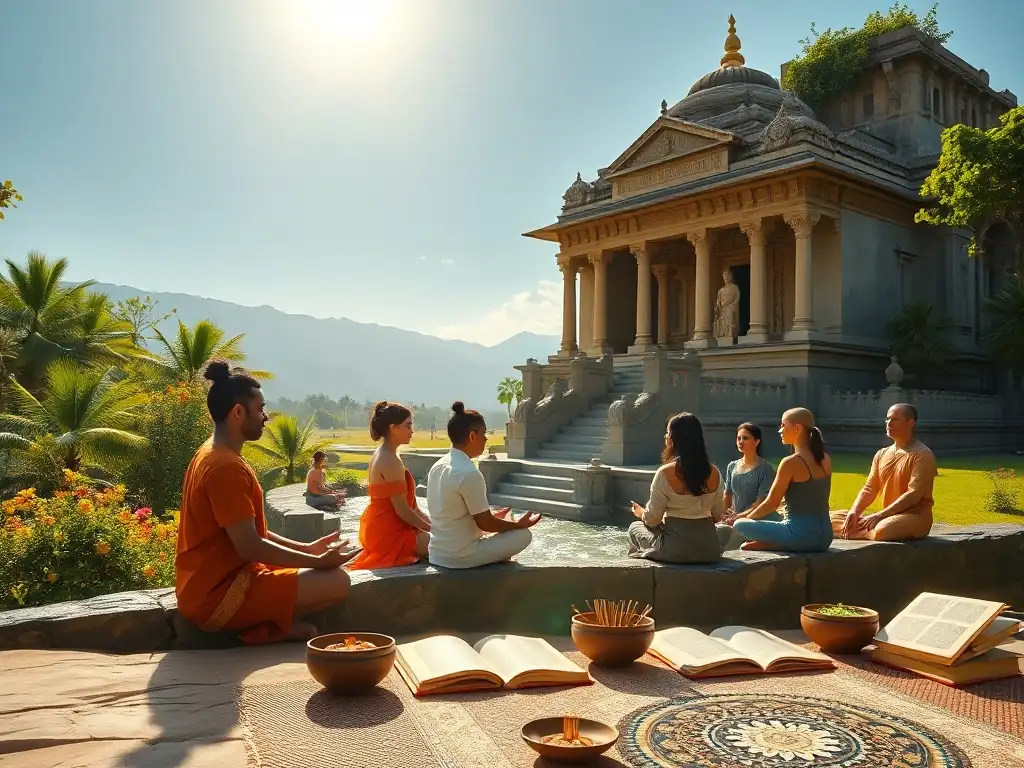
Welcome to Ancient India History, where we embark on an enthralling journey through the rich tapestry of ancient Indian civilizations! Here, we delve into the mystical practices that flourished across the subcontinent and explore how these fascinating traditions not only shaped the spiritual landscape of India but also influenced neighboring regions. In our featured article, "The Exchange of Mystical Practices Between Ancient India and Neighboring Regions," you'll uncover the profound connections that transcended borders and time.
Prepare to be captivated as we unravel the secrets of ancient Indian mystical practices and their enduring legacy. Join us as we explore the vibrant cultural exchanges that have left an indelible mark on history!
Introduction to Ancient Indian Mystical Practices
The exploration of ancient Indian mystical practices reveals a profound tapestry of spiritual beliefs, rituals, and philosophies that have shaped not only the subcontinent but also neighboring regions throughout history. These practices, rooted in the rich cultural milieu of ancient India, encompass a wide range of traditions, including meditation, yoga, and various forms of ritualistic worship.
The significance of these practices lies not just in their intrinsic value but also in their capacity to foster intercultural exchanges that influenced the development of spiritual ideologies in adjacent civilizations. By examining the historical context and the evolution of these mystical traditions, we gain insight into how ancient Indian mystical practices have transcended geographical boundaries and enriched the spiritual landscape of neighboring cultures.
Definition of Mystical Practices in Ancient India
In the context of ancient India, mystical practices can be defined as a collection of spiritual activities aimed at achieving profound experiences and insights that transcend ordinary consciousness. These practices include:
- Meditation: Techniques for calming the mind and attaining deeper states of awareness.
- Yoga: A disciplined practice integrating physical postures, breath control, and ethical principles to harmonize body, mind, and spirit.
- Rituals: Ceremonial acts performed to invoke divine presence or achieve specific spiritual goals.
- Philosophical Inquiry: Exploration of metaphysical concepts and the nature of reality, often found in texts like the Upanishads.
These practices not only served individual spiritual growth but also played a pivotal role in communal and societal cohesion.
Overview of Key Mystical Traditions
Ancient Indian mystical practices can be categorized into several key traditions, each with unique philosophies and methodologies:
- Hindu Mysticism: Focuses on the realization of the self (Atman) and its unity with the divine (Brahman), prominently articulated in the Upanishads.
- Buddhist Mysticism: Emphasizes mindfulness and the cessation of suffering through practices like meditation and ethical living, aiming for enlightenment (Nirvana).
- Jain Mysticism: Centers on non-violence (Ahimsa) and ascetic practices, aiming for liberation (Moksha) through self-discipline and introspection.
These traditions not only flourished within India but also interacted with various neighboring cultures, leading to a rich exchange of ideas and practices.
Historical Context of Ancient Indian Mysticism
To truly appreciate the depth of ancient Indian mystical practices, it is essential to understand their historical context. This section explores the genesis and evolution of these practices from the earliest civilizations to the philosophical developments that followed.
The Indus Valley Civilization and Early Spiritual Practices
The Indus Valley Civilization (circa 3300–1300 BCE) is one of the earliest examples of urban culture in ancient India, and it laid the groundwork for spiritual practices that would evolve over millennia. Archaeological findings, such as seals depicting figures in meditative postures and possible ritualistic sites, suggest that early inhabitants engaged in practices that hinted at mystical beliefs. The significance of water in their cities, alongside evidence of early forms of worship, points to a nascent spiritual consciousness that valued both nature and the metaphysical.
Evolution of Mystical Practices Through the Vedic Period
With the advent of the Vedic period (circa 1500–500 BCE), mystical practices in ancient India underwent significant transformation. The Vedas, composed during this era, introduce elaborate rituals and chants (mantras) aimed at invoking divine powers. Key developments include:
- The emergence of sacrificial rituals (Yajna) to appease deities.
- The formulation of philosophical hymns that explore the nature of existence and consciousness.
- The beginnings of yogic practices, which were initially tied to ritualistic contexts but gradually began to focus on personal spirituality and self-realization.
This period marked a significant shift towards more structured and codified mystical practices.
The Influence of Upanishadic Thought on Mystical Traditions
The Upanishads, composed later in the Vedic period, represent a pivotal moment in the history of ancient Indian mystical practices. These texts shift the focus from ritualistic worship to philosophical inquiry, emphasizing direct personal experience of the divine. Key concepts introduced in the Upanishads include:
- The idea of Brahman as the ultimate reality.
- The relationship between Atman (self) and Brahman, emphasizing their fundamental unity.
- Practices aimed at achieving self-realization and liberation from the cycle of birth and death (Samsara).
The Upanishadic influence not only enriched Indian spiritual thought but also resonated with neighboring cultures, leading to a cross-pollination of mystical ideas and practices that shaped the spiritual landscape of ancient civilizations.
Neighboring Regions Influenced by Ancient Indian Mystical Practices
Ancient Indian mystical practices have had a profound influence on various neighboring regions, shaping spiritual and philosophical developments across cultures. The interactions between ancient India and its neighbors facilitated a dynamic exchange of ideas, rituals, and beliefs, leading to a rich tapestry of mystical traditions. This cross-pollination can be observed particularly in Persia, Central Asia, and Southeast Asia.
The Impact of Ancient Indian Mysticism on Persia
The ancient Persian civilization, particularly during the Achaemenid Empire (c. 550–330 BCE), was significantly influenced by the mystical traditions of ancient India. One of the most notable exchanges occurred through the spread of Zoroastrianism, which shared thematic elements with Indian philosophies, such as the concepts of dualism and the struggle between good and evil.
Additionally, the Persian texts, including the Avesta, reflect similarities with Vedic literature, particularly in their cosmological themes and the importance of rituals. Scholars suggest that the migration of peoples and trade routes, like the Silk Road, facilitated the transfer of mystical ideas and practices, including astrology and alchemy, which were prominent in both cultures.
The Spread of Mystical Concepts to Central Asia
Central Asia served as a crucial conduit for the exchange of mystical practices between ancient India and neighboring regions. The movement of the Silk Road not only allowed for the trade of goods but also the sharing of spiritual philosophies. Indian mysticism, characterized by meditation and yoga, began to permeate Central Asian cultures, influencing local spiritual practices.
For example, the introduction of Buddhist thought into regions like Bactria and Sogdiana led to the syncretism of Indian and Persian mystical practices, enriching the spiritual landscape. The establishment of monasteries along trade routes facilitated the diffusion of these ideas, which later evolved into unique local interpretations, blending elements from various traditions.
Influence on Southeast Asian Spiritual Traditions
The influence of ancient Indian mystical practices extended to Southeast Asia, particularly through the spread of Hinduism and Buddhism from the 1st century CE onwards. Indian traders, travelers, and religious missionaries played a pivotal role in embedding these mystical practices within Southeast Asian cultures.
In regions like Indonesia and Malaysia, elements of Indian mysticism merged with local beliefs, resulting in a distinctive blend of spirituality. Temples such as Borobudur and Angkor Wat showcase the architectural and artistic expressions influenced by Indian religious practices. The integration of meditation, rituals, and cosmological concepts into local traditions illustrates the extensive reach of ancient Indian mysticism.
The shared mystical practices between ancient India and its neighboring regions reveal a rich interplay of ideas and rituals that shaped spiritual traditions. While some practices retained their unique characteristics, others evolved through synthesis with local beliefs.
Meditation Techniques: Similarities and Differences
Meditation, a cornerstone of ancient Indian mystical practices, found resonance in various neighboring cultures. In India, techniques such as Dhyana (focused meditation) emphasize mindfulness and self-realization. In contrast, Persian practices like Zoroastrian meditation focused on divine communion and ethical reflections.
Similarly, Central Asian practices often incorporated breath control, akin to Pranayama in yoga, yet tended to emphasize communal rather than solitary experiences. Southeast Asian cultures adapted Indian meditation techniques, blending them with indigenous practices that focused on nature and ancestral spirits, thus creating a diverse meditation landscape.
Rituals and Offerings: A Cross-Cultural Comparison
Rituals and offerings are significant components of mystical practices across cultures. In ancient India, rituals often involve elaborate ceremonies aimed at appeasing deities or seeking spiritual enlightenment. These practices influenced Persian rituals, which also featured fire offerings and prayers, highlighting the importance of ritual in both traditions.
In Central Asia, shamanistic rituals began to incorporate elements of Indian offerings, such as the use of incense and sacred symbols, creating a fusion of practices. In Southeast Asia, rituals evolved to include local agricultural ceremonies that invoked both Indian deities and indigenous spirits, showcasing how ancient Indian practices were adapted to fit local contexts.
Philosophical Underpinnings: Shared Beliefs and Divergences
At the core of mystical practices in ancient India and its neighbors lie philosophical underpinnings that both unite and differentiate them. Concepts such as karma, dharma, and moksha from Indian philosophy resonate in various forms in neighboring traditions. For instance, the Persian concept of Asha reflects a similar ethical framework as karma, emphasizing truth and order.
In Central Asia, while Buddhist influences introduced ideas of impermanence and interconnectedness, local beliefs often focused on ancestral worship and nature, showing divergence in application. In Southeast Asia, the synthesis of Hindu and Buddhist philosophies led to the development of unique spiritual systems that retained the essence of ancient Indian thought while also embracing local beliefs. This interplay of shared and divergent philosophical ideas continues to shape the mystical landscapes of these regions today.
Case Studies of Cultural Exchanges
Cultural exchanges between ancient India and its neighboring regions significantly influenced the development and dissemination of mystical practices. Several key interactions illustrate how these practices transcended geographical boundaries, enriching the spiritual landscapes of various cultures. This section explores notable case studies, highlighting the Silk Road, the global spread of yoga, and the adaptation of Indian mysticism in Tibetan Buddhism.
The Silk Road: A Conduit for Mystical Knowledge
The Silk Road, a vast network of trade routes connecting India with Central Asia, China, and beyond, served as a crucial conduit for the exchange of mystical knowledge. Merchants, pilgrims, and travelers traversed these routes, facilitating not just trade in goods but also the sharing of spiritual ideas and practices.
One notable aspect was the transmission of Indian philosophical texts, including the Upanishads and Brahmanical texts, which deeply influenced the spiritual traditions of neighboring cultures. For instance, Buddhism, which originated in India, spread along the Silk Road, leading to the establishment of Buddhist monastic communities that incorporated Indian meditative practices.
Furthermore, the exchange extended to alchemical and astrological knowledge, with Indian practices merging with those of ancient Persia and China. This fusion resulted in a rich tapestry of mystical practices, showcasing how interconnected ancient civilizations were in their quest for spiritual understanding.
The Spread of Yoga: From India to the World
Yoga is one of the most significant ancient Indian mystical practices that has gained international recognition and adaptation. Initially developed as a spiritual discipline aimed at achieving moksha (liberation), yoga encompasses physical postures (asanas), breathing techniques (pranayama), and meditation.
The globalization of yoga began in the late 19th and early 20th centuries when Indian gurus traveled to the West, introducing yoga to a broader audience. Pioneers like Swami Vivekananda and Paramahansa Yogananda emphasized the philosophical dimensions of yoga, attracting interest from spiritual seekers.
Today, various forms of yoga, such as Hatha, Vinyasa, and Ashtanga, are practiced worldwide, often stripped of their original spiritual contexts. This evolution demonstrates how ancient Indian mystical practices have been appropriated and adapted, blending with local customs and philosophies, yet retaining their core essence of promoting holistic well-being.
The Adaptation of Indian Mysticism in Tibetan Buddhism
Tibetan Buddhism stands as a remarkable example of how ancient Indian mystical practices were adapted and integrated into neighboring cultures. Following the arrival of Buddhism in Tibet, Indian scholars and monks played a pivotal role in shaping Tibetan spiritual practices.
Key figures, such as Padmasambhava, known as Guru Rinpoche, were instrumental in introducing Indian texts and practices, including Tantric rituals and meditative techniques. These practices fused with local beliefs, resulting in a unique Tibetan Buddhist tradition that retained the foundational elements of Indian mysticism while also embracing indigenous spiritual concepts.
The rich tapestry of Tibetan Buddhism illustrates how ancient Indian mystical practices can be transformed, emphasizing the dynamic nature of cultural exchanges. This interplay is a testament to the adaptability of spiritual traditions in response to diverse cultural contexts.
Conclusion
Summary of Key Findings on Ancient Indian Mystical Practices
The exploration of ancient Indian mystical practices reveals a profound interconnectedness with neighboring regions. The Silk Road facilitated the exchange of philosophical texts and mystical ideas, while the global spread of yoga exemplifies the adaptation of these practices across cultures. Additionally, the integration of Indian mysticism into Tibetan Buddhism highlights the transformative nature of these exchanges, showcasing how ancient traditions evolve and resonate in varied cultural landscapes.
The Lasting Legacy of Interactions Between Ancient India and Neighboring Cultures
The interactions between ancient India and its neighbors have left a lasting legacy that continues to influence contemporary spiritual practices. The transmission of mystical knowledge not only enriched the spiritual traditions of various cultures but also fostered a sense of shared understanding and interconnectedness. As these ancient practices adapt and evolve, they serve as a reminder of the rich tapestry of human experience, inviting future generations to explore the depths of mystical wisdom and its universal appeal.
References and Further Reading
Exploring the mystical practices of ancient India and their interactions with neighboring civilizations reveals a rich tapestry of cultural exchange. For those interested in delving deeper into this fascinating topic, the following resources provide valuable insights and comprehensive analyses.
Scholarly Articles on Ancient Indian Mysticism
-
“Mystical Practices in Ancient India: A Historical Overview”
This article provides a thorough examination of various mystical traditions in ancient India, including meditation, yoga, and ritualistic practices, and how they influenced neighboring cultures.
-
“The Influence of Vedic Texts on Neighboring Cultures”
A critical analysis of how the Vedic scriptures shaped the mystical practices in regions such as Persia and Central Asia, exploring the cross-cultural exchanges facilitated by trade routes.
-
“Comparative Study of Mysticism in Ancient India and Persia”
This scholarly work compares the mystical elements found in ancient Indian spirituality and Persian practices, highlighting the shared themes and divergent paths of development.
Books on Cultural Exchanges in Ancient History
-
“The Silk Roads: A New History of the World” by Peter Frankopan
This book discusses how the Silk Road served as a conduit for not only trade but also the exchange of mystical ideas and practices between India and its neighbors.
-
“India and the World: A History of Cultural Exchange” by Romila Thapar
Thapar offers an in-depth exploration of how Indian culture, including its mystical practices, influenced and was influenced by other civilizations throughout history.
-
“Yoga and the Path of the Mystic” by Georg Feuerstein
Feuerstein's work delves into the roots of yoga as a mystical practice in ancient India and its spread to other regions, emphasizing cross-cultural interactions.
Documentaries and Resources on Ancient Indian Practices
-
“The Ancient Wisdom of Yoga”
This documentary explores the origins of yoga in ancient India, its philosophical underpinnings, and how it was transmitted to other cultures.
-
“Mystical India: The Spiritual Legacy of the Subcontinent”
A visual journey through ancient Indian mystical practices, this resource highlights key rituals and philosophies that have left a lasting impact on neighboring regions.
-
“The Paths of the Mystic: A Journey Through Ancient Spirituality”
This documentary series focuses on the various mystical traditions that emerged in ancient India and their interactions with adjacent cultures, showcasing the richness of spiritual exchange.
- Introduction to Ancient Indian Mystical Practices
- Historical Context of Ancient Indian Mysticism
- Neighboring Regions Influenced by Ancient Indian Mystical Practices
- Key Mystical Practices Shared Between Ancient India and Neighbors
- Case Studies of Cultural Exchanges
- Conclusion
- References and Further Reading
- What are ancient Indian mystical practices?
- How did ancient Indian mystical practices influence neighboring cultures?
- What role did the Indus Valley civilization play in mystical practices?
- How did the Gupta Empire contribute to mystical practices?
- Are there any modern influences from ancient Indian mystical practices today?
Frequently Asked Questions
What are ancient Indian mystical practices?
Ancient Indian mystical practices encompass a variety of spiritual and philosophical traditions, including yoga, meditation, and rituals that were aimed at achieving higher states of consciousness and enlightenment.
How did ancient Indian mystical practices influence neighboring cultures?
These practices had a profound impact on neighboring regions, leading to the exchange of ideas and traditions that enriched the spiritual landscapes of places like Tibet, China, and Southeast Asia.
What role did the Indus Valley civilization play in mystical practices?
The Indus Valley civilization is believed to have laid the foundational elements of spiritual thought and ritualistic practices, which later evolved into more complex forms during subsequent periods in ancient Indian history.
How did the Gupta Empire contribute to mystical practices?
During the Gupta Empire, there was a notable revival of arts, literature, and philosophy, which included the flourishing of mystical texts and teachings that shaped the spiritual discourse in ancient India.
Are there any modern influences from ancient Indian mystical practices today?
Yes, many modern spiritual movements and wellness practices, such as mindfulness and holistic healing, are deeply rooted in ancient Indian mystical practices, showcasing their lasting impact on contemporary life.
Final Reflection: The Timeless Legacy of Ancient Indian Mystical Practices
The exchange of mystical practices between ancient India and its neighboring regions remains profoundly relevant today, as we seek deeper connections to spirituality and understanding of the self. In a world increasingly dominated by technology and materialism, the wisdom of ancient Indian mystical practices offers a sanctuary for those yearning for inner peace and enlightenment. The intricate tapestry of beliefs and rituals that emerged from this cultural exchange continues to inspire countless individuals on their spiritual journeys.
Cultural and social landscapes have been significantly shaped by these ancient practices, fostering a sense of unity and shared wisdom across borders. The rich traditions of meditation, yoga, and holistic healing not only draw from ancient Indian roots but also resonate with diverse cultures, creating a global dialogue about spirituality and well-being. As noted by the philosopher Alan Watts, The menu is not the meal.
This reminds us that while we may explore various practices, the essence of these teachings transcends mere rituals, inviting us to experience the profound truths they embody.
As we reflect on the lessons embedded in ancient Indian mystical practices, I encourage you to explore how these teachings can enrich your own life. Consider integrating mindfulness, meditation, or yoga into your daily routine, allowing these ancient practices to guide you toward a deeper understanding of yourself and the world around you. Embrace the opportunity to connect with the timeless wisdom that has been passed down through generations, and let it inspire you to cultivate a more meaningful existence.
Unveil the Mysteries of Ancient Wisdom!
Thank you for diving into the fascinating world of mystical practices exchanged between ancient India and its neighbors! By exploring this rich tapestry of tradition and spirituality, you’ve unlocked insights that can deepen your understanding of cultural connections. Now, it’s time to take the next step and engage with this knowledge in meaningful ways.
Here are a few actions you can take to continue your journey:
- Explore further: Delve into related texts or documentaries on the mystical practices of ancient cultures—discover the surprising overlaps and unique traits!
- Share your insights: Discuss your favorite mystical practices with friends or in online forums to spark deeper conversations and insights.
- Join a community: Connect with local or online groups that focus on historical spirituality or cultural exchange; you may uncover valuable knowledge and perspectives!
Which mystical practice intrigues you the most, and in what ways do you think it has influenced contemporary spirituality?