
Architectural Wonders: The Influence of Indian Styles on Southeast Asian Temples


Welcome to Ancient India History, where we invite you to embark on a fascinating journey through the rich tapestry of ancient Indian civilizations. As you delve into our featured article, "Architectural Wonders: The Influence of Indian Styles on Southeast Asian Temples," prepare to uncover the profound impact of Indian architectural brilliance that has shaped the landscapes of Southeast Asia. Discover how the intricate designs and spiritual philosophies of the past continue to resonate in the temples of today. Your exploration of cultural exchanges and influences awaits—let's unlock the secrets of history together!

Introduction to Indian Architectural Influence in Southeast Asia
The architectural influence of ancient India on Southeast Asia is a captivating narrative that illustrates the profound cultural exchanges that occurred through trade, migration, and the spread of religious beliefs. From the majestic temple complexes of Angkor Wat in Cambodia to the exquisite structures of Borobudur in Indonesia, the legacy of Indian architectural styles is evident across the region.
This article delves into the rich tapestry of Indian architectural influence in Southeast Asia, highlighting how these styles not only shaped the physical landscape but also enriched the cultural and spiritual life of the communities that adopted them. By understanding the nuances of this influence, we can appreciate the interconnectedness of civilizations and the enduring impact of Indian architectural traditions.
Overview of Indian Architectural Styles
Indian architecture, with its diverse regional variations, includes several distinct styles that have significantly impacted Southeast Asia. Key features of Indian architectural styles include:
- Stupas and Viharas: These structures served as important religious sites, particularly in Buddhist architecture, and have influenced temple designs in countries like Thailand and Myanmar.
- Hindu Temples: Characterized by intricate carvings, towering spires (shikharas), and elaborate sanctums, these temples inspired the construction of grand structures such as the Prambanan in Indonesia.
- Islamic Influence: Post the arrival of Islam, Indo-Islamic architectural elements blended with local styles, creating unique structures visible in places like Malaysia.
Understanding these architectural components is crucial for recognizing how they were adapted and transformed in Southeast Asia.
Significance of Architectural Exchange in Ancient Times
The exchange of architectural styles between India and Southeast Asia transcended mere aesthetics; it played a vital role in the socio-cultural and religious dynamics of the region. Key aspects include:
- Cultural Integration: The adoption of Indian architectural styles facilitated the integration of Indian culture, language, and traditions into Southeast Asian societies.
- Religious Syncretism: As Buddhism and Hinduism spread, the architectural form became a medium for expressing religious beliefs, fostering a sense of shared identity and community among diverse populations.
This architectural exchange is a testament to the enduring connections forged between ancient Indian civilizations and their Southeast Asian counterparts.
Historical Context of Indian Influence on Southeast Asian Architecture
To fully appreciate the architectural wonders influenced by Indian styles, it is essential to understand the historical context in which these exchanges occurred.
Trade Routes and Cultural Interactions
The establishment of maritime and overland trade routes during ancient times was pivotal in facilitating cultural interactions between India and Southeast Asia. Significant points include:
- Maritime Trade Networks: The Indian Ocean trade routes enabled the exchange of goods, ideas, and architectural knowledge, connecting Indian ports with those in Southeast Asia.
- Cultural Melting Pots: Cities such as Srivijaya and Funan became melting pots of Indian and local cultures, leading to the emergence of hybrid architectural styles.
These trade routes not only enhanced economic ties but also served as conduits for cultural and artistic exchange.
The Role of Religion in Architectural Exchange
Religion served as a crucial catalyst for architectural exchange between Indian and Southeast Asian civilizations. Key points to consider include:
- Spread of Buddhism and Hinduism: The propagation of these religions was often accompanied by the establishment of temples and stupas, which adopted Indian architectural elements.
- Pilgrimage and Artistic Influence: Pilgrimage routes facilitated the movement of artisans and architects, leading to the dissemination of Indian styles and techniques across the region.
The intertwining of religion and architecture highlights how spiritual beliefs influenced the physical landscapes of Southeast Asia, creating enduring monuments that reflect the rich history of cultural exchange.
Key Indian Architectural Features Adopted in Southeast Asia
The architectural influence of Indian styles on Southeast Asia is profound and diverse, manifesting in various forms and techniques that became integral to the region's cultural identity. Several key features from Indian architecture were adopted and adapted by Southeast Asian civilizations, creating a unique blend that reflects both local traditions and Indian influences.
Stupas and Their Significance
Stupas, originally constructed as relic shrines in India, played a pivotal role in the architectural landscape of Southeast Asia. These dome-shaped structures not only served as religious monuments but also symbolized the spiritual journey towards enlightenment. In countries like Thailand and Myanmar, stupas were often adorned with intricate designs and gilded finishes, reflecting local artistic styles while maintaining their core religious significance.
The stupa's architectural form evolved in Southeast Asia, leading to variations like the 'chedi' in Thailand and the 'zedi' in Myanmar. These structures often incorporated local materials and techniques, resulting in a harmonious blend of Indian influence and regional aesthetics. The emphasis on stupas highlights the deep-rooted connection between religion and architecture in these cultures, serving as focal points for worship and community gatherings.
Temple Layouts and Design Principles
The layout and design principles of Indian temples significantly influenced the construction of religious structures across Southeast Asia. Many Southeast Asian temples adopted the cardinal orientation typical of Indian temple architecture, aligning their sanctums to reflect cosmic and celestial significance. The concept of the 'garbhagriha' (sanctum sanctorum) became a central element in these temples, where deities were enshrined, creating a powerful spiritual focal point.
In addition to layout, the use of elevated platforms, or 'jagati,' often derived from Indian architecture, became common in temples across Southeast Asia. This design not only enhanced the aesthetic appeal but also served practical purposes, such as providing flood resistance in low-lying areas. The incorporation of intricate mandapas (pillared halls) and elaborate entrances further demonstrates the blending of Indian architectural wisdom with local building practices.
Use of Intricate Carvings and Iconography
Intricate carvings and rich iconography are hallmarks of Indian architecture that found their way into Southeast Asian temple designs. These carvings often depicted mythological stories, deities, and celestial beings, drawing from the vast repertoire of Hindu and Buddhist iconography. The attention to detail in these sculptures reflects the artisans' skills and the cultural narratives they sought to convey.
In many Southeast Asian temples, such as those in Cambodia and Indonesia, the relief carvings serve not only decorative purposes but also educational ones, narrating tales from sacred texts like the Ramayana and Mahabharata. This storytelling aspect of architecture underscores the role of temples as cultural hubs, where art, religion, and community life intersect.
Prominent Southeast Asian Temples Influenced by Indian Architecture

Southeast Asia is home to numerous temples that showcase the profound influence of Indian architectural styles. These temples not only highlight the cross-cultural exchanges between India and Southeast Asia but also stand as testaments to the region's rich historical tapestry.
Angkor Wat: A Fusion of Indian and Khmer Styles
Angkor Wat, one of the most celebrated temples in the world, exemplifies the fusion of Indian and Khmer architectural styles. Originally built in the early 12th century as a Hindu temple dedicated to the god Vishnu, it later transformed into a Buddhist site. The grand scale of Angkor Wat, with its intricate bas-reliefs and towering spires, draws heavily from Indian temple architecture.
The layout of Angkor Wat mirrors that of classic Indian temples, featuring a central tower symbolizing Mount Meru, the axis of the universe in Hindu cosmology. The temple's extensive carvings depict scenes from Hindu mythology, illustrating the seamless integration of Indian artistic elements with local Khmer traditions.
Borobudur: The Stupa as a Central Element
Borobudur, located in Indonesia, is a monumental example of the stupa's architectural significance in Southeast Asia. Constructed in the 8th and 9th centuries, Borobudur is designed as a massive stupa that represents the Buddhist path to enlightenment. Its layered structure, adorned with hundreds of relief panels and stupas, reflects the architectural principles derived from Indian influences.
The central dome of Borobudur, surrounded by smaller stupas, symbolizes the ultimate goal of spiritual enlightenment. The intricate carvings narrate the life of Buddha and depict various Buddhist teachings, showcasing how Indian architectural styles were adapted to suit local spiritual narratives.
The Prambanan Temple Complex: Hindu Influences in Java
The Prambanan Temple Complex, also in Indonesia, showcases the strong Hindu influences in Javanese architecture. Built in the 9th century, this complex consists of multiple temples dedicated to Hindu deities such as Shiva, Vishnu, and Brahma. The design and layout of Prambanan closely resemble Indian temple architecture, with towering spires and intricately carved facades.
The temple's central structure, dedicated to Shiva, highlights the importance of the 'garbhagriha' and features stunning reliefs that depict scenes from the Ramayana. Prambanan serves as a prime example of how Indian architectural concepts were embraced and transformed within the context of Javanese culture, reflecting a rich tapestry of religious and artistic influences.
Architectural Techniques and Innovations Transferred from India
The exchange of architectural techniques between India and Southeast Asia has played a critical role in shaping the temple structures found in the latter region. As Indian traders, monks, and artists traveled to Southeast Asia, they brought along their sophisticated knowledge of architecture, which was adapted to the local context. This blend of styles created a unique architectural identity that can still be observed today. Key innovations included advanced stone masonry, intricate carvings, and innovative water management systems which were instrumental in constructing durable and aesthetically pleasing temples.
Stone Masonry and Construction Methods
Indian stone masonry techniques significantly influenced the construction practices in Southeast Asia. The use of durable stones, such as sandstone and laterite, was common in Indian architecture and became prevalent in Southeast Asian temples, allowing for the creation of monumental structures that could withstand the test of time.
- Corbelled Arches: Indian artisans introduced corbelled arch techniques which enabled the construction of larger and more stable structures, while enhancing the aesthetic appeal through intricate designs.
- Carving Techniques: The detailed carvings that adorned temples in India inspired Southeast Asian builders, resulting in the development of elaborate relief sculptures depicting deities, mythological stories, and cultural motifs.
These innovations not only improved the structural integrity of buildings but also enriched the artistic expression found in temple architecture across Southeast Asia.
Water Management Systems in Temple Architecture
Water management was a critical aspect of temple architecture in both India and Southeast Asia. The introduction of advanced hydraulic engineering techniques from India facilitated the construction of effective water management systems that played a vital role in temple design.
- Reservoirs and Canals: Indian architectural principles emphasized the importance of water sources for ritualistic and practical purposes. This led to the establishment of elaborate reservoirs and canals in Southeast Asian temple complexes, ensuring a reliable water supply for ceremonies and daily activities.
- Water Features: Temples like Angkor Wat incorporate water features that reflect Indian influences, where water symbolizes purity and serves both aesthetic and functional purposes. The careful planning of these features demonstrates the understanding of landscape architecture rooted in Indian traditions.
These water management innovations not only enhanced the usability of temple spaces but also contributed to the spiritual ambiance of the sacred sites.
Cultural and Religious Implications of Indian Architectural Influence
The architectural influence of Indian styles on Southeast Asian temples extends far beyond structural techniques; it encompasses significant cultural and religious dimensions as well. The adoption of Indian architectural elements facilitated the spread of religious ideologies and fostered cultural exchanges that shaped the identities of various Southeast Asian societies.
The Spread of Hinduism and Buddhism through Architecture
Indian architectural styles served as a medium for the dissemination of Hinduism and Buddhism throughout Southeast Asia. Temples became vital centers for religious practice, education, and community gatherings.
- Sacred Geometry: The design principles rooted in Indian architecture often incorporated sacred geometry, reflecting cosmological beliefs and enhancing the spiritual significance of the structures. This helped integrate Hindu and Buddhist cosmology into the very fabric of temple architecture.
- Iconography and Symbolism: The incorporation of Indian deities and iconography in Southeast Asian temples solidified the connection to Indian religious traditions. Structures like the Borobudur in Indonesia display a fusion of Buddhist themes with Indian stylistic elements, highlighting the architectural dialogue between cultures.
As a result, temples not only served as places of worship but also as symbols of cultural identity and religious devotion across the region.
Integration of Local Elements into Indian-Inspired Structures
While Indian architectural styles had a profound influence on Southeast Asian temples, local adaptations ensured that these structures reflected the unique cultural identities of the respective regions.
- Materials and Techniques: Local materials such as bamboo, wood, and indigenous stone were often used alongside traditional Indian techniques, resulting in a hybrid architecture that was well-suited to the local environment. This adaptation allowed for the creation of structures that were not only aesthetically pleasing but also functional in the context of local climatic conditions.
- Cultural Symbols: Southeast Asian builders infused local symbols and motifs into the design of Indian-inspired temples, showcasing the syncretic nature of the architectural landscape. For instance, the influence of local folklore and spiritual beliefs can be seen in the decorative elements of temples, which often tell stories relevant to the local community.
This integration of local elements with Indian architectural principles enriched the cultural tapestry of Southeast Asia, creating structures that resonate with both Indian heritage and local traditions.
Conclusion: Lasting Legacy of Indian Architectural Influence in Southeast Asia
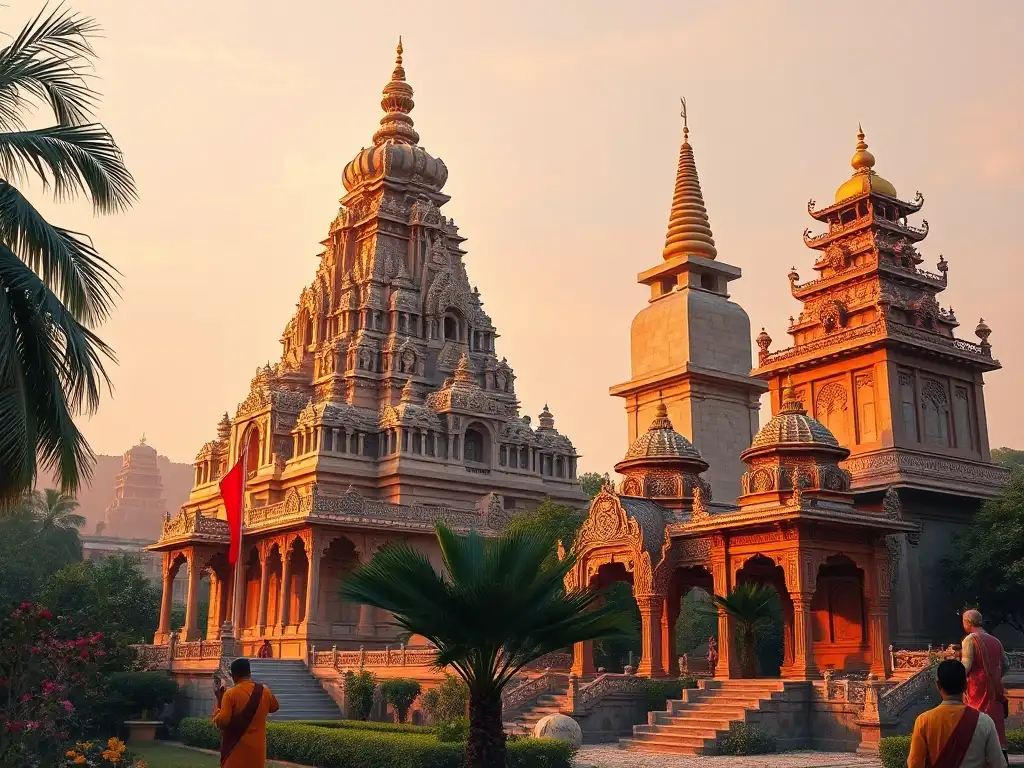
The architectural influence of India on Southeast Asia is a testament to the deep cultural exchanges that have shaped the region's history. From the ornate carvings and intricate sculptures found in the temples of Angkor Wat to the grand stupas of Borobudur, the footprints of Indian architectural principles are evident throughout Southeast Asia. This influence is not merely aesthetic; it reflects the shared religious, philosophical, and social ideologies that were exchanged along trade routes over centuries.
The legacy left by Indian architecture can be seen in the development of local styles that incorporated Indian elements while adapting to indigenous needs and materials. This fusion resulted in unique architectural forms that are celebrated today, showcasing a blend of creativity and cultural dialogue. The temples and monuments stand as enduring symbols of the interconnectedness of these ancient civilizations, illustrating how architecture can serve as a bridge between diverse cultures.
Reflection on the Cultural Exchange and Its Impact
The cultural exchange between India and Southeast Asia facilitated not only architectural innovation but also the spread of religious beliefs, particularly Hinduism and Buddhism. As Indian traders, monks, and artisans traveled to Southeast Asia, they brought with them not just their skills but their ideologies, which took root in local cultures.
This interaction led to the construction of monumental structures that often served as focal points for worship and community gatherings. For instance, the construction of Hindu temples in Cambodia, such as those dedicated to Shiva, reflects the adaptation of Indian rituals to local traditions. Similarly, Buddhist stupas and monasteries in Thailand and Myanmar illustrate how Indian architectural concepts were reshaped to fit local contexts and religious practices.
The impact of this cultural exchange is profound, resulting in a rich tapestry of traditions that continue to influence contemporary Southeast Asian architecture. The blending of Indian and local styles has created a unique heritage that is celebrated in festivals, rituals, and modern architectural practices across the region.
Future Perspectives on Indian Architectural Heritage in Southeast Asia
Looking ahead, the preservation and promotion of Indian architectural heritage in Southeast Asia hold significant potential for enhancing cultural tourism and fostering a deeper understanding of historical ties. As globalization continues to influence architectural practices, there is an opportunity to revive traditional techniques and styles inspired by ancient Indian architecture.
Collaborative projects between India and Southeast Asian countries can further enrich the understanding and appreciation of this shared heritage. Initiatives such as educational exchanges, archaeological studies, and cultural festivals can highlight the importance of Indian architectural influence in shaping Southeast Asian identity.
Moreover, as modern architects draw inspiration from ancient designs, there is a chance to integrate traditional elements with contemporary aesthetics. This fusion can lead to innovative structures that respect historical contexts while meeting modern needs, ensuring that the legacy of Indian architectural influence continues to thrive in Southeast Asia for generations to come.
- Introduction to Indian Architectural Influence in Southeast Asia
- Historical Context of Indian Influence on Southeast Asian Architecture
- Key Indian Architectural Features Adopted in Southeast Asia
- Prominent Southeast Asian Temples Influenced by Indian Architecture
- Architectural Techniques and Innovations Transferred from India
- Cultural and Religious Implications of Indian Architectural Influence
- Conclusion: Lasting Legacy of Indian Architectural Influence in Southeast Asia
- Reflection on the Cultural Exchange and Its Impact
- Future Perspectives on Indian Architectural Heritage in Southeast Asia
- What is the main focus of the article "Architectural Wonders: The Influence of Indian Styles on Southeast Asian Temples"?
- How did ancient Indian architecture influence Southeast Asia?
- What are some examples of Indian architectural elements found in Southeast Asian temples?
- Why is the study of Indian influence on Southeast Asian architecture important?
- How did trade routes contribute to the architectural exchange between India and Southeast Asia?
Frequently Asked Questions
What is the main focus of the article "Architectural Wonders: The Influence of Indian Styles on Southeast Asian Temples"?
The article primarily explores the architectural influence of Indian styles on temple designs throughout Southeast Asia, highlighting how ancient Indian civilizations shaped the region's architectural landscape.
How did ancient Indian architecture influence Southeast Asia?
Ancient Indian architecture influenced Southeast Asia through the spread of Hinduism and Buddhism, which brought Indian design principles, sculptural techniques, and temple layouts to the region, leading to a fusion of styles.
What are some examples of Indian architectural elements found in Southeast Asian temples?
Examples include stupas, shikharas (tower-like structures), and intricate carvings that reflect Indian artistic traditions, prominently seen in temples like Angkor Wat in Cambodia and Borobudur in Indonesia.
Why is the study of Indian influence on Southeast Asian architecture important?
Studying this influence is crucial as it showcases the cultural exchange and historical connections between ancient civilizations, revealing how trade and religion fostered artistic collaboration across regions.
How did trade routes contribute to the architectural exchange between India and Southeast Asia?
Trade routes facilitated the movement of people, ideas, and architectural styles, allowing Indian artisans and builders to share their knowledge with Southeast Asian cultures, which in turn adapted these influences into their own building practices.
Final Reflection: Embracing the Legacy of Indian Architectural Influence in Southeast Asia
The intricate relationship between Indian architectural styles and Southeast Asian temples is not just a historical curiosity; it is a vibrant testament to the enduring impact of cultural exchange. Today, as we navigate an increasingly interconnected world, the architectural wonders of the past remind us of the beauty that arises from collaboration and adaptation. The temples that dot the landscapes of Southeast Asia stand as living monuments to this shared heritage, echoing the profound influence of Indian design and artistry.
The fusion of Indian architectural elements with local traditions has shaped not only the physical structures but also the cultural identities of Southeast Asian nations. This ongoing dialogue between cultures continues to inspire architects, artists, and historians alike, fostering a deeper appreciation for the rich tapestry of influences that define our built environment. Architecture is the art of how to waste space.
– Philip Johnson. This quote resonates deeply as we reflect on how the spaces we inhabit are shaped by the stories and styles that have come before us, urging us to recognize the value in these historical narratives.
As we contemplate the lessons embedded in these architectural wonders, let us take a moment to reflect on our own lives and the influences that shape us. I invite you to explore the diverse cultural legacies that surround you and consider how they inform your identity and values. By embracing the interconnectedness of our histories, we can foster a greater sense of unity and appreciation for the beauty that arises from diversity. As we move forward, let us carry this awareness into the future, honoring the past while building a more inclusive and harmonious world.
Unveil the Beauty of Indian Architectural Influence!
Thank you for diving into the fascinating world of architectural wonders with us! You've explored how Indian styles have shaped the temples of Southeast Asia, and now it’s time to take your newfound knowledge a step further. Let’s celebrate this cultural richness and deepen your engagement with these magnificent legacies.
Here are a few specific actions you can take next:
- Visit a local museum or cultural center that features exhibits on Indian or Southeast Asian architecture to experience the beauty firsthand.
- Share this article with friends or on social media to spark conversations about the influences that shape our architectural heritage.
- Explore online virtual tours of iconic temples and uncover their intricate designs and histories from the comfort of your home.
What architectural wonder has inspired you the most, and how do you see it shaping modern designs? Share your thoughts below!