
How Ancient Indian Mathematicians Revolutionized Numerical Systems

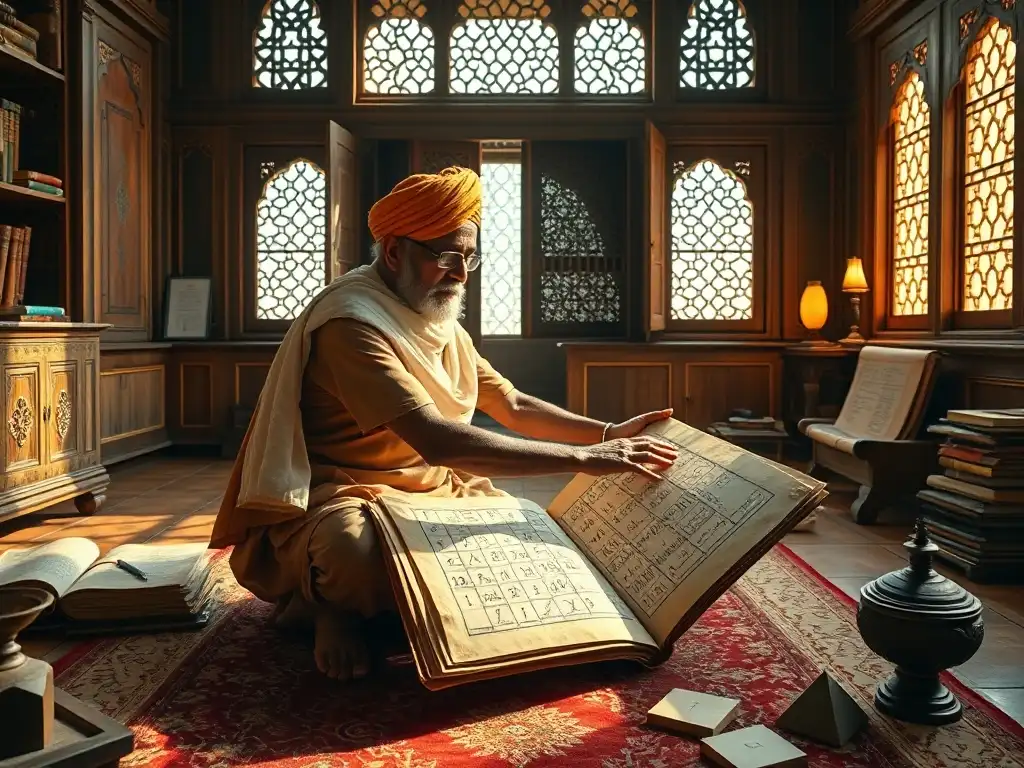
Welcome to Ancient India History, where we embark on a fascinating journey through the rich tapestry of ancient Indian civilizations. In our featured article, "How Ancient Indian Mathematicians Revolutionized Numerical Systems," we delve into the extraordinary contributions of ancient Indian mathematics that laid the groundwork for modern numerical systems. From the ingenious innovations of the Indus Valley to the scholarly advancements of the Gupta Empire, discover how these brilliant minds transformed our understanding of mathematics. Join us as we explore the captivating legacy and profound impact of ancient Indian mathematicians—your adventure into the past begins here!
- Introduction to Ancient Indian Mathematics Contributions
- Historical Context of Mathematics in Ancient India
- Key Contributions of Ancient Indian Mathematicians
- The Role of Ancient Indian Texts in Mathematical Development
- Comparative Analysis of Ancient Indian and Global Mathematical Systems
- Legacy of Ancient Indian Mathematics Contributions
- Conclusion: The Enduring Impact of Ancient Indian Mathematics
-
Frequently Asked Questions
- What are some of the key contributions of ancient Indian mathematics?
- Who were some notable ancient Indian mathematicians?
- How did ancient Indian mathematics influence other cultures?
- What role did the decimal system play in ancient Indian mathematics?
- How is the legacy of ancient Indian mathematicians perceived today?
- Final Reflection: The Enduring Legacy of Ancient Indian Mathematics
- Unleash the Power of Ancient Wisdom!
Introduction to Ancient Indian Mathematics Contributions
Ancient India stands as a beacon of intellectual prowess and innovation, particularly in the realm of mathematics. The contributions of ancient Indian mathematicians are not only remarkable for their depth and complexity but also for their lasting impact on the global understanding of numerical systems.
From the sophisticated calculations of the Indus Valley Civilization to the groundbreaking concepts introduced during the Gupta Empire, ancient Indian mathematics has played a pivotal role in shaping mathematical thought across cultures and eras. This article delves into the extraordinary advancements made by these mathematicians, highlighting the innovative ideas that emerged and their significance in the development of numerical systems.
Overview of Ancient Indian Mathematics
The origins of ancient Indian mathematics can be traced back to the Indus Valley Civilization (c. 2600–1900 BCE), where evidence of early mathematical practices, such as measuring land and building structures, suggests a foundational understanding of geometry and arithmetic. However, it was during the later periods, notably the Vedic period (c. 1500–500 BCE) and the classical period (c. 400–1200 CE), that Indian mathematicians began to make significant strides.
Key figures in this evolution include:
- Aryabhata (476–550 CE): Renowned for his work, the Aryabhatiya, Aryabhata introduced the concept of zero as a numeral and developed methods for solving quadratic equations.
- Brahmagupta (598–668 CE): He formulated rules for arithmetic operations involving zero and negative numbers, which were revolutionary for their time.
- Bhaskara I (c. 600 CE) and Bhaskara II (1114–1185 CE): Both contributed substantially to trigonometry and calculus, with Bhaskara II’s Lilavati being a significant treatise on arithmetic and geometry.
The mathematical innovations of ancient India were characterized by:
- Decimal System: The place-value system, which allowed for efficient computation and representation of large numbers.
- Algebra: Introduction of algebraic concepts, including the formulation of equations and algorithms.
- Trigonometry: Advanced understanding of sine and cosine functions, which laid the groundwork for modern trigonometry.
These contributions not only influenced subsequent generations of mathematicians in India but also had a profound impact on the mathematical traditions of other cultures, particularly during the Islamic Golden Age and the European Renaissance.
Importance of Numerical Systems in Ancient India
The development of numerical systems in ancient India was crucial for several reasons:
- Facilitating Trade and Commerce: The need for accurate calculations in trade led to the refinement of numerical systems, which enabled merchants to conduct transactions with precision.
- Astronomical Calculations: Ancient Indian mathematicians made significant contributions to astronomy, necessitating advanced numerical techniques for calculating planetary positions and eclipses.
- Cultural and Philosophical Significance: Mathematics was deeply intertwined with the philosophical and spiritual beliefs of Indian society, leading to the exploration of concepts such as infinity and the nature of numbers.
The mathematical contributions of ancient Indian civilizations laid the groundwork for contemporary numerical systems and continue to resonate in today's mathematical practices. Understanding these contributions not only honors the legacy of these ancient scholars but also enriches our appreciation for the evolution of mathematics as a whole.
Historical Context of Mathematics in Ancient India

India's rich mathematical heritage is deeply intertwined with its historical context, reflecting the complexities of its ancient civilizations. The mathematical developments in ancient India can be traced back to the Indus Valley Civilization (circa 3300–1300 BCE), where early forms of counting and measurement emerged. Archaeological findings, such as weights and measures, suggest that the inhabitants had an understanding of basic arithmetic and geometry.
As we move forward in time, the Vedic period (circa 1500–500 BCE) marks a significant evolution in mathematical thought. The Vedas, particularly the Shulba Sutras, provide insights into geometric constructions necessary for rituals and altars, indicating an early use of algebraic techniques and geometric principles. The Shulba Sutras, in particular, contain rules and procedures for constructing altars, showcasing the application of mathematics in religious practices.
The subsequent era of the Maurya Empire (circa 322–185 BCE) and the Gupta Empire (circa 320–550 CE) saw a further flourishing of mathematical ideas. The Gupta period is often referred to as the "Golden Age of India," during which mathematicians like Aryabhata and Brahmagupta made groundbreaking contributions. This era laid the foundational concepts that would shape not only Indian mathematics but also influence mathematical thought worldwide.
The Evolution of Mathematical Thought in Ancient India
The evolution of mathematical thought in ancient India can be categorized into several key phases:
- Early Counting Systems:
- The use of tally marks and simple counting techniques reflects the initial stages of numerical understanding.
- Evidence from the Indus Valley Civilization, such as the discovery of counting boards, indicates that early Indians were engaged in trade and required a reliable system for tracking transactions.
- Vedic Mathematics:
- The introduction of Vedic mathematics marked a pivotal point in mathematical evolution. The Shulba Sutras introduced geometric principles used for constructing altars, emphasizing the importance of mathematics in religious and cultural practices.
- Techniques for calculating areas and volumes were documented, showcasing an understanding of spatial relationships.
- Classical Period:
- The Gupta period heralded significant advancements, with mathematicians like Aryabhata developing concepts of zero and place value, which are critical to modern arithmetic.
- Aryabhata's work, particularly the "Aryabhatiya," introduced sine functions and methods for solving quadratic equations, reflecting a sophisticated understanding of trigonometry.
- Brahmagupta's Contributions:
- Brahmagupta's seminal text, the "Brahmasphutasiddhanta," further advanced algebraic concepts, including rules for handling negative numbers and zero. His insights into solving quadratic equations laid the groundwork for future mathematical explorations.
- Influence on Global Mathematics:
- The mathematical treatises developed during these periods were not isolated; they influenced scholars and mathematicians in other cultures, particularly during the spread of trade and the exchange of ideas along the Silk Road.
Influence of Ancient Indian Civilization on Mathematics
Ancient Indian civilization significantly influenced mathematical thought, both within its borders and beyond. Key aspects of this influence include:
- Cultural Integration of Mathematics:
- Mathematics was deeply embedded in various aspects of life, including astronomy, architecture, and art. The need for precise calculations in agriculture and trade further propelled mathematical advancements.
- Establishment of Mathematical Texts:
- The compilation of texts such as the "Aryabhatiya" and the "Brahmasphutasiddhanta" created a foundation for mathematical study and education. These texts were crucial in disseminating mathematical knowledge across regions.
- Trade and Cultural Exchanges:
- The flourishing trade networks during ancient times facilitated the exchange of ideas, leading to the spread of Indian mathematical concepts to the Middle East and beyond. This exchange played a vital role in the development of mathematics in other cultures.
- Legacy of Indian Numerals:
- The numeral system developed in ancient India, particularly the concept of zero and the decimal system, has become the basis for the numeral systems used globally today. This contribution is often regarded as one of the most significant advancements in mathematics.
- Interdisciplinary Connections:
- The interrelation of mathematics with astronomy and astrology in ancient India highlights its importance in various fields. This integration allowed for the development of more complex mathematical theories and practices, influencing later scholars in both India and abroad.
The contributions of ancient Indian mathematicians were not only revolutionary for their time but also laid the groundwork for future mathematical endeavors across the globe. The rich tapestry of mathematical thought in ancient India continues to inspire and inform modern mathematics.
Key Contributions of Ancient Indian Mathematicians
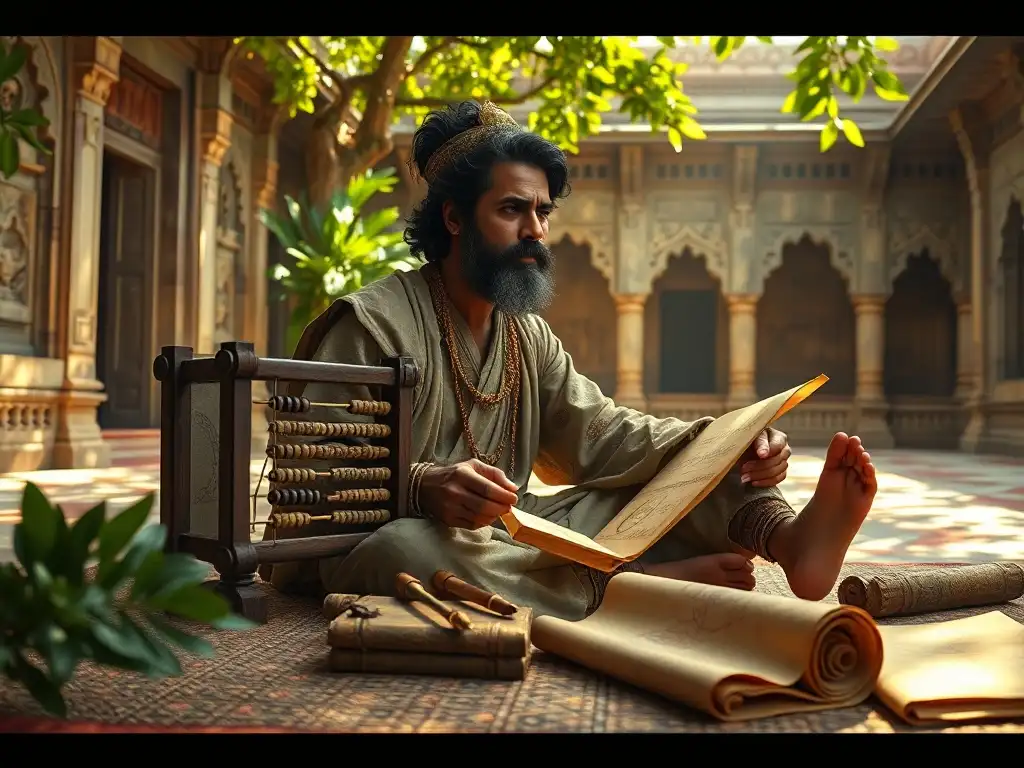
Ancient Indian mathematicians made groundbreaking contributions that significantly advanced the field of mathematics. Their work laid the foundation for modern numerical systems and introduced concepts that are still in use today. Among these mathematicians, Aryabhata and Brahmagupta stand out for their exceptional innovations and ideas.
Aryabhata and His Innovations in Mathematics
Introduction to Aryabhata's Work
Aryabhata, who lived in the 5th century CE, is often regarded as one of the most influential mathematicians and astronomers in ancient India. His seminal work, the Aryabhatiya, covers various topics in mathematics and astronomy, showcasing his profound understanding of numerical systems and their applications. Aryabhata's writings not only contributed to mathematical theory but also influenced the development of astronomy, making him a pivotal figure in both fields.
Key Concepts Introduced by Aryabhata
Aryabhata introduced several key concepts that revolutionized ancient Indian mathematics, including:
- Place Value System: Aryabhata was among the first to recognize and formalize the importance of a positional decimal system. This system allowed for the representation of large numbers and complex calculations with ease.
- Approximation of Pi (π): He calculated the value of π to an impressive accuracy, stating it as 3.1416, which contributed significantly to the field of geometry.
- Trigonometric Functions: Aryabhata made significant advancements in trigonometry by introducing sine (known as ardha-jya) and cosine functions, which laid the groundwork for future developments in this area.
- Algebraic Methods: He also explored solutions to algebraic equations, emphasizing systematic approaches to problem-solving that were ahead of his time.
Aryabhata's work paved the way for subsequent mathematicians and established a strong mathematical tradition in India that influenced the world.
Brahmagupta and the Concept of Zero
The Significance of Zero in Ancient Indian Mathematics
Brahmagupta, who lived in the 7th century CE, is renowned for formalizing the concept of zero in mathematics, a groundbreaking advancement that transformed mathematical thought. His work, Brahmasphutasiddhanta, specifically addresses the properties of zero and its operational rules.
The introduction of zero as a number, rather than merely a placeholder, enabled mathematicians to perform calculations more efficiently. It facilitated the development of the decimal system, allowing for more complex arithmetic and algebraic operations. This concept was pivotal, not only in India but also in the growth of mathematics globally.
Brahmagupta's Rules for Arithmetic
Brahmagupta established several key rules for arithmetic involving zero, which can be summarized as follows:
- Addition and Subtraction:
- Any number plus zero equals the number itself.
- Any number minus zero equals the number itself.
- Multiplication:
- Any number multiplied by zero equals zero.
- Division:
- Zero divided by any non-zero number equals zero.
- Division of zero by zero is indeterminate.
These rules provided a framework for understanding and utilizing zero in calculations, contributing to the functionality of mathematical systems and influencing future generations of mathematicians. Brahmagupta's insights on zero remain fundamental in mathematics today, showcasing the profound impact of ancient Indian mathematics contributions.
Bhaskara II and Advanced Mathematical Techniques
Bhaskara II, also known as Bhaskara Acharya, lived during the 12th century CE and is hailed as one of the most prominent mathematicians in ancient India. His major work, Lilavati, serves as a comprehensive text on arithmetic and mathematics, combining poetic verses with practical examples. This innovative approach made mathematics accessible and engaging, fostering a deeper understanding among students and scholars alike.
One of Bhaskara's most significant contributions was his exploration of advanced mathematical techniques, particularly in the realm of number theory and algebra. He introduced concepts such as the cyclic method for solving equations and provided systematic ways to handle quadratic equations. His work also included solutions for indeterminate equations, which paved the way for future developments in algebra.
In addition to algebra, Bhaskara made remarkable strides in calculus, predating the European calculus by several centuries. He formulated the concept of derivatives and provided rules for computing them, demonstrating an understanding of instantaneous rates of change. His work on the "Jya" (sine) and "Koti-jya" (cosine) functions was groundbreaking, contributing to trigonometric calculations and their applications in astronomy and other sciences.
Through Bhaskara II's innovative techniques and comprehensive texts, he not only advanced mathematical thought in his time but also laid a foundation for future mathematicians, both in India and beyond.
Contributions to Algebra and Calculus
Bhaskara II's contributions to algebra were profound and extensive. He categorized various types of equations and provided methods for their resolution. In his seminal work Vijaganita, he systematically addressed problems involving both linear and quadratic equations. Bhaskara's approach emphasized the importance of practical applications, which made his methods particularly useful for traders, astronomers, and architects of his time.
His exploration of algebra extended to the use of symbols, which was relatively uncommon in ancient mathematical texts. He utilized a form of symbolic notation that allowed for concise representation of mathematical ideas, thus enhancing clarity and comprehension. This innovation was a significant leap towards the symbolic algebra we recognize today.
In the realm of calculus, Bhaskara's concepts were revolutionary. He introduced the notion of "infinitesimals," which are quantities that are infinitely small and played a crucial role in his calculations. He also formulated rules for finding the area under curves, a precursor to integral calculus, and discussed methods to approximate results using iterative processes. These contributions were not only influential within India but also laid groundwork that would later be recognized in the development of calculus in the West.
Bhaskara's Influence on Later Mathematical Thought
The influence of Bhaskara II on later mathematical thought cannot be overstated. His texts, especially Lilavati and Vijaganita, became essential references for subsequent generations of mathematicians and scholars in India and across the globe. His innovative methods and clear explanations inspired a multitude of mathematicians, fostering an environment where mathematical inquiry could thrive.
Bhaskara's impact extended beyond India; his works were translated into Arabic and later into Latin, making their way into the curriculum of medieval European education. Scholars such as Fibonacci and other mathematicians in the West drew upon his ideas, which contributed to the gradual development of modern mathematics in Europe.
Additionally, Bhaskara's emphasis on practical applications in mathematics influenced various fields, including astronomy, engineering, and architecture. His techniques for solving complex problems laid the groundwork for future mathematical advancements, ensuring that his legacy endured long after his time. The rich tapestry of ancient Indian mathematics, woven through the contributions of Bhaskara II, continues to resonate in contemporary mathematical thought.
The Role of Ancient Indian Texts in Mathematical Development

Ancient Indian mathematics is deeply intertwined with a rich textual tradition that played a crucial role in its development. The mathematical concepts and techniques that emerged in India were often documented in texts that not only served as educational resources but also reflected the cultural and philosophical contexts of their time. These texts provided foundational knowledge that influenced not only Indian scholars but also mathematicians across the globe.
The key contributions of ancient Indian mathematics can be traced back to several notable texts, each of which introduced innovative ideas and methodologies. Here, we will explore three significant works that highlight the mathematical prowess of ancient Indian scholars.
The Sulbasutras: Geometry and Measurement
The Sulbasutras, dating back to around 800 BCE, are among the earliest texts that illustrate the application of geometry in ancient India. These texts were primarily concerned with the construction of altars for Vedic rituals and provided detailed instructions on the geometric principles required for accurate measurements.
- Geometric Principles: The Sulbasutras contain rules for constructing various geometric shapes, including squares, rectangles, and circles, using only a compass and a straightedge. They introduced concepts such as the Pythagorean theorem, although this mathematical principle had emerged independently in India prior to its recognition in the West.
- Practical Applications: The instructions for altar construction involved precise measurements that required an understanding of ratios and proportions, demonstrating that ancient Indian mathematicians were not only theorists but also practitioners who applied their knowledge to real-world scenarios.
- Influence on Later Mathematics: The geometric principles outlined in the Sulbasutras laid the groundwork for future mathematical exploration in India and beyond, influencing subsequent generations of mathematicians and architects.
The Aryabhatiya: Foundations of Indian Mathematical Knowledge
Composed by the renowned mathematician Aryabhata in the 5th century CE, the Aryabhatiya is a seminal work that covers a wide range of mathematical topics, including arithmetic, algebra, and astronomy. Aryabhata's approach to mathematics was groundbreaking and set the stage for future developments in the field.
- Innovative Techniques: Aryabhata introduced the concept of zero as a numeral, which was revolutionary. His work on positional notation allowed for more complex calculations and served as a precursor to the modern decimal system.
- Astronomical Calculations: The Aryabhatiya also provides algorithms for calculating the positions of celestial bodies, showcasing the integration of mathematics with astronomy. Aryabhata's use of sine functions in trigonometric calculations is particularly noteworthy, as it laid the foundation for future advancements in mathematical astronomy.
- Legacy: Aryabhata’s influence extended beyond India; his works were translated into Arabic and Latin, spreading knowledge of Indian mathematical innovations to the Islamic world and later to Europe, significantly contributing to the global mathematical canon.
The Brahmasphutasiddhanta: Bridging Mathematics and Astronomy
Written by Brahmagupta in the 7th century CE, the Brahmasphutasiddhanta is another pivotal text that made significant contributions to both mathematics and astronomy. This work is notable for its systematic treatment of arithmetic and algebra, as well as its practical applications.
- Algebraic Concepts: Brahmagupta’s insights into the rules for arithmetic operations with negative numbers and the formulation of equations were groundbreaking. He established methods for solving quadratic equations, which were a significant advancement in algebra.
- Astronomy and Calendar Calculations: The Brahmasphutasiddhanta also addressed astronomical phenomena, offering formulas for calculating eclipses and planetary motions. Brahmagupta emphasized the importance of accurate timekeeping and calendrical calculations, reflecting the intertwined nature of mathematics and astronomy in ancient Indian culture.
- Cultural Impact: This text had far-reaching implications, influencing not only Indian mathematicians but also scholars in the Islamic world, where it was studied and translated, further disseminating the knowledge contained within its pages.
Ancient Indian mathematics contributions, as evidenced by these foundational texts, underscore the sophisticated understanding of numerical systems and their applications in various fields. The works of mathematicians like Aryabhata and Brahmagupta not only enriched the mathematical landscape of their time but also laid the groundwork for future developments in mathematics and science globally.
Comparative Analysis of Ancient Indian and Global Mathematical Systems

Similarities and Differences in Numerical Representations
Ancient Indian mathematics contributions are characterized by unique numerical representations that set them apart from global mathematical systems. One of the most significant areas of comparison is the use of symbols and notations. For instance, the Brahmi script, one of the earliest writing systems used in ancient India, included symbols to represent numbers. This differs from the Babylonian system, which employed a base-60 system using only a few symbols.
- Base Systems:
- Ancient India: Adoption of a base-10 (decimal) system.
- Babylon: Utilized a base-60 (sexagesimal) system.
- Notation:
- Indian Mathematicians: Developed positional notation, which allowed for the representation of large numbers efficiently.
- Chinese System: Used counting rods and a more cumbersome method for large numbers.
India's unique approach to zero (0) as a placeholder was revolutionary. It allowed for the representation of numbers such as 10, 20, and 100, demonstrating a sophisticated understanding of place value. In contrast, many ancient civilizations lacked a true zero, which limited their numerical systems.
The Impact of Ancient Indian Mathematics on Global Systems
The contributions of ancient Indian mathematics have had a profound and lasting impact on global mathematical systems. Indian mathematicians like Aryabhata and Brahmagupta introduced concepts that were later adopted and adapted by various cultures, including the Islamic Golden Age.
- Introduction of Zero:
- The concept of zero as a number, rather than just a placeholder, was a groundbreaking idea that transformed mathematics. This idea facilitated calculations and complex problem-solving, influencing systems worldwide.
- Decimal System:
- The decimal system we use today owes much to ancient Indian mathematicians. The positional value system, which indicates the value of a digit based on its position, was essential for simplifying calculations and recording large numbers.
- Algebraic Contributions:
- Ancient Indian mathematicians made significant advances in algebra, with texts such as Brahmagupta’s Brahmasphutasiddhanta detailing rules for solving quadratic equations. These principles were later incorporated into Islamic mathematics and European mathematical thought.
- Trigonometry:
- Indian mathematicians developed sine and cosine functions, laying the groundwork for modern trigonometry. The Siddhanta texts provided detailed methods for calculating these functions, which were later adopted by Persian and Arab mathematicians.
The influence of ancient Indian mathematics is evident in various fields today, from computer science to engineering. The methods, concepts, and symbols introduced by these early mathematicians continue to shape the way we understand and apply mathematics globally.
The comparative analysis of ancient Indian and global mathematical systems demonstrates both unique features and significant influences, highlighting the essential role that ancient Indian mathematics contributions have played in the evolution of mathematical thought.
Legacy of Ancient Indian Mathematics Contributions

The legacy of ancient Indian mathematics contributions is profound and far-reaching, laying the groundwork for various mathematical concepts that we still utilize today. Ancient Indian mathematicians were pioneers in the development of numerical systems, algebra, and geometry, significantly influencing the course of mathematical thought worldwide.
Influence on Modern Mathematics
Ancient Indian mathematicians made several groundbreaking contributions that have shaped modern mathematics. One of the most significant advancements was the introduction of the decimal system, which included the concept of zero as a number. This innovation allowed for easier computation and the representation of large numbers, revolutionizing how mathematics was approached.
- The Concept of Zero:
- The numeral 0 was first documented in Bakhshali Manuscript (circa 200 CE), where it was used as a placeholder.
- The treatise "Aryabhatiya" by Aryabhata (476–550 CE) cemented the use of zero in calculations, making it a foundational element in arithmetic and algebra.
- Numerical Notation:
- The Indian numeral system, which includes the digits 1-9 and the concept of zero, formed the basis for the Hindu-Arabic numeral system. This system is now the most widely used numerical notation globally.
- The transition of this system to the Arab world, particularly through scholars like Al-Khwarizmi, led to its adoption in Europe during the Middle Ages.
- Algebra and Algorithms:
- The work of ancient mathematicians like Brahmagupta (598–668 CE) and Bhaskara II (1114–1185 CE) in algebra laid the groundwork for modern algebraic methods. Brahmagupta’s rules for solving quadratic equations are still taught today.
- The term "algorithm" is derived from the Latinization of Al-Khwarizmi's name, highlighting the importance of Indian contributions to algorithmic processes.
Recognition of Ancient Indian Mathematicians in Contemporary Education
In recent years, there has been a growing recognition of the contributions of ancient Indian mathematicians in contemporary education. This acknowledgment reflects the importance of integrating historical perspectives into modern mathematics curricula.
- Curricular Integration:
- Educational institutions are increasingly including modules on ancient Indian mathematics within their mathematics programs to highlight its relevance and historical significance.
- Textbooks are being revised to incorporate examples and problems based on ancient Indian mathematical texts, showcasing techniques that predate Western mathematical developments.
- Research and Publications:
- Scholars are actively researching ancient Indian mathematics, publishing papers that explore its principles and methodologies. This academic interest has led to a resurgence in the study of ancient texts, such as the "Siddhanta Shiromani" by Bhaskara II.
- Conferences and seminars focused on the history of mathematics often feature discussions on the contributions of ancient Indian mathematicians, fostering a deeper appreciation among students and educators alike.
- Global Recognition:
- International conferences on the history of mathematics increasingly highlight the achievements of ancient Indian mathematicians, ensuring that their contributions are recognized on a global scale.
- The promotion of ancient Indian mathematics in STEM (Science, Technology, Engineering, and Mathematics) fields helps inspire future generations to appreciate and build upon this rich legacy.
The enduring impact of ancient Indian mathematics contributions continues to influence both the historical narrative of mathematics and its practical application in modern education. By recognizing and studying these contributions, we not only honor the legacy of these early mathematicians but also enrich our understanding of mathematics as a universal language.
Conclusion: The Enduring Impact of Ancient Indian Mathematics
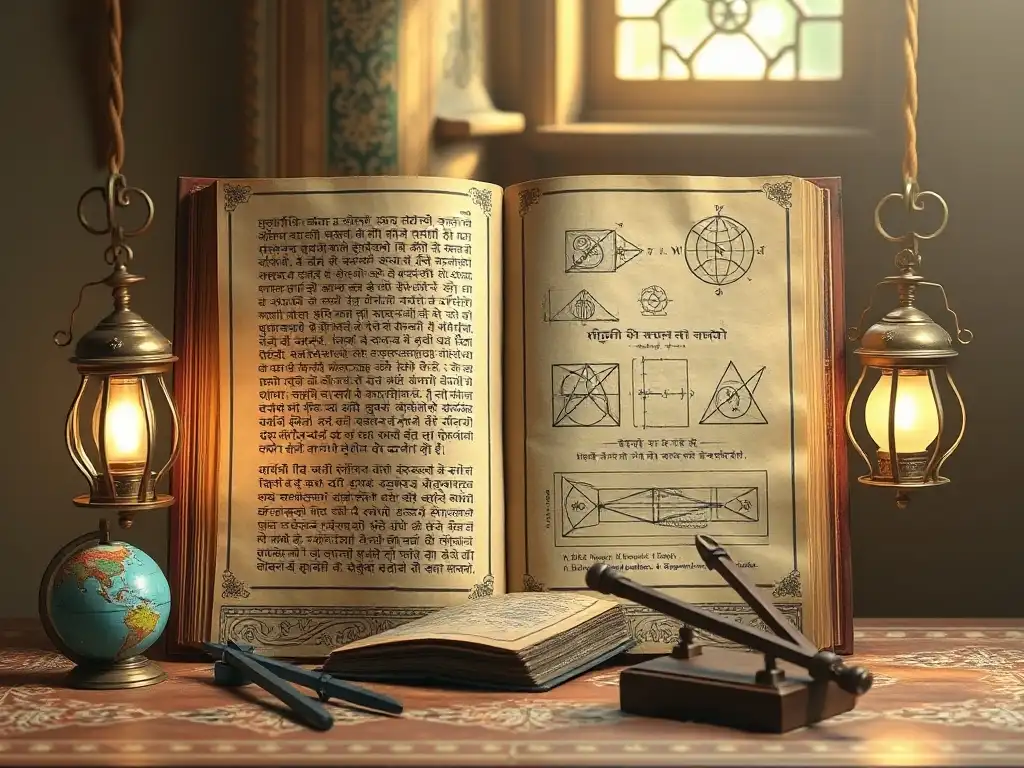
The contributions of ancient Indian mathematicians have profoundly shaped the development of numerical systems, significantly influencing mathematics as we know it today. Their innovative approaches and discoveries laid the groundwork for many concepts that remain integral to modern mathematics. From the sophisticated numeral system to advanced concepts of zero and infinity, the legacy of ancient Indian mathematics continues to resonate in contemporary mathematical practices.
Summary of Key Contributions
Ancient Indian mathematicians made several pivotal contributions that revolutionized numerical systems. Here are some of the most significant:
- The Concept of Zero: The introduction of zero as a numeral was a groundbreaking advancement. It facilitated complex calculations and the development of the decimal system, allowing for more efficient computation.
- Decimal System: The positional decimal system, which uses ten symbols (0-9) to represent numbers, was refined in ancient India. This system is the foundation of modern arithmetic and significantly simplified calculations.
- Aryabhata’s Innovations: Aryabhata, one of the most prominent mathematicians, introduced methods for calculating square roots and cube roots. His work in trigonometry and algebra paved the way for future mathematical exploration.
- Brahmagupta’s Rules: Brahmagupta formulated rules for arithmetic operations involving positive and negative numbers, laying the groundwork for algebra. His contributions provided a comprehensive understanding of mathematics.
- Mathematical Astronomy: Ancient Indian scholars such as Varahamihira combined mathematics with astronomy, creating accurate astronomical calculations that were crucial for navigation and timekeeping.
These contributions collectively illustrate the sophistication of ancient Indian mathematics, demonstrating a deep understanding of numerical systems and their applications.
Final Thoughts on the Importance of Ancient Indian Numerical Systems
The numerical systems developed by ancient Indian mathematicians not only revolutionized mathematics in their time but also had a lasting global impact. The principles and concepts they established have transcended cultural and temporal boundaries, influencing mathematicians and scholars across various civilizations.
By studying ancient Indian mathematics contributions, we gain insight into the intellectual achievements of these civilizations and their profound understanding of mathematics. This historical perspective enriches our appreciation for the evolution of numerical systems and underscores the importance of preserving and exploring these ancient legacies.
The enduring impact of ancient Indian mathematics is a testament to the ingenuity and creativity of its scholars. Their work continues to inspire and inform the mathematical advancements of today, reminding us of the rich tapestry of knowledge woven through history.
Frequently Asked Questions
What are some of the key contributions of ancient Indian mathematics?
Ancient Indian mathematicians made significant contributions such as the concept of zero, the decimal system, and advancements in geometry and algebra which laid the foundation for modern mathematics.
Who were some notable ancient Indian mathematicians?
Aryabhata, Brahmagupta, and Bhaskara II are among the most notable figures. They made groundbreaking discoveries that influenced not only India but also the world.
How did ancient Indian mathematics influence other cultures?
The numerical systems developed in ancient India were transmitted to the Islamic world and subsequently to Europe, profoundly impacting mathematics and science globally.
What role did the decimal system play in ancient Indian mathematics?
The decimal system allowed for more efficient calculations and representations of numbers. It was crucial in the development of both arithmetic and algebra in ancient Indian mathematics.
How is the legacy of ancient Indian mathematicians perceived today?
The legacy of ancient Indian mathematicians is recognized as foundational, with their innovations continuing to be taught and celebrated in modern mathematics and education systems worldwide.
Final Reflection: The Enduring Legacy of Ancient Indian Mathematics
The contributions of ancient Indian mathematicians have not only shaped the foundations of numerical systems but continue to resonate in our modern world. From the invention of zero to the development of sophisticated algorithms, these innovations have transformed how we understand and interact with numbers today. The brilliance of these mathematicians is a testament to the power of human intellect and creativity, reminding us that the seeds of knowledge sown in the past can yield profound impacts in the present and future.
The influence of ancient Indian mathematics extends far beyond textbooks; it has woven itself into the very fabric of our daily lives. The principles established by these early thinkers have paved the way for advancements in science, technology, and engineering, demonstrating the interconnectedness of knowledge across cultures and eras. As the renowned mathematician Carl Friedrich Gauss once said, "> Mathematics is the queen of the sciences." This statement underscores the vital role that mathematical discoveries play in driving progress and innovation, a legacy that traces back to the remarkable contributions of ancient Indian scholars.
As we reflect on the rich history of ancient Indian mathematics, let us take a moment to appreciate the profound impact these contributions have on our lives today. I invite you to explore how these mathematical principles can inspire your own journey of learning and discovery.
Whether you're a student, a professional, or simply a curious mind, embracing the lessons of the past can empower you to think critically and creatively in the face of modern challenges. Together, let us honor the legacy of these ancient mathematicians by continuing to push the boundaries of knowledge and innovation in our own lives.
Unleash the Power of Ancient Wisdom!
Thank you for diving into the incredible world of ancient Indian mathematicians with us! You've explored how their innovative contributions transformed numerical systems and paved the way for modern mathematics. Now, it’s time to take that inspiration and make it your own!
Consider the following actions to deepen your connection with this rich history:
- Explore more about ancient Indian mathematical concepts—start by researching influential figures like Aryabhata or Brahmagupta.
- Share your newfound knowledge! Engage in discussions about these ancient techniques with friends or join local math clubs to encourage a broader appreciation of historical mathematics.
- Challenge yourself by solving a contemporary math problem using techniques inspired by ancient methods—you might be surprised at how different perspectives can enhance your problem-solving skills!
What will you discover when you apply ancient wisdom to today’s challenges? We would love to hear your insights in the comments!