
Exploring the Historical Context of the Vedas: A Timeline of Ancient India


Welcome to Ancient India History, where we embark on a fascinating journey through the intricate tapestry of ancient Indian civilizations. In our featured article, "Exploring the Historical Context of the Vedas: A Timeline of Ancient India," we invite you to delve into the profound depths of a time when spirituality and culture flourished, shaping the very foundations of society. Discover how the timeline of ancient Indian history unfolds the stories of remarkable achievements, diverse beliefs, and the timeless wisdom that continues to influence us today. Ready to unlock the secrets of the past? Let’s explore together!
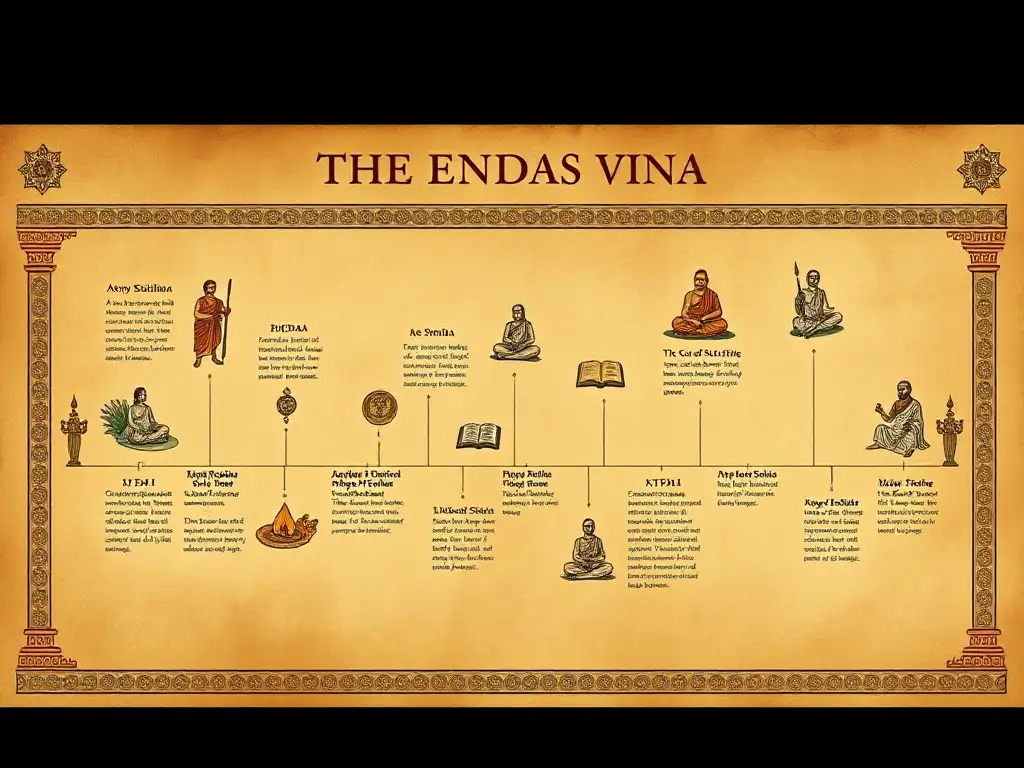
Introduction to the Vedas and Ancient Indian History
The Vedas, often regarded as the oldest sacred texts of Hinduism, serve as a crucial lens through which we can explore the rich tapestry of ancient Indian history. These texts not only encapsulate spiritual knowledge but also reflect the socio-political and cultural dynamics of their time.
Understanding this historical context is vital for grasping the evolution of Indian civilization from its earliest roots to the flourishing of the Gupta Empire. This article aims to provide a comprehensive timeline of ancient Indian history, highlighting key events and developments that intertwine with the Vedic tradition, ultimately unveiling the profound contributions of ancient Indian civilizations.
Overview of the Vedas as Sacred Texts
The Vedas are a collection of four principal texts: the Rigveda, Samaveda, Yajurveda, and Atharvaveda. Each of these texts encompasses a variety of hymns, rituals, and philosophical discourses, providing insights into the spiritual and daily lives of the people during the Vedic period (approximately 1500–500 BCE). The Rigveda, for instance, is the oldest and consists of hymns dedicated to various deities, while the Atharvaveda includes spells and incantations that reflect the practical needs of society.
These texts are written in an ancient form of Sanskrit and are considered the earliest records of Indo-Aryan culture, laying the groundwork for later philosophical and religious thought. They also document the evolution of language, literature, and cultural practices in ancient India.
Importance of Vedas in the Historical Context of Ancient India
The Vedas are not merely religious scriptures; they are historical documents that provide a glimpse into the life, values, and belief systems of ancient Indian society. They reveal the transition from nomadic pastoralism to settled agricultural communities and highlight the emergence of complex social hierarchies. The rituals and sacrifices described in the Vedas reflect the spiritual practices and cosmology of the time, showcasing the significance of religion in unifying diverse communities under shared cultural norms.
Moreover, the Vedas played a pivotal role in shaping the social structure, particularly through the delineation of the four varnas (social classes) that would influence Indian society for centuries. Through a detailed timeline of ancient Indian history, we can better understand how the Vedic texts informed the development of subsequent Indian philosophies, religions, and cultural identities.
Purpose of the Timeline of Ancient Indian History
The purpose of this timeline is to elucidate the interconnectedness of historical events and cultural developments from the dawn of civilization in the Indus Valley to the height of the Gupta Empire, all while emphasizing the significance of the Vedas as a foundational element in this narrative. By mapping out these historical milestones, we aim to provide readers with a clearer understanding of how ancient Indian history unfolded and the pivotal role that Vedic literature played in shaping the trajectory of Indian civilization.
The Indus Valley Civilization: Foundations of Ancient Indian Culture
The Indus Valley Civilization, flourishing between approximately 3300 and 1300 BCE, represents one of the earliest urban cultures in the world, characterized by advanced city planning, architecture, and social organization.
Key Features of the Indus Valley Civilization
- Urban Planning: The cities of Harappa and Mohenjo-Daro are exemplars of sophisticated urban design, featuring grid patterns, drainage systems, and standardized fired-brick construction.
- Trade and Economy: The civilization engaged in extensive trade networks, connecting with regions as far away as Mesopotamia, and relied on agriculture supplemented by trade in goods such as cotton, pottery, and metals.
- Art and Culture: The Indus people produced intricate seals, pottery, and figurines that reflect a rich cultural life and possibly religious beliefs, although much remains unknown due to the undeciphered script.
The Role of Religion and Early Texts
While the religious practices of the Indus Valley civilization are not well documented, archaeological findings suggest a pantheon of deities and ritualistic practices. The presence of figures resembling proto-Shiva and the worship of fertility symbols indicate a complex belief system that may have influenced Vedic thought. Early texts, possibly composed during or after this civilization, likely drew upon these indigenous beliefs, paving the way for the Vedic tradition.
Transition to Vedic Culture
The decline of the Indus Valley Civilization around 1300 BCE led to significant migrations and cultural transformations. The arrival of Indo-Aryan peoples brought new languages, customs, and religious practices that coalesced into what we recognize as Vedic culture. This transition marks a pivotal moment in ancient Indian history, setting the stage for the rich tapestry of beliefs, social structures, and philosophical thought that would emerge in the subsequent centuries.
By examining these foundational elements within the broader timeline of ancient Indian history, we can appreciate the complex interplay between the past and the textual narratives that have shaped the cultural and spiritual landscape of India.
The Vedic Period: Birth of the Vedas
The Vedic Period marks a significant era in ancient Indian history, characterized by the emergence of the Vedas, which are among the oldest sacred texts in Hinduism. This period, spanning roughly from 1500 to 500 BCE, laid the foundation for various aspects of Indian culture, religion, and philosophy. It is during this time that the complex societal structures, rituals, and beliefs began to crystallize, influencing generations to come.
Overview of the Vedic Period (1500-500 BCE)
The Vedic Period is traditionally divided into two main segments: the Early Vedic Period (1500-1000 BCE) and the Later Vedic Period (1000-500 BCE). This era was marked by the migration of Indo-Aryan tribes into the Indian subcontinent, bringing with them their language, culture, and religious practices. The society during this time was predominantly pastoral, gradually transitioning to settled agriculture, which significantly influenced social organization and economic structures.
The Vedic texts, composed in Sanskrit, encapsulate a range of hymns, rituals, and philosophical discourses. The period also witnessed the establishment of the four varnas (social classes) and various rites of passage that defined personal and communal life. The oral tradition of preserving these texts was crucial, as it allowed for the transmission of knowledge across generations, maintaining the continuity of Vedic wisdom.
Composition of the Vedas: Rigveda, Samaveda, Yajurveda, and Atharvaveda
The Vedas consist of four primary texts:
- Rigveda: The oldest of the Vedas, composed around 1500 BCE, contains hymns dedicated to various deities, reflecting the early Indo-Aryan society's spiritual beliefs and practices. It consists of 1,028 hymns organized into ten books (mandalas).
- Samaveda: Emerging around 1200 BCE, the Samaveda is primarily a collection of melodies and chants derived from the Rigveda, intended for musical expression during rituals. It emphasizes the importance of sound and intonation in Vedic worship.
- Yajurveda: This Veda, compiled around 1200-800 BCE, serves as a manual for rituals, providing detailed instructions on the performance of sacrifices (yajnas). It consists of two main branches: the Shukla (white) Yajurveda and the Krishna (black) Yajurveda.
- Atharvaveda: Composed last, around 1000-600 BCE, the Atharvaveda includes hymns, spells, and incantations that reflect the everyday life of the people, addressing health, prosperity, and domestic concerns, thus offering insights into the socio-cultural milieu of the time.
Socio-Political Context during the Vedic Period
During the Vedic Period, the socio-political landscape was intricately linked to the religious practices outlined in the Vedas. The early society was characterized by tribal affiliations led by chieftains known as "rajas." These leaders played a vital role in both governance and religious rituals.
The emergence of agrarian communities led to the gradual establishment of settlements, which fostered trade and communication among different tribes. The structure of society evolved, giving rise to a more stratified system, further solidified by the development of the varna system, which categorized people into four main groups: Brahmins (priests), Kshatriyas (warriors), Vaishyas (traders), and Shudras (laborers).
This period also experienced conflicts and alliances among tribes, often revolving around resource control and territorial expansion. The rituals and sacrifices prescribed in the Vedas were not only religious observances but also served to consolidate power and legitimize authority, reflecting the interplay between religion and politics.
Timeline of Ancient Indian History: Key Events and Milestones
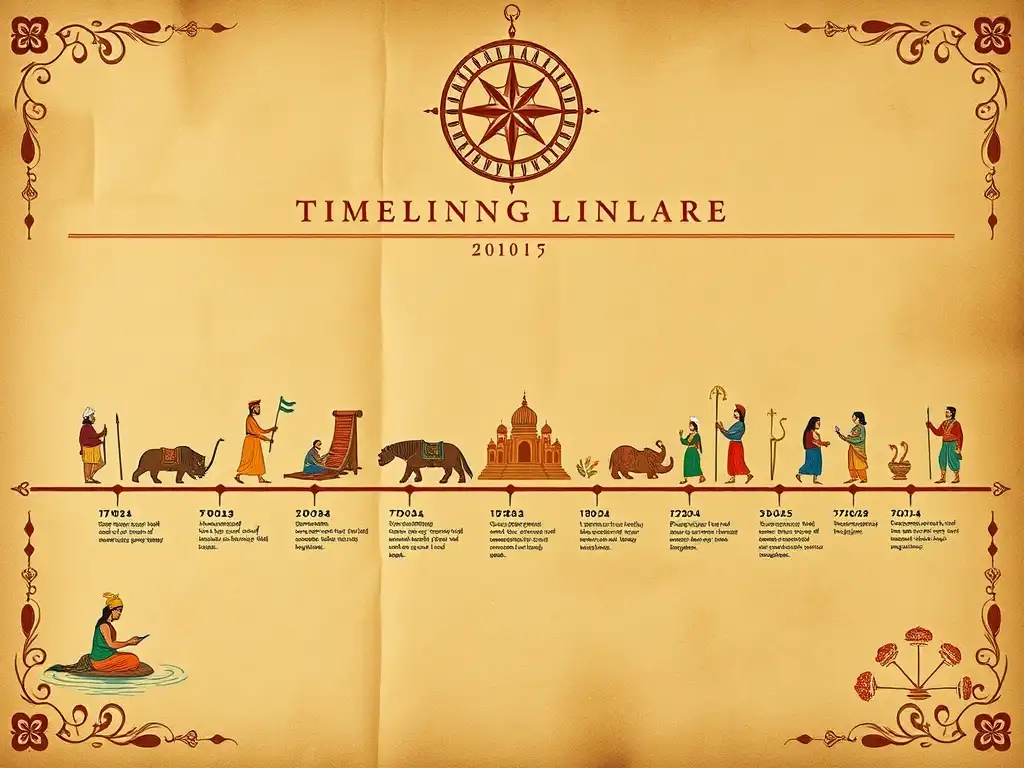
The timeline of ancient Indian history, particularly during the Vedic Period, encompasses several crucial developments that shaped the cultural and religious landscape of the region. Understanding this timeline helps contextualize the significance of the Vedas in Indian history.
Early Vedic Period (1500-1000 BCE)
- Migration of Indo-Aryans: The arrival of the Indo-Aryans marks the beginning of the Early Vedic Period, bringing with them their linguistic and cultural practices.
- Composition of the Rigveda: The earliest hymns of the Rigveda were composed during this time, illustrating the spiritual landscape of early Vedic society.
- Nomadic Pastoralism: The society was primarily pastoral, with a focus on cattle rearing, reflecting the economic and social structures of the time.
Later Vedic Period (1000-500 BCE)
- Agricultural Settlements: Transition from nomadic life to agrarian communities led to the establishment of more permanent settlements.
- Development of the Yajurveda and Samaveda: Ritualistic texts were compiled, indicating a growing complexity in religious practices.
- Formation of Social Classes: The varna system became more defined, with the emergence of distinct roles within society.
Major Developments in Religion and Society
- Ritual Practices: The detailed rituals and sacrifices outlined in the Vedas became central to societal functions, influencing both daily life and governance.
- Philosophical Thought: The seeds of philosophical inquiry began to emerge, paving the way for later texts like the Upanishads, which explored metaphysical concepts and the nature of existence.
Influence of the Vedas on Subsequent Indian Philosophies
The Vedas served as the foundational texts for subsequent religious and philosophical developments in ancient India. Their themes of cosmology, ethics, and spirituality deeply influenced later philosophies, including those found in the Upanishads and the various schools of Hindu thought.
The emphasis on ritual, sacrifice, and the relationship between the individual and the cosmos in Vedic literature set the stage for a rich tapestry of philosophical discourse that would evolve over centuries. The Vedas not only shaped the spiritual practices of ancient India but also established a cultural legacy that continues to resonate in contemporary Hinduism and Indian philosophy.
The Upanishads: Philosophical Evolution in Ancient India
The Upanishads mark a significant transformation in the intellectual landscape of ancient India, representing a shift from ritualistic practices to profound philosophical inquiry. These texts, composed between 800 and 400 BCE, delve into metaphysical questions about existence, consciousness, and the nature of the ultimate reality, Brahman. Unlike their Vedic predecessors, which primarily focused on rituals and hymns, the Upanishads encourage introspection and the pursuit of knowledge beyond mere ceremonial observance.
This philosophical evolution is characterized by a movement towards understanding the self (Atman) and its relationship with the universe. The Upanishads assert that the ultimate goal of human life is to realize this connection, leading to liberation (Moksha). This transformative thinking laid the groundwork for various schools of Indian philosophy, influencing not only Hinduism but also Buddhism and Jainism, which emerged in the same historical context.
Transition from Vedic Rituals to Philosophical Thought
The transition from Vedic rituals to philosophical thought in the Upanishads can be seen as a response to the limitations of ritualism. While the Vedas emphasized elaborate sacrifices and priestly authority, the Upanishads questioned the efficacy of such practices in achieving spiritual fulfillment. Philosophers began to emphasize the importance of personal experience and inner knowledge, advocating for meditation and self-exploration as pathways to understanding the divine.
This shift reflects broader socio-political changes in ancient India, where urbanization and the rise of new social classes challenged the traditional Brahminical authority. The growing importance of individual spiritual experience led to a democratization of spiritual knowledge, making it accessible to a wider audience.
Historical Context of the Upanishads within the Timeline
The Upanishads emerged during a period of significant change in ancient Indian society, known as the "second urbanization" (circa 800-300 BCE). This era saw the rise of new political entities, the Mahajanapadas, and increasing trade and cultural exchanges. It was a time when philosophical schools began to flourish alongside the traditional Vedic practices.
Historically, the composition of the Upanishads coincided with the decline of the Vedic ritualism that had dominated earlier periods. The emergence of new sects and the questioning of established norms created a fertile ground for philosophical discourse. The Upanishads, therefore, serve as a crucial link in the timeline of ancient Indian history, marking the transition from the early Vedic period to the classical age of Indian philosophy.
Impact of Upanishads on Indian Spirituality and Culture
The impact of the Upanishads on Indian spirituality and culture is profound and enduring. They introduced essential concepts such as karma, dharma, and reincarnation, which have become foundational to Hindu belief systems. The emphasis on meditation and self-realization has also influenced various spiritual practices in India, leading to the development of schools of thought that prioritize inner experience.
Moreover, the Upanishads inspired a rich tradition of commentary and interpretation, influencing not only religious thought but also art, literature, and music in India. Their philosophical inquiries laid the groundwork for later texts, including the Bhagavad Gita and various Puranas, which further explore the themes introduced in the Upanishads. The continued relevance of these texts in contemporary spiritual practices highlights their lasting legacy in Indian culture.
The Rise of the Mahajanapadas: Political Landscape of Ancient India
The Mahajanapadas, or "great kingdoms," represent a pivotal development in the political landscape of ancient India from approximately 600 to 300 BCE. This period saw the emergence of 16 prominent kingdoms and republics, each characterized by distinct political structures, cultural practices, and economic systems. The rise of these states marked a significant shift from tribal and clan-based societies to more complex forms of governance.
The Mahajanapadas were often engaged in territorial expansion, trade, and diplomacy, leading to a vibrant political atmosphere that fostered interaction among diverse communities. This era set the stage for the emergence of powerful dynasties, including the Magadha, which would later play a crucial role in the establishment of the Maurya Empire.
Overview of the Mahajanapadas (600-300 BCE)
The Mahajanapadas included notable kingdoms such as Magadha, Kosala, and Vatsa, each contributing to the political and cultural dynamism of the time. These states were characterized by varying forms of governance, including monarchies and republican systems, reflecting the diversity of political thought in ancient India.
During this period, urban centers began to flourish, leading to increased trade and commerce. The cities became hubs of cultural exchange, where ideas, philosophies, and religious practices converged. The emergence of a more stratified society also paved the way for the development of new social classes, including merchants and artisans, who played a significant role in the economy.
The Role of the Vedas in Governance and Society
The Vedas, as the foundational texts of Hinduism, played a crucial role in shaping the governance and social structures of the Mahajanapadas. They provided the ideological basis for kingship, emphasizing the divine right of rulers and the importance of dharma (righteousness) in governance. The concept of Varna, or social hierarchy, derived from Vedic texts, influenced the organization of society and the roles of different classes.
Rulers often sought the counsel of Brahmins, who were regarded as custodians of Vedic knowledge, to ensure their decisions aligned with religious and ethical principles. This relationship between the political and religious spheres established a framework for governance that blended secular authority with spiritual legitimacy.
Interactions with Other Cultures and Societies
The rise of the Mahajanapadas also coincided with increased interactions with neighboring cultures and societies. The flourishing trade routes facilitated cultural exchanges, introducing new ideas and practices from regions such as Persia, Central Asia, and beyond. These interactions enriched the cultural tapestry of ancient India, influencing art, architecture, and philosophical thought.
Additionally, the presence of foreign traders and travelers contributed to the diffusion of ideas, leading to the cross-pollination of religious beliefs and practices. The Mahajanapadas became a melting pot of cultures, setting the stage for the rich diversity that characterizes ancient Indian civilization. This era not only shaped the political landscape but also laid the groundwork for the later empires that would further unify and enrich the subcontinent.
The Maurya and Gupta Empires: Consolidation of Vedic Thought

The Maurya and Gupta Empires marked significant periods in ancient Indian history where Vedic thought not only flourished but also became deeply integrated into the socio-political fabric of the time. During these empires, the teachings and philosophies embedded in the Vedas were not merely religious texts; they influenced governance, administration, and even cultural practices. The consolidation of Vedic thought during these eras set the stage for the development of Hindu philosophy and traditions that would continue to thrive in subsequent centuries.
Overview of the Maurya Empire (322-185 BCE)
The Maurya Empire, founded by Chandragupta Maurya, emerged as one of the largest and most powerful empires in ancient India. Spanning much of the Indian subcontinent, it was characterized by a centralized government that emphasized the importance of Dharma (moral law) as articulated in the Vedas. Under the reign of Ashoka the Great, the empire witnessed a significant promotion of Buddhist teachings alongside Vedic principles, illustrating a syncretic approach to spirituality. Ashoka's edicts, inscribed on pillars throughout the empire, reflect a commitment to moral governance, which resonated with Vedic ideals of righteousness and duty.
The Maurya Empire's administrative framework was heavily influenced by Vedic texts, particularly in areas concerning law and ethics. The Arthashastra, attributed to Kautilya (Chanakya), served as a key treatise on statecraft, emphasizing the importance of political strategy, economics, and governance grounded in Vedic philosophy. This period solidified the Vedas' role as foundational texts in shaping political ideology and ethical governance.
The Gupta Empire (c. 240-550 CE) and Vedic Revival
The Gupta Empire is often heralded as the Golden Age of India, characterized by remarkable achievements in art, science, and philosophy. This period saw a resurgence of interest in Vedic traditions, particularly as Hinduism began to re-establish itself as a dominant cultural force in contrast to Buddhism, which had previously gained prominence. The Guptas patronized scholars who wrote extensively on Vedic texts, furthering the interpretation and application of these scriptures in daily life.
During this era, there was a notable revival of rituals and ceremonies rooted in Vedic practices, which reinforced the social order and the caste system. The compilation of texts such as the Puranas and the Smritis drew heavily from Vedic teachings, ensuring their relevance in contemporary society. The Gupta period also saw the emergence of influential philosophers like Adi Shankaracharya, who synthesized various schools of thought, including Vedic philosophy, into a cohesive understanding of Hinduism.
Contributions of the Vedas to Governance and Administration
The Vedas contributed significantly to the development of governance and administration in ancient India. Their teachings on Dharma provided a moral compass for rulers, guiding their decisions and policies. The concept of Raja Dharma, which emphasizes the king's duty to uphold justice and righteousness, can be traced back to Vedic principles. This framework was crucial for maintaining social order and legitimacy in the eyes of the populace.
Moreover, Vedic texts informed various administrative practices, including taxation, law enforcement, and public welfare. The emphasis on ethical leadership and the welfare of subjects became a hallmark of governance during the Maurya and Gupta Empires. As such, the Vedas were not just religious scriptures but foundational texts that influenced the governance structures of ancient Indian civilizations, echoing through centuries of Indian history.
Conclusion: The Enduring Legacy of the Vedas in Ancient Indian History
The legacy of the Vedas is profound and enduring, leaving an indelible mark on the cultural, spiritual, and political landscape of ancient India. Their teachings continue to resonate in modern Hinduism and Indian culture, illustrating the timeless relevance of these ancient scriptures.
Summary of Key Points in the Timeline of Ancient Indian History
- Maurya Empire (322-185 BCE): Centralization of governance influenced by Vedic principles; Ashoka's promotion of Dharma.
- Gupta Empire (c. 240-550 CE): Revival of Vedic traditions; synthesis of philosophy; patronage of scholars.
- Governance and Administration: Vedic teachings deeply impacted ethical governance and administrative practices.
The Vedas' Influence on Modern Hinduism and Indian Culture
The Vedas continue to exert a significant influence on modern Hinduism, serving as a touchstone for religious practices, rituals, and philosophical inquiry. The principles of Dharma articulated in the Vedas underpin contemporary understandings of morality and duty in Indian society. Festivals, ceremonies, and daily rituals often draw from Vedic texts, ensuring their continued relevance in the lives of millions. Furthermore, the philosophical inquiries initiated by Vedic thought have inspired countless schools of thought and spiritual movements, contributing to the rich tapestry of Indian culture.
Final Thoughts on the Importance of Understanding Ancient Indian History
Understanding ancient Indian history, particularly the role of the Vedas, is essential for grasping the complexities of Indian civilization. The Vedas not only provide insight into the spiritual and philosophical dimensions of ancient India but also highlight the interplay between religion, governance, and culture. By studying this timeline of ancient Indian history, we gain a deeper appreciation for the continuity of traditions that have shaped the identity of India and its people over millennia. The Vedas stand as a testament to the enduring legacy of ancient Indian thought and its relevance in the modern world.
References and Further Reading
When delving into the rich tapestry of Vedic literature and ancient Indian history, a range of references and resources can provide deeper insights. The following sections outline suggested books and online resources that are invaluable for anyone interested in exploring the timeline of ancient Indian history, particularly through the lens of the Vedas.
Suggested Books on Vedic Literature and Ancient Indian History
-
"The Vedas: An Introduction to Hinduism's Sacred Texts" by Roshen Dalal
This book offers an accessible overview of the Vedas, discussing their origins, significance, and influence on Hindu philosophy and culture. Dalal's engaging writing style makes complex concepts easier to understand for beginners.
-
"The Rig Veda: A Historical Analysis" by R. L. Kashyap
A thorough examination of the Rig Veda, this book places the text in its historical context, exploring its themes, structure, and the insights it provides into early Indo-Aryan society.
-
"A History of Ancient India: From 6500 BC to 1200 AD" by Upinder Singh
Singh's comprehensive work covers a vast timeline, integrating archaeological findings with literary sources, including Vedic texts, to paint a broad picture of ancient Indian civilizations.
-
"The Upanishads: A New Translation" by Vernon Katz and Renuka Singh
This translation provides modern readers with an accessible version of the Upanishads, emphasizing philosophical ideas that emerged from Vedic thought and their relevance today.
-
"Hinduism: A Very Short Introduction" by Kim Knott
This concise book gives readers a quick overview of Hindu beliefs, practices, and texts, including the Vedas, situating them within the broader context of Indian history.
Online Resources for Exploring Ancient Indian Civilizations
-
Digital Library of India
An extensive collection of texts, including translations and interpretations of Vedic literature, this digital library provides free access to various resources for research and study.
-
Internet Archive
This resource hosts a plethora of books and documents on ancient Indian history and Vedic texts, offering a rich repository for those interested in historical research.
-
The Vedic Society
An online platform dedicated to the study of Vedic literature, offering articles, discussions, and resources for both scholars and enthusiasts interested in Vedic studies.
-
Ancient History Encyclopedia
This website provides articles and timelines that cover significant events and figures in ancient Indian history, including the Vedic period, making it a valuable resource for contextual understanding.
-
YouTube Channels like 'The History of India' and 'Indian History and Culture'
These channels feature documentaries, talks, and lectures that cover various aspects of ancient Indian civilizations, including discussions on the Vedas and their historical significance.
These references and resources will equip readers with a foundational understanding of the Vedas and the broader historical context of ancient India, enriching their exploration of this fascinating subject.
- Introduction to the Vedas and Ancient Indian History
- The Indus Valley Civilization: Foundations of Ancient Indian Culture
- The Vedic Period: Birth of the Vedas
- Timeline of Ancient Indian History: Key Events and Milestones
- The Upanishads: Philosophical Evolution in Ancient India
- The Rise of the Mahajanapadas: Political Landscape of Ancient India
- The Maurya and Gupta Empires: Consolidation of Vedic Thought
- Conclusion: The Enduring Legacy of the Vedas in Ancient Indian History
- References and Further Reading
- What are the Vedas, and why are they significant in ancient Indian history?
- How does the timeline of ancient Indian history start?
- What role did the Gupta Empire play in ancient Indian history?
- How did the Vedic period influence later Indian society?
- What are the main contributions of ancient Indian civilizations?
Frequently Asked Questions
What are the Vedas, and why are they significant in ancient Indian history?
The Vedas are the oldest sacred texts of Hinduism, composed in Sanskrit. They are significant because they provide insights into the religious, cultural, and social practices of ancient Indian civilizations.
How does the timeline of ancient Indian history start?
The timeline of ancient Indian history begins with the Indus Valley Civilization, which flourished around 2500 BCE. This period laid the foundation for many aspects of later Indian culture.
What role did the Gupta Empire play in ancient Indian history?
The Gupta Empire, often referred to as the Golden Age of India, marked a period of significant advancements in art, science, and literature from the 4th to the 6th century CE, enhancing India's cultural legacy.
How did the Vedic period influence later Indian society?
The Vedic period established many social structures, rituals, and philosophical concepts that deeply influenced subsequent Indian cultures, including the development of castes and religious practices.
What are the main contributions of ancient Indian civilizations?
Ancient Indian civilizations contributed significantly to mathematics, astronomy, medicine, and philosophy. Their innovations, such as the concept of zero and advancements in Ayurveda, have had a lasting impact on the world.
Final Reflection: Understanding Our Roots Through the Timeline of Ancient Indian History
The exploration of the Vedas and their historical context reveals the profound significance of ancient Indian texts in shaping not only the cultural but also the spiritual landscape of India today. As we navigate through the complexities of modern society, the wisdom encapsulated in these ancient scriptures continues to resonate, reminding us of the enduring legacy of our past. The timeline of ancient Indian history is not merely a sequence of events; it serves as a foundation upon which contemporary values and beliefs are built.
The influence of the Vedas extends far beyond their historical origins, intertwining with the very fabric of Indian culture and identity. From philosophy to art, the teachings of the Vedas have inspired generations, fostering a deep connection to heritage and tradition. As Mahatma Gandhi once said, A nation's greatness is measured by how it treats its weakest members.
This sentiment underscores the importance of understanding our historical context, as it shapes our ethical frameworks and societal norms, encouraging us to reflect on our responsibilities towards one another.
As we conclude this exploration, I invite you to reflect on how the lessons from ancient Indian history can inform your own life and values. Consider how the principles derived from the Vedas can guide your actions and decisions in a rapidly changing world. Let us embrace the wisdom of our ancestors, allowing it to illuminate our paths and inspire us to contribute positively to our communities. In doing so, we honor the rich tapestry of our history while forging a brighter future.
Unveil the Wisdom of the Vedas!
Thank you for diving into the rich tapestry of ancient India with us! You've gained insights into the profound history and cultural significance of the Vedas. Now, it's time to take those insights and transform them into action!
Here’s how you can continue your journey:
- Explore Further: Delve deeper into the ancient texts by accessing various online libraries and resources. Discover translations and interpretations that will enhance your understanding.
- Join the Conversation: Share your thoughts on social media using the hashtag #VedaWisdom. Engage with fellow history enthusiasts and expand your network!
- Create a Timeline: Design a visual timeline of the Vedas and their historical context. This unique approach will help solidify your knowledge while sparking creativity.
What aspect of Vedic history intrigues you the most, and how do you plan to explore it further?