
A Journey into the Mind: How Sankhya Defines Consciousness and Perception

Welcome to Ancient India History, where we invite you on a fascinating journey through the rich tapestry of ancient civilizations that shaped the Indian subcontinent. In our featured article, “A Journey into the Mind: How Sankhya Defines Consciousness and Perception,” we delve into the profound insights of Sankhya philosophy—a cornerstone of Indian thought that explores the intricate relationship between consciousness and reality. Prepare to expand your understanding as we unravel the complexities of perception and existence in this ancient philosophical framework. Curious to discover how these timeless ideas resonate with modern perspectives? Let’s embark on this intellectual adventure together!
The Sankhya philosophy, one of the six orthodox schools of Indian philosophy, offers profound insights into the nature of consciousness and perception. Rooted in ancient texts, particularly the Samkhya Sutras, this philosophical system seeks to unravel the complexities of existence and the mind. By delineating the duality between consciousness (Purusha) and matter (Prakriti), Sankhya provides a unique framework for understanding how perception influences our experience of reality.
This article embarks on an exploration of Sankhya philosophy, shedding light on its definitions of consciousness and perception, and highlighting its relevance in both ancient and contemporary contexts. Through this journey, we will uncover how Sankhya not only contributes to philosophical discourse but also impacts fields such as psychology and cognitive science, bridging the gap between ancient wisdom and modern inquiry.
The Foundations of Sankhya Philosophy
Sankhya philosophy is characterized by its systematic approach to categorizing reality into distinct elements. At its core, it posits two fundamental principles:
- Purusha (Consciousness): The eternal, unchanging self that perceives and experiences.
- Prakriti (Matter): The dynamic, ever-changing aspect of reality that includes the physical world and mental phenomena.
This dualism is crucial for understanding how consciousness interacts with the material world, influencing perception and cognition.
Consciousness in Sankhya
In Sankhya, consciousness is viewed as the observer, distinct from the objects of perception. The relationship between Purusha and Prakriti is pivotal, as it emphasizes that true knowledge arises when one recognizes the separation between the self and the external world.
Key Concepts of Consciousness in Sankhya:
- Avidya (Ignorance): The misconception that equates the self with the material world, leading to confusion and suffering.
- Viveka (Discrimination): The process of discerning the difference between Purusha and Prakriti, facilitating liberation (moksha).
- Sattva, Rajas, and Tamas: The three gunas (qualities) that describe the nature of Prakriti and influence perception and behavior.
Perception According to Sankhya
Sankhya philosophy provides a comprehensive framework for understanding perception, which is seen as a process involving both external and internal stimuli. The interaction between the senses and the mind plays a crucial role in shaping our experiences.
The Process of Perception:
- Pratyaksha (Direct Perception): Knowledge gained through the senses, which forms the basis of empirical understanding.
- Anumana (Inference): Knowledge derived from reasoning and deduction, expanding our comprehension beyond immediate sensory input.
- Shabda (Testimony): Knowledge acquired through verbal testimony, emphasizing the importance of communication and language in shaping our understanding of reality.
Conclusion: The Relevance of Sankhya Today
The insights derived from Sankhya philosophy remain relevant in contemporary discussions about consciousness and perception. As modern science delves into the nature of the mind, the distinctions made by Sankhya provide a valuable lens through which to examine our understanding of consciousness and its implications for human experience. By bridging ancient wisdom with modern inquiry, Sankhya philosophy continues to inspire and inform our exploration of the mind and its intricate relationship with reality.
- The Foundations of Sankhya Philosophy
- Consciousness in Sankhya
- Perception According to Sankhya
- Conclusion: The Relevance of Sankhya Today
Introduction to Sankhya Philosophy and Consciousness
Sankhya philosophy stands as one of the foundational schools of thought in ancient Indian philosophy, offering profound insights into the nature of reality, consciousness, and perception. Developed around the 1st millennium BCE, this dualistic philosophy systematically categorizes existence into two primary entities: Purusha (consciousness) and Prakriti (matter). The exploration of consciousness within the framework of Sankhya philosophy provides a unique perspective that has influenced numerous other philosophical and spiritual traditions in India.
Understanding how Sankhya defines consciousness and its relation to perception can illuminate the intricate connections between mind, matter, and the self. This section delves into the key tenets of Sankhya philosophy, its significance in the broader context of Indian thought, and the essential concepts that shape our understanding of consciousness and perception.
Overview of Sankhya Philosophy
Sankhya, attributed to the sage Kapila, is characterized by its systematic enumeration of the principles governing existence. The term "Sankhya" itself means "number" or "enumeration," reflecting the philosophy's analytical approach. Central to Sankhya are the following concepts:
- Purusha: The pure consciousness, unchanging and eternal. It is the observer, the witness of experiences, and is distinct from the material world.
- Prakriti: The primal nature or material reality, which is dynamic and constantly changing. It encompasses the three Gunas (qualities) — Sattva (purity), Rajas (activity), and Tamas (inertia) — that shape the physical and mental realms.
- Evolution of the Universe: Sankhya posits that from the interplay of Purusha and Prakriti emerges the manifold universe, including the mind and senses. This transformation is not random but follows a specific order, leading to the emergence of various forms of consciousness.
This philosophical framework encourages a deep inquiry into the nature of self and reality, prompting practitioners to discern between the transient material world and the eternal consciousness.
Importance of Consciousness in Indian Philosophy
Consciousness, or Chit, holds a pivotal role in various Indian philosophical traditions, with Sankhya offering a unique lens through which to examine it. The exploration of consciousness in Sankhya philosophy emphasizes several critical aspects:
- Distinction Between Self and Non-Self: Sankhya teaches that the realization of one's true nature as Purusha leads to liberation (Moksha). This understanding fosters a clear distinction between the self (consciousness) and the non-self (the material world).
- Path to Self-Realization: The process of discerning consciousness from the distractions of Prakriti is essential for attaining self-realization. By understanding the nature of consciousness, individuals can cultivate deeper awareness and ultimately achieve liberation from the cycle of birth and death (Samsara).
- Influence on Other Philosophies: The insights gained from Sankhya have significantly influenced other philosophical systems in India, including Yoga, Vedanta, and Buddhism. The emphasis on consciousness and self-awareness resonates throughout these traditions, reflecting a shared inquiry into the nature of existence.
Sankhya philosophy introduces several key concepts that enhance our understanding of consciousness and perception:
- Cognition (Pramana): The means of acquiring knowledge, which includes direct perception, inference, and testimony. Sankhya recognizes that perception is not merely passive observation; it involves active interpretation by the conscious mind.
- The Three Gunas: The interplay of Sattva, Rajas, and Tamas influences our perceptions and mental states. For instance:
- Sattva enhances clarity and understanding, promoting a higher state of consciousness.
- Rajas leads to activity and restlessness, often clouding perception.
- Tamas results in inertia and ignorance, hindering awareness.
- The Role of Buddhi: In Sankhya, Buddhi (intellect) plays a crucial role in processing sensory information. It is through Buddhi that individuals discern and interpret their experiences, shaping their perception of reality.
- Maya and Avidya: These concepts refer to the illusion of the material world and ignorance of one's true nature. Sankhya philosophy advocates overcoming Maya and Avidya to achieve clarity regarding the self as Purusha.
By integrating these concepts, Sankhya philosophy provides a comprehensive framework to understand consciousness and perception, encouraging individuals to embark on a journey toward self-awareness and enlightenment.
Historical Context of Sankhya Philosophy
Origins of the Sankhya School of Thought
The Sankhya school of thought is one of the oldest philosophical systems in India, traditionally attributed to the sage Kapila. Its foundational texts, particularly the Sankhya Sutras, are believed to date back to around the 6th century BCE. This system is unique in its dualistic approach to understanding the nature of reality, positing a distinction between Purusha (consciousness) and Prakriti (matter).
The term "Sankhya" itself translates to "number" or "enumeration," reflecting its analytical nature. The philosophy emphasizes the categorization of the elements of reality, leading to a systematic understanding of consciousness and perception. The development of this school coincided with the rise of other philosophical movements in ancient India, including Buddhism and Jainism, which also grappled with concepts of existence and the nature of the self.
Influences from Ancient Indian Civilizations
Sankhya philosophy emerged within a rich tapestry of ancient Indian thought, drawing from various influences. The Vedic texts, which laid the groundwork for many philosophical ideas, contributed significantly to Sankhya's development. Concepts such as Atman (self) and the cyclical nature of life and death were pivotal in shaping its theories.
Moreover, the cosmological views of the early Indian civilization, particularly those found in the Upanishads, played a crucial role. The Upanishads introduced the idea of a universal consciousness, which resonates with the Sankhya distinction between the individual self and the ultimate reality. This interplay of ideas showcases how Sankhya was not developed in isolation but was part of a broader intellectual dialogue in ancient India.
In addition to textual influences, the cultural practices and spiritual quests of the time also shaped Sankhya thought. The emphasis on meditation and self-realization in various sects encouraged a deeper inquiry into the nature of consciousness, leading to a more refined understanding as articulated by the Sankhya philosophers.
Key Figures in Sankhya Philosophy
Several notable figures have been instrumental in the formulation and dissemination of Sankhya philosophy.
- Kapila: Most commonly credited as the founder of the Sankhya school, his teachings laid the groundwork for the philosophy's principles. Kapila's work is primarily known through later texts, as the original Sutras have been lost, but his influence remains profound.
- Ishvara Krishna: A pivotal figure in the 4th century CE, Ishvara Krishna authored the Sankhya Karika, a key text that systematically presents Sankhya ideas. His work is crucial for understanding the nuances of Sankhya thought, particularly the elaboration on the nature of consciousness and the process of liberation.
- Gaudapada: While primarily associated with Advaita Vedanta, Gaudapada's commentary on Sankhya concepts contributed to the philosophical discourse, helping to bridge ideas between different schools of thought.
- Vyasa: Often considered a legendary figure in Indian philosophy, Vyasa's contributions to the Mahabharata and the Puranas reflect a synthesis of various philosophical ideas, including Sankhya, and have had a lasting impact on Indian thought.
These figures, among others, shaped the trajectory of Sankhya philosophy, enriching its discourse on consciousness and perception, and establishing a lasting legacy that continues to influence contemporary philosophical discussions.
Fundamental Principles of Sankhya Philosophy
Sankhya philosophy is one of the six orthodox schools of Indian philosophy, primarily focusing on the nature of reality, consciousness, and perception. It lays the groundwork for understanding the dualistic relationship between the self and the material world, emphasizing a systematic approach to knowledge and the mechanisms of consciousness.
At its core, Sankhya proposes that the universe is composed of two fundamental realities: Purusha (the conscious self) and Prakriti (the material world). This dualism is crucial for comprehending how consciousness interacts with the physical realm, laying the foundation for deeper philosophical inquiries into the nature of existence, perception, and liberation.
The Dualism of Purusha and Prakriti
The Sankhya philosophy introduces a clear distinction between Purusha and Prakriti, which serves as a central theme in understanding consciousness and perception.
- Purusha represents the eternal, unchanging, and conscious aspect of reality. It is the observer, the witness of all experiences, and is considered to be pure awareness. Purusha is infinite and transcendent, existing beyond the physical dimensions and temporal constraints.
- Prakriti, on the other hand, embodies the material universe, consisting of the three gunas (qualities) that influence all phenomena:sattva (purity, harmony), rajas (activity, passion), and tamas (inertia, darkness). Prakriti is dynamic and ever-changing, constantly interacting with Purusha.
The relationship between Purusha and Prakriti is crucial for understanding consciousness. According to Sankhya, the interplay of these two elements leads to the manifestation of the universe. Consciousness arises when Purusha interacts with the evolving forms of Prakriti. This leads to the perception of reality as experienced by individuals.
The Concept of Gunas and Their Role in Consciousness
Sankhya philosophy identifies three fundamental qualities, or gunas, that govern the behavior and evolution of Prakriti. Each guna plays a significant role in shaping consciousness and perception:
- Sattva:
- Characterized by purity, knowledge, and harmony.
- Facilitates clarity of perception and promotes wisdom.
- When predominating, it leads to a state of peace and enlightenment.
- Rajas:
- Associated with activity, dynamism, and passion.
- Drives motivation and action but can lead to restlessness and attachment.
- When dominant, it can cloud judgment and obscure true perception.
- Tamas:
- Represents inertia, darkness, and ignorance.
- Hinders perception and understanding, resulting in confusion and delusion.
- When prevalent, it leads to stagnation and an inability to discern reality.
The interplay of these gunas in an individual's consciousness affects their experiences, decisions, and overall perception of reality. For example, a predominance of sattva may enhance one's ability to perceive truth and engage in self-reflection, while an excess of rajas may lead to sensory distractions and attachment to transient experiences.
The Evolution of Perception in Sankhya Thought
In Sankhya philosophy, the evolution of perception is intricately linked to the interaction between Purusha and Prakriti, as well as the influence of the gunas. This evolution can be understood through several key stages:
- Initial Awareness: The journey of perception begins with the awareness of Purusha. This initial state is characterized by pure consciousness, devoid of any attachment or identification with the physical world.
- Involvement with Prakriti: As Purusha engages with Prakriti, the interplay of the gunas begins to manifest. This results in the emergence of thoughts, emotions, and experiences, shaping an individual's perception of reality.
- Development of Individual Consciousness: Through the interaction of Purusha and the evolving forms of Prakriti, individual consciousness develops. This stage is marked by the formation of ego and identity, influenced by the dominant guna.
- Path to Liberation: Ultimately, the aim of Sankhya philosophy is to uncover the true nature of consciousness by transcending the limitations imposed by the gunas and the material world. This liberation, or kaivalya, is achieved when an individual realizes their true identity as Purusha, separate from the fluctuations of Prakriti.
Sankhya philosophy offers profound insights into the nature of consciousness and perception, providing a framework for understanding the dualistic relationship between the self and the material world. By exploring the principles of Purusha, Prakriti, and the gunas, one can gain a deeper appreciation of the complexities of consciousness and the path toward self-realization.
Sankhya Philosophy and the Nature of Consciousness
Defining Consciousness in the Sankhya Framework
In the context of Sankhya philosophy, consciousness (or Purusha) is viewed as an eternal, unchanging reality distinct from the material world. This dualistic framework posits that there are two fundamental principles: Purusha (consciousness) and Prakriti (matter).
- Purusha: Represents the true self, characterized by awareness and the ability to perceive. It is devoid of qualities and is not influenced by the changes in the material world.
- Prakriti: Encompasses everything that is tangible and ever-changing, including the mind and senses. It is the source of all phenomena.
The interaction between Purusha and Prakriti is essential for understanding consciousness in the Sankhya system. When Purusha becomes associated with Prakriti, it experiences the world through the mind and senses, leading to the perception of reality.
This philosophical framework suggests that consciousness is not merely a byproduct of brain activity, as posited in some modern theories, but rather a fundamental aspect of existence itself. Sankhya philosophy emphasizes that true knowledge arises from understanding the distinction between these two principles, allowing one to transcend the limitations imposed by the material world.
The Relationship Between Consciousness and Perception
In Sankhya philosophy, perception is fundamentally linked to the functioning of the mind and senses, which are manifestations of Prakriti. Consciousness (Purusha) does not engage directly with the external world; instead, it becomes aware of the experiences mediated through the mind.
- Sensation: The process begins with the senses receiving stimuli from the environment, which are then processed by the mind.
- Interpretation: The mind interprets these sensations, leading to thoughts and perceptions. This interpretation is subjective and varies from person to person based on individual experiences and knowledge.
- Awareness: Finally, it is Purusha that becomes aware of these interpretations and sensations. It is important to note that while Purusha observes, it remains unaffected by the experiences, as it is separate from Prakriti.
This relationship illustrates that perception is a fundamental aspect of human experience, influenced by the interplay between the material mind and the conscious self. The Sankhya framework teaches that achieving clarity of perception requires understanding and separating the true self (Purusha) from the ever-changing nature of the mind and senses.
Differentiating Between Consciousness and Awareness
In Sankhya philosophy, it is crucial to differentiate between consciousness and awareness, as both terms, while often used interchangeably in modern discourse, hold distinct meanings within this framework:
- Consciousness (Purusha): Refers to the unchanging essence of the self. It is the observer, the true nature of being that exists beyond time and space. Purusha is not influenced by external circumstances, thoughts, or feelings. It represents pure existence and consciousness without any attributes.
- Awareness: This term is often used to describe the active engagement of consciousness with the material world. While consciousness itself is constant, awareness fluctuates based on the experiences and perceptions of the mind. Awareness can be influenced by emotions, thoughts, and sensory inputs, making it a dynamic aspect of human experience.
Understanding this differentiation is essential for practitioners of Sankhya philosophy. It allows individuals to cultivate a deeper awareness of their thoughts and perceptions while recognizing that their true essence—consciousness—remains unchanged and unaffected by the fluctuations of life. By fostering this understanding, one can progress towards liberation (Moksha) and achieve a state of self-realization, free from the illusions of the material world.
The Process of Perception According to Sankhya
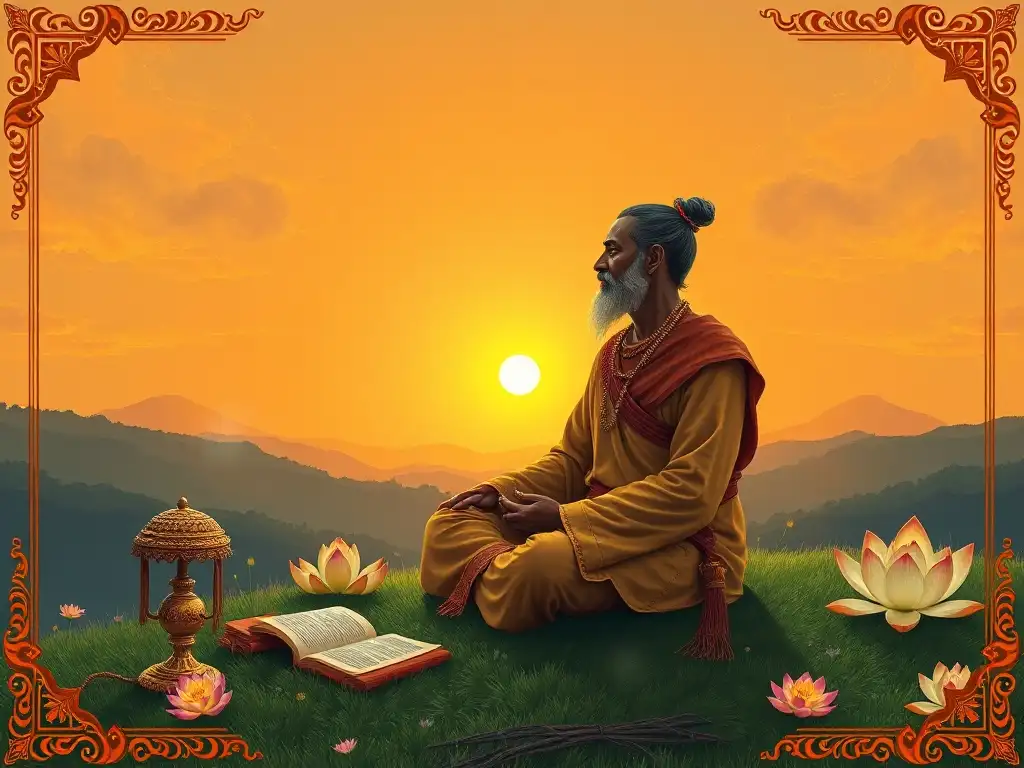
The Sankhya philosophy presents a unique framework for understanding the process of perception, intricately linking consciousness with the external world through a structured approach. This process is not merely a passive reception of sensory input but an active engagement of the mind and intellect, rooted in the interplay of the three Gunas: Sattva, Rajas, and Tamas.
The Role of Senses in Perception
In the Sankhya school of thought, the senses (Indriyas) are crucial conduits for perception. They are categorized into two groups:
- Jnanendriyas (Sensory organs): These include the five senses responsible for acquiring information about the external world:
- Eyes: Perception of forms and colors.
- Ears: Reception of sound.
- Nose: Detection of smells.
- Tongue: Taste sensation.
- Skin: Feeling of touch.
- Karmendriyas (Motor organs): These facilitate action and include:
- Hands: Performing tasks and manipulation.
- Feet: Locomotion and movement.
- Speech: Communication.
- Excretory organs: Waste expulsion.
- Reproductive organs: Procreation.
The interaction between the Jnanendriyas and the external stimuli fuels the process of perception. For instance, when an object is seen, the eyes capture the visual data, which is then processed by the mind. This processing is influenced by the Gunas, determining how the information is interpreted and understood.
How Sankhya Explains the Mechanism of Perception
Sankhya philosophy outlines a detailed mechanism for how perception operates. This process can be broken down into several key stages:
- Stimulus Reception: The initial contact between the external world and the senses.
- Sensory Processing: The sensory organs transmit the information to the mind. Each sense contributes uniquely to the perception, adding layers of meaning and context.
- Cognitive Interpretation: The mind (Manas) assesses and interprets the sensory data. This is where the Gunas play a pivotal role:
- Sattva: Promotes clarity and understanding, enabling accurate perception.
- Rajas: Introduces activity and restlessness, often leading to distorted perceptions due to bias or desire.
- Tamas: Causes ignorance and confusion, hindering proper interpretation of sensory input.
- Consciousness and Awareness: Ultimately, the processed information reaches the higher state of consciousness (Purusha), where self-awareness and understanding take place. This stage highlights the duality of existence—while the senses engage with the material world, true knowledge transcends sensory limitations.
The Impact of Gunas on Perception
The influence of the three Gunas on perception is a core tenet of Sankhya philosophy. Each Guna shapes not only the process of perception but also the quality of experiences:
- Sattva: When Sattva predominates, perception is characterized by clarity, wisdom, and a sense of peace. Individuals experience reality as it is, leading to profound insights and understanding.
- Rajas: A predominance of Rajas results in a more chaotic perception. Desire-driven actions often cloud judgment, leading to misinterpretation of sensations and an increased focus on external achievements rather than internal understanding.
- Tamas: With Tamas in control, perception becomes dull, confused, and lethargic. Individuals may struggle to engage with their surroundings, often leading to ignorance about the nature of reality and self.
Understanding how the Gunas affect perception allows individuals to cultivate awareness and control over their experiences. By striving for Sattva, one can enhance their perceptual clarity and deepen their understanding of consciousness, as envisioned by Sankhya philosophy.
This exploration into the Sankhya framework reveals the meticulous nature of perception, illustrating how deeply intertwined consciousness is with sensory experience and the fundamental qualities that shape our understanding of reality.
Comparative Analysis of Sankhya Philosophy and Other Indian Philosophical Schools
Comparison with Advaita Vedanta on Consciousness
Sankhya philosophy and Advaita Vedanta represent two pivotal perspectives on consciousness within Indian philosophy. While both schools acknowledge the significance of consciousness, they diverge in their interpretations and implications.
- Nature of Reality:
- Sankhya posits a dualistic framework where reality is divided into Purusha (consciousness) and Prakriti (matter). Consciousness is seen as a witness, separate from the ever-changing material world.
- Conversely, Advaita Vedanta advocates for non-dualism, asserting that the ultimate reality ( Brahman) is singular, and that individual consciousness ( Atman) is fundamentally the same as Brahman. The perception of duality is deemed an illusion ( Maya).
- Understanding of Liberation:
- In Sankhya, liberation ( Moksha) is achieved through the discernment of the true nature of Purusha and Prakriti, leading to the cessation of suffering and ignorance.
- Advaita Vedanta emphasizes self-realization, where understanding and experiencing the oneness with Brahman leads to liberation from the cycle of rebirth.
- Methodology:
- Sankhya employs a systematic analysis of the components of reality, categorizing them into 25 principles, culminating in the realization of Purusha.
- Advaita Vedanta utilizes meditative practices and scriptural study to dissolve the illusion of separateness, guiding practitioners towards experiential knowledge of their true nature.
Sankhya vs. Yoga: Understanding Perception
The relationship between Sankhya philosophy and Yoga is profound, particularly in their interpretations of perception and cognitive processes. While both schools are interconnected, they serve distinct purposes in understanding the mind and consciousness.
- Role of Perception:
- Sankhya defines perception as a means through which the Purusha interacts with Prakriti. It emphasizes the distinction between the observer (consciousness) and the observed (the material world).
- Yoga, especially in the context of Patanjali's Yoga Sutras, focuses on the methods to control the mind and senses to achieve higher states of perception. It posits that through practices like meditation and ethical conduct, one can purify the mind and enhance perceptual clarity.
- Cognitive Functions:
- In Sankhya, cognition is analyzed through the lens of the buddhi (intellect), ahankara (ego), and manas (mind), which interact to form perceptions and ultimately influence actions.
- Yoga emphasizes the importance of Pratyahara (withdrawal of the senses) as a precursor to deeper meditation, where the practitioner learns to discern between true perception and the distractions of the mind.
- Objective:
- The objective of Sankhya is to achieve knowledge of the true Self, thereby allowing one to live in harmony with the laws of nature, without attachment.
- Yoga, on the other hand, seeks to cultivate a disciplined practice that leads to the unification of the individual with the universal consciousness, transcending ordinary perception.
Key Differences in the Interpretation of Consciousness
The interpretation of consciousness varies significantly across different philosophical schools in ancient India. Understanding these differences enriches the discourse on Sankhya philosophy and its unique contributions.
- Epistemological Stance:
- Sankhya employs a realist epistemology, asserting that knowledge arises from direct experience and the discernment of the distinct natures of Purusha and Prakriti.
- In contrast, Madhyamaka Buddhism presents a more skeptical approach, arguing that all phenomena, including consciousness, are empty of inherent existence, emphasizing the interdependent origination of all things.
- Concept of the Self:
- Sankhya maintains a clear distinction between the individual self (Purusha) and the material world, promoting a dualistic understanding.
- Jainism, while also recognizing the existence of the self, posits that the self is inherently tied to karmic accumulation, thus influencing ethical behavior and spiritual progress.
- Practical Implications:
- Sankhya's philosophical framework serves as a foundation for various practical applications, including those found in Ayurveda and modern psychology, where understanding consciousness is vital for holistic health and wellness.
- Vaishnavism, with its theistic approach, emphasizes devotion to a personal deity and views consciousness as a divine spark, promoting a relational understanding of consciousness in the context of love and surrender.
While Sankhya philosophy offers a distinct perspective on consciousness and perception, its interactions with other schools of thought illuminate the rich tapestry of Indian philosophical inquiry. The comparative analysis emphasizes the depth and complexity of these interpretations, contributing to a broader understanding of consciousness within ancient Indian thought.
Contemporary Relevance of Sankhya Philosophy

The Sankhya philosophy, one of the six classical schools of Indian philosophy, remains profoundly relevant in contemporary discussions around consciousness and perception. Rooted in a dualistic framework, Sankhya delineates between the material (Prakriti) and the spiritual (Purusha), offering insights that resonate with modern philosophical and psychological inquiries. By providing a structured understanding of consciousness, Sankhya contributes to both theoretical discourse and practical applications in various fields today.
Applications of Sankhya Concepts in Modern Psychology
Sankhya's analytical approach to understanding the mind and consciousness has influenced modern psychology significantly. The framework it provides assists in dissecting the complexities of human cognition, behavior, and emotional response.
- Cognitive Behavioral Therapy (CBT):
- The principles of Sankhya can be seen in the cognitive restructuring techniques used in CBT. Just as Sankhya emphasizes discernment (Viveka) between the self and the non-self, CBT encourages individuals to identify and challenge distorted thought patterns.
- Mind-Body Connection:
- Sankhya's dualism between Purusha and Prakriti mirrors the contemporary exploration of the mind-body connection. This perspective helps in understanding how mental states can influence physical health, leading to integrative approaches in wellness practices.
- Self-Realization and Personal Development:
- The Sankhya concept of self-awareness fosters personal growth. Modern psychological practices emphasize mindfulness and self-reflection, echoing the Sankhya teaching of recognizing the distinction between the true self and the transient mind.
- Psychological Research:
- Researchers are increasingly examining the links between ancient philosophies and contemporary psychological theories. The Sankhya framework provides a rich philosophical backdrop for exploring consciousness, enabling psychologists to develop more holistic approaches to mental health.
The Influence of Sankhya on Mindfulness and Awareness Practices
Mindfulness practices, which have gained popularity in the West, owe much to ancient philosophical principles, particularly those found in Sankhya. The emphasis on awareness and perception in Sankhya philosophy aligns closely with modern techniques aimed at enhancing mental clarity and emotional regulation.
- Meditation Techniques:
- Sankhya provides a philosophical foundation for various meditation practices that cultivate awareness of the present moment. Through meditation, practitioners learn to observe thoughts without attachment, a core tenet of Sankhya's approach to the mind.
- Mindfulness-Based Stress Reduction (MBSR):
- Programs like MBSR draw upon the principles of Sankhya by encouraging individuals to focus on their thoughts and feelings as passing phenomena, thereby reducing stress and enhancing well-being.
- Yoga and Sankhya:
- The integration of Sankhya philosophy in yoga practice highlights the interconnectedness of body and mind. Both emphasize self-awareness as a pathway to enlightenment, demonstrating that the teachings of Sankhya continue to inform spiritual and physical disciplines today.
Reviving Sankhya Philosophy in Today's Context
The revival of Sankhya philosophy in contemporary discourse invites a reassessment of its principles in light of modern challenges. The increasing interest in consciousness studies and holistic well-being provides an opportunity to explore Sankhya's insights further.
- Educational Reforms:
- Incorporating Sankhya concepts into educational curricula can foster critical thinking and self-awareness among students. By teaching students about the nature of consciousness and perception, educators can equip them with tools for personal and intellectual growth.
- Cultural Integration:
- As societies become more globalized, the integration of Sankhya philosophy into diverse cultural contexts can promote cross-cultural understanding and enrichment. Workshops, seminars, and public lectures can help disseminate these ideas more widely.
- Philosophical Discourse:
- Engaging philosophers and thinkers in discussions surrounding Sankhya can stimulate new interpretations and applications of its principles in addressing contemporary issues such as mental health, societal well-being, and ecological awareness.
The revival of Sankhya philosophy not only enriches our understanding of consciousness but also provides practical frameworks for navigating the complexities of modern life. By exploring its teachings, we can cultivate a deeper awareness of ourselves and our interactions with the world around us.
Conclusion: The Legacy of Sankhya Philosophy on Consciousness and Perception
Summarizing Key Insights on Consciousness
Sankhya philosophy offers a profound framework for understanding consciousness and perception, emphasizing the distinction between the purusha (the self or consciousness) and prakriti (the material world). This dualistic perspective asserts that consciousness is the eternal observer, separate from the changing phenomena of the physical universe. Here are some key insights derived from Sankhya philosophy:
- Dualism of Purusha and Prakriti: Sankhya posits that consciousness ( purusha) is unchanging and eternal, while prakriti is the source of all creation and change. This separation is pivotal in understanding how consciousness perceives the world around it.
- The Role of Gunas: The three gunas— sattva (purity), rajas (activity), and tamas (inertia)—play a critical role in shaping perception. Through these qualities, Sankhya explains how different states of mind affect consciousness and influence human experience.
- Cognitive Process: Sankhya outlines a systematic approach to cognition that involves a process of discrimination ( viveka), allowing individuals to distinguish between the self and the external world. This cognitive clarity is essential for achieving liberation ( moksha).
- Influence on Meditation Practices: The insights of Sankhya have significantly influenced various meditative practices in Hinduism, emphasizing the need to transcend the fluctuations of the mind to access a higher state of consciousness.
In this way, Sankhya philosophy provides a comprehensive lens through which to explore the intricate nature of consciousness and perception, offering valuable tools for self-inquiry and spiritual growth.
The Enduring Impact of Sankhya on Indian Philosophy and Beyond
The influence of Sankhya philosophy extends far beyond its own historical context, permeating various aspects of Indian philosophy and even reaching global philosophical discourse. Its impact can be observed in several areas:
- Integration into Other Philosophical Schools: Sankhya has laid the groundwork for other major schools of Indian thought, including Yoga and Vedanta. These traditions borrow significant elements from Sankhya's framework of consciousness, particularly in their metaphysical discussions.
- Influence on Psychological Theories: The distinction between purusha and prakriti resonates with modern psychological theories that explore the nature of self and consciousness. The emphasis on cognitive clarity and self-awareness reflects contemporary interests in mindfulness and introspective practices.
- Global Philosophical Discourse: As Western philosophers grapple with concepts of consciousness, the insights from Sankhya philosophy provide a rich comparative perspective, particularly in discussions about the nature of reality and the self.
- Cultural Renaissance: In recent years, there has been a resurgence of interest in Eastern philosophies, including Sankhya, as individuals seek holistic approaches to understanding consciousness, well-being, and the nature of existence.
The legacy of Sankhya philosophy on consciousness and perception is both profound and enduring. It not only shapes traditional Indian thought but also offers valuable insights that continue to resonate in contemporary philosophical and psychological discussions, ensuring its relevance for future generations.
References for Further Exploration of Sankhya Philosophy and Consciousness
Suggested Readings on Sankhya Philosophy
Delving into the intricacies of Sankhya philosophy and its profound insights on consciousness requires a curated selection of readings that can enhance understanding. Here are some highly recommended texts:
- "Sankhya: A Dualist Philosophy" by A. K. Ghosh
- This book provides a comprehensive overview of Sankhya philosophy, elucidating its dualistic nature and how it differentiates between Purusha (consciousness) and Prakriti (matter).
- "The Philosophy of the Upanishads" by Paul Deussen
- While not exclusively about Sankhya, this text provides context on the philosophical landscape of ancient India, including the connections between Sankhya and other schools of thought regarding consciousness.
- "The Yoga Sutras of Patanjali" (translated by various authors)
- This foundational text offers insights into the relationship between Sankhya and Yoga, particularly how both schools address consciousness and perception.
- "Sankhya: An Introduction to the Classical Indian Philosophy" by A. K. Ghosh
- This introductory text is ideal for those new to Sankhya philosophy, detailing its historical development and key concepts related to consciousness.
- "Consciousness and the Absolute" by Swami Sivananda
- This book discusses the concept of consciousness in various philosophical traditions, including Sankhya, and explores its implications for understanding reality.
Important Texts and Manuscripts on Consciousness and Perception
The exploration of consciousness and perception in Sankhya philosophy can be further enriched by studying key texts and manuscripts that delve into these topics:
- "Samkhya Sutra" (Sankhya Karika) by Ishvara Krishna
- This foundational text articulates the core principles of Sankhya philosophy, presenting arguments for the existence of dualism between consciousness and matter, and addressing the nature of perception.
- "Tattva Samasa" by Gangesha Upadhyaya
- This manuscript contains discussions on the epistemology of consciousness, examining how perception is formed and its role in understanding reality through the lens of Sankhya.
- "Mahabharata" (Anuśāsana Parva)
- Within this epic, philosophical discussions are present that reflect on consciousness, the self, and the universe, providing valuable insights into the broader implications of Sankhya philosophy.
- "Bhagavad Gita"
- Although primarily a spiritual text, the Gita includes discussions on the nature of the self (Atman) and consciousness, which resonate with Sankhya principles, particularly in the context of action and perception.
- "The Yoga Vasistha"
- This philosophical text explores the nature of consciousness and reality, often intertwining concepts from Sankhya and offering a narrative approach to understanding perception.
By engaging with these readings and texts, one can gain a deeper appreciation of how Sankhya philosophy and consciousness intersect, providing a richer understanding of ancient Indian thought and its relevance to modern philosophical inquiries.
Frequently Asked Questions
What is Sankhya philosophy?
Sankhya philosophy is one of the six orthodox schools of Indian philosophy that emphasizes the distinction between consciousness (Purusha) and matter (Prakriti). It provides a framework for understanding the nature of reality and human experience.
How does Sankhya define consciousness?
In Sankhya, consciousness is viewed as the pure awareness that perceives the universe, separate from the material world. It is the eternal, unchanging aspect of existence that allows for self-realization.
What is the relationship between Sankhya and perception?
Sankhya philosophy posits that perception arises when consciousness interacts with Prakriti, leading to the formation of experiences. This interaction highlights the dual nature of reality as both conscious and material.
Why is Sankhya philosophy significant in ancient Indian history?
Sankhya philosophy is significant because it has influenced many other philosophical systems, including Yoga and Vedanta, by providing foundational concepts regarding consciousness and the nature of reality.
How does Sankhya contribute to modern discussions on consciousness?
Sankhya's insights into the nature of consciousness and its distinction from matter continue to inform contemporary discussions in philosophy, psychology, and cognitive science, offering a unique perspective on self-awareness and perception.
Final Reflection: The Enduring Quest for Understanding Consciousness through Sankhya Philosophy
In our exploration of Sankhya philosophy and consciousness, we have uncovered profound insights that resonate deeply with contemporary discussions about the nature of the mind and perception. As we navigate an increasingly complex world, the principles of Sankhya remind us that understanding consciousness is not just an academic pursuit but a vital aspect of our human experience. The quest for self-awareness and clarity in perception remains as relevant today as it was centuries ago.
The influence of Sankhya philosophy extends far beyond its historical roots, shaping cultural narratives and social paradigms. This ancient framework offers a lens through which we can examine our thoughts, emotions, and interactions. As we grapple with the challenges of modern life, the teachings of Sankhya encourage us to cultivate a deeper awareness of our consciousness. The mind is everything. What you think you become.
This quote encapsulates the essence of how our perceptions shape our reality, a concept that is echoed in both ancient wisdom and contemporary psychology.
As we conclude this journey into the mind, I invite you to reflect on your own consciousness and perceptions. Consider how the insights gleaned from Sankhya can inspire you to explore your inner landscape and foster a greater understanding of yourself and others. Embrace this opportunity to delve deeper into your thoughts and experiences, allowing the wisdom of Sankhya to guide you toward a more conscious and fulfilling existence.
Unveil the Depths of Consciousness!
Thank you for diving deep into the fascinating world of Sankhya philosophy with us! We hope you’ve gained valuable insights into how consciousness and perception are intricately defined and interconnected. Now, it’s time to put this knowledge into action and further your journey of understanding.
Here are a few steps you can take to elevate your exploration:
- Engage with your own perception: Take a moment today to reflect on your thoughts. What do they reveal about your understanding of reality? Consider journaling your insights!
- Join our community: Connect with fellow enthusiasts interested in philosophy by sharing your thoughts on our forums. Your unique perspective enriches the conversation!
- Explore further: Discover more about related ancient philosophies by browsing our article section—many insights await you!
What aspect of consciousness fascinates you the most, and how do you see it influencing your daily life? We’d love to hear your thoughts!