
The Interconnection of Ancient Indian Trade and Agriculture

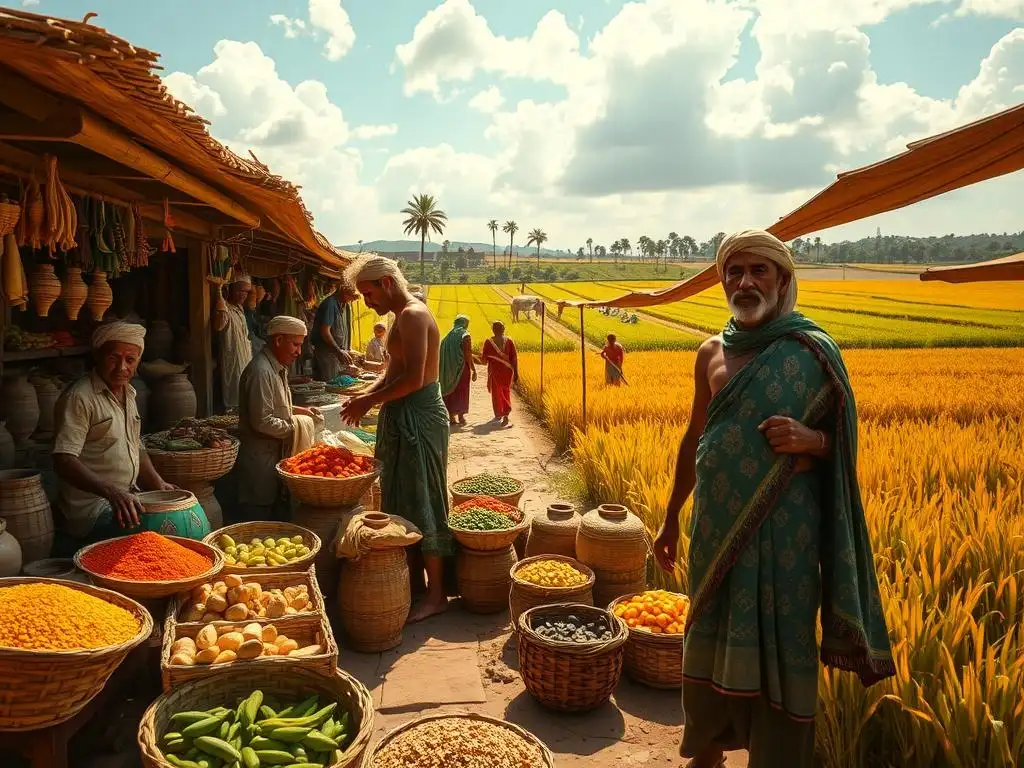
Welcome to Ancient India History, where we embark on a fascinating journey through the rich tapestry of India’s past. Today, we delve into the intricate world of Ancient Indian trade and agriculture, exploring how these two vital components shaped the economy and culture of ancient civilizations. From the bustling markets of the Indus Valley to the sophisticated agrarian practices of the Gupta Empire, you’ll uncover the connections that fueled prosperity and innovation.
Are you ready to discover the secrets of how trade routes and farming practices intertwined to create a thriving society? Let’s dive in and explore the legacy of ancient Indian ingenuity!
Introduction to Ancient Indian Trade and Agriculture
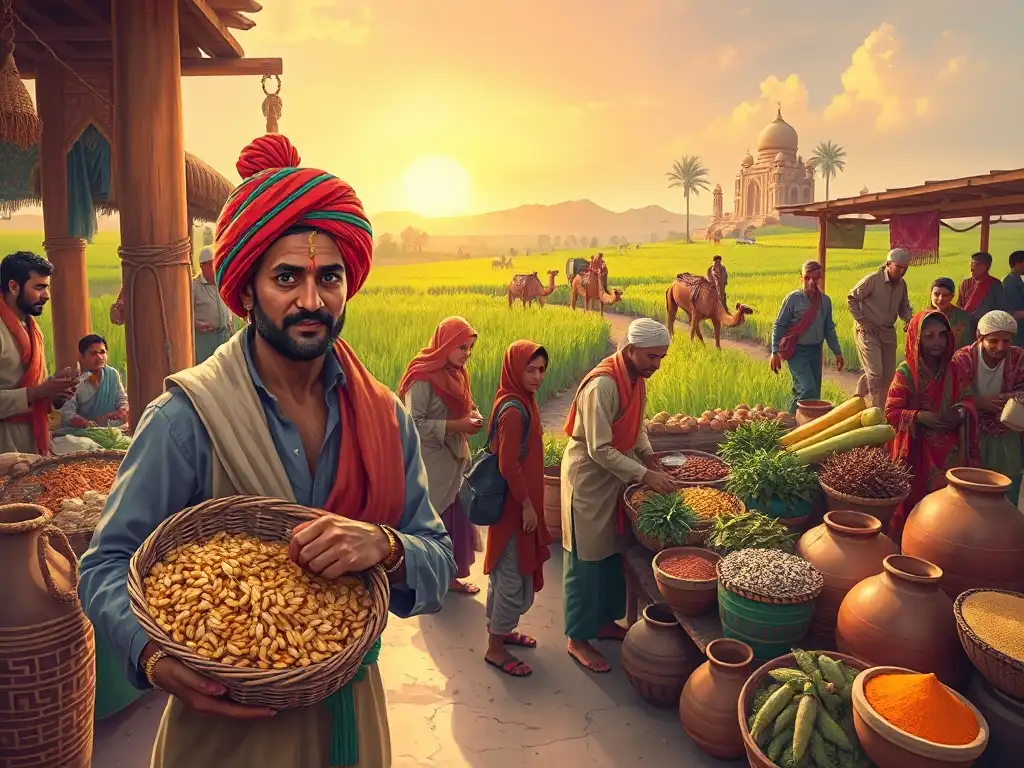
The history of Ancient Indian trade and agriculture is a fascinating tapestry woven through millennia, reflecting the ingenuity and resilience of its people. From the fertile banks of the Indus River to the expansive fields of the Gangetic plains, agriculture served as the backbone of Indian civilization, while trade routes facilitated the exchange of goods, ideas, and cultures. This intricate interplay between agriculture and trade not only shaped the economy but also influenced social structures, urban development, and cultural exchanges. Understanding this interconnection reveals how ancient Indian societies thrived and how their legacies continue to influence modern economies.
Overview of Ancient Indian Civilization
Ancient India, known for its rich cultural heritage, was home to several advanced civilizations, including the Indus Valley Civilization, the Mauryan Empire, and the Gupta Empire. Each of these societies contributed significantly to agriculture and trade, fostering a network of exchanges that reached far beyond its borders. The emergence of urban centers, such as Harappa and Mohenjo-Daro, showcased sophisticated planning and agricultural techniques that supported large populations.
- Key Features of Ancient Indian Civilizations:
- Advanced urban planning and architecture
- Development of writing systems
- Rich artistic and cultural expressions
- Establishment of trade routes connecting to the West and East
Importance of Trade and Agriculture in Ancient India
Trade and agriculture in ancient India were not merely economic activities; they were vital to the social fabric and identity of the civilization. Agriculture ensured food security and stability, while trade promoted cultural exchanges and economic prosperity. The interdependence of these sectors led to the flourishing of cities and the spread of innovations.
- Significance of Trade and Agriculture:
- Economic Stability: Agriculture provided the necessary resources for trade, which in turn stimulated economic growth.
- Cultural Exchange: Trade routes facilitated the movement of goods and ideas, enriching cultural practices and traditions.
- Urban Development: The prosperity from trade and agriculture led to the growth of urban centers, which became hubs of commerce and culture.
The Role of Agriculture in Ancient Indian Economy
Agriculture was the cornerstone of the ancient Indian economy, supporting not only sustenance but also trade. The productivity of agricultural practices determined the wealth and power of various kingdoms, influencing their ability to engage in trade with neighboring regions and civilizations.
Major Agricultural Practices in Ancient India
Ancient Indian farmers employed a variety of techniques suited to their geographic and climatic conditions. These practices included:
- Irrigation Systems: Utilization of rivers and canals to enhance agricultural productivity.
- Crop Rotation: Diverse cropping methods to maintain soil fertility and ensure continuous harvests.
- Organic Farming: Use of natural fertilizers and pest control methods, ensuring sustainable agriculture.
Key Crops Cultivated and Their Economic Impact
The cultivation of specific crops played a crucial role in the economy of ancient India. Key crops included:
| Crop | Economic Impact |
|---|---|
| Rice | Staple food, essential for sustenance and trade |
| Wheat | Major export to neighboring regions |
| Spices | Highly sought after in international markets |
| Cotton | Foundation of textile trade, leading to prosperous industries |
These crops not only sustained the local populations but also became important commodities for trade, enhancing India's position in global markets.
Seasonal Cycles and Agricultural Productivity
The agricultural calendar in ancient India was closely tied to seasonal cycles, particularly the monsoon rains, which dictated planting and harvesting times. Farmers developed their practices around these cycles to maximize productivity:
- Monsoon Season: Ideal for planting and sustaining crops.
- Harvest Season: Time for gathering and trading surplus produce.
- Fallow Periods: Utilization of land management techniques to restore soil health.
By understanding these seasonal patterns, ancient Indian farmers were able to optimize their agricultural output, supporting both local needs and trade activities.
The exploration of ancient Indian trade and agriculture underscores their profound influence on the historical trajectory of the region. Their interconnectedness not only laid the foundations for economic stability but also fostered cultural exchanges that enriched the ancient Indian civilization.
The Development of Trade in Ancient India
The development of trade in ancient India played a pivotal role in shaping its economy and contributing to the prosperity of its civilizations. Trade routes expanded from the early days of the Indus Valley Civilization, facilitating commerce not only within the Indian subcontinent but also connecting it to distant lands. As urban centers emerged, so did the need for goods and resources, leading to a complex network of trade that included land and maritime routes.
Emergence of Trade Routes in Ancient India
The emergence of trade routes in ancient India can be traced back to the Indus Valley Civilization (circa 2500-1900 BCE), where evidence of trade with Mesopotamia and Persia has been uncovered. With the decline of the Indus Valley, trade dynamics shifted, paving the way for the establishment of overland routes such as the famous Silk Road and maritime routes connecting India to Southeast Asia, the Arabian Peninsula, and beyond.
The Mauryan Empire (circa 322-185 BCE) further facilitated trade by developing infrastructure, including roads and ports, which improved transportation and communication. The resulting growth of trade not only increased the exchange of goods but also ideas, cultures, and technologies across regions.
Key Trade Goods and Commodities
Ancient Indian trade was characterized by a rich variety of goods and commodities. Some of the key trade items included:
- Spices: India was renowned for its spices, such as black pepper, cardamom, and cinnamon, which were highly sought after in foreign markets.
- Textiles: Cotton and silk textiles were significant exports, with Indian fabrics noted for their quality and intricate designs.
- Metals and Gems: Gold, silver, and precious stones were traded extensively, contributing to wealth accumulation and craftsmanship.
- Agricultural Products: Grains like rice and wheat, along with pulses, constituted essential trade goods, highlighting the agricultural foundation of the economy.
The variety of products facilitated extensive trade relationships, with merchants often forming guilds to regulate trade practices and protect their interests.
Influence of Geography on Trade Networks
Geography significantly influenced trade networks in ancient India. The subcontinent's diverse landscape, including mountains, rivers, and coastal regions, created both challenges and opportunities for trade. The Himalayas and the Western Ghats acted as natural barriers, while the fertile plains of the Ganges and the Indus rivers provided easy access to transport goods.
Coastal cities like Lothal became bustling ports, leveraging the monsoon winds for maritime trade. The strategic location of India, situated between major trade routes connecting the East and West, facilitated cultural exchanges and economic interactions that enriched its civilization.
Interrelationship Between Agriculture and Trade
The interrelationship between agriculture and trade in ancient India was profound, as agricultural productivity directly influenced trade dynamics. The ability to produce surplus crops allowed for the establishment of trade networks that extended beyond local markets.
How Agricultural Surplus Fueled Trade Expansion
Agricultural surplus was a driving force behind the expansion of trade in ancient India. Regions with fertile land produced excess grains, which could be traded for various goods, thereby creating a cycle of economic interdependence. This surplus not only sustained local populations but also supported urban centers where trade flourished.
As agricultural practices evolved, so did the capacity for production. The introduction of irrigation techniques and crop rotation increased yields, further enhancing trade potential. The ability to export surplus food allowed traders to acquire luxury goods and resources from distant lands, fostering a vibrant economy.
The Impact of Trade on Agricultural Techniques
Trade had a reciprocal impact on agricultural techniques in ancient India. As merchants traveled and exchanged goods, they also shared knowledge about farming methods, crop varieties, and tools. This exchange led to the adoption of more efficient agricultural practices, ultimately improving yields.
The demand for certain crops in trade markets encouraged farmers to diversify their production, experimenting with new crops and techniques. This adaptability not only catered to trade needs but also ensured food security for growing populations.
Case Studies of Trade Centers and Agricultural Regions
Various trade centers in ancient India exemplify the synergy between trade and agriculture.
- Taxila: Located near the North-West Frontier, Taxila was a prominent trade hub that connected the Indian subcontinent with Central Asia. Its agricultural surplus, primarily in grains and livestock, supported its role as a bustling marketplace.
- Kanchipuram: Known for its silk weaving, Kanchipuram thrived due to its proximity to agricultural regions that produced high-quality cotton and silk. The local economy flourished through both agriculture and trade, making it a center of cultural and economic exchange.
- Lothal: An ancient port city of the Indus Valley Civilization, Lothal showcased advanced maritime trade practices. The surrounding agricultural lands contributed to the port's prosperity, as traders exchanged agricultural produce for goods from overseas.
These case studies illustrate how the interplay of agriculture and trade created robust economic systems in ancient India, contributing to its rich cultural tapestry and historical legacy.
Major Trade Routes Connecting Agriculture and Commerce
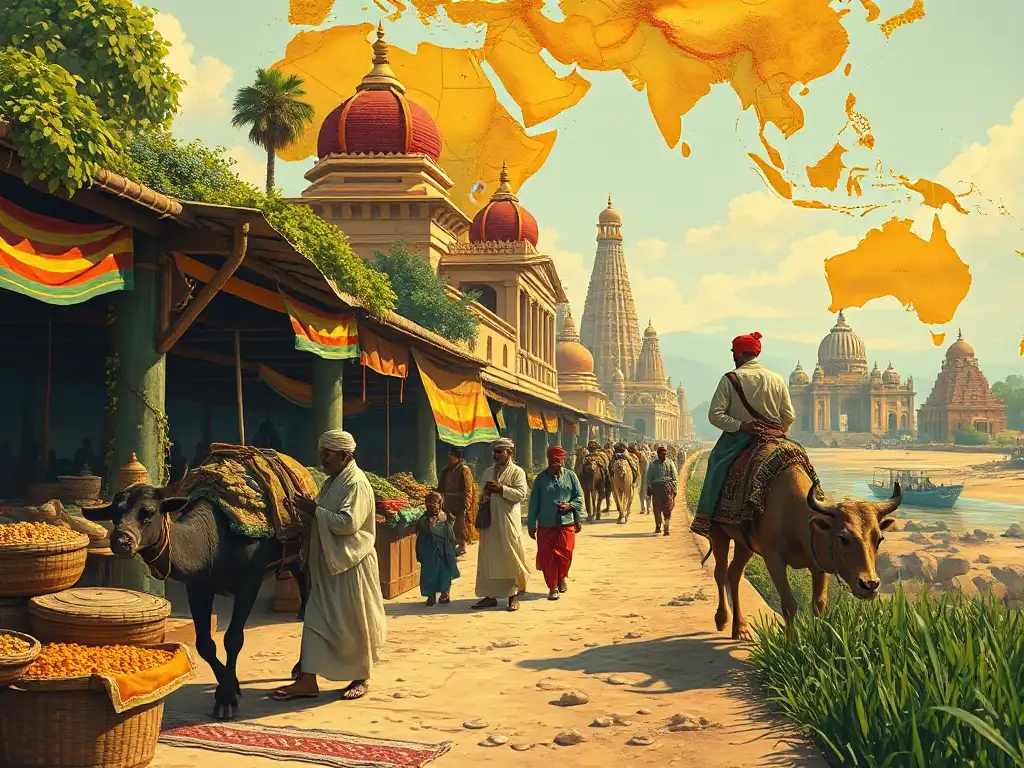
The interconnection between ancient Indian trade and agriculture was significantly influenced by various trade routes that facilitated the exchange of goods, ideas, and agricultural practices. The complexity of these trade networks not only boosted the economy but also fostered cultural exchanges that shaped the agricultural landscape of ancient India. Two primary categories of trade routes were instrumental in this intricate relationship: overland routes, such as the Silk Road, and maritime routes that connected India with distant shores.
Trade routes were not merely conduits for the movement of goods; they also enabled the dissemination of agricultural innovations. As traders journeyed across these paths, they shared farming techniques, crop varieties, and irrigation methods, which had a lasting impact on agricultural productivity in the regions they traversed. The flourishing of cities along these routes, where agricultural surplus could be exchanged for goods, further exemplifies the symbiotic relationship between trade and agriculture.
The Silk Road and Its Influence on Indian Trade
The Silk Road, a network of overland trade routes, played a pivotal role in connecting ancient India with Central Asia, the Middle East, and beyond. This route facilitated the exchange of not only silk but also spices, textiles, and agricultural products. Indian merchants became integral players in this vast trade system, allowing for the flow of goods that included rice, wheat, and various legumes.
The influence of the Silk Road on Indian trade extended beyond economics; it also shaped agricultural practices. For instance, the demand for Indian spices, known for their flavor and preservative qualities, led to the expansion of spice cultivation in regions such as Kerala and Tamil Nadu. The increased trade activities prompted advancements in agricultural techniques, as farmers adapted to meet the growing demands of both local and international markets.
Maritime Trade Routes and Agricultural Exports
In addition to the Silk Road, maritime trade routes, particularly those connecting the Indian subcontinent with Southeast Asia and the Arabian Peninsula, significantly influenced ancient Indian agriculture. The monsoon winds facilitated navigation, allowing merchants to transport agricultural goods such as rice, cotton, and spices across the Indian Ocean.
Ports like Lothal and Bharuch became bustling trade hubs where agricultural products were exchanged for luxury items, contributing to the local economy. The maritime trade not only established India as a key player in global commerce but also encouraged the diversification of crops. As Indian traders interacted with other cultures, they were introduced to new agricultural practices and crops, which enriched the agricultural tapestry of the region.
The Role of Local Markets in Trade and Agriculture
Local markets emerged as essential nodes in the trade and agricultural landscape of ancient India. These markets served as vital meeting points for farmers and traders, facilitating the exchange of surplus produce for goods and services. The presence of bustling markets indicated a thriving agricultural economy, where farmers could sell their harvests and reinvest in better farming techniques and tools.
The role of local markets extended beyond mere transactions; they fostered community interactions and played a crucial part in sustaining local economies. Agricultural festivals and fairs often occurred in these markets, further strengthening the connection between trade and agriculture and promoting the exchange of agricultural knowledge and practices among farmers.
Cultural Exchange Through Trade and Agriculture
The interplay between trade and agriculture in ancient India was not solely economic; it also fostered rich cultural exchanges. The movement of people, goods, and ideas along trade routes facilitated interactions between diverse cultures, leading to an amalgamation of agricultural practices, beliefs, and innovations.
Exchange of Agricultural Knowledge and Techniques
One of the most significant aspects of cultural exchange through trade was the sharing of agricultural knowledge and techniques. Traders and travelers often brought with them not just goods but also information about effective farming methods, pest control, and crop rotation. This exchange enriched local agricultural practices, leading to improved yields and the introduction of new crops.
For example, the introduction of tropical crops such as bananas and coconuts to the Indian subcontinent can be traced back to interactions with traders from Southeast Asia. Such exchanges helped diversify the agricultural landscape, contributing to food security and economic stability.
Impact of Trade on Agricultural Diversity
Trade significantly impacted agricultural diversity in ancient India. As merchants traveled along trade routes, they introduced new crops and agricultural techniques that transformed local farming practices. The demand for various agricultural products in domestic and international markets encouraged farmers to experiment with different crops, leading to a rich tapestry of agricultural diversity.
The cultivation of cotton, for instance, expanded due to its high demand in trade, ultimately establishing India as a major producer of textiles. This shift not only diversified agricultural outputs but also influenced cultural identity, as communities became known for specific crops and products.
Cultural Interactions Between Traders and Farmers
The interactions between traders and farmers fostered a unique cultural blend that enriched the social fabric of ancient India. Farmers learned from traders about market demands, pricing strategies, and the importance of quality in agricultural products. Conversely, traders acquired knowledge about local agricultural practices, which allowed them to better engage with farmers and promote their goods effectively.
These interactions often led to lasting relationships between communities, influencing everything from culinary practices to rituals associated with agriculture. Additionally, as traders settled in agricultural regions, they contributed to the local economy and cultural life, solidifying the interconnection between trade and agriculture in ancient India.
Conclusion
The intricate relationship between ancient Indian trade and agriculture played a pivotal role in shaping the civilization's economic landscape and cultural exchanges. As agricultural practices advanced, they not only supported local populations but also created surplus produce that fueled trade networks both within the Indian subcontinent and beyond. This symbiotic relationship fostered connectivity and interdependence among various regions, leading to the establishment of vibrant markets and trade routes that would later become integral parts of larger networks like the Silk Road.
The prosperity derived from agriculture significantly impacted trade dynamics, allowing merchants to engage with diverse cultures and exchange goods, ideas, and innovations. The exchange of agricultural products, such as spices, textiles, and grains, not only enhanced the economy but also enriched the cultural fabric of ancient India, laying the groundwork for future civilizations.
Summary of the Interconnection of Ancient Indian Trade and Agriculture
To summarize, ancient Indian trade and agriculture were inextricably linked, with agriculture serving as the backbone of the economy. The surplus generated by agricultural advancements enabled merchants to expand their reach, establishing trade routes that connected India with distant lands. Major agricultural products, such as rice, wheat, and spices, were integral to trade, leading to the development of bustling marketplaces and trade centers in key regions.
Moreover, the exchange of goods facilitated the transfer of knowledge and cultural practices, fostering an environment of innovation and growth. The role of trade in disseminating agricultural techniques and crops further highlights the interconnectedness between these two sectors. As a result, ancient India's trade networks not only contributed to economic prosperity but also played a crucial role in the cultural exchange that characterized the region.
Lasting Legacy of Trade and Agriculture in Ancient Indian Civilization
The lasting legacy of ancient Indian trade and agriculture is evident in various aspects of contemporary society. The agricultural techniques developed during this period, such as crop rotation and irrigation methods, continue to influence modern farming practices. Furthermore, the rich tapestry of trade routes established in ancient times laid the foundation for India’s position in global trade today.
Culturally, the impact of trade and agricultural exchanges is reflected in India's diverse culinary traditions, which incorporate ingredients and cooking methods introduced through trade. The historical significance of trade cities, like Taxila and Ujjain, remains evident as they are studied for their contributions to commerce and culture.
Overall, the interconnection of ancient Indian trade and agriculture not only shaped the civilization during its time but also left a profound influence on subsequent generations, illustrating the importance of these sectors in the development of a rich and enduring cultural heritage.
- Introduction to Ancient Indian Trade and Agriculture
- The Role of Agriculture in Ancient Indian Economy
- The Development of Trade in Ancient India
- Interrelationship Between Agriculture and Trade
- Major Trade Routes Connecting Agriculture and Commerce
- Cultural Exchange Through Trade and Agriculture
- Conclusion
Frequently Asked Questions
What were the main features of ancient Indian trade?
Ancient Indian trade was characterized by extensive networks, both overland and maritime. It facilitated the exchange of luxury goods, such as spices, textiles, and precious stones, enhancing economic prosperity.
How did agriculture contribute to trade in ancient India?
Agriculture provided the essential surplus needed for trade. The production of grains and spices not only supported local economies but also became key export items that attracted international traders.
What role did the Indus Valley Civilization play in trade?
The Indus Valley Civilization was crucial in establishing early trade routes, using advanced urban planning and standardized weights for commerce. Their trade networks reached as far as Mesopotamia, showcasing their economic influence.
How did the Gupta Empire impact trade and agriculture?
During the Gupta Empire, trade flourished due to political stability and improved infrastructure. Agriculture was enhanced through innovations, such as irrigation, which increased crop yields and supported a growing economy.
What were the main trade goods in ancient India?
Ancient Indian traders dealt in a variety of goods, including spices, cotton textiles, metalwork, and precious stones. These products were highly sought after in international markets, establishing India as a key trading hub.
Final Reflection: The Enduring Legacy of Ancient Indian Trade and Agriculture
The intricate relationship between ancient Indian trade and agriculture remains profoundly relevant today, as it underscores the foundational role of these sectors in shaping economies and cultures. The lessons drawn from this historical interplay remind us that sustainable practices and interconnectedness are not merely relics of the past but essential components of our modern world. As we navigate the complexities of globalization and environmental challenges, understanding this legacy can guide us toward more resilient and equitable systems.
The influence of ancient Indian trade and agriculture extends beyond historical significance; it continues to resonate in contemporary society, highlighting the importance of community and resource management. The agricultural practices and trade routes established centuries ago laid the groundwork for social cohesion and economic prosperity that can still be observed in modern agricultural communities. > “Trade is a bridge that connects cultures, and agriculture is the foundation that sustains them.” This quote encapsulates the enduring impact of these ancient practices, reminding us that our current systems are built upon the wisdom of those who came before us.
As we reflect on the lessons of ancient Indian trade and agriculture, I invite you to consider how these insights can be applied in your own life. How can you foster connections within your community, support sustainable practices, and honor the rich heritage of trade and agriculture? By embracing these principles, we can contribute to a future that values interdependence and sustainability, ensuring that the legacy of our ancestors continues to thrive.
Unveil the Secrets of Ancient Trade and Agriculture!
Thank you for joining us on this captivating journey through the interconnections of ancient Indian trade and agriculture. We hope you’ve gained valuable insights into how these two vital aspects shaped the civilization and landscapes of India. Now, it’s time to take the next step in your exploration!
Here are a few actions you can take to deepen your understanding and share this knowledge with others:
- Dive Deeper: Explore the fascinating history of ancient trade routes by visiting local museums or browsing online exhibits that focus on ancient India.
- Join a Discussion: Engage with fellow history enthusiasts in forums or social media groups dedicated to the study of ancient Indian civilization.
- Share Your Findings: Write a blog post or share a story on social media about the influence of ancient trade on modern agricultural practices in India.
What aspect of ancient Indian trade and agriculture surprises you the most? How do you think it impacts our understanding of today’s agricultural practices? We would love to hear your thoughts in the comments!