
The Nyaya Theory of Knowledge: Validity, Truth, and Justification


Welcome to Ancient India History, where we embark on an enlightening journey through the vibrant tapestry of ancient Indian civilizations. Dive deep into the intricate philosophies and remarkable contributions that have shaped our understanding of the world. In this article, we unravel the Nyaya theory of knowledge, exploring its profound insights on validity, truth, and justification. Prepare to be captivated as we uncover the layers of thought that have influenced not just India, but the very essence of philosophical inquiry itself. Join us as we explore this fascinating dimension of ancient wisdom and ignite your curiosity to learn more!
- The Nyaya Theory of Knowledge: Validity, Truth, and Justification in Ancient India
- Historical Context of the Nyaya Theory
- Fundamental Concepts of the Nyaya Theory of Knowledge
- Validity of Knowledge in Nyaya Philosophy
- Truth and Justification in the Nyaya Framework
- Critiques and Counterarguments to the Nyaya Theory
- Contemporary Relevance of the Nyaya Theory of Knowledge
- Frequently Asked Questions
- Final Reflection: Embracing the Wisdom of the Nyaya Theory of Knowledge
- Unveil Your Understanding of Knowledge!
The Nyaya Theory of Knowledge: Validity, Truth, and Justification in Ancient India
The Nyaya theory of knowledge, which emerged from the ancient philosophical tradition of India, delves into the intricate relationships between validity, truth, and justification. As one of the six orthodox schools of Indian philosophy, Nyaya has significantly influenced various aspects of Indian thought, including logic, epistemology, and ethics.
This article explores the fundamental principles of the Nyaya theory of knowledge, its historical context, and its enduring impact on philosophical discourse in India. By examining the nuances of Nyaya, we gain insight into how this school of thought has shaped the understanding of knowledge and reasoning in ancient Indian civilization, ultimately contributing to a richer appreciation of its philosophical heritage.
Introduction to the Nyaya Theory of Knowledge in India
The Nyaya theory of knowledge, or Nyaya Darshana, is primarily concerned with understanding the means and processes through which knowledge is acquired and validated. Originating around the 2nd century BCE with the foundational work of philosopher Gautama (also known as Akshapada), Nyaya offers a systematic approach to investigating knowledge, focusing on defining what constitutes valid knowledge and how it can be justified.
At its core, the Nyaya philosophy posits that knowledge is not merely an intellectual exercise but a practical tool for achieving liberation (moksha) and understanding the nature of reality. The Nyaya school identifies four primary means of knowledge, known as pramanas:
- Pratyaksha (Perception): Direct sensory experience.
- Anumana (Inference): Logical deduction based on observation.
- Upamana (Comparison): Knowledge gained through analogy.
- Shabda (Testimony): Knowledge derived from authoritative sources, such as scriptures.
These pramanas form the foundation of the Nyaya epistemology, allowing philosophers to analyze and categorize different types of knowledge claims, thereby establishing a framework for evaluating their validity and truth.
Overview of Nyaya Philosophy in Ancient Indian Thought
The Nyaya school occupies a pivotal position in ancient Indian philosophy, particularly in the context of its interactions with other philosophical systems such as Vaisheshika, Sankhya, and Buddhism. It emphasizes rigorous reasoning and logical clarity, making it a crucial reference point for subsequent philosophical developments in India.
Nyaya philosophers engaged in extensive debates with rival schools, refining their arguments and methodologies in the process. The Nyaya Sutras, the foundational text of the Nyaya school, serve as a comprehensive guide to epistemology, logic, and ethics, addressing various philosophical inquiries, including:
- Nature of Reality: Nyaya asserts that reality is composed of substances, qualities, and actions, which can be known through the pramanas.
- Nature of Truth: Truth is defined as the correspondence between knowledge and reality, emphasizing that valid knowledge accurately reflects the world.
- Justification of Knowledge: Nyaya philosophers argue that knowledge must be justified through logical reasoning and evidence, ensuring that beliefs are grounded in rational thought.
Through these discussions, the Nyaya school has not only contributed to the philosophical landscape of ancient India but has also laid the groundwork for modern discussions about knowledge, validity, and justification in various academic fields. The principles of Nyaya continue to resonate today, reflecting the timeless relevance of its insights into the nature of knowledge and understanding.
Historical Context of the Nyaya Theory

The Nyaya theory of knowledge, originating from ancient India, has significantly shaped the philosophical landscape of the subcontinent. Its historical context reveals a rich tapestry of intellectual pursuits that emerged during a time when philosophical inquiry was deeply intertwined with spirituality, ethics, and metaphysics. The Nyaya school primarily focuses on epistemology—how knowledge is acquired, validated, and justified. Understanding the historical context of Nyaya provides insight into its enduring relevance in both ancient and modern philosophical discussions.
Origins of the Nyaya School in Ancient India
The Nyaya school is believed to have been established around the 6th century BCE, with its roots in the ancient texts known as the "Nyaya Sutras," authored by the philosopher Gautama (also referred to as Akshapada). This foundational text lays out the principles of logical reasoning and the methods for acquiring valid knowledge. The Nyaya school was part of the broader philosophical movement in ancient India, which included various schools such as Sankhya, Vedanta, and Vaisheshika.
Gautama's Nyaya Sutras delineate four means of obtaining knowledge (pramanas):
- Pratyaksha (Perception): Direct sensory experience.
- Anumana (Inference): Logical deduction based on premises.
- Upamana (Comparison): Knowledge gained through analogy.
- Shabda (Testimony): Knowledge derived from authoritative sources.
The emphasis on logical reasoning and validation of knowledge was revolutionary, establishing Nyaya as a precursor to modern epistemology.
Key Figures in Nyaya Philosophy
The development of the Nyaya theory saw contributions from several prominent philosophers who expanded upon Gautama's ideas:
- Uddyotakara: A significant figure in the 7th century CE, Uddyotakara is known for his commentary on the Nyaya Sutras, where he elaborated on the nature of inference and developed the concept of "vyapti" (pervasion), which is the basis for valid inferences.
- Gangesha Upadhyaya: Flourishing in the 12th century CE, Gangesha's work was pivotal in synthesizing Nyaya with other philosophical schools. His text, the "Tattvacintāmaṇi," systematically explored various epistemological issues, establishing Nyaya as a vital player in Indian philosophy.
- Raghunatha Shiromani: In the 16th century, Raghunatha further advanced Nyaya thought by integrating it with the emerging ideas of the Vedanta school, thus creating a more comprehensive philosophical framework.
These philosophers not only contributed to the evolution of Nyaya but also engaged in dialogues with other schools, showcasing the interconnectedness of Indian philosophical traditions.
Influence of Nyaya on Other Philosophical Schools
The Nyaya theory of knowledge has had a profound influence on various other philosophical schools in India. Its rigorous approach to logic and epistemology provided a foundation for several key developments:
- Vaisheshika: This school, which focuses on metaphysics and categorization of reality, borrowed heavily from Nyaya's epistemological principles, particularly in its method of inference.
- Sankhya: Although primarily concerned with metaphysics and cosmology, Sankhya philosophers utilized Nyaya's logical frameworks to articulate their theories about the nature of reality and consciousness.
- Advaita Vedanta: The non-dualistic approach of Advaita Vedanta engaged with Nyaya's concepts of knowledge and reality, leading to a rich dialogue about the nature of truth and ultimate reality.
The influence of Nyaya extended beyond philosophy into fields such as law, ethics, and linguistics, demonstrating its integral role in shaping the intellectual heritage of ancient India. Its emphasis on logical reasoning and the pursuit of knowledge continues to resonate in contemporary discussions on epistemology and philosophy.
The Nyaya theory of knowledge serves as a cornerstone of Indian philosophical thought, with its origins, key figures, and influence underscoring its significance in the broader context of ancient Indian civilization.
Fundamental Concepts of the Nyaya Theory of Knowledge

The Nyaya theory of knowledge, deeply rooted in Indian philosophy, is a critical framework for understanding how knowledge is acquired, validated, and justified. This philosophical school, dating back to ancient India, emphasizes the importance of logic and reasoning as tools for discerning valid knowledge from falsehoods. The Nyaya philosophers posited that knowledge is not merely about believing something to be true; it involves a rigorous process of justification based on a set of criteria.
At the heart of Nyaya philosophy lies the assertion that knowledge must be valid (prama) and capable of leading to true understanding. This leads to a detailed examination of the mechanisms through which knowledge is obtained, categorized, and verified. Understanding these fundamental concepts is essential for grasping the broader implications of the Nyaya theory in the context of Indian philosophical discourse.
Definition of Knowledge in Nyaya Philosophy
In Nyaya philosophy, knowledge is defined as a justified true belief. This means that for a belief to qualify as knowledge, it must meet three criteria:
- Belief: An individual must hold a belief about a specific proposition.
- Truth: The belief must correspond to reality; it must be true.
- Justification: There must be adequate justification or evidence for the belief, which differentiates mere opinion from knowledge.
This tripartite definition underscores the significance of epistemic justification, which is explored through various means of acquiring knowledge. The Nyaya philosophers placed a strong emphasis on logical reasoning and critical examination, arguing that without proper justification, even true beliefs cannot be considered knowledge.
Types of Knowledge According to Nyaya
The Nyaya school categorizes knowledge into four primary types, each representing a distinct method of acquiring knowledge. These types are characterized by specific processes and validation criteria, highlighting the systematic approach of Nyaya philosophy toward understanding knowledge.
Perception (Pratyaksha)
Perception, or Pratyaksha, is regarded as the most direct and immediate means of acquiring knowledge in Nyaya. It refers to knowledge gained through sensory experience and observation. The Nyaya philosophers outlined two forms of perception:
- Ordinary Perception: Knowledge acquired through the five senses (sight, hearing, touch, taste, and smell).
- Extraordinary Perception: Knowledge that transcends ordinary sensory experiences, such as insights gained through intuition or mystical experiences.
Perception is considered the foundation of all knowledge, as it provides the initial data upon which reasoning and inference are built.
Inference (Anumana)
Inference, or Anumana, is the second type of knowledge in Nyaya, involving logical reasoning. This method allows individuals to deduce conclusions based on premises. The Nyaya philosophers structured inference into a formal syllogism, which consists of:
- Major Premise: A general statement about a class.
- Minor Premise: A specific statement about an instance within that class.
- Conclusion: The logical outcome derived from the premises.
For example, if we know that "All humans are mortal" (major premise) and "Socrates is a human" (minor premise), we can infer that "Socrates is mortal" (conclusion). This type of knowledge underscores the role of logical reasoning in validating beliefs and understanding truths.
Comparison (Upamana)
Comparison, or Upamana, is the third type of knowledge, which arises through analogy. It involves understanding a new concept by comparing it to a known one. This method is particularly useful when encountering unfamiliar objects or ideas. For instance, learning about an unknown animal by comparing it to a familiar one allows for the acquisition of knowledge based on shared characteristics.
In Nyaya, comparison is recognized as a significant means of knowledge acquisition, especially in contexts where direct perception and inference may not be applicable.
Testimony (Shabda)
Testimony, or Shabda, is the fourth type of knowledge in Nyaya, which pertains to knowledge derived from credible sources, particularly verbal communication. This includes information obtained from scriptures, authoritative texts, or reliable witnesses. The Nyaya philosophers emphasized the importance of the reliability and authority of the source when evaluating testimony as a means of knowledge.
For example, learning about historical events from well-documented texts or listening to experts in a field exemplifies the acquisition of knowledge through testimony. This type of knowledge plays a crucial role in the transmission of cultural and philosophical ideas across generations.
The Nyaya theory of knowledge presents a comprehensive framework for understanding how knowledge is defined, categorized, and justified. The four types of knowledge—perception, inference, comparison, and testimony—highlight the diverse methods through which individuals can acquire knowledge, reflecting the rich intellectual tradition of ancient Indian philosophy.
Validity of Knowledge in Nyaya Philosophy
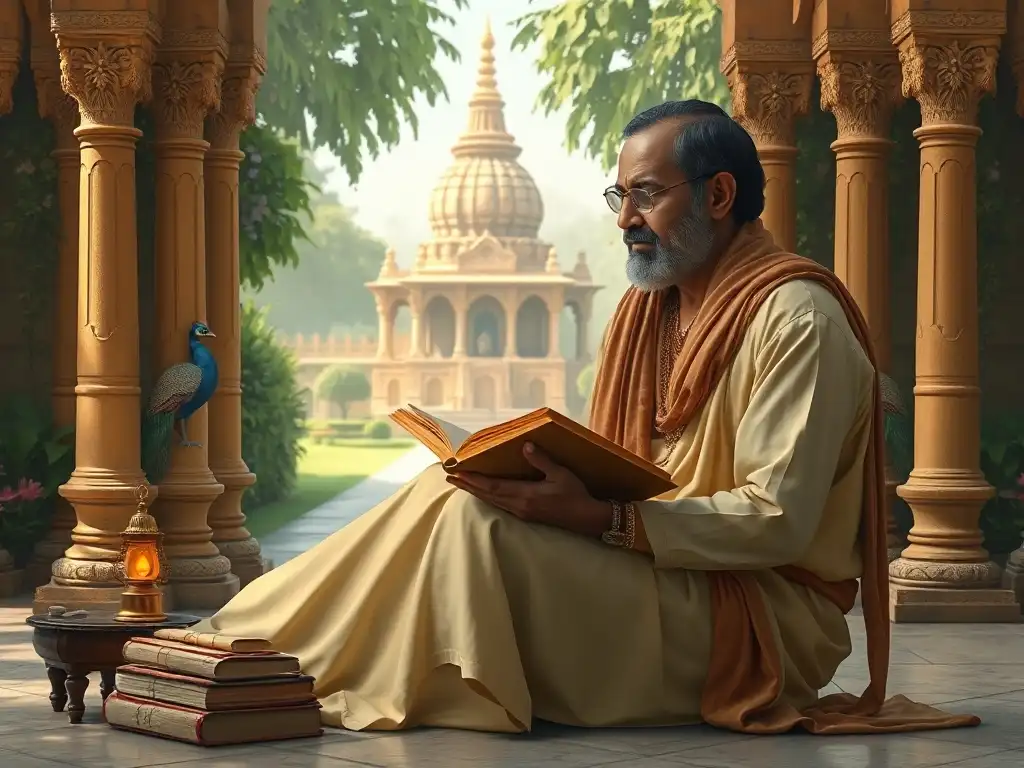
The Nyaya philosophy, originating from ancient India, presents a systematic approach to understanding the nature of knowledge and its validity. In the context of the Nyaya theory of knowledge, the term "validity" refers to the criteria by which knowledge claims can be confirmed as true or justified. This philosophical inquiry is essential for differentiating between genuine understanding and mere opinion.
Criteria for Valid Knowledge
Nyaya philosophy delineates specific criteria for what constitutes valid knowledge, referred to as "pramāṇa" (means of knowledge). The following are the primary criteria identified by Nyaya philosophers:
- Perception (Pratyakṣa):
- Direct sensory experience is considered the most fundamental source of valid knowledge. For example, seeing a tree or hearing a sound directly provides knowledge that is immediate and reliable.
- Inference (Anumāna):
- This involves deducing knowledge from premises. For instance, if we see smoke, we can infer that there is fire. This type of knowledge is valid as long as the inference follows logical reasoning.
- Comparison (Upamāna):
- Knowledge gained through analogy or comparison also holds validity. If one knows a cow and sees an unfamiliar animal that shares characteristics with the cow, one can conclude that it is a similar type of animal.
- Testimony (Śabda):
- The statements of reliable sources or scriptures are accepted as valid knowledge. For instance, texts that have been confirmed by tradition and respected authorities are recognized as trustworthy.
These criteria form a robust framework for assessing knowledge, ensuring that beliefs are not merely subjective but grounded in demonstrable reality.
The Role of Pramanas in Nyaya Theory
In Nyaya philosophy, pramāṇas play a crucial role as the means through which knowledge is acquired. Each pramāṇa serves a unique function:
- Pratyakṣa (Perception):
- It is the most direct and immediate means of knowledge. Nyaya philosophers assert that it provides certainty, as it is based on actual experience.
- Anumāna (Inference):
- This pramāṇa is critical for understanding underlying truths that are not immediately observable. For example, the knowledge of the existence of unseen entities (like gravity) can be inferred through its effects.
- Upamāna (Comparison):
- This allows human beings to expand their knowledge base by drawing parallels between known and unknown entities, facilitating learning and understanding.
- Śabda (Testimony):
- This highlights the importance of language and communication in the transmission of knowledge. It emphasizes that reliable testimony can provide insights that personal experience may not offer.
The interplay of these pramāṇas ensures a comprehensive approach to knowledge, enhancing the robustness of the Nyaya theory of knowledge in India.
Distinguishing Between Valid and Invalid Knowledge
The Nyaya philosophy also emphasizes the importance of distinguishing between valid and invalid knowledge. This distinction is vital to avoid misconceptions and ensure a clear understanding of the world.
- Valid Knowledge:
- Valid knowledge is characterized by its adherence to the criteria of pramāṇas. It is coherent, verifiable, and consistent with other knowledge claims. For example, knowing that water boils at 100 degrees Celsius under standard atmospheric pressure is valid knowledge that can be tested and confirmed.
- Invalid Knowledge:
- Invalid knowledge, on the other hand, arises from faulty reasoning, sensory illusion, or unverified testimony. For instance, if one claims that a mirage is water based solely on visual perception without any further investigation, this belief is considered invalid.
The Nyaya school stresses rigorous examination and reasoning to ensure that knowledge is valid. This philosophical rigor not only aids in individual understanding but also contributes to the collective knowledge of society, reinforcing the value of critical thinking and logical analysis in the pursuit of truth.
The Nyaya theory of knowledge provides a comprehensive framework for understanding knowledge's validity, emphasizing the essential role of clear criteria, reliable pramāṇas, and the critical differentiation between valid and invalid knowledge. Through this lens, one can appreciate the depth and sophistication of ancient Indian philosophical thought.
Truth and Justification in the Nyaya Framework

Understanding Truth in the Context of Nyaya
In the Nyaya theory of knowledge, truth is not merely a subjective notion but is rooted in objective reality. The Nyaya philosophers, particularly Gautama, emphasized the importance of aligning knowledge with the external world, proposing that a statement is considered true if it accurately reflects the state of affairs it describes. This perspective is essential in understanding how Nyaya approaches epistemology.
The Nyaya school categorizes truth into two main types:
- Prama (Valid Knowledge): Knowledge that is based on valid means of acquisition, such as perception (pratyaksha), inference (anumana), comparison (upamana), and testimony (shabda).
- Prameya (Objects of Knowledge): The entities or facts that can be known, which must also correspond to reality to be deemed true.
The alignment of knowledge with reality is illustrated through their famous example of the pot and clay: if someone states that "this is a clay pot," the truth is validated when the statement corresponds with the observable reality of the pot. Thus, in Nyaya philosophy, truth is a correspondence theory; it is about matching our perceptions and assertions with the actual state of the world.
The Justification Process in Nyaya Epistemology
Justification in the Nyaya framework plays a pivotal role in establishing the validity of knowledge. Nyaya identifies four primary means of obtaining knowledge, each contributing to the process of justification:
- Pratyaksha (Perception): The immediate, direct experience of an object through the senses. For Nyaya, this is the most reliable source of knowledge as it provides direct evidence of the external world.
- Anumana (Inference): Knowledge derived from reasoning based on observation. For example, if smoke is seen rising, one can infer the presence of fire. This process must be logically sound to justify the conclusion.
- Upamana (Comparison): Knowledge acquired through analogy or comparison. This involves understanding a new object by relating it to a known object, such as recognizing a new species of tree by comparing it to a familiar one.
- Shabda (Testimony): Knowledge gained through credible verbal testimony. The reliability of the source is crucial; thus, the justification hinges on the authority and trustworthiness of the speaker.
Through these means, knowledge gains justification, allowing individuals to claim that their beliefs are not only true but also well-founded. The rigorous analytical approach of Nyaya ensures that beliefs are substantiated through these processes, making the theory a robust framework for understanding knowledge.
Relation of Truth to Knowledge and Belief
In the Nyaya theory of knowledge, the relationship between truth, knowledge, and belief is intricately woven. Knowledge is defined as justified true belief, meaning that for something to be classified as knowledge, it must meet three essential criteria:
- Truth: The belief must correspond to reality. If a belief refers to something false, it cannot be considered knowledge.
- Justification: The belief must be supported by valid reasoning or evidence. This is where the four means of knowledge come into play, providing the necessary backing for the belief to be considered justified.
- Belief: The individual must genuinely hold the belief. It is not sufficient for a statement to be true; the individual must also accept it as true.
The Nyaya philosophers argue that any deviation from these criteria—be it a false belief or lack of justification—invalidates the claim to knowledge. Therefore, the pursuit of knowledge in Nyaya is a rigorous process that emphasizes the importance of criteria such as truth and justification, ensuring that one's beliefs are both reliable and accurate.
The Nyaya theory of knowledge provides a comprehensive framework that emphasizes truth, justification, and the relationship between these concepts, shaping a profound understanding of epistemology in ancient Indian philosophy.
Critiques and Counterarguments to the Nyaya Theory

The Nyaya theory of knowledge, while foundational in Indian philosophy, has faced various critiques and counterarguments from different philosophical schools. These critiques often focus on the theory's approach to epistemology, the nature of truth, and its methods for validating knowledge. Understanding these critiques is essential to appreciate the robustness of the Nyaya perspective and its responses.
Challenges from Other Philosophical Schools
- Buddhist Critique
- Concept of Anatta: Buddhists argue against the Nyaya assertion of a permanent self (atman) that can be a knower. They posit the doctrine of anatta (non-self), suggesting that the concept of a stable self is an illusion.
- Perception and Inference: Buddhist philosophers, particularly Dignaga, challenge the Nyaya emphasis on perception as the primary means of knowledge. They claim that all knowledge is ultimately conditioned by mental constructs and subjective experiences.
- Advaita Vedanta
- Non-Duality: Advaita proponents, like Adi Shankaracharya, critique the Nyaya insistence on duality between the knower and the known. They argue for a non-dual reality, where the distinction between subject and object is merely an illusion ( Maya).
- Nature of Reality: The Nyaya theory’s reliance on external verification through perception is questioned. Advaita suggests that ultimate knowledge is realized through jnana (knowledge) rather than through sensory experience.
- Vaisheshika
- Atomic Theory: The Vaisheshika school posits a different ontology based on atoms (anu). They argue that Nyaya's focus on logical reasoning may overlook the fundamental nature of reality as composed of indivisible atoms interacting in a complex manner.
- Types of Knowledge: Vaisheshika philosophers challenge Nyaya’s categorization of valid knowledge, asserting that their own atomic metaphysics offers a more comprehensive framework for understanding the universe.
Responses from Nyaya Philosophers
-
Defense of the Self
Nyaya philosophers assert that the existence of the self is not only logical but also essential for the understanding of knowledge acquisition. They argue that perception and inference are grounded in the existence of a stable self that can process experiences and validate knowledge.
-
Perception as a Reliable Source
In response to Buddhist critiques, Nyaya philosophers maintain that perception, when properly analyzed and understood, provides a reliable foundation for knowledge. They emphasize the importance of pratyaksha (direct perception) as the first and foremost means of acquiring knowledge, arguing that it is not merely subjective but can be universally acknowledged.
-
Logical Framework
Nyaya thinkers highlight their rigorous logical and epistemological frameworks, which they believe surpass the critiques from other schools. They argue that their methods of debate and analysis (such as tarka) provide tools to address any inconsistencies raised by opponents, reinforcing the validity of their positions.
-
Engagement with Other Schools
Rather than dismissing criticisms, Nyaya philosophers often engage with other schools in dialogue. This engagement showcases their confidence in the Nyaya theory of knowledge and its adaptability to incorporate valid insights from other philosophical traditions while maintaining its core principles.
Through these critiques and responses, the Nyaya theory of knowledge not only demonstrates its philosophical depth but also its resilience in the face of opposing viewpoints, contributing significantly to the rich tapestry of Indian philosophical discourse.
Contemporary Relevance of the Nyaya Theory of Knowledge

Influence of Nyaya on Modern Epistemology
The Nyaya theory of knowledge, originating from ancient Indian philosophy, has significantly influenced modern epistemology. Its systematic approach to understanding knowledge - focusing on the validity, truth, and justification of beliefs - resonates with contemporary discussions in philosophy. The Nyaya school, with its rigorous logical framework, provides a foundational basis for evaluating knowledge claims.
One of the most notable contributions of the Nyaya theory is the distinction between different types of knowledge, such as perceptual knowledge (pratyaksha), inferential knowledge (anumana), and testimonial knowledge (shabda). This categorization has parallels in modern epistemology, particularly in the examination of how knowledge is acquired and validated. The clarity with which Nyaya articulates the processes of inference and perception informs current debates on knowledge justification.
Moreover, the Nyaya principles emphasize the importance of sound reasoning and evidence in establishing truth. In today's context, these ideas are mirrored in scientific methodologies and critical thinking frameworks, where evidence-based reasoning is paramount. By applying Nyaya's logical constructs, modern philosophers can analyze and critique various epistemological theories, enriching the discourse with a comprehensive understanding of knowledge.
Applications of Nyaya Principles in Current Philosophical Discourse
The principles of the Nyaya theory of knowledge are not only historically significant but continue to find applications in contemporary philosophical discussions. For instance, in the realm of logic and argumentation, Nyaya's formal logic has been instrumental in shaping logical rigor in debates. Its focus on valid syllogisms and the criteria for sound arguments serves as a valuable resource for philosophers today.
Additionally, the Nyaya approach to knowledge has implications in ethics and moral philosophy. By advocating for justified beliefs based on logical reasoning, Nyaya influences how ethical theories are constructed and evaluated. The emphasis on justification encourages a more analytical approach to moral dilemmas, prompting contemporary philosophers to consider the validity of their ethical claims.
Furthermore, the resurgence of interest in comparative philosophy has led scholars to draw parallels between Nyaya and Western philosophical traditions. This cross-cultural examination highlights the universality of certain philosophical inquiries, particularly regarding knowledge and truth. The integration of Nyaya principles into current philosophical discourse enriches the dialogue, fostering a deeper understanding of knowledge dynamics across cultures.
Conclusion: The Legacy of the Nyaya Theory of Knowledge in India
The Nyaya theory of knowledge remains a cornerstone of Indian philosophical tradition, leaving an indelible mark on the landscape of epistemology. Its systematic approach to understanding validity, truth, and justification has not only shaped ancient Indian thought but continues to resonate with modern philosophical inquiries.
As scholars and philosophers engage with Nyaya principles, they uncover a wealth of insights that bridge the ancient and contemporary worlds. The legacy of the Nyaya theory of knowledge in India is evident in its enduring relevance, as it inspires critical thinking, logical reasoning, and a nuanced understanding of knowledge.
The Nyaya theory of knowledge stands as a testament to the rich intellectual heritage of ancient India, offering valuable perspectives that enrich our understanding of knowledge and its complexities in both historical and modern contexts.
Final Thoughts on Validity, Truth, and Justification in Nyaya Philosophy
The Nyaya theory of knowledge in ancient Indian philosophy offers profound insights into the concepts of validity, truth, and justification. These foundational elements not only shaped the discourse of Indian philosophy but also resonate with contemporary epistemological debates.
At its core, Nyaya philosophy emphasizes the importance of logical reasoning and empirical evidence as essential tools for acquiring knowledge. The Nyaya epistemologists meticulously delineated various means of obtaining valid knowledge, including perception (pratyaksha), inference (anumana), comparison (upamana), and verbal testimony (shabda). This structured approach underscores the significance of sound methodology in discerning truth from falsehood.
Moreover, the Nyaya perspective on truth is intricately linked to the concept of correspondence—truth is defined as the alignment of knowledge with reality. This notion remains relevant today, particularly in discussions surrounding scientific inquiry and the criteria for truth claims in various fields. The insistence on rigorous justification for beliefs, a hallmark of the Nyaya school, continues to inform contemporary philosophical debates about skepticism, belief formation, and the justification of knowledge claims.
The Nyaya theory of knowledge not only enriches our understanding of ancient Indian philosophical traditions but also provides a robust framework for addressing modern epistemological challenges. The emphasis on validity, truth, and justification serves as a reminder of the timeless relevance of logical reasoning and critical inquiry in our quest for knowledge. As we navigate the complexities of knowledge in the contemporary world, the principles articulated by Nyaya philosophers remain a valuable guide for discerning what we know and how we come to know it.
Frequently Asked Questions
What is the Nyaya Theory of Knowledge?
The Nyaya Theory of Knowledge is a foundational concept in Indian philosophy that focuses on the principles of logic, reasoning, and epistemology. It seeks to establish the criteria for valid knowledge and the processes through which we discern truth.
How does the Nyaya Theory define validity?
In the Nyaya framework, validity is determined through a systematic analysis of inference and perception. It emphasizes that knowledge must be justifiable through logical reasoning and empirical evidence to be considered valid.
What role does truth play in the Nyaya Theory?
Truth in the Nyaya Theory is closely linked to the accuracy and reliability of knowledge claims. It asserts that for knowledge to be valid, it must correspond to reality and withstand logical scrutiny.
Can you explain the concept of justification in the Nyaya Theory?
Justification in the Nyaya Theory involves providing adequate reasons and evidence for a claim. It highlights the importance of a rational basis for beliefs, ensuring that knowledge is not merely based on opinion or speculation.
How does the Nyaya Theory relate to other Indian philosophies?
The Nyaya Theory interacts with various other Indian philosophies, such as Vedanta and Buddhism, by offering a distinct perspective on knowledge, perception, and reasoning. Its focus on logic and debate significantly influenced the philosophical discourse in ancient India.
Final Reflection: Embracing the Wisdom of the Nyaya Theory of Knowledge
The Nyaya theory of knowledge offers profound insights into the nature of validity, truth, and justification that resonate deeply in today's world. In an era where misinformation spreads rapidly and the quest for truth becomes increasingly complex, the principles laid out by the Nyaya philosophers remind us of the importance of rigorous reasoning and critical thinking. The relevance of this ancient Indian philosophical framework is not merely historical; it serves as a guiding light for navigating the murky waters of contemporary discourse.
Cultural and social landscapes are continually shaped by our understanding of knowledge and truth, and the Nyaya theory plays a pivotal role in this evolution. The emphasis on logical reasoning and the systematic approach to knowledge acquisition encourages us to question our assumptions and seek clarity in our beliefs. As the philosopher Gangesha Upadhyaya stated, The path to knowledge is paved with inquiry and reflection.
This enduring wisdom invites us to engage actively with our thoughts and the world around us, fostering a culture of intellectual curiosity and discernment.
As we reflect on the lessons of the Nyaya theory, let us commit to applying its principles in our daily lives. I invite you to embrace the spirit of inquiry and challenge yourself to seek truth with diligence and integrity. In doing so, we not only honor the rich philosophical heritage of India but also contribute to a more informed and enlightened society. The journey toward understanding is ongoing, and each of us has a role to play in cultivating a landscape where knowledge thrives and truth prevails.
Unveil Your Understanding of Knowledge!
Thank you for diving into the intricacies of the Nyaya theory of knowledge! Your engagement with the concepts of validity, truth, and justification is a crucial step towards gaining deeper philosophical insights. Now, let’s transform that knowledge into action!
Here’s how you can further explore and apply what you've learned:
- Dive deeper: Read related texts on Indian philosophy to broaden your understanding of the Nyaya framework and its impact on the study of knowledge.
- Join the conversation: Share your thoughts or insights on social media or in community forums to engage with others who are passionate about Indian philosophy.
- Reflect and journal: Take a moment to write about how the principles of the Nyaya theory can influence your daily decision-making processes or help you evaluate the truth in current events.
What questions do you have about applying the Nyaya theory to enhance your understanding of knowledge today? Let’s discuss!