
The Influence of Indian Astronomy on Trade Navigation


Welcome to Ancient India History, where we embark on a fascinating journey through the rich tapestry of India's past. In our featured article, "The Influence of Indian Astronomy on Trade Navigation," we delve into how ancient Indian civilizations harnessed the stars to revolutionize trade and navigation, shaping not only their own destiny but also that of distant lands. Discover the intricate connections between celestial observations and maritime commerce that fueled an era of prosperity. Are you ready to uncover the secrets of the skies that guided ancient traders? Let's explore together!
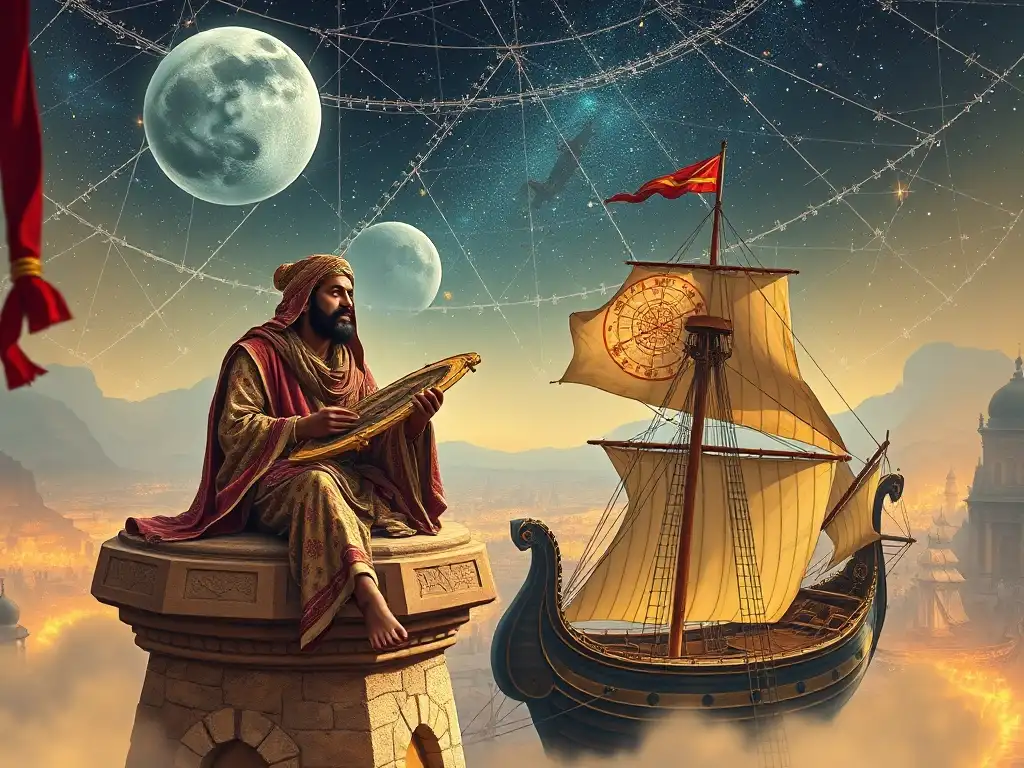
Exploring the intricate relationship between Indian astronomy and trade navigation reveals a fascinating chapter in the history of ancient civilizations. The advancements in astronomical knowledge not only influenced the understanding of celestial bodies but also played a pivotal role in shaping maritime practices and trade routes.
From the sophisticated navigation techniques developed by ancient Indian astronomers to their lasting impact on trade dynamics, this article delves into how Indian astronomy facilitated not just local trade but also connected distant lands. By examining the methods and figures instrumental in this evolution, we can appreciate the profound contributions of ancient Indian civilization to the realms of navigation and commerce.
Overview of Indian Astronomy
Indian astronomy boasts a rich heritage that dates back thousands of years, characterized by meticulous observations of celestial bodies and the formulation of complex systems to predict their movements. Ancient Indian astronomers, such as Aryabhata and Brahmagupta, made significant contributions that laid the groundwork for future developments in the field. Their works encompassed not just theoretical discussions but practical applications that were crucial for navigation.
Key aspects of Indian astronomy included:
- Celestial Measurements: The use of instruments like the gnomon and astrolabe allowed for precise measurements of angles and time.
- Calendrical Systems: The development of lunar and solar calendars aided traders in planning their journeys according to seasonal changes.
- Star Charts: Detailed maps of constellations guided navigators during voyages, especially across the Indian Ocean.
Historical Context of Trade Navigation in Ancient India
Trade navigation in ancient India flourished due to its strategic geographic location and the wealth of resources available. The Indian subcontinent served as a crucial hub in the trade network connecting the East and West. Key factors influencing this thriving trade included:
- Geographical Advantages: The Indian coastline, with its natural harbors, facilitated maritime trade routes.
- Cultural Exchanges: Interaction with other civilizations, such as the Greeks and Romans, enriched Indian maritime practices.
- Trade Goods: A variety of commodities, including spices, textiles, and precious stones, attracted traders from distant lands.
The intricate web of trade routes expanded exponentially, driven by both land and maritime navigation techniques that were rooted in astronomic knowledge.
Key Astronomical Techniques Used in Navigation
Indian astronomers employed a variety of techniques to aid maritime navigation, ensuring that traders could traverse vast distances with confidence. Notable techniques included:
- Guidance by Stars: Navigators often relied on the North Star (Dhruva) for orientation, particularly during nighttime voyages.
- Solar Navigation: The sun's position was used to determine the time of day and assist in directional guidance.
- Lunar Phases: The phases of the moon helped in predicting tides, which were critical for safe docking and sailing.
These techniques not only improved navigation but also ensured the safety and efficiency of trade expeditions.
Notable Indian Astronomers and Their Contributions
Several prominent figures in Indian astronomy made remarkable contributions that significantly impacted trade navigation:
- Aryabhata: His groundbreaking work, the Aryabhatiya, introduced concepts of zero and place value, revolutionizing mathematical calculations crucial for navigation.
- Brahmagupta: In his book Brahmasphutasiddhanta, he detailed methods for calculating the positions of planets and their relevance to navigation.
- Varahamihira: His contributions in Brihat Samhita encompassed astronomical observations that were essential for understanding seasonal changes affecting maritime trade.
These scholars not only advanced the field of astronomy but also created a legacy that intertwined the stars with the art of navigation, enriching the trade practices of ancient India.
How Indian Astronomy Shaped Trade Routes
Indian astronomy played a pivotal role in shaping trade routes, both maritime and overland, during ancient times. The sophisticated understanding of celestial bodies, developed by Indian astronomers, facilitated navigation across vast distances. This knowledge enabled merchants to plan their journeys by observing the stars, ensuring they could travel safely and efficiently. The use of astronomy not only enhanced trade logistics but also fostered connections between various cultures, facilitating the exchange of goods and ideas.
Influence on Sea Trade Routes in the Indian Ocean
The Indian Ocean was a crucial hub for maritime trade, connecting India with regions such as East Africa, the Arabian Peninsula, and Southeast Asia. Indian astronomers utilized the positions of stars, particularly the Pole Star, to determine latitude and navigate these waters.
- Key Contributions:
- Star Maps: Ancient Indian texts, such as the Surya Siddhanta, provided detailed star maps that guided sailors.
- Monsoon Winds: Understanding seasonal monsoon patterns allowed traders to time their voyages, maximizing their efficiency and safety.
These advancements not only enhanced the volume of trade but also contributed to the establishment of thriving port cities like Surat and Calicut, which became melting pots of culture and commerce.
Impact on Overland Trade Routes and Caravans
While maritime routes were significant, overland trade routes, particularly the Silk Road, were equally important. Indian astronomy influenced these routes by providing vital navigational information for caravan leaders traversing challenging terrains.
- Celestial Navigation: Caravan leaders used celestial bodies to maintain direction across deserts and mountains, ensuring that they could travel long distances without losing their way.
- Landmarks and Timing: Astronomical observations helped traders identify seasonal changes, aiding in the selection of optimal travel periods to avoid harsh weather conditions.
This knowledge allowed for the establishment of well-planned trade networks, connecting major cities such as Pataliputra and Taxila to the broader world.
The Integration of Astronomy into Trade Practices
The integration of astronomy into trade practices was essential for the success of ancient Indian merchants. By merging astronomical knowledge with practical trade skills, merchants could enhance their operational efficiency and minimize risks associated with travel.
Navigational Tools Developed by Ancient Indians
Ancient Indians developed several navigational tools that were deeply rooted in their astronomical knowledge:
- Astrolabes: Used for determining the altitude of celestial bodies, helping navigators ascertain their latitude.
- Gnomons: Simple devices that measured the angle of the sun's shadow, facilitating timekeeping and orientation.
- Sextants: Though later in development, early versions allowed for the measurement of angles between celestial bodies, aiding in navigation.
These tools were instrumental for both sea and land traders, significantly improving their ability to traverse complex routes.
Case Studies of Successful Trade Expeditions Guided by Astronomy
Numerous successful trade expeditions in ancient India were significantly aided by astronomical knowledge.
- The Voyage of the Malabar Coast Traders: Merchants sailing from the Malabar Coast to the Arabian Peninsula relied on lunar phases and star positions to navigate through monsoon conditions. Their successful voyages led to prosperous trade in spices and textiles, establishing long-lasting trade relations.
- The Silk Road Caravans: Caravans traveling from India to Central Asia utilized celestial navigation to traverse the difficult terrains of the Himalayas. The accuracy of their navigation enabled them to reach their destinations safely, leading to significant cultural exchanges and economic prosperity along the Silk Road.
These case studies exemplify how Indian astronomy not only influenced trade navigation but also contributed to the economic and cultural richness of ancient civilizations.
Cultural Exchange and Economic Impact
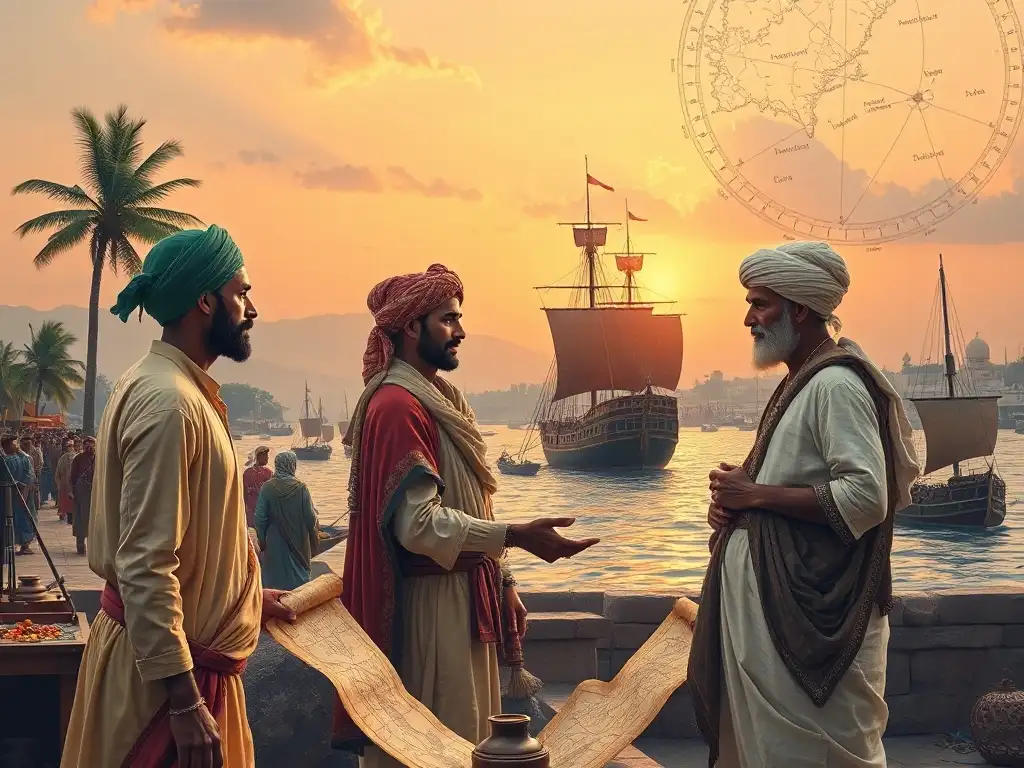
The relationship between Indian astronomy and trade navigation facilitated significant cultural exchanges and economic impacts throughout ancient civilizations. As maritime trade routes expanded, Indian astronomers played a crucial role in enhancing navigation techniques, which in turn enabled merchants to connect diverse cultures. This interaction not only enriched trade practices but also led to the dissemination of astronomical knowledge across regions.
The Indian subcontinent, particularly the coastal areas, became a melting pot where traders, scholars, and astronomers from various cultures converged. The exchange of goods such as spices, textiles, and precious stones was accompanied by the sharing of knowledge about celestial navigation, leading to a more integrated economic landscape. The influence of Indian astronomy can be seen in the advancements in navigational tools, such as the astrolabe and the use of star charts, which were vital for trade expeditions across the Indian Ocean.
The Relationship Between Astronomy and Trade Cultures
The relationship between astronomy and trade cultures in ancient India is multifaceted. Indian merchants relied heavily on celestial bodies to determine their routes and timing for expeditions. The ability to accurately navigate by the stars allowed for safer and more efficient trade journeys, which in turn stimulated economic growth. The significance of astronomical phenomena was deeply embedded in the cultural practices of trade, where merchants would align their journeys with auspicious celestial events, believing these would bring prosperity.
Moreover, astronomical observations were often recorded in texts that were widely circulated among traders. These texts not only included navigational techniques but also information about the best times to sail based on seasonal changes, monsoon patterns, and lunar cycles. As a result, trade routes were optimized, and the economic engagements became more predictable, fostering trust among traders and enhancing long-term partnerships.
Contributions to Global Trade Practices and Knowledge
Indian astronomy made noteworthy contributions to global trade practices and knowledge, influencing navigational systems far beyond its borders. The ancient texts produced by Indian astronomers, such as the "Surya Siddhanta," provided insights into calculations of time, distance, and planetary movements. This foundational knowledge was later transmitted to other civilizations, particularly through the Silk Road and maritime trade routes.
Notably, the introduction of the concept of latitude and longitude from Indian astronomy laid the groundwork for modern navigational techniques. These concepts were later adopted and refined by traders from Persia and Europe, which propelled advancements in their navigation practices. The meticulous observations and mathematical precision of Indian astronomers not only enhanced trade navigation but also contributed to global knowledge in astronomy, mathematics, and geography.
Conclusion
Summary of Indian Astronomy's Influence on Trade Navigation
Indian astronomy significantly influenced trade navigation by providing the necessary tools and knowledge for successful maritime expeditions. The integration of celestial navigation with trade practices led to enhanced economic interactions and cultural exchanges across regions. This synergy not only improved the navigational skills of ancient Indian merchants but also showcased the importance of astronomy in shaping trade dynamics throughout history.
Reflections on the Legacy of Ancient Indian Navigational Techniques
The legacy of ancient Indian navigational techniques continues to be relevant today. Modern navigation, while technologically advanced, still relies on principles established by ancient astronomers. The enduring influence of Indian astronomy on trade navigation serves as a testament to the ingenuity of ancient civilizations and their ability to adapt to the needs of commerce. As we reflect on this legacy, it is crucial to recognize the interconnectedness of knowledge across cultures and the lasting impact of ancient practices on contemporary navigation and trade.
Further Reading and Resources
To gain a deeper understanding of how Indian astronomy influenced trade navigation, there are various resources available that delve into both historical texts and modern analyses. These resources encompass books, scholarly articles, and online platforms that provide valuable insights into the intersection of astronomy and economic practices in ancient India.
Recommended Books on Indian Astronomy and Trade Navigation
- "The Astronomy of Ancient India" by J. C. Bhattacharya
- This book explores the evolution of astronomical practices in ancient India, detailing how celestial observations were integral to navigation and trade. It also highlights the methods used by ancient Indian astronomers to create accurate calendars and predict celestial events.
- "Indian Astronomy: A Historical Perspective" by R. C. Gupta
- Gupta's work provides a comprehensive overview of Indian astronomical traditions, including how they influenced maritime navigation. It discusses the role of astronomy in determining trade routes and how it was crucial for merchants venturing into distant waters.
- "Trade in Ancient India: Economic Practices and Cultural Exchanges" by R. S. Sharma
- This book examines the broader economic practices in ancient India, with a significant focus on trade navigation. It includes discussions on how astronomical knowledge facilitated trade across the Indian Ocean and beyond.
- "The Indian Ocean Trade: A Historical Perspective" by K. M. Panikkar
- Although primarily focused on trade, this book touches upon the navigational techniques used by Indian traders, including the astronomical methods that guided their voyages. It provides context on how these practices expanded trade networks.
- "Astronomy and Navigation in Ancient Civilizations" by A. B. Desai
- This resource offers insights into various ancient civilizations' navigational techniques, with specific sections dedicated to Indian contributions. It highlights the importance of celestial navigation in trade routes.
Online Resources for Exploring Ancient Indian Economic Practices
- Digital Library of India
- This online repository hosts a vast collection of texts related to Indian history, including works on astronomy and trade. It is a valuable resource for researchers and enthusiasts looking to explore primary sources.
- Ancient India: A Historical Overview (Website)
- This website features articles and essays on a variety of topics related to ancient Indian civilization, including sections on economic practices and the role of astronomy in trade navigation.
- Indian Council of Historical Research
- The ICHR provides access to research papers and publications that focus on the economic practices of ancient India, including the pivotal role of astronomy in facilitating trade.
- Academia.edu
- A platform where scholars publish their papers, many focusing on Indian astronomy and trade practices. Searching for keywords such as "Indian astronomy trade navigation" will yield numerous academic articles that provide in-depth analysis.
- Khan Academy: Ancient Indian Trade
- An educational platform that offers free resources and videos discussing ancient Indian trade routes and practices, including the astronomical techniques that informed navigation.
These resources will significantly enhance your understanding of the intricate relationship between Indian astronomy and trade navigation, showcasing the advancements of ancient Indian civilizations in these fields.
- Introduction to Indian Astronomy and Trade Navigation
- The Role of Indian Astronomy in Maritime Navigation
- How Indian Astronomy Shaped Trade Routes
- The Integration of Astronomy into Trade Practices
- Cultural Exchange and Economic Impact
- Conclusion
- Further Reading and Resources
- What role did Indian astronomy play in trade navigation?
- How did ancient Indian navigators utilize astronomy?
- What contributions did the Indus Valley civilization make to astronomy?
- How did the Gupta Empire influence astronomical studies?
- Why is understanding Indian astronomy important for trade navigation history?
Frequently Asked Questions
Indian astronomy provided essential tools for navigators, enabling them to determine their position at sea using celestial bodies. This contributed significantly to the expansion of maritime trade routes.
Ancient Indian navigators relied on star positions and celestial phenomena to guide their journeys. They developed intricate methods to navigate, which allowed for safer and more efficient trade voyages.
What contributions did the Indus Valley civilization make to astronomy?
The Indus Valley civilization exhibited advanced understanding of astronomical phenomena, evident in their urban planning and alignment of structures. This knowledge laid the foundation for later developments in navigation.
How did the Gupta Empire influence astronomical studies?
The Gupta Empire was a golden age for Indian astronomy, marked by significant advancements in calculations and celestial mapping. These contributions greatly enhanced the accuracy of navigation used in trade.
Understanding Indian astronomy is crucial as it highlights the sophisticated knowledge that ancient civilizations possessed, which directly influenced the growth and success of trade networks across regions.
The profound influence of Indian astronomy on trade navigation is not merely a historical footnote; it is a testament to the ingenuity and foresight of ancient civilizations. Today, as global trade continues to expand and evolve, the principles of navigation that were once guided by the stars remind us of the interconnectedness of cultures and the importance of knowledge sharing. The innovations of Indian astronomers laid the groundwork for maritime exploration and trade routes that shaped economies and societies, proving that the stars have always been a compass for human progress.
The impact of Indian astronomy on trade navigation is a reflection of how knowledge transcends borders and time. This ancient wisdom continues to resonate in our modern world, where the principles of navigation are still rooted in the celestial observations of our ancestors. As we navigate the complexities of globalization, we can draw inspiration from the past. In the midst of chaos, there is also opportunity.
– Sun Tzu. This quote encapsulates the idea that understanding our history can illuminate pathways for future endeavors, especially in trade and exploration.
As we reflect on the lessons of Indian astronomy and its pivotal role in trade navigation, I invite you to consider how you can apply these insights in your own life. Embrace the spirit of exploration and curiosity, whether in your personal or professional journey. Let the stars guide you in seeking new opportunities and forging connections across cultures. Remember, just as the ancient navigators relied on the heavens, you too can chart your course by looking to the wisdom of the past while boldly stepping into the future.
Thank you for taking the time to delve into the fascinating impact of Indian astronomy on trade navigation. Your curiosity is the first step towards unlocking the treasures of ancient knowledge! Now, let's take that passion and turn it into action.
Here are some steps you can take to deepen your understanding and share this incredible history:
- Dive deeper: Learn about influential Indian astronomers such as Aryabhata and their groundbreaking contributions to navigation. Consider reading a book or watching a documentary to expand your knowledge!
- Engage with a community: Participate in online forums or social media groups dedicated to ancient sciences and trade history. Share your insights and gain new perspectives from fellow enthusiasts.
- Plan a stargazing night: Organize an event with friends to explore the night sky and discuss historical navigation methods, blending science with captivating storytelling!
Now, we’d love to hear from you! What aspect of Indian astronomy do you find most intriguing, and how do you think it could inspire modern navigation techniques?