
The Cosmic Wisdom: Unveiling Astronomy's Role in Ancient Indian Culture

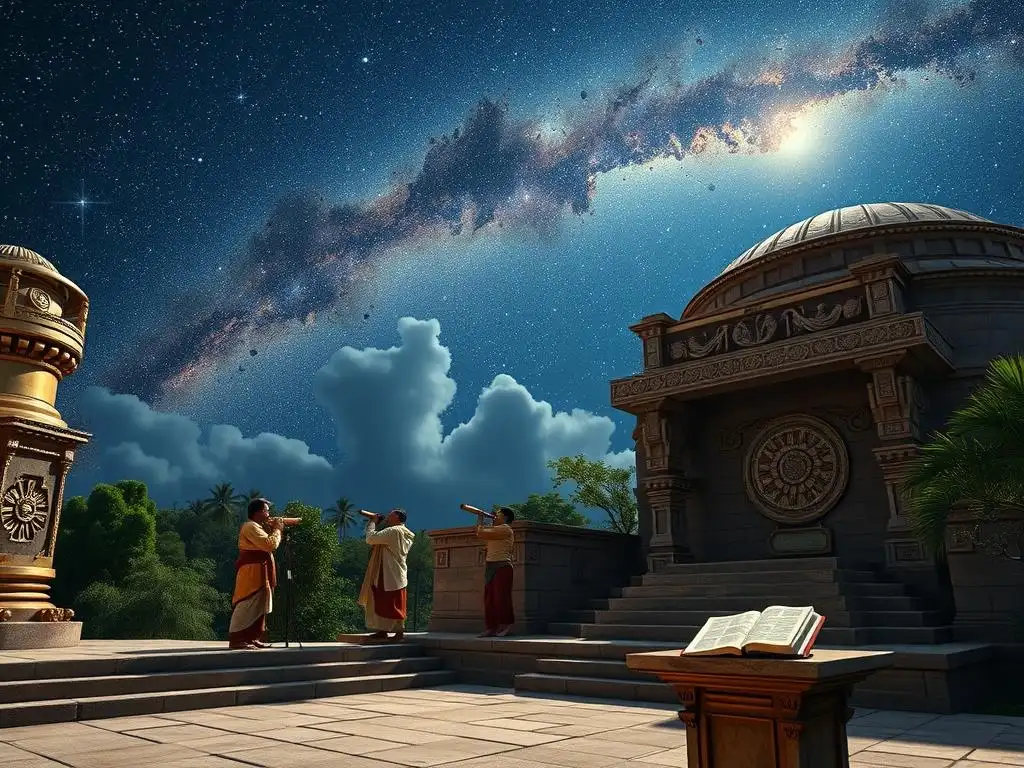
Welcome to Ancient India History, where we embark on a journey through time to uncover the rich tapestry of ancient Indian civilizations. In this exploration, we delve into the fascinating realm of ancient Indian astronomy contributions, revealing how the stars and the cosmos inspired a culture of profound scientific inquiry and wisdom.
Prepare to be captivated as we unveil the cosmic secrets that shaped not only the skies above but also the very foundations of ancient Indian thought. Join us as we navigate through the celestial wonders and the legacy of knowledge that continue to influence our understanding of the universe today!
Introduction to Ancient Indian Astronomy Contributions
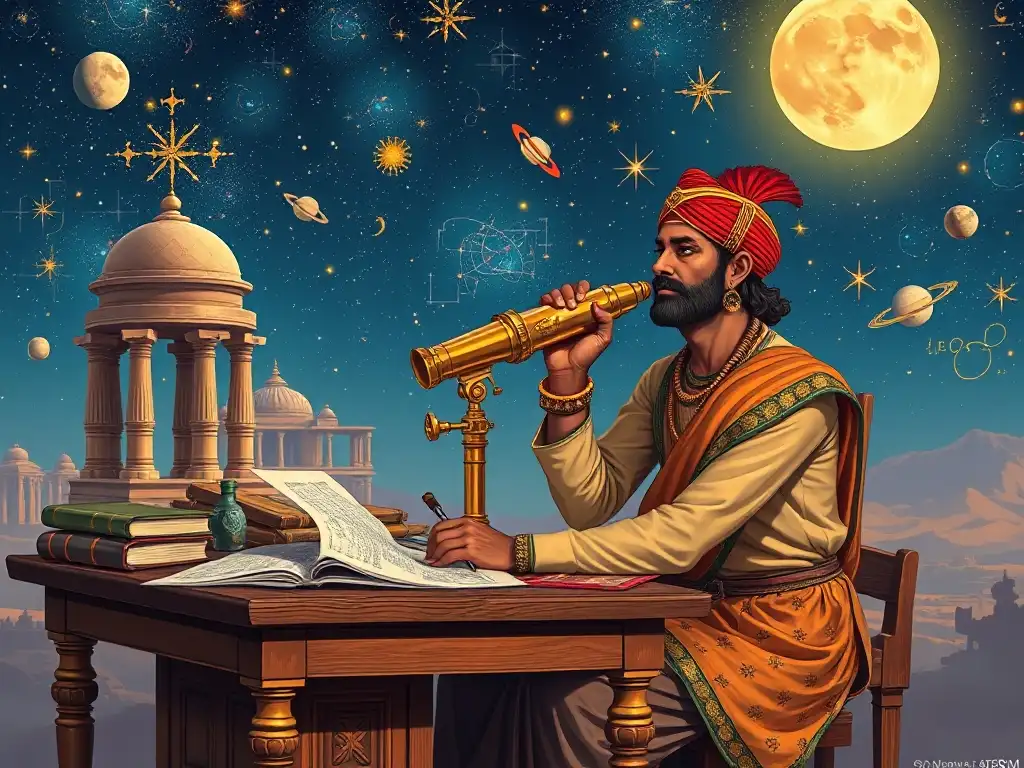
Exploring the vast expanse of ancient Indian astronomy reveals a tapestry woven with intricate observations, profound philosophies, and groundbreaking contributions that have significantly shaped our understanding of the cosmos. From the meticulous celestial calculations of the Indus Valley civilization to the sophisticated astronomical texts of the Gupta Empire, ancient Indian astronomers not only mapped the stars but also integrated their findings into the very fabric of society.
This article delves into the remarkable achievements and cultural significance of astronomy in ancient India, highlighting its pivotal role in shaping both scientific thought and spiritual practices. By examining these contributions, we can appreciate the depth of knowledge and insight that ancient Indian civilizations offered to the world, which continues to influence contemporary astronomy.
Overview of Astronomy in Ancient India
Ancient Indian astronomy, often referred to as "Jyotisha," encompasses a rich heritage of observational techniques, mathematical models, and philosophical reflections. The foundations of this ancient science were laid in various texts, including the Vedas, Siddhantas, and Puranas, which not only recorded astronomical phenomena but also linked them to cosmological and astrological beliefs. Key contributions include:
- Calendar Systems: Ancient Indians developed complex calendar systems based on lunar and solar cycles, which were crucial for agricultural planning and religious observances.
- Celestial Measurements: Techniques for measuring celestial bodies, such as the length of shadows and the position of stars, were advanced, demonstrating a deep understanding of geometry and trigonometry.
- Influential Texts: Works like the Surya Siddhanta and Aryabhatiya laid the groundwork for various astronomical calculations and still serve as references in modern studies.
Importance of Astronomy in Ancient Indian Culture
The significance of astronomy in ancient India extended beyond mere scientific inquiry; it was deeply intertwined with culture, religion, and daily life.
- Astrology and Spirituality: Astronomy was closely linked to astrology, influencing religious rituals, personal decisions, and social structures. Celestial events were often seen as omens or divine messages.
- Navigation and Agriculture: Astronomical knowledge facilitated navigation for trade and improved agricultural productivity by predicting seasonal changes.
- Cultural Festivals: Many festivals were timed according to astronomical events, highlighting the integration of celestial observations into the fabric of society.
Historical Context of Astronomy in Ancient India
To fully appreciate the contributions of ancient Indian astronomy, it is essential to understand the historical context in which these advancements occurred.
The Vedic Period and Astronomical Observations
During the Vedic period (approximately 1500 – 500 BCE), the foundations of astronomical knowledge were established. The Vedas contain references to celestial phenomena, indicating an early recognition of the importance of the stars and planets. Key features of this period include:
- Rigveda References: The Rigveda mentions various celestial bodies and phenomena, illustrating an early understanding of the cosmos.
- Astronomical Calculations: The development of techniques for calculating time and celestial events laid the groundwork for future advancements in astronomy.
Astronomy in the Maurya and Gupta Empires
The Maurya (322 – 185 BCE) and Gupta (approximately 320 – 550 CE) empires marked the zenith of astronomical achievements in ancient India.
- Aryabhata's Contributions: Aryabhata, one of the most notable astronomers of this era, introduced concepts such as the Earth's rotation and accurate calculations of planetary positions.
- Brahmagupta's Innovations: Brahmagupta further advanced astronomical knowledge by formulating rules for calculating eclipses and planetary motions, significantly influencing both Indian and Islamic astronomy.
Through these historical phases, ancient Indian astronomy not only flourished but also laid the groundwork for future scientific disciplines, demonstrating the remarkable intellect and creativity of its scholars.
Key Figures in Ancient Indian Astronomy
Ancient Indian astronomy was shaped by several key figures whose discoveries and theories laid the foundation for future astronomical studies. These scholars made significant contributions not only to astronomy but also to mathematics and other sciences. Their works influenced both contemporary and later civilizations, making ancient Indian astronomy a crucial part of the global scientific heritage.
Aryabhata: The Pioneer of Indian Astronomy
Aryabhata (476–550 CE) stands as one of the most celebrated figures in ancient Indian astronomy. His seminal work, the Aryabhatiya, is a comprehensive treatise covering mathematics and astronomy. Aryabhata introduced the concept of the Earth's rotation on its axis, which was revolutionary for his time.
He calculated the circumference of the Earth with remarkable accuracy and proposed that the moon shines by reflected sunlight. Additionally, he contributed to the understanding of eclipses, stating that they occur due to the shadow of the Earth or the moon. Aryabhata's innovative methods for calculating the positions of celestial bodies laid the groundwork for future astronomers and demonstrated a sophisticated understanding of mathematical principles.
Brahmagupta and His Contributions to Mathematics and Astronomy
Brahmagupta (598–668 CE) was another pivotal figure in the realm of ancient Indian astronomy, known for his influential work, the Brahmasphutasiddhanta. In this text, he expanded on Aryabhata's ideas and introduced new concepts in mathematics, particularly in algebra. Brahmagupta was among the first to define zero as a number and established rules for arithmetic operations involving zero. His astronomical contributions included methods for calculating the positions of planets and detailed descriptions of lunar and solar eclipses. He also emphasized the importance of observational accuracy and practical applications in astronomy, bridging the gap between theoretical knowledge and real-world observations.
Varahamihira and the Brihat Samhita
Varahamihira (505–587 CE) was a renowned astronomer and astrologer whose work, the Brihat Samhita, is a monumental encyclopedia covering various scientific disciplines, including astronomy. This text is notable for its extensive discussions on planetary motion, eclipses, and astrological phenomena. Varahamihira's observations led to improvements in astronomical calculations, particularly regarding the positions of celestial bodies. He also integrated astrology with astronomy, reflecting the cultural significance of celestial observations in ancient Indian society. His contributions emphasized the interconnectedness of science and spirituality, showcasing how ancient Indian scholars viewed the cosmos as a reflection of divine order.
Major Contributions of Ancient Indian Astronomy
The contributions of ancient Indian astronomy extended beyond individual scholars, encompassing a range of advancements that influenced various fields. These contributions included the development of instruments, calendar systems, and mathematical concepts that profoundly impacted both science and daily life.
Development of Astronomical Instruments
Ancient Indian astronomers developed several sophisticated instruments that aided in celestial observations. Instruments such as the gnomon (a simple sundial) and the yantra (a device for measuring angles) played crucial roles in determining time and the positions of celestial bodies. The construction of large astronomical observatories, such as the Jantar Mantar in Jaipur, further exemplified the advanced engineering techniques of the time. These instruments allowed astronomers to make accurate measurements and predictions, marking a significant advancement in observational astronomy.
Calendar Systems and Timekeeping in Ancient India
Ancient Indian astronomers created complex calendar systems that reflect their extensive understanding of celestial cycles. The Hindu calendar, which includes both lunar and solar elements, was developed to determine auspicious dates for rituals and agricultural activities. The concept of the yuga, or cosmic age, was also integral to timekeeping, linking astronomical phenomena to philosophical ideas about the universe's cyclical nature. These calendars not only facilitated the organization of time but also connected cultural practices to astronomical events, showcasing the deep interrelationship between science and society.
The Concept of Zero and Its Impact on Astronomy
One of the most profound contributions of ancient Indian mathematics to astronomy is the concept of zero. Introduced by Indian mathematicians like Brahmagupta, zero revolutionized calculations and the representation of numbers. This innovation enabled astronomers to perform complex calculations more efficiently, facilitating the precise tracking of celestial bodies and the prediction of astronomical events. The use of zero in positional notation significantly advanced mathematical understanding and allowed for greater accuracy in astronomical computations, influencing future generations of scientists worldwide.
The contributions of ancient Indian astronomy are not only remarkable in their own right but also serve as the foundation for many scientific principles that resonate in modern astronomy.
Ancient Texts and Astronomical Knowledge
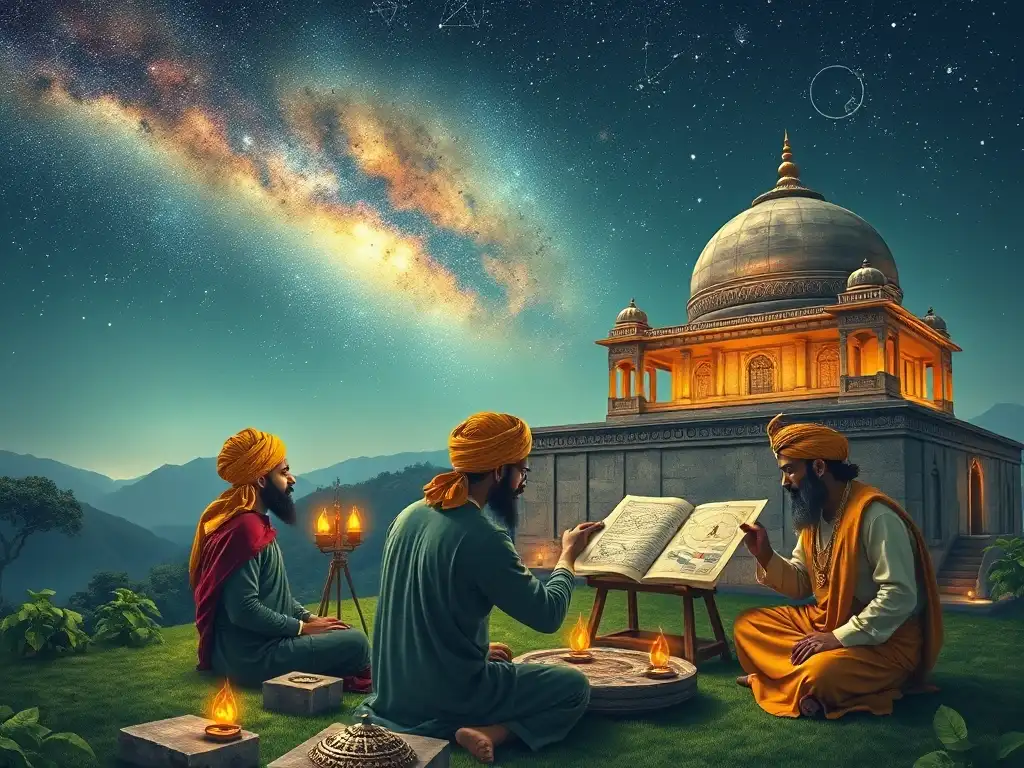
Ancient Indian astronomy is deeply rooted in the rich tapestry of texts that detail celestial observations and calculations. These texts reflect a sophisticated understanding of the cosmos, laying the groundwork for future scientific inquiry. Scholars utilized a variety of ancient texts to document their astronomical findings, making significant contributions to both theoretical and practical aspects of astronomy. The meticulous nature of these writings showcases the advanced mathematical techniques and observational skills that ancient Indian astronomers possessed.
The Surya Siddhanta: A Fundamental Astronomical Text
The Surya Siddhanta, composed around the 4th to 5th century CE, is one of the most significant classical texts in Indian astronomy. It serves as a comprehensive guide to various astronomical calculations, including the measurement of time, planetary positions, and eclipses. The text introduces concepts such as the calculation of the Earth’s circumference, which was determined to be about 39,968 kilometers, remarkably close to the modern measurement.
In addition to its mathematical prowess, the Surya Siddhanta emphasizes the importance of observation, urging astronomers to closely monitor celestial bodies to enhance their understanding of the universe. The text also discusses the motions of the Sun, Moon, and planets, providing methodologies that influenced later astronomers both in India and beyond. Its systematic approach to astronomy laid the foundation for subsequent astronomical texts and practices.
The Aryabhatiya: Contributions to Trigonometry and Astronomy
Written by the renowned mathematician Aryabhata in the 5th century CE, the Aryabhatiya is a seminal work that combines mathematics and astronomy. Aryabhata's contributions to trigonometry are particularly noteworthy; he introduced sine functions and established the relationship between angles and their trigonometric values, which was pivotal for astronomical calculations.
The Aryabhatiya also contains significant insights into the rotation of the Earth and the calculation of the length of a year, which Aryabhata determined to be approximately 365.358 days. His innovative use of mathematical formulas for predicting planetary positions and eclipses marked a turning point in ancient Indian astronomy. The influence of Aryabhata's work is evident in later scholars, who built upon his methodologies and principles, extending the reach of Indian astronomical knowledge across cultures.
Influence of Ancient Indian Texts on Global Astronomy
Ancient Indian astronomical texts, particularly the Surya Siddhanta and Aryabhatiya, had a profound impact on global astronomy. These works were translated into Arabic during the medieval period, significantly influencing Islamic astronomy. Scholars such as Al-Biruni and Al-Khwarizmi drew upon these texts, incorporating their methodologies into their own astronomical frameworks.
The propagation of Indian astronomical concepts across the Silk Road and into Europe also facilitated the exchange of knowledge. This cross-cultural interaction enriched global scientific discourse, showcasing how ancient Indian astronomers contributed to the broader understanding of the cosmos. The principles established in these texts continue to resonate in contemporary astronomical practices, highlighting the timeless nature of ancient Indian insights.
Cultural Significance of Astronomy in Ancient India
Astronomy in ancient India was not merely a scientific pursuit; it was intricately woven into the cultural and religious fabric of society. The celestial phenomena were often seen as divine manifestations, influencing various aspects of daily life, spirituality, and societal structures. This cultural significance underscores the profound connection between the heavens and the earthly realm in ancient Indian civilization.
Astronomy and Religion: Alignments with Temples and Rituals
The interplay between astronomy and religion is evident in the architectural designs of temples, many of which were aligned with celestial events. This alignment was not just for aesthetic purposes; it served a spiritual function, allowing worshippers to connect with the cosmos during rituals. For instance, the orientation of temples was often designed to capture the first rays of sunlight at sunrise, symbolizing the divine presence and cosmic order.
Festivals were frequently timed with celestial events, such as solstices and equinoxes, reflecting the belief that these moments held special significance. Rituals performed during these times were thought to enhance the connection between humans and the divine, reinforcing the idea that the cosmos played a vital role in shaping the spiritual landscape of ancient Indian society.
Astrology and Its Role in Ancient Indian Society
Astrology held a prominent place in ancient Indian culture, deeply influencing social and personal decisions. The belief that celestial positions could affect human behavior and destiny led to a widespread practice of astrological consultations. Astrologers, known as jyotishis, utilized intricate calculations based on the positions of stars and planets to create horoscopes, guiding individuals in their life choices.
Astrology was not limited to personal affairs; it also extended into political realms, where rulers sought astrological advice for governance and warfare. This intertwining of astronomy and astrology highlights how celestial observations were integral to various facets of ancient Indian life, reinforcing the perception that the cosmos governed earthly affairs.
Festivals and Celestial Events: Celebrating the Cosmos
Ancient Indian festivals often celebrated celestial events, reflecting the community's reverence for the cosmos. Events such as Diwali, which marks the victory of light over darkness, were linked to astronomical phenomena, such as the new moon. Similarly, Makar Sankranti, celebrated during the winter solstice, signifies the transition of the Sun into the zodiac of Capricorn, heralding the return of longer days.
These festivals not only served as communal celebrations but also provided opportunities for astronomical observations. The alignment of festivals with celestial events encouraged people to engage with the cosmos actively, fostering a culture of appreciation for the universe's rhythms and cycles. The integration of astronomy into cultural practices underscores the holistic view of ancient Indian civilization, where science, spirituality, and community life were interconnected.
Preservation of Ancient Indian Astronomical Knowledge
The preservation of ancient Indian astronomical knowledge is a testament to the meticulous efforts undertaken by scholars and astronomers throughout India's rich history. Ancient Indian texts, such as the Surya Siddhanta and the Aryabhatiya, served as foundational works that documented celestial observations, mathematical principles, and cosmological theories. These texts were not only revered in their time but were also meticulously copied and preserved across generations.
The tradition of oral transmission played a significant role as well, where learned scholars would recite and teach complex astronomical concepts to students. This oral culture ensured that knowledge was passed down accurately before being committed to writing. The integration of astronomy into religious practices, agriculture, and navigation further solidified its importance in ancient Indian society, making its preservation a collective effort.
Manuscripts and Their Role in Safeguarding Knowledge
Manuscripts such as the Brahmasphutasiddhanta and the Brahma Sphuta Siddhanta were crucial in safeguarding astronomical knowledge. These texts were often written in Sanskrit and provided detailed calculations regarding planetary positions, eclipses, and timekeeping. The meticulous nature of these manuscripts allowed for the preservation of astronomical observations that could span centuries.
Many of these manuscripts were later translated into Arabic during the medieval period, facilitating the sharing of ancient Indian wisdom with scholars in the Islamic world. The role of manuscripts cannot be overstated, as they served as a bridge between ancient knowledge and subsequent advancements in various fields of science and mathematics.
Influence on Later Astronomical Developments in the Islamic Golden Age
The astronomical contributions of ancient India significantly influenced the Islamic Golden Age. Scholars such as Al-Biruni and Al-Khwarizmi drew upon Indian astronomical texts, integrating their observations into the Islamic scientific canon. The translation of texts like the Aryabhatiya into Arabic not only preserved the knowledge but also sparked further inquiry and exploration.
This cross-cultural exchange led to the development of new astronomical instruments and methodologies in the Islamic world. Concepts such as the sine function, which was pivotal in trigonometry, were derived from Indian mathematics, showcasing the profound impact that ancient Indian astronomy had on later scientific advancements.
Conclusion: The Legacy of Ancient Indian Astronomy Contributions
The legacy of ancient Indian astronomy contributions extends beyond historical significance; it remains a cornerstone in the foundation of modern astronomical practices. The precision and depth of ancient Indian astronomical knowledge reflect a sophisticated understanding of the cosmos that continues to inspire contemporary researchers.
Lasting Impact on Modern Astronomy
Modern astronomy owes a great debt to ancient Indian scholars who laid the groundwork for celestial studies. Techniques for calculating eclipses, understanding planetary motions, and even the concept of zero in mathematics are rooted in ancient Indian contributions. Today, astronomers still refer to ancient calculations and methodologies to enhance their understanding of the universe.
Furthermore, contemporary astronomical software often incorporates ancient principles, showcasing how these age-old ideas have seamlessly integrated into modern scientific discourse. The accuracy of ancient Indian astronomy serves as a reminder of the ingenuity and scientific prowess present in ancient civilizations.
Reflection on the Cosmic Wisdom of Ancient Indian Culture
The cosmic wisdom of ancient Indian culture reveals a profound connection between humanity and the universe. This relationship was characterized by a blend of spirituality and scientific inquiry, where celestial bodies were viewed not only as physical entities but also as symbols of deeper philosophical truths.
The reverence for the cosmos is reflected in various cultural practices, art, and literature throughout Indian history. By exploring the contributions of ancient Indian astronomy, we gain insight into a civilization that valued knowledge, curiosity, and the pursuit of understanding the mysteries of existence. The legacy of this cosmic wisdom continues to resonate, reminding us of the importance of preserving and celebrating our shared intellectual heritage.
- Introduction to Ancient Indian Astronomy Contributions
- Historical Context of Astronomy in Ancient India
- Key Figures in Ancient Indian Astronomy
- Major Contributions of Ancient Indian Astronomy
- Ancient Texts and Astronomical Knowledge
- Cultural Significance of Astronomy in Ancient India
- Preservation of Ancient Indian Astronomical Knowledge
- Conclusion: The Legacy of Ancient Indian Astronomy Contributions
Frequently Asked Questions
What were the key contributions of ancient Indian astronomy?
Ancient Indian astronomy made significant contributions in areas like calendar systems, celestial navigation, and the development of mathematical concepts such as trigonometry.
How did ancient Indian astronomers measure time?
They employed sophisticated methods including the use of shadow clocks and water clocks, which helped them create highly accurate calendar systems for agricultural and religious purposes.
Who were some notable figures in ancient Indian astronomy?
Prominent astronomers like Aryabhata, Brahmagupta, and Varahamihira made pivotal advancements in astronomy, mathematics, and astrology, influencing both Indian and global knowledge.
What influence did ancient Indian astronomy have on other cultures?
Ancient Indian astronomy had a profound impact on Islamic and European astronomy, particularly through translations of texts during the Medieval period, spreading knowledge of mathematical astronomy.
How is ancient Indian astronomy relevant today?
The principles and techniques developed in ancient Indian astronomy continue to be relevant, influencing modern astronomy and offering insights into cultural heritage and scientific evolution.
Final Reflection: Embracing the Cosmic Wisdom of Ancient Indian Astronomy
The contributions of ancient Indian astronomy are not just relics of the past; they are a profound testament to humanity's quest for knowledge and understanding of the universe. Today, as we navigate an increasingly complex world, the insights and methodologies developed by ancient astronomers resonate with our ongoing exploration of the cosmos. Their work reminds us that the pursuit of knowledge is timeless and that the stars have always been a source of inspiration and guidance.
Cultural and social landscapes are continually shaped by the wisdom of those who came before us. The intricate relationship between astronomy and spirituality in ancient Indian culture highlights how deeply interconnected our understanding of the universe is with our identity and beliefs. As we reflect on this legacy, we can draw parallels to contemporary movements that seek to harmonize science and spirituality. The cosmos is within us. We are made of star-stuff. We are a way for the universe to know itself.
– Carl Sagan. This quote encapsulates the essence of our connection to the cosmos, urging us to appreciate the profound insights of our ancestors.
As we look to the future, let us take a moment to reflect on how we can apply the lessons from ancient Indian astronomy in our own lives. Consider how the pursuit of knowledge, curiosity, and a sense of wonder can guide your journey. Embrace the cosmic wisdom that has been passed down through generations, and allow it to inspire you to explore, question, and connect with the universe around you. In doing so, we honor the contributions of those who came before us and pave the way for future generations to continue this timeless quest for understanding.
Unveil the Cosmos: Embrace Ancient Insights Today!
Thank you for journeying through the fascinating intersection of astronomy and ancient Indian culture! You've uncovered the rich heritage and wisdom that shaped our understanding of the stars. Now, it’s time to channel that inspiration into meaningful actions that enhance your connection to this incredible legacy.
Here are a few steps you can take to deepen your exploration:
- Explore the Night Sky: Grab a telescope or simply lay back and stargaze. Try to identify constellations and celestial phenomena that were significant to ancient Indian astronomers.
- Share the Knowledge: Discuss what you've learned with friends and family, or share this article on social media to spark conversations about the wonders of ancient astronomy.
- Engage with the Community: Join local astronomy clubs or online forums dedicated to the study of ancient cultures. Participate in discussions or attend lectures that delve into the historical significance of the cosmos.
Which aspect of ancient Indian astronomy resonates with you the most, and how do you think it can influence our understanding of the universe today?