
The Life of the Tirthankara: The Connection Between Buddhism and Jainism


Welcome to Ancient India History, where we embark on a captivating journey through the rich tapestry of India's past. Here, you will uncover the profound connections between Buddhism and Jainism, two of the most influential religions that emerged from the subcontinent's fertile cultural soil. In our featured article, "The Life of the Tirthankara: The Connection Between Buddhism and Jainism," we delve into the lives and teachings that shaped these spiritual traditions.
Prepare to be intrigued as we reveal the shared philosophies and historical contexts that link these ancient faiths, inviting you to explore a world where spirituality, culture, and history intertwine. Join us in uncovering the mysteries of ancient Indian religions and their enduring impact on the world!
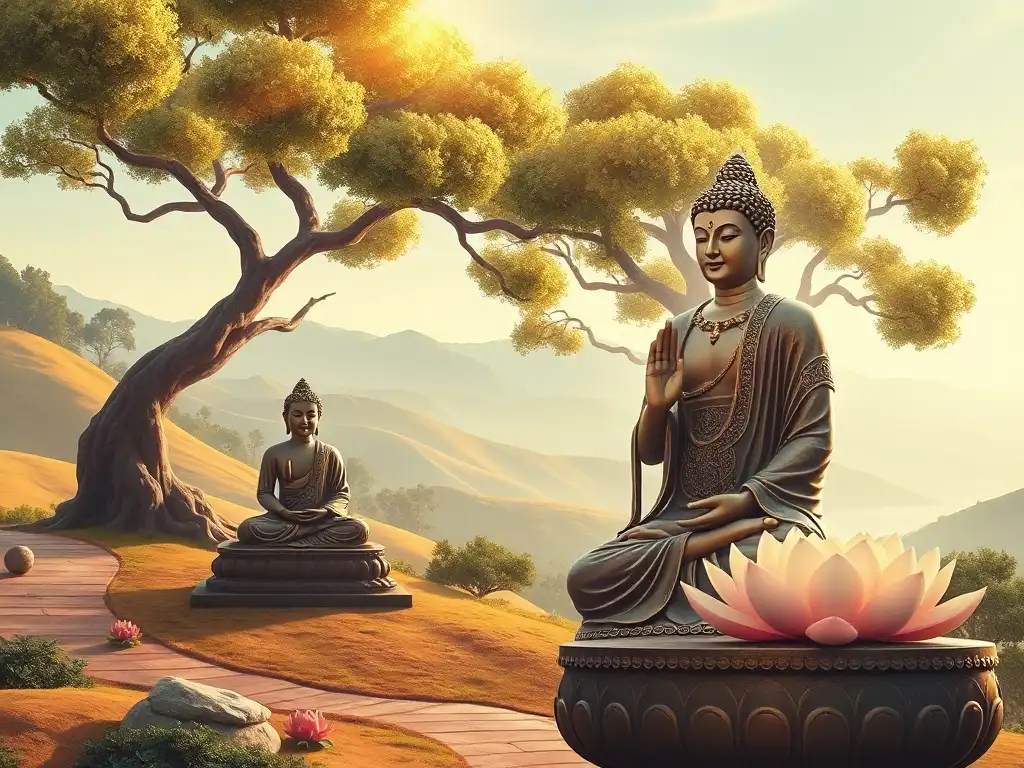
Introduction to Buddhism and Jainism Connections
The intricate relationship between Buddhism and Jainism is a fascinating aspect of ancient Indian history, revealing how these two prominent religious traditions have influenced one another while maintaining distinct identities. Both religions emerged in the same geographical and cultural milieu, sharing philosophical concepts and ethical principles that continue to resonate to this day.
Understanding the connections between Buddhism and Jainism is essential for grasping the broader narrative of ancient Indian civilization, as it showcases the diversity and richness of spiritual thought during that era. This article will delve into the life of the Tirthankara as a central figure in Jainism and explore the interplay between these two religions, shedding light on their historical context and mutual influences.
Historical Context of Buddhism and Jainism
To appreciate the connections between Buddhism and Jainism, one must first consider the historical backdrop against which these religions developed. Both arose in ancient India during a time of significant social, political, and economic transformation. The rise of urban centers and the emergence of new philosophical ideas prompted a re-evaluation of existing religious practices, leading to the birth of new movements.
Roots of Buddhism and Jainism in Ancient India
Buddhism and Jainism can trace their roots to the 6th century BCE, a period marked by the rise of ascetic movements that sought to address the spiritual needs of a rapidly changing society.
- Jainism, attributed to Mahavira, emphasizes the path of non-violence (ahimsa) and truth (satya), advocating for the liberation of the soul through rigorous ascetic practices.
- Buddhism, founded by Siddhartha Gautama (the Buddha), promotes the Four Noble Truths and the Eightfold Path as a means to attain enlightenment and freedom from suffering.
Both religions share key concepts such as karma, samsara (the cycle of birth and rebirth), and the ultimate goal of liberation (moksha or nirvana), highlighting their philosophical commonalities.
Influence of Ancient Indian Civilization on Both Religions
The influence of ancient Indian civilization on Buddhism and Jainism cannot be overstated. The cultural, artistic, and intellectual achievements of the time provided a fertile ground for the growth of these religions.
- Cultural Exchange: The trade routes, pilgrimage sites, and royal patronage allowed for the exchange of ideas and practices, enriching both traditions.
- Art and Architecture: The architectural marvels, such as stupas and temples, served as significant centers for worship and learning, reflecting the religious fervor of the time.
Ultimately, the interplay between Buddhism and Jainism illustrates a broader narrative of spiritual exploration and cultural exchange in ancient India, offering valuable insights into the complexities of religious life during this vibrant period.
Understanding Tirthankaras
The Tirthankaras are central figures in Jainism, revered as spiritual teachers who have attained enlightenment and guide others towards liberation. The term "Tirthankara" translates to "ford-maker," symbolizing someone who helps others cross the ocean of worldly existence, ultimately leading them to spiritual freedom. Jain tradition recognizes 24 Tirthankaras, with the most notable being Lord Rishabhanatha, the first Tirthankara, and Lord Mahavira, the last. Each Tirthankara is believed to have established the core principles of Jain philosophy and ethics, serving as an inspiration for followers to pursue a path of righteousness and spiritual development.
Within the context of ancient Indian religions, the Tirthankaras represent a deep-rooted connection between Jainism and other spiritual paths, particularly Buddhism. Both religions emerged in a similar cultural milieu during the 6th century BCE and share several philosophical tenets, making the study of Tirthankaras essential to understanding the interplay between these two traditions.
What is a Tirthankara?
A Tirthankara is not merely a historical figure but embodies the ultimate ideal of spiritual achievement in Jainism. Each Tirthankara is believed to have conquered the cycle of birth and death (samsara) and attained kevaljnana, or absolute knowledge. They are considered to have lived exemplary lives characterized by the practice of ahimsa (non-violence), truthfulness, and asceticism.
Tirthankaras are often depicted in Jain art and iconography, symbolizing their spiritual attributes through various gestures (mudras) and postures. Their teachings emphasize the importance of self-discipline, meditation, and the pursuit of truth, which are essential for followers seeking to attain liberation (moksha). The teachings of each Tirthankara are preserved in sacred texts, and their lives serve as moral exemplars for Jains.
Key Tirthankaras and Their Contributions
The contributions of the Tirthankaras to Jainism are monumental, with each one laying down essential teachings and principles that contribute to the overall framework of Jain philosophy. Here are some of the key Tirthankaras and their contributions:
- Rishabhanatha (1st Tirthankara): Known for introducing agriculture and crafts, he is often regarded as the founder of Jainism. His teachings emphasized the importance of non-violence and truth.
- Parshvanatha (23rd Tirthankara): He is credited with advocating the four major vows of Jainism: non-violence, truthfulness, non-stealing, and non-possessiveness. His teachings influenced the ethical practices that are central to Jain beliefs.
- Mahavira (24th Tirthankara): Revered as the most significant Tirthankara, Mahavira's life and teachings form the foundation of modern Jainism. He emphasized the importance of severe asceticism and the practice of non-attachment, shaping the path of liberation for countless followers.
The teachings of these Tirthankaras have been instrumental in molding the ethical and philosophical landscape of Jainism, while also influencing the principles of Buddhism, highlighting the historical and spiritual connections between these two ancient Indian religions.
Parallels Between Buddhism and Jainism
Buddhism and Jainism share several philosophical underpinnings, which can be traced back to the teachings of their respective founders and the cultural context of ancient India. Both religions emerged as reform movements during a time when ritualistic practices dominated spiritual life, advocating for a more personal and direct approach to enlightenment.
Core Philosophies: Ahimsa and Non-attachment
One of the most significant parallels between Buddhism and Jainism is the principle of ahimsa or non-violence. In Jainism, ahimsa is the highest ethical duty, extending to all living beings, and serves as a guiding principle in all aspects of life. Similarly, Buddhism emphasizes non-violence, particularly in the context of the Eightfold Path, which encourages followers to cultivate compassion and kindness towards all living creatures.
Another shared philosophy is the concept of non-attachment. In Jainism, non-attachment (aparigraha) is crucial for spiritual growth, advocating that individuals should minimize their desires and possessions to attain liberation. Buddhism echoes this sentiment through the teachings on the Four Noble Truths, particularly the idea that desire leads to suffering (dukkha). Both traditions stress that overcoming attachment is vital for achieving spiritual enlightenment.
Concepts of Karma and Rebirth
Both Buddhism and Jainism hold a deep understanding of karma and rebirth, believing that actions in this life directly influence future existences. In Jainism, karma is viewed as a physical substance that binds to the soul, affecting its journey through the cycles of life. The ultimate goal is to purify the soul by shedding accumulated karma through ethical living and spiritual practice.
Buddhism offers a similar perspective on karma, emphasizing that intentional actions lead to future consequences. The cycle of rebirth is also a central theme in Buddhism, where individuals strive to break free from samsara through enlightenment. The shared belief in karma and rebirth underscores the interconnectedness of these two religions, illustrating their common origins and philosophical foundations.
In summation, the connections between Buddhism and Jainism, particularly through the lens of the Tirthankaras, reveal a rich tapestry of shared values and beliefs that have shaped the spiritual landscape of ancient India.
Rituals and Practices in Buddhism and Jainism
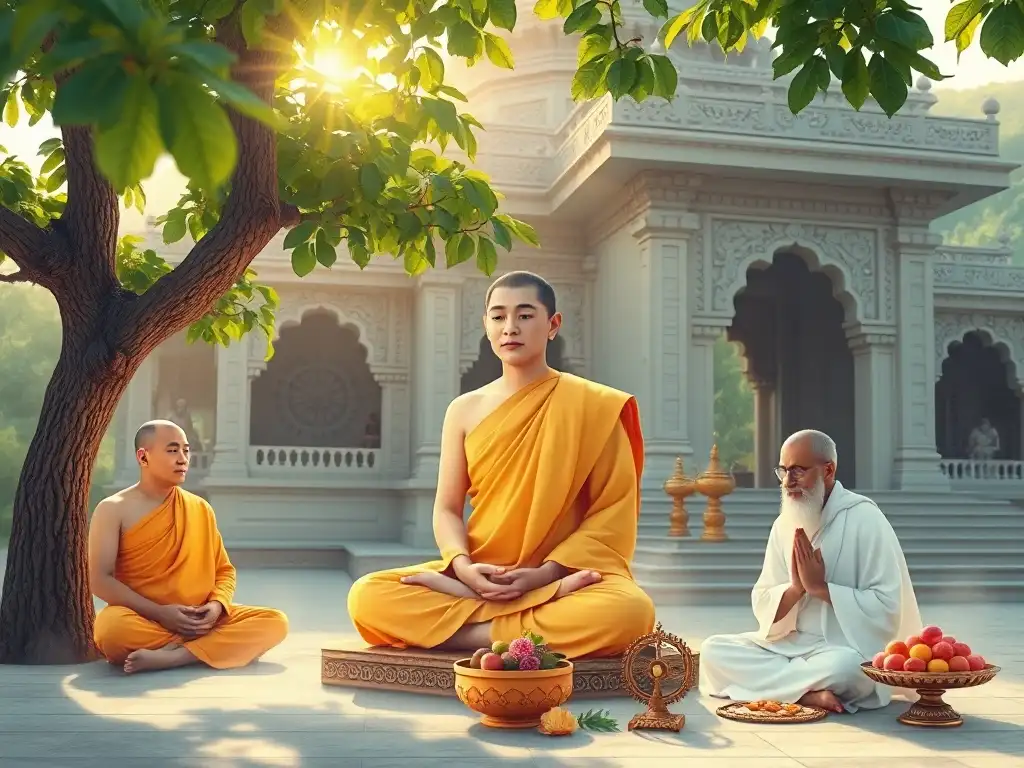
Rituals and practices are integral components of both Buddhism and Jainism, reflecting their shared roots while also highlighting their unique paths. Both religions emphasize the importance of ethical conduct, meditation, and the pursuit of spiritual liberation. However, the specific rituals and practices they adopt exhibit distinct characteristics shaped by their philosophical teachings and cultural contexts.
Meditation and Asceticism
Meditation plays a crucial role in both Buddhism and Jainism as a means to achieve spiritual enlightenment and self-realization. In Buddhism, meditation practices such as Vipassana (insight meditation) and Samatha (calm abiding) are essential for understanding the nature of suffering and the impermanence of life. The Buddha taught various meditation techniques to help practitioners attain Nirvana—a state of liberation from the cycle of birth and rebirth (samsara).
In contrast, Jainism emphasizes asceticism as a vital practice for spiritual advancement. The Tirthankaras, revered spiritual teachers in Jainism, exemplify the ideal of ascetic living. Practicing severe austerities, engaging in fasting, and renouncing worldly pleasures are common among Jains seeking liberation (moksha). The meditation practices in Jainism often focus on self-discipline and the realization of the soul's true nature, aligning closely with the teachings of the Tirthankaras.
Festivals and Observances
Both religions celebrate various festivals that reflect their teachings and values, though the specific observances differ. In Buddhism, major festivals include Vesak, which commemorates the birth, enlightenment, and death of the Buddha. This event is marked by activities such as candlelit processions, meditation sessions, and the sharing of food with the needy. Another significant festival is Asalha Puja, celebrating the Buddha's first sermon and the establishment of the Sangha (community of monks).
Conversely, Jain festivals often center around the lives and teachings of the Tirthankaras. One of the most important is Paryushana, a time of reflection, fasting, and forgiveness. During this period, Jains engage in prayers, spiritual discussions, and communal gatherings to strengthen their commitment to non-violence and truth. Another notable festival is Mahavir Jayanti, which celebrates the birth of Lord Mahavira, the 24th Tirthankara, marked by processions, prayers, and charitable acts.
Impact of Tirthankaras on Buddhism
The Tirthankaras significantly influenced the development of Buddhism, particularly in shaping its philosophical foundations and practices. Their emphasis on ethical living, non-violence, and the quest for liberation resonates throughout Buddhist teachings.
Influence on Buddhist Philosophy and Practices
The philosophical underpinnings of Buddhism bear a resemblance to the principles laid down by the Tirthankaras. Concepts such as ahimsa (non-violence) and karma (the law of cause and effect) are foundational to both traditions. The Buddha's teachings on the Four Noble Truths and the Eightfold Path align with Jain principles of right conduct, right knowledge, and right faith.
Moreover, the ascetic practices of the Tirthankaras have inspired Buddhist monks, who often adopt similar lifestyles of renunciation and meditation. The monastic communities in both religions serve as vital institutions for preserving teachings and guiding followers toward spiritual liberation.
Comparative Analysis of Tirthankara and Buddha
While both Tirthankaras and the Buddha are revered as enlightened beings, their approaches to spirituality present notable differences. The Tirthankaras, particularly in Jainism, are seen as the ultimate spiritual guides who have achieved liberation and can help others achieve the same through their teachings and example. They emphasize extreme asceticism and adherence to strict ethical codes.
In contrast, the Buddha's path is characterized by moderation, famously articulated in the concept of the Middle Way—a balanced approach between indulgence and severe asceticism. While both highlight the importance of ethical conduct and meditation, the Buddha's teachings place a greater emphasis on understanding the nature of suffering and the path to enlightenment through wisdom and compassion.
The connections between Buddhism and Jainism are deeply rooted in their shared history and teachings. The Tirthankaras, with their profound impact on spiritual practices, continue to resonate within Buddhist philosophy, creating a rich tapestry of beliefs and practices that enrich both traditions.
Conclusion: The Interwoven Paths of Buddhism and Jainism
The historical and philosophical connections between Buddhism and Jainism reveal a tapestry of shared ideals and divergent practices that have shaped the spiritual landscape of ancient India. Both traditions emerged around the same time, responding to the socio-religious milieu of the 6th century BCE, and influenced each other in various ways.
At their core, both Buddhism and Jainism emphasize the principles of non-violence (ahimsa), truthfulness, and asceticism. The Tirthankaras, revered figures in Jainism, played a pivotal role in articulating these values, which were echoed in the teachings of the Buddha. This mutual regard for ethical living and the pursuit of spiritual liberation illustrates a profound philosophical kinship.
However, as these traditions evolved, they also charted distinct paths. Jainism, with its strict adherence to ascetic practices and its emphasis on the concept of the soul (jiva), diverged from Buddhism's more pragmatic approach to enlightenment and suffering. This divergence is evident in their respective doctrines and rituals, which reflect their unique interpretations of the human condition and the cosmos.
The intertwined histories of Buddhism and Jainism showcase how two distinct yet complementary traditions arose from a shared cultural foundation. Their ongoing dialogue not only enriched their respective teachings but also contributed significantly to the broader tapestry of Indian philosophy and spirituality. The legacy of these interwoven paths continues to influence contemporary discussions on ethics, spirituality, and the search for truth.
Call to Action
If you are intrigued by the complex relationships between ancient Indian religions, we encourage you to explore further. Dive deeper into the teachings of the Tirthankaras and the Buddha, and discover how their philosophies continue to resonate today.
- Read more: Investigate the historical contexts in which these religions flourished.
- Engage with us: Share your thoughts on the connections between Buddhism and Jainism in the comments below!
- Subscribe: Stay updated with our latest articles on ancient Indian history and its rich cultural heritage.
Join us in uncovering the fascinating narratives of ancient civilizations and their enduring influence on modern spiritual practices! 🌸
- Introduction to Buddhism and Jainism Connections
- Historical Context of Buddhism and Jainism
- Understanding Tirthankaras
- Parallels Between Buddhism and Jainism
- Rituals and Practices in Buddhism and Jainism
- Impact of Tirthankaras on Buddhism
- Conclusion: The Interwoven Paths of Buddhism and Jainism
- Call to Action
Frequently Asked Questions
What is the significance of the Tirthankara in Jainism?
The Tirthankara is a revered figure in Jainism, representing spiritual teachers who have attained liberation. They guide followers on the path of non-violence and truth.
Both Buddhism and Jainism emphasize the importance of self-discipline, ethical conduct, and the pursuit of enlightenment. They share a common cultural and philosophical background rooted in ancient Indian traditions.
What are the key differences between Buddhism and Jainism?
While both religions focus on non-violence and meditation, Buddhism believes in the Middle Path and the concept of Nirvana, whereas Jainism emphasizes asceticism and the attainment of Kevala Jnana (absolute knowledge).
How did the rise of Buddhism influence Jainism?
The rise of Buddhism in ancient India led to increased competition for followers, prompting Jainism to refine its teachings and practices while maintaining its core principles of ahimsa (non-violence) and truth.
In what ways are the historical contexts of Buddhism and Jainism interlinked?
Both emerged in the 6th century BCE in the Ganges region, responding to the social and spiritual needs of the time. Their histories are intertwined through shared concepts, cultural exchanges, and philosophical debates.
Final Reflection: The Enduring Connections Between Buddhism and Jainism
The exploration of the connections between Buddhism and Jainism reveals a profound tapestry of spiritual wisdom that remains relevant today. As we navigate an increasingly complex world, understanding these ancient philosophies can provide us with invaluable insights into compassion, non-violence, and the pursuit of enlightenment. The teachings of the Tirthankaras and the Buddha resonate with timeless truths that challenge us to reflect on our own beliefs and actions.
Cultural and social landscapes are continually shaped by the teachings of these two traditions, influencing countless individuals and communities across the globe. The principles of non-attachment and ethical living advocated by both Buddhism and Jainism encourage a deeper examination of our relationships with ourselves and others. The greatest gift is the gift of the teachings.
This quote encapsulates the essence of how these teachings inspire personal growth and collective harmony, reminding us of the power of shared wisdom in fostering understanding and peace.
As we conclude this exploration, I invite you to reflect on how the teachings of Buddhism and Jainism can enrich your own life. Consider how the values of compassion, mindfulness, and ethical living can be integrated into your daily practices. By embracing these principles, we can contribute to a more harmonious world, honoring the legacy of the Tirthankaras and the Buddha while forging our own paths toward enlightenment.
Unveil the Wisdom of Tirthankaras Today!
Thank you for exploring the fascinating connections between Buddhism and Jainism. You've uncovered essential insights about Tirthankaras and their significance. Now, let’s take those learnings and put them into action!
- Explore further: Delve into the teachings of specific Tirthankaras and discover how they resonate with modern life.
- Engage with the community: Participate in discussions on forums or local meetups that focus on Jain and Buddhist philosophies.
- Share your thoughts: Reflect on what you've learned or share this article with friends and family to spark conversations about these incredible spiritual traditions.
Which Tirthankara's teachings resonate most with you, and how might you apply them in your life today?