
The Power of Words: How Inscriptions Shaped Ancient Indian Governance

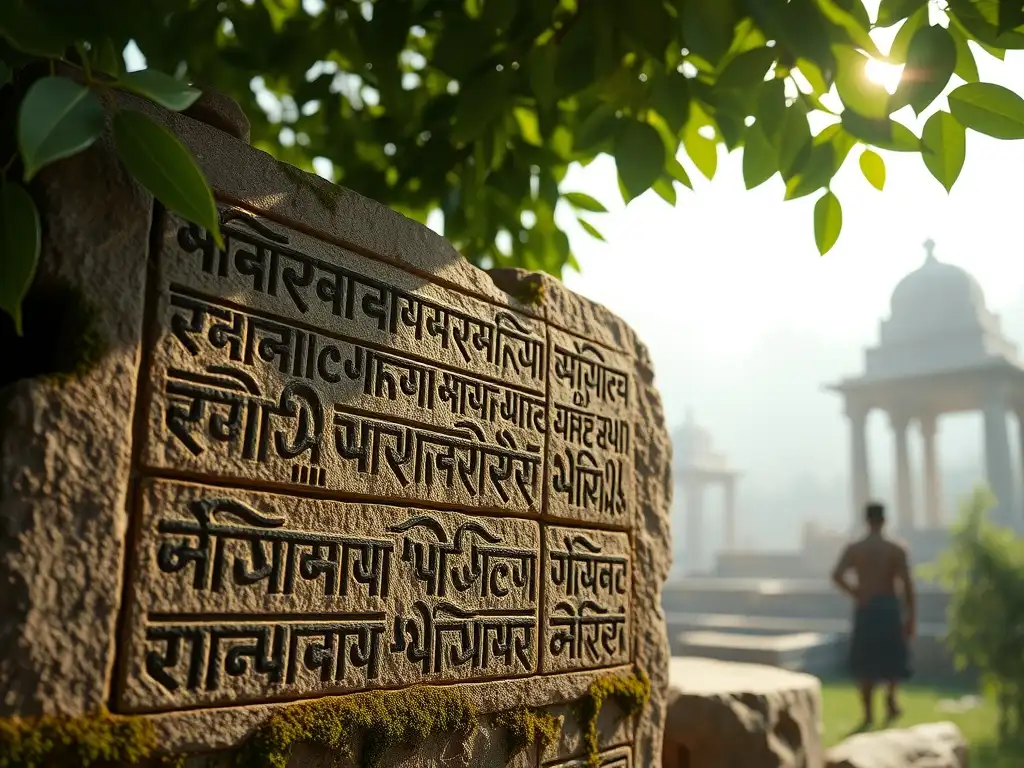
Welcome to Ancient India History, where we embark on an extraordinary journey through the rich tapestry of ancient Indian civilizations. In our featured article, “The Power of Words: How Inscriptions Shaped Ancient Indian Governance,” we delve into the fascinating world of ancient Indian inscriptions—the silent yet powerful tools that molded governance and public life.
Join us as we uncover the secrets behind these inscriptions and their pivotal role in the development of society from the Indus Valley to the Gupta Empire. Prepare to be intrigued and inspired as you explore the legacy of a civilization that thrived on the written word!
Introduction to Ancient Indian Inscriptions and Governance
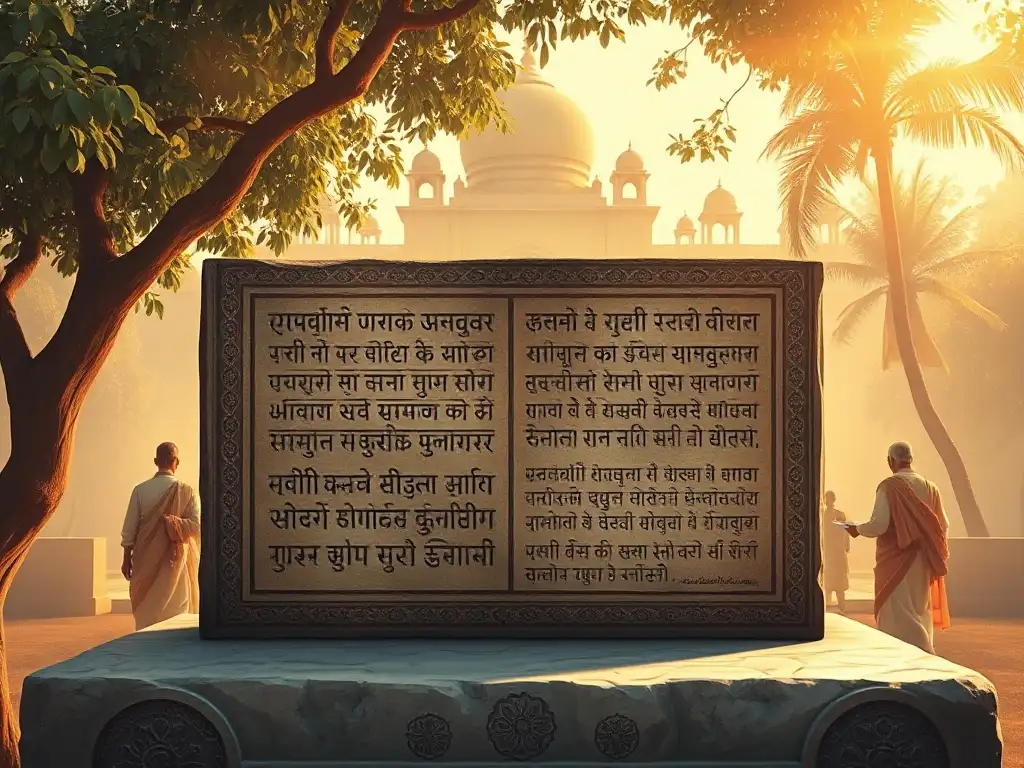
In the vast tapestry of ancient Indian history, inscriptions stand out as powerful artifacts that illuminate the governance structures, cultural values, and societal norms of various civilizations. These inscriptions, often etched in stone, clay, or metal, served not only as records of authority and law but also as vehicles of communication that transcended time and space.
They played a pivotal role in shaping the political landscape, providing insights into the administrative practices and societal hierarchies of the time. This article delves into the intricate relationship between ancient Indian inscriptions and governance, exploring how these texts contributed to the administration and unity of diverse states and empires.
Understanding the Role of Inscriptions in Ancient India
The role of inscriptions in ancient India was multifaceted, serving as both official records and cultural expressions. They documented everything from royal decrees and land grants to religious edicts and trade agreements. The use of inscriptions enabled rulers to communicate their authority and intentions clearly to their subjects and future generations. Moreover, these written records were instrumental in maintaining continuity and stability in governance, especially during times of transition or conflict.
- Key Functions of Inscriptions:
- Legal Documentation: Codified laws and regulations.
- Political Propaganda: Celebrated victories and legitimized rule.
- Cultural Heritage: Preserved religious and philosophical teachings.
The study of these inscriptions provides valuable insights into the bureaucratic mechanisms and social dynamics that characterized ancient Indian governance.
Importance of Governance in Ancient Indian Civilizations
Governance in ancient India was not merely about ruling; it was a complex interplay of political theory, administrative practices, and ethical considerations. Various rulers and dynasties established systems that emphasized justice, welfare, and order. The inscriptions often reflected these values, showcasing how governance was intertwined with the moral and ethical frameworks of society.
- Governance Principles in Ancient India:
- Dharma: The moral law that guided rulers in their duties.
- Rajdharma: The responsibilities of kings towards their subjects.
- Sama, Dama, Danda, and Bheda: Techniques of governance and statecraft.
Understanding these principles is crucial for comprehending the administrative philosophies that influenced the governance of ancient Indian civilizations.
Historical Context of Inscriptions in Ancient India
Overview of Major Ancient Indian Civilizations
Ancient India was home to several prominent civilizations, each contributing to the rich tapestry of its history. From the Indus Valley Civilization to the Gupta Empire, these societies developed unique governance structures that were often documented through inscriptions.
- Key Civilizations:
- Indus Valley Civilization (c. 3300–1300 BCE): Early urban centers with seals and symbols.
- Maurya Empire (c. 322–185 BCE): Notable for Ashoka's edicts promoting Dharma.
- Gupta Empire (c. 320–550 CE): Flourished in arts and sciences, with inscriptions documenting royal patronage.
Each civilization utilized inscriptions to denote authority, communicate laws, and record significant events, shaping the governance landscape of the time.
Evolution of Writing and Inscriptions in India
The evolution of writing in India, particularly the script styles and languages, played a significant role in the development of inscriptions. From the early Indus script to the later Brahmi and Kharosthi scripts, the progression of writing systems reflected the changing dynamics of society and governance.
- Major Writing Systems:
- Indus Script: Mysterious symbols with undeciphered meanings.
- Brahmi Script: The foundation of many Indian scripts, used in various inscriptions.
- Kharosthi Script: Primarily used in the northwest region, significant for trade and administration.
The advancements in writing not only facilitated the dissemination of information but also reinforced the authority of rulers through inscribed edicts, thereby shaping the governance of ancient Indian civilizations.
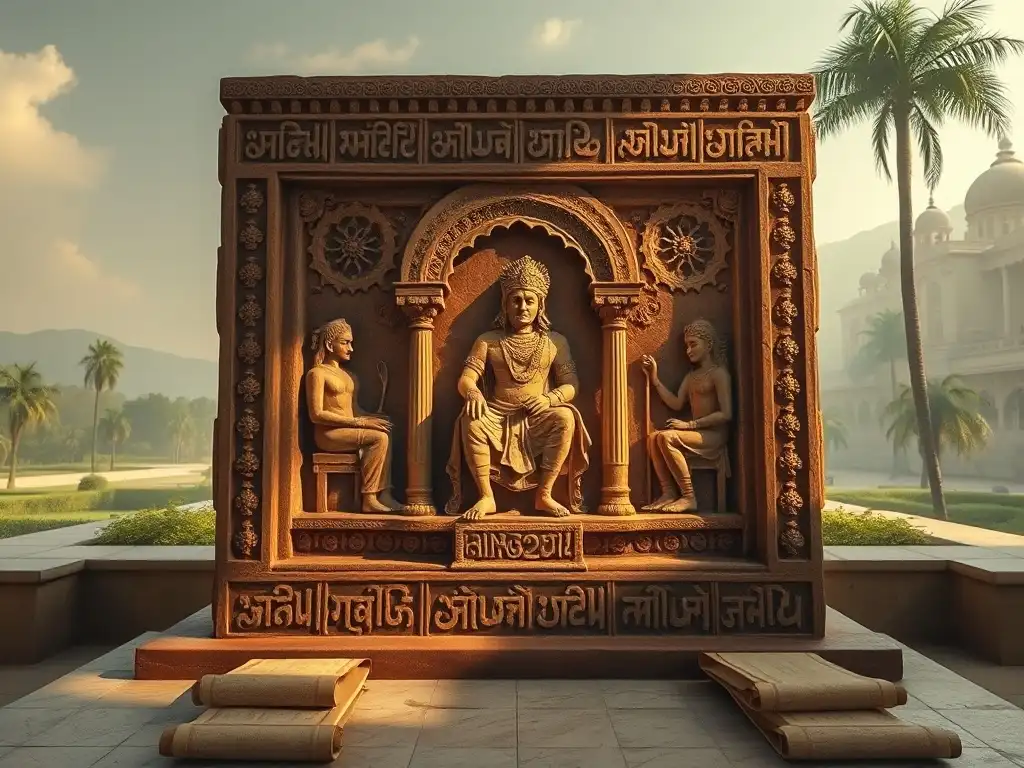
Ancient Indian inscriptions can be categorized into several types, each reflecting unique aspects of governance and societal organization. These inscriptions provide invaluable insights into the political, administrative, and cultural fabric of ancient civilizations. The primary types of inscriptions related to governance include:
- Administrative Inscriptions: These inscriptions document the bureaucratic and administrative functions of governance, detailing laws, decrees, and the organization of state affairs.
- Religious Inscriptions: Often inscribed on temples and religious monuments, these inscriptions not only reflect spiritual beliefs but also outline the role of religious authorities in governance and their influence on societal norms.
- Commemorative Inscriptions: These inscriptions celebrate significant events, victories, or the contributions of rulers and leaders. They serve to reinforce the legitimacy of leadership and the historical narrative of a kingdom.
Each type of inscription plays a crucial role in understanding how governance was structured and maintained in ancient India.
Administrative Inscriptions: Functions and Features
Administrative inscriptions were crucial in the governance of ancient Indian states. They often included royal edicts, laws, and official records that outlined the workings of government. The functions of these inscriptions included:
- Documentation of Laws: Inscriptions served as a written record of laws and regulations, ensuring that governance was transparent and consistent. For instance, the Edicts of Ashoka detail moral and ethical precepts that governed the Mauryan Empire.
- Bureaucratic Directives: These inscriptions provided instructions to officials and bureaucrats, detailing their roles, responsibilities, and the procedures to be followed in administration.
- Taxation Records: Many inscriptions contained information about tax rates and collection methods, allowing for efficient revenue generation and fiscal management.
The features of these inscriptions typically included clarity in language, formal structure, and often the use of specific scripts such as Brahmi or Kharosthi, which contributed to their authoritative nature.
Religious Inscriptions: Influence on Governance
Religious inscriptions played a pivotal role in shaping governance in ancient India by intertwining spiritual authority with political power. These inscriptions were typically found on temples and monuments and served multiple purposes:
- Legitimization of Rulers: Many rulers commissioned religious inscriptions to align their rule with divine will, portraying themselves as chosen by the gods. This practice not only enhanced their authority but also reinforced the social order.
- Promotion of Dharma: Inscriptions often included references to Dharma (moral law), highlighting the ruler's responsibility to uphold ethical governance. For example, Ashoka's edicts emphasized non-violence and compassion, reflecting a governance model rooted in moral principles.
- Community Organization: Religious inscriptions sometimes detailed the organization of local communities around temples, indicating the integration of governance with religious life and community welfare.
Overall, these inscriptions underscore how religion influenced political structures and the legitimacy of rulers.
Commemorative Inscriptions: Celebrating Leadership
Commemorative inscriptions serve as a testament to the accomplishments and legacies of ancient leaders. These inscriptions are integral to understanding how leadership was perceived and celebrated in ancient Indian society. Key aspects include:
- Heroic Deeds: Many inscriptions recount the military victories and territorial expansions of rulers, portraying them as champions of their people. For example, the Rani Durgavati Inscription celebrates the valor of the queen in defending her kingdom.
- Cultural Heritage: Commemorative inscriptions often reflect the cultural contributions of leaders, such as the patronage of arts and literature, enhancing their status in history.
- Public Memory: These inscriptions are also crucial for the collective memory of societies, as they preserve narratives of past leaders and their impact on governance, fostering a sense of identity among the populace.
Through these commemorative practices, inscriptions played a vital role in shaping the historical narratives and collective memory of ancient Indian civilizations.
The Impact of Inscriptions on Ancient Indian Governance
The impact of inscriptions on ancient Indian governance was profound, influencing various aspects of political authority, societal order, and communication. They served not just as historical records but as active tools in governance.
Inscriptions as Tools for Political Legitimacy
Inscriptions were critical in establishing and reinforcing political legitimacy in ancient India. By publicly declaring the achievements and divine support of rulers, these inscriptions helped to:
- Consolidate Power: Rulers used inscriptions to assert their authority and divine right to rule, often linking their governance to religious tenets or prophecies.
- Inform the Public: By disseminating information about policies and achievements, rulers could foster loyalty and compliance among their subjects.
- Historical Continuity: Inscriptions preserved the lineage of rulers and their contributions, ensuring that future generations recognized their legacy and the historical continuity of governance.
This strategic use of inscriptions played a vital role in maintaining stability and order within ancient Indian states.
The Role of Inscriptions in Law and Order
Inscriptions served as fundamental instruments in establishing law and order in ancient Indian society. They provided:
- Legal Framework: Many inscriptions detailed legal codes, thus serving as formal documentation of laws that governed society, which helped maintain order and justice.
- Conflict Resolution: Inscriptions outlined procedures for dispute resolution and the roles of local officials, enabling communities to address grievances without resorting to violence.
- Standardization of Practices: By codifying laws and administrative practices, inscriptions promoted uniformity in governance across regions, facilitating smoother interactions and reducing conflicts.
In this way, inscriptions were integral to the establishment and maintenance of social order.
Communication of Governance Through Inscriptions
Inscriptions were also vital communication tools within ancient Indian governance. They served to:
- Inform Citizens: Public inscriptions ensured that citizens were aware of laws, royal edicts, and government initiatives, fostering a sense of participation in governance.
- Facilitate Bureaucracy: Inscriptions provided clear directives to officials and bureaucrats, enabling efficient administration and execution of policies.
- Cultural Identity: Through the promotion of local languages and scripts in inscriptions, rulers communicated with diverse populations, reinforcing regional identities while establishing a common framework for governance.
Overall, inscriptions were essential in bridging the communication gap between rulers and the governed, ensuring that the principles of governance reached every level of society.
Case Studies of Notable Ancient Indian Inscriptions
Ancient Indian inscriptions serve as invaluable sources for understanding the governance and administrative practices of past civilizations. The following case studies highlight some of the most significant inscriptions that shaped the political landscape of ancient India.
The Edicts of Ashoka: A Model of Governance
The Edicts of Ashoka, inscribed between 268 and 232 BCE, represent one of the earliest and most comprehensive examples of state communication in ancient India. These edicts, carved on rocks and pillars throughout the Indian subcontinent, reflect Ashoka's commitment to Dhamma (moral law) and provide insights into his governance philosophy.
Ashoka's edicts cover a range of topics including ethics, social welfare, and administrative duties. For instance, the Rock Edict I emphasizes the importance of non-violence and compassion, while Rock Edict II highlights the responsibilities of rulers towards their subjects.
The use of a common language (Prakrit) in these inscriptions facilitated communication across diverse populations, promoting a sense of unity within the Mauryan Empire. The edicts not only served as legal proclamations but also acted as a medium to educate the populace about the values and expectations of governance.
The Allahabad Pillar Inscription: A Historical Account
The Allahabad Pillar Inscription, attributed to Samudragupta, a prominent ruler of the Gupta Empire (c. 4th century CE), is a crucial document that chronicles the military conquests and administrative prowess of the Gupta dynasty. This inscription is significant for its detailed account of Samudragupta's campaigns, illustrating his diplomatic strategies and military capabilities.
The inscription is notable for its poetic language, employing a Sanskrit style that elevates the narrative of governance to an art form. It not only details territorial expansion but also highlights the king's role as a patron of arts and culture, reflecting the Gupta ethos of governance that prioritized both military strength and cultural prosperity.
Further, the inscription serves as a testament to the administrative structure of the Gupta Empire, showcasing how inscriptions were used to legitimize authority and document achievements in governance.
Gupta Inscriptions: Reflections of Governance
Throughout the Gupta period, inscriptions became vital tools for recording the administration, land grants, and royal decrees. Numerous inscriptions found in temples, pillars, and copper plates reveal the intricacies of governance during this era.
For example, the Banskhera Inscription details land grants made to Brahmins, emphasizing the economic policies of the Gupta rulers aimed at promoting agriculture and religious patronage. These inscriptions often employ formal language and elaborate styles, indicative of the sophisticated administrative practices of the time.
Moreover, Gupta inscriptions frequently feature the concept of Dharma, underscoring the moral responsibilities of rulers towards their subjects. This reflection of governance through inscriptions not only served bureaucratic needs but also reinforced the ideological foundations of Gupta rule.
Analysis of Language and Style in Ancient Indian Inscriptions
The language and style of ancient Indian inscriptions are crucial for understanding the political and cultural context of the time. These inscriptions often employed specific linguistic features and symbolic imagery that conveyed the essence of governance.
Linguistic Features of Governance-related Inscriptions
Ancient Indian inscriptions predominantly utilized languages such as Sanskrit and Prakrit, with their choice often reflecting the audience and purpose of the message. Governance-related inscriptions typically employed formal register and technical terminology, enhancing the authoritative tone of the documents.
Inscriptions like the Edicts of Ashoka demonstrate a balance between accessibility and formality, making them effective for both the elite and the common populace. The use of imperative verbs in these inscriptions often conveys directives, emphasizing the ruler's power and expectations from subjects.
Moreover, the presence of metaphors and analogies in these texts not only enriched the language but also served to illustrate complex governance concepts, making them more relatable to the public.
Symbolism and Imagery in Governance Inscriptions
Symbolism plays a pivotal role in ancient Indian inscriptions, often reflecting the ideals and values of governance. For instance, the lion, commonly associated with Ashoka, symbolizes strength and authority, reinforcing the ruler's power.
Imagery in inscriptions frequently includes representations of lotus, which signifies purity and spiritual enlightenment, aligning the ruler's governance with moral and ethical ideals. Such symbols are not only decorative but serve to communicate deeper messages about the ruler's legitimacy and moral obligations.
Additionally, inscriptions often utilized mythological references to enhance their messages, linking the contemporary rulers with divine authority. This strategic use of symbolism and imagery helped to solidify the connection between governance and spiritual legitimacy, making inscriptions a powerful tool for political propaganda.
Challenges in Studying Ancient Indian Inscriptions
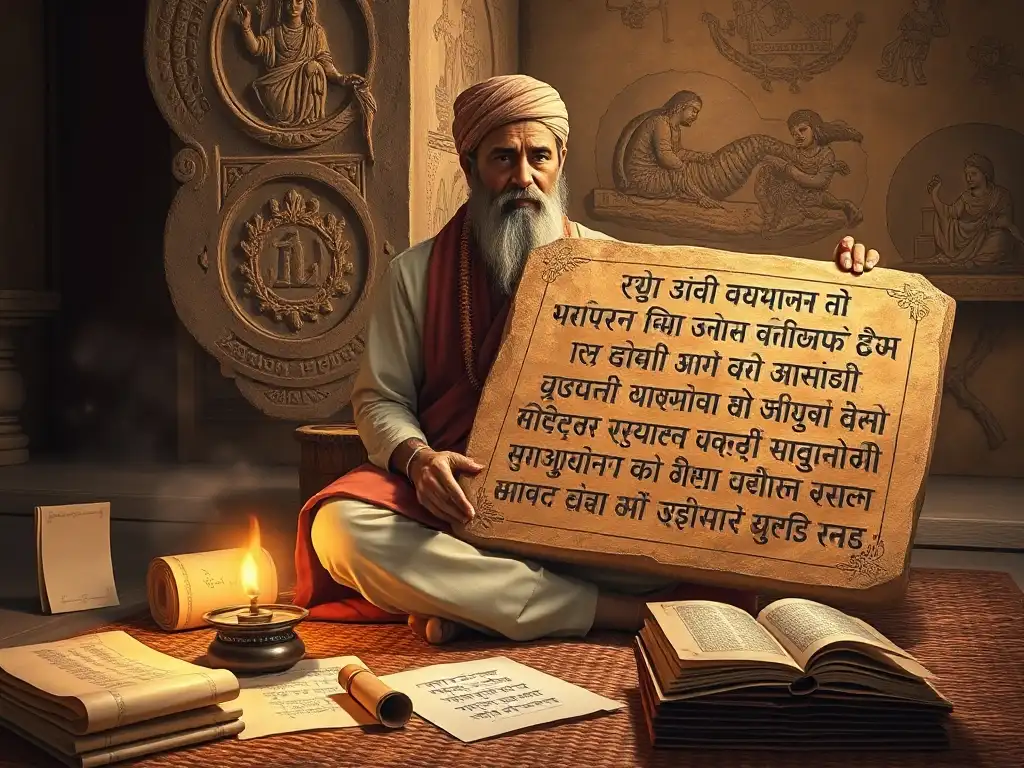
The study of ancient Indian inscriptions presents several formidable challenges that can hinder our understanding of the historical and governance contexts in which they were created. These challenges stem from both physical and interpretative aspects, making it essential for researchers to navigate these complexities to gain deeper insights into ancient Indian societies.
Preservation Issues: The Fragility of Inscriptions
One of the primary challenges in studying ancient Indian inscriptions is the issue of preservation. Many inscriptions are carved on stone, metal, or other materials that have weathered over centuries. Factors contributing to their deterioration include:
- Environmental Conditions: Exposure to elements such as moisture, temperature fluctuations, and pollution can lead to erosion and fading of inscriptions. For instance, inscriptions found in coastal areas are often more vulnerable to saltwater corrosion.
- Human Activities: Urban development, construction, and vandalism can damage or completely erase ancient inscriptions. Instances of neglect or lack of proper care in archaeological sites have led to the loss of invaluable historical records.
- Natural Disasters: Earthquakes, floods, and other natural calamities can obliterate sites containing inscriptions, further complicating the preservation efforts.
To combat these issues, conservation techniques and modern technology are being employed, including digital imaging and 3D modeling, which can help document and preserve inscriptions without causing physical damage.
Interpretation Challenges: Deciphering Ancient Scripts
Another significant hurdle in the study of ancient Indian inscriptions is the interpretation of various scripts used throughout history. The diversity of scripts, languages, and dialects presents a complex landscape for scholars. Key challenges include:
- Linguistic Diversity: Ancient India was home to numerous languages and scripts, such as Brahmi, Kharosthi, and Tamil-Brahmi. Each script has its unique characteristics and has evolved over time, making it difficult to establish a standardized method for reading them.
- Contextual Understanding: The inscriptions often contain references to local customs, religious beliefs, and political events that require a nuanced understanding of the historical context. Without adequate context, misinterpretations can arise.
- Fragmentation: Many inscriptions exist only in fragments, which complicates the task of reconstructing their original meanings. Scholars must rely on comparative studies and cross-reference with other historical sources to fill in gaps.
Successfully overcoming these interpretative challenges is crucial for historians, as accurate readings of ancient inscriptions can illuminate governance structures, societal norms, and cultural practices of the time.
Conclusion: The Lasting Legacy of Ancient Indian Inscriptions on Governance
Ancient Indian inscriptions have played a pivotal role in shaping the governance of their time, serving as vital records that document laws, edicts, and administrative practices. These inscriptions not only reveal the political landscape but also reflect the moral and ethical frameworks that guided rulers and subjects alike. The enduring legacy of these inscriptions continues to influence our understanding of governance today.
The Influence of Ancient Inscriptions on Modern Governance
The principles derived from ancient Indian inscriptions have had a lasting impact on modern governance frameworks. Elements such as:
- Rule of Law: Many inscriptions emphasized adherence to law and order, laying the groundwork for contemporary legal systems.
- Public Accountability: Inscriptions often recorded royal decrees and public works, promoting a sense of accountability among rulers. This practice resonates in modern democratic governance, where transparency and public service are valued.
- Civic Engagement: The inscriptions served as tools for communication between rulers and the populace, fostering civic engagement and participation. Today, this notion underpins the importance of citizen involvement in governance.
Recognizing this influence can enrich our understanding of the evolution of governance in India and beyond.
Future Research Directions in Ancient Indian Epigraphy
The field of ancient Indian epigraphy is ripe with potential for future research. Scholars can explore various avenues to enhance our comprehension of ancient inscriptions and their multifaceted roles in governance:
- Interdisciplinary Approaches: Collaborations between historians, linguists, archaeologists, and conservationists can yield comprehensive insights into the contexts and implications of inscriptions.
- Technological Advancements: Employing cutting-edge technologies such as AI for pattern recognition and machine learning for script analysis can facilitate the deciphering of previously unreadable inscriptions.
- Global Comparisons: Comparative studies with inscriptions from other ancient civilizations can illuminate shared governance practices and cultural exchanges, enriching the narrative of human history.
As we delve deeper into these research directions, the study of ancient Indian inscriptions will continue to unveil the profound connections between language, governance, and societal development throughout history.
References and Further Reading on Ancient Indian Inscriptions and Governance
Understanding the role of inscriptions in shaping ancient Indian governance requires delving into a rich tapestry of literature that covers historical, epigraphic, and archaeological perspectives. These resources not only provide insight into the inscriptions themselves but also elucidate their impact on governance, administration, and societal structures in ancient India. Here, we present a collection of recommended readings that will enhance your understanding of this fascinating subject.
Recommended Books on Ancient Indian Inscriptions
-
"Inscriptions of Ashoka" by J. S. Speyer
This book offers a comprehensive analysis of the inscriptions left by Emperor Ashoka, one of ancient India’s most significant rulers. It explores the moral and administrative principles articulated in his edicts, providing critical insights into his governance style.
-
"Epigraphy and Inscriptions in India" by T. K. Thakur
Thakur's work presents a detailed examination of various inscriptions across India, discussing their historical contexts and implications for governance. The book serves as a fundamental resource for anyone interested in the study of ancient Indian inscriptions.
-
"The Politics of Language in Ancient India" by M. A. Dhaky
This book discusses how language, as reflected in inscriptions, played a pivotal role in governance and administration. Dhaky analyzes the evolution of language in inscriptions and its correlation with the political landscape of ancient India.
-
"Ancient Indian History and Civilization" by R. S. Sharma
Sharma's book provides a broad overview of ancient Indian history, including the role of inscriptions in governance. It situates inscriptions within the larger narrative of Indian civilization and political development.
-
"Writing and Society in Ancient India" by J. C. Harle
This book investigates the relationship between writing, inscriptions, and societal structures in ancient India. Harle discusses how inscriptions were utilized as tools of governance and social control, making it essential reading for understanding their impact.
Academic Journals Focused on Ancient Indian Governance
-
Journal of Indian History
This journal publishes scholarly articles on various aspects of Indian history, including the role of inscriptions in governance. It features in-depth studies and research findings that provide valuable insights into ancient administrative practices.
-
Indian Epigraphy
As a dedicated publication for epigraphic studies, this journal focuses on inscriptions from across India. Articles often explore the significance of specific inscriptions in understanding governance and administration in ancient times.
-
The Indian Historical Review
This journal covers a wide range of historical topics, with many articles addressing the governance structures of ancient India. The role of inscriptions as a means of communication and policy-making is frequently discussed.
-
Studies in History
Featuring interdisciplinary approaches to historical research, this journal includes works that analyze the intersection of inscriptions and governance. Researchers often contribute articles that explore the implications of ancient inscriptions on political authority.
-
International Journal of Historical Studies
This journal examines historical developments globally, with a significant focus on South Asian studies. Articles related to ancient Indian inscriptions and their governance implications contribute to a broader understanding of historical governance practices.
These resources collectively provide a robust framework for understanding how ancient Indian inscriptions influenced governance, offering both foundational knowledge and advanced scholarly insights for further study.
- Introduction to Ancient Indian Inscriptions and Governance
- Understanding the Role of Inscriptions in Ancient India
- Importance of Governance in Ancient Indian Civilizations
- Historical Context of Inscriptions in Ancient India
- Types of Ancient Indian Inscriptions Related to Governance
- The Impact of Inscriptions on Ancient Indian Governance
- Case Studies of Notable Ancient Indian Inscriptions
- Analysis of Language and Style in Ancient Indian Inscriptions
- Challenges in Studying Ancient Indian Inscriptions
- Conclusion: The Lasting Legacy of Ancient Indian Inscriptions on Governance
- References and Further Reading on Ancient Indian Inscriptions and Governance
- What role did inscriptions play in ancient Indian governance?
- Which significant inscriptions are associated with ancient Indian rulers?
- How did ancient Indian inscriptions influence modern governance?
- What materials were commonly used for ancient Indian inscriptions?
- Are there any ongoing efforts to study ancient Indian inscriptions?
Frequently Asked Questions
What role did inscriptions play in ancient Indian governance?
Inscriptions were crucial for documenting laws, royal edicts, and administrative practices in ancient India, providing a written record that helped maintain order and authority.
Which significant inscriptions are associated with ancient Indian rulers?
Some notable inscriptions include the Ashoka Edicts, which outline the principles of Buddhism and governance, and the Gupta inscriptions, which detail earlier administrative systems and achievements.
How did ancient Indian inscriptions influence modern governance?
These inscriptions laid the groundwork for legal documentation and administrative transparency, influencing contemporary practices in record-keeping and governance structures.
What materials were commonly used for ancient Indian inscriptions?
Inscriptions were typically carved on stone, metal, and sometimes even on wood or terracotta, using tools that allowed for detailed craftsmanship.
Are there any ongoing efforts to study ancient Indian inscriptions?
Yes, researchers and archaeologists are actively engaged in deciphering and preserving ancient inscriptions, which offer valuable insights into the political and cultural dynamics of ancient India.
Final Reflection: The Enduring Legacy of Ancient Indian Inscriptions in Governance
The exploration of ancient Indian inscriptions reveals their profound impact on governance, illustrating how words have the power to shape societies and influence leadership. In today's world, where communication remains a cornerstone of effective governance, the lessons drawn from these historical artifacts resonate more than ever. The inscriptions not only served as records of laws and decrees but also as tools for unifying diverse populations under a common narrative, showcasing the timeless relevance of language in administration and societal cohesion.
The influence of these inscriptions extends far beyond their historical context; they continue to inspire contemporary governance and cultural identity. The meticulous documentation of laws and societal norms through inscriptions has laid a foundation for transparency and accountability that modern systems strive to uphold.
As Mahatma Gandhi once said, "> A 'No' uttered from the deepest conviction is better than a 'Yes' merely uttered to please, or worse, to avoid trouble." This sentiment echoes the essence of ancient inscriptions, which were often crafted with the intent to uphold justice and truth, reminding us that the integrity of words is crucial in governance.
As we reflect on the power of words and their role in shaping governance, I invite you to consider how you can harness the lessons of the past in your own life. Think about the words you choose and the impact they have on those around you. Whether in your personal relationships, community engagements, or professional endeavors, let the legacy of ancient Indian inscriptions inspire you to communicate with intention and integrity. Embrace the power of your voice, for it holds the potential to influence, inspire, and create meaningful change in the world.
Unleash the Power of Your Words!
Thank you for diving into the fascinating world of ancient inscriptions with us! You've discovered how **language** influenced the governance of ancient India and the **lasting legacies** it created. Now, it’s time to turn that knowledge into action!
Here are a few ways you can deepen your engagement with this powerful history:
- Explore your local libraries or museums to find texts on ancient inscriptions and their impact on governance—take a trip and see how history is woven into your community.
- Share your insights with friends or on social media; discuss how you believe ancient words resonate in today’s world. Your perspective can inspire others!
- Join a local or online history group focused on ancient civilizations—connect and engage with fellow enthusiasts who share your passion for the past.
Which inscription or phrase from history resonates with you the most, and how do you think it shapes our understanding of governance today?