
Boddhidharma: The Zen Master Who Transformed Buddhism in China


Welcome to Ancient India History, where we embark on an extraordinary journey through time, unraveling the rich tapestry of ancient Indian civilizations. Today, we delve into the transformative legacy of Bodhidharma, a figure whose profound impact on Buddhism reshaped its very essence in China. As you explore our latest article, "Bodhidharma: The Zen Master Who Transformed Buddhism in China," prepare to uncover the fascinating connections between ancient Indian thought and the development of Zen practices. Join us as we illuminate the paths carved by these remarkable contributions and inspire a deeper understanding of our shared heritage.
- Introduction to Boddhidharma and His Influence on Buddhism
- Boddhidharma's Background: The Man Behind the Legend
- The Zen Revolution: Boddhidharma's Role in Chan Buddhism
- Boddhidharma's Impact on Buddhism in China
- Comparing Boddhidharma with Other Key Figures in Buddhism
- Conclusion: The Enduring Impact of Boddhidharma on Buddhism
- Further Reading on Boddhidharma and Buddhism
- Frequently Asked Questions
- Final Reflection: The Enduring Legacy of Bodhidharma's Impact on Buddhism
- Unveil Your Inner Zen: Take Action Today!
Introduction to Boddhidharma and His Influence on Buddhism
Boddhidharma, often recognized as a pivotal figure in the evolution of Buddhism, particularly in China, serves as a bridge connecting ancient Indian traditions with Chinese philosophies. As the founder of Zen Buddhism, his teachings and practices not only transformed the understanding of Buddhism but also cultivated a unique approach that emphasized direct experience and meditation over textual study.
This journey from the Indus Valley to the shores of China illustrates the dynamic nature of ancient Indian religions and highlights the profound impact of Indian thinkers on global spiritual practices. In this article, we delve into Boddhidharma's life, his teachings, and the lasting legacy he left on Buddhism, particularly his significant impact on the development of Zen and its philosophies.
Overview of Boddhidharma's Life and Legacy
Boddhidharma is traditionally believed to have been born in South India around the 5th or 6th century CE. His journey to China is marked by a quest for deeper understanding and the desire to spread the teachings of Buddhism. According to legend, he traveled to China during the Liang Dynasty, where he encountered Emperor Wu of Liang, who was eager to learn about Buddhism. Despite the emperor's reverence, Boddhidharma famously remarked that merit gained through good deeds was insufficient for true enlightenment.
Boddhidharma's teachings emphasized meditation (zazen) and the direct experience of reality, which diverged from the more ritualistic aspects of Buddhism prevalent at the time. He is credited with introducing the practice of silent meditation, which would become a cornerstone of Zen Buddhism. His time at the Shaolin Temple, where he is said to have taught martial arts as a form of meditation, further solidified his legacy, intertwining physical discipline with spiritual practice.
His influence extended beyond his lifetime, as his teachings laid the groundwork for a distinctly Chinese form of Buddhism that resonated with the cultural and philosophical landscape of East Asia. The "Two Entrances and Four Practices" method he introduced became foundational in Zen training, emphasizing the importance of both insight and the experience of enlightenment.
Importance of Boddhidharma in the Context of Buddhist History
Boddhidharma's impact on Buddhism is profound and multifaceted. He represents a critical juncture in the transmission of Buddhist thought from India to China, marking a significant transformation in the interpretation and practice of Buddhism. This transition is characterized by several key elements:
- Shift in Focus: From doctrinal teachings to experiential understanding.
- Development of Zen: The establishment of Zen Buddhism as a major school that values meditation and direct experience.
- Cultural Synthesis: The integration of indigenous Chinese philosophies, such as Daoism, with Buddhist principles, resulting in a unique spiritual framework that continues to influence millions.
Boddhidharma's legacy is not only significant in a historical context but also resonates in contemporary Buddhism. His teachings encourage practitioners to seek enlightenment through personal experience rather than mere scholarly pursuit, a principle that remains central to Zen practice today. His life and teachings underscore the dynamic and evolving nature of Buddhism, illustrating how ancient Indian thought can adapt and thrive in diverse cultural landscapes.
Boddhidharma's contributions to Buddhism, particularly through his emphasis on meditation and direct experience, have left an indelible mark on the spiritual traditions of both India and China, shaping the course of Buddhist history in profound ways.
Boddhidharma's Background: The Man Behind the Legend
Early Life and Spiritual Journey
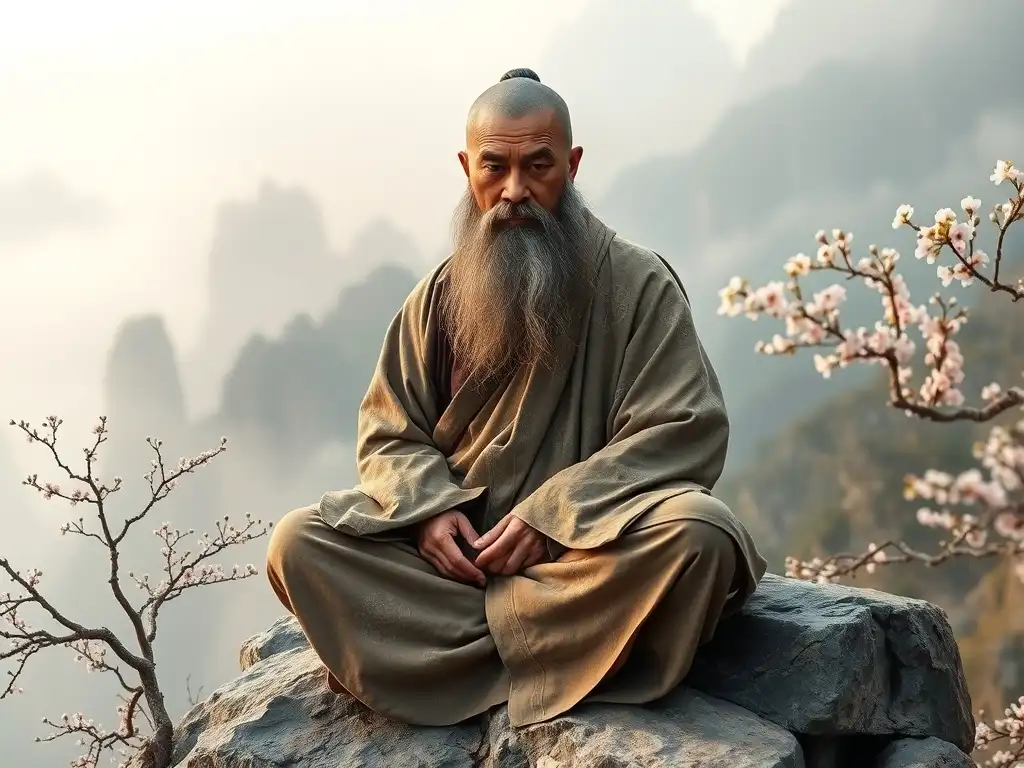
Boddhidharma, often revered as the first patriarch of Zen Buddhism, has a life shrouded in mystery and legend. Historical records about his early life are sparse, but it is generally believed that he was born in the southern region of India around the 5th or 6th century CE. His birth name is thought to be Bodhidharma, derived from the Sanskrit word "Bodhi," meaning enlightenment.
From a young age, Boddhidharma was deeply committed to spiritual pursuits. He reportedly trained under a prominent teacher of the time, which significantly shaped his understanding of Buddhism. His dedication led him to the Siddhārtha Gautama teachings, focusing on meditation and the direct experience of enlightenment rather than mere intellectual understanding. This emphasis on meditation would later become a cornerstone of Zen practices.
Boddhidharma's journey towards attaining enlightenment culminated in a legendary event where he meditated for nine years in a cave, facing a wall in deep contemplation. It is said that during this period, he developed profound insights into the nature of mind and reality, which profoundly influenced his teachings. This transformative experience not only solidified his own path to enlightenment but also prepared him to share his wisdom with others, particularly in the context of his later mission in China.
Boddhidharma's Arrival in China: Historical Context
Boddhidharma's arrival in China is placed around the early 6th century CE, during the Liu Song Dynasty. At this time, China was experiencing significant cultural exchanges and transformations, particularly with the influx of Buddhist teachings from India. The religion had already begun to take root in China but was largely influenced by various doctrines and interpretations.
As Boddhidharma journeyed to China, he sought to establish a more direct and authentic practice of Buddhism, emphasizing meditative experience over the doctrinal and ritualistic practices that had become prevalent. Upon his arrival, he is said to have traveled to the Shaolin Monastery, where he introduced his teachings on Dhyana, or meditation, which would later evolve into Zen Buddhism.
Boddhidharma's teachings challenged the existing Buddhist paradigms, encouraging monks to engage in rigorous meditation and to seek enlightenment through personal experience rather than relying solely on scriptures. His impact on Buddhism can be seen in the formation of distinct Zen practices, which prioritized mindfulness and the cultivation of a direct, experiential understanding of enlightenment.
In essence, Boddhidharma's arrival in China marked a significant turning point in the evolution of Buddhism. His teachings laid the foundation for a new school of thought that resonated with the Chinese cultural context, ultimately leading to the flourishing of Zen Buddhism as a significant spiritual tradition.
The Zen Revolution: Boddhidharma's Role in Chan Buddhism

Introduction to Chan Buddhism and Its Origins
Chan Buddhism, known as Zen in Japan, traces its origins back to the teachings of the historical Buddha, Siddhartha Gautama, but gained significant transformation in its approach and philosophy through the influence of Boddhidharma. Emerging around the 6th century CE in China, Chan Buddhism represents a synthesis of Indian Buddhist thought and Chinese cultural practices, particularly those related to Daoism.
The arrival of Boddhidharma, often referred to as the 28th patriarch of Buddhism, marked a pivotal moment in the evolution of Chan Buddhism. His journey from India to China is steeped in legend, with accounts suggesting that he traveled to the Shaolin Monastery, where he emphasized meditation and direct experience of enlightenment over the traditional study of scriptures. This shift laid the groundwork for a distinctive form of Buddhism that prioritized personal insight and the cultivation of a meditative state.
The foundational tenets of Chan Buddhism emphasize the idea that enlightenment is accessible to all individuals, not just through intellectual achievement but through intuitive understanding and meditation. This approach diverged from earlier Buddhist traditions that often focused heavily on verbal teachings and rituals. Boddhidharma's influence helped to cultivate an environment where practitioners engaged directly with their own experiences, leading to an authentic and transformative spiritual practice.
Boddhidharma's Teachings and Philosophical Contributions
Boddhidharma's teachings are characterized by their focus on the practice of meditation (zazen) and the importance of personal realization. He asserted that the essence of Buddhism lies not in the texts but in the direct experience of one's true nature. His teachings can be distilled into a few key philosophical contributions that shaped Chan Buddhism:
- Meditation as the Core Practice: Boddhidharma emphasized the significance of meditation as a means to attain enlightenment. He believed that quieting the mind and turning inward allowed practitioners to discover their inherent nature, leading to profound insights.
- Direct Transmission of Knowledge: One of Boddhidharma's famous sayings, "A special transmission outside the scriptures," highlights his belief that true understanding cannot be conveyed through words alone. He advocated for a method of teaching that transcended written texts, focusing instead on personal guidance and experiential learning.
- The Concept of No-Mind (Wu Xin): Boddhidharma introduced the concept of "no-mind," which refers to a state of consciousness free from distractions and attachments. This mental state is crucial for achieving clarity and enlightenment, as it allows practitioners to perceive reality without the distortions of ego and desire.
Boddhidharma's contributions were instrumental in establishing a unique identity for Chan Buddhism, which would evolve and proliferate throughout China and later into Japan and other regions. His teachings continue to resonate, emphasizing a practical approach to spirituality that remains relevant in contemporary discussions about mindfulness and meditation.
Key Concepts Introduced by Boddhidharma
Boddhidharma's impact on Buddhism is underscored by several key concepts that he introduced, which have become foundational to Chan Buddhism:
- Sudden Enlightenment: Boddhidharma posited that enlightenment could occur suddenly, rather than through gradual progression. This idea challenged previous notions of spiritual development, encouraging practitioners to seek immediate awakening.
- Non-Duality: He taught that the distinction between self and other is an illusion, and realizing this non-duality is essential for attaining enlightenment. This concept promotes the understanding that all beings are interconnected, and the separation one feels is a product of limited perception.
- Mindfulness in Daily Life: Boddhidharma encouraged practitioners to apply mindfulness in everyday activities, asserting that every moment offers an opportunity for awakening. This focus on integrating meditation into daily life has become a hallmark of Chan practice.
- The Importance of Lineage: He emphasized the significance of lineage in transmitting teachings, establishing the role of the teacher-student relationship as vital for guiding practitioners on their spiritual journeys.
Boddhidharma's influence on Buddhism is profound, as his teachings helped to cultivate a rich tradition of meditation and direct experience that continues to inspire millions around the world today. His legacy is not only foundational for Chan Buddhism but also resonates across various schools of thought within Buddhism, illustrating the enduring impact of his insights.
Boddhidharma's Impact on Buddhism in China

Transformation of Buddhist Practices and Beliefs
Boddhidharma, often revered as the 28th patriarch of Indian Buddhism, is credited with introducing significant transformations that reshaped Buddhist practices and beliefs upon his arrival in China during the 6th century CE. His teachings emphasized direct experience and meditation over scholarly study, marking a pivotal shift in the way Buddhism was practiced.
- Zen Meditation (Zazen): One of Boddhidharma's most profound contributions was the formalization of Zazen, or seated meditation. This practice encouraged practitioners to focus inwardly, fostering a deep, personal connection with their own consciousness. The emphasis on meditation allowed followers to cultivate mindfulness and attain enlightenment (satori) through self-realization rather than through textual study.
- Direct Transmission: In contrast to the traditional method of learning through scripture and discourse, Boddhidharma introduced the idea of direct transmission of wisdom from master to disciple. This approach not only simplified the path to enlightenment but also encouraged a more intimate teacher-student relationship, thereby nurturing a community of practitioners who supported one another in their spiritual journeys.
- Koan Practice: Boddhidharma is also associated with the use of koans—paradoxical anecdotes or riddles used in Zen practice to provoke deep thought and challenge conventional reasoning. This method aimed to break through the barriers of dualistic thinking, further aligning with his focus on experiential understanding of reality.
Influence on Chinese Culture and Philosophy
The influence of Boddhidharma transcended religious practices and seeped deeply into the fabric of Chinese culture and philosophy. His teachings contributed to the development of Chan Buddhism, which would later evolve into Zen Buddhism in Japan.
- Integration with Daoism: Boddhidharma's teachings resonated with elements of Daoism, particularly the emphasis on naturalness and spontaneity. This synthesis of ideas allowed Buddhism to be more readily accepted and adapted within Chinese society, leading to a unique philosophical blend that emphasized harmony and balance.
- Art and Aesthetics: The principles of Zen, as popularized by Boddhidharma, significantly influenced Chinese art, poetry, and aesthetics. The focus on simplicity, spontaneity, and the beauty of nature became central themes in various art forms, including ink painting and traditional calligraphy, which sought to express the essence of the moment rather than merely depict reality.
- Martial Arts: Boddhidharma is also traditionally associated with the development of martial arts, particularly within the Shaolin Temple. The integration of Zen principles into martial training created a holistic approach that emphasized not only physical prowess but also mental discipline and spiritual awareness.
Boddhidharma's Legacy in Modern Buddhism
Boddhidharma's impact on Buddhism has endured through centuries, shaping contemporary Buddhist practices and philosophies worldwide. His legacy is evident in various aspects of modern spiritual life.
- Global Zen Movement: The Zen movement, which can trace its roots back to Boddhidharma, has gained immense popularity in the West. The principles of mindfulness and meditation that he championed have been integrated into modern therapeutic practices, emphasizing mental health and well-being.
- Interfaith Dialogue: Boddhidharma's emphasis on direct experience and personal insight encourages an inclusive approach to spirituality. This has fostered greater interfaith dialogue, allowing practitioners of various traditions to explore commonalities and deepen their understanding of one another.
- Continued Relevance of Meditation: The meditation practices that Boddhidharma established remain a cornerstone of Buddhism today. With the growing interest in mindfulness and meditation in contemporary society, his teachings continue to inspire countless individuals seeking spiritual growth and self-discovery.
Boddhidharma's profound impact on Buddhism in China not only transformed the religion itself but also created ripples of influence across culture, philosophy, and modern practice, ensuring that his legacy endures in the global spiritual landscape.
Comparing Boddhidharma with Other Key Figures in Buddhism

Comparison with Siddhartha Gautama (Buddha)
Boddhidharma, often credited with introducing Zen Buddhism to China, presents a fascinating study in contrast to Siddhartha Gautama, the historical Buddha. While both figures are revered in Buddhist tradition, their approaches and teachings reflect the evolution of Buddhism across different cultural landscapes.
Foundational Teachings
Siddhartha Gautama's teachings revolve around the Four Noble Truths and the Eightfold Path, which outline the nature of suffering and the path toward enlightenment. His emphasis on ethical conduct, meditation, and wisdom provided a comprehensive framework for spiritual development. In contrast, Boddhidharma's teachings emphasize direct experience and meditation over doctrinal study. He famously stated, "A special transmission outside the scriptures," highlighting the importance of personal insight over textual knowledge.
Meditation Practices
While the Buddha advocated for meditation as part of the path to enlightenment, Boddhidharma expanded this practice into a distinct form known as zazen or seated meditation. This method became central to Zen Buddhism, fostering a direct and experiential approach to understanding one’s true nature. The shift from the Buddha’s systematic teachings to Boddhidharma’s focus on meditation illustrates a pivotal transformation in Buddhist practice.
Cultural Contexts
The cultural backgrounds of these two figures also play a significant role in their teachings. Siddhartha Gautama's life and teachings were rooted in the Indian subcontinent, where the philosophical and spiritual environment was rich with diverse practices and beliefs. Boddhidharma, on the other hand, arrived in China during a time of social upheaval, where he adapted Buddhist principles to resonate with Chinese philosophical traditions, particularly Daoism and Confucianism. This adaptation illustrates how Buddhism evolved as it traversed different cultures.
Influence of Other Masters on Boddhidharma's Teachings
Boddhidharma did not emerge in a vacuum; his teachings were significantly influenced by earlier Buddhist masters and traditions. Understanding these influences provides deeper insight into his impact on Buddhism.
Buddhism in India
Before Boddhidharma, the Indian Buddhist tradition had already seen the establishment of various schools, such as Theravada and Mahayana. The emphasis on compassion and wisdom found in Mahayana Buddhism, which advocates for the Bodhisattva path, likely informed Boddhidharma's approach, particularly his focus on the practical application of wisdom in everyday life.
Influence of Nagarjuna
One of the most significant figures in Mahayana Buddhism, Nagarjuna, introduced the concept of emptiness (śūnyatā), which had a profound impact on later Buddhist thought. Boddhidharma incorporated elements of this philosophical framework into Zen, emphasizing the non-dual nature of reality. By doing so, he provided a bridge between the philosophical rigor of Nagarjuna and the experiential practices of Zen.
Daoism's Role
Boddhidharma's teachings were also shaped by Daoist principles. His focus on spontaneity, naturalness, and the idea of "wu wei" (non-action) can be seen as a synthesis of Buddhist and Daoist thought. This integration allowed Zen Buddhism to resonate deeply with Chinese cultural and philosophical contexts, making it more accessible and appealing to Chinese practitioners.
Legacy of Early Chan Masters
Following Boddhidharma, the early Chan (Zen) masters, including Huike and Sengcan, further developed his teachings, emphasizing the importance of direct transmission and personal insight in meditation. The lineage established by Boddhidharma laid the groundwork for the rich and diverse practices that would flourish in Chinese Buddhism.
Boddhidharma's impact on Buddhism is marked by his unique blend of Indian and Chinese influences, creating a transformative legacy that continues to shape Buddhist practices today. This synthesis not only highlights the adaptability of Buddhism but also underscores the significance of cultural context in spiritual development.
Conclusion: The Enduring Impact of Boddhidharma on Buddhism
Summary of Boddhidharma's Contributions
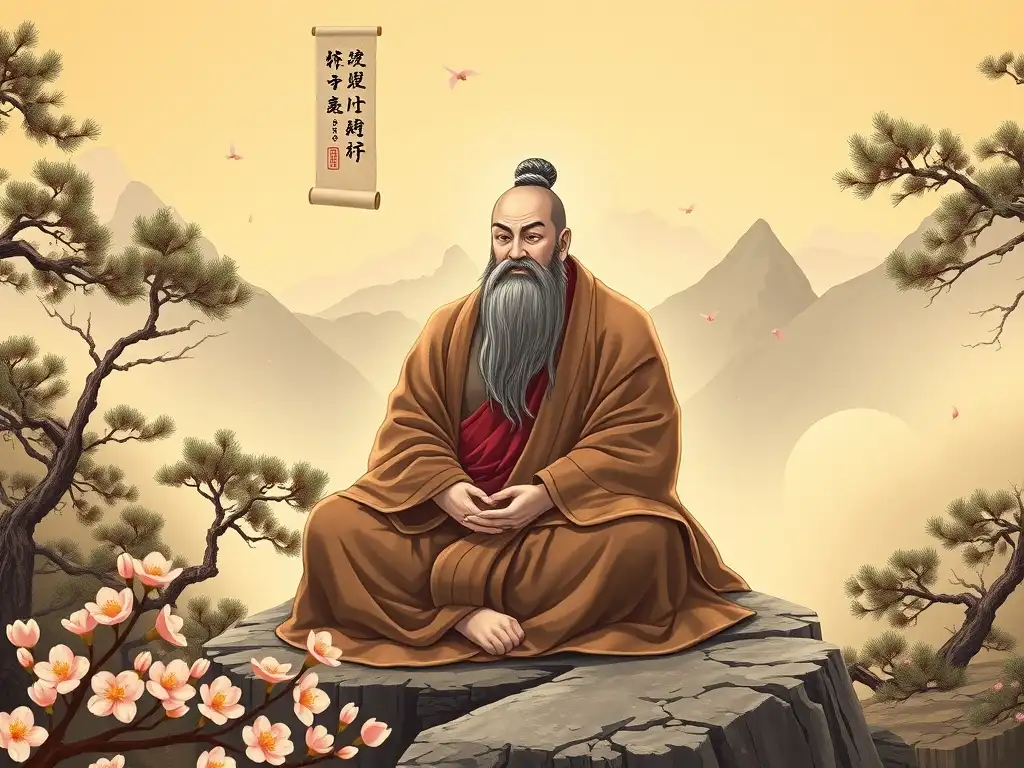
Boddhidharma, often regarded as the founder of Zen Buddhism in China, made profound contributions that reshaped the landscape of Buddhist practice. Arriving in China during the 6th century CE, his teachings emphasized a direct experience of enlightenment and the importance of meditation. Unlike the prevailing scholarly focus on scriptures, Boddhidharma introduced a more experiential approach, advocating for zazen (sitting meditation) as a core practice.
One of his most significant contributions was the concept of "mind-to-mind transmission," where teachings are passed directly from master to student rather than through written texts. This approach not only democratized the understanding of enlightenment but also encouraged practitioners to seek their own paths to realization.
Boddhidharma's influence extended beyond meditation techniques; he also initiated the idea of "seeing into one's nature," which underscores the Zen belief that all beings possess the potential for enlightenment. His teachings laid the foundation for subsequent Zen masters, fostering a lineage that continues to thrive today.
Reflection on Boddhidharma's Relevance Today
The relevance of Boddhidharma in contemporary society cannot be overstated. As the pace of modern life accelerates, many individuals seek solace and clarity through meditation. Boddhidharma's emphasis on mindfulness and self-inquiry resonates strongly with today's practices aimed at mental well-being.
Moreover, his teachings on direct experience challenge the modern tendency to rely heavily on external sources of knowledge. They encourage a return to introspection, prompting individuals to explore their own consciousness and find personal meaning in life. This is particularly significant in a world filled with distractions and superficial engagements.
In addition, the principles of Zen Buddhism, as propagated by Boddhidharma, have found applications beyond spiritual practice, influencing fields like psychology, art, and even business. Concepts such as presence, focus, and simplicity are now recognized as vital components for personal and professional success.
Boddhidharma's legacy is not only a historical footnote but a living tradition that continues to inspire and guide countless individuals in their quest for deeper understanding and fulfillment. His impact on Buddhism remains a testament to the transformative power of authentic spiritual practice in any era.
Further Reading on Boddhidharma and Buddhism

Recommended Books and Articles on Boddhidharma
For those interested in delving deeper into the life and teachings of Boddhidharma, a variety of scholarly works and accessible reads offer valuable insights. Here’s a curated list of recommended books and articles that explore Boddhidharma's significant impact on Buddhism, particularly in the context of Chan (Zen) Buddhism:
-
"The Zen Teaching of Bodhidharma"
This compilation includes translations of Boddhidharma's teachings, which offer a direct glimpse into his profound philosophical contributions and meditative practices.
-
"Bodhidharma: The Greatest Zen Master" by Hakuin Ekaku
This book provides an in-depth exploration of Boddhidharma's life and legacy, emphasizing his role in establishing Zen principles that continue to resonate with practitioners today.
-
"The Buddhist Religion: A Historical Introduction" by Richard H. Robinson and Willard L. Johnson
In this comprehensive text, the authors examine the historical context of Buddhism, including the pivotal role played by Boddhidharma in its evolution in China.
-
"Buddhism: A Very Short Introduction" by Damien Keown
This concise guide offers a broad overview of Buddhism, with sections dedicated to key figures like Boddhidharma, providing a quick yet informative read.
-
Academic Articles:
- “Bodhidharma and the Origins of Zen” explores the historical roots and philosophical underpinnings of Chan Buddhism.
- “The Impact of Bodhidharma on Chinese Buddhism” discusses Boddhidharma's transformative role in adapting Buddhist teachings to resonate with Chinese culture.
Resources for Exploring Chan Buddhism Further
To further explore the rich traditions of Chan Buddhism, the following resources are invaluable:
- Online Databases:
- JSTOR: A digital library that offers access to academic journal articles and books on Chan Buddhism and Boddhidharma's influence. Search for terms like "Chan Buddhism" and "Bodhidharma impact on Buddhism."
- Documentaries and Lectures:
- YouTube: Numerous lectures by scholars and practitioners discussing Boddhidharma and Chan Buddhism can be found. Look for lectures by renowned figures in Buddhism studies to gain diverse perspectives.
- Podcasts:
- "The Zen Studies Podcast": This series features episodes dedicated to Boddhidharma and the evolution of Zen practices, ideal for those who prefer auditory learning.
- Websites:
- The Buddhist Geeks: This platform offers articles and discussions on contemporary Buddhist practice, including insights into Chan Buddhism's origins and evolution.
- Access to Insight: A resourceful site filled with translations of Buddhist texts and teachings, including those related to Chan Buddhism.
- Community Groups:
- Local Zen Centers: Engaging with local Zen communities can provide firsthand experience of Boddhidharma's teachings through meditation practices and group discussions.
Through these resources, individuals can gain a deeper understanding of Boddhidharma's profound impact on Buddhism and explore the teachings that have shaped the spiritual landscape of Chan Buddhism.
Frequently Asked Questions
What was Boddhidharma's role in Buddhism?
Boddhidharma was a Zen master who is credited with transmitting Zen Buddhism to China, emphasizing meditation and direct experience over textual study.
How did Boddhidharma influence Buddhist practices?
Boddhidharma introduced the practice of Zazen (sitting meditation), which became a fundamental aspect of Zen Buddhism, shaping how practitioners approach meditation today.
What are the key teachings of Boddhidharma?
Boddhidharma's teachings focused on self-realization, the importance of meditation, and the idea that enlightenment comes from within, rather than through external rituals or scriptures.
Why is Boddhidharma considered significant in Buddhist history?
His contributions marked a pivotal shift in Buddhism, particularly in how it was practiced in China, leading to the development of distinct Zen traditions that later spread globally.
How did Boddhidharma's legacy continue after his time?
Boddhidharma's influence can be seen in the continued popularity of Zen Buddhism, which has inspired countless practitioners and has become a major school of thought within Buddhism worldwide.
Final Reflection: The Enduring Legacy of Bodhidharma's Impact on Buddhism
Bodhidharma's journey from India to China not only marked a pivotal moment in the history of Buddhism but also laid the foundation for a profound transformation that resonates in our contemporary world. Today, as we navigate the complexities of modern life, the teachings of Bodhidharma remind us of the importance of introspection and mindfulness. His emphasis on direct experience over dogma challenges us to seek our own truths in a society often overwhelmed by external distractions.
The influence of Bodhidharma extends beyond the confines of religious practice; it has permeated our cultural and social landscapes, shaping philosophies and lifestyles across the globe. His teachings on meditation and self-awareness have inspired countless individuals to embark on their own journeys of self-discovery. As the renowned Zen saying goes, The mind is everything. What you think you become.
This encapsulates the essence of Bodhidharma's impact, urging us to cultivate a deeper understanding of ourselves and our place in the world.
As we reflect on Bodhidharma's teachings, let us embrace the invitation to explore our inner selves and challenge the status quo. Take a moment to consider how you can integrate mindfulness and self-awareness into your daily life. Whether through meditation, contemplation, or simply being present in the moment, each small step can lead to profound personal transformation. In honoring Bodhidharma's legacy, we not only enrich our own lives but also contribute to a more compassionate and enlightened world.
Unveil Your Inner Zen: Take Action Today!
Thank you for embarking on the profound journey of learning about Bodhidharma and the transformative influence he had on Buddhism in China. We hope you found valuable insights that inspire reflection and promote personal growth. Now, let's take the next step toward deepening your understanding and practice!
Here are a few actions you can take to apply Bodhidharma's teachings:
- Start a daily meditation practice: Dedicate just 10 minutes each day to sit in silence and reflect. This small commitment can lead to greater mindfulness and awareness.
- Explore the roots of Zen by reading more about Bodhidharma's teachings. Consider picking up a book on Zen philosophy or the history of Buddhism to enrich your knowledge.
- Share your newfound knowledge! Discuss Bodhidharma's impact with friends or on social media, inviting others to join in this enlightening exploration.
What aspect of Bodhidharma's philosophy resonates most with you, and how will you incorporate it into your daily life?