
The Influence of Ancient Indian Philosophy on Mauryan Governance


Welcome to Ancient India History, where we embark on a fascinating journey through the tapestry of ancient Indian civilizations. From the enigmatic Indus Valley to the illustrious Gupta Empire, this site invites you to explore the rich and diverse history that has shaped a culture steeped in wisdom and innovation. In our featured article, “The Influence of Ancient Indian Philosophy on Mauryan Governance,” we delve into how profound philosophical ideas not only guided rulers but also laid the groundwork for governance systems that resonate even today.
Are you ready to uncover the intricate connections between thought and statecraft? Let’s dive deeper into this captivating narrative!
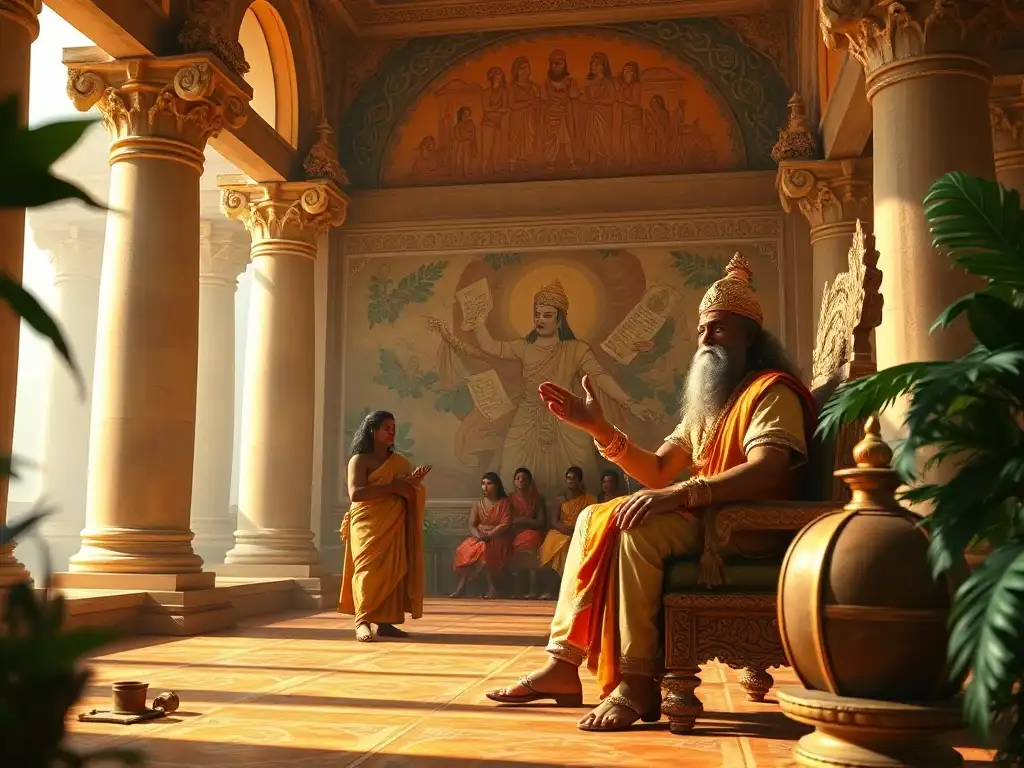
Introduction to Ancient Indian Philosophy and Governance
The intricate tapestry of ancient Indian philosophy has significantly shaped various aspects of governance throughout history, particularly during the Mauryan Empire. This period, marked by remarkable advancements in political thought and administration, saw the synthesis of philosophical ideas with practical governance, which laid the groundwork for future empires.
Ancient Indian philosophy, rich with concepts of dharma (duty), artha (wealth), and moksha (liberation), provided a framework that influenced rulers in their approach to governance and statecraft. By understanding the interplay between philosophy and governance, we can gain deeper insights into how ancient Indian civilizations, particularly the Mauryan Empire, fostered a unique political environment that emphasized moral integrity, social responsibility, and effective administration.
Definition of Ancient Indian Philosophy
Ancient Indian philosophy encompasses a diverse array of philosophical schools and ideas that emerged in the Indian subcontinent. It includes the six orthodox (astika) schools of thought—Nyaya, Vaisheshika, Samkhya, Yoga, Mimamsa, and Vedanta—as well as the heterodox (nastika) traditions such as Buddhism and Jainism. These philosophical traditions explored profound questions relating to ethics, metaphysics, and epistemology, focusing on the nature of reality, the self, and the moral responsibilities of individuals within society.
Notably, the concepts of dharma and artha played pivotal roles in shaping ethical governance. Dharma refers to the moral law that governs individual conduct and societal order, while artha pertains to the pursuit of material prosperity and security. Together, these principles provided a moral compass for rulers, emphasizing the importance of righteous governance and the welfare of the state.
Overview of Governance in Ancient India
Governance in ancient India was characterized by a blend of political authority, moral philosophy, and societal norms. Rulers were often seen as the custodians of dharma, tasked with maintaining social order and justice. The political landscape was diverse, with various kingdoms and republics operating under different systems of governance, yet many shared common philosophical foundations.
Key to ancient Indian governance was the notion of Rajadharma, which outlined the duties and responsibilities of kings. This concept insisted that a ruler must be a just and benevolent leader, prioritizing the welfare of the people while ensuring the stability and prosperity of the state. Additionally, the Arthashastra, a treatise attributed to Kautilya (Chanakya), provided practical insights into statecraft, emphasizing political strategy, economic management, and the importance of wisdom in governance.
Historical Context of the Mauryan Empire
Emergence of the Mauryan Empire
The Mauryan Empire, established in the 4th century BCE, marked a significant turning point in Indian history. Founded by Chandragupta Maurya, the empire expanded rapidly under the guidance of strategic thinkers like Chanakya, who played a crucial role in shaping its governance. The Mauryan Empire was characterized by a centralized administration that effectively integrated diverse cultures and regions, setting a precedent for future Indian empires.
The empire's rise was facilitated by the fragmentation of regional powers following the decline of the Nanda dynasty. Chandragupta, with Chanakya's cunning strategies, capitalized on this political vacuum, leading to the establishment of a vast empire that spanned much of the Indian subcontinent. This consolidation of power provided a unique opportunity for the implementation of ancient Indian philosophical principles into governance.
Key Figures Influencing Mauryan Governance
Several key figures emerged during the Mauryan Empire, influencing its governance through a blend of philosophical thought and practical administration.
- Chandragupta Maurya: As the founder of the empire, he set the stage for a centralized governance model that balanced authority with ethical considerations derived from ancient Indian philosophy.
- Chanakya (Kautilya): A brilliant strategist and philosopher, Chanakya's Arthashastra remains a foundational text in understanding the integration of philosophy and governance. His insights into statecraft emphasized the necessity of wise and pragmatic leadership.
- Ashoka the Great: Perhaps the most renowned Mauryan ruler, Ashoka's reign is often highlighted for his embrace of Buddhism and commitment to dharma. His edicts promoted ethical governance, social welfare, and non-violence, reflecting the profound influence of philosophy on his administration.
Through the contributions of these figures, the Mauryan Empire exemplified the profound impact of ancient Indian philosophy on the practice of governance, establishing a legacy that would resonate throughout subsequent periods in Indian history.
Core Philosophical Concepts Influencing Governance
Ancient Indian philosophy has profoundly influenced governance, especially during the Mauryan Empire. The interplay of philosophical concepts such as Dharma, Artha, and Moksha formed the bedrock of Mauryan governance, shaping the policies and ethical frameworks that guided rulers. These concepts were not merely abstract ideas; they were integral to the daily operations of the state and influenced the relationship between the rulers and the ruled. The Mauryan rulers, particularly Chandragupta Maurya and his advisor Kautilya, adeptly integrated these philosophical principles into their governance strategies, creating a unique administrative framework that emphasized ethical leadership, economic stability, and spiritual integrity.
Dharma: The Principle of Righteousness
Dharma, or righteousness, was a cornerstone of ancient Indian philosophy that had a significant impact on governance during the Mauryan Empire. It encompasses moral duties, ethical conduct, and the responsibilities of individuals toward society. For rulers, Dharma emphasized the importance of just and fair governance, aligning state policies with ethical principles.
The Mauryan kings were expected to be exemplars of Dharma, ensuring that their decisions reflected moral values and the welfare of their subjects. This principle fostered a sense of accountability, compelling rulers to uphold justice and protect the rights of the populace. The idea of Dharma also extended to the administration, where officials were expected to operate within a framework of ethical governance, promoting a just society. This moral obligation contributed to the stability and legitimacy of the Mauryan rule, as subjects were more likely to support a government perceived as adhering to righteous principles.
Artha: The Pursuit of Prosperity
Artha, meaning prosperity or wealth, played a crucial role in shaping the economic policies of the Mauryan Empire. It emphasized the importance of economic stability as a foundation for a thriving society. The Mauryan rulers recognized that a prosperous state not only ensured the well-being of its citizens but also strengthened the kingdom's power and influence.
Kautilya, in his seminal work, the Arthashastra, highlighted the significance of Artha in governance. He argued that a ruler must actively pursue wealth through effective administration, trade, and resource management. This pursuit involved implementing policies that encouraged agriculture, commerce, and industry, thus fostering economic growth. By prioritizing Artha, the Mauryan Empire was able to maintain robust state finances, fund military expeditions, and support public welfare initiatives, ultimately contributing to the empire's longevity and strength.
Moksha: Spiritual Liberation and Governance
Moksha, or spiritual liberation, represents the ultimate goal of human existence in ancient Indian philosophy. While it may seem distant from the practicalities of governance, the concept of Moksha subtly influenced the Mauryan rulers' approach to leadership. The idea of spiritual liberation encouraged rulers to consider the broader implications of their governance and to strive for a harmonious society where individuals could pursue their spiritual goals alongside material prosperity.
Incorporating Moksha into governance meant that rulers were not solely focused on temporal power but also on the moral and spiritual upliftment of their subjects. This perspective fostered a sense of duty among rulers to create an environment conducive to spiritual growth, allowing citizens to flourish both materially and spiritually. The emphasis on Moksha also encouraged tolerance and inclusivity in governance, as rulers recognized the diverse spiritual paths of their subjects.
The Role of Kautilya's Arthashastra
Overview of Arthashastra and Its Philosophical Underpinnings
The Arthashastra, authored by Kautilya (also known as Chanakya), is one of the most influential texts in ancient Indian political philosophy. It serves as a comprehensive guide to statecraft, economics, and military strategy. Kautilya's work is grounded in the principles of Dharma, Artha, and Moksha, reflecting the intricate relationship between ethics and governance.
Kautilya emphasized that effective governance requires a pragmatic approach, balancing moral imperatives with the need for political expediency. The Arthashastra provides insights into the complexities of power dynamics, outlining strategies for rulers to maintain control and ensure the prosperity of their state. By integrating philosophical concepts with practical governance, Kautilya laid the groundwork for a sophisticated understanding of statecraft that resonated throughout the Mauryan Empire.
Kautilya's Views on Power and Statecraft
Kautilya's views on power and statecraft were characterized by a blend of realism and idealism. He recognized that rulers must wield power effectively to maintain stability and protect their state. Kautilya advocated for a strategic approach to governance, where the ruler must be shrewd, adaptable, and sometimes even manipulative in the pursuit of political goals.
His philosophy emphasized the importance of intelligence and knowledge in governance, urging rulers to gather information and understand the motivations of their subjects and adversaries. Kautilya believed that a ruler's effectiveness was directly linked to their ability to navigate the complexities of human behavior and societal dynamics. This pragmatic perspective allowed Mauryan rulers to implement policies that were not only effective but also sustainable, ensuring the longevity of the empire.
Practical Applications of Arthashastra in Mauryan Governance
The principles outlined in Kautilya's Arthashastra were practically applied in the governance of the Mauryan Empire. The text provided a blueprint for administrative efficiency, economic management, and military organization. Mauryan rulers implemented Kautilya's strategies in various aspects of governance, including taxation, resource allocation, and foreign relations.
One notable application was the establishment of a well-structured bureaucracy, which ensured that administrative functions were carried out effectively. Kautilya's emphasis on surveillance and intelligence gathering led to the creation of an extensive network of spies, enabling rulers to stay informed about internal and external threats. Additionally, the principles of diplomacy and warfare discussed in the Arthashastra guided the Mauryan military campaigns, allowing them to expand and consolidate their empire successfully.
The integration of ancient Indian philosophy into Mauryan governance, particularly through the teachings of Kautilya's Arthashastra, created a robust framework that balanced ethical considerations with practical governance, setting a precedent for future administrations.
Integration of Philosophy into Administrative Practices
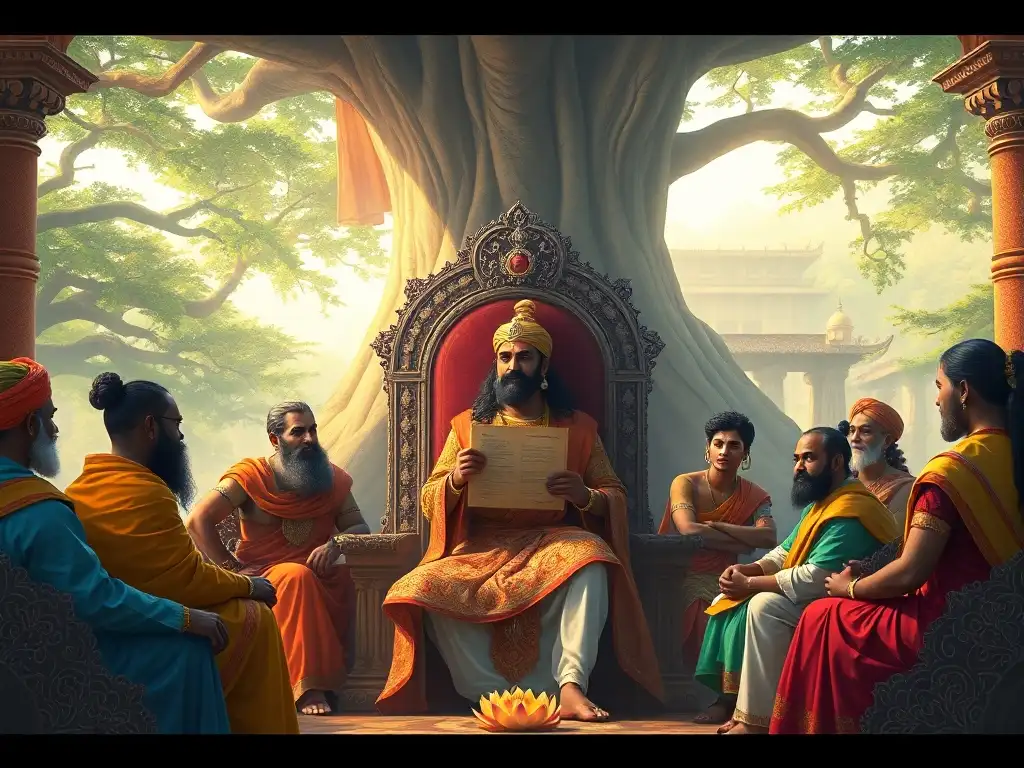
Ancient Indian philosophy played a significant role in shaping the administrative practices of the Mauryan Empire. The rulers of this period, particularly Chandragupta Maurya and his grandson Ashoka, recognized the importance of philosophical principles in governance. The integration of philosophy provided a framework for ethical leadership, social justice, and the welfare of the subjects.
Philosophical texts, such as the Arthashastra by Kautilya, emphasized pragmatic governance and statecraft, focusing on realpolitik and the importance of a well-structured administration. This work, while rooted in material conditions and power dynamics, also incorporated ethical considerations, promoting the idea that a ruler should prioritize the well-being of the people.
Furthermore, various philosophical schools, including the Nyaya and Vaisheshika, influenced the development of administrative practices by advocating for logical reasoning and ethical conduct. The result was a governance model that was not only efficient but also grounded in moral principles, allowing the Mauryan Empire to prosper and maintain stability over a vast territory.
Administrative Structure of the Mauryan Empire
The Mauryan Empire boasted a highly organized administrative structure that was reflective of its philosophical underpinnings. The central government was headed by the emperor, who was viewed as a divine figure responsible for the welfare of his subjects. Below the emperor were various levels of officials, including ministers, governors, and local administrators, all tasked with implementing the emperor's policies.
The administrative divisions were well-defined, often categorized into provinces known as "janapadas." Each province was governed by a royal representative who ensured that the policies of the central government were executed effectively. This hierarchical structure facilitated efficient governance while also allowing for local autonomy, a principle rooted in the philosophical belief of respecting local customs and traditions.
Moreover, the Mauryan administration employed an extensive bureaucracy, consisting of various departments responsible for taxation, law enforcement, and public works. This intricate system was designed to foster accountability and transparency, reflecting the philosophical ideals of justice and order that were integral to the Mauryan Empire's governance.
Influence of Philosophy on Legal Systems
The legal systems of the Mauryan Empire were significantly influenced by ancient Indian philosophy, particularly the principles of Dharma, which emphasized moral laws and ethical conduct. The concept of Dharma played a crucial role in shaping the legal framework, as it provided the foundation for justice and righteousness in society.
The Mauryan legal system was characterized by its attempts to balance individual rights with the common good. Laws were derived not only from royal edicts but also from philosophical tenets that promoted fairness and equity. This integration of philosophy into law ensured that the rulers adhered to a moral code, thus enhancing the legitimacy of their rule.
Additionally, the influence of Kautilya’s Arthashastra cannot be overlooked. While it emphasized the importance of power and strategic governance, it also advocated for a legal system that protected the welfare of the people and promoted social harmony. The combination of these philosophical influences resulted in a legal system that was both pragmatic and ethical, a hallmark of Mauryan governance.
Ethical Governance in the Mauryan Administration
Ethical governance was a cornerstone of the Mauryan administration, largely stemming from the philosophical teachings that permeated the empire. This emphasis on ethics was particularly evident during Ashoka's reign, where he adopted the principles of non-violence and compassion, significantly influenced by Buddhism.
Ashoka's Edicts, inscribed across the empire, reflect a commitment to ethical governance, advocating for the welfare of all living beings and the promotion of moral values. This shift towards ethical leadership marked a departure from purely power-centric governance, showcasing a profound understanding of the philosophical implications of rulership.
The Mauryan Empire's ethical governance model also promoted civic responsibility, encouraging subjects to engage in virtuous behavior and community service. This reciprocal relationship between the ruler and the ruled fostered a sense of loyalty and stability, illustrating how ancient Indian philosophy directly shaped the moral landscape of governance in the Mauryan Empire.
The Impact of Religion on Mauryan Governance
Religion played a pivotal role in the governance of the Mauryan Empire, intertwining with philosophical thought to shape policies and administrative decisions. The rulers recognized the importance of religious beliefs in influencing the populace, leading to a governance approach that was inclusive of various faiths, primarily Buddhism, Hinduism, and Jainism.
Buddhism and Its Philosophical Contributions
Buddhism, particularly under Ashoka's patronage, significantly influenced Mauryan governance. Ashoka’s conversion to Buddhism led to the integration of its philosophical principles into state policy, emphasizing non-violence, compassion, and moral governance.
The Buddhist concept of "Dharma" was foundational in shaping Ashoka's edicts, which called for ethical behavior, social welfare, and respect for all life. This philosophical approach not only aimed to enhance the moral fabric of society but also sought to create a more harmonious state, reducing conflict and promoting peace. The propagation of Buddhism throughout the empire under Ashoka further solidified its role in governance, as it became a unifying force that transcended regional and cultural differences.
Hindu Philosophical Influences on the State
Hindu philosophical traditions also left a significant mark on Mauryan governance. The principles found in texts like the Manusmriti articulated ideas of duty (Dharma), righteousness, and the social order, which informed the administration's policies.
The Mauryan rulers, particularly Chandragupta, drew from these Hindu teachings to legitimize their authority, presenting themselves as upholders of Dharma. This intertwining of governance and Hindu philosophy emphasized the ruler's responsibility to maintain social order and justice, which resonated with the populace's values and beliefs.
Moreover, the incorporation of Hindu rituals and ceremonies into the governance model served to reinforce the rulers' divine right to rule and their commitment to upholding cosmic order, thereby enhancing their legitimacy.
The Role of Jainism in Mauryan Policy Making
Jainism, with its core tenets of non-violence and truth, also influenced Mauryan policy-making, particularly during the reign of Ashoka. The Jain philosophy of Ahimsa (non-violence) resonated deeply with Ashoka, prompting him to adopt policies that prioritized the welfare of all living beings.
This philosophical influence led to the promotion of vegetarianism and the protection of animal life, reflecting Jain values within public policy. Ashoka's edicts often echoed these principles, advocating for compassion and ethical treatment of all creatures, which had a profound impact on societal norms during the Mauryan period.
Furthermore, Jain thinkers played a significant role in advising the Mauryan rulers, contributing to the formulation of laws and ethical guidelines that governed society. The synthesis of Jain philosophy into the governance framework illustrated the diversity of thought that characterized the Mauryan Empire, showcasing a governance model that was both inclusive and ethically grounded.
Case Studies: Philosophical Governance in Action
The Mauryan Empire, particularly under the rule of Ashoka the Great, stands as a paramount example of how ancient Indian philosophy shaped governance. The following case studies illustrate the practical implementation of philosophical principles in the Mauryan administrative framework, showcasing the deep interconnection between governance and philosophy.
Ashoka the Great and His Policies
Ashoka, the third Mauryan emperor, ascended to the throne in 268 BCE and is celebrated for his profound transformation from a warlike ruler to a proponent of peace and ethical governance after the Kalinga War. His reign marked a pivotal shift in Mauryan policies, as he embraced Buddhism and its core tenets, which emphasized compassion, non-violence, and moral integrity.
- Edicts of Ashoka: Ashoka's edicts, inscribed on rocks and pillars throughout his empire, reflect his philosophical stance on governance. These inscriptions advocate for ethical conduct, social welfare, and respect for all living beings. Notably, the Rock Edict XIII explicitly renounces war and promotes the idea of Dharma (moral law) as a guiding principle for both rulers and subjects.
- Promotion of Buddhism: Ashoka's support for Buddhism not only influenced his policies but also led to the establishment of monasteries and educational institutions. This fostered a culture of learning and ethical deliberation, which permeated the administrative practices of the time.
- Social Welfare Initiatives: Under Ashoka, various welfare programs were instituted, such as the creation of hospitals for humans and animals, planting of trees along roads for shade, and provisions for the poor. These initiatives were deeply rooted in the Buddhist principles of compassion and community welfare.
The Role of Councils and Assemblies in Governance
The governance of the Mauryan Empire was characterized by a sophisticated administrative structure that included councils and assemblies, which played a significant role in decision-making processes.
- Council of Ministers (Mantriparishad): This council, composed of trusted advisers and experts, was integral to Ashoka's governance. Philosophical discussions among council members influenced policies, ensuring that decisions aligned with ethical governance and the welfare of the populace.
- Local Assemblies (Sabhas and Samitis): Local governance was facilitated through assemblies that allowed for public participation in decision-making. These bodies were avenues for the expression of collective wisdom, reflecting the philosophical belief in community involvement in governance.
- Feedback Mechanisms: Assemblies served not only as platforms for governance but also as feedback mechanisms where the populace could voice their concerns and suggestions. This participatory approach was rooted in the philosophical idea that rulers should be accountable to their subjects.
Examples of Administrative Decisions Influenced by Philosophy
The philosophical underpinnings of Mauryan governance can be seen in various administrative decisions made during Ashoka's reign, highlighting the practical application of philosophy in statecraft.
- Justice Reforms: Ashoka implemented reforms aimed at ensuring justice and reducing corruption. His edicts emphasized fairness, with a focus on the welfare of the common people. This was reflective of the Buddhist belief in the importance of right action and ethical conduct.
- Promotion of Trade and Economy: Understanding the link between economic well-being and societal stability, Ashoka promoted trade routes and infrastructure development. His policies encouraged fair trade practices, which aligned with the philosophical tenet of mutual benefit and respect among individuals.
- Cultural and Religious Tolerance: Ashoka's governance was marked by a policy of religious tolerance, allowing various faiths to coexist peacefully. This was rooted in his philosophical belief in the value of diverse perspectives and the importance of harmony within society.
Comparative Analysis with Other Ancient Civilizations

The influence of philosophical thought on governance is not unique to the Mauryan Empire. A comparative analysis reveals both similarities and contrasts with other ancient civilizations.
Similar Philosophical Influences in Other Indian Kingdoms
Other Indian kingdoms, such as the Gupta Empire, also reflected philosophical influences in their governance structures.
- Dharma and Governance: Like the Mauryans, Gupta rulers emphasized Dharma as a guiding principle. The Gupta rulers promoted Hindu philosophy, which focused on righteousness, duty, and the welfare of their subjects.
- Cultural Flourishing: The Gupta period saw a renaissance in arts, literature, and science, influenced by philosophical teachings that encouraged intellectual pursuits and moral governance.
- Community Engagement: Similar to the Mauryan local assemblies, the Guptas utilized village councils, which engaged citizens in governance and promoted a sense of community responsibility.
Contrasts with Greek and Persian Governance Philosophies
While philosophical governance in ancient India shares similarities with other civilizations, significant contrasts exist, particularly with Greek and Persian models.
- Greek Philosophical Governance: Greek city-states, particularly Athens, emphasized democracy and rational discourse, led by philosophers like Plato and Aristotle. Governance was often focused on individual rights and civic participation, diverging from the more collectivist and ethically-oriented approach of the Mauryas.
- Persian Administrative Practices: The Persian Empire, known for its bureaucratic sophistication, utilized a top-down approach to governance. While it incorporated local customs and governance structures, it lacked the philosophical underpinning of ethical governance seen in the Mauryan model, which prioritized moral considerations over sheer administrative efficiency.
- Philosophy of Leadership: In contrast to Ashoka's ethical and compassionate leadership style, Persian rulers often emphasized absolute power and control, reflecting a different philosophical approach to governance that prioritized order and subjugation over welfare and ethical considerations.
The influence of ancient Indian philosophy on Mauryan governance, particularly during Ashoka's reign, showcases a unique blend of ethical principles and administrative practices that set it apart from other ancient civilizations.
Conclusion: Lasting Legacy of Ancient Indian Philosophy on Governance
The influence of ancient Indian philosophy on Mauryan governance is profound and enduring. Philosophical principles, particularly those articulated by thinkers such as Chanakya (Kautilya), laid the groundwork for a governance framework that emphasized ethical leadership, social responsibility, and the pursuit of dharma (righteousness). The Mauryan Empire, under the guidance of its rulers, notably Ashoka, implemented these principles in ways that not only shaped the administrative structures of their time but also left a lasting imprint on subsequent Indian political thought.
The legacy of this philosophical approach to governance can still be observed in contemporary discussions around ethical leadership and governance practices. The emphasis on moral responsibility and the welfare of the populace continues to resonate with modern governance models, highlighting the relevance of ancient wisdom in today’s political landscape.
Summary of Key Influences
- Dharma as a Guiding Principle: The concept of dharma played a pivotal role in shaping the values and responsibilities of rulers. It emphasized justice, morality, and the welfare of the state, which were integral to governance during the Mauryan period.
- Role of Advisors: The teachings of Chanakya underscored the importance of wise counsel in governance. His work, the Arthashastra, provided insights into statecraft, economic policy, and military strategy, influencing the administrative practices of the Mauryan rulers.
- Social Welfare and Ethics: The Mauryan administration, particularly under Ashoka, adopted a governance model that prioritized the well-being of citizens. This ethical approach to governance was rooted in Buddhist philosophy, promoting non-violence and compassion.
- Centralization and Bureaucracy: The philosophical tenets also contributed to a more structured and centralized bureaucratic framework, allowing for effective governance across the vast Mauryan Empire.
Reflection on Modern Governance and Ancient Philosophical Principles
The principles derived from ancient Indian philosophy continue to inform modern governance debates, particularly in the realm of ethical leadership and public service. Contemporary leaders and policymakers can draw from the Mauryan emphasis on dharma, which advocates for a governance model that seeks not only to maintain order but also to promote justice and equity.
Furthermore, the idea of governance as a form of stewardship, as demonstrated by Ashoka’s policies promoting social welfare and religious tolerance, resonates with today’s calls for inclusive and responsible governance. This reflection encourages modern societies to consider the philosophical underpinnings of their governance structures, recognizing that the wisdom of the past can provide valuable insights into resolving today’s challenges.
References
Key Texts and Sources on Ancient Indian Philosophy
- Arthashastra by Kautilya (Chanakya): A foundational text on statecraft and political philosophy that outlines practical governance strategies.
- Brahmanical Texts: Various texts like the Manusmriti provide insights into the moral and ethical frameworks that governed ancient Indian society.
- Buddhist Scriptures: Texts such as the Dhammapada emphasize ethical conduct and the role of rulers in promoting social welfare.
Suggested Further Reading on Mauryan Governance
- "The Mauryan Empire" by Romila Thapar: An exploration of the political, social, and economic aspects of the Mauryan period.
- "Kautilya's Arthashastra: A Historical Commentary": by R. Shamasastry: A detailed commentary on the Arthashastra, providing context and analysis of Kautilya's thoughts on governance.
- "Ashoka: The Search for India's Lost Emperor": by Charles Allen: A biography that delves into the life and governance of Emperor Ashoka, highlighting his philosophical outlook and contributions to statecraft.
This comprehensive analysis of ancient Indian philosophy's influence on Mauryan governance not only enriches our understanding of the past but also serves as a guide for contemporary governance practices.
- Introduction to Ancient Indian Philosophy and Governance
- Historical Context of the Mauryan Empire
- Core Philosophical Concepts Influencing Governance
- The Role of Kautilya's Arthashastra
- Integration of Philosophy into Administrative Practices
- The Impact of Religion on Mauryan Governance
- Case Studies: Philosophical Governance in Action
- Comparative Analysis with Other Ancient Civilizations
- Conclusion: Lasting Legacy of Ancient Indian Philosophy on Governance
- References
- What is the significance of ancient Indian philosophy in governance?
- How did the Mauryan Empire incorporate ancient Indian philosophical principles?
- What contributions did ancient Indian philosophers make to political thought?
- How does ancient Indian philosophy differ from Western political thought?
- What lasting impact has ancient Indian philosophy had on modern governance?
Frequently Asked Questions
What is the significance of ancient Indian philosophy in governance?
Ancient Indian philosophy provided a framework for governance that emphasized ethical leadership and the welfare of the state, influencing rulers like those of the Mauryan Empire.
How did the Mauryan Empire incorporate ancient Indian philosophical principles?
The Mauryan rulers, especially Ashoka, integrated Buddhist and Dharmic values into their governance, promoting non-violence and social welfare as central tenets of their rule.
What contributions did ancient Indian philosophers make to political thought?
Ancient Indian philosophers, such as Kautilya, contributed significantly to political theory with texts like the Arthashastra, which outlined strategies for effective governance and statecraft.
How does ancient Indian philosophy differ from Western political thought?
Ancient Indian philosophy often emphasizes moral duties and the collective good, contrasting with Western thought that tends to prioritize individual rights and liberty.
What lasting impact has ancient Indian philosophy had on modern governance?
The principles of ethical governance and social responsibility from ancient Indian philosophy continue to influence modern governance models, encouraging leaders to prioritize the common good over personal gain.
Final Reflection: The Enduring Legacy of Ancient Indian Philosophy in Governance
The principles of ancient Indian philosophy continue to resonate in contemporary governance, highlighting the timeless relevance of ethical leadership and societal harmony. As we navigate the complexities of modern political landscapes, the insights derived from ancient texts remind us that effective governance is not merely about power but about fostering a just and equitable society. The wisdom of the Mauryan era, rooted in philosophical thought, serves as a guiding beacon for today’s leaders.
The influence of ancient Indian philosophy on governance has shaped not only political structures but also the cultural fabric of society. Its teachings encourage a holistic approach to leadership, emphasizing the importance of moral integrity and the welfare of the populace. As Mahatma Gandhi once said, The best way to find yourself is to lose yourself in the service of others.
This sentiment echoes the essence of ancient philosophies that advocate for rulers to prioritize the needs of their citizens, reinforcing the idea that governance should be an act of service rather than domination.
As we reflect on the lessons of ancient Indian philosophy, let us challenge ourselves to integrate these timeless principles into our daily lives and communities. Consider how you can embody the values of ethical leadership and social responsibility in your own actions. By doing so, we not only honor the legacy of the Mauryan governance but also contribute to a future where leadership is synonymous with compassion and integrity. Embrace the wisdom of the past as a catalyst for positive change in the present and beyond.
Unlock the Secrets of Governance Inspired by Ancient Wisdom!
Thank you for taking the time to explore how ancient Indian philosophy shaped the governance of the Mauryan Empire. Your interest in this profound connection reveals the timeless relevance of philosophical principles in leadership and administration. Now, it's time to act on this newfound knowledge!
Here are some ways you can deepen your understanding and engage with this fascinating topic further:
- Dive deeper into ancient Indian texts and explore philosophical concepts that influenced modern governance. Start with “Kautilya's Arthashastra” for practical insights!
- Share your thoughts by joining online forums dedicated to Indian philosophy and its impact on contemporary governance – your perspective matters!
- Participate in local discussions or workshops on historical governance methods; you might uncover more about how philosophy can shape our modern world.
What aspect of ancient governance do you believe holds the key to solving today’s leadership challenges? We invite you to share your insights in the comments!