
The Role of Dialogue in Advancing Philosophical Thought in Ancient India

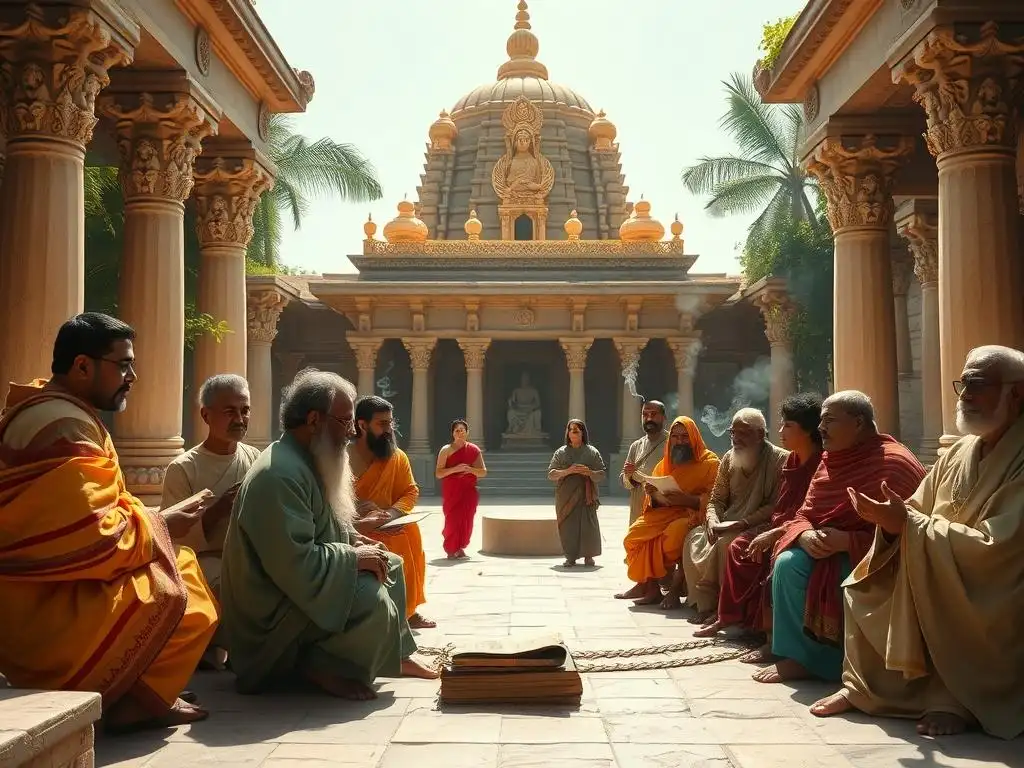
Welcome to Ancient India History, where we embark on an enlightening journey through the rich tapestry of ancient Indian civilizations. Have you ever pondered how philosophical dialogue in ancient India shaped the very foundations of thought that continue to influence us today? In our featured article, "The Role of Dialogue in Advancing Philosophical Thought in Ancient India," we delve into the fascinating interplay of ideas and discussions that fueled intellectual growth across epochs. Join us as we uncover the profound impact of these dialogues and invite you to explore the depths of wisdom that ancient India has to offer!
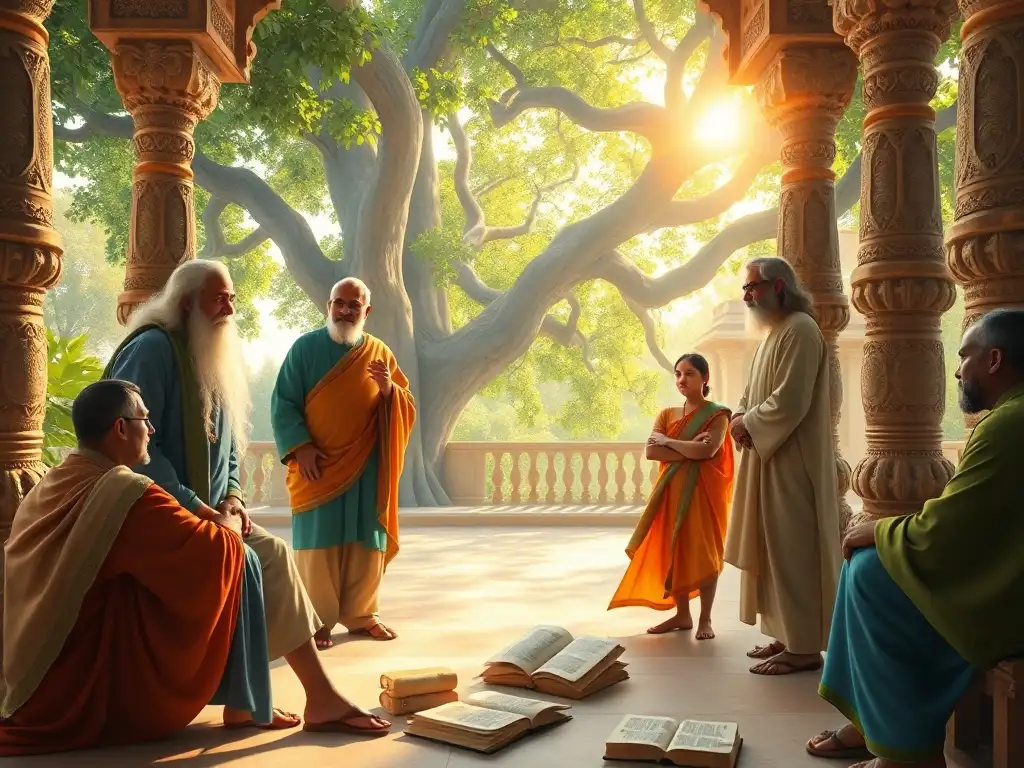
Exploring the intricate tapestry of ancient Indian philosophy reveals a profound emphasis on dialogue as a vehicle for intellectual exploration and development. From the early dialogues of the Vedas to the intricate discussions found in texts like the Upanishads and the works of prominent philosophers such as Adi Shankaracharya and Gautama Buddha, philosophical dialogue in ancient India was not merely a method of communication but a fundamental aspect of philosophical inquiry.
This article delves into the significance of dialogue in fostering philosophical thought in ancient India, highlighting its definitions, importance, and the historical context that shaped these vibrant exchanges of ideas.
Introduction to Philosophical Dialogue in Ancient India
Definition of Philosophical Dialogue
Philosophical dialogue can be defined as a structured conversation aimed at exploring complex ideas, challenging assumptions, and fostering mutual understanding. In ancient India, this form of dialogue often took place in the form of questions and answers, debates, and discussions among scholars, students, and spiritual seekers. It served as a vital method for the transmission of knowledge and the refinement of philosophical concepts.
Importance of Dialogue in Philosophy
The role of dialogue in philosophy is paramount. It encourages critical thinking, nurtures diverse perspectives, and facilitates deeper comprehension of abstract ideas. In the context of ancient Indian philosophy, dialogue was essential for:
- Clarifying Concepts: Engaging in dialogue helped clarify and refine philosophical concepts.
- Encouraging Debate: Philosophers often engaged in rigorous debates, leading to the evolution of ideas.
- Fostering Community: Dialogue created a sense of community among thinkers, promoting collaborative learning.
Historical Context of Philosophical Thought in Ancient India
Overview of Ancient Indian Civilizations
Ancient India was home to several flourishing civilizations, each contributing to the rich philosophical discourse. The Indus Valley Civilization laid early foundations, but it was during the Vedic period (circa 1500–500 BCE) that philosophical thought began to take shape. The subsequent emergence of various sects and schools, including Hinduism, Buddhism, and Jainism, further enriched the philosophical landscape.
Key Philosophical Schools in Ancient India
Several philosophical schools emerged in ancient India, each with its distinct approach to dialogue and inquiry:
- Vedanta: Focused on the nature of reality and the self, promoting dialogue to explore the relationship between the individual soul (Atman) and the ultimate reality (Brahman).
- Buddhism: Emphasized dialectical reasoning and the importance of questioning to achieve enlightenment.
- Jainism: Advocated for non-violence and truth, often engaging in dialogues that challenged prevailing beliefs.
These schools not only contributed to the philosophical dialogue of their time but also set the stage for future discussions that would influence generations to come.
The Nature of Dialogue in Ancient Indian Philosophy
In ancient Indian philosophy, dialogue served as a crucial tool for the exploration and advancement of philosophical thought. It was not merely a method of communication but a dynamic process through which ideas were exchanged, challenged, and refined. Philosophical dialogue in ancient India often took the form of discussions between teachers and students, debates among scholars, and dialogues recorded in sacred texts. These interactions were characterized by a spirit of inquiry and a quest for truth, reflecting the belief that understanding could be deepened through discourse.
The dialogues were typically structured around fundamental questions about existence, ethics, knowledge, and the nature of reality. They encouraged participants to articulate their views, listen to opposing perspectives, and critically evaluate their own beliefs. This dialectical approach fostered an environment where philosophical ideas could evolve, making dialogue a cornerstone of intellectual life in ancient India.
Types of Dialogues in Ancient Texts
The ancient Indian texts reveal several distinct types of dialogues that contributed to philosophical discourse:
- Socratic Dialogue: Similar to the Socratic method, these dialogues involved a series of questions that led participants to examine their assumptions and beliefs critically.
- Didactic Dialogue: Focused on teaching, these dialogues were often conducted between a guru and a shishya (student), where the guru would impart wisdom through conversational exchanges.
- Debate: Philosophical debates were common, especially among competing schools of thought, such as Buddhism, Jainism, and various Hindu philosophies. These debates often took place in public forums and were crucial for the development of ideas.
- Narrative Dialogue: Some texts incorporated dialogues within stories, where characters engaged in philosophical discussions that illustrated key concepts and moral dilemmas.
Each type of dialogue played a unique role in shaping the philosophical landscape of ancient India, contributing to the richness and diversity of thought.
Prominent Dialogues and Texts
Several texts stand out as significant examples of philosophical dialogue in ancient India. Notable among these are:
- The Upanishads: These ancient texts contain profound dialogues between sages and seekers, exploring the nature of reality, the self (Atman), and the ultimate reality (Brahman). The interactions often lead to deep existential inquiries.
- The Bhagavad Gita: A conversation between Lord Krishna and Arjuna, this text addresses moral dilemmas and the nature of duty. The dialogue format allows for a multifaceted exploration of dharma (duty) and devotion.
- The Dhammapada: This collection of sayings of the Buddha includes dialogues that emphasize ethical conduct and mental discipline, showcasing the practical applications of philosophical thought.
- The Nyaya Sutras: Focused on logic and epistemology, these texts present analytical dialogues that discuss methods of knowledge acquisition and the nature of reality.
These texts not only illustrate the richness of philosophical dialogue but also serve as foundational works that influenced subsequent philosophical developments in India.
Key Figures in Philosophical Dialogue
Philosophical dialogue in ancient India was significantly shaped by a number of key figures whose contributions and ideas continue to resonate in contemporary philosophical discourse. These thinkers played pivotal roles in fostering dialogue as a means of philosophical inquiry, offering diverse perspectives and methodologies.
Major Philosophers and Thinkers
- Buddha (Siddhartha Gautama): The founder of Buddhism, Buddha utilized dialogue extensively in his teachings, engaging with followers and skeptics alike to elucidate the Four Noble Truths and the Eightfold Path.
- Adi Shankaracharya: A proponent of Advaita Vedanta, Shankara engaged in dialogues that emphasized non-dualism and the unity of Atman and Brahman, challenging other philosophical schools through rigorous debate.
- Ramanuja: A key figure in the Vishishtadvaita (qualified non-dualism) philosophy, Ramanuja’s dialogues with followers emphasized devotion (bhakti) and the relationship between the individual soul and the divine.
- Madhva: The founder of the Dvaita (dualism) school, Madhva engaged in extensive debates with adherents of Advaita Vedanta, defending the distinction between the individual soul and God.
These philosophers not only contributed their unique perspectives but also enriched the tradition of philosophical dialogue by engaging with diverse thoughts and schools.
Their Contributions to Philosophical Dialogue
The contributions of these philosophers to philosophical dialogue were manifold:
- Innovative Methodologies: They employed various dialectical techniques, such as counter-arguments and analogies, to clarify complex ideas and engage with opponents effectively.
- Textual Development: Their dialogues often led to the creation of significant texts that systematically articulated their philosophies, allowing for future generations to engage with their ideas.
- Cultural Impact: By engaging in public debates and discussions, these thinkers helped shape the intellectual landscape of ancient India, fostering an environment where philosophical inquiry was valued and pursued.
- Interdisciplinary Connections: Their dialogues often bridged religious, ethical, and metaphysical themes, showcasing the interconnectedness of different branches of philosophy.
Through their dialogues and teachings, these philosophers not only advanced philosophical thought in ancient India but also laid the groundwork for future discourse, ensuring that dialogue remained a vital component of philosophical exploration.
The Impact of Dialogue on Philosophical Development
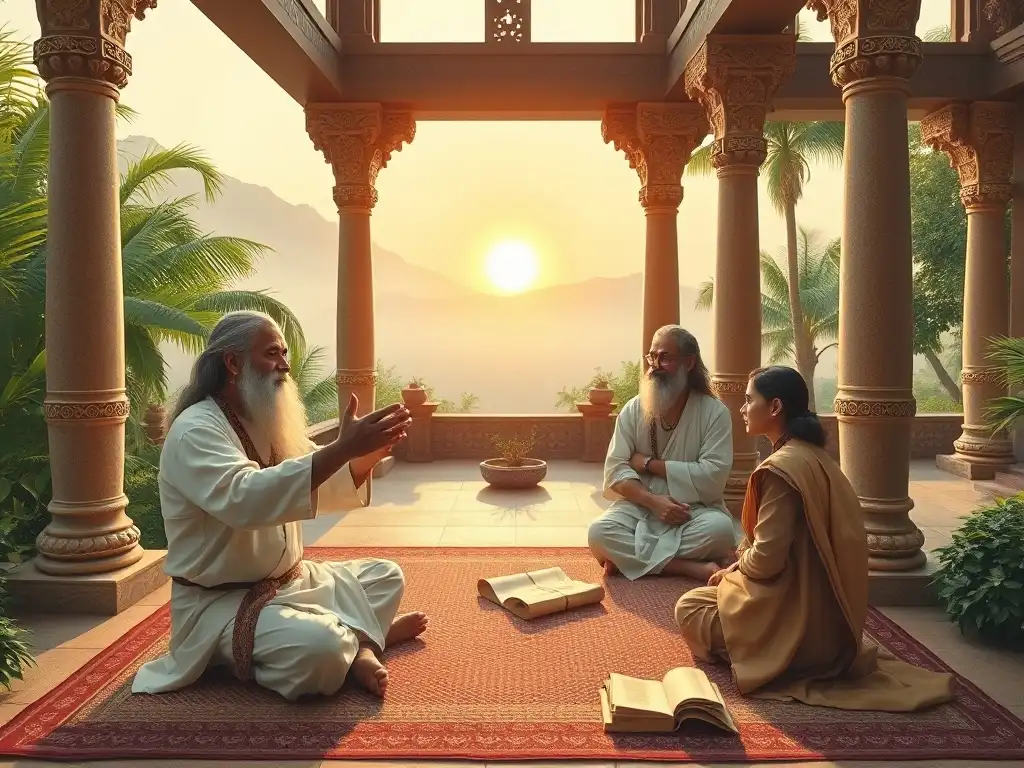
In ancient India, philosophical dialogue was not merely a method of communication but a foundational concept that significantly shaped the development of philosophical thought. The practice of engaging in dialogues allowed scholars and thinkers to explore complex ideas, challenge established beliefs, and refine their arguments through discourse. This dynamic exchange of thoughts fostered an environment of critical inquiry, where ideas could be tested and debated, leading to a deeper understanding of various philosophical concepts.
One of the most notable examples of such dialogue can be found in the works of ancient texts like the Upanishads and the Brahmanas, where conversations between sages and students reveal profound insights into metaphysics, ethics, and the nature of reality. The impact of these dialogues extended beyond individual thinkers, as they contributed to the formation of philosophical schools that would dominate thought in ancient India.
How Dialogue Shaped Philosophical Schools
The role of dialogue in shaping philosophical schools in ancient India cannot be overstated. Key schools such as Nyaya, Vaisheshika, and Samkhya emerged through rigorous discussions and debates among philosophers. For instance, the Nyaya school, which is focused on logic and epistemology, was heavily influenced by dialogues that addressed the nature of knowledge and the means of acquiring it.
Each school of thought not only presented its doctrines but also engaged with opposing views, which required a dialectical approach. The process of dialogue allowed these schools to articulate their philosophies more clearly and systematically. The debates often culminated in texts that served as foundational literature, such as the "Nyaya Sutras" by Gautama, which encapsulated the essence of their discussions for future generations.
The Role of Debate and Discussion in Philosophical Growth
Debate and discussion were essential components of philosophical growth in ancient India. Philosophers frequently gathered in assemblies or schools where they would engage in structured debates known as "Shastrarthas." These debates were rigorous, often involving multiple participants who would defend their positions while critically examining others'.
The methodology of debate not only enhanced the clarity of expression among philosophers but also encouraged the development of new ideas. Participants were compelled to think critically and creatively, as they needed to anticipate counterarguments and strengthen their own positions. This intellectual environment nurtured a culture of inquiry that made philosophical exploration a communal endeavor, fostering a rich tradition of collective learning and growth.
Influence on Later Philosophical Traditions
The influence of philosophical dialogue in ancient India extended well beyond its own time, impacting later philosophical traditions both within India and beyond. The methods and principles established by ancient Indian philosophers laid the groundwork for subsequent schools of thought, including those in Buddhism and Jainism, which emphasized dialogue and debate as essential tools for understanding and enlightenment.
Moreover, the dialogues of ancient Indian philosophers contributed to the global philosophical discourse. Concepts such as non-duality (Advaita) and the nature of self (Atman) have resonated through various philosophical traditions around the world, influencing thinkers from different cultures. The emphasis on dialogue as a means of seeking truth has become a hallmark of philosophical inquiry, transcending borders and epochs.
Conclusion: The Lasting Legacy of Dialogue in Ancient Indian Philosophy
The legacy of dialogue in ancient Indian philosophy is profound and enduring. It established a framework for philosophical inquiry that has continued to resonate through the centuries, influencing both Eastern and Western philosophical traditions. The richness of thought that emerged from dialogues in ancient India highlights the importance of discourse in the development of philosophical ideas.
Summary of Key Contributions
The key contributions of philosophical dialogue in ancient India include the establishment of structured philosophical schools, the development of critical reasoning through debate, and the fostering of a collaborative intellectual culture. These contributions have not only shaped ancient thought but have also provided a foundation for future philosophical explorations.
Reflection on Modern Relevance of Ancient Dialogue
In today's world, the principles of dialogue that were so vital to ancient Indian philosophy remain relevant. The increasing complexity of contemporary issues calls for open dialogue and critical discussion, echoing the ancient practices of inquiry. By embracing the spirit of philosophical dialogue, modern thinkers can navigate the challenges of our time, fostering understanding and collaboration across diverse perspectives. The lessons learned from ancient dialogues serve as a guide for enriching philosophical discourse in the present and future.
Further Reading on Philosophical Dialogue in Ancient India
Exploring the rich tapestry of philosophical dialogue in ancient India unveils a plethora of texts and resources that offer profound insights into the evolution of thought during this era. Engaging with these works not only enhances our understanding of ancient Indian philosophy but also illustrates the intricate dialogues that shaped cultural and intellectual landscapes.
Recommended Texts and Resources
-
The Upanishads
These ancient texts are foundational to Indian philosophy, exploring themes of metaphysics, ethics, and the nature of reality through dialogues between sages and seekers. Key Upanishads, such as the Chandogya and Brihadaranyaka, exemplify the dialogic method of inquiry.
-
The Bhagavad Gita
This epic dialogue between Prince Arjuna and Lord Krishna addresses moral dilemmas and the philosophy of duty (dharma). It serves as a critical text for understanding the practical applications of philosophical ideas in real-world scenarios.
-
Nyaya Sutras
Authored by Gautama, this text outlines the principles of logic and epistemology in a dialogic framework. It emphasizes the importance of reasoned debate and discussion in the pursuit of knowledge.
-
The Dhammapada
A collection of sayings of the Buddha, this text provides insights into Buddhist philosophy, often delivered through dialogues with disciples and laypersons. It emphasizes ethical living and mental discipline.
-
The Brahma Sutras
This work summarizes key philosophical concepts found in the Upanishads and is structured in a question-and-answer format, highlighting the importance of dialogue in clarifying complex ideas.
-
The Charaka Samhita
While primarily a medical text, it includes discussions on health and ethics, often framed in dialogues between physicians and patients, showcasing the integration of philosophy and everyday life.
-
Secondary Sources
- "Indian Philosophy: A Very Short Introduction" by Sue Hamilton provides an accessible overview of the main philosophical traditions in India.
- "The Philosophy of the Upanishads" by Paul Deussen offers a detailed analysis of the philosophical implications within these ancient texts.
Suggested Topics for Exploration
-
The Role of Socratic Dialogue in Indian Philosophy
Investigate how the methods of questioning and dialogue used by Socrates may have parallels in ancient Indian philosophical practices, particularly in the Upanishadic traditions.
-
Comparative Analysis of Dialogues in Eastern and Western Philosophies
Explore similarities and differences in the structure and purpose of philosophical dialogues in ancient India and Greece, focusing on their respective cultural contexts.
-
Influence of Philosophical Dialogue on Indian Epistemology
Examine how dialogues in texts such as the Nyaya Sutras contributed to the development of theories of knowledge and perception in Indian philosophy.
-
Philosophical Dialogues in Jainism
Investigate the role of dialogue in Jain philosophical texts, particularly in the context of ethical discussions surrounding non-violence (ahimsa) and truth (satya).
-
Modern Interpretations of Ancient Dialogues
Analyze how contemporary philosophers and scholars interpret and apply the principles found in ancient Indian dialogues to modern philosophical discussions.
-
The Impact of Cultural Exchange on Philosophical Dialogue
Study the effects of interactions between ancient Indian and other civilizations, such as the Greeks and Persians, on the development of philosophical thought and dialogue.
By delving into these texts and topics, readers can gain a deeper appreciation for the rich tradition of philosophical dialogue in ancient India, recognizing its lasting impact on both historical and contemporary philosophical discourse.
- Introduction to Philosophical Dialogue in Ancient India
- Historical Context of Philosophical Thought in Ancient India
- The Nature of Dialogue in Ancient Indian Philosophy
- Key Figures in Philosophical Dialogue
- The Impact of Dialogue on Philosophical Development
- Conclusion: The Lasting Legacy of Dialogue in Ancient Indian Philosophy
- Further Reading on Philosophical Dialogue in Ancient India
- What was the significance of philosophical dialogue in ancient India?
- How did dialogue contribute to the cultural exchanges in ancient Indian civilizations?
- Which ancient texts showcase the practice of philosophical dialogue?
- In what ways did the Gupta Empire influence philosophical discussions?
- How can the legacy of philosophical dialogue from ancient India be seen today?
Frequently Asked Questions
What was the significance of philosophical dialogue in ancient India?
Philosophical dialogue played a crucial role in the development of thought and debate among scholars, allowing diverse ideas to flourish and influence various schools of philosophy.
How did dialogue contribute to the cultural exchanges in ancient Indian civilizations?
Dialogue facilitated cultural exchanges by promoting discussions among different philosophical traditions, leading to the synthesis of ideas and a richer cultural tapestry.
Which ancient texts showcase the practice of philosophical dialogue?
Key texts such as the Upanishads and Brahmanas exemplify philosophical dialogue, illustrating the method of questioning and debate that stimulated intellectual discourse.
In what ways did the Gupta Empire influence philosophical discussions?
The Gupta Empire was a golden age for philosophy, where dialogue among scholars contributed to advancements in logic, ethics, and the metaphysics of various philosophical schools.
How can the legacy of philosophical dialogue from ancient India be seen today?
The legacy of ancient Indian philosophical dialogue continues to inspire modern philosophers and thinkers, promoting critical thinking and dialogical methods in contemporary philosophical discussions.
Final Reflection: The Enduring Legacy of Philosophical Dialogue in Ancient India
The exploration of philosophical dialogue in ancient India reveals a profound connection to contemporary thought, emphasizing that the exchange of ideas is essential for intellectual growth. In a world increasingly polarized by differing beliefs, the dialogues of ancient sages remind us of the power of conversation to bridge divides and foster understanding. The insights gained from these ancient discussions are not just relics of the past; they are vital tools for navigating the complexities of modern life.
The impact of philosophical dialogue in ancient India is not confined to historical texts; it continues to shape our cultural and social landscapes today. The principles of inquiry and debate that were foundational to Indian philosophy encourage us to engage with diverse perspectives and challenge our own assumptions. As we reflect on this legacy, we are reminded of the words of the philosopher Jiddu Krishnamurti: The ability to observe without evaluating is the highest form of intelligence.
This notion underscores the importance of open dialogue in fostering a deeper understanding of ourselves and the world around us.
As we conclude this exploration, I invite you to reflect on the role of dialogue in your own life. Consider how engaging in thoughtful conversations can enrich your understanding and promote empathy in your interactions with others. Embrace the lessons from ancient India and strive to cultivate a space for dialogue in your personal and professional relationships. By doing so, you not only honor the wisdom of the past but also contribute to a more thoughtful and connected future.
Unveil the Power of Dialogue in Ancient Philosophy!
Thank you for diving into the fascinating world of dialogue and its impact on philosophical thought in ancient India! You've explored essential insights that illuminate how conversations shaped ideas and transformed societies. Now, it’s time to take that knowledge further and embrace the wisdom of dialogue in your own journey.
Here are a few actionable steps to deepen your understanding and engage with this enriching topic:
- Join a discussion group focused on ancient philosophies—sharing insights with others can lead to new revelations!
- Reflect on a specific dialogue from your studies and write down your thoughts on how it can apply to modern philosophical discussions.
- Explore local or online philosophy clubs where you can engage with others and dive deeper into these timeless concepts.
What transformative ideas could emerge if we actively practiced the art of dialogue in our communities today?