
Chandragupta vs. Alexander: How Two Great Leaders Shaped Ancient India

Welcome to Ancient India History, where we embark on a fascinating journey through the rich tapestry of ancient Indian civilizations. In this exploration, we delve into the intriguing comparison between two monumental figures: Chandragupta and Alexander. How did these great leaders shape the course of history in their respective realms? Prepare to uncover the remarkable stories, cultural exchanges, and strategic prowess that defined their legacies. Join us as we unravel the compelling narratives that intertwine their destinies and discover the profound impact they had on ancient India. Your adventure into history begins now!
- Introduction to Chandragupta and Alexander: A Comparative Overview
- Chandragupta Maurya: The Rise of a Great Leader
- Alexander the Great: Conqueror and Visionary
- Chandragupta and Alexander Comparison: Leadership Styles
- Cultural Impact of Chandragupta and Alexander
- Conclusion: The Lasting Legacy of Two Great Leaders
- Further Reading on Chandragupta and Alexander
- Frequently Asked Questions
- Final Reflection: The Enduring Legacy of Chandragupta and Alexander
- Ignite Your Curiosity: Explore the Legacy of Ancient Leaders!
Introduction to Chandragupta and Alexander: A Comparative Overview
The legacies of Chandragupta Maurya and Alexander the Great represent two pivotal moments in the history of ancient India, illustrating the complex interplay of culture, power, and conquest. While Alexander's military campaigns in the 4th century BCE brought him into the Indian subcontinent, it was Chandragupta who harnessed the subsequent political vacuum to establish one of India's first great empires.
This article delves into the fascinating Chandragupta and Alexander comparison, examining not only their military strategies and political acumen but also their lasting impacts on the Indian landscape. By exploring the historical contexts that shaped their leadership, we can better understand how these two extraordinary figures influenced the course of ancient Indian civilization and set the stage for future developments.
The Historical Context of Chandragupta and Alexander
To truly appreciate the significance of Chandragupta and Alexander, one must first consider the historical backdrop that defined their eras.
-
Alexander the Great (356–323 BCE):
Alexander was a Macedonian king whose conquests stretched from Greece to Egypt and into the heart of Persia. His incursion into the Indian subcontinent began around 326 BCE during the Battle of the Hydaspes against King Porus, a battle that showcased both his military genius and the diversity of Indian kingdoms at the time.
-
Chandragupta Maurya (c. 340–297 BCE):
Emerging in the wake of Alexander's campaigns, Chandragupta sought to unify the fragmented states of India. Influenced by the teachings of Chanakya, a sage and strategist, he capitalized on the weakened state of local rulers, eventually founding the Maurya Empire.
These contrasting pathways highlight not only their distinct backgrounds and motivations but also the broader geopolitical shifts occurring in ancient India. Chandragupta's rise was intricately tied to the aftermath of Alexander's invasion, as he navigated a landscape altered by foreign influence and internal strife.
Significance of Their Leadership in Ancient India
The leadership of both Chandragupta and Alexander left indelible marks on the political and cultural landscape of ancient India, albeit in profoundly different ways.
- Chandragupta's Unification Efforts:
- Foundation of the Maurya Empire: Chandragupta's establishment of a centralized empire marked a departure from the fragmented kingdoms that characterized the region. His governance model laid the groundwork for subsequent Indian empires.
- Economic and Administrative Reforms: Under his rule, India witnessed significant advancements in trade, agriculture, and administrative organization, fostering economic growth and stability.
- Alexander's Cultural Exchange:
- Hellenistic Influence: Alexander's brief presence in India facilitated cultural exchanges that enriched local traditions and introduced new ideas, which would later influence Indian art and philosophy.
- Military Innovation: His military tactics and strategies left a legacy that would inform Indian warfare in subsequent centuries, as local rulers adapted his methods.
Both leaders shaped the trajectory of ancient India through their distinct approaches to power and governance, creating a complex tapestry of conflict, cooperation, and cultural exchange that defined their respective eras.
Chandragupta Maurya: The Rise of a Great Leader
Chandragupta Maurya is a pivotal figure in the history of ancient India, renowned for founding the Maurya Empire and establishing a centralized governance system that transformed the subcontinent. His rise to power is marked by strategic acumen, military prowess, and a vision for uniting various Indian territories under a single banner.
Early Life and Influences on Chandragupta
Chandragupta's origins are shrouded in some mystery, but it is widely believed that he was born around 340 BCE in a humble family in present-day Bihar. His early life was influenced by several key factors that shaped his character and ambitions:
- Cultural Background: Growing up in the Magadha region, Chandragupta was exposed to the rich cultural and political landscape of ancient India, which included various kingdoms and local rulers. This environment likely instilled in him a desire for power and governance.
- Education and Mentorship: Chandragupta's education is thought to have been influenced by notable figures such as Chanakya (also known as Kautilya), a Brahmin scholar and strategist. Chanakya's teachings on statecraft, warfare, and economics would go on to play a crucial role in Chandragupta's later success.
- Interactions with Local Rulers: His encounters with various local rulers and their governance styles provided Chandragupta with insights into the complexities of leadership and administration. These experiences would prove invaluable in his quest to establish his own empire.
Establishing the Maurya Empire
Chandragupta's ascent to power involved a series of strategic moves and alliances that laid the foundation for the Maurya Empire. Key events include:
- Defeating the Nanda Dynasty: In his early twenties, with Chanakya's guidance, Chandragupta initiated a rebellion against the Nanda Dynasty, a powerful ruling family in Magadha. Through a combination of guerilla warfare tactics and strategic alliances, he managed to overthrow the Nandas around 321 BCE.
- Unification of North India: Following the defeat of the Nandas, Chandragupta focused on consolidating his power. He embarked on a campaign to unify various smaller kingdoms in Northern India, employing both diplomacy and military force. By 317 BCE, he had established dominance over a substantial portion of the Indian subcontinent.
- Formation of a Centralized Government: Chandragupta implemented a centralized administrative system, dividing his empire into provinces governed by appointed officials. This system enabled efficient management and communication across vast distances, setting the stage for one of the largest empires in ancient India.
Key Achievements and Contributions of Chandragupta
Chandragupta's contributions to ancient Indian civilization were multifaceted and had a lasting impact:
- Economic Reforms: He instituted various economic policies that promoted agriculture, trade, and commerce, enhancing the wealth and stability of the Maurya Empire. The establishment of a standardized system of taxation helped fund public works and military campaigns.
- Military Innovations: Chandragupta's military strategies, developed with Chanakya's guidance, included the use of war elephants and a disciplined infantry. These innovations not only secured his empire but also influenced military tactics in subsequent Indian kingdoms.
- Cultural Integration: Under his rule, Chandragupta fostered a sense of cultural unity among the diverse peoples of his empire. He encouraged the spread of Buddhism and Jainism, which contributed to a rich tapestry of religious and cultural life.
- Legacy and Succession: Chandragupta's reign laid the groundwork for his son, Bindusara, and grandson, Ashoka, to further expand and refine the Maurya Empire. His strategies and policies became a model for future Indian rulers.
In comparing Chandragupta with Alexander the Great, one can see significant differences in their approaches to leadership and governance. While Alexander aimed for rapid conquest and cultural diffusion, Chandragupta focused on sustainable governance and unification of a diverse region, establishing a legacy that would endure long after his reign.
Alexander the Great: Conqueror and Visionary
Early Life and Influences on Alexander
Alexander the Great, born in 356 BCE in Pella, the ancient capital of Macedonia, was the son of King Philip II. His upbringing was marked by a blend of military training and classical education, setting the stage for his future conquests. Influenced by notable figures such as Aristotle, who taught him philosophy, science, and the arts, Alexander developed a keen intellect alongside his martial prowess.
- Family Influence:
- Philip II: His father's military achievements and reforms inspired Alexander to pursue a path of conquest.
- Olympias: His mother, who was deeply religious and believed in the divine lineage of Alexander, instilled in him a sense of destiny and greatness.
- Education and Training:
- Aristotle's Tutelage: Alexander learned the importance of knowledge and culture, which would later influence his approach to governance.
- Military Drills: His early exposure to warfare and tactics was crucial in shaping his skills as a commander.
These foundational experiences cultivated a leader who was not only a brilliant strategist but also a visionary with aspirations that extended beyond mere military conquest.
Alexander's Campaigns in India
Alexander's campaigns in India began around 326 BCE, marking a significant chapter in his quest for empire. His advance into the Indian subcontinent was characterized by a series of battles that showcased his military ingenuity and adaptability.
- Battle of the Hydaspes (326 BCE):
- Fought against King Porus, this battle is one of the most notable encounters during Alexander’s Indian campaign.
- Tactics: Alexander utilized his cavalry and archers effectively, overcoming Porus's war elephants and infantry.
- Outcome: Despite his defeat, Porus earned Alexander’s respect, leading to an alliance that allowed for the integration of Indian forces into Alexander's army.
- Impact of Geography:
- The challenging terrain and the monsoon season tested Alexander's logistical capabilities.
- His ability to navigate these obstacles played a crucial role in his success in the region.
- Cultural Interactions:
- As Alexander moved through the Indian territories, he encountered diverse cultures and philosophies, leading to a fusion of Greek and Indian ideas.
- This cultural exchange would influence subsequent Hellenistic and Indian civilizations.
The Impact of Alexander's Conquests on Ancient India
The impact of Alexander's conquests on ancient India was profound and multifaceted, affecting both the political landscape and cultural exchanges of the time.
- Political Ramifications:
- Fragmentation of Indian Kingdoms: Alexander’s invasions exposed the vulnerabilities of Indian states, leading to shifts in power dynamics.
- Prelude to the Maurya Empire: The chaos following Alexander’s departure paved the way for Chandragupta Maurya to unify India, establishing the Maurya Empire.
- Cultural and Economic Exchange:
- Hellenistic Influence: The mingling of Greek and Indian cultures led to advancements in art, science, and philosophy.
- Trade Routes: Alexander’s campaigns opened new trade routes, facilitating commerce between the East and the West.
- Legacy:
- Alexander's brief presence in India left a lasting legacy that influenced generations. His tactics and strategies were studied by future leaders, and the cultural exchanges initiated during his campaigns contributed to a rich tapestry of historical development.
The comparison between Chandragupta and Alexander highlights two distinct yet interconnected paths of leadership that shaped ancient India. While Alexander's military genius introduced new ideas and dynamics, it was Chandragupta's visionary governance that ultimately unified and strengthened the Indian subcontinent.
Chandragupta and Alexander Comparison: Leadership Styles
The comparison of Chandragupta Maurya and Alexander the Great extends beyond mere military conquests; it delves into their distinct leadership styles that shaped their respective empires. While both were formidable leaders, their approaches to warfare, diplomacy, and governance revealed contrasting philosophies that influenced the trajectory of ancient Indian civilization and beyond.
Strategic Approaches: Military Tactics of Chandragupta vs. Alexander
Both Chandragupta and Alexander are renowned for their military prowess, yet their tactics reflected different strategies suited to their unique contexts.
-
Chandragupta's Guerilla Warfare:
Chandragupta employed guerrilla tactics that leveraged the terrain of the Indian subcontinent. His approach involved:
- Ambushes and Raids: Utilizing the dense forests and hilly terrains, Chandragupta's forces executed surprise attacks on larger enemy detachments.
- Local Alliances: He often forged alliances with local rulers, which not only provided additional manpower but also facilitated intelligence gathering on enemy movements.
-
Alexander's Phalanx Formation:
In contrast, Alexander's military strategy was characterized by:
- Phalanx Tactics: His use of the phalanx formation allowed for effective frontal assaults, maximizing the strength of his infantry.
- Siege Warfare: Alexander was also known for his ability to conduct prolonged sieges, as exemplified in his conquests of fortified cities like Tyre and Gaza.
Both leaders demonstrated adaptability in their tactics, but while Alexander relied on disciplined formations and rapid advances, Chandragupta favored more fluid and flexible strategies tailored to the Indian landscape.
Diplomatic Relations: How Each Leader Engaged with Local Rulers
The diplomatic methodologies of Chandragupta and Alexander markedly differed, reflecting their broader objectives and cultural contexts.
-
Chandragupta's Coalition Building:
Chandragupta's diplomatic relations were rooted in forming coalitions. His strategies included:
- Marriages and Alliances: He often married into local royal families to secure loyalty and peace, thus consolidating power without extensive bloodshed.
- Respect for Local Customs: Chandragupta showed a keen understanding of local customs and traditions, which helped him gain the trust of regional rulers and their subjects.
-
Alexander's Conquest and Integration:
Alexander’s approach was more confrontational. He aimed to integrate conquered territories into his empire through:
- Cultural Assimilation: Alexander encouraged intermarriage between his troops and local women, promoting a fusion of cultures.
- Direct Rule: He established garrisons and appointed loyal governors to maintain control, often undermining local authority.
While both leaders understood the importance of local rulers, Chandragupta’s methods fostered stability and loyalty, whereas Alexander’s conquests often incited resistance.
Governance: Administrative Strategies of Chandragupta vs. Alexander
The governance styles of Chandragupta and Alexander reveal further distinctions in how they ruled their empires.
-
Chandragupta’s Administrative Framework:
Chandragupta established a structured administrative system that emphasized:
- Centralized Authority: He centralized power, creating a strong bureaucracy that facilitated efficient governance across his vast empire.
- Diverse Governance: His administration was inclusive, incorporating local governors who understood regional dynamics, thus ensuring smoother rule.
-
Alexander’s Hellenistic Influence:
Alexander’s governance was characterized by:
- Military Governance: His empire relied heavily on military leaders to maintain order, often sidelining local administrative systems.
- Cultural Spread: He aimed to spread Hellenistic culture, establishing cities like Alexandria, which became centers of learning and culture but often disrupted local governance structures.
Chandragupta’s focus on creating a stable, inclusive administrative system contrasts sharply with Alexander’s military-centric governance, which prioritized rapid expansion and cultural integration over local autonomy.
The comparison of Chandragupta and Alexander reveals that while both leaders were instrumental in shaping ancient India, their leadership styles, military tactics, diplomatic engagements, and governance strategies were markedly different, each leaving a lasting legacy on the Indian subcontinent.
Cultural Impact of Chandragupta and Alexander
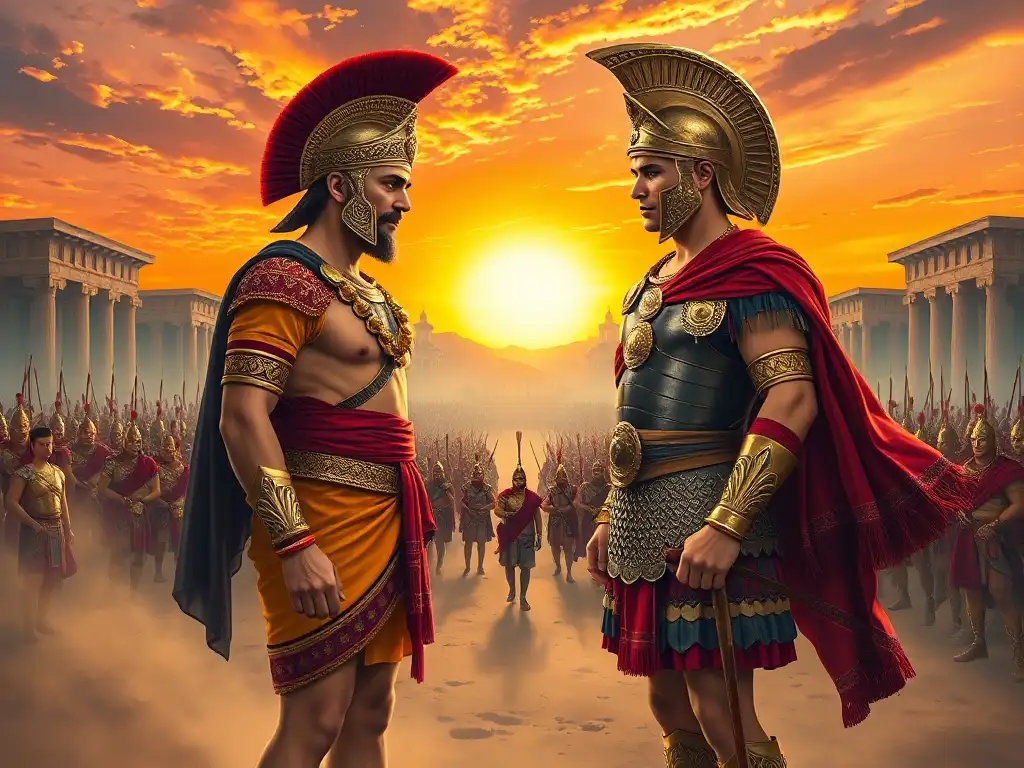
The cultural impact of Chandragupta Maurya and Alexander the Great on ancient India is profound and multifaceted. Both leaders, though markedly different in their approaches and legacies, contributed significantly to the religious, philosophical, artistic, and architectural landscape of the region. Their interactions, conflicts, and exchanges fostered a cultural milieu that shaped the trajectory of Indian civilization.
Influence on Religion and Philosophy
Chandragupta and Alexander's reigns coincided with a period of significant religious and philosophical development in ancient India.
- Chandragupta's Role:
- Chandragupta, the founder of the Maurya Empire, is noted for his patronage of Jainism, particularly after his conversion influenced by the teachings of Jain monk Bhadrabahu. His reign marked a pivotal point in the promotion of Jain values, which emphasized non-violence and asceticism.
- The Mauryan Empire under Chandragupta also facilitated the spread of Buddhism, particularly through the later efforts of his grandson Ashoka, who expanded on these teachings. This laid the groundwork for a philosophical environment that embraced diverse spiritual paths.
- Alexander's Influence:
- Alexander's conquests introduced Hellenistic philosophies and religious ideas to the Indian subcontinent. His encounters with Indian thinkers, like the Gymnosophists, sparked exchanges that melded Greek and Indian thought, particularly in ethics and metaphysics.
- The blending of Hellenistic and Indian philosophies would later influence schools of thought, leading to greater intellectual discourse in the region.
This fusion of religious and philosophical ideas contributed to a rich tapestry of belief systems, encouraging dialogue and the emergence of syncretic practices that shaped the spiritual landscape of ancient India.
Contributions to Arts and Architecture
The artistic and architectural contributions of both Chandragupta and Alexander were significant, with lasting influences that can still be traced today.
- Chandragupta's Architectural Legacy:
- Under Chandragupta's rule, the Maurya Empire saw the construction of impressive urban centers and fortifications, including the capital city of Pataliputra.
- The use of stone in architecture became more prevalent, leading to the development of monumental structures like stupas and pillars, which would later evolve into sophisticated examples of Buddhist art and architecture during Ashoka's reign.
- Alexander's Impact on Arts:
- Alexander's campaigns opened pathways for the exchange of artistic ideas. Greek art forms, particularly sculpture and coinage, began to blend with Indian traditions, leading to a unique style that combined Hellenistic realism with Indian motifs.
- The introduction of Greco-Buddhist art, especially in regions like Gandhara, is a testament to this cultural fusion, showcasing how Alexander's incursions facilitated the cross-pollination of artistic traditions.
The artistic heritage stemming from both leaders has left indelible marks on the cultural identity of ancient India, influencing subsequent generations of artists and architects.
Legacy of Chandragupta and Alexander in Ancient Indian Culture
The legacies of Chandragupta and Alexander resonate strongly within the cultural memory of ancient India, highlighting their distinct yet interconnected influences.
- Chandragupta's Enduring Legacy:
- Chandragupta is celebrated as the architect of a unified Indian subcontinent, marking the beginning of centralized governance in India. His establishment of the Maurya Empire set a precedent for future rulers and shaped the political landscape for centuries to come.
- His contributions to governance, military strategy, and administration are documented in texts like Kautilya's Arthashastra, which remains a critical reference for political philosophy.
- Alexander's Lasting Influence:
- Although Alexander's stay in India was relatively brief, his campaigns sowed the seeds for the Hellenistic influence that permeated Indian culture. His interactions with local rulers and philosophers initiated a dialogue that would evolve over the centuries.
- The melding of cultures fostered by Alexander's presence led to the emergence of new trade routes and cultural exchanges, laying the groundwork for the rich tapestry of diversity that characterizes India.
The comparison of Chandragupta and Alexander reveals how their respective leadership styles and legacies have significantly shaped ancient Indian culture. Their influence continues to be felt in contemporary discussions about governance, philosophy, and art, making their stories integral to the understanding of India's historical narrative.
Conclusion: The Lasting Legacy of Two Great Leaders
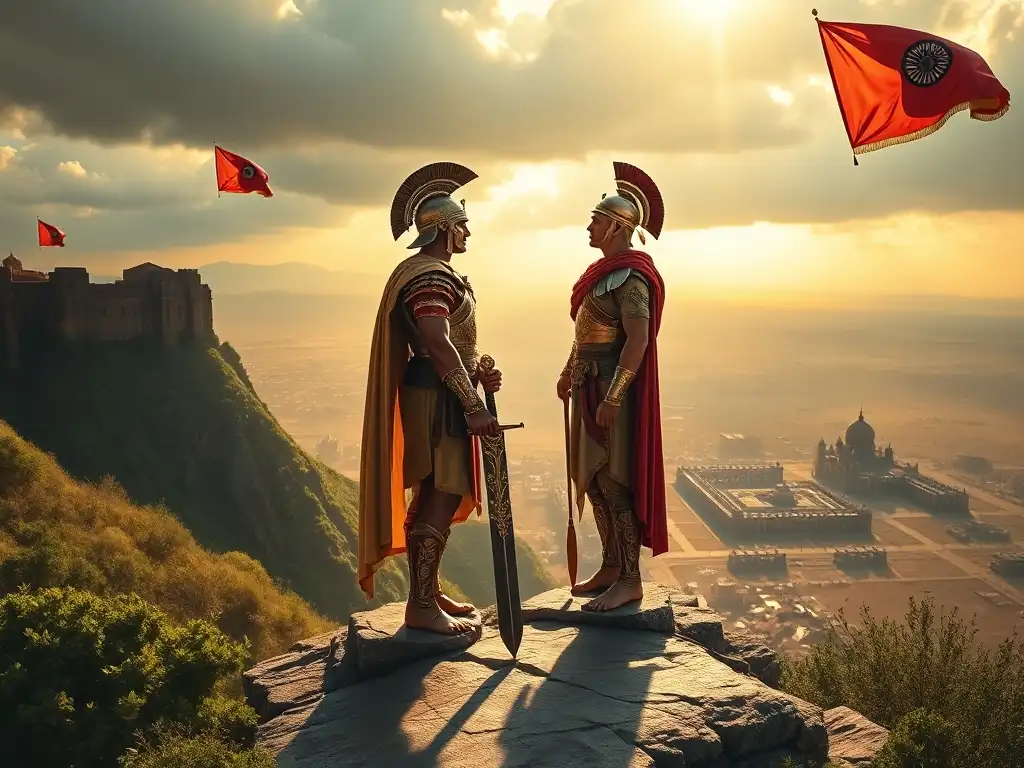
The legacies of Chandragupta Maurya and Alexander the Great extend far beyond their lifetimes, shaping the course of history in profound ways. Both leaders, though separated by culture and geography, left indelible marks on the Indian subcontinent. Their encounters and subsequent influences created a unique blend of cultural and political dynamics that continue to be studied and revered today.
Summary of Key Comparisons Between Chandragupta and Alexander
- Leadership Styles:
- Chandragupta: Utilized strategic alliances and a strong administrative framework, establishing a centralized authority that laid the groundwork for the Maurya Empire. His leadership was characterized by pragmatism and adaptability, as he forged alliances with local rulers to consolidate power.
- Alexander: Known for his military genius and charismatic leadership, he relied on direct military conquest to expand his empire. His tactics often included rapid advances and psychological warfare, enabling him to outmaneuver opponents.
- Cultural Influence:
- Chandragupta: Fostered the growth of Indian culture, art, and commerce. Under his rule, there was a revival of trade along the Silk Road, and he played a pivotal role in promoting Buddhism, which would later thrive under his grandson, Ashoka.
- Alexander: Introduced Hellenistic culture to India, blending Greek and Indian traditions. His conquests facilitated cultural exchanges that influenced art, architecture, and philosophy in the region.
- Military Strategies:
- Chandragupta: Adopted a defensive strategy, utilizing fortifications and local support to repel invaders. His military tactics were deeply rooted in understanding the terrain and leveraging local knowledge.
- Alexander: Employed offensive strategies, characterized by rapid troop movements and innovative formations. His campaigns showcased his ability to adapt tactics to different enemies and environments.
- Enduring Impact:
- Chandragupta: Established the foundation for one of the largest empires in ancient India, setting precedents in governance and administration that influenced future rulers.
- Alexander: Although his empire fragmented shortly after his death, his campaigns opened the door for subsequent interactions between the East and West, profoundly affecting trade and cultural exchanges.
The Importance of Their Contributions in Shaping Ancient India
The contributions of Chandragupta and Alexander were pivotal in shaping the historical landscape of ancient India.
-
Political Structures:
Chandragupta's establishment of the Maurya Empire provided a model for centralized governance that influenced future dynasties. His administrative reforms and tax systems increased efficiency and stability, which were crucial for the growth of trade and agriculture.
-
Cultural Syncretism:
The encounters between Indian and Hellenistic cultures during Alexander's campaigns led to a rich exchange of ideas and practices. This syncretism is evident in art, science, and philosophy, fostering an environment of intellectual curiosity that would flourish during the Gupta Empire.
-
Strategic Alliances:
Chandragupta’s methods of forming alliances laid the groundwork for diplomatic relations in ancient India. The lessons learned from his interactions with neighboring states and tribes would inform Indian diplomacy for centuries to come.
-
Military Innovations:
Both leaders contributed to military tactics that shaped subsequent warfare in the region. Chandragupta's defensive strategies and Alexander's aggressive tactics influenced military thought and practice, allowing future leaders to adapt and improve upon these methods.
The Chandragupta and Alexander comparison reveals not only their individual strengths and contributions but also the complex interplay of their legacies that continue to resonate in the study of ancient Indian history. Their leadership styles, cultural impacts, and military innovations were instrumental in forging the historical narrative of the subcontinent, leaving a legacy that remains relevant to this day.
Further Reading on Chandragupta and Alexander
Suggested Books and Articles on Maurya Empire
To delve deeper into the lives and impacts of Chandragupta Maurya and Alexander the Great, numerous scholarly resources provide comprehensive insights. Here is a curated list of suggested readings:
-
Books:
-
The Maurya Empire by Romila Thapar
This book offers an extensive analysis of the Maurya Empire's formation, with a specific focus on Chandragupta’s strategies and governance.
-
Alexander the Great: The Story of an Ancient Life by Thomas R. Martin
A detailed biography that examines Alexander's military campaigns and their implications for India, including his encounters with Chandragupta.
-
Chandragupta Maurya: A Historical Perspective by R.S. Sharma
This work provides a thorough exploration of Chandragupta's life, his rise to power, and the socio-political environment of ancient India during his reign.
-
-
Articles:
-
"The Clash of Titans: Chandragupta Maurya vs. Alexander the Great"
An academic article that compares the military strategies and political ideologies of both leaders, available in various historical journals.
-
"Cultural Exchanges between India and Greece: The Legacy of Alexander"
This article explores the cultural ramifications of Alexander's invasion and how it influenced the Maurya Empire.
-
Resources for Understanding Ancient Indian Civilizations
To further enrich your knowledge of ancient Indian civilizations and their connections to figures like Chandragupta and Alexander, consider the following resources:
-
Online Databases:
-
JSTOR
A digital library that provides access to thousands of academic papers, including those focused on Indian history and the Maurya Empire.
-
Project Gutenberg
Offers free eBooks that include historical texts and translations relevant to ancient Indian history.
-
-
Documentaries and Lectures:
-
The Story of India by Michael Wood
A BBC documentary series that covers the sweep of Indian history, including the Maurya period and Alexander's influence.
-
Online lectures available on platforms like Coursera and edX that focus on ancient civilizations and the interactions between Greek and Indian cultures.
-
-
Museums and Exhibits:
-
National Museum, New Delhi
Home to a vast collection of artifacts from the Maurya Empire, providing a tangible connection to the era of Chandragupta and Alexander.
-
Victoria and Albert Museum, London
Offers exhibitions related to ancient Indian art and culture, including influences from the Hellenistic period.
-
These resources serve not only to illuminate the lives and legacies of Chandragupta and Alexander but also to enhance the understanding of the broader historical context of ancient Indian civilizations.
Frequently Asked Questions
What is the significance of Chandragupta in ancient Indian history?
Chandragupta was the founder of the Maurya Empire and played a crucial role in unifying India under a single rule, marking a significant shift in political and cultural dynamics.
How did Alexander the Great influence ancient India?
Alexander's invasion introduced Hellenistic culture to India, leading to exchanges in trade, art, and ideas, which significantly impacted the region's development.
What are the main differences between Chandragupta and Alexander?
While Chandragupta focused on nation-building and governance, Alexander was primarily an expansionist, seeking to conquer and spread Greek culture across regions.
Did Chandragupta and Alexander ever meet?
No, Chandragupta and Alexander did not meet directly; however, their paths intersected historically, as Chandragupta rose to power shortly after Alexander's campaigns in the region.
How did the legacies of Chandragupta and Alexander differ?
Chandragupta's legacy lies in the establishment of a unified empire that fostered Indian culture, while Alexander's legacy is marked by the spread of Hellenistic influence and military conquests across Asia.
Final Reflection: The Enduring Legacy of Chandragupta and Alexander
The comparison between Chandragupta and Alexander highlights the profound impact of leadership on the course of history. In an era where the actions of a few can shape the destinies of many, the legacies of these two leaders remind us of the power of vision, strategy, and cultural exchange. Their contrasting approaches to governance and conquest not only defined their respective empires but also laid the groundwork for the complex tapestry of ancient India. Understanding their influence today is crucial as we navigate our own leadership challenges in a rapidly changing world.
The cultural and social landscapes shaped by Chandragupta and Alexander continue to resonate in contemporary society. Their stories reflect the timeless themes of ambition, resilience, and the quest for identity. As we examine their legacies, we see how their actions fostered a rich exchange of ideas and cultures that still influences us today. Leaders are not born; they are made by the challenges they overcome.
This quote encapsulates the essence of both Chandragupta and Alexander, reminding us that the trials they faced were instrumental in forging their paths and shaping their legacies.
As you reflect on the lessons drawn from the lives of Chandragupta and Alexander, consider how their experiences can inform your own journey. What challenges are you facing, and how can you channel the courage and strategic thinking of these great leaders? Embrace the opportunity to learn from their stories, and let their legacies inspire you to lead with purpose, resilience, and an openness to cultural exchange in your own life. The past has much to teach us, and it is up to us to carry those lessons forward into the future.
Ignite Your Curiosity: Explore the Legacy of Ancient Leaders!
Thank you for diving into the remarkable stories of Chandragupta and Alexander! You've uncovered how these extraordinary leaders molded the course of history in Ancient India, and now it’s time to take the next step.
Here are some exciting ways to deepen your journey into their legacies:
- Discover More: Read additional articles that explore the impacts of these leaders on their empires to gain a broader understanding of their historical significance.
- Join the Discussion: Share your insights on social media or our community forum to engage with fellow history enthusiasts and exchange ideas.
- Reflect and Create: Write a brief essay on how the leadership styles of Chandragupta and Alexander can inspire contemporary leaders.
What do you believe are the most important lessons we can learn from these historical figures as we navigate today’s challenges?