
The Relationship Between Nyaya and Nyaya Sutras: A Historical Overview


Welcome to Ancient India History, where we embark on a fascinating journey through the rich tapestry of ancient Indian civilizations. Here, we delve into the profound Nyaya philosophy and sutras, exploring their pivotal role in shaping intellectual thought and cultural discourse. What is the intricate relationship between Nyaya and its foundational sutras? Join us as we unravel this historical overview, shedding light on the wisdom that has influenced generations. Prepare to be captivated by the profound insights of ancient philosophy and discover how these timeless teachings continue to resonate today. Dive in and quench your curiosity!
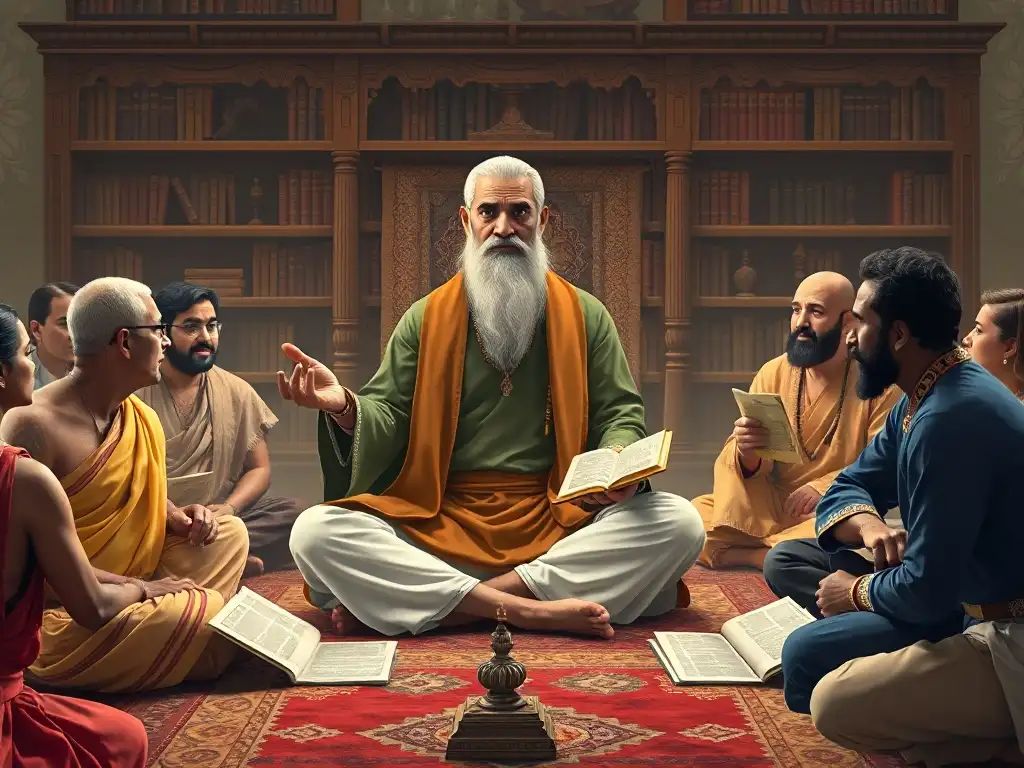
Introduction to Nyaya Philosophy and Sutras
Nyaya philosophy, one of the six orthodox schools of Indian philosophy, plays a crucial role in understanding ancient Indian thought and logic. Rooted in the quest for knowledge and the methodology of reasoning, Nyaya offers profound insights into the nature of reality, perception, and epistemology. The Nyaya Sutras, compiled by the sage Gautama around the 2nd century BCE, serve as the foundational text of this philosophical school, outlining its principles and establishing a framework for logical analysis.
This relationship between Nyaya and its sutras is not merely textual but encompasses a rich tradition that has influenced various aspects of Indian philosophy, law, and ethics. In this article, we will explore the intricate bond between Nyaya philosophy and the Nyaya Sutras, delving into their definitions, historical contexts, and the key figures who have shaped their development.
Definition of Nyaya Philosophy
Nyaya, which translates to "justice" or "rule," is primarily concerned with the processes of reasoning and the validation of knowledge. This philosophical framework emphasizes the importance of logical inference (anumana) and perception (pratyaksha) as means of acquiring knowledge. The Nyaya school posits that valid knowledge is essential for achieving liberation (moksha) from the cycle of birth and death (samsara).
Key principles of Nyaya philosophy include:
- Pramanas (Means of Knowledge): Nyaya recognizes four primary means of knowledge: perception, inference, comparison, and testimony.
- Anumana (Inference): A crucial aspect of Nyaya, anumana involves deriving conclusions based on premises and evidence.
- Tarka (Dialectical Reasoning): The practice of logical debate to arrive at truth.
Overview of Nyaya Sutras
The Nyaya Sutras are a collection of aphorisms that encapsulate the core tenets of Nyaya philosophy. Composed by Gautama, these sutras provide a systematic approach to logic and reasoning, facilitating the exploration of philosophical questions. The text is divided into five books, which address various topics including:
- General Principles of Knowledge: Establishing the foundations of epistemology.
- Means of Knowledge: Discussing the pramanas and their significance.
- The Nature of Objects: Exploring the characteristics of reality.
- The Process of Inference: Detailing methods of logical reasoning.
- Fallacies and Errors: Identifying common mistakes in reasoning.
The Nyaya Sutras not only serve as a guide for philosophical inquiry but have also influenced other schools of thought, contributing to the broader discourse on Indian philosophy.
Historical Context of Nyaya Philosophy
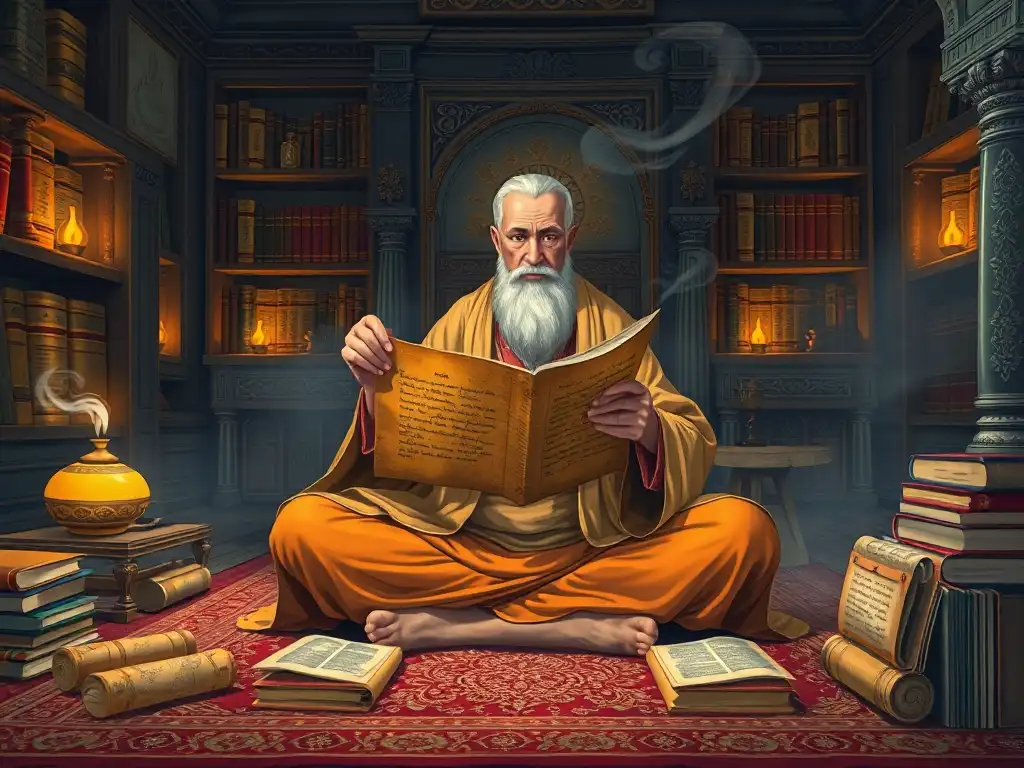
Origins of Nyaya in Ancient India
Nyaya philosophy emerged during a period of rich intellectual activity in ancient India, particularly around the time of the Vedic texts. It was a response to the growing need for systematic reasoning and clarification of philosophical concepts. The Nyaya Sutras were composed in a cultural milieu that valued debate and discourse, making it essential for philosophers to establish robust methodologies for argumentation and analysis.
The interactions between various philosophical schools, such as Samkhya, Vaisheshika, and Buddhism, also played a pivotal role in shaping Nyaya thought, as scholars engaged in dialogues and critiques, refining their ideas in the process.
Key Historical Figures in Nyaya Philosophy
Several notable figures have significantly contributed to the evolution of Nyaya philosophy beyond Gautama. These include:
- Uddyotakara: A prominent commentator on the Nyaya Sutras, who elaborated on various aspects of logic and epistemology.
- Vatsyayana: Another key figure, known for his commentary on the Nyaya Sutras, enriching the text with detailed explanations and applications.
- Gangesha Upadhyaya: A medieval scholar who synthesized Nyaya with other philosophical traditions, further advancing its principles.
The contributions of these figures demonstrate the dynamic nature of Nyaya philosophy and its adaptability in the face of new ideas and critiques.
In the following sections, we will delve deeper into the nuances of Nyaya philosophy, its sutras, and their enduring impact on the landscape of Indian philosophy.
Core Concepts of Nyaya Philosophy
Nyaya philosophy, one of the six orthodox schools of Indian philosophy, is primarily concerned with the theory of knowledge, epistemology, and logic. The term "Nyaya" translates to "rules" or "method," emphasizing the importance of systematic reasoning and debate. Central to Nyaya is the belief that knowledge is essential for liberation (moksha) and that understanding the nature of reality can be achieved through rigorous analysis and logical scrutiny.
The core concepts of Nyaya revolve around pramanas (means of knowledge), anumana (inference), and pratyaksha (perception), which form the foundation of its epistemological framework. Additionally, Nyaya engages in discussions about the nature of reality, the existence of objects, and the relationship between the observer and the observed. By employing a structured methodology, Nyaya aims to establish valid knowledge and dispel misconceptions, ultimately leading to a clearer understanding of existence and truth.
Pramanas: Means of Knowledge in Nyaya
In Nyaya philosophy, pramanas are the accepted means through which knowledge is acquired. There are four primary pramanas recognized by Nyaya:
- Pratyaksha (Perception): This is direct sensory experience, which is considered the most reliable source of knowledge. It involves the immediate awareness of objects through the senses.
- Anumana (Inference): This refers to knowledge derived from reasoning. It allows individuals to draw conclusions based on premises, such as inferring the existence of fire from smoke.
- Upamana (Comparison): This involves knowledge gained through analogy—understanding a new object based on its similarity to a known object.
- Shabda (Testimony): This is knowledge acquired through authoritative sources or scriptures, where information is accepted based on the credibility of the speaker or text.
Each pramana plays a crucial role in the Nyaya epistemological system, enabling practitioners to build a comprehensive understanding of the world and validate their beliefs through logical reasoning.
Nyaya and Logic: The Role of Reasoning
Logic holds a central place in Nyaya philosophy, as it emphasizes the importance of reasoning in the pursuit of knowledge. The Nyaya school systematically analyzes arguments and syllogisms, providing a framework for valid reasoning that distinguishes between sound and unsound arguments.
Key components of Nyaya logic include:
- Tarka (Reasoning): The process of logical analysis that leads to conclusions based on premises.
- Vada (Debate): A method of discourse aimed at uncovering truth through constructive dialogue. It contrasts with Jalpa, which focuses on winning an argument without seeking truth.
- Prakriya (Methodology): The structured approach to reasoning that guides the process of inquiry and argumentation.
Through these logical methods, Nyaya philosophers sought to establish a rigorous approach to philosophical inquiry, allowing for the examination of metaphysical questions and ethical dilemmas with clarity and precision.
The Fourfold Aim of Life (Purusharthas) in Nyaya
The Purusharthas, or the fourfold aims of life, are integral to Nyaya philosophy, providing a framework for ethical living and human purpose. These aims are:
- Dharma (Righteousness): Following ethical duties and moral principles, which contribute to individual and societal well-being.
- Artha (Wealth): The pursuit of material prosperity and economic stability, necessary for fulfilling one's responsibilities and desires.
- Kama (Desire): The fulfillment of emotional and physical pleasures, acknowledging the importance of personal happiness.
- Moksha (Liberation): The ultimate goal of achieving spiritual freedom and enlightenment, transcending the cycle of birth and rebirth.
Nyaya philosophy recognizes that while the first three aims are essential for a fulfilling life, the ultimate pursuit remains moksha, which can be attained through knowledge and understanding of reality. The interplay among these aims guides individuals in making informed decisions that align with their ethical and philosophical beliefs.
The Evolution of Nyaya Sutras
The Nyaya Sutras, attributed to the sage Gautama, serve as the foundational text for Nyaya philosophy. This work, composed around the 2nd century BCE, marks a significant milestone in the development of Indian logic and epistemology. Over time, the Nyaya Sutras have been subject to extensive interpretation and commentary, reflecting the evolving understanding of Nyaya concepts across different eras.
Composition of the Nyaya Sutras by Gautama
Gautama's Nyaya Sutras consist of five books, systematically addressing various aspects of logic, epistemology, and metaphysics. The text is characterized by its aphoristic style, presenting concise statements that encapsulate complex philosophical ideas. Gautama's primary objective was to provide a framework for reasoning and debate, thereby laying the groundwork for subsequent philosophical inquiry.
The composition of the sutras emphasizes clarity and precision in argumentation, reflecting the Nyaya school’s commitment to rational discourse. Gautama's work also engages with competing philosophical systems, asserting the validity of Nyaya through logical demonstration and critique.
The Structure and Themes of Nyaya Sutras
The Nyaya Sutras are organized into sections that explore various themes related to knowledge and reality. Key structural elements include:
- Definitions of Pramanas: An exploration of the means of knowledge and their implications for understanding reality.
- Analysis of Inference: Detailed discussions on the nature and validity of inferential reasoning.
- Examination of Fallacies: Identification of common logical fallacies to aid practitioners in developing sound arguments.
The themes of the Nyaya Sutras encompass a wide range of topics, including ontology, epistemology, and ethics, making it a comprehensive resource for understanding Nyaya philosophy. The text not only serves as a guide for philosophical inquiry but also as a tool for practical application in daily life.
Commentary and Interpretation: The Role of Later Scholars
The Nyaya Sutras have inspired countless commentaries and interpretations throughout history, significantly enriching the understanding of Nyaya philosophy. Later scholars, such as Uddyotakara, Vatsyayana, and Gangesha, contributed to the evolution of Nyaya thought by providing detailed analyses and clarifications of the original texts.
These commentaries addressed various aspects of the sutras, including:
- Contextualization: Placing the sutras within the broader framework of Indian philosophy and engaging with other philosophical schools.
- Clarification of Terms: Elaborating on key concepts and terminology to enhance comprehension.
- Debate and Critique: Engaging with opposing views and refining the arguments presented in the sutras.
Through their work, later scholars have ensured the enduring relevance of Nyaya philosophy, allowing it to adapt to contemporary philosophical discussions while maintaining its foundational principles. The ongoing dialogue between the sutras and their commentators exemplifies the dynamic nature of philosophical inquiry in ancient India.
The Relationship Between Nyaya and Other Philosophical Schools
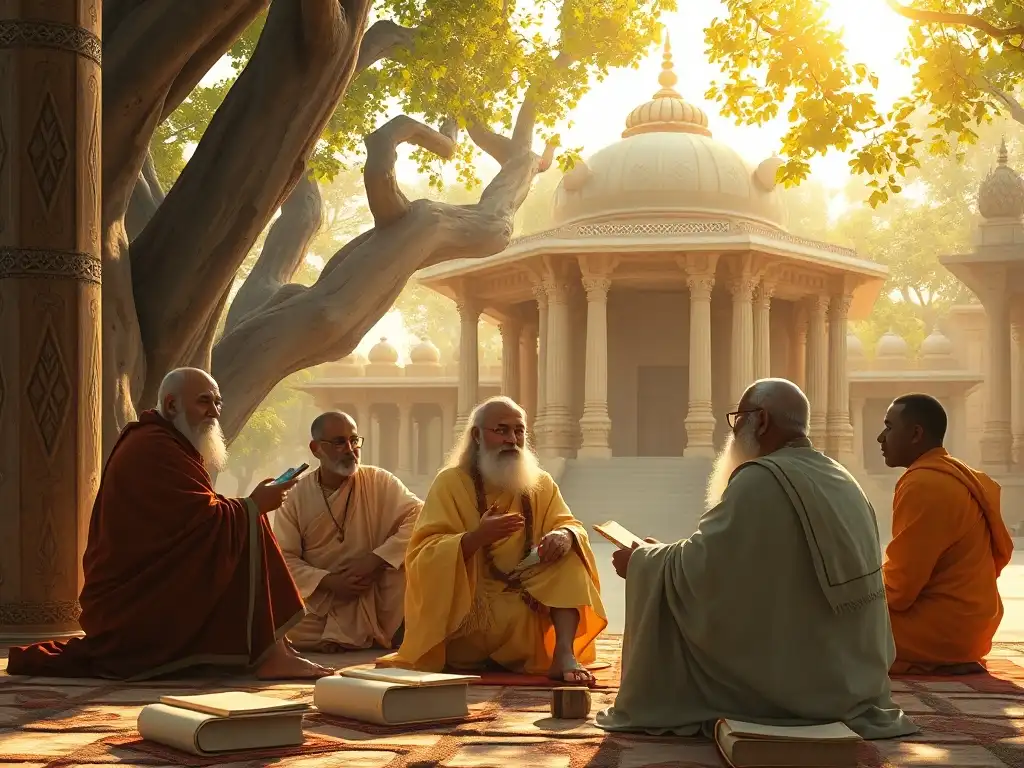
Nyaya philosophy, one of the six orthodox schools of Indian philosophy, has a significant relationship with other philosophical systems, particularly Vaisheshika and Sankhya. This interconnectedness highlights how different schools of thought influenced one another, leading to a rich tapestry of philosophical inquiry in ancient India. Understanding these relationships is essential for grasping the evolution of Indian philosophy as a whole.
Nyaya and Vaisheshika: Complementary Philosophies
Nyaya and Vaisheshika are often viewed as complementary systems. While Nyaya focuses primarily on epistemology and logic, Vaisheshika emphasizes metaphysics and categorization of reality. Together, they provide a comprehensive approach to understanding the nature of knowledge and existence.
- Common Foundations: Both schools recognize the concept of prama (valid knowledge) and prameya (the object of knowledge). They agree on the importance of perception and inference as means to acquire knowledge.
- Syllogistic Reasoning: The Nyaya Sutras introduce rigorous logical methods, which Vaisheshika adopts to explain its metaphysical categories. This collaboration enhances the clarity of both schools' arguments.
- Joint Influence: The synthesis of Nyaya's logical rigor with Vaisheshika's metaphysical insights has shaped subsequent philosophical discussions in India, influencing later thinkers and schools.
Comparison between Nyaya and Sankhya
The relationship between Nyaya and Sankhya is marked by both contrasts and intersections, particularly in their approaches to epistemology and metaphysics.
- Epistemology vs. Cosmology: Nyaya emphasizes the methodology of knowledge acquisition and validation, while Sankhya focuses on the dualistic nature of reality, comprising purusha (consciousness) and prakriti (matter). This fundamental difference reflects their philosophical priorities.
- The Nature of Reality: Nyaya posits that the world is fundamentally knowable and emphasizes logical reasoning, whereas Sankhya presents a more abstract cosmological model that categorizes reality into distinct elements.
- Influence and Engagement: Despite their differences, Nyaya has engaged with Sankhya concepts, particularly in discussions about the nature of knowledge, perception, and the existence of the self. This engagement illustrates the dynamic philosophical landscape of ancient India.
Influence of Nyaya on Later Indian Philosophy
The impact of Nyaya philosophy extends beyond its immediate context, influencing various schools of thought in the ancient and medieval periods.
- Integration into Vedanta: Nyaya's focus on logic and epistemology significantly influenced later Vedantic thinkers, who integrated Nyaya's principles into their metaphysical inquiries.
- Legal and Ethical Frameworks: Nyaya's logical methodologies have been employed in developing legal reasoning and ethical frameworks, demonstrating its practical applications in society.
- Continued Relevance: The principles established by Nyaya continue to resonate in contemporary philosophical discourse, as later Indian philosophers and scholars engage with its ideas to address modern philosophical questions.
The Relevance of Nyaya Philosophy Today
Nyaya philosophy remains relevant in contemporary discourse, providing insights into logic, reasoning, and the nature of knowledge.
Modern Interpretations of Nyaya Sutras
Modern scholars and philosophers have revisited the Nyaya Sutras, interpreting them in various contexts to address contemporary issues.
- Philosophical Debates: Nyaya's logical frameworks are utilized in contemporary philosophical debates, especially in epistemology, where its methods of argumentation and validation are particularly applicable.
- Interdisciplinary Applications: The principles of Nyaya have found resonance in fields such as cognitive science, artificial intelligence, and logic, where understanding the nature of reasoning is crucial.
- Revival of Interest: The resurgence of interest in traditional Indian philosophies has led to a renewed examination of Nyaya, fostering cross-cultural dialogues that enrich global philosophical discussions.
The Impact of Nyaya Philosophy on Contemporary Thought
The essence of Nyaya philosophy continues to influence contemporary thought, shaping various aspects of reasoning and debate.
- Critical Thinking: Nyaya's emphasis on logical reasoning encourages critical thinking skills, which are essential in today's information-rich environment.
- Legal Reasoning: The logical structures derived from Nyaya have been adopted in legal reasoning, emphasizing the importance of sound argumentation in judicial processes.
- Ethical Frameworks: Nyaya philosophy contributes to ongoing discussions about ethics, particularly in addressing moral dilemmas through rational discourse.
The interplay between Nyaya and other philosophical schools, along with its continuing relevance today, positions Nyaya philosophy as a vital component of the philosophical heritage of ancient India. Its insights invite further exploration and application in various modern contexts, ensuring its enduring legacy.
Conclusion
The exploration of the relationship between Nyaya philosophy and the Nyaya Sutras reveals a profound interconnection that significantly shaped the philosophical landscape of ancient India. As a system of logic and epistemology, Nyaya offered a structured approach to inquiry and debate, which was meticulously codified in the Nyaya Sutras. This formal documentation not only preserved the teachings of the Nyaya school but also facilitated the transmission of its ideas across generations, allowing scholars and philosophers to engage with and build upon its foundational concepts.
Summary of the Relationship Between Nyaya and Nyaya Sutras
The Nyaya Sutras, attributed to the philosopher Gautama, serve as the foundational text of Nyaya philosophy. They outline the principles of reasoning, argumentation, and the methods of knowledge acquisition, emphasizing the importance of logical clarity and critical analysis. The relationship between Nyaya and its sutras can be summarized as follows:
- Foundation of the Philosophy: The Nyaya Sutras encapsulate the core tenets of Nyaya philosophy, focusing on the nature of knowledge (prama), the means of acquiring knowledge (pramanas), and the process of reasoning (tarka).
- Systematic Approach: The sutras provide a systematic framework for philosophical discourse, enabling scholars to engage in dialectical debates and refine their understanding of reality.
- Influence on Other Schools: The principles outlined in the Nyaya Sutras influenced other philosophical schools in ancient India, including Vaisheshika and Mimamsa, fostering a rich tradition of philosophical inquiry that examined the nature of existence, perception, and reality.
Through these sutras, Nyaya philosophy established itself as a critical component of Indian intellectual tradition, promoting rigorous analysis and debate.
Final Thoughts on the Importance of Nyaya Philosophy in Ancient Indian History
Nyaya philosophy holds a pivotal position in the tapestry of ancient Indian thought. Its emphasis on logic, reasoning, and the pursuit of knowledge has left an indelible mark on the philosophical discourse of the region. The Nyaya Sutras not only served as a foundational text for practitioners of Nyaya but also inspired scholars across various disciplines to adopt a methodical approach to philosophical inquiry.
The legacy of Nyaya philosophy continues to resonate today, as its principles remain relevant in contemporary discussions about logic, ethics, and epistemology. By understanding the historical significance of Nyaya and its sutras, we gain a deeper appreciation for the intellectual achievements of ancient Indian civilizations and their contributions to the global philosophical heritage. The relationship between Nyaya and the Nyaya Sutras exemplifies the enduring quest for knowledge and truth that characterizes human thought throughout history.
- Introduction to Nyaya Philosophy and Sutras
- Definition of Nyaya Philosophy
- Overview of Nyaya Sutras
- Historical Context of Nyaya Philosophy
- Core Concepts of Nyaya Philosophy
- The Evolution of Nyaya Sutras
- The Relationship Between Nyaya and Other Philosophical Schools
- The Relevance of Nyaya Philosophy Today
- Conclusion
Frequently Asked Questions
What is Nyaya philosophy?
Nyaya philosophy is a school of thought in Indian philosophy focused on logic and epistemology. It emphasizes the importance of reasoning and debate in understanding truth and knowledge.
What are the Nyaya Sutras?
The Nyaya Sutras are a foundational text of Nyaya philosophy, composed by Gautama. They outline the principles of logic and the methods for acquiring knowledge, serving as a guide for philosophical inquiry.
How does Nyaya philosophy relate to other Indian philosophies?
Nyaya philosophy interacts with various Indian philosophical schools, such as Vedanta and Buddhism, influencing their views on epistemology and logic while also adopting some of their concepts for its own framework.
Who was Gautama and what was his contribution?
Gautama, the author of the Nyaya Sutras, significantly contributed to the development of logical reasoning in Indian philosophy. His work laid the groundwork for later scholars to expand on Nyaya and its applications.
Why is the study of Nyaya important today?
The study of Nyaya is important as it provides insights into critical thinking, argumentation, and the evolution of logic in philosophical discourse. It remains relevant for contemporary discussions on knowledge and truth.
Final Reflection: The Enduring Legacy of Nyaya Philosophy and Sutras
In exploring the intricate relationship between Nyaya philosophy and the Nyaya Sutras, we uncover a profound legacy that continues to shape contemporary thought. The principles of logical reasoning and epistemology established by ancient scholars resonate with today's quest for clarity and truth in an increasingly complex world. The relevance of these teachings is not merely historical; they serve as a guiding light in our pursuit of knowledge and understanding in modern society.
The impact of Nyaya philosophy extends far beyond its historical context, influencing various cultural and social landscapes. As we navigate the challenges of our time, the emphasis on rational discourse and critical thinking remains vital. The teachings encapsulated in the Nyaya Sutras encourage us to question, analyze, and engage with the world around us. The ultimate aim of knowledge is liberation, and the path to liberation is through reasoned inquiry.
This quote encapsulates the essence of Nyaya, reminding us that the pursuit of knowledge is not just an intellectual exercise but a means to achieve deeper understanding and freedom.
As we reflect on the teachings of Nyaya philosophy, I invite you to consider how these ancient principles can be applied in your own life. Take a moment to engage in thoughtful inquiry, challenge assumptions, and embrace the power of reasoned debate. By doing so, you not only honor the legacy of the Nyaya Sutras but also empower yourself to navigate the complexities of the modern world with clarity and purpose. Let us carry forward this tradition of critical thinking and logical reasoning, ensuring that the wisdom of the past continues to illuminate our path into the future.
Unveil the Depths of Philosophy Today!
Thank you for investing your time in exploring the fascinating relationship between Nyaya and the Nyaya Sutras. It's inspiring to see your interest in ancient Indian philosophy! Now, let’s take what you’ve learned and deepen your engagement with these concepts.
Here’s how you can embark on your next philosophical journey:
- Dive into further readings: Explore additional texts on Nyaya philosophy. Seek out commentaries or contemporary interpretations to enrich your understanding.
- Join discussions: Share your thoughts on social media or forums with fellow enthusiasts. Engaging with others can illuminate new perspectives and insights.
- Attend a local lecture or webinar: Look for opportunities to learn directly from experts in ancient Indian philosophy and connect with a community of like-minded individuals.
Which aspect of Nyaya philosophy resonated with you the most, and how do you plan to incorporate it into your understanding of modern thought? We invite you to share your reflections with us!