
Notable Legal Cases from Ancient India: Lessons from History


Welcome to Ancient India History, where we delve into the rich tapestry of civilizations that shaped the Indian subcontinent. In our featured article, "Notable Legal Cases from Ancient India: Lessons from History," we uncover the fascinating world of ancient Indian legal cases that not only reflect the legal prowess of the time but also offer timeless lessons relevant even today.
Join us on this enlightening journey as we explore the intricate legal systems and law codes that governed ancient societies, and discover how the echoes of their decisions continue to resonate through the ages. Dive in to satisfy your curiosity and expand your understanding of this captivating subject!
- Introduction to Ancient Indian Legal Cases
- Key Legal Cases from Ancient India
- Themes and Lessons from Ancient Indian Legal Cases
- Comparison of Ancient Indian Legal Cases to Modern Legal Systems
- Conclusion: The Legacy of Ancient Indian Legal Cases
- References and Further Reading
-
Frequently Asked Questions
- What are some notable legal cases from ancient India?
- How did ancient Indian law differ from modern legal systems?
- What role did dharma play in ancient Indian legal cases?
- How were legal disputes typically resolved in ancient India?
- What lessons can modern society learn from ancient Indian legal cases?
- Final Reflection: Lessons from Ancient Indian Legal Cases Resonate Today
- Unlock the Wisdom of Ancient India’s Legal Legacy!
Introduction to Ancient Indian Legal Cases

The history of law in ancient India is a fascinating tapestry woven from the rich cultural, social, and philosophical threads of its time. Legal practices in ancient civilizations not only provide insights into the governance and societal norms of the period but also reflect the evolving nature of justice and the rule of law. This article delves into notable legal cases from ancient India, exploring their implications and the lessons they offer contemporary society. By examining these cases, we gain a deeper understanding of ancient Indian judicial practices and the moral and ethical frameworks that guided them.
Overview of Ancient Indian Judicial Practices
Ancient Indian judicial practices were deeply rooted in the customs and traditions of various civilizations, ranging from the Indus Valley to the Gupta Empire. The legal frameworks were influenced by religious texts, local customs, and the overarching philosophy of dharma, which emphasized moral duty and righteousness.
Some key features of ancient Indian judicial practices include:
- Dharma Shastras: These texts, including the Manusmriti and Yajnavalkya Smriti, provided a comprehensive codification of laws covering various aspects of life, including family, property, and criminal offenses.
- Local Governance: Village assemblies, known as panchayats, played a crucial role in resolving disputes and administering justice at the local level.
- Role of Kings: Monarchs were seen as the ultimate dispensers of justice, often intervening in legal matters to ensure dharma was upheld.
The legal system was characterized by a blend of formal and informal practices, with an emphasis on restorative justice rather than punitive measures.
Importance of Legal Cases in Understanding Ancient Indian Society
Studying notable legal cases from ancient India is essential for several reasons:
- Cultural Insights: These cases reveal the values, beliefs, and social norms of ancient Indian societies. For instance, cases related to property rights highlight the status of women and the importance of inheritance laws.
- Judicial Evolution: Analyzing legal cases illustrates the evolution of judicial practices and legal principles over time, showcasing how ancient societies adapted to changing circumstances.
- Moral and Ethical Standards: Legal cases often reflect the moral dilemmas faced by individuals and communities, providing a window into the ethical frameworks that guided decision-making.
Through these lenses, we can appreciate the complexities of ancient Indian legal systems and their lasting impact on contemporary legal thought. The exploration of these cases not only enriches our understanding of history but also offers valuable lessons for modern legal practices.
Key Legal Cases from Ancient India
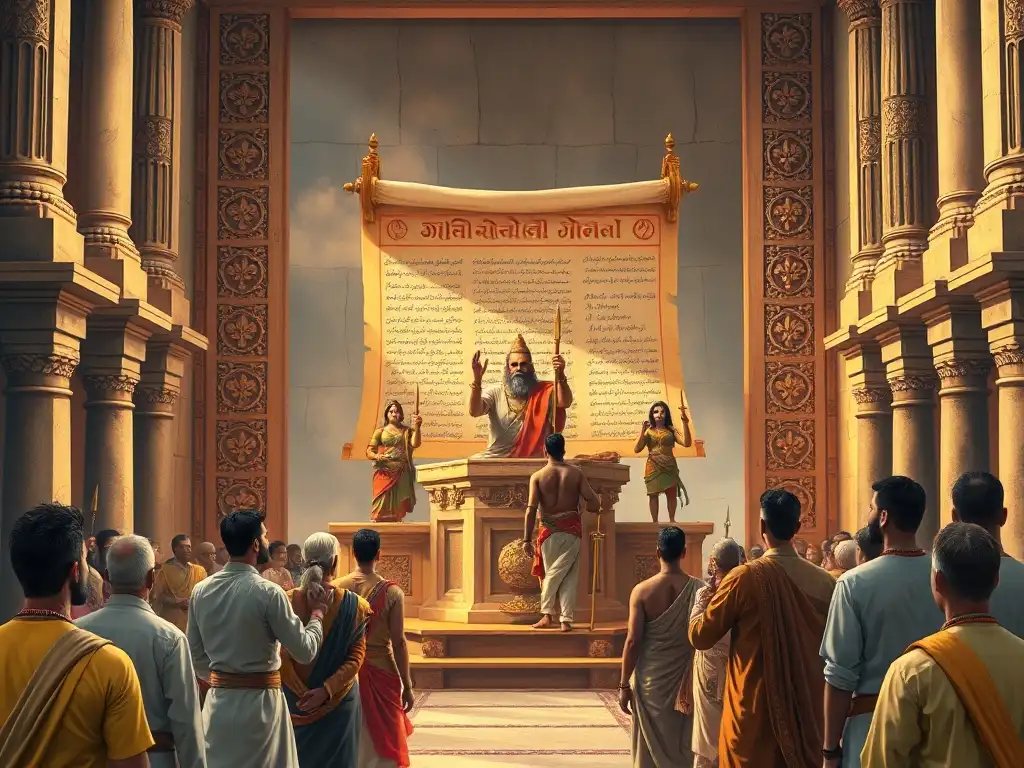
Ancient Indian legal cases provide a fascinating lens through which we can understand the judicial practices and legal frameworks that shaped the civilizations of the subcontinent. These cases not only highlight the complexities of law but also reflect the cultural and ethical values prevalent during their times. Below, we explore two notable legal cases that illustrate the evolution of legal thought and practice in ancient India.
Case Study 1: The Case of Vedic Rishis and Their Disputes
Background and Context of the Case
The Vedic period (circa 1500-500 BCE) marked a significant era in ancient Indian history, characterized by the emergence of philosophical thought and the codification of various social laws. The Rishis, or sages, were revered figures in this period, often involved in disputes regarding land ownership, ritual practices, and societal roles. One notable case involved a dispute between two Rishis over the ownership of a sacred grove, essential for their spiritual practices.
Legal Principles Involved
The legal principles at play in this case were deeply rooted in Dharma, which refers to the moral and ethical duties of individuals. The Vedic texts, particularly the Manusmriti, outlined specific guidelines for resolving disputes among individuals of different social standings. The resolution was often mediated through dialogue, emphasizing reconciliation over punitive measures. The principles of equity and restorative justice were also prevalent, aiming to restore harmony within the community.
Outcome and Significance of the Case
The outcome of the dispute was a compromise that allowed both Rishis to use the grove for their rituals while sharing its resources. This case is significant as it highlights the importance of dialogue and mediation in ancient Indian legal practices. It also illustrates how religious and social duties were intertwined with legal responsibilities, emphasizing the holistic view of justice in ancient Indian society.
Case Study 2: The Case of King Ashoka's Edicts
Historical Context and Importance
King Ashoka, who reigned from 268 to 232 BCE, is one of the most celebrated rulers in ancient Indian history. His edicts, inscribed on rocks and pillars across his empire, served as a means to communicate his legal and moral vision to his subjects. The edicts addressed various aspects of governance, including justice, ethics, and social welfare. One prominent case related to the implementation of these edicts involved a dispute among local governors regarding the treatment of prisoners.
Key Legal Arguments and Judgements
The key legal arguments in this case revolved around the principles of Ahimsa (non-violence) and Dharma. Ashoka's edicts emphasized compassion towards all living beings, leading to a legal framework that prioritized rehabilitation over punishment. The governors were instructed to adhere to these principles in their judgments, illustrating a significant shift from retributive justice to a more humane approach.
The judgement involved a thorough review of the prisoners’ conditions and a call for reforms in the penal system, emphasizing the need for humane treatment and the possibility of redemption.
Impact on Judicial Practices in Ancient India
The impact of Ashoka's edicts on judicial practices was profound. They laid the foundation for a legal system that valued ethics and morality alongside law. The principles articulated in his edicts influenced subsequent legal thought and practices, fostering a culture of justice that prioritized the welfare of the populace. This case exemplifies how the integration of moral philosophy with legal frameworks can lead to significant advancements in societal justice.
Through these case studies, we gain valuable insights into the complexities of ancient Indian legal cases and their enduring impact on contemporary legal practices and philosophy. The emphasis on dialogue, ethical governance, and humane treatment in these historical contexts serves as a potent reminder of the timeless nature of justice.
Case Study 3: The Case of Manu Smriti and Its Interpretations
Description and Overview
The Manu Smriti, also known as the Manusmriti or the Laws of Manu, is one of the earliest and most significant texts in ancient Indian legal literature. Believed to have been composed around 200 BCE to 200 CE, this text is attributed to the sage Manu and outlines a comprehensive set of laws governing various aspects of society, including civil rights, duties, and moral conduct. It serves as a foundational text for Hindu law and reflects the social and ethical values of its time.
The Manu Smriti is structured into twelve chapters, detailing laws related to different societal classes (varnas), gender roles, and the duties of individuals within the family and community. Importantly, it encapsulates the principles of dharma (righteousness) and karma (the law of cause and effect), illustrating how individuals should navigate their lives in accordance with cosmic order. Over centuries, the interpretations of this text have sparked debates and discussions, influencing legal practices and societal norms in India.
Legal Precedents Established
The Manu Smriti established several legal precedents that resonated through history, influencing the judicial systems of ancient India. Some of its key legal principles include:
- Social Hierarchy and Caste Laws: The text enshrined the varna system, prescribing specific duties and rights for each class, which laid the groundwork for the caste system in India. This stratification affected legal rights and responsibilities across generations.
- Gender Roles: The Manu Smriti delineated the position of women in society, often prescribing limitations on their rights. For instance, it stated that a woman should always be under the protection of a male guardian, whether that be her father, husband, or son. This interpretation has had profound implications on women's legal status in India for centuries.
- Criminal Justice: The text includes provisions for various crimes and corresponding punishments, emphasizing restitution and retribution. For example, theft was addressed with specific penalties, illustrating an early form of criminal law that sought to maintain social order.
These precedents not only framed the legal discourse of the time but also influenced subsequent law codes, such as the Yajnavalkya Smriti and the Narada Smriti, which built upon Manu's principles.
Long-term Effects on Indian Law
The influence of the Manu Smriti extends far beyond its time of composition. Its interpretations have shaped Indian legal philosophy and practice throughout history. The key long-term effects include:
- Enduring Influence on Hindu Law: Despite various reforms and changes in modern Indian law, many principles from the Manu Smriti still echo in contemporary legal discussions surrounding family law and inheritance rights.
- Caste System Legislation: The legal and social constructs established in the Manu Smriti contributed to the entrenchment of the caste system in Indian society. Even in modern legal frameworks, the remnants of caste-based discrimination continue to pose challenges in achieving social justice.
- Gender Inequality: The patriarchal interpretations of the Manu Smriti have had lasting repercussions on women's rights in India. Although significant strides have been made towards gender equality, the historical context provided by the Manu Smriti still influences societal attitudes and legal interpretations regarding women's roles.
The Manu Smriti remains a pivotal text in understanding ancient Indian legal cases, offering lessons that resonate in modern legal frameworks while also highlighting the complexities of social justice and equality in India’s historical context.
Themes and Lessons from Ancient Indian Legal Cases

In examining notable legal cases from ancient India, several recurring themes and lessons emerge that highlight the complexity and sophistication of early Indian judicial practices. These cases not only reflect the legal principles of the time but also provide insights into the cultural and societal values prevalent in ancient Indian civilizations.
Common Legal Principles in Ancient Indian Law
Ancient Indian law was rooted in a variety of texts, primarily the Dharma Shastras, which outlined legal norms and ethical standards. Key principles include:
- Justice (Dharma): The concept of Dharma was central to legal proceedings, emphasizing fairness and moral righteousness. Courts aimed to uphold Dharma in their judgments, ensuring that decisions aligned with the ethical fabric of society.
- Equity and Fairness: The legal system prioritized equitable solutions, particularly in cases involving disputes between individuals or communities. Judges were expected to consider the broader implications of their rulings on social harmony.
- Restoration over Punishment: Many cases focused on restoring the status quo rather than merely punishing the offender. This can be seen in cases where compensation or restitution to the aggrieved party was preferred over harsh penalties.
- Role of Precedents: Ancient Indian legal practices often referenced past judgments to guide current decisions. This reliance on precedents helped establish consistency and reliability within the legal framework.
The integration of these principles into judicial proceedings underscores the depth of ancient Indian legal thought and its relevance in contemporary discussions about justice.
The Role of Dharma in Judicial Decisions
Dharma played a critical role in shaping the outcomes of legal cases in ancient India. It encompassed not just legal norms but also moral and ethical considerations. Key aspects include:
- Contextual Interpretation: Judges were often required to interpret Dharma based on the specific circumstances of a case. This flexibility allowed for nuanced decisions that considered the broader implications of the law on community welfare.
- Public Good: Decisions were made with a focus on public welfare and the greater good, often prioritizing communal harmony over individual interests. This approach reflected the collective nature of ancient Indian society, where individual rights were balanced against societal obligations.
- Judicial Discretion: Judges wielded considerable discretion in applying Dharma, allowing them to tailor their rulings to the unique needs of the case. This aspect highlights the dynamic nature of ancient Indian jurisprudence, which was responsive to the complexities of human behavior and societal norms.
Through the lens of Dharma, ancient Indian legal cases reveal a unique blend of law and ethics, emphasizing the importance of moral underpinnings in judicial decision-making.
Influence of Religion and Philosophy on Legal Outcomes
The intersection of religion, philosophy, and law in ancient India is evident in various legal cases, where spiritual beliefs influenced judicial outcomes. Notable factors include:
- Religious Texts as Legal Authority: Sacred texts, such as the Vedas and Upanishads, served as foundational sources for legal principles. Judges often referenced these texts to justify their decisions, illustrating the intertwining of legal and spiritual authority.
- Philosophical Schools of Thought: Different schools of philosophy contributed varying perspectives on justice and morality. For example, the Nyaya school emphasized logic and reasoning in legal matters, while the Vaisheshika focused on the nature of reality and its implications for law.
- Caste and Social Hierarchy: Legal outcomes were often influenced by the caste system and the associated duties and rights. Cases involving individuals from different castes could lead to varying interpretations of justice, reflecting the socio-religious dynamics of the time.
The influence of religion and philosophy on legal outcomes in ancient India underscores the holistic nature of their legal system, where law was not merely a set of rules but a reflection of the society’s moral and ethical landscape.
The exploration of these themes and lessons from ancient Indian legal cases provides valuable insights into the evolution of legal thought and practice, offering a rich tapestry of knowledge that continues to resonate in contemporary legal discussions.
Comparison of Ancient Indian Legal Cases to Modern Legal Systems

Similarities in Legal Principles and Practices
Ancient Indian legal cases exhibit several principles that resonate with modern legal systems, demonstrating a continuity of thought that transcends time. One significant similarity is the emphasis on dharma, or moral law, which guided legal proceedings and decisions in ancient India. This concept finds its parallel in contemporary legal frameworks where the idea of justice is grounded in ethical considerations.
- Equity and Fairness: Ancient texts, such as the Manusmriti, highlight the importance of fairness and equity in legal judgments. Similarly, modern legal systems prioritize the equitable treatment of all individuals, ensuring that justice is not merely a procedural formality but a substantive outcome.
- Precedents: Just as modern courts rely on legal precedents to guide their rulings, ancient legal systems also referenced prior judgments to maintain consistency and stability in law. This practice underscores the foundational role of case law throughout history.
- Community Involvement: In ancient India, community elders often played a crucial role in resolving disputes, reflecting a communal approach to justice that can be seen in restorative justice practices today. This highlights a shared understanding that societal harmony is essential for the rule of law.
Differences in Judicial Processes and Outcomes
Despite these similarities, there are notable differences between ancient Indian legal cases and contemporary judicial systems. Understanding these distinctions offers insights into the evolution of legal practices over time.
- Formalization of Legal Codes: While ancient India had a system of customary laws, modern legal systems are characterized by codified laws that are uniformly applied. The Yajnavalkya Smriti and other texts served as guiding principles, but their interpretation often varied by region and community, leading to inconsistencies that modern codification seeks to eliminate.
- Role of the Judiciary: In ancient India, the role of judges often intertwined with that of religious leaders or community elders, blurring the lines between secular and sacred authority. In contrast, modern legal systems strive for the separation of powers, ensuring that judicial authority remains independent and impartial, free from external influences.
- Access to Justice: The reach of ancient legal systems was often limited to those with social status or wealth, resulting in unequal access to justice. Today, modern legal systems increasingly emphasize the importance of accessibility and inclusivity, with various mechanisms in place to protect the rights of marginalized groups.
Influence of Ancient Indian Legal Thought on Modern Jurisprudence
The legal philosophies and practices of ancient India have left a lasting impact on contemporary jurisprudence, shaping legal thought in various ways.
- Natural Law Theory: The concept of dharma has influenced the development of natural law theories, which assert that there are universal moral principles that underpin legal systems. This philosophical foundation is evident in many modern legal discussions surrounding human rights, ethics, and justice.
- Dispute Resolution Mechanisms: Ancient Indian practices of mediation and conciliation can be seen in modern alternative dispute resolution (ADR) methods. These approaches prioritize consensus and harmony, reflecting a shift towards less adversarial legal processes.
- Legal Pluralism: The coexistence of multiple legal traditions in ancient India has inspired contemporary discussions about legal pluralism, where various legal systems can operate simultaneously within a single jurisdiction. This framework acknowledges the diversity of legal practices and respects the rights of different communities.
While there are marked differences between ancient Indian legal cases and modern legal systems, the enduring principles of justice, equity, and community involvement continue to influence contemporary legal thought and practices. Understanding these connections provides valuable insights into the evolution of law and its relevance in today's society.
Conclusion: The Legacy of Ancient Indian Legal Cases

The legacy of ancient Indian legal cases is a testament to the sophisticated judicial practices that flourished in early Indian civilizations. These cases not only reveal the complexities of legal thought during their time but also reflect the societal values and norms that guided them. The ancient Indian legal system, encapsulated in texts like the Manusmriti and the Arthashastra, established a framework that prioritized justice, fairness, and moral responsibility.
By examining notable legal cases from ancient India, we gain insights into how legal principles were developed, interpreted, and enforced. These cases illustrate the role of the judiciary in maintaining social order and resolving conflicts, highlighting the importance of precedents and legal reasoning. The influence of ancient Indian law can still be felt in modern legal systems, as many principles continue to guide judgments and legal interpretations today.
Reflection on the Evolution of Legal Systems in India
The evolution of legal systems in India has been marked by various phases, from the Vedic period through the Mauryan and Gupta empires, culminating in the colonial period and the present day. Each phase introduced new concepts and practices, enriching the legal landscape.
- Vedic Period: The earliest form of legal thought can be traced back to the Vedas, which emphasized dharma (moral law) and the duties of individuals within society. Disputes were often resolved through community consensus and rituals.
- Mauryan Empire: With the establishment of a more centralized authority, legal systems became more formalized. The Arthashastra by Kautilya introduced administrative law and statecraft, emphasizing the role of the king in upholding justice.
- Gupta Empire: This period saw the flourishing of legal texts that codified laws and regulations. The Manusmriti became a crucial document, outlining duties, rights, and legal procedures, reflecting the societal hierarchy and moral values of the time.
As India transitioned through these periods, the legal system adapted to incorporate various influences, including regional customs and norms. This adaptability has allowed the Indian legal system to maintain relevance and authority over centuries.
Continuing Relevance of Ancient Indian Legal Principles Today
Ancient Indian legal principles continue to resonate in contemporary society, shaping the foundations of modern law. Several key concepts have endured:
- Justice and Fairness: The emphasis placed on justice in ancient legal cases underscores the importance of equitable treatment in judicial processes today. The notion that laws should serve the common good remains a cornerstone of modern legal systems.
- Restorative Justice: Many ancient cases favored reconciliation and restoration over punitive measures, a concept that is gaining traction in contemporary legal practices. This approach promotes healing and community involvement in resolving disputes.
- Social Responsibility: The ancient legal framework highlighted the interdependence of individuals within society. Modern legal systems, while more individualistic, are beginning to recognize the significance of social responsibilities and communal well-being.
- Precedent and Interpretation: The reliance on precedents in ancient cases has influenced the doctrine of stare decisis in modern law, where past judgments inform future legal decisions.
The rich tapestry of ancient Indian legal cases not only provides a glimpse into the past but also offers valuable lessons for the present and future. By reflecting on these historical cases, we can appreciate the evolution of legal thought and the enduring relevance of ancient principles in our modern judicial practices. The study of ancient Indian legal cases serves as a reminder of the complexities of justice and the importance of upholding ethical standards in law.
References and Further Reading

Recommended Texts on Ancient Indian Law and Legal Cases
To gain a deeper understanding of ancient Indian legal cases and the judicial practices of the time, the following texts are highly recommended:
-
"The Laws of Manu"
This ancient legal text, also known as Manusmriti, outlines the social and legal codes that governed Hindu society. It provides insights into the philosophical underpinnings of law in ancient India.
-
"Ancient Indian Law: An Historical and Comparative Study" by G. C. Tripathi
This comprehensive study delves into the evolution of legal principles in ancient India, comparing them with contemporary legal systems across the world.
-
"Justice in Ancient India" by R. C. Majumdar
This book explores various judicial practices in ancient Indian society, emphasizing notable cases that shaped the legal landscape.
-
"The Arthashastra" by Kautilya (Chanakya)
While primarily a treatise on statecraft, this text includes significant discussions on law and justice, including legal procedures and the administration of courts.
-
"Vedic Law: The Foundations of Indian Jurisprudence" by M. R. Kale
This text covers the ancient legal traditions rooted in Vedic literature, presenting a detailed analysis of how these traditions influenced later legal systems.
Online Resources for Exploring Ancient Indian Judicial Practices
For those interested in exploring ancient Indian judicial practices further, the following online resources provide valuable insights:
-
Digital Library of India
A vast collection of digitized texts, including ancient legal documents and treatises that detail judicial practices from different periods of Indian history.
-
Internet Archive
This platform houses a range of books and manuscripts related to ancient Indian law, freely accessible for research purposes.
-
Ancient History Encyclopedia
An informative resource that includes articles and discussions on legal practices in ancient India, providing context and analysis of significant legal cases.
-
The British Library: Indian Law Collection
This collection offers access to various historical texts, including legal manuscripts from ancient India, which can be invaluable for researchers and enthusiasts.
-
Coursera: Indian Legal System
An online course that covers the evolution of the legal system in India, including the influence of ancient legal practices on modern law.
By utilizing these texts and resources, readers can enhance their knowledge of ancient Indian legal cases and the broader judicial framework that existed in ancient civilizations.
Frequently Asked Questions
What are some notable legal cases from ancient India?
Some of the most notable legal cases include the Nalanda University case, which addressed issues of intellectual property, and the case of the Ashoka's edicts, focusing on moral and ethical governance.
How did ancient Indian law differ from modern legal systems?
Ancient Indian law was often based on customary practices and religious texts, while modern systems rely more on codified laws and judicial precedents. This reflects a significant shift in legal philosophy and interpretation.
What role did dharma play in ancient Indian legal cases?
Dharma, or moral duty, was fundamental in ancient Indian legal cases, influencing not only the decisions made by judges but also the conduct of individuals in society, as it emphasized ethical behavior.
How were legal disputes typically resolved in ancient India?
Legal disputes in ancient India were often resolved through mediation and arbitration, with local leaders or elders acting as mediators, rather than through formal courts as seen in contemporary systems.
What lessons can modern society learn from ancient Indian legal cases?
Modern society can learn about the importance of ethical principles and community involvement in legal matters, as well as the significance of cultural context in shaping justice and law.
Final Reflection: Lessons from Ancient Indian Legal Cases Resonate Today
The exploration of ancient Indian legal cases reveals a profound connection between historical jurisprudence and contemporary legal principles. As we navigate the complexities of modern law, it becomes increasingly clear that the foundational ideas of justice, equity, and societal order established in ancient India continue to influence our legal systems today. The wisdom embedded in these cases serves as a reminder that the pursuit of justice is not merely a contemporary endeavor but a timeless quest that transcends eras.
The impact of these ancient legal cases extends beyond mere historical interest; they have shaped the cultural and social landscape of India and beyond. Reflecting on these cases allows us to appreciate the evolution of legal thought and the enduring relevance of ethical considerations in law. As Mahatma Gandhi once said, An unjust law is itself a species of violence.
This sentiment underscores the importance of examining our legal frameworks through the lens of justice and morality, a principle that remains vital in our ongoing discussions about law and society.
As we conclude our journey through the notable legal cases of ancient India, I invite you to reflect on how these lessons can be applied in your own life and community. Consider the principles of fairness and justice that have stood the test of time, and think about how you can embody these values in your daily interactions. By embracing the wisdom of our ancestors, we can contribute to a more just and equitable society, ensuring that the lessons from history are not just remembered but actively practiced in our pursuit of justice today.
Unlock the Wisdom of Ancient India’s Legal Legacy!
Thank you for exploring the fascinating world of notable legal cases from ancient India! We hope you’ve unearthed valuable insights that resonate with today’s legal principles and ethical dilemmas. Now it’s time to take your newfound knowledge a step further.
Here are some actionable steps you can take to deepen your understanding and share the wisdom of ancient legal traditions:
- Delve into a Comparative Study: Choose a case discussed in this article and explore a contemporary legal case that mirrors its principles. Analyze how the outcomes align or differ.
- Engage with a Community: Participate in discussions on legal forums or social media groups focused on ancient law. Share your thoughts and invite others to contribute their perspectives.
- Create Your Own Reflection: Write a short piece or blog post on how ancient legal practices can inform modern judicial systems. Your insights might spark new conversations!
As you continue to connect with this rich history, consider this: How can the legal wisdom of ancient India inspire changes in today’s justice system?