
The Shared Astronomical Knowledge between Ancient India and Persia

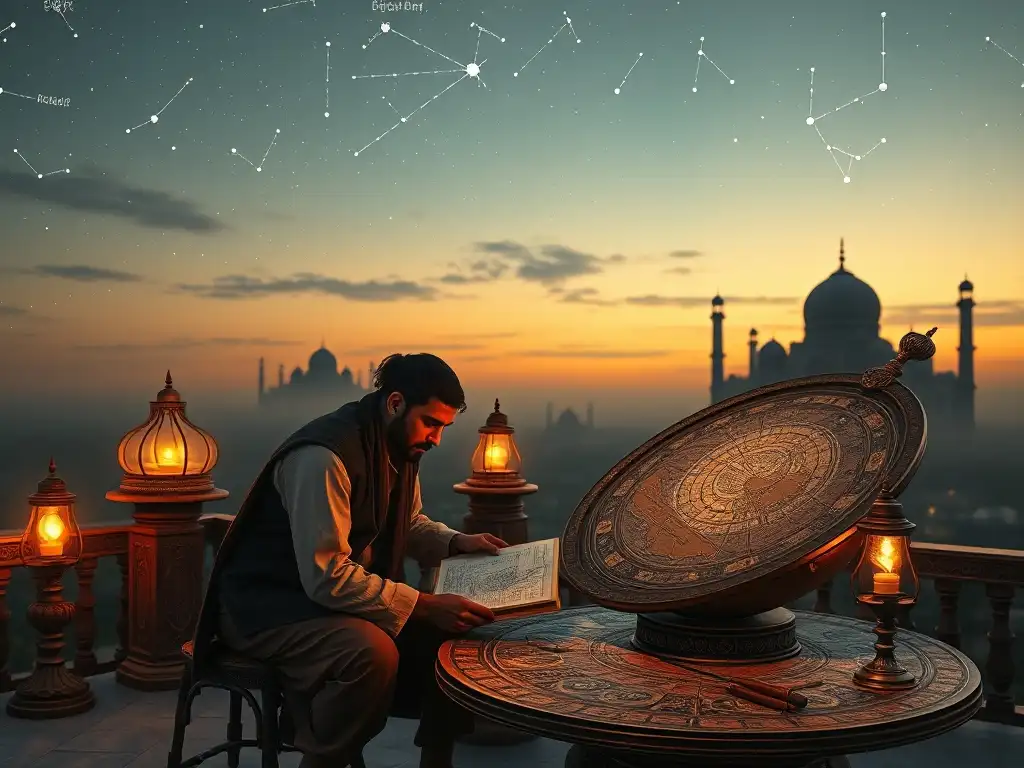
Welcome to Ancient India History, where we embark on a fascinating journey through the rich tapestry of Indian civilizations! Dive into the captivating world of Ancient India and its intersections with Persia, particularly as we explore the profound astronomical knowledge exchanged between these two great cultures. What secrets did the stars hold for our ancestors? Discover how this shared wisdom not only shaped their understanding of the cosmos but also laid the groundwork for advancements that resonate even today. Join us as we unravel the intricate threads of history that connect these remarkable civilizations!
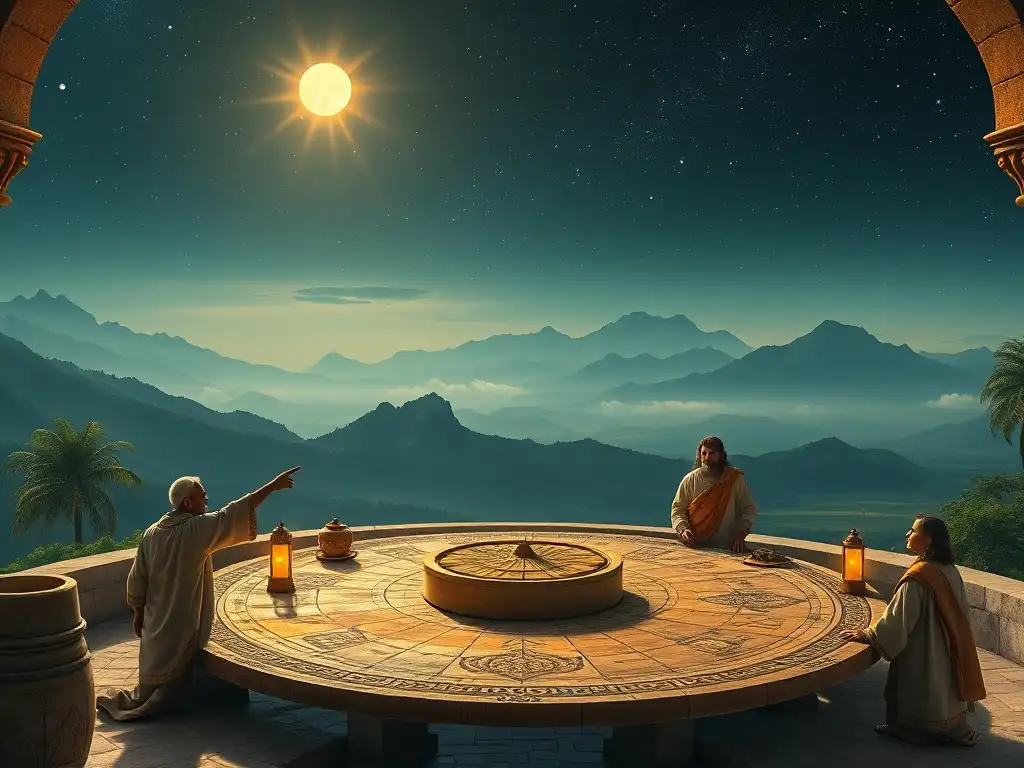
The rich tapestry of ancient civilizations has long been woven with threads of knowledge that transcended borders. Among these civilizations, ancient India and Persia stand out for their profound contributions to astronomy. The intersection of their astronomical knowledge not only reflects their scientific advancements but also highlights the cultural exchanges and interactions that shaped their respective societies. This article delves into the intricate relationship between ancient Indian and Persian astronomy, examining how these two cultures influenced each other and contributed to the broader understanding of the cosmos.
Introduction to Ancient India and Persia's Astronomical Knowledge
The study of astronomy in ancient India and Persia was not merely a scientific pursuit; it was deeply intertwined with religion, philosophy, and daily life. Both civilizations developed sophisticated systems for observing celestial bodies, which were essential for calendar-making, navigation, and agricultural planning.
Overview of Ancient Astronomy in India and Persia
- Ancient India:
- The Vedic texts, dating back to around 1500 BCE, contain references to celestial phenomena and rituals linked to astronomical events.
- The works of scholars like Aryabhata and Varahamihira laid the foundation for later astronomical studies, with Aryabhata's Aryabhatiya presenting concepts of planetary motion and the value of pi.
- Ancient Persia:
- Persian astronomers, particularly during the Achaemenid Empire (circa 550–330 BCE) and later in the Islamic Golden Age, made significant strides in observational astronomy.
- The Zij tables created by Persian astronomers like Al-Battani incorporated data from Greek, Indian, and Babylonian sources, illustrating a blend of knowledge.
Both cultures utilized extensive observations of celestial bodies, leading to advancements in understanding the movements of planets and stars.
Importance of Astronomy in Ancient Civilizations
Astronomy played a pivotal role in ancient societies, serving various functions:
- Agricultural Planning: Seasonal changes dictated by celestial movements were crucial for crop cycles.
- Religious Practices: Many rituals and festivals were aligned with astronomical events, reflecting the belief systems of the time.
- Navigation: Knowledge of the stars was vital for trade and exploration, particularly for maritime routes.
Historical Context of Indian-Persian Interactions
The exchange of astronomical knowledge between India and Persia was facilitated by trade and political interactions, particularly during key historical periods.
Trade Routes and Cultural Exchanges
The Silk Road and maritime trade routes connected India and Persia, allowing for the exchange of not only goods but also ideas. As traders moved across these routes:
- Cultural Diffusion: Concepts of astronomy, such as the zodiac and calculations of time, were shared, leading to enriched astronomical practices in both regions.
- Collaborative Scholarship: Scholars from both cultures often met in bustling trade hubs, sharing their findings and techniques.
Political Alliances and Collaborations
Political relationships also played a significant role in fostering Indian-Persian astronomical knowledge:
- Dynastic Marriages: Alliances through marriage often facilitated the exchange of knowledge and culture.
- Royal Patronage: Rulers from both civilizations supported astronomers and scholars, enabling significant advancements in the field.
The synthesis of astronomical insights from ancient India and Persia not only enhanced their respective scientific landscapes but also laid the groundwork for future explorations in the field of astronomy across civilizations.
Key Figures in Ancient Astronomy
The field of astronomy in ancient India and Persia was shaped by remarkable scholars whose contributions laid the foundations for future generations. These key figures were not only instrumental in their own cultures but also played a crucial role in the exchange of astronomical knowledge between the two civilizations. Through their endeavors, they established a framework that integrated observations, mathematical calculations, and philosophical inquiries into the cosmos.
Prominent Indian Astronomers
- Aryabhata (476–550 CE): One of the most celebrated astronomers of ancient India, Aryabhata made significant contributions to mathematics and astronomy. His seminal work, the Aryabhatiya, introduced concepts such as the rotation of the Earth on its axis and the calculation of eclipses. He emphasized the importance of a mathematical approach to astronomy, which influenced both Indian and Persian scholars.
- Varahamihira (505–587 CE): A contemporary of Aryabhata, Varahamihira was renowned for his work in both astronomy and astrology. His major text, the Brihat Samhita, compiled knowledge from various disciplines, including meteorology and planetary motions. Varahamihira's insights on planetary positions and their impacts on Earth were pivotal in shaping the astronomical practices in ancient India and beyond.
- Bhaskara I (600–680 CE): Known for his translations and commentaries on Aryabhata's works, Bhaskara I expanded upon Aryabhata's ideas, particularly in trigonometry. His contributions helped in refining astronomical calculations and made significant advancements in the precision of astronomical tables.
Influential Persian Astronomers
- Al-Battani (858–929 CE): Often regarded as one of the great astronomers of the medieval period, Al-Battani made remarkable advancements in the measurement of celestial bodies. His work, the Zij, included precise observations of solar and lunar movements, which influenced both Islamic and Indian astronomy.
- Omar Khayyam (1048–1131 CE): A poet and mathematician, Khayyam was also an accomplished astronomer who contributed to the development of the Persian calendar. His work on the Zij-i-Malikshahi presented detailed tables for the calculation of celestial phenomena, reflecting the synthesis of Indian and Persian astronomical knowledge.
- Nasir al-Din al-Tusi (1201–1274 CE): A prominent figure in the Islamic Golden Age, al-Tusi made significant contributions to astronomy and mathematics. His work included the establishment of observatories and the refinement of astronomical models, further bridging the knowledge between Indian and Persian scholars.
The Exchange of Astronomical Knowledge
The exchange of astronomical knowledge between ancient India and Persia was a dynamic process, facilitated by trade, cultural interactions, and the shared pursuit of understanding the cosmos. This collaboration resulted in a rich tapestry of ideas that advanced the field of astronomy in both regions.
Shared Texts and Manuscripts
Several texts and manuscripts served as conduits for the exchange of astronomical knowledge. Notably, the translations of Indian astronomical works into Persian and Arabic allowed Persian scholars to access Indian mathematical techniques and observational data. Texts like the Siddhanta and Aryabhatiya were translated and adapted, enriching the Persian understanding of celestial movements and calculations.
Influence of Indian Astronomy on Persian Practices
Indian astronomy significantly influenced Persian practices, particularly in the realms of mathematical calculations and observational techniques. The introduction of the decimal system and techniques for calculating planetary positions from Indian texts enhanced the precision of Persian astronomical observations. Persian astronomers adopted Indian methods for predicting eclipses and understanding planetary motions, integrating them into their own systems.
Persian Contributions to Indian Astronomical Techniques
Conversely, Persian scholars contributed to the refinement of Indian astronomical techniques, particularly in observational tools and methods. The development of sophisticated instruments, such as the astrolabe, and the establishment of observatories in Persian cities provided Indian astronomers with enhanced capabilities for observing celestial events. The cross-pollination of ideas led to the emergence of more accurate astronomical models, benefiting both civilizations.
Comparative Analysis of Astronomical Practices
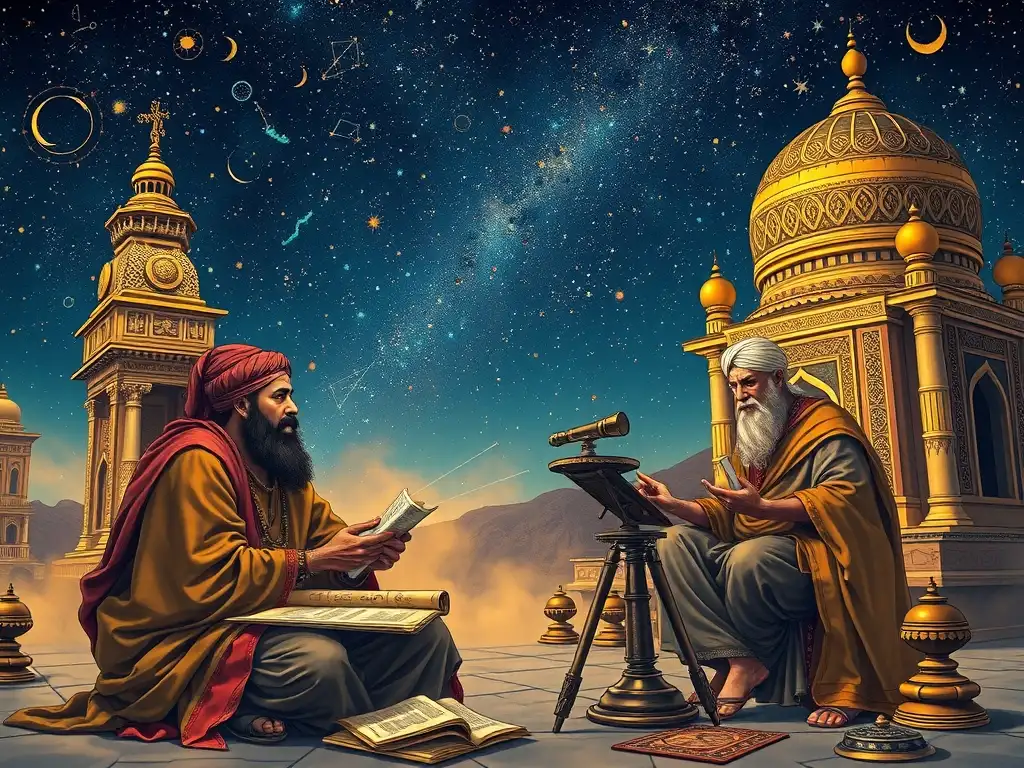
The ancient civilizations of India and Persia shared a rich tapestry of astronomical practices that were influenced by their unique cultural, philosophical, and scientific contexts. Both societies developed sophisticated methods for observing celestial phenomena, which were integral to their agricultural calendars, religious rituals, and navigation. This comparative analysis highlights the techniques, tools, and cultural significance of astronomy in both civilizations.
While Indian astronomy was often characterized by its mathematical rigor and theoretical frameworks, Persian astronomy excelled in observational techniques and the compilation of comprehensive star catalogs. Indian astronomers, such as Aryabhata and Brahmagupta, contributed significantly to the understanding of planetary motions and eclipses, often employing complex calculations to predict celestial events. In contrast, Persian astronomers like Al-Biruni and Omar Khayyam focused on meticulous observations of the night sky, leading to the establishment of precise astronomical tables and calendars.
Furthermore, the transmission of knowledge between these cultures was facilitated by trade routes and scholarly exchanges, allowing for a blending of techniques and ideas. This cross-pollination of astronomical knowledge not only enriched the scientific pursuits of both civilizations but also laid the groundwork for future advancements in the field.
Techniques in Celestial Observation
The techniques employed by ancient Indian and Persian astronomers were pivotal in their understanding of celestial bodies and movements. Indian astronomers relied on gnomons, simple instruments like sundials, and geometric calculations to observe the sun's position and track the movement of stars and planets. The use of shadow casting devices allowed for accurate measurements of time and angles, which were essential for their astronomical calculations.
In Persia, the development of observatories, such as the one in Maragheh, marked a significant advancement in astronomical techniques. Persian astronomers utilized advanced instruments, including astrolabes and quadrants, to measure celestial altitudes and azimuths. Their observational techniques were often complemented by meticulous record-keeping, which enabled them to compile extensive star catalogs and lunar tables.
Both civilizations demonstrated a keen understanding of the cyclical nature of celestial phenomena. They developed methods to predict eclipses and other astronomical events, showcasing their sophisticated grasp of the cosmos. The convergence of these techniques exemplifies the shared commitment to understanding the universe that characterized both Indian and Persian astronomy.
Calendar Systems and Timekeeping
Calendar systems were crucial for both ancient Indian and Persian societies, as they dictated agricultural practices, religious festivals, and civic life. The ancient Indian calendar, known as the Vedic calendar, was lunisolar, integrating both lunar months and solar years. This system allowed for the accurate prediction of seasonal changes, which were vital for agricultural planning.
Conversely, the Persian calendar, particularly the Zoroastrian calendar, was primarily solar. It consisted of twelve months, each with thirty days, plus an additional five days to align with the solar year. This calendrical system was celebrated for its precision and was instrumental in determining important religious observances.
Both calendars reflected a deep astronomical understanding and were adapted over time to enhance accuracy. The interplay between these systems facilitated cultural exchanges, leading to the incorporation of Indian mathematical concepts in Persian astronomy. This collaboration ultimately contributed to the refinement of calendar systems in both cultures.
Astrology and Its Cultural Significance
Astrology held a significant place in both ancient Indian and Persian societies, intertwining with their religious and cultural beliefs. In India, astrology, or Jyotisha, served as a means to understand cosmic influences on human affairs. It was deeply integrated into daily life, influencing decisions related to marriage, agriculture, and governance. Indian astrologers utilized a complex system of zodiac signs and planetary positions to provide insights into individual destinies and societal events.
In Persia, astrology was similarly revered, often linked to Zoroastrian beliefs and practices. The Persians developed a rich astrological tradition that included horoscopes and the interpretation of celestial omens. Persian astrologers, such as those in the court of the Sassanian Empire, played crucial roles in advising rulers based on astronomical observations.
The cultural significance of astrology in both civilizations also fostered collaboration. Shared texts and knowledge allowed for a cross-cultural synthesis of astrological practices, enriching the astrological frameworks of each society. This mutual fascination with celestial influences illustrates how astronomy and astrology were not merely scientific pursuits but integral aspects of cultural identity.
Case Studies of Collaborative Astronomical Projects
The collaborative efforts of ancient Indian and Persian astronomers resulted in several notable projects that enhanced the understanding of celestial phenomena. These joint initiatives were often spurred by the exchange of ideas, texts, and techniques, leading to remarkable advancements in astronomy.
Joint Observations and Findings
One of the most significant collaborative projects was the translation of astronomical texts. Persian scholars, such as Al-Biruni, translated Indian astronomical works into Arabic, allowing for the dissemination of Indian mathematical techniques throughout the Islamic world. This exchange not only preserved Indian knowledge but also provided Persian astronomers with new tools for their observational practices.
Moreover, joint observations during celestial events, such as eclipses, facilitated the gathering of data from multiple locations. For instance, the observation of the lunar eclipse of 1065 CE was recorded by astronomers in both India and Persia, leading to refined calculations of the moon's position and the establishment of more accurate ephemerides.
Notable Astronomical Events Recorded
Several notable astronomical events were meticulously recorded by both Indian and Persian astronomers, highlighting their collaborative spirit. The supernova observed in 1054 CE, which created the Crab Nebula, was documented by scholars from both cultures. This event demonstrated the ability of astronomers to share information rapidly and accurately across cultural boundaries.
Additionally, both civilizations recorded significant planetary conjunctions, such as the alignment of Saturn and Jupiter, which held astrological importance. These recordings not only provided insights into celestial mechanics but also reflected the shared cultural significance of such phenomena in both societies.
Through these collaborative projects, ancient India and Persia forged a profound connection in the realm of astronomy, setting the stage for future generations to build upon their shared knowledge and understanding of the cosmos.
The shared astronomical knowledge between Ancient India and Persia has left a profound legacy that continues to influence modern science and mathematics. This legacy is primarily rooted in the exchange of ideas, texts, and scholars during significant periods of interaction between these two great civilizations. The synthesis of astronomical observations and methodologies from both cultures led to advancements that were crucial for the development of astronomy as a discipline.
One of the most notable aspects of this legacy is the mutual influence on the calculation of celestial phenomena. Indian astronomers, such as Aryabhata and Brahmagupta, contributed significant theories and computational methods that were later adopted and adapted by Persian scholars like Al-Khwarizmi and Al-Battani. This cross-pollination of ideas not only enriched both traditions but also laid the groundwork for future advancements in astronomy.
Furthermore, the translation movements during the Islamic Golden Age played a critical role in preserving and disseminating these astronomical works. Persian scholars translated Indian texts, which in turn influenced the works of European astronomers during the Renaissance. This legacy underscores the importance of collaborative knowledge-sharing in the advancement of scientific understanding.
Impact on Subsequent Civilizations
The impact of the shared astronomical knowledge between Ancient India and Persia extended far beyond their borders, significantly influencing subsequent civilizations. The mathematical techniques and astronomical models developed during this collaboration provided a foundation for later astronomers in the Islamic Golden Age and beyond.
For instance, the introduction of the decimal system and the concept of zero from Indian mathematics into Persian astronomy transformed calculations and observations. This innovation enabled more precise tracking of celestial bodies, which was critical for navigation, agriculture, and the development of calendars.
Moreover, the compilation of astronomical tables, such as the Zij al-Sindhind, which incorporated Indian methods and observations, became reference points for astronomers in the Islamic world and eventually reached Europe. These tables facilitated astronomical research, fostering an environment where scientific inquiry flourished across civilizations.
Furthermore, the legacy of this shared knowledge can be seen in the adoption of certain astronomical instruments, such as the astrolabe, which was enhanced by Indian and Persian innovations. This instrument became essential for navigation and timekeeping in many cultures, demonstrating the practical implications of their collaborative achievements.
Modern Relevance of Ancient Astronomy
The relevance of ancient astronomical knowledge from India and Persia is increasingly acknowledged in contemporary discussions of science and history. Modern astronomy often revisits the sophisticated methods and theories that were developed during this era as researchers seek to understand the foundations of our current knowledge.
Today, scholars recognize the value of interdisciplinary studies that examine how ancient civilizations approached astronomy. Concepts such as celestial mechanics, planetary motion, and the mathematical models developed during this period are now seen as precursors to modern astronomical concepts.
Moreover, the intercultural exchanges that occurred during these ancient times serve as a model for present-day global scientific collaboration. The challenges of contemporary astronomy, such as understanding dark matter and exoplanets, echo the spirit of cooperation that characterized the relationship between Ancient India and Persia.
The preservation and study of ancient astronomical texts continue to inspire modern scientists, reminding us of the rich tapestry of knowledge that has shaped our understanding of the universe.
Conclusion
Summary of Key Points on Ancient India and Persia's Astronomy Knowledge
The astronomical knowledge shared between Ancient India and Persia represents a significant chapter in the history of science. Key points include:
- The collaborative development of mathematical methods and astronomical observations.
- The influence of Indian astronomy on Persian scholars and vice versa.
- The role of translation movements in preserving and disseminating astronomical knowledge.
- The lasting impact on subsequent civilizations, including the Islamic Golden Age and European Renaissance.
- The modern relevance of ancient astronomy in contemporary scientific discourse.
These points highlight the importance of understanding the interconnectedness of ancient civilizations in the advancement of human knowledge.
Reflection on the Importance of Cross-Cultural Exchanges in Astronomy
Reflecting on the importance of cross-cultural exchanges in astronomy reveals a pattern of growth that is crucial for the evolution of science. The interactions between Ancient India and Persia illustrate how collaboration and the sharing of ideas can lead to significant advancements.
Such exchanges foster a deeper understanding of the universe and demonstrate that knowledge is not confined to geographical boundaries. By embracing the contributions of diverse cultures, modern science can continue to benefit from the rich history of collaboration that has shaped our understanding of the cosmos.
Ultimately, recognizing the contributions of ancient civilizations like India and Persia serves not only to honor their legacy but also to inspire future generations to pursue knowledge across cultures and disciplines. The journey of astronomy is a testament to human curiosity and the collaborative spirit that transcends time and space.
- Introduction to Ancient India and Persia's Astronomical Knowledge
- Historical Context of Indian-Persian Interactions
- Key Figures in Ancient Astronomy
- The Exchange of Astronomical Knowledge
- Comparative Analysis of Astronomical Practices
- Case Studies of Collaborative Astronomical Projects
- The Legacy of Shared Astronomical Knowledge
- Conclusion
- What was the significance of astronomy in ancient India and Persia?
- How did ancient Indian and Persian astronomers influence each other?
- What are some key astronomical contributions from ancient India?
- How did Persian astronomy differ from that of ancient India?
- What role did religion play in astronomy in ancient India and Persia?
Frequently Asked Questions
What was the significance of astronomy in ancient India and Persia?
Astronomy in ancient India and Persia was crucial for navigation, timekeeping, and calendrical calculations, showcasing their advanced understanding of celestial phenomena.
How did ancient Indian and Persian astronomers influence each other?
The exchange of astronomical knowledge occurred through trade routes and cultural interactions, leading to the sharing of techniques and mathematical concepts between the two civilizations.
What are some key astronomical contributions from ancient India?
Ancient Indian astronomers, such as Aryabhata and Brahmagupta, made significant contributions, including the concept of zero and methods for calculating planetary positions.
How did Persian astronomy differ from that of ancient India?
Persian astronomy was heavily influenced by Greek astronomy, focusing on astrolabes and star cataloging, while Indian astronomy emphasized mathematical precision and cosmological models.
What role did religion play in astronomy in ancient India and Persia?
In both civilizations, astronomy was often intertwined with religious practices, influencing calendar systems and festivals, and demonstrating the spiritual significance of celestial events.
Final Reflection: The Timeless Legacy of Ancient India and Persia's Astronomical Knowledge
The shared astronomical knowledge between Ancient India and Persia is not just a relic of the past; it is a profound testament to the interconnectedness of human thought and discovery. In today's world, where scientific collaboration transcends borders, the historical exchange of ideas between these two great civilizations serves as a reminder of our collective quest for understanding the cosmos. The intricate astronomical systems developed by these cultures continue to inspire modern science, highlighting the enduring relevance of their contributions.
The influence of Ancient India and Persia's astronomical knowledge is woven into the fabric of our cultural and scientific landscape. From the intricate calculations of celestial movements to the philosophical implications of astronomy, their legacy persists in contemporary practices and beliefs. As Carl Sagan once said, "> We are made of star-stuff. We are a way for the universe to know itself." This profound connection underscores the importance of recognizing and valuing the contributions of diverse cultures in shaping our understanding of the universe.
As we reflect on the lessons from Ancient India and Persia, let us embrace the spirit of inquiry and collaboration that defined their astronomical pursuits. I invite you to explore the wonders of the cosmos, not just as a scientist or a scholar, but as a curious individual eager to learn from the past. By acknowledging the shared knowledge of our ancestors, we can foster a deeper appreciation for the universe and inspire future generations to continue this journey of discovery together.
Thank you for exploring the fascinating connections between ancient India and Persia! Your curiosity about their shared astronomical knowledge helps us appreciate the depth of human understanding and collaboration throughout history. Now, let’s take your newfound insights further!
Take Action Now!
- Dive deeper into the astronomical texts from both cultures—explore translations and commentaries to uncover remarkable insights and hidden treasures.
- Share your newfound knowledge with friends or on social media to spark engaging conversations about ancient astronomy and its relevance in today's world!
- Join online forums or local groups that focus on ancient sciences to exchange ideas and connect with fellow enthusiasts.
What aspect of ancient astronomical knowledge excites you the most, and how do you believe it shapes our understanding of the universe today?