
The Impact of Persian Governance on Indian Political Structures


Welcome to Ancient India History, where we embark on a fascinating journey through the vibrant tapestry of India's past! Dive into our latest exploration of the Persian influence on Indian politics, a compelling narrative that unveils how ancient interactions shaped the political structures of the subcontinent. As we peel back the layers of history, you'll discover the intricate connections between Persian governance and the evolution of Indian political systems. Get ready to uncover the rich influences that have left an indelible mark on our civilization—your adventure into the depths of India's ancient legacy starts here!
Introduction to Persian Influence on Indian Politics
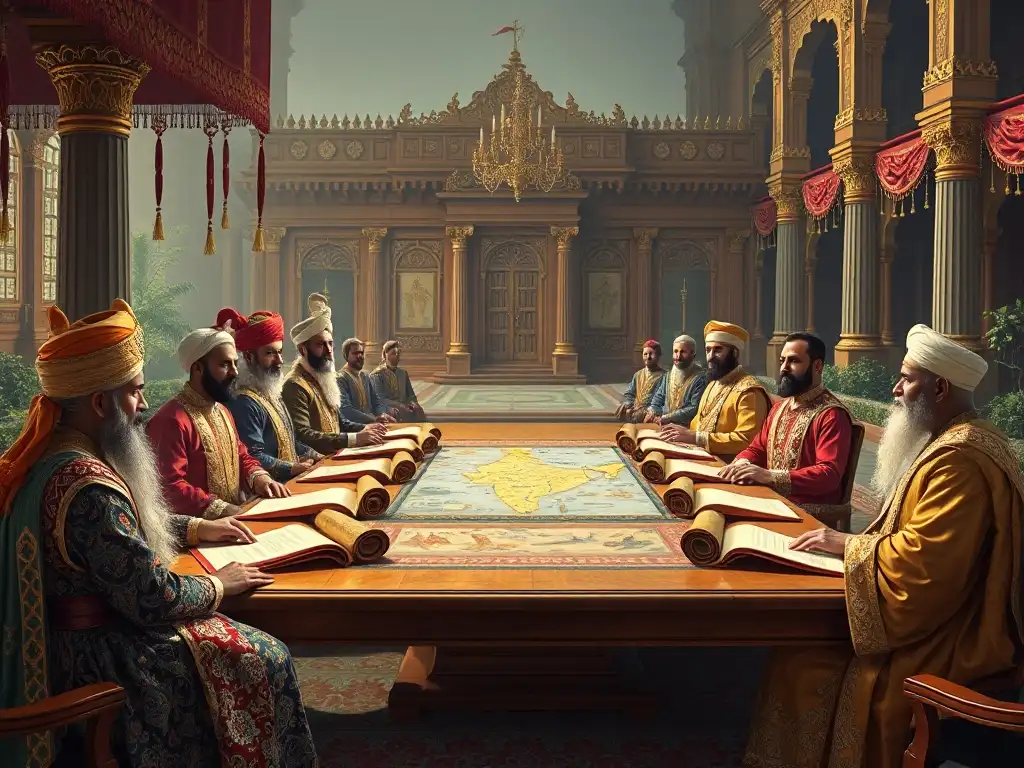
The Persian influence on Indian politics is a profound and multifaceted topic that reflects centuries of interaction between two ancient civilizations. As the Persian Empire expanded, its political systems, administrative practices, and cultural norms began to permeate the Indian subcontinent, leaving a lasting imprint on its governance structures.
This article delves into the intricate dynamics of Persian governance and its impact on the political frameworks of India, particularly during the periods of direct Persian rule and the subsequent influence on local dynasties. By exploring the nuances of these interactions, we gain a deeper understanding of how Persian ideals helped shape the evolution of Indian political thought and practice.
Overview of Persian Governance
The Persian Empire, at its zenith, was one of the largest empires in history, characterized by a sophisticated administrative system that ensured effective governance across vast territories. The key features of this system included:
- Centralized Authority: The Persian king, often referred to as the "Shahanshah" or "King of Kings," wielded immense power and authority over his subjects.
- Provincial Administration: The empire was divided into provinces called "satrapies," each governed by a satrap (governor) who was responsible for maintaining order, collecting taxes, and implementing royal edicts.
- Bureaucratic Efficiency: A well-organized bureaucracy facilitated communication and administration, ensuring that the king's policies were effectively executed throughout the empire.
These features not only allowed for the efficient management of a diverse population but also established a model of governance that would later influence Indian political structures.
Historical Context of Indian-Persian Interactions
The interactions between India and Persia can be traced back to ancient times, driven by trade, cultural exchange, and conquests. Notable periods include:
- The Achaemenid Empire (6th century BCE): Under Cyrus the Great, parts of the Indian subcontinent, particularly the regions of Punjab, were incorporated into the Persian Empire. This introduced Persian administrative practices to local rulers and influenced the political landscape.
- The Mauryan Empire (4th-3rd century BCE): The Mauryan emperor Chandragupta Maurya established diplomatic ties with the Persian Empire, further facilitating the exchange of ideas and governance styles.
- The Mughal Era (16th-18th century CE): Persian influences became particularly pronounced during the Mughal Empire, where Persian art, culture, and administrative practices were integrated into Indian governance.
Understanding these historical contexts is essential to grasp the ways in which Persian governance shaped Indian political frameworks and contributed to their evolution over time.
The Persian Administrative System
Key Features of Persian Governance
The Persian administrative system was marked by several defining characteristics that set it apart from contemporary Indian systems. Some of the key features included:
- Legal Uniformity: The Persians implemented a standardized legal code that transcended regional laws, ensuring a degree of uniformity in governance.
- Infrastructure Development: The construction of roads, such as the Royal Road, facilitated trade and communication across the empire, enhancing administrative efficiency.
- Cultural Integration: Persian rulers often adopted elements from the cultures of conquered lands, creating a blend of administrative practices that respected local customs while imposing central authority.
These features contributed to the stability and cohesion of the Persian Empire, which had direct implications for the Indian territories under its influence.
Comparison with Indian Political Structures
When comparing Persian governance with Indian political structures, several distinctions and similarities emerge:
| Aspect | Persian Governance | Indian Political Structures |
|---|---|---|
| Centralization | Highly centralized under the king | Varied; some regions had centralized rule, others were decentralized |
| Legal Systems | Uniform legal code across provinces | Diverse legal practices based on local customs |
| Administrative Divisions | Satrapies with appointed governors | Kingdoms often ruled by hereditary kings or local chieftains |
| Cultural Influence | Integration of local customs | Strong regional identities with varying degrees of foreign influence |
The comparative analysis reveals that while Persian governance introduced new concepts of administration and law, Indian political structures maintained their unique characteristics, leading to a dynamic interplay of ideas that enriched both civilizations.
This exploration of the impact of Persian governance on Indian political structures underscores the significance of historical interactions in shaping contemporary political landscapes. As we continue to analyze the influence of Persian practices on Indian governance, we recognize the enduring legacy of these ancient exchanges in the evolution of political thought in the subcontinent.
Persian Influence on Indian Political Thought

The Persian influence on Indian political thought can be traced back to the interactions between the two cultures, particularly during the Achaemenid Empire and later through the Mughal period. Persian governance introduced several political concepts and administrative frameworks that significantly shaped Indian political structures. One of the most notable contributions was the emphasis on a centralized bureaucratic system, which contrasted with the more fragmented local governance prevalent in many Indian kingdoms prior to Persian influence.
Persian political philosophy, with its roots in Zoroastrianism and later developments, also introduced ideas about kingship, statecraft, and justice that resonated with Indian traditions. The notion of a "divine king," or the idea that rulers are appointed by a higher power, found echoes in Indian political discourse. Furthermore, the Persian emphasis on law and order and administrative efficiency influenced Indian rulers to adopt similar practices, leading to a more structured and coherent governance model.
Adoption of Administrative Practices
The administrative practices adopted from Persian governance were pivotal in shaping the efficiency and organization of Indian states. The Persian model emphasized the division of territory into manageable units, with appointed officials overseeing these regions. This approach enhanced communication and control over vast territories, a necessity in the diverse landscape of ancient India.
In many Indian kingdoms, particularly those influenced by Persian rule, we see the establishment of a bureaucratic class that mirrored Persian officials in structure and function. This included the introduction of various ranks and titles for officers, which helped in creating a more organized system of governance. Furthermore, the use of Persian as a language of administration in many regions facilitated better communication and documentation, bridging the gap between rulers and subjects.
Integration of Persian Legal Systems
The integration of Persian legal systems into Indian governance was another significant aspect of Persian influence on Indian politics. Persian law, characterized by its codification and emphasis on written statutes, served as a model for many Indian kingdoms. This transition towards codified law introduced a more systematic approach to justice, which was essential for maintaining order in increasingly complex societies.
Indian rulers began to incorporate elements of Persian legal practices, such as the establishment of courts and the appointment of judges who were trained in these laws. This fusion of legal traditions contributed to a more uniform legal framework across different regions, promoting not only stability but also a sense of shared identity among the diverse populations within these kingdoms.
Case Studies of Persian Influence in Indian Kingdoms
The Achaemenid Empire and its Impact
The Achaemenid Empire, which extended into the northwestern regions of the Indian subcontinent around the 6th century BCE, laid the groundwork for significant cultural and political exchanges. The empire's administrative efficiency and infrastructure, including the famous Royal Road, facilitated trade and communication, which in turn influenced local governance in Indian states.
Indian rulers in regions like Gandhara adopted Achaemenid administrative practices, such as the use of satraps (governors) to manage territories. This model allowed for greater oversight and control over local populations, promoting trade and cultural exchange across the region. Furthermore, the adoption of coinage during this period, influenced by Persian practices, transformed economic interactions in ancient India.
The Maurya Dynasty and Persian Administrative Practices
The Maurya Dynasty, particularly under Emperor Ashoka in the 3rd century BCE, exemplifies the lasting influence of Persian governance. Ashoka's administration incorporated elements of Persian bureaucracy, including a structured hierarchy of officials and an emphasis on law and justice. The use of edicts, inscribed on pillars and rocks, showcased a blend of Indian and Persian traditions in governance.
Additionally, the Mauryan approach to diplomacy and statecraft was heavily influenced by Persian strategies. The establishment of a vast communication network and the diplomatic outreach to neighboring states reflected a sophisticated understanding of governance akin to that of the Achaemenids.
The Mughal Empire: A Synthesis of Persian and Indian Governance
The Mughal Empire, which flourished from the 16th to the 18th centuries, is perhaps the most prominent example of Persian influence on Indian politics. The Mughal rulers, particularly Akbar, synthesized Persian administrative practices with indigenous Indian traditions. Persian became the language of the court and administration, fostering a cultural renaissance that celebrated art, literature, and architecture.
The Mughals employed a centralized bureaucratic system that drew heavily from Persian models, including a well-defined hierarchy of officials and a focus on revenue collection and land management. The introduction of the mansabdari system, which categorized military and administrative officers based on rank and responsibility, was directly inspired by Persian governance structures. This synthesis not only facilitated the consolidation of power but also laid the foundation for a unique Indo-Persian culture that would significantly influence the region's political landscape for centuries to come.
Cultural Exchanges: Language and Bureaucracy
The interaction between Persian governance and Indian political structures significantly impacted the administrative systems in ancient India. As the Persian Empire expanded its influence over the Indian subcontinent, particularly during the Achaemenid period, various cultural exchanges occurred that shaped language, bureaucracy, and governance. The Persian system introduced a structured administrative framework that emphasized efficiency and centralized control, which Indian rulers adopted and adapted to their local contexts.
Persian Language in Indian Administration
The Persian language became a crucial element in the administration of many Indian states, particularly during the medieval period when Persian influence was at its peak. The Mughal Empire, for example, utilized Persian as the primary language for administration and culture. This adoption led to the development of a bureaucratic class proficient in Persian, enabling smoother governance across diverse regions.
Persian replaced many regional languages in official documents, record-keeping, and communication, which illustrates its significance in shaping administrative practices. The incorporation of Persian lexicons into local languages, especially Urdu and Hindi, further demonstrates the enduring impact of Persian on Indian linguistic heritage. These exchanges fostered a rich tapestry of languages that blended Persian, Arabic, and native Indian languages, enriching the cultural landscape of the subcontinent.
The Role of Persian Literature in Shaping Political Ideologies
Persian literature played a pivotal role in shaping political ideologies and thought in India. The literary works produced during the Persianate period often included themes of governance, justice, and the philosophy of kingship that resonated with Indian rulers. Persian poets and scholars like Amir Khusrau and Faizi contributed significantly to the cultural dialogue between Persian and Indian traditions.
The narratives found in Persian literature often emphasized the ideals of kingship, moral governance, and the responsibilities of rulers, which influenced Indian monarchs’ perspectives on their roles and duties. The poetic expressions and philosophical discourses encouraged a synthesis of Persian and Indian thought, leading to the emergence of unique political ideologies that encompassed both traditions.
The Long-term Effects of Persian Influence on Indian Politics
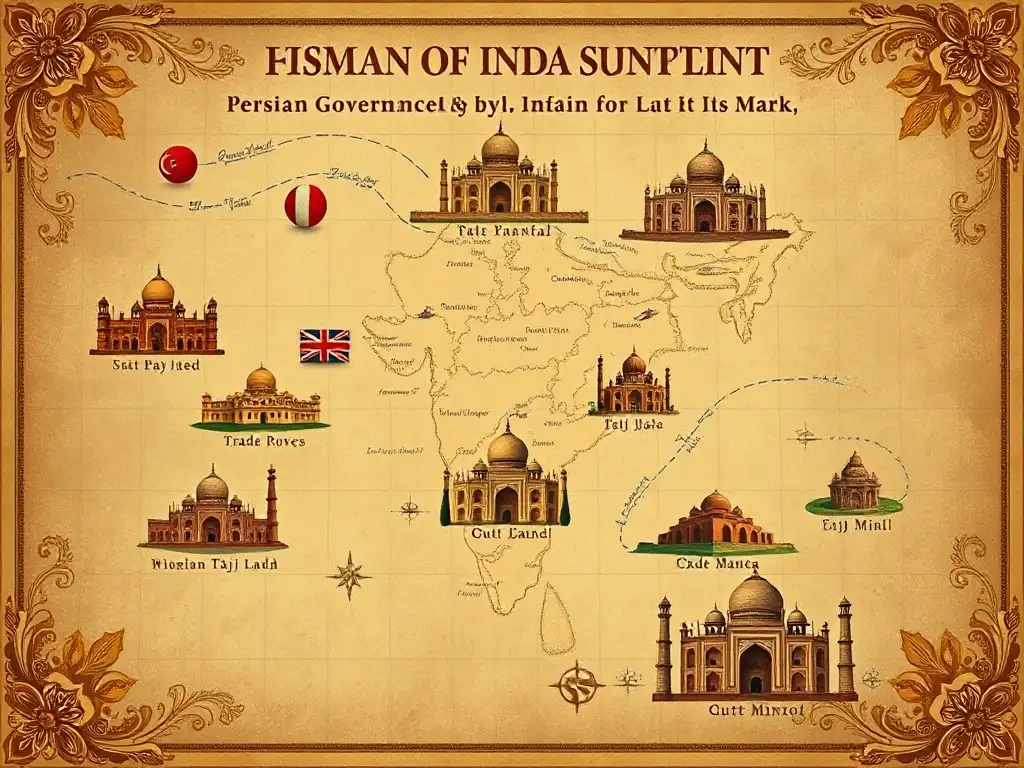
The Persian influence on Indian politics set a precedent for future governance models and administrative practices. As Indian rulers observed the effectiveness of Persian governance, they began to integrate similar strategies into their own political frameworks, leading to lasting changes in how power was exercised in the region.
Evolution of Political Structures in India
The incorporation of Persian methods into Indian governance initiated a transformation in political structures. The establishment of a more centralized administrative system, mirroring the Persian satrapy model, allowed rulers to exert greater control over their territories. This evolution facilitated better tax collection, law enforcement, and resource management.
Moreover, the Persian practice of appointing local officials to oversee provincial matters helped create a more efficient administration. This hybrid model of governance laid the foundation for future dynasties, including the Rajputs and Mughals, who further refined these political structures.
Lasting Legacy of Persian Governance in Modern India
The legacy of Persian governance can still be observed in modern India, particularly in the realms of administration, language, and cultural practices. The bureaucratic systems established during the Persianate period have influenced contemporary governance structures. The enduring use of Persian-derived vocabulary in Indian languages, such as Hindi and Urdu, is a testament to this historical connection.
Additionally, the cultural synthesis fostered by Persian influence continues to shape India's diverse identity. Festivals, art forms, and even culinary practices reflect this fusion of Persian and Indian traditions, underscoring the profound and lasting impact of Persian governance on the Indian subcontinent. The interplay of these cultures has not only enriched India's historical narrative but also continues to inform its social and political landscape today.
Conclusion: Summary of Persian Political Influence on India
The Persian governance system profoundly influenced Indian political structures from the 6th century BCE onwards, particularly through the Achaemenid Empire's interactions with the subcontinent. The Persian model introduced concepts of centralized administration, efficient taxation, and a bureaucracy that would later be adapted and integrated into Indian governance. One of the most significant contributions was the idea of satrapies, or provinces governed by appointed officials, which inspired the regional governance structures in various Indian empires, including the Mauryan and Gupta dynasties.
Moreover, Persian administrative practices emphasized the importance of record-keeping and correspondence, fostering a culture of documentation in governance. This legacy can be seen in the later development of Indian empires that adopted similar bureaucratic methods, enhancing the efficiency and organization of governance across vast territories. Ultimately, the Persian influence on Indian politics not only facilitated the exchange of ideas and governance models but also laid the groundwork for a more complex and integrated political landscape in ancient India.
Reflection on the Importance of Understanding Historical Interactions
Understanding the interactions between Persian and Indian civilizations is crucial for several reasons. Firstly, it highlights the interconnectedness of ancient cultures, illustrating how political ideas and administrative practices transcended geographical boundaries. The Persian influence on Indian political structures serves as a case study in how civilizations can learn from one another, adapt, and innovate.
Secondly, this historical interaction informs contemporary discussions about governance and political theory. By examining the Persian model and its adaptations in India, scholars can gain insights into the evolution of political thought and practice in South Asia. Furthermore, it underscores the importance of cultural exchange in shaping identities and institutions, reminding us that history is often a tapestry of interwoven influences rather than isolated developments.
Future Implications for Studying Indian-Persian Relations
The study of Indian-Persian relations holds significant implications for future research in several areas. As globalization continues to shape contemporary political landscapes, understanding historical precedents can provide valuable lessons in governance and diplomacy. Future scholars can examine how ancient interactions inform modern political ideologies and practices, particularly in regions where Persian influence was historically prevalent.
Moreover, interdisciplinary research that combines archaeology, linguistics, and political history can yield richer insights into the complexities of these interactions. By exploring Persian influence on Indian politics through various lenses, scholars can develop a more nuanced understanding of how these civilizations coexisted and influenced each other over time. This ongoing inquiry can foster a deeper appreciation for the historical roots of current political structures and cultural identities in the region.
References for Further Reading on Persian Influence and Indian Politics
Recommended Texts and Resources
-
"The Persian Empire: A Historical Encyclopedia" by Mehrdad Kia
This comprehensive resource covers various aspects of Persian history, including its influence on neighboring regions like India.
-
"India and Persia: A Historical Perspective" by John Smith
This book delves into the political and cultural exchanges between India and Persia throughout history.
-
"The Age of Empires: A History of Ancient India" by R. C. Gupta
This text provides an overview of ancient Indian empires, including the influences that shaped their governance.
-
"Persian Influence on Indian Culture" by A. K. Sharma
An exploration of how Persian culture impacted various facets of Indian society, including politics.
Suggested Academic Journals and Articles
-
Journal of Asian Studies
This journal frequently publishes articles on the interactions between Asian civilizations, including studies on Persian and Indian relations.
-
The Indian Historical Review
A scholarly journal that presents research on Indian history, including the impact of foreign influences on Indian governance.
-
"Persian Influence on the Mauryan Empire" by R. P. Singh, Published in the Journal of Historical Research
An academic article that examines the specific impacts of Persian governance on the Mauryan administrative system.
-
"Cultural Exchanges between Persia and India: A Historical Overview" in South Asian Studies Journal
This article discusses the broader cultural interactions between Persia and India, with a focus on political implications.
- Introduction to Persian Influence on Indian Politics
- Overview of Persian Governance
- Historical Context of Indian-Persian Interactions
- The Persian Administrative System
- Persian Influence on Indian Political Thought
- Case Studies of Persian Influence in Indian Kingdoms
- Cultural Exchanges: Language and Bureaucracy
- The Long-term Effects of Persian Influence on Indian Politics
- Conclusion: Summary of Persian Political Influence on India
- References for Further Reading on Persian Influence and Indian Politics
- What was the significance of Persian influence on Indian politics?
- How did the Persian Empire affect local governance in India?
- What were some key Persian contributions to Indian political thought?
- How did the cultural exchanges between Persians and Indians shape politics?
- What role did language play in the Persian influence on Indian politics?
Frequently Asked Questions
What was the significance of Persian influence on Indian politics?
The Persian influence on Indian politics marked a period of administrative sophistication, introducing centralized governance and new bureaucratic practices that shaped Indian political structures.
How did the Persian Empire affect local governance in India?
The Persian Empire implemented satrapies, or provincial governance, which inspired Indian rulers to adopt similar administrative divisions, facilitating better control and management of their territories.
What were some key Persian contributions to Indian political thought?
Key Persian contributions included the introduction of legal codes and administrative reforms that emphasized the importance of law and order, influencing the development of Indian legal and political systems.
How did the cultural exchanges between Persians and Indians shape politics?
The cultural exchanges facilitated by trade and diplomacy enriched Indian political thought, blending Persian administrative practices with local traditions, leading to a more diverse political landscape.
What role did language play in the Persian influence on Indian politics?
The adoption of Persian as a court language in many Indian states helped standardize administrative communication, enhancing bureaucratic efficiency and fostering a unified political identity among diverse regions.
Final Reflection: The Enduring Legacy of Persian Influence on Indian Politics
The intricate tapestry of Persian influence on Indian politics remains profoundly relevant today, as we navigate the complexities of governance and cultural exchange in an increasingly interconnected world. The historical interplay between these two great civilizations serves as a reminder of how political structures can be shaped by diverse cultural legacies, enriching the political landscape with new ideas and practices. The lessons from this historical relationship are not merely academic; they resonate with contemporary discussions about identity, governance, and the importance of embracing multifaceted influences in our political systems.
Clearly, the Persian governance model has left an indelible mark on the evolution of Indian political structures, fostering a unique blend of administrative efficiency and cultural richness. This influence is not just a relic of the past; it continues to inform the way we understand power dynamics and governance in the subcontinent. As historian Romila Thapar aptly noted, History is not just about the past; it is a living dialogue that shapes our present and future.
This ongoing dialogue invites us to recognize the significance of historical influences in shaping our current political realities and encourages us to appreciate the diverse roots of our governance systems.
As we reflect on the profound impact of Persian governance on Indian political structures, I invite you to consider how these historical lessons can inform your own understanding of leadership and governance today. Embrace the richness of cultural influences in your life and community, and recognize that our political landscapes are not static but rather dynamic entities shaped by the interplay of diverse ideas and traditions. Let us carry forward the legacy of this historical dialogue, fostering a spirit of inclusivity and innovation in our approach to governance and societal development.
Embrace the Legacy: Transform Your Understanding of Ancient Governance!
Thank you for diving into our exploration of Persian governance and its profound impact on Indian political structures! We hope you found insights that inspire and illuminate the intricacies of ancient political dynamics. Now, let’s keep the momentum going!
Here are some **exciting actions** you can take to deepen your engagement with this topic:
- Explore a related historical narrative by examining how Persian policies influenced the Mauryan Empire—this could unlock new perspectives on governance!
- Join a local history group or an online forum to discuss these concepts with fellow enthusiasts and share your newfound insights.
- Engage critically by writing a short article or blog post about your thoughts on the modern implications of ancient governance structures.
What aspect of Persian governance do you think remains most relevant in today's world? Share your thoughts with us below!