
The Influence of Indian Science and Astronomy in Southeast Asia: A Historical Overview


Welcome to Ancient India History, where we embark on a fascinating journey through the rich tapestry of ancient Indian civilizations. From the enigmatic Indus Valley to the illustrious Gupta Empire, our exploration unveils the profound influence that Indian science and astronomy have had on Southeast Asia. In our featured article, "The Influence of Indian Science and Astronomy in Southeast Asia: A Historical Overview," you'll discover the intricate cultural exchanges that shaped not just a region, but the very fabric of civilizations.
Join us as we delve deeper into this captivating narrative and uncover the threads that connect these ancient worlds. Your adventure into history starts here!
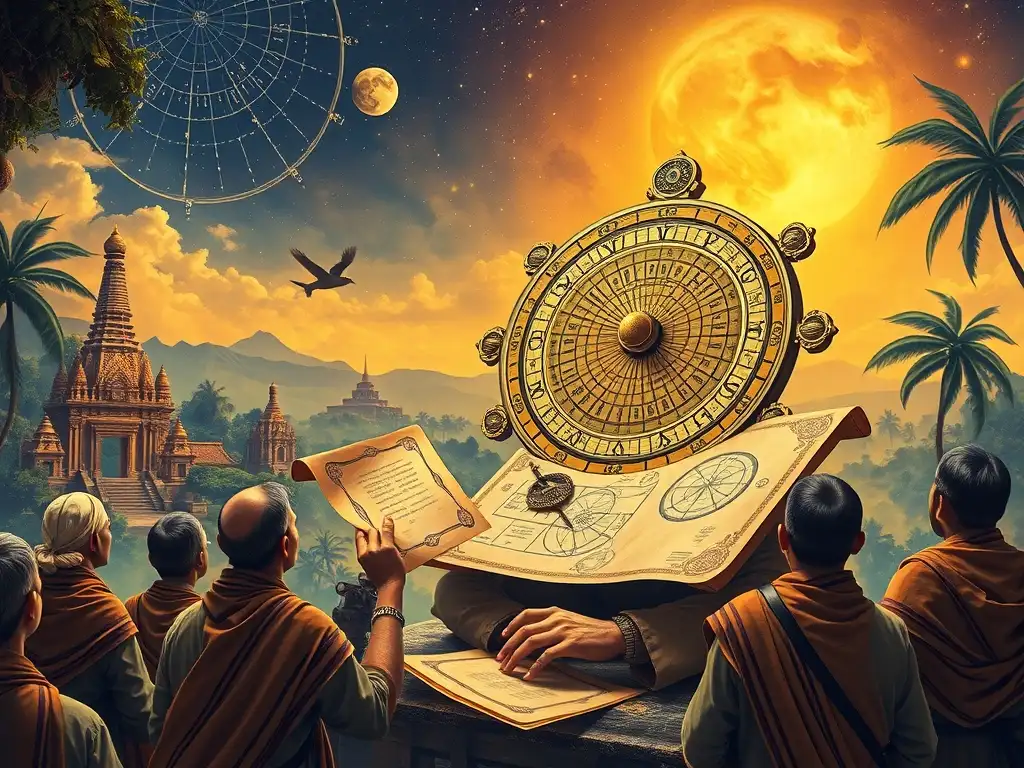
Introduction to Indian Science and Astronomy
The historical influence of Indian science and astronomy on Southeast Asia is a profound testament to the cultural exchanges that shaped civilization across regions. Indian scholars and astronomers made significant contributions in these fields, which not only advanced knowledge within India but also spread to neighboring regions, particularly Southeast Asia. This article aims to explore the depths of this influence, examining the ways in which Indian scientific thought and astronomical practices permeated Southeast Asian cultures, leaving a lasting legacy that can still be observed today.
Definition of Indian Science
Indian science encompasses a broad spectrum of knowledge and practices developed in the Indian subcontinent, including mathematics, medicine, astronomy, and metallurgy. This scientific tradition is characterized by its holistic approach, integrating empirical observation with philosophical inquiry. Notably, Indian astronomers like Aryabhata and Brahmagupta laid foundational principles in mathematics and astronomy that influenced not only India but also neighboring regions. Their work emphasized the importance of celestial observations and mathematical calculations, leading to innovations that resonated across cultures.
Key Contributions of Indian Astronomy
Indian astronomy is marked by significant milestones that contributed extensively to the understanding of celestial phenomena. Some key contributions include:
- Aryabhata's Aryabhatiya: This seminal text introduced concepts like the approximation of π and theories about the rotation of the Earth.
- Brahmagupta's Brahmasphutasiddhanta: This work laid out rules for calculations involving zero and negative numbers, revolutionizing mathematics.
- Zij: Indian astronomical tables, known as "Zij," provided precise calculations for predicting celestial events, which were crucial for navigation and agricultural planning in Southeast Asia.
These contributions not only advanced scientific knowledge but also fostered a cultural appreciation for astronomy within Southeast Asian societies.
Importance of Cultural Exchanges in Ancient Times
Cultural exchanges were vital in ancient times, facilitating the transfer of knowledge, technology, and ideas between civilizations. In the context of Indian influence on Southeast Asia, these exchanges were primarily driven by trade, migration, and the spread of religious beliefs. The interaction between Indian traders, scholars, and local populations led to the diffusion of Indian science, particularly in astronomy, which was essential for navigation and agriculture. This cultural interplay enriched both Indian and Southeast Asian societies, creating a tapestry of shared knowledge and practices.
Historical Context of Indian Influence in Southeast Asia
Understanding the historical context of Indian influence in Southeast Asia requires examining the early trade routes, the spread of Indian culture through maritime trade, and the timeline of significant exchanges.
Early Trade Routes and Their Role in Cultural Exchange
The establishment of early trade routes, such as the Silk Road and maritime pathways through the Indian Ocean, played a crucial role in facilitating cultural exchanges between India and Southeast Asia. These routes allowed for the movement of not only goods but also ideas and knowledge. Indian merchants and navigators traveled extensively, bringing with them their scientific knowledge, religious beliefs, and cultural practices, which were eagerly adopted and adapted by Southeast Asian societies.
The Spread of Indian Culture through Maritime Trade
Maritime trade routes served as conduits for the dissemination of Indian culture, including science and astronomy, throughout Southeast Asia. Ports such as Srivijaya and Champa became melting pots where Indian and local cultures mingled. The introduction of Indian astronomical concepts enhanced local navigation techniques, which were essential for trade and exploration. As a result, Indian influence became deeply embedded in the cultural fabric of Southeast Asian societies.
Timeline of Indian Influence in Southeast Asia
A timeline of key events highlights the significant periods of Indian influence in Southeast Asia:
| Period | Event |
|---|---|
| 1st Century CE | Establishment of early trade routes linking India and Southeast Asia |
| 5th Century CE | Introduction of Indian astronomical texts to Southeast Asian scholars |
| 7th Century CE | The rise of maritime trade empires like Srivijaya |
| 10th Century CE | Integration of Indian science in local practices |
| 15th Century CE | Continued exchange of ideas through trade and cultural interactions |
This timeline illustrates the gradual yet profound impact of Indian science and astronomy on the development of Southeast Asian civilizations, laying the groundwork for future advancements and cultural exchanges.
Key Areas of Indian Science that Impacted Southeast Asia
The influence of Indian science on Southeast Asia is profound and multifaceted, with several key areas demonstrating significant cultural and educational exchanges. These areas include mathematics, astronomy, and medicine, each contributing uniquely to the development of Southeast Asian societies.
- Mathematics: The introduction of advanced mathematical concepts, particularly the decimal system, revolutionized trade, commerce, and astronomy in the region. This system made calculations more efficient and laid the groundwork for further mathematical developments in Southeast Asian cultures.
- Astronomy: Indian astronomical knowledge significantly influenced local practices, particularly in the formulation of calendar systems and navigation techniques. The use of celestial bodies for timing agricultural activities was crucial for societies dependent on monsoon cycles.
- Medicine: The Ayurvedic system of medicine from India found a receptive audience in Southeast Asia, where its principles were integrated into local healing traditions. This exchange improved healthcare practices and established a foundation for future medical advancements in the region.
Mathematics: The Introduction of the Decimal System
The introduction of the decimal system from India had a transformative impact on mathematics in Southeast Asia, becoming the foundation for numerical representation and calculations. This system, which includes the concepts of zero and place value, facilitated more complex mathematical operations, enabling merchants and scholars to perform advanced calculations necessary for trade and astronomy.
The adoption of this system is evident in ancient texts and inscriptions found in various Southeast Asian cultures, particularly in maritime trading hubs such as Srivijaya and Majapahit. The influence of Indian mathematicians, such as Aryabhata and Brahmagupta, can be seen in the way numbers were employed in commerce and navigation, leading to enhanced economic growth and cultural exchanges.
Astronomy: Influence on Calendar Systems and Navigation
Indian astronomical knowledge significantly influenced the development of calendar systems in Southeast Asia, which were critical for agricultural societies dependent on seasonal changes. The Indian methods of observing celestial phenomena were integrated into local practices, allowing for more accurate predictions of monsoon patterns and other seasonal events.
Furthermore, Indian contributions to navigation techniques, such as the use of celestial navigation and the creation of star charts, were essential for maritime trade routes. These advancements enabled Southeast Asian seafarers to navigate the waters more effectively, promoting trade links with India and beyond. The blending of Indian and local astronomical practices created a rich tapestry of knowledge that shaped the region's cultural landscape.
Medicine: Ayurvedic Practices and Their Adoption
Ayurveda, the ancient Indian system of medicine, made substantial inroads into Southeast Asia, influencing local healing traditions and practices. The principles of Ayurveda, emphasizing balance and holistic health, resonated with the indigenous medical systems already in place.
Southeast Asian practitioners adopted Ayurvedic texts and treatments, leading to the integration of herbal remedies, dietary practices, and surgical techniques into local medicine. The establishment of Ayurvedic centers and the training of local practitioners further solidified this influence, resulting in a robust healthcare framework that combined Indian knowledge with indigenous practices.
The Role of Indian Scientists and Scholars
The role of Indian scientists and scholars in disseminating knowledge to Southeast Asia cannot be overstated. Their contributions were pivotal in shaping the intellectual landscape of the region, facilitating a rich exchange of ideas that transcended geographical boundaries.
Notable Indian Scholars in Southeast Asia
Several notable Indian scholars played a crucial role in the transfer of scientific knowledge to Southeast Asia. Figures such as the astronomer Aryabhata and the mathematician Brahmagupta were instrumental in introducing advanced concepts in mathematics and astronomy. Additionally, scholars like Nagarjuna influenced philosophical thought and medicinal practices through their extensive travels and teachings.
These scholars often settled in Southeast Asian kingdoms, establishing centers of learning that became hubs for knowledge exchange. Their presence not only enriched local intellectual traditions but also fostered a culture of inquiry and scholarship that benefited future generations.
The Transfer of Knowledge: How Ideas Were Shared
The transfer of knowledge between Indian scholars and Southeast Asian societies occurred through various channels, including trade, travel, and cultural exchanges. Indian merchants frequently traveled to Southeast Asia for trade, bringing with them not only goods but also ideas and knowledge.
Furthermore, the establishment of Indianized kingdoms in Southeast Asia, such as the Khmer Empire and Srivijaya, facilitated the movement of scholars and the sharing of scientific knowledge. Texts were translated, and practices were adapted to local contexts, ensuring that Indian scientific concepts were preserved and further developed.
The Impact of Indian Universities and Learning Centers
Indian universities and learning centers, such as Nalanda and Takshashila, played a significant role in the dissemination of knowledge across Asia. These institutions attracted students from various regions, including Southeast Asia, who sought to learn mathematics, astronomy, and medicine.
The curriculum offered at these centers included both theoretical and practical knowledge, equipping students with the skills needed to contribute to their own societies. Upon returning to their homelands, these scholars carried with them a wealth of knowledge, thereby enhancing local educational practices and contributing to the scientific advancement of Southeast Asia.
The enduring impact of Indian science and astronomy in Southeast Asia is a testament to the rich cultural exchanges that shaped the region's history, illustrating how knowledge transcends borders and fosters progress across civilizations.
Case Studies of Indian Influence in Specific Southeast Asian Regions

The influence of Indian science and astronomy in Southeast Asia is vividly illustrated through various case studies across the region. Each of these examples highlights unique aspects of cultural, scientific, and technological exchanges that took place over centuries, leading to significant advancements in local practices and knowledge systems.
Influence in Indonesia: The Spread of Indian Astronomy
In Indonesia, the arrival of Indian traders and scholars during the early centuries CE brought with them advanced astronomical knowledge. Indian astronomy, characterized by its precision and systematic observations, significantly influenced the local understanding of celestial phenomena.
The introduction of the Javanese calendar is a notable example. This calendar incorporated Indian lunar calculations and was essential for agricultural cycles, religious observances, and maritime navigation. Additionally, ancient texts such as the Brahmaputra and Siddhanta were translated into local languages, allowing Indonesian scholars to adapt Indian astronomical principles to their own contexts.
Moreover, the architectural marvels of temples like Borobudur exhibit astronomical alignments that reflect Indian influences, illustrating how astronomy and architecture intertwined in ancient Indonesian culture.
Influence in Cambodia: Indian Science in Architecture and Astronomy
Cambodia's historical relationship with Indian science is notably seen in its architecture and astronomical practices, particularly during the Khmer Empire. The Angkor Wat temple complex, a UNESCO World Heritage site, is a prime example of this influence.
Built in the early 12th century, Angkor Wat is oriented towards the west, which researchers suggest aligns with astronomical phenomena related to the equinoxes and solstices. This architectural alignment demonstrates the integration of Indian astronomical knowledge into Khmer construction practices, signifying a deep appreciation of celestial events.
Additionally, the Khmer Empire adopted Indian mathematical concepts, which were crucial for the design and layout of monumental structures. The use of geometry and intricate calculations in temple architecture showcases the profound impact of Indian scientific principles on Cambodian craftsmanship.
Influence in Thailand: The Integration of Indian Medical Practices
Thailand's historical interactions with Indian civilization have significantly shaped its traditional medical practices. The Ayurvedic system, originating from ancient India, was introduced to Thailand through cultural exchanges and trade, leading to the establishment of traditional Thai medicine.
Thai healers began to incorporate Indian medical texts, particularly the Sushruta Samhita and the Charaka Samhita, which provided detailed descriptions of surgical techniques, herbal remedies, and holistic health practices. This integration not only enriched Thai medical knowledge but also established a foundation for the development of local healing practices, which continue to thrive today.
Moreover, the influence of Indian science is evident in the Thai approach to astrology and health, where astrological charts are often employed to diagnose ailments and determine auspicious timings for medical treatments.
Cultural and Religious Impacts of Indian Science
The influence of Indian science on Southeast Asia extends beyond practical applications; it has profoundly impacted local cultures and religions, intertwining Indian philosophies with indigenous beliefs and practices.
The Intersection of Indian Science and Southeast Asian Religions
Indian scientific thought has been closely linked with the development of religious practices in Southeast Asia. The introduction of Hinduism and Buddhism brought with it a framework of cosmology that integrated scientific observations with spiritual beliefs.
For instance, the concept of the universe in Hindu cosmology, characterized by cycles of creation and destruction, resonated with local traditions, influencing their worldviews. Similarly, Buddhist texts that discuss the nature of existence and the cosmos reflect Indian astronomical knowledge, enriching the spiritual fabric of Southeast Asian societies.
The alignment of temples with celestial bodies further exemplifies this intersection, as many structures were designed to honor deities while also showcasing astronomical significance, reinforcing the relationship between science and spirituality.
The Role of Indian Literature in Shaping Scientific Thought
Indian literature, particularly texts on mathematics, astronomy, and medicine, played a pivotal role in shaping scientific thought in Southeast Asia. Works such as the Aryabhatiya and the Bhaskara were translated and disseminated throughout the region, influencing local scholars and practitioners.
These texts introduced advanced concepts such as zero, algebra, and astronomical calculations, which were crucial for the development of local science and mathematics. The adaptation of these ideas into Southeast Asian contexts demonstrates the fluidity of knowledge transfer and the enduring legacy of Indian literature in shaping intellectual discourse.
Festivals and Traditions Influenced by Indian Scientific Concepts
The influence of Indian scientific concepts is also evident in various festivals and traditions celebrated across Southeast Asia. Festivals such as Diwali in Indonesia and Songkran in Thailand highlight the integration of astronomical observations into cultural practices.
For example, the timing of these festivals is often aligned with lunar cycles and equinoxes, reflecting the ancient Indian understanding of celestial events. Additionally, traditional rituals and agricultural practices are often planned according to astrological calendars, showcasing the continued relevance of Indian scientific principles in contemporary Southeast Asian societies.
Indian science and astronomy have left an indelible mark on various Southeast Asian regions, shaping not only scientific practices but also cultural and religious identities. These historical exchanges continue to resonate, illustrating the profound interconnectedness of knowledge across civilizations.
Modern Reflections on Ancient Indian Influence
The ancient influence of Indian science and astronomy in Southeast Asia continues to play a significant role in shaping contemporary cultural and scientific landscapes. This influence is not merely historical; it manifests in various modern practices, beliefs, and educational systems across Southeast Asian nations. The enduring legacy can be seen in the integration of traditional knowledge systems with modern scientific methodologies, highlighting the resilience and adaptability of ancient concepts in contemporary settings.
The Legacy of Indian Science in Contemporary Southeast Asia
The legacy of Indian science in Southeast Asia is evident in numerous fields, including mathematics, medicine, and astronomy. The numeral system, which originated in India, is now the basis of modern mathematics globally, including in Southeast Asia. Furthermore, Ayurvedic medicine, rooted in ancient Indian practices, continues to thrive, with many practitioners integrating traditional remedies into contemporary health systems. Additionally, ancient astronomical texts have influenced local calendrical systems and agricultural practices, demonstrating a blend of ancient knowledge with modern life.
Ongoing Cultural and Scientific Exchanges Today
Cultural and scientific exchanges between India and Southeast Asia persist in various forms today. Collaborative research initiatives and academic partnerships have been established, fostering a renewed interest in ancient Indian scientific contributions. Educational institutions often include studies on Indian philosophy, mathematics, and astronomy in their curricula, reflecting a commitment to understanding and appreciating this historical influence. Moreover, cultural festivals and exchanges celebrate the shared heritage, reinforcing the connections forged centuries ago.
Lessons from Ancient Indian Contributions to Modern Science
The contributions of ancient Indian scholars offer valuable lessons for modern science. The holistic approach to knowledge, which integrates philosophy, spirituality, and empirical observation, can inspire contemporary scientific inquiry. For instance, the emphasis on observation and documentation seen in ancient texts can encourage current researchers to adopt more rigorous methodologies. Additionally, the Indian tradition of questioning and debate promotes a culture of innovation and critical thinking that is essential for scientific progress today.
Conclusion: The Lasting Impact of Indian Science on Southeast Asia
The impact of Indian science on Southeast Asia is profound and multifaceted, reflecting a historical narrative that continues to influence present-day societies. The interweaving of ancient Indian knowledge with local practices has created a rich tapestry of scientific thought that shapes various aspects of life in Southeast Asia.
Summary of Key Points
- Ancient Indian science introduced foundational concepts in mathematics, astronomy, and medicine to Southeast Asia.
- The numeral system and Ayurvedic practices remain integral to contemporary Southeast Asian culture.
- Ongoing scientific collaborations and cultural exchanges highlight the vitality of this ancient influence.
- The holistic and critical thinking approaches of ancient Indian scholars provide valuable insights for modern scientific endeavors.
The Importance of Preserving Historical Knowledge
Preserving the historical knowledge of Indian science is crucial for understanding cultural identities and fostering innovation. This knowledge serves as a bridge connecting past achievements with future aspirations. By documenting and disseminating this information, societies can ensure that the wisdom of ancient scholars continues to inspire generations to come.
Future Research Directions on Indian Influence in Southeast Asia
Future research should focus on exploring the lesser-known aspects of Indian influence in Southeast Asia, such as the specifics of technological transfers and their adaptations over time. Additionally, interdisciplinary studies that combine anthropology, archaeology, and history can provide deeper insights into the complexities of cultural exchanges. Investigating the role of Indian science in shaping local governance, environmental practices, and community health will also enrich our understanding of its lasting impact in the region.
- Introduction to Indian Science and Astronomy
- Historical Context of Indian Influence in Southeast Asia
- Key Areas of Indian Science that Impacted Southeast Asia
- The Role of Indian Scientists and Scholars
- Case Studies of Indian Influence in Specific Southeast Asian Regions
- Cultural and Religious Impacts of Indian Science
- Modern Reflections on Ancient Indian Influence
- Conclusion: The Lasting Impact of Indian Science on Southeast Asia
- What is the significance of Indian science in Southeast Asia?
- How did Indian astronomy impact Southeast Asian civilizations?
- What were some key contributions of ancient Indian civilizations to Southeast Asia?
- In what ways did trade facilitate the influence of Indian science in the region?
- What role did cultural exchanges play in the dissemination of Indian knowledge?
Frequently Asked Questions
What is the significance of Indian science in Southeast Asia?
Indian science played a crucial role in shaping the cultural and intellectual landscape of Southeast Asia, influencing various fields like astronomy, mathematics, and medicine.
How did Indian astronomy impact Southeast Asian civilizations?
Indian astronomy introduced advanced techniques and concepts that helped Southeast Asian societies develop their own calendar systems and improve navigation and agriculture.
What were some key contributions of ancient Indian civilizations to Southeast Asia?
Ancient Indian civilizations contributed religious texts, artistic styles, and scientific knowledge, which were integrated into local cultures, enriching their own traditions.
In what ways did trade facilitate the influence of Indian science in the region?
Trade routes allowed for the exchange of not just goods, but also ideas and knowledge, enabling Indian science to spread throughout Southeast Asia and leave a lasting impact.
What role did cultural exchanges play in the dissemination of Indian knowledge?
Cultural exchanges, through migration and trade, were vital in transmitting Indian scientific ideas, fostering a shared intellectual heritage across Southeast Asian countries.
Final Reflection: The Enduring Legacy of Indian Science in Southeast Asia
The profound impact of Indian science and astronomy in Southeast Asia is not merely a relic of the past; it is a vibrant thread woven into the fabric of contemporary culture and knowledge. As we explore the historical connections and exchanges that shaped this region, we recognize that the principles and innovations introduced by Indian scholars continue to resonate today, influencing everything from agricultural practices to navigation techniques. This legacy serves as a reminder of the power of knowledge to transcend borders and time.
The infusion of Indian scientific thought into Southeast Asia has not only enriched local traditions but has also fostered a spirit of inquiry and innovation that remains relevant in our modern world. The shared history of these regions is a testament to the collaborative nature of human progress. As noted by the historian Romila Thapar, History is not just about the past; it is about the connections we make and the lessons we learn.
This ongoing dialogue between cultures illustrates how the seeds of knowledge planted centuries ago continue to bear fruit, shaping identities and inspiring future generations.
As we reflect on the enduring influence of Indian science in Southeast Asia, I invite you to consider your own relationship with knowledge and cultural exchange. How can you embrace the lessons of the past to inform your actions today? Whether through fostering curiosity, engaging with diverse perspectives, or contributing to the collective wisdom of our global community, each of us has the power to carry forward the legacy of collaboration and innovation. Let us honor this rich history by actively participating in the ongoing journey of discovery and understanding.
Unveil the Wonders of Ancient Knowledge Today!
Thank you for taking the time to explore the fascinating influence of Indian science and astronomy on Southeast Asia. Your interest not only enhances your understanding of this rich historical tapestry but also inspires a deeper connection to cultural exchange throughout the ages.
Now, let’s take meaningful steps to further enrich your journey:
- Dive Deeper: Explore additional resources on ancient Indian scientific advancements in our dedicated sections. Unlock hidden gems of knowledge waiting to be discovered!
- Share Your Insights: Join the conversation! Contribute your thoughts on how ancient knowledge shapes our understanding of the modern world in the comments below.
- Connect with Others: Engage with our community by sharing this article with friends who appreciate history and cultures. Let’s build a space of shared learning!
What aspect of ancient Indian science and astronomy do you find most intriguing and why? Your insights could spark a vibrant discussion!