
Ancient Indian Maritime Trade: Navigating the Oceans of Economy

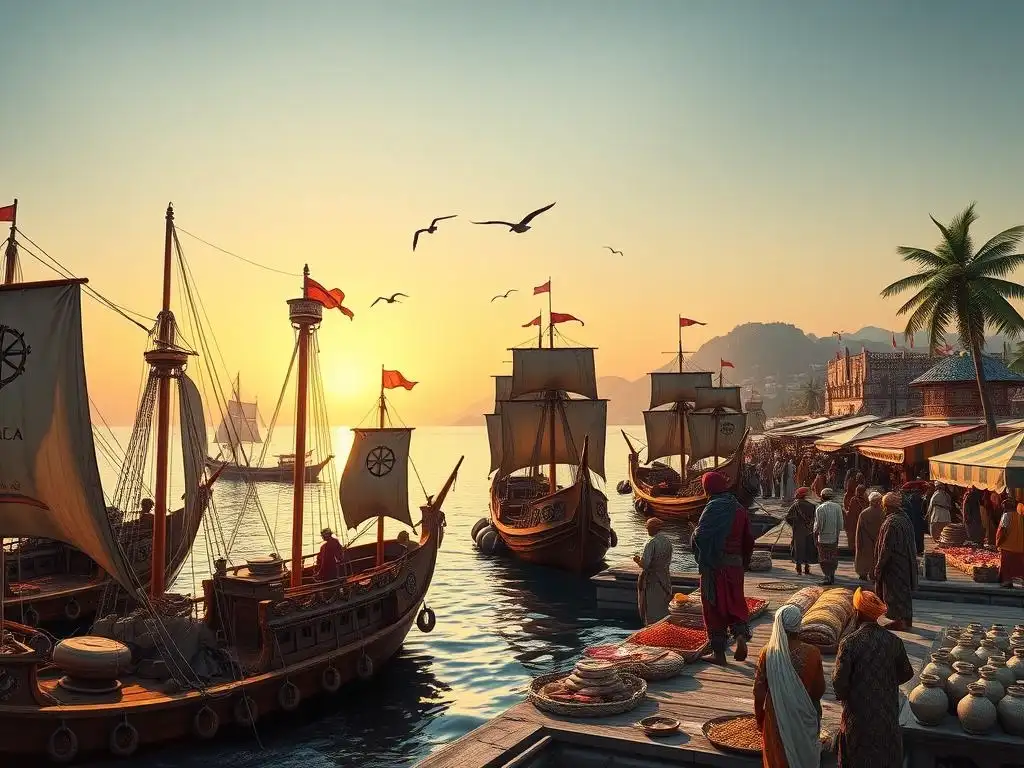
Welcome to Ancient India History—your gateway to the fascinating realms of India's past! Here, we embark on a captivating journey through the rich tapestry of ancient civilizations, exploring everything from the remarkable Indus Valley to the illustrious Gupta Empire. In our featured article, Ancient Indian Maritime Trade: Navigating the Oceans of Economy, we dive into the complex web of ancient Indian maritime trade routes that connected distant lands and cultures.
What secrets lay beneath the waves? Join us as we unfold the stories of commerce, exploration, and cultural exchange that shaped the economic landscape of a civilization as vibrant as the oceans it navigated. Your adventure into the depths of history begins now!
- Introduction to Ancient Indian Maritime Trade
- Historical Context of Ancient Indian Maritime Trade
- Major Ancient Indian Maritime Trade Routes
- Key Commodities in Ancient Indian Maritime Trade
- Cultural Exchange through Maritime Trade
- Challenges and Risks of Ancient Indian Maritime Trade
- The Decline of Ancient Indian Maritime Trade
- Legacy of Ancient Indian Maritime Trade
- Conclusion: The Enduring Importance of Ancient Indian Maritime Trade Routes
- Frequently Asked Questions
- Final Reflection: Navigating the Legacy of Ancient Indian Maritime Trade Routes
- Set Sail on Your Journey of Discovery!
Introduction to Ancient Indian Maritime Trade
Ancient Indian maritime trade was a vital component of the economy and cultural exchanges that shaped the subcontinent's history. Spanning several millennia, from the flourishing Indus Valley Civilization to the sophisticated trade networks established during the Gupta Empire, maritime trade routes played a crucial role in connecting India to various regions across the globe. These routes facilitated not only the exchange of goods but also the sharing of ideas, culture, and technology, contributing significantly to the development of ancient Indian civilization.
The exploration of these ancient Indian maritime trade routes reveals a complex web of economic interactions that extended far beyond the Indian shores. This article will delve into the various aspects of this trade, highlighting the significance of these routes in the broader context of ancient economies. By understanding the intricacies of ancient Indian maritime trade, we can better appreciate the cultural and economic legacies that have influenced modern trade practices and global interactions.
Overview of Ancient Indian Maritime Trade Routes
Ancient Indian maritime trade routes were characterized by a network that connected the Indian subcontinent with regions such as Southeast Asia, the Middle East, and East Africa. Key ports such as Lothal, Kolkata, and Kochi became bustling hubs of commerce, facilitating the movement of goods like spices, textiles, and precious stones.
Major Trade Routes and Ports:
- Indus Valley to Mesopotamia:
- The trade route connecting the Indus Valley Civilization with Mesopotamia (modern-day Iraq) was an early example of maritime trade, utilizing the Arabian Sea.
- Southeast Asian Trade:
- The Maritime Silk Route linked India with Southeast Asia, allowing for the exchange of spices and cultural influences.
- Trade with the Roman Empire:
- Indian goods reached the Mediterranean, with ports like Barygaza (modern-day Bharuch) serving as critical nodes in this trade network.
The ancient Indian maritime routes were not only essential for economic growth but also acted as conduits for cultural exchange, leading to the spread of religions such as Buddhism and Hinduism across various regions.
Significance of Maritime Trade in Ancient Economies
The significance of maritime trade in ancient economies cannot be overstated. It served as a catalyst for economic prosperity, enabling the flow of wealth and resources across vast distances. The following points highlight the importance of these trade routes:
- Economic Growth: The establishment of trade routes led to increased trade volumes, resulting in economic expansion and the growth of urban centers.
- Cultural Exchange: Maritime trade facilitated the exchange of ideas, art, and technologies, enriching the cultural tapestry of ancient India and its trading partners.
- Political Alliances: Trade often fostered diplomatic relationships, as kingdoms sought to secure trade agreements and alliances through commerce.
Through the lens of ancient Indian maritime trade, we can gain valuable insights into the interconnectedness of civilizations and the role of trade in shaping historical narratives. The legacy of these trade routes continues to influence contemporary trade practices, reminding us of the enduring impact of ancient economic systems.
Historical Context of Ancient Indian Maritime Trade
The Emergence of Trade Centers in Ancient India
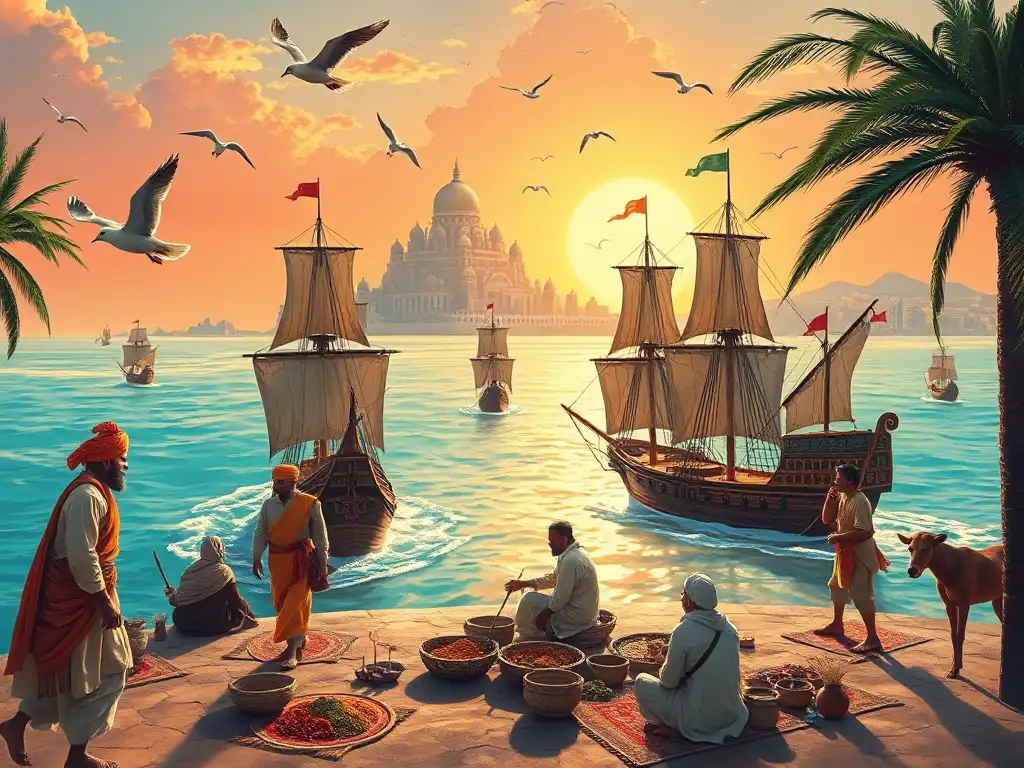
The emergence of trade centers in ancient India was a pivotal development in the formation of Ancient Indian maritime trade routes. Cities such as Lothal, Kalyan, and Sopara became crucial hubs of commerce, connecting India to distant lands across the seas. Lothal, for instance, is renowned for its well-planned dockyard, which facilitated maritime activities and trade with regions such as Mesopotamia and Egypt.
- Lothal:
- Located in the present-day state of Gujarat, Lothal was an integral part of the Indus Valley Civilization. Its strategic location along the Arabian Sea enabled the export of goods such as beads, textiles, and pottery.
- Archaeological evidence suggests that Lothal had a thriving trade relationship with civilizations as far away as Sumer.
- Kalyan:
- Situated near modern-day Mumbai, Kalyan served as a significant port city that contributed to the maritime trade during various dynasties, including the Mauryan and Gupta empires.
- Kalyan's proximity to the coastline allowed for easy access to trade routes that extended to Southeast Asia.
- Sopara:
- This ancient port, located near present-day Nalasopara, was known for its trade in spices and textiles. Sopara played a key role in the trade network that connected India with the Roman Empire and other regions.
Influence of Geography on Maritime Trade Routes
Geography played a crucial role in shaping the Ancient Indian maritime trade routes. The country's extensive coastline, approximately 7,500 kilometers long, provided access to various seas and oceans, facilitating trade with multiple regions.
- Western Coast:
- The Arabian Sea was a significant trade route where ports like Surat and Kochi thrived. Trade with the Persian Gulf and East Africa was particularly prominent, with goods such as textiles and spices flowing in and out of these ports.
- Eastern Coast:
- The Bay of Bengal served as a gateway to Southeast Asian markets. Ports such as Chennai and Puri were vital for trade with countries like Indonesia and Malaysia, exporting rice, cotton, and spices.
- Monsoon Winds:
- The predictable patterns of monsoon winds were instrumental for ancient mariners. Sailors capitalized on these seasonal winds to navigate the Indian Ocean, allowing for efficient travel and trade.
Summary
The trade centers of ancient India, along with the geographical advantages of its coastline and favorable monsoon winds, facilitated a complex network of maritime trade routes. These routes not only enriched local economies but also fostered cultural exchanges between India and distant civilizations. By examining the historical context of these maritime trade routes, we gain insight into the economic practices and systems that characterized ancient Indian society.
Major Ancient Indian Maritime Trade Routes
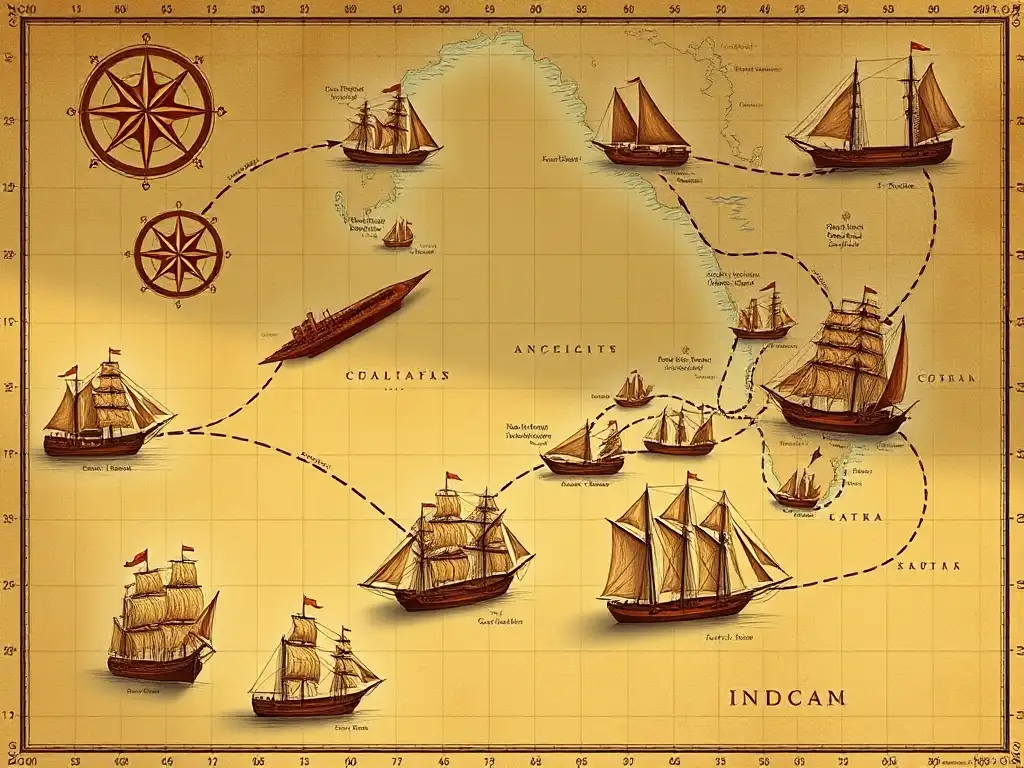
Ancient Indian maritime trade routes played a crucial role in connecting India with various regions across the globe. These routes facilitated not only the exchange of goods but also the sharing of culture, ideas, and technologies. The significance of these trade routes can be understood through various specific networks that emerged throughout history.
The Silk Route and Its Maritime Extensions
The Silk Route is often associated with land-based trade, but it also had significant maritime extensions that connected India with other parts of Asia and beyond. The maritime Silk Route linked Indian ports to those in Southeast Asia, the Middle East, and even distant lands like Rome and Persia.
- Key Ports: Important Indian ports, such as Lothal, Bharukachchha, and Sopara, served as key hubs along these routes.
- Goods Traded: Indian merchants exported textiles, spices, and precious stones while importing silk, glassware, and other luxuries from the West.
- Cultural Exchange: This route was instrumental in the exchange of not just goods but also philosophies, religions, and technologies. For instance, Buddhism spread to Southeast Asia through these maritime links.
The Spice Trade Routes: Connecting India to the World
The spice trade routes were vital for India's economy, as they were highly sought after by various civilizations around the world. Spices such as pepper, cardamom, and cinnamon were in great demand in Europe and the Middle East.
- Trade Centers: The Malabar Coast was a significant hub for spice trade, with ports like Kochi and Calicut becoming bustling centers for commerce.
- Economic Impact: The high value of spices led to the establishment of trade alliances and encouraged maritime explorations. Historical records indicate that Indian spices were often traded for gold and silver, highlighting their economic importance.
- Cultural Interactions: The spice trade not only connected India to other cultures but also influenced local cuisines, agricultural practices, and even social structures in various regions.
The Red Sea and Arabian Sea Trade Networks
The trade networks of the Red Sea and Arabian Sea were vital for ancient Indian maritime trade, linking India with the Mediterranean world and the Arabian Peninsula.
- Trade Routes: Indian merchants navigated these waters to reach ports in Arabia, Egypt, and beyond, facilitating the exchange of goods like textiles and spices for Arabian incense, gold, and silver.
- Maritime Techniques: The navigational techniques developed by Indian sailors, including the use of monsoon winds, played a significant role in enhancing maritime trade efficiency.
- Cultural Significance: These trade networks also fostered interactions between different cultures, contributing to the spread of religions such as Islam and Hinduism, as well as various art forms and scientific knowledge.
Ancient Indian maritime trade routes were multifaceted and interconnected, contributing significantly to India's economic practices and cultural exchanges with the wider world. The legacy of these trade networks continues to influence modern trade and cultural interactions.
Key Commodities in Ancient Indian Maritime Trade
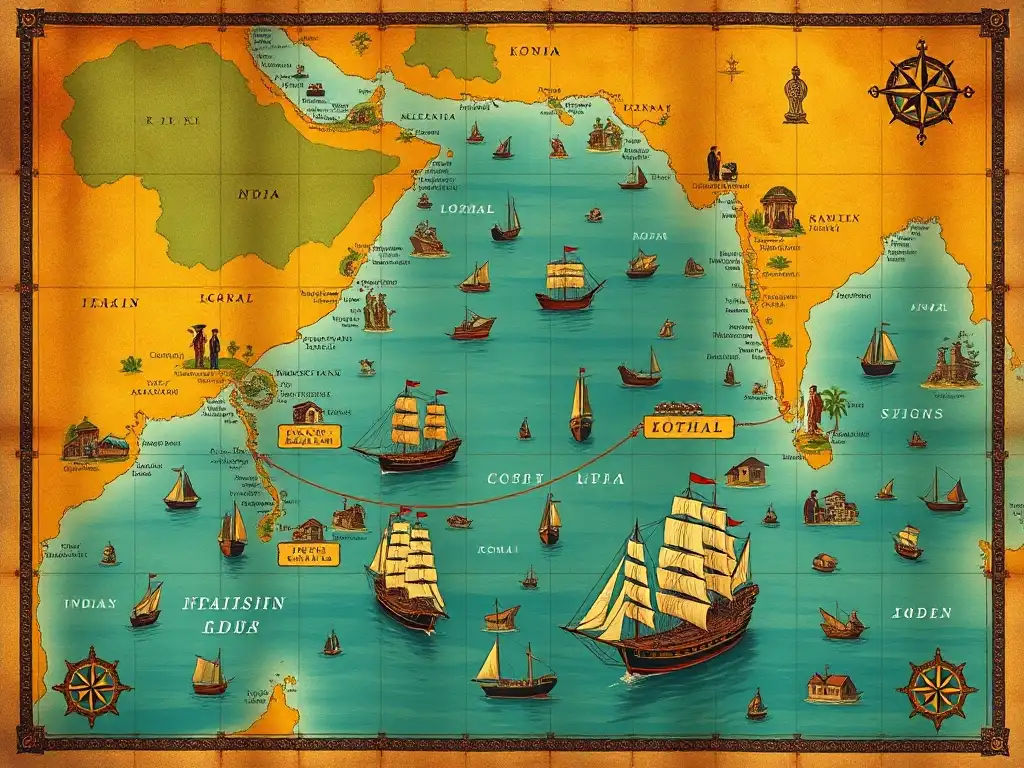
Ancient Indian maritime trade was not merely a system of exchange but a dynamic network that fostered economic relationships across vast distances. The commodities traded were diverse and reflected the rich resources and craftsmanship of the Indian subcontinent. Among these, spices, textiles, and precious gems and metals played pivotal roles in establishing ancient India as a significant player in international trade.
Spices: The Gold of the East
Spices were arguably the most coveted commodities in ancient Indian maritime trade, often referred to as the "Gold of the East." The demand for spices such as black pepper, cardamom, and cloves was insatiable in markets across Europe, the Middle East, and Southeast Asia.
-
Origins of Spice Trade:
The spice trade can be traced back to as early as 2000 BCE, with the Indus Valley Civilization engaging in trade with Mesopotamia, where spices were highly prized.
-
Trade Routes:
The ancient spice routes were extensive, connecting India to various regions. Key routes included:
- The maritime route to the Roman Empire through the Red Sea.
- The Silk Road, which facilitated trade overland to Central Asia and beyond.
-
Economic Impact:
The lucrative nature of the spice trade significantly boosted local economies and led to the establishment of trading ports, such as those in Kozhikode and Kochi. Historical records indicate that by the 1st century CE, India was exporting spices worth millions of denarii to the Roman Empire.
Spices were not just culinary enhancements; they were symbols of wealth and status, often used as currency in trade.
Textiles: Weaving Economic Prosperity
Textiles formed another cornerstone of ancient Indian maritime trade, with Indian cotton, silk, and woolen fabrics being highly sought after. The sheer variety and quality of textiles produced in India established it as a hub of textile trade.
-
Diverse Fabrics:
Indian weavers produced a wide array of fabrics, including:
- Cotton textiles from the Deccan region.
- Silk from the eastern states, particularly Bengal.
- Woolen shawls from the northern regions.
-
Global Demand:
Textiles were exported to various regions, including:
- The Roman Empire, where Indian silk was prized.
- Southeast Asia, where cotton fabrics became integral to local economies.
-
Trade Networks:
Maritime trade routes facilitated the movement of textiles across oceans. The role of ports like Lothal and Sopara was crucial, as they served as major hubs for the export of textiles to foreign lands.
| Year | Major Exported Textiles | Destination |
|---|---|---|
| 200 BCE | Cotton | Rome |
| 1 CE | Silk | Southeast Asia |
| 500 CE | Woolen Shawls | Middle East |
The intricate patterns and vibrant colors of Indian textiles captivated traders and consumers alike, making them a staple in international markets.
Precious Gems and Metals: Trade in Luxury Goods
The trade of precious gems and metals was another significant aspect of ancient Indian maritime trade. Diamonds, rubies, emeralds, and gold from Indian mines found their way to markets around the world.
-
Sources of Gems and Metals:
India was home to renowned diamond mines, particularly in the Golconda region, which produced some of the finest diamonds of the era. Additionally, gold was mined in various regions, notably in the western Indian states.
-
Trade Dynamics:
The allure of Indian gems and metals attracted traders from distant lands, facilitating exchanges with:
- Arab traders who transported goods to Europe.
- Traders from Southeast Asia who exchanged spices and textiles for gems.
-
Cultural Significance:
Beyond their economic value, precious gems held cultural significance in Indian society, often used in religious and royal adornments. The trade of these luxury goods helped elevate the status of Indian artisans and craftsmen on the global stage.
The brilliance of Indian gemstones not only dazzled the eye but also wove a narrative of opulence and artistry that spanned continents.
The key commodities of ancient Indian maritime trade—spices, textiles, and precious gems—were vital to the economy and culture of ancient India. Their trade not only contributed to the wealth of Indian civilizations but also established enduring connections with various cultures across the ancient world.
Cultural Exchange through Maritime Trade
The Spread of Ideas and Technology via Maritime Routes
Ancient Indian maritime trade routes were not just conduits for goods; they were also vital pathways for cultural exchange and the dissemination of ideas and technologies. As traders navigated vast oceans, they interacted with various civilizations, such as those in Mesopotamia, East Africa, and Southeast Asia. This interaction led to a rich exchange of knowledge that significantly influenced Indian society.
- Technological Innovations:
- The introduction of advanced maritime navigation techniques, such as the use of the compass and astrolabe, revolutionized sea travel. These tools allowed Indian sailors to venture farther into the ocean with increased precision.
- Shipbuilding techniques evolved as well, incorporating designs and materials from other cultures, which enhanced the durability and speed of Indian vessels.
- Spread of Philosophical Ideas:
- Maritime trade facilitated the exchange of philosophical and religious ideas. For instance, Buddhism and Hinduism spread to Southeast Asian countries via traders who traveled along the Indian Ocean.
- The Silk Road, while primarily a land route, also had maritime extensions that connected Indian ideas with those from China and the Middle East, fostering a cross-cultural dialogue.
- Culinary Influences:
- The introduction of spices and ingredients from distant lands not only enriched Indian cuisine but also led to the fusion of culinary traditions. For example, the use of coconut and tamarind became prevalent in Indian cooking due to maritime trade with Southeast Asia.
Influence of Trade on Art and Architecture in Ancient India
The impact of ancient Indian maritime trade routes extended deeply into the realms of art and architecture, reflecting the diverse influences that traveled along these trade networks.
- Architectural Styles:
- The exchange of architectural ideas led to the development of distinct styles in ancient Indian temples and structures. For example, the Dravidian style of architecture, characterized by towering temple spires, was influenced by maritime interactions with Southeast Asian cultures.
- Additionally, trade with the Roman Empire introduced new construction techniques and materials, such as brick and mortar, which became foundational in Indian architecture.
- Artistic Expressions:
- The influx of foreign artisans and craftsmen due to trade created a melting pot of artistic styles. This fusion is evident in the intricate carvings and sculptures found in many ancient Indian temples, which often depict motifs from both Indian and foreign cultures.
- The art of textile weaving flourished, with patterns and techniques from Persia and the Mediterranean influencing Indian textiles. These textiles were highly sought after in international markets, showcasing the artistic talent of Indian weavers.
- Cultural Symbolism:
- Many artifacts discovered along ancient trade routes, such as pottery and jewelry, illustrate the symbolic blend of cultures. For instance, the use of zoomorphic designs in art can be traced back to interactions with Egyptian and Mesopotamian cultures.
- The iconography in sculptures often reflects the stories of trade, depicting deities alongside merchants, symbolizing the importance of commerce in society.
Ancient Indian maritime trade routes were instrumental not only in establishing economic ties but also in facilitating a profound exchange of culture, technology, and artistic expression. This rich tapestry of influence is a testament to the interconnectedness of ancient civilizations and their shared legacy.
Challenges and Risks of Ancient Indian Maritime Trade
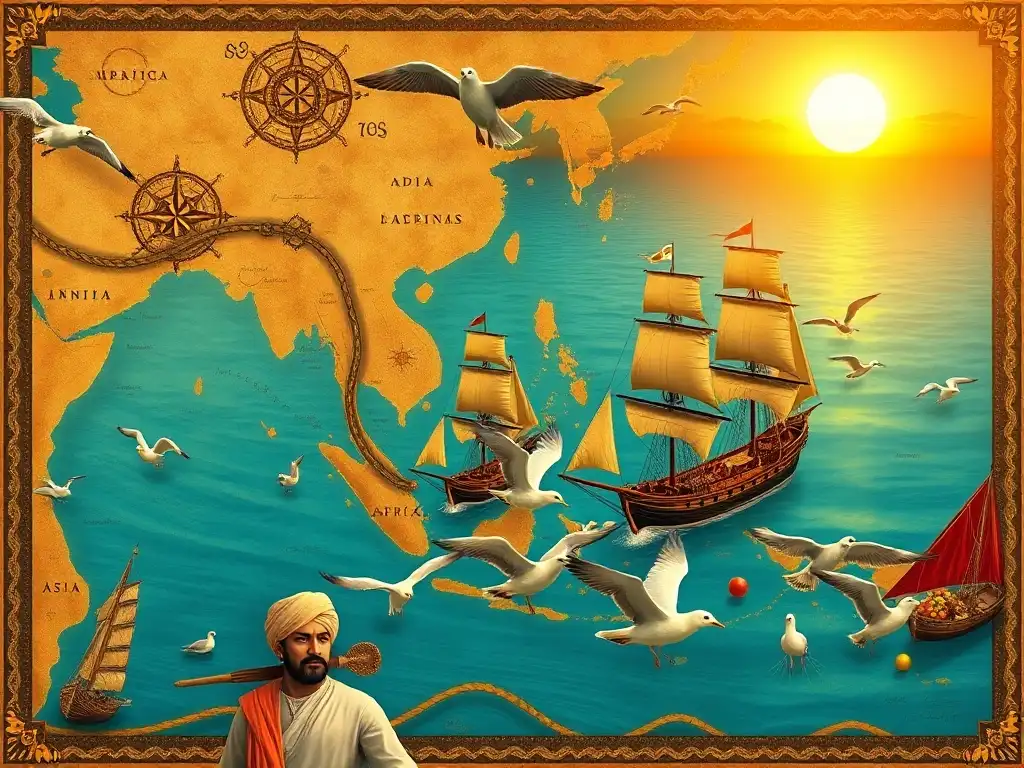
Ancient Indian maritime trade was not without its challenges and risks. Navigating the vast oceans and engaging in trade with distant lands required a keen understanding of various factors that could impact the success of trade expeditions. These challenges can be broadly categorized into natural challenges and political and economic risks.
The unpredictable nature of the ocean posed significant threats to ancient mariners. Navigating the seas required a deep understanding of environmental conditions, as well as advanced navigational skills. Here are some of the key natural challenges faced by ancient Indian maritime traders:
- Monsoons: The seasonal winds of the Indian Ocean, particularly the southwest and northeast monsoons, were crucial for navigation. Traders had to time their voyages to take advantage of these winds. A miscalculation could lead to disastrous delays or shipwrecks.
- Storms and High Waves: Sudden storms were a constant threat. These could arise without warning and lead to treacherous conditions, making it difficult for sailors to maintain control of their vessels.
- Currents and Tides: Understanding the ocean currents and tides was essential for successful navigation. Ignorance could result in being swept off course or grounding on uncharted reefs.
- Limited Technology: Compared to modern standards, ancient navigational tools were rudimentary. Mariners relied on celestial navigation, using the stars to guide them, which required extensive knowledge and experience.
These natural challenges necessitated a high level of skill and preparation among ancient Indian traders. Successful voyages often depended on the mariners' ability to read the skies and understand the ocean's moods.
Political and Economic Risks in Maritime Trade
In addition to natural challenges, ancient Indian maritime trade routes were fraught with political and economic risks that could affect trade outcomes. These risks included:
- Piracy: The threat of piracy was a significant concern for traders. Pirates often targeted merchant ships, leading to significant losses and endangering lives. Traders had to navigate routes known for pirate activity with extreme caution.
- Political Instability: The changing political landscape in regions along trade routes could disrupt trade. Alliances, conflicts, or shifts in power could alter the security and accessibility of trade routes, impacting the flow of goods.
- Regulatory Barriers: Different kingdoms and empires imposed various regulations on trade, including tariffs and taxes. These could vary significantly from one region to another, complicating trade negotiations and reducing profit margins.
- Market Fluctuations: The value of traded goods could fluctuate based on demand and supply dynamics in different markets. Traders had to be astute in their assessments to avoid losses due to sudden changes in market conditions.
The combination of these risks made ancient Indian maritime trade a complex and risky endeavor. Traders had to be not only skilled navigators but also shrewd negotiators and keen observers of the political climate to successfully traverse these treacherous waters.
The Decline of Ancient Indian Maritime Trade
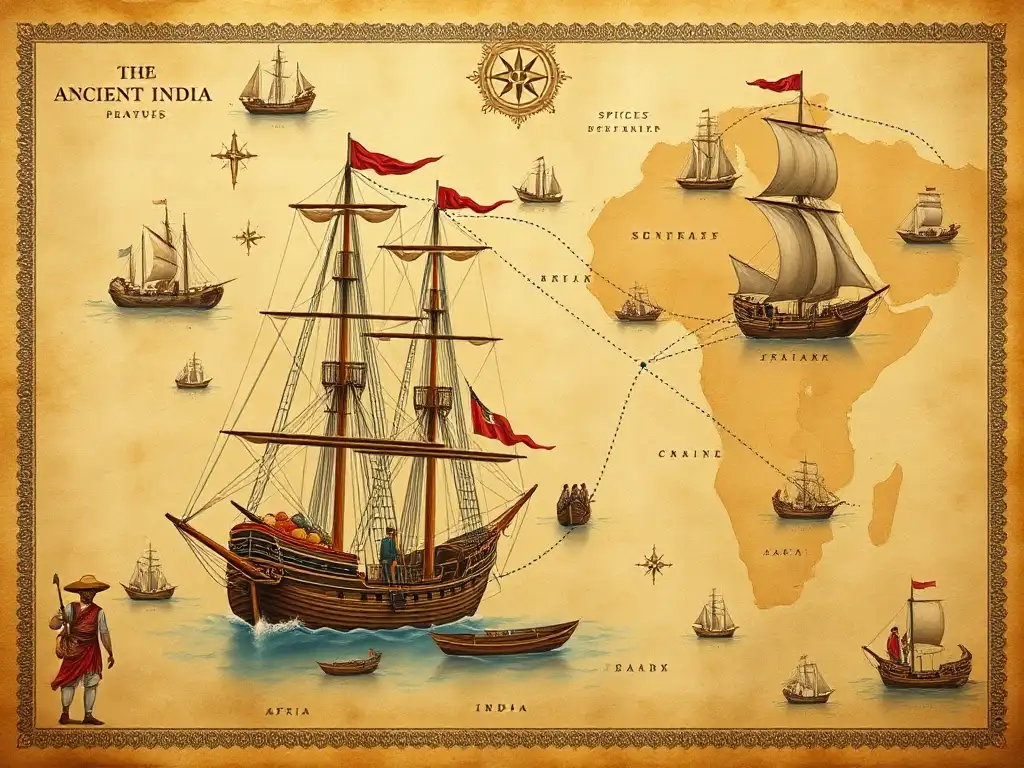
The decline of ancient Indian maritime trade marks a significant turning point in the economic history of the region. While ancient Indian maritime trade routes flourished for centuries, connecting the subcontinent to various parts of the world, several factors contributed to their gradual decline. Understanding these factors provides insight into the socio-economic dynamics of the time and their long-lasting implications on the Indian economy.
Factors Leading to the Decline of Trade Routes
-
Invasions and Political Instability
The political landscape of ancient India was often tumultuous, with invasions, wars, and power shifts disrupting trade. Key instances include:
- Invasions by Foreign Powers: The arrival of foreign invaders, such as the Huns and later Islamic conquests, destabilized established trade routes. Merchants faced increasing risks, leading to a decline in sea trade.
- Fragmentation of Kingdoms: The disintegration of large empires like the Gupta Empire resulted in smaller, less stable states. This fragmentation made maritime trade routes less secure and less appealing for merchants.
-
Economic Shifts
Changes in trade patterns and economic focus also contributed to the decline:
- Emergence of Overland Trade: With the rise of overland trade routes, such as the Silk Road, traders began to favor these alternatives. This shift was partly due to the safety and stability offered by overland routes compared to the risks associated with maritime trade.
- Decline in Demand for Indian Goods: As political and economic conditions changed in neighboring regions, such as Southeast Asia and the Middle East, the demand for Indian products began to wane. This decline diminished the incentive for maritime trade.
-
Environmental Factors
Natural disasters and changing climate conditions also played a role:
- Natural Disasters: Frequent monsoons, cyclones, and other environmental challenges posed significant threats to maritime activities, leading to loss of vessels and cargo.
- Climate Change: Long-term climate shifts could have affected agricultural productivity, reducing the surplus available for trade and impacting the economy as a whole.
Impact of Political Changes on Maritime Trade
Political changes had a complex and multi-faceted impact on ancient Indian maritime trade. The interaction between governance and trade is evident in several key areas:
-
Disruption of Trade Networks
Political instability often led to the disruption of established trade networks. For example:
- Control Over Ports: As different kingdoms rose and fell, control over important ports changed hands. This control determined which trade routes remained active, often leading to the abandonment of previously thriving ports.
- Imposition of Tariffs and Taxes: New rulers often imposed heavy tariffs and taxes on trade, discouraging merchants from utilizing specific routes. This economic burden further contributed to the decline of maritime commerce.
-
Declining Maritime Infrastructure
The neglect of maritime infrastructure due to political changes significantly impacted trade:
- Port Maintenance: With changing powers, priorities often shifted away from maintaining ports and shipbuilding facilities. This neglect led to deteriorating conditions for maritime trade.
- Loss of Skilled Labor: Political turmoil often resulted in the migration of skilled laborers, such as shipbuilders and navigators, leading to a decline in maritime expertise.
-
Cultural and Diplomatic Relations
The nature of political relations also influenced trade dynamics:
- Diplomatic Isolation: Shifts in political alliances could lead to isolation from traditional trading partners, diminishing the flow of goods and cultural exchange.
- Cultural Exchange: Conversely, periods of stable governance allowed for cultural exchanges that enriched trade, but these were often disrupted during times of political strife.
The decline of ancient Indian maritime trade routes was a result of a confluence of factors, notably political instability, economic shifts, and environmental challenges. Understanding these elements provides a clearer picture of how ancient India navigated its complex trade landscape and the eventual decline of its maritime influence.
Legacy of Ancient Indian Maritime Trade
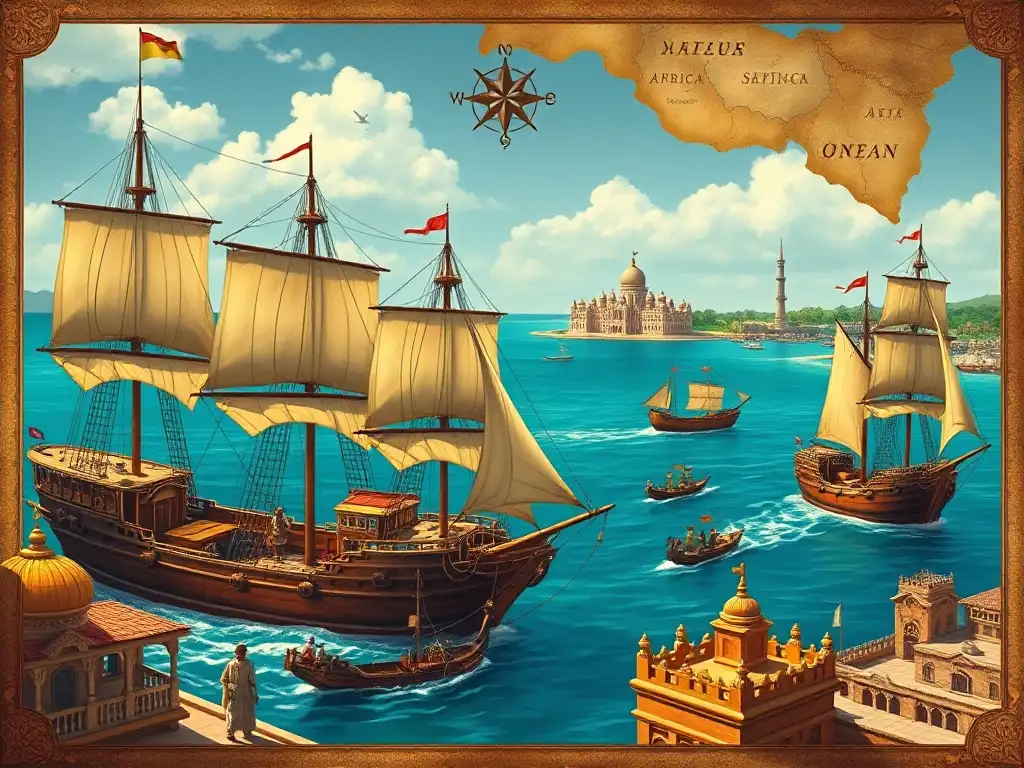
The legacy of ancient Indian maritime trade is a testament to the ingenuity and adaptability of Indian civilizations. Spanning centuries, these trade routes were not mere pathways for commerce; they were dynamic networks facilitating the exchange of goods, ideas, and cultures across vast distances. The thriving ports along the Indian coastline, such as Lothal, Arikamedu, and Sopara, served as pivotal hubs for trade, showcasing the sophistication and organizational skills of ancient Indian societies.
The Indus Valley Civilization, one of the earliest urban cultures, paved the way for maritime trade by establishing trade links with Mesopotamia and the Arabian Peninsula. Archaeological findings reveal that Indus merchants engaged in the export of textiles, beads, and other goods. The use of standardized weights and measures indicates a well-structured trade system, which laid the groundwork for future maritime exchanges.
Moreover, during the Mauryan and Gupta Empires, trade flourished further. Indian ships began to navigate the waters of the Indian Ocean, the Arabian Sea, and the Bay of Bengal, establishing connections with regions as far as the Roman Empire, Southeast Asia, and East Africa. This extensive network not only facilitated the exchange of spices, silk, and precious stones but also introduced Indian culture and religions, such as Buddhism and Hinduism, to foreign lands.
Influence on Modern Trade Practices
The impact of ancient Indian maritime trade routes can still be seen in contemporary trade practices. Many of the trade routes established thousands of years ago have evolved but continue to serve as crucial maritime pathways in today's global economy. For instance:
- Strategic Ports: Modern ports like Mumbai and Kolkata are located close to ancient trading hubs. They have developed into significant centers for international trade, benefiting from historical trade routes.
- Trade Agreements: Countries along the Indian Ocean are increasingly engaged in trade agreements that echo ancient practices, promoting the movement of goods and cultural exchanges.
- Cultural Exchange: The ancient maritime trade routes fostered a spirit of multiculturalism that remains evident in modern trade, with diverse products and ideas flowing across borders.
The techniques and navigation skills developed by ancient mariners laid the groundwork for modern shipping methods. Innovations such as the compass and advancements in shipbuilding can trace their roots back to the maritime practices established during this period.
Continuing Impact of Ancient Trade Routes on Indian Economy
The economic repercussions of ancient Indian maritime trade continue to resonate in the present-day Indian economy. Here are some ways this impact is evident:
- Economic Integration: Ancient trade routes contributed to the economic integration of diverse regions, promoting a sense of unity and shared economic interests. This integration is mirrored in modern India's efforts to enhance regional trade through initiatives like the Act East Policy.
- Export Growth: The historical precedence of exporting luxury goods such as textiles and spices has fostered a robust export culture in India. Today, India remains one of the largest exporters of textiles and spices, continuing a legacy that began centuries ago.
- Tourism: The historical significance of ancient trade routes attracts tourists, contributing to the economy. Sites associated with maritime trade, like Lothal, are now important archaeological tourism destinations, generating revenue and promoting local economies.
- Cultural Heritage: The intertwining of various cultures due to ancient maritime trade has enriched India's cultural heritage, which in turn boosts sectors like handicrafts and cuisine, further enhancing economic contributions.
The enduring legacy of ancient Indian maritime trade routes is a profound aspect of India's historical narrative, shaping not only the past but also the present and future of its economy. As India continues to engage with global markets, the lessons learned from its rich maritime history remain crucial in navigating the complexities of modern trade.
Conclusion: The Enduring Importance of Ancient Indian Maritime Trade Routes
The maritime trade routes of ancient India played a pivotal role in shaping the economic landscape not only of the Indian subcontinent but also of the broader Asian and African regions. These routes facilitated the exchange of goods, ideas, and cultures, establishing India as a significant player in global trade networks. The intricate web of maritime pathways enabled the movement of commodities such as spices, textiles, precious stones, and metals, which were highly sought after in various markets.
Reflection on the Economic Contributions of Ancient India
Ancient Indian maritime trade routes were crucial for the prosperity of numerous civilizations. They connected ports like Lothal, Musiri, and Kollam to distant lands, allowing merchants to engage in trade with regions like Arabia, Southeast Asia, and even the Roman Empire.
- Economic Impact:
- Trade Goods: The exchange of goods such as silk, cotton textiles, and spices not only enriched local economies but also contributed to the wealth of merchant classes.
- Cultural Exchange: These trade routes were conduits for cultural interaction, leading to the spread of ideas, religions, and technologies. For instance, the introduction of Buddhism to Southeast Asia was facilitated by Indian traders navigating these maritime paths.
The financial ramifications of these trade activities are evident in archaeological findings, which reveal a wealth of artifacts and trade goods that underscore the economic sophistication of ancient Indian societies.
Future Research Directions in Ancient Indian Trade Studies
The study of ancient Indian maritime trade routes is an evolving field, with numerous avenues for future research that can further illuminate this vital aspect of history:
- Archaeological Investigations:
- Continued excavation of ancient port sites can uncover new artifacts and evidence of trade practices, contributing to a deeper understanding of the maritime economy.
- Interdisciplinary Approaches:
- Integrating studies from fields such as anthropology, geography, and environmental science can yield a more holistic view of the impact of maritime trade on ancient Indian societies.
- Technological Advancements:
- Utilizing modern technologies such as GIS (Geographic Information Systems) and remote sensing can enhance the mapping of ancient trade routes and their connections to contemporary landscapes.
The ancient Indian maritime trade routes were not merely pathways for commerce but dynamic channels through which culture and economy flourished. Ongoing research in this area promises to uncover more about the depth and breadth of ancient India's contributions to global trade networks, reaffirming the significance of its maritime heritage in shaping historical trajectories.
Frequently Asked Questions
What were the ancient Indian maritime trade routes?
Ancient Indian maritime trade routes were sea pathways used for trading goods like spices, textiles, and metals, connecting India to Africa, Southeast Asia, and beyond.
How did maritime trade impact ancient Indian civilizations?
Maritime trade significantly boosted the economy, enabling the exchange of culture, ideas, and goods, which led to the prosperity of cities and the rise of powerful kingdoms.
Which goods were commonly traded along these routes?
The most commonly traded goods included spices, silks, precious stones, and metals, all of which were highly sought after in international markets.
How did geography influence ancient Indian maritime trade?
India's strategic location between major oceans facilitated trade with other civilizations, allowing for easier access to resources and markets, thus enhancing maritime activities.
What role did ports play in ancient Indian maritime trade?
Ports served as crucial hubs for trade, enabling the loading and unloading of goods, and facilitating interactions between merchants, which was vital for the thriving of maritime commerce.
Ancient Indian maritime trade routes were not merely pathways of commerce; they were vital arteries of cultural exchange and economic prosperity that shaped civilizations. Today, as we navigate a globalized world, the lessons from these ancient routes resonate profoundly. The interconnectedness fostered by these trade networks reminds us that our modern economies are built on the same principles of collaboration and exchange that thrived centuries ago. Understanding this historical context is crucial as we face contemporary challenges in global trade and cultural understanding.
The influence of ancient Indian maritime trade extends far beyond historical significance; it continues to shape our cultural and social landscapes today. These trade routes were the lifelines that facilitated not just the exchange of goods, but also ideas, religions, and innovations. The legacy of this vibrant interaction is evident in the rich tapestry of cultures that emerged along these routes. As historian K. N. Chaudhuri aptly stated, The Indian Ocean was a crucible of cultural and commercial exchange, where the East met the West in a dance of trade and ideas.
This ongoing influence serves as a reminder of the importance of fostering connections and understanding among diverse cultures in our increasingly interconnected world.
As we reflect on the significance of ancient Indian maritime trade routes, I invite you to consider how these lessons can be applied in your own life. Think about the connections you can foster in your community, the ideas you can share, and the cultures you can embrace. Just as ancient traders navigated the oceans to create a legacy of exchange, you too can chart your own course toward building bridges in today’s world. Let us honor this rich history by becoming active participants in the ongoing journey of cultural and economic exchange.
Set Sail on Your Journey of Discovery!
Thank you for diving into the fascinating world of Ancient Indian Maritime Trade with us! We hope you now have a richer understanding of how these brave seafarers shaped economies and cultures across oceans. Ready to explore further?
Here’s how you can continue this journey:
- Dive Deeper: Explore the intricate trade routes that connected ancient India to various civilizations around the world. Understanding these pathways will enhance your appreciation of cultural exchange!
- Share Your Thoughts: Engage with our community by sharing this article with friends or on social media! Initiate conversations about maritime history and discover diverse perspectives on this important topic.
- Join the Discussion: We invite you to comment below with your insights or questions. Connecting with fellow history enthusiasts can lead to richer discussions and new insights!
Which ancient trade routes captivate your interest the most, and in what ways do you believe they affect our world today?