
The Role of Women in Ancient Indian Astronomy and Mathematics


Welcome to Ancient India History, where we embark on a fascinating journey through the remarkable tapestry of ancient Indian civilizations. In this exploration, we invite you to delve into the often-overlooked contributions of women in the realms of astronomy and mathematics. Have you ever wondered about the influential figures who shaped our understanding of the cosmos in ancient times?
Our latest article, "The Role of Women in Ancient Indian Astronomy and Mathematics," uncovers the pivotal roles these trailblazing women played, challenging the traditional narratives of history. Prepare to be inspired as you uncover the rich legacies that continue to resonate in our modern world.
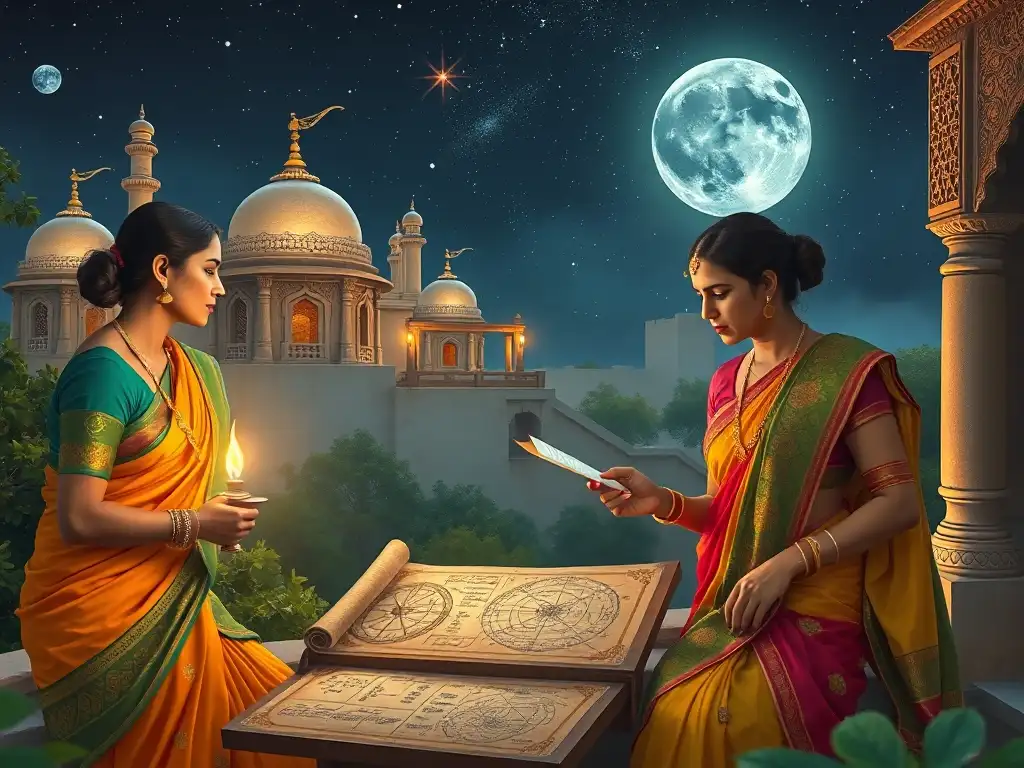
Throughout history, women have played significant yet often overlooked roles in various fields, including the realms of astronomy and mathematics. In ancient India, the contributions of women in these disciplines were not merely peripheral; they were integral to the development of scientific thought and the advancement of knowledge.
This article delves into the vital contributions of women in ancient Indian astronomy, emphasizing their influence, the historical context of their work, and the societal frameworks that shaped their opportunities for education and knowledge transmission. By exploring the achievements and recognition of these pioneering women, we can better appreciate the rich tapestry of ancient Indian civilization and the diverse voices that contributed to its legacy.
Introduction to Women in Ancient Indian Astronomy
Overview of Women's Contributions to Science
The history of women in science is often characterized by a struggle against societal norms and restrictions. However, in ancient India, there were remarkable women who defied these limitations and made significant contributions to astronomy and mathematics. Figures like Aryabhata's contemporaries, who were instrumental in astronomical observations, and Brahmagupta's commentary, which highlighted the work of women in mathematics, illustrate the pivotal roles they played.
Notably, women such as Lilavati, whose name is synonymous with mathematical treatises, showcased the intellectual capabilities of women in a male-dominated society. These contributions were not isolated but part of a broader tradition of knowledge that included both men and women working collaboratively to enhance scientific understanding.
Importance of Studying Women in Ancient Indian Astronomy and Mathematics
Understanding the role of women in ancient Indian astronomy is essential for several reasons:
- Recognition of Contributions: It sheds light on the significant yet often overlooked contributions of women, helping to correct historical narratives that typically focus on male figures.
- Cultural Insight: It provides insights into the cultural and societal frameworks of ancient India, revealing how women navigated the complexities of their roles in science.
- Inspiration for Future Generations: Highlighting these figures can inspire contemporary discussions about women in STEM (Science, Technology, Engineering, and Mathematics) fields today, showcasing the long-standing tradition of female intellectualism.
Historical Context of Women in Astronomy and Mathematics in Ancient India
The Social and Cultural Status of Women in Ancient Indian Society
The status of women in ancient Indian society was complex and varied by region and period. While some texts depict women as having limited rights and opportunities, others reveal a more nuanced picture where women were educated and participated in scholarly activities. For example, the Brahmanical texts suggest that women could attain education and engage in discussions around science, although this was often contingent upon their familial and social status.
- Royal Patronage: Women in royal families often had access to education and could engage in scholarly pursuits, which enabled them to contribute to astronomy and mathematics.
- Cultural Practices: Festivals and rituals sometimes involved astronomical calculations, in which women actively participated, demonstrating their practical knowledge of these sciences.
Education and Knowledge Transmission Among Women
The transmission of knowledge among women in ancient India often occurred through informal networks, familial ties, and community practices. Formal education for women was limited, yet many learned through:
- Family Tradition: Knowledge was often passed down through generations, with mothers teaching daughters about astronomy, calendars, and mathematical principles.
- Collaborative Learning: Women would engage in group discussions, sharing insights and findings, thereby fostering a communal approach to learning.
The study of women in ancient Indian astronomy and mathematics not only highlights their contributions but also enriches our understanding of the social and cultural dynamics that shaped their roles. As we continue to explore this fascinating aspect of history, we uncover the profound impact women have had on the scientific advancements of ancient India.
Notable Women Astronomers and Mathematicians
Throughout ancient Indian history, several women made significant contributions to the fields of astronomy and mathematics, often defying the gender norms of their times. One of the most notable figures is Brahmagupta's sister, who played an essential role in translating and interpreting astronomical texts. While specific names are often lost to history, references in ancient literature indicate that women participated in astronomical discussions and educational practices.
Another important figure is Vedic mathematician and astronomer, Lilavati, who is often celebrated for her work in mathematics. Although primarily known through the text attributed to her father, Bhāskara II, her contributions highlight the acknowledgment of women in mathematical scholarship. The 'Lilavati' text includes various mathematical problems and solutions, reflecting the intellectual environment that allowed for female participation.
Additionally, women were involved in the oral transmission of knowledge, acting as custodians of astronomical lore and mathematical principles. They contributed to the community's understanding of celestial phenomena, showcasing their pivotal role in early scientific endeavors.
Contributions of Female Scholars in Ancient India
Female scholars in ancient India made profound contributions to the understanding of astronomy and mathematics, often through the preservation and transmission of knowledge. One significant aspect of their contributions was their involvement in the study of celestial calendars and the calculation of time, essential for agricultural and religious purposes.
Women were often seen as the keepers of household knowledge, which included understanding celestial events that impacted daily life. This practical knowledge translated into a broader understanding of astronomy, as women observed and recorded celestial cycles, contributing to the community's agricultural practices.
Moreover, ancient texts suggest that women engaged in mathematical calculations related to trade and household management, thereby enhancing their mathematical skills. This foundational knowledge likely influenced the broader academic discourse on mathematics at the time.
Influence of Women on Major Astronomical Works
The influence of women on major astronomical works in ancient India cannot be understated. While many texts do not explicitly credit women, their impact is evident in the collaborative nature of knowledge transmission. Women often served as teachers and mentors, passing down knowledge through generations.
In the realm of astronomical literature, women's involvement in the discussions surrounding key texts, such as the Surya Siddhanta, is notable. The text, which is a seminal work in Indian astronomy, reflects a synthesis of ideas, many of which may have been influenced by female scholars who contributed to the discussions and interpretations.
Additionally, the oral tradition played a crucial role in preserving astronomical knowledge, with women frequently serving as storytellers and educators. Their role in this cultural transmission ensured that essential astronomical concepts were not only preserved but also adapted and expanded upon in subsequent generations.
The Influence of Religious and Philosophical Texts
Religious and philosophical texts from ancient India significantly influenced the role of women in astronomy and mathematics. These texts often contained references to celestial phenomena and mathematical concepts, providing a framework for understanding the universe.
Philosophical schools, such as Nyaya and Vaisheshika, discussed the nature of reality and existence, including the celestial bodies. Women engaged in these philosophical discussions, contributing their perspectives and interpretations, which further enriched the discourse on astronomy.
Vedic Texts and Their Impact on Women in Astronomy
The Vedic texts hold a special place in ancient Indian scholarship, and they reflect an early acknowledgment of women's intellectual capabilities. The Rigveda, for instance, includes hymns that celebrate the cosmic order and celestial bodies, inviting interpretations from both men and women alike.
Women, particularly those belonging to scholarly families, were often educated in the Vedic tradition, allowing them to participate in discussions about astronomy. This education enabled them to understand and contribute to the calculations of sacred rituals, which were closely tied to astronomical events.
Furthermore, the Vedic texts emphasize the importance of sacrifice and rituals aligned with celestial cycles, showcasing how women's roles in these practices were crucial to the larger astronomical framework of ancient India.
The Role of Women in Astronomy as Reflected in Ancient Scriptures
Ancient scriptures provide valuable insights into the societal perceptions of women and their roles in astronomy. Texts such as the Mahabharata and Puranas often depict women as knowledgeable figures who engage in discussions about the cosmos and its workings.
These scriptures highlight instances where women are portrayed not just as passive recipients of knowledge but as active participants in the scientific and philosophical discourse of their time. For example, the character of Gargi in the Brahmanas is known for her profound knowledge of the universe, challenging male scholars and asserting her intellectual agency.
The consistent representation of women in these texts as knowledgeable figures serves to underscore their contributions to astronomy and mathematics, illustrating that their roles were integral to the broader scientific culture of ancient India. This acknowledgment is vital for understanding the legacy of women in ancient Indian astronomy, paving the way for future generations of female scholars.
Women's Participation in Astronomical Practices
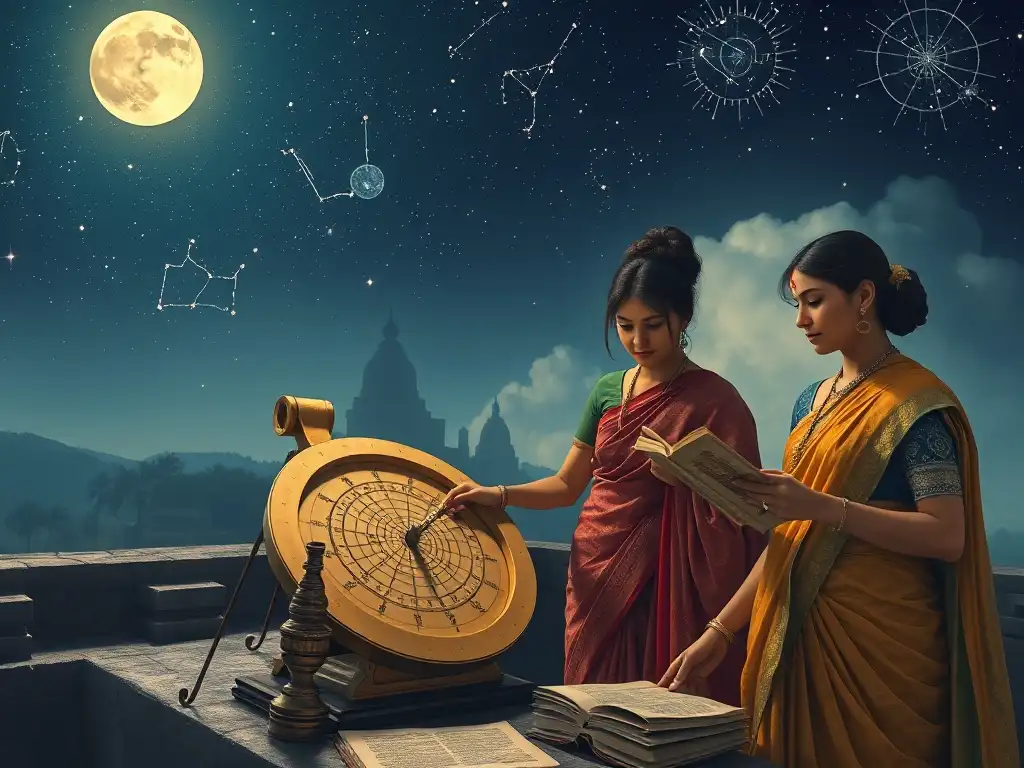
Women played an integral role in the field of astronomy in ancient India, participating in various astronomical practices that contributed to the understanding of celestial phenomena. This participation, however, was often overshadowed by the male-centric narratives prevalent in historical accounts. Women engaged in observational astronomy, utilizing their skills to chart the stars and understand the cycles of celestial bodies. The presence of female astronomers in ancient texts indicates that women were not only participants but also contributors to astronomical knowledge.
For example, texts such as the Aryabhatiya by Aryabhata and the Surya Siddhanta reference women who were knowledgeable in mathematics and astronomy, highlighting their involvement in these sciences. Moreover, archaeological findings from the Indus Valley Civilization suggest that women may have engaged in astronomical observations, as some seals depict celestial motifs that could indicate an understanding of celestial movements.
Observational Astronomy and Women’s Roles
Observational astronomy was a field where women’s contributions were particularly significant. They often served as observers, recording celestial events such as eclipses and planetary alignments. Women in ancient Indian society sometimes acted as custodians of astronomical knowledge, passing down information through oral traditions and teaching younger generations.
Historical accounts suggest that women were involved in the maintenance of astronomical calendars and rituals, which were crucial for agricultural practices and religious ceremonies. Their observations were essential for determining auspicious times for planting and harvesting, which further emphasizes their practical contributions to society. Notably, some texts mention notable female astronomers like Lilavati, who is credited with works in mathematics that also reflect an understanding of astronomical principles.
The Use of Mathematics by Women in Astronomy
Mathematics served as a fundamental tool in the field of astronomy, and women utilized mathematical concepts to enhance their understanding of celestial phenomena. The application of geometry, arithmetic, and algebra was vital for calculations related to celestial bodies, eclipses, and calendar systems. Women mathematicians, such as the legendary figure Lilavati, authored texts that integrated mathematical theories with astronomical observations.
The formulation of algorithms for predicting celestial events often involved collaborative efforts between male and female scholars. Women contributed not only in terms of direct calculations but also in the interpretation of mathematical results related to astronomy. Their work laid the groundwork for future developments in the sciences, showcasing that women were not merely passive learners but active innovators in ancient Indian astronomy.
Challenges Faced by Women in Ancient Indian Astronomy
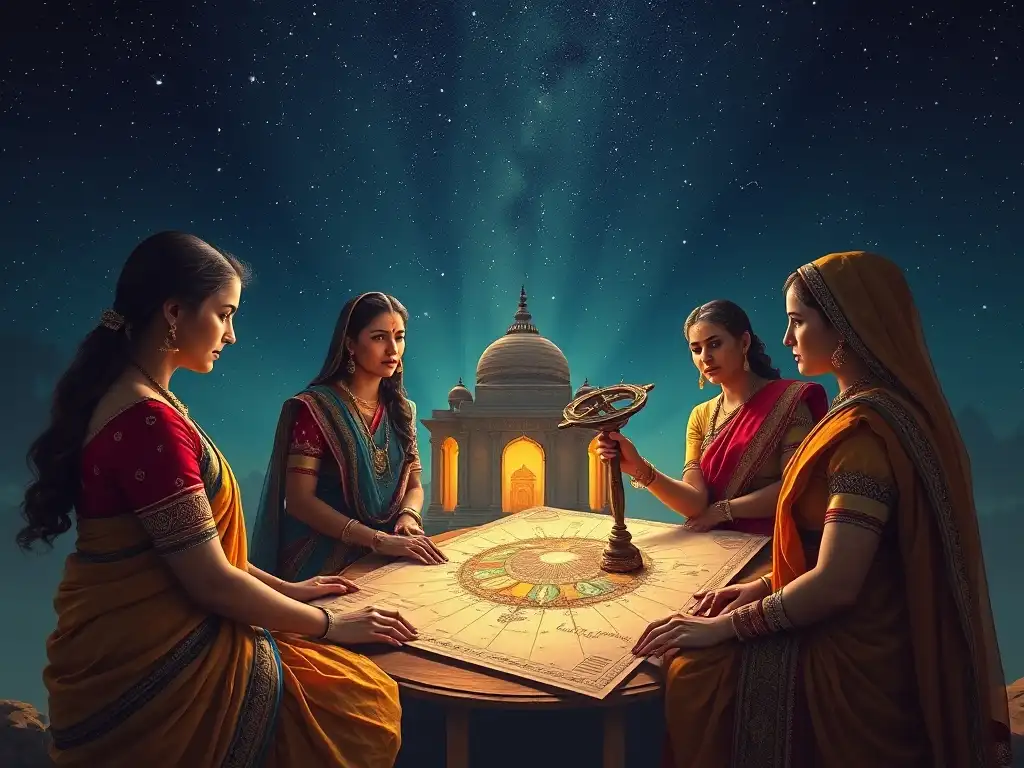
Despite the significant contributions made by women in astronomy, they faced numerous challenges that limited their participation and recognition. These challenges stemmed from societal norms and educational barriers that often marginalized women in scientific fields.
Societal Barriers and Gender Norms
The societal structure of ancient India was predominantly patriarchal, which created barriers for women aspiring to engage in scholarly pursuits. Gender norms dictated that women’s roles were primarily confined to domestic spheres, restricting their access to formal education and professional opportunities in fields like astronomy and mathematics.
As a result, many women had to navigate a complex landscape where their contributions were often overlooked or credited to male counterparts. This dynamic created a historical narrative that underrepresented women’s roles in the scientific community, leading to a loss of recognition for their contributions to ancient Indian astronomy.
Limitations in Access to Education and Resources
Access to education was another significant challenge for women in ancient India. Educational institutions were primarily male-dominated, and women had limited opportunities to study mathematics and astronomy. This lack of access prevented many talented women from fully realizing their potential in these fields.
Moreover, the resources necessary for rigorous astronomical study, such as instruments and texts, were often inaccessible to women. The absence of supportive networks and mentorship further hindered their advancement in the sciences. Despite these limitations, some women managed to acquire knowledge through informal means, such as family teachings and community participation, demonstrating resilience and adaptability in the face of systemic obstacles.
Legacy and Impact of Women in Ancient Indian Astronomy
Women in ancient Indian astronomy made significant contributions that have often been overlooked in mainstream historical narratives. Their involvement extended beyond mere participation; they played crucial roles in the development of astronomical concepts and practices. Notably, women such as Āryabhaṭīyā's commentator, the renowned astronomer and mathematician Bhāskara II’s mother, are believed to have influenced the intellectual environment of their time. They were not just passive observers but active contributors to the body of knowledge that laid the groundwork for future generations in both astronomy and mathematics.
The legacy of these women is reflected in various texts and practices. For instance, women like Gargi and Maitreyī are mentioned in Vedic literature, showcasing their scholarly pursuits. Their influence can also be traced in the realms of astrology and astronomy, where the knowledge of the stars and celestial bodies was essential for agricultural and ritualistic purposes. The impact of these contributions has echoed through history, shaping not only scientific thought but also cultural perceptions of women’s roles in intellectual fields.
Lasting Contributions to Mathematical Concepts
Women in ancient India were pivotal in formulating and preserving mathematical concepts that are still relevant today. Historical records suggest that women such as the mathematician and astronomer Lilavati, whose name is associated with the famous mathematical text, made significant advancements in arithmetic and geometry. The text "Lilavati," attributed to Bhāskara II, reflects the influence of women on mathematical education, as it includes problems likely inspired by women’s everyday experiences, thus making mathematics more accessible and relatable.
Moreover, the role of women in teaching mathematics to their children and students cannot be overlooked. Many ancient texts indicate that women were involved in the transmission of knowledge, serving as mentors and educators. This connection between women and mathematics laid a foundation for future mathematical innovations. The understanding and application of concepts such as zero, decimal systems, and algebra were often passed down through familial lines, showing how women were integral to the mathematical discourse of their times.
Recognition of Women’s Roles in Historical Narratives
The historical narratives surrounding ancient Indian astronomy and mathematics have often marginalized women's contributions, focusing primarily on male figures. However, recent scholarship has begun to reassess these narratives, highlighting the roles women played in these fields. By revisiting ancient texts, inscriptions, and oral histories, researchers have uncovered evidence of women who were astronomers, mathematicians, and educators.
For example, the works of women like Āryabhaṭīyā's commentator and the contributions of female scholars in royal courts are being recognized for their significance. This recognition is crucial, as it not only enriches our understanding of ancient knowledge systems but also challenges the perception that scientific inquiry was a male-dominated endeavor. By bringing these narratives to light, we can appreciate the collaborative nature of scientific progress in ancient India.
Conclusion: The Importance of Recognizing Women in Ancient Indian Astronomy and Mathematics
Recognizing the contributions of women in ancient Indian astronomy and mathematics is essential for a comprehensive understanding of these disciplines. It serves to dismantle the historical biases that have overshadowed women's roles in science. By acknowledging their achievements, we can highlight the diverse contributions to knowledge that span across genders and time periods. This recognition not only enriches the historical landscape but also validates the experiences and intellect of women who have shaped scientific thought.
Implications for Modern Understanding of Science and Gender
The legacy of women in ancient Indian astronomy and mathematics carries significant implications for modern discussions about gender in science. Understanding how women contributed to these fields can inspire a reevaluation of contemporary gender dynamics in scientific inquiry. It highlights the necessity for inclusive practices that promote equity in scientific disciplines today. By recognizing the historical contributions of women, we can foster an environment that values diverse perspectives and encourages underrepresented voices in science.
Call to Action for Further Research on Women in Ancient Indian Science
There is a pressing need for further research focusing on women in ancient Indian science, particularly in astronomy and mathematics. Scholars and historians are encouraged to delve deeper into ancient texts, inscriptions, and archaeological findings to uncover more about the lives and contributions of these women.
By expanding our understanding of their roles, we can construct a more accurate and inclusive narrative of scientific history. This research not only honors the legacy of women in ancient India but also serves as a catalyst for future generations of women in science, inspiring them to pursue their interests in these fields with the recognition that they too can leave a lasting legacy.
- Introduction to Women in Ancient Indian Astronomy
- Historical Context of Women in Astronomy and Mathematics in Ancient India
- Notable Women Astronomers and Mathematicians
- The Influence of Religious and Philosophical Texts
- Women's Participation in Astronomical Practices
- Observational Astronomy and Women’s Roles
- The Use of Mathematics by Women in Astronomy
- Challenges Faced by Women in Ancient Indian Astronomy
- Legacy and Impact of Women in Ancient Indian Astronomy
- Conclusion: The Importance of Recognizing Women in Ancient Indian Astronomy and Mathematics
- What was the significance of women in ancient Indian astronomy?
- Were there any notable female astronomers in ancient India?
- How did ancient Indian society view women in academic fields?
- What contributions did women make to mathematics in ancient India?
- How is the role of women in ancient Indian astronomy perceived today?
Frequently Asked Questions
What was the significance of women in ancient Indian astronomy?
Women played a crucial role in ancient Indian astronomy, contributing to mathematical calculations, observational practices, and cultural interpretations of celestial phenomena.
Were there any notable female astronomers in ancient India?
Yes, notable figures like Aryabhata's contemporaries and later scholars made significant contributions, showcasing the impact of women in the field of astronomy.
How did ancient Indian society view women in academic fields?
Ancient Indian society had a complex view of women, where they were often respected as scholars in fields like astronomy and mathematics, but also faced social restrictions.
What contributions did women make to mathematics in ancient India?
Women contributed to mathematical theories, calculations, and even the development of algorithms, showcasing their intellectual prowess alongside their male counterparts.
How is the role of women in ancient Indian astronomy perceived today?
Today, the contributions of women in ancient Indian astronomy are being rediscovered and celebrated, highlighting their significant roles in shaping the scientific landscape of the time.
Final Reflection: Celebrating the Legacy of Women in Ancient Indian Astronomy
The contributions of women in ancient Indian astronomy are not just historical footnotes; they are a testament to the brilliance and resilience of female intellect in a male-dominated field. Today, as we strive for gender equality and recognition in all spheres of life, it is crucial to acknowledge the pivotal roles that women played in shaping the foundations of astronomy and mathematics in ancient India. Their stories inspire us to challenge the stereotypes that persist in contemporary society, reminding us that brilliance knows no gender.
The influence of these remarkable women continues to resonate in our cultural and social landscape, as their achievements pave the way for future generations of female scientists and mathematicians. The legacy of figures like Aryabhata's contemporaries and the mathematicians of the Kerala School serves as a powerful reminder that women have always been at the forefront of intellectual pursuits. The future belongs to those who believe in the beauty of their dreams.
– Eleanor Roosevelt. This quote encapsulates the spirit of those women who dared to dream and achieve, and it encourages us to foster an environment where young girls today can aspire to reach for the stars, just as their ancient counterparts did.
As we reflect on the vital role of women in ancient Indian astronomy, let us take a moment to consider how we can honor their legacy in our own lives. I invite you to explore the stories of these pioneering women and to recognize the importance of supporting and uplifting female voices in science and mathematics today.
By doing so, we not only pay homage to their contributions but also inspire a new generation to continue breaking barriers and reaching for the cosmos. Together, let us ensure that the legacy of women in ancient Indian astronomy shines brightly in the present and the future.
Unveil the Legacy of Women in Ancient Indian Sciences!
Thank you for exploring the incredible contributions of women in ancient Indian astronomy and mathematics! Your interest underscores the need to recognize and celebrate these eminent figures whose work laid the groundwork for scientific advancements. Now, it’s time to take that knowledge a step further. Here's how you can dive deeper:
- Join a local or online discussion group focused on the history of women in science to share insights and broaden your understanding.
- Read more about influential women from various cultures who made significant contributions to science and technology.
- Share this article with friends and family to raise awareness about the vital role women played in shaping our understanding of the universe.
What insights from these trailblazing women inspire you to explore their contributions further?