
How Ancient Indian Scholars Used Observational Techniques to Advance Astronomy

Welcome to Ancient India History, where we invite you to journey through the fascinating tapestry of ancient Indian civilizations! In this exploration, we delve into the remarkable achievements of our forebears, particularly focusing on ancient Indian astronomy techniques. Have you ever wondered how scholars of the past gazed at the stars and unraveled the mysteries of the universe?
Our main article, "How Ancient Indian Scholars Used Observational Techniques to Advance Astronomy," will illuminate the innovative methods and profound knowledge that shaped celestial studies in ancient India. Join us as we uncover these intriguing insights and inspire your curiosity about the scientific advancements that have left an indelible mark on history!
- Introduction to Ancient Indian Astronomy Techniques
- Historical Context of Ancient Indian Astronomy
- Key Observational Techniques Used by Ancient Indian Scholars
- Instruments and Tools Employed in Ancient Indian Astronomy
- Case Studies of Notable Ancient Indian Astronomers
- Methodologies for Data Collection and Analysis
- The Legacy of Ancient Indian Astronomy Techniques
- Conclusion: The Impact of Ancient Indian Astronomy Techniques on Modern Science
- References
-
Frequently Asked Questions
- What were the primary observational techniques used by ancient Indian astronomers?
- How did ancient Indian astronomy influence modern science?
- What is the significance of the Indus Valley Civilization in astronomy?
- Who were some notable figures in ancient Indian astronomy?
- How did the Gupta Empire contribute to the field of astronomy?
- Final Reflection: The Enduring Legacy of Ancient Indian Astronomy Techniques
- Embrace the Wisdom of Ancient Astronomy!
Introduction to Ancient Indian Astronomy Techniques
Ancient India boasts a profound and intricate history in the realm of astronomy, showcasing a wealth of knowledge and practices that have significantly influenced both Eastern and Western scientific traditions. The study of ancient Indian astronomy techniques reveals not only the intellectual prowess of Indian scholars but also their innovative methodologies that paved the way for astronomical advancements.
From the meticulous observations of celestial bodies to the formulation of complex mathematical models, ancient Indian astronomers utilized their understanding of the cosmos to create a framework for timekeeping, navigation, and even agricultural planning. This article delves into the sophisticated observational techniques employed by these scholars, highlighting their contributions and the enduring legacy they left behind.
Overview of Astronomy in Ancient India
The roots of astronomy in ancient India can be traced back to the Indus Valley Civilization, where early inhabitants exhibited a keen interest in celestial phenomena. Over the centuries, this fascination evolved into a structured field of study, significantly shaped by revered texts such as the Surya Siddhanta and the Aryabhatiya.
- Key Periods in Indian Astronomy:
- Indus Valley Civilization (c. 3300–1300 BCE): Early observations of celestial events.
- Vedic Period (c. 1500–500 BCE): The integration of astronomy with religious rituals and calendar systems.
- Classical Period (c. 500–1200 CE): The formulation of mathematical models and astronomical tables by luminaries like Aryabhata, Brahmagupta, and Varahamihira.
The scholars of ancient India employed a variety of observational techniques, from simple naked-eye observations to the development of sophisticated instruments. They meticulously recorded celestial events, which were essential for creating calendars and predicting seasonal changes.
Importance of Observational Techniques in Astronomy
Observational techniques were the backbone of ancient Indian astronomy, enabling scholars to gather empirical data and refine their understanding of the cosmos. The significance of these techniques can be encapsulated in several key aspects:
- Precision in Measurements:
- Ancient Indian astronomers developed methods such as gnomons (shadows) to measure time and the position of celestial bodies.
- They utilized meridian observations to determine the latitude and longitude of locations.
- Mathematical Innovations:
- The application of trigonometry and geometry in celestial calculations provided accurate predictions of eclipses and planetary positions.
- Texts like the Siddhanta Shiromani by Bhaskara II showcase the intricate calculations derived from observational data.
- Cultural and Religious Integration:
- Astronomy was deeply intertwined with Hindu rituals and festivals, necessitating precise celestial observations to determine auspicious timings.
- The construction of temples and monuments often aligned with astronomical phenomena, reflecting the significance of celestial events in cultural practices.
The observational techniques developed by ancient Indian scholars not only advanced the field of astronomy but also had a profound impact on the social, cultural, and scientific fabric of society. Their legacy continues to inspire modern astronomical studies, underscoring the importance of empirical observation in understanding the universe.
Historical Context of Ancient Indian Astronomy

Timeline of Astronomical Developments in Ancient India
The timeline of astronomical developments in ancient India showcases a remarkable progression of knowledge and techniques that were pivotal in the evolution of astronomy. This timeline can be delineated into several key periods:
- Indus Valley Civilization (c. 3300–1300 BCE)
- Early Calendrical Systems: Evidence suggests that the inhabitants of the Indus Valley utilized basic observational techniques to track celestial bodies, which may have been the foundation for their agricultural calendars.
- Vedic Period (c. 1500–500 BCE)
- Surya Siddhanta: The earliest astronomical texts, like the Surya Siddhanta, emerged during this period, establishing foundational concepts of celestial movements and calendars.
- Lunar and Solar Observations: Scholars began to record the positions of the sun and moon, leading to a better understanding of eclipses and the solar year.
- Classical Period (c. 500 BCE–1200 CE)
- Aryabhata (476–550 CE): His seminal work, the Aryabhatiya, introduced innovative concepts such as the rotation of the Earth and the circumference of the Earth calculated with remarkable accuracy.
- Brahmagupta (598–668 CE): Further advanced the field with his texts, which discussed planetary motions and introduced the concept of zero in astronomical calculations.
- Medieval Period (c. 1200–1800 CE)
- Lalla and Bhaskara II (1114–1185 CE): Continued the tradition of observational astronomy, refining techniques for calculating planetary positions and eclipses.
- Influence of Islamic Astronomy: The interaction with Islamic scholars led to the synthesis of ideas, further enhancing the precision of astronomical computations.
This timeline indicates the evolving complexity of ancient Indian astronomy techniques, highlighting a blend of observational skills and mathematical ingenuity that laid the groundwork for future astronomical studies.
Key Figures in Ancient Indian Astronomy
The contributions of several key figures in ancient Indian astronomy have been instrumental in shaping the field. These scholars not only advanced observational techniques but also integrated mathematics into astronomy, creating a rich legacy that influenced both Indian and global science.
- Aryabhata (476–550 CE)
- Contributions: Authored the Aryabhatiya, which discussed the rotation of the Earth and the calculation of eclipses, emphasizing the importance of observational data.
- Techniques: Utilized mathematical models to predict celestial events, showcasing the blend of mathematics and astronomy.
- Brahmagupta (598–668 CE)
- Contributions: Known for his work, the Brahmasphutasiddhanta, which detailed planetary motions and introduced rules for calculating the positions of celestial bodies.
- Techniques: Pioneered the use of algebraic methods in astronomy, enhancing the accuracy of celestial predictions.
- Bhaskara I (c. 600–680 CE)
- Contributions: Developed techniques for calculating the sine function, which were crucial for astronomical calculations.
- Techniques: His observational methods included the use of instruments like the gnomon for measuring the shadows cast by celestial bodies.
- Bhaskara II (1114–1185 CE)
- Contributions: Authored the Siddhanta Shiromani, which included sections on both arithmetic and astronomy.
- Techniques: Enhanced earlier techniques by integrating detailed observations with mathematical formulas to create more precise models of planetary movements.
These key figures represent just a fraction of the scholarly tradition in ancient Indian astronomy, which thrived through rigorous observation and innovative mathematical techniques, laying a foundation that would influence future generations of astronomers both in India and beyond.
Key Observational Techniques Used by Ancient Indian Scholars
Use of the Gnomon in Observational Astronomy
The gnomon, a simple yet profound instrument, played a pivotal role in ancient Indian astronomy techniques. This vertical stick or pillar, when placed perpendicular to the ground, casts a shadow that can be measured to determine time and the position of celestial bodies. Ancient scholars utilized the gnomon to create sundials, enabling them to track the movement of the sun across the sky.
- Timekeeping: By measuring the length and direction of the shadow at various times of the day, astronomers could ascertain the time. This technique was crucial for agricultural societies, as it governed the timing of planting and harvesting.
- Seasonal Changes: The gnomon also helped in observing seasonal changes, as the angle and length of the shadow would vary throughout the year. This understanding allowed scholars to create calendars that were aligned with agricultural cycles.
- Geographical Location: Ancient Indian astronomers used the gnomon to determine geographical latitude. By observing the shadow cast at noon, they could calculate their position relative to the equator, which contributed to the advancement of navigational techniques.
The Role of Shadows and Light in Astronomical Measurements
Shadows and light were fundamental to the observational techniques employed by ancient Indian astronomers. Scholars meticulously studied how shadows changed during different times of the day and year, which significantly enhanced their understanding of celestial phenomena.
- Equinoxes and Solstices: By observing the shadows cast on specific days of the year, astronomers could identify equinoxes and solstices. This knowledge was vital for creating accurate calendars and understanding the cyclical nature of celestial events.
- Lunar Observations: Shadows also played a crucial role in lunar observations. The changing phases of the moon were meticulously recorded, allowing scholars to predict eclipses. These predictions were not only scientific achievements but also held cultural significance in ancient Indian society.
- Architectural Alignment: Temples and structures were often designed with specific alignments to capture the interplay of light and shadow during important celestial events. This architectural technique not only served a religious purpose but also acted as a practical tool for astronomical observations.
Importance of Celestial Alignments and Landmarks
Celestial alignments and landmarks were integral to the astronomical practices of ancient Indian scholars. By aligning structures with celestial bodies, they were able to enhance their observational capabilities and deepen their understanding of the cosmos.
- Stellar Alignments: Ancient astronomers often aligned their observatories with specific stars or constellations. This alignment allowed for precise observations and tracking of celestial movements, which were crucial for navigation and timekeeping.
- Landmark Observations: Natural landmarks such as mountains and rivers were used as reference points for astronomical observations. By correlating the positions of these landmarks with celestial events, scholars could make more accurate predictions regarding the movement of heavenly bodies.
- Cultural Significance: Celestial alignments held profound cultural significance in ancient Indian society. They were often linked to religious beliefs and rituals, reinforcing the connection between astronomy and spirituality in the ancient worldview.
The use of observational techniques such as the gnomon, the study of shadows and light, and the importance of celestial alignments were fundamental to the advancement of ancient Indian astronomy techniques. These methods not only contributed to scientific knowledge but also enriched the cultural and spiritual lives of ancient Indian civilizations.
Instruments and Tools Employed in Ancient Indian Astronomy
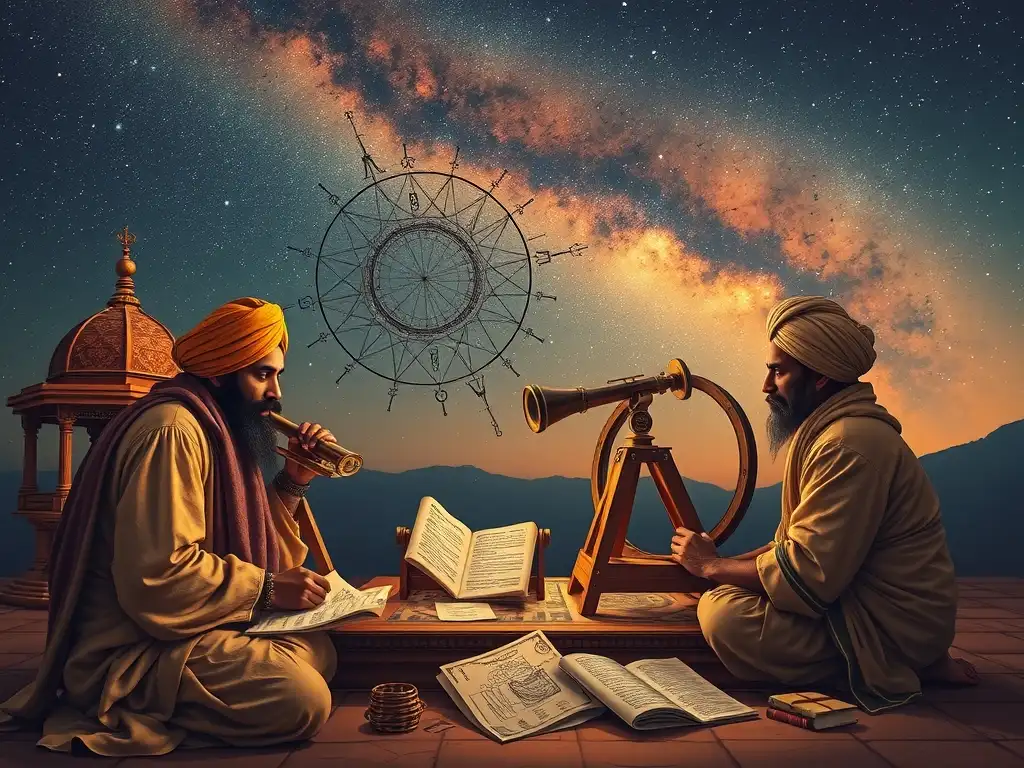
Description of Ancient Astronomical Instruments
Ancient Indian astronomers developed a variety of instruments that enabled them to observe celestial bodies with remarkable precision. These instruments were crafted from locally available materials and reflected a deep understanding of both astronomy and mathematics. Some of the most notable instruments include:
- Gnomon (Shanku): A simple yet effective instrument, the gnomon consists of a vertical stick or pillar that casts a shadow. By measuring the length and angle of the shadow at various times, astronomers could determine the time of day and the solar declination.
- Astrolabe (Yasti): This complex device helped astronomers calculate the positions of stars and planets. The astrolabe consisted of a flat disk with a rotating arm that could be aligned with celestial objects, allowing for measurements of angles and distances.
- Armillary Sphere (Gola Yantra): This spherical framework represented celestial circles and was used to demonstrate the apparent motion of the heavens. It aided in teaching concepts of celestial navigation and the movements of stars.
- Dials and Quadrants: Various types of sundials and quadrants were employed to track time and celestial events. These instruments allowed astronomers to observe the sun’s position and the changing seasons, contributing to agricultural planning.
The meticulous construction and innovative design of these instruments highlight the advanced skills of ancient Indian artisans and their dedication to the observational sciences.
The Siddhanta: A Treatise on Astronomy
The Siddhanta is a crucial body of work in ancient Indian astronomy, encapsulating the astronomical knowledge and techniques of the time. Composed by prominent scholars such as Aryabhata, Brahmagupta, and Varahamihira, these texts served as comprehensive guides to understanding celestial phenomena.
- Aryabhata’s Aryabhatiya: Written in the 5th century CE, this text introduced concepts such as the rotation of the Earth on its axis and the calculation of eclipses. Aryabhata emphasized the use of mathematical models to predict astronomical events, marking a significant departure from purely observational methods.
- Brahmagupta’s Brahmasphutasiddhanta: This 7th-century work built upon Aryabhata's foundations and introduced more sophisticated mathematical techniques, including rules for calculating the positions of planets and the timing of eclipses. Brahmagupta’s contributions laid the groundwork for future advancements in both astronomy and mathematics.
- Varahamihira’s Pancha Siddhantika: Compiled in the 6th century CE, this text synthesized knowledge from various astronomical traditions, including Greek, Persian, and Indian. It detailed methods for calculating planetary positions and predicting celestial events, reflecting the collaborative spirit of ancient scholars.
The Siddhanta texts not only cataloged the observational techniques and calculations used in ancient Indian astronomy but also served as educational resources for future generations of astronomers.
Observatories in Ancient India: Locations and Functions
Ancient India was home to several observatories that played a pivotal role in advancing astronomical knowledge. These observatories were strategically located in areas with minimal light pollution and clear skies, allowing for unobstructed views of celestial phenomena. Some notable observatories include:
- Jantar Mantar, Jaipur: Built by Maharaja Jai Singh II in the 18th century, this observatory is famous for its large-scale instruments, including the Samrat Yantra, a massive sundial that can measure time with remarkable accuracy. The Jantar Mantar complex features various devices designed for specific astronomical functions, such as tracking the movements of celestial bodies.
- Jantar Mantar, Delhi: Another creation of Jai Singh II, this observatory contains similar instruments to those in Jaipur, adapted for the urban environment of Delhi. The observatory served as a crucial site for the study of astronomy and contributed to the development of accurate astronomical tables.
- Kodaikanal Solar Observatory: Established in 1899, this observatory focuses on solar research and is equipped with advanced telescopes. While not ancient, it exemplifies the enduring tradition of astronomical observation in India, continuing the legacy of its ancient predecessors.
These observatories not only facilitated the practical application of ancient Indian astronomy techniques but also fostered a community of scholars dedicated to the pursuit of knowledge about the cosmos. Through their work, ancient Indian astronomers made invaluable contributions to the field, influencing generations of scientists worldwide.
Case Studies of Notable Ancient Indian Astronomers
Aryabhata: Contributions to Astronomical Techniques
Aryabhata (476–550 CE) stands as one of the most significant figures in ancient Indian astronomy. His seminal work, the Aryabhatiya, serves as a cornerstone for understanding ancient Indian astronomy techniques. Aryabhata's contributions were multifaceted, encompassing both observational and mathematical advancements.
- Heliocentric Theory: Aryabhata proposed that the Earth rotates on its axis, a revolutionary idea for his time. This heliocentric perspective indicated that he understood the Earth's motion relative to the celestial bodies, laying the groundwork for later astronomical discoveries.
- Eclipses: He provided detailed explanations about solar and lunar eclipses, positing that these were caused by the shadows of the Earth and the Moon. His calculations for the timing of eclipses were remarkably accurate, showcasing his observational prowess.
- Trigonometry: Aryabhata is credited with the introduction of sine functions, which he referred to as "ardha-jya" (half-chord). This mathematical innovation was crucial for celestial calculations and contributed to the development of further astronomical techniques.
- Place Value System: His use of a decimal place value system enabled more complex calculations and was instrumental in advancing astronomical computations.
Aryabhata's work illustrates the integration of mathematics and observational techniques, forming a foundation that would influence future generations of astronomers.
Varahamihira: Integrating Astronomy with Astrology
Varahamihira (505–587 CE) was another pivotal figure in ancient Indian astronomy, known for his comprehensive approach that blended astronomy with astrology. His major work, the Brihat Samhita, encompasses a wide range of topics, including weather prediction, planetary positions, and astrological influences.
- Planetary Positions: Varahamihira meticulously recorded the positions of planets, utilizing observational techniques that emphasized accuracy. His calculations of planetary movements relied on earlier works, including those of Aryabhata, and were instrumental in refining astronomical predictions.
- Astrology and Astronomy: Varahamihira’s unique integration of astrology with astronomy was groundbreaking. He believed that celestial bodies influenced terrestrial events, which led to the formulation of astrological charts based on precise astronomical observations.
- Weather Forecasting: His contributions extended to meteorology, where he employed observational data to predict weather patterns. This practical application of his astronomical knowledge illustrates the versatility of ancient Indian astronomy techniques.
- Cultural Impact: Varahamihira’s writings had a profound influence on subsequent scholars in both astronomy and astrology, bridging the gap between these fields in ancient Indian culture.
Through his work, Varahamihira exemplified the interconnectedness of various disciplines, showcasing how ancient Indian astronomy techniques were not only scientific but also culturally significant.
Brahmagupta: Innovations in Mathematical Astronomy
Brahmagupta (598–668 CE) made remarkable contributions to astronomical techniques, particularly through his work, the Brahmasphutasiddhanta. His innovative approaches in mathematics significantly advanced the field of astronomy in ancient India.
- Rules for Calculating Eclipses: Brahmagupta provided systematic methods for calculating eclipses, expanding upon previous astronomers’ findings. His rules were based on observational data, allowing for more reliable predictions of celestial events.
- Negative Numbers: One of Brahmagupta's key innovations was the formal treatment of zero and negative numbers, which he used in calculations involving astronomical phenomena. This mathematical advancement facilitated more complex astronomical computations.
- Equations of Motion: He developed equations to describe the motion of celestial bodies, improving the accuracy of astronomical predictions. His methods emphasized the importance of algebraic techniques in understanding astronomy.
- Lunar and Solar Calendars: Brahmagupta’s work included detailed calendars based on lunar and solar cycles, showcasing his observational skills and understanding of cyclical patterns in astronomy.
Brahmagupta's contributions reflect a significant evolution in ancient Indian astronomy techniques, highlighting the interplay between mathematics and celestial observations that characterized this period.
Methodologies for Data Collection and Analysis

Ancient Indian scholars employed a variety of sophisticated methodologies for data collection and analysis in their pursuit of understanding astronomy. These methods were deeply rooted in observational practices, with an emphasis on meticulous recording and interpretation of celestial phenomena. The use of observational techniques not only advanced their astronomical knowledge but also laid the foundation for subsequent developments in mathematics and science.
The methodologies can be broadly categorized into a few key practices, which include systematic observation, thorough documentation, and analytical interpretation of data. Each of these practices played a critical role in the evolution of ancient Indian astronomy techniques.
Techniques for Tracking Celestial Bodies
To track celestial bodies effectively, ancient Indian astronomers relied on several innovative techniques that combined empirical observation with mathematical calculations.
- Gnomon and Sundials:
- One of the earliest tools used was the gnomon, a simple device consisting of a vertical stick or pillar that casts a shadow. By measuring the length and direction of this shadow at different times of the day, scholars could determine the solar time and make predictions about solar movements.
- Astrolabe and Armillary Spheres:
- More advanced instruments, such as astrolabes and armillary spheres, were developed to track the movements of stars and planets. These devices allowed for the measurement of angles and positions in the sky, aiding in the navigation of celestial bodies.
- Zodiacal Constellations:
- Ancient Indian astronomers divided the sky into segments based on zodiacal constellations. This division facilitated the tracking of celestial events, such as eclipses and planetary alignments, by correlating them with specific constellations.
- Ephemerides:
- The creation of ephemerides, which are tables that provide the positions of celestial bodies at regular intervals, allowed astronomers to predict future positions based on past observations. This technique was essential for long-term astronomical studies.
These techniques were not only practical but also reflected a deep understanding of geometry and mathematics, showcasing the intellectual prowess of ancient Indian scholars.
Observational Practices: Night Sky Monitoring
Night sky monitoring was a cornerstone of ancient Indian astronomy techniques. Scholars dedicated countless hours to observing celestial events, often forming communities that shared their findings.
- Systematic Observations:
- Astronomers maintained detailed logs of their observations, documenting phenomena such as the phases of the moon, the appearance of comets, and the movements of planets. These logs were crucial for identifying patterns and correlations in celestial behavior.
- Seasonal Changes:
- Observations were often aligned with seasonal changes, allowing scholars to track the annual cycles of the sun and moon. This practice was vital for agricultural planning, as it helped farmers determine the best times for planting and harvesting.
- Cultural and Religious Significance:
- Many celestial events held cultural and religious significance, which compelled astronomers to monitor the night sky closely. Festivals and rituals were often timed according to celestial events, further integrating astronomy into daily life.
- Collaborative Efforts:
- Collaboration among scholars was common, allowing for a pooling of resources and knowledge. This collective effort enhanced the accuracy of observations and fostered a rich environment for astronomical inquiry.
These observational practices not only advanced the field of astronomy but also contributed to a greater understanding of the universe's intricate workings.
Recording and Interpreting Astronomical Data
The recording and interpretation of astronomical data were fundamental aspects of ancient Indian astronomy techniques. Scholars developed rigorous methods for documenting their findings, ensuring their longevity and applicability.
- Written Records:
- Ancient texts, such as the “Surya Siddhanta” and “Aryabhatiya,” served as repositories of astronomical knowledge. These texts contained not only observational data but also mathematical formulations and theories that explained celestial phenomena.
- Mathematical Frameworks:
- To interpret the astronomical data accurately, scholars employed advanced mathematical frameworks, including trigonometry and algebra. These frameworks allowed for precise calculations of celestial positions and movements.
- Commentaries and Interpretations:
- Scholars often wrote commentaries on existing texts, providing interpretations and insights based on their observations. This practice ensured that knowledge was continuously refined and expanded upon by successive generations.
- Impact on Future Astronomy:
- The meticulous recording and interpretation of astronomical data by ancient Indian scholars significantly influenced later astronomers. Their works were studied and built upon by scholars in other cultures, contributing to the global advancement of astronomy.
The methodologies for data collection and analysis in ancient Indian astronomy were characterized by a blend of observational techniques, systematic documentation, and analytical interpretation. These practices not only advanced the field of astronomy but also established a legacy that continues to inspire modern scientific inquiry.
The Legacy of Ancient Indian Astronomy Techniques
The legacy of ancient Indian astronomy techniques is profound, showcasing a blend of empirical observation, mathematical precision, and philosophical inquiry. These scholars laid the groundwork for many astronomical principles that continue to influence the field today. Their methodologies were not only innovative but also reflected a deep understanding of celestial phenomena.
Influence on Later Astronomical Developments
Ancient Indian astronomers, such as Aryabhata and Brahmagupta, made significant contributions that transcended their time and geography. Their work influenced later developments in both Indian and global astronomy.
- Mathematical Innovations:
- Aryabhata introduced the concept of zero and the place value system, which revolutionized calculations in astronomy. His work in trigonometry provided formulas that are still used today.
- Brahmagupta's rules for solving quadratic equations and his method for calculating eclipses laid the foundation for future mathematicians and astronomers.
- Astronomical Texts:
- Texts like the Aryabhatiya and the Brahmasphutasiddhanta served as vital references for scholars in the Islamic Golden Age, who translated and built upon these works.
- These texts emphasized observational techniques and systematic approaches to understanding celestial movements, influencing both Islamic and European astronomers.
- Calendar Systems:
- Ancient Indian scholars developed sophisticated calendar systems based on lunar and solar cycles. Their meticulous observations allowed for accurate predictions of celestial events, which were crucial for agricultural and religious activities.
The advancements made by ancient Indian astronomers not only enriched their own civilization but also provided essential knowledge that would shape the future of astronomy across cultures.
Connection to Global Astronomy Practices
The techniques employed by ancient Indian astronomers were not isolated; they established connections with other cultures, contributing to a global dialogue on astronomy.
- Cultural Exchange:
- The Silk Road facilitated the exchange of knowledge between India, the Middle East, and beyond. Indian astronomical texts were translated into Arabic, influencing scholars such as Al-Khwarizmi and Al-Battani, who further disseminated these ideas.
- Observational Methods:
- Indian astronomers emphasized careful observations of the night sky, using instruments like the gnomon (a simple sundial) and later, more complex devices such as the yantra. These methods were paralleled by contemporaneous practices in Greek and Islamic astronomy, fostering a shared understanding of celestial mechanics.
- Philosophical Underpinnings:
- The integration of astronomy with philosophy in ancient India fostered a holistic view of the universe. This perspective resonated with Greek philosophers like Ptolemy, who also sought to understand the cosmos through a systematic approach, leading to a rich tapestry of astronomical thought that spanned cultures.
The ancient Indian astronomy techniques not only created a rich legacy that influenced later developments but also connected with global practices, promoting a shared pursuit of celestial knowledge that transcends cultural boundaries.
Conclusion: The Impact of Ancient Indian Astronomy Techniques on Modern Science
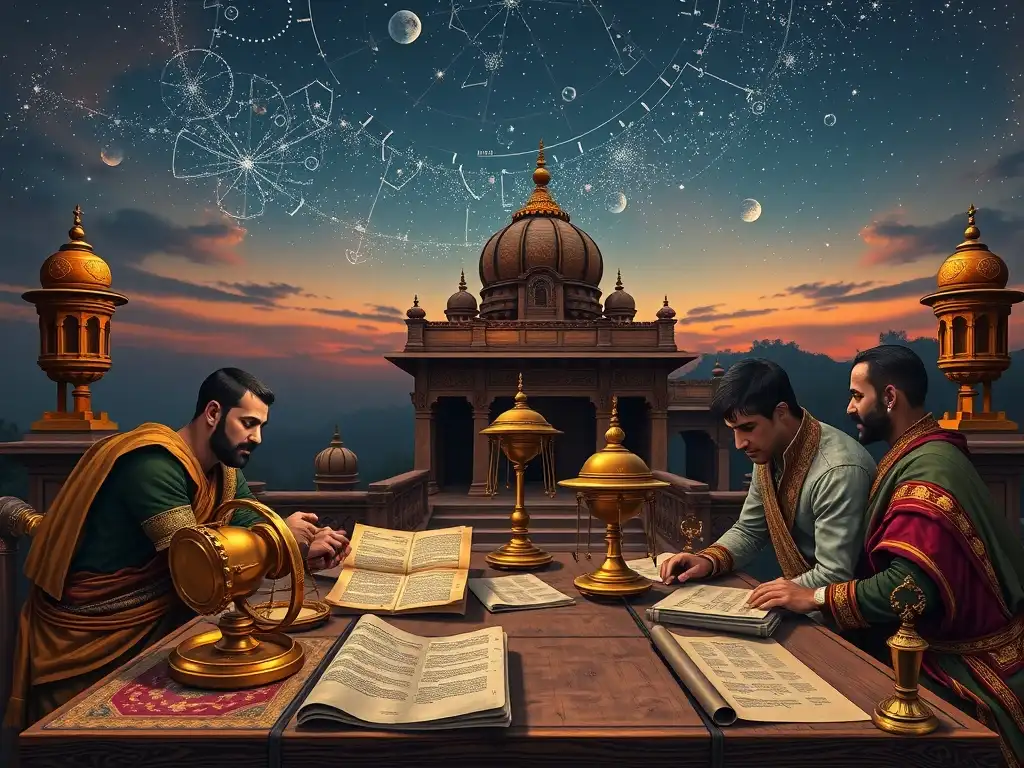
The contributions of ancient Indian astronomy techniques have left an indelible mark on modern scientific practices. Scholars from ancient India engaged in meticulous observations of celestial bodies, developing complex methodologies that not only advanced their understanding of the cosmos but also laid the groundwork for future astronomical research. Their keen insights into planetary movements, eclipses, and celestial timing systems have informed contemporary astronomical techniques and continue to shape modern astronomy.
Relevance of Ancient Methods in Contemporary Astronomy
The methodologies employed by ancient Indian astronomers, such as Aryabhata and Brahmagupta, were groundbreaking for their time. They utilized a combination of observational techniques and mathematical rigor to derive formulas that accurately predicted astronomical phenomena. Here are several ways in which these ancient methods remain relevant today:
- Mathematical Innovations: Ancient Indian scholars developed the concept of zero and positional notation, which were crucial for complex calculations in astronomy. This mathematical foundation is still essential in current astronomical computations.
- Observational Techniques:
- Naksatras and Zodiac Signs: The classification of stars into naksatras and the use of zodiac signs provided a systematic method for tracking celestial movements, influencing both Western and Eastern astrological practices.
- Eclipse Predictions: The precision with which ancient astronomers could predict solar and lunar eclipses is a testament to their observational skills. Modern astronomy still relies on similar fundamental principles.
- Timekeeping and Calendars: The ancient Indian calendars, which incorporated lunar and solar cycles, laid the groundwork for contemporary timekeeping systems. This is vital for various scientific and agricultural applications today.
The integration of these ancient practices into modern astronomy not only highlights their significance but also serves as a reminder of the rich intellectual heritage of ancient India.
Final Thoughts on the Contributions of Ancient Indian Scholars
The legacy of ancient Indian astronomers is a cornerstone of the scientific method, showcasing their profound understanding of mathematics and the natural world. Their work exemplifies the synergy between observation and theoretical frameworks, which is foundational to all scientific inquiry. As we explore the cosmos today, it is essential to acknowledge the contributions of these early thinkers:
- Interdisciplinary Connections: Ancient Indian astronomy was not an isolated discipline; it was deeply intertwined with mathematics, medicine, and philosophy. This holistic approach is increasingly relevant in contemporary scientific discourse.
- Cultural Heritage: The methods and insights of ancient Indian scholars reflect a unique cultural perspective that values empirical observation and rational thought. This cultural heritage continues to inspire modern scientists and researchers.
- Inspiration for Future Research: The techniques and discoveries of ancient Indian astronomers serve as a source of inspiration for modern astronomers seeking new ways to explore the universe.
The ancient Indian astronomy techniques represent a remarkable blend of observation, mathematics, and philosophical inquiry that has shaped the course of scientific thought. Their contributions not only advance our understanding of the universe but also remind us of the enduring legacy of ancient civilizations in the pursuit of knowledge.
References
Suggested Readings on Ancient Indian Astronomy Techniques
- Ancient Indian Astronomical Techniques - This book provides an in-depth look at the methods and tools used by ancient Indian astronomers. It covers the historical context and significance of these techniques, including the use of instruments like the gnomon and the armillary sphere.
- The Siddhantas: Ancient Indian Astronomical Texts: - A comprehensive examination of the various Siddhantas, which are foundational texts in Indian astronomy. This reading delves into how ancient scholars calculated planetary positions and eclipses.
- A History of Indian Astronomy - This text tracks the evolution of astronomical thought in India, from the Vedic period to the medieval era, highlighting key figures such as Aryabhata and Brahmagupta.
- Astronomy in India: A Historical Overview: - This overview focuses on the cultural and scientific contributions of ancient Indian astronomy across different dynasties, emphasizing observational techniques and their practical applications in society.
- Mathematics and Astronomy in Ancient India - An insightful resource that discusses the interplay between mathematical concepts and astronomical observations, showcasing how ancient Indian scholars used geometry in celestial calculations.
Sources for Further Exploration of Astronomy in Ancient India
- Journal of the History of Astronomy: This academic journal publishes articles and research papers that often focus on ancient astronomical practices, including those from India.
- Indian Journal of History of Science: A platform for scholarly research on the history of science in India, including articles specifically about ancient Indian astronomy techniques.
- National Science Museum, Delhi: This museum houses various exhibits and resources related to ancient Indian science, including astronomy. Visit their archives for detailed studies and artifacts.
- Indian Space Research Organisation (ISRO): Although primarily focused on modern space exploration, ISRO also offers insights and resources on the historical developments of Indian astronomy.
- The Asiatic Society: A research institution that provides access to a wealth of resources on ancient Indian history and culture, including manuscripts that detail astronomical observations and techniques.
By exploring these suggested readings and sources, enthusiasts and scholars can gain a deeper understanding of the ancient Indian astronomy techniques that shaped the field and influenced generations of astronomers.
Frequently Asked Questions
What were the primary observational techniques used by ancient Indian astronomers?
Ancient Indian astronomers employed naked-eye observations of celestial bodies, using tools like the gola (spherical model) and shastras (texts) to study the stars and planets.
How did ancient Indian astronomy influence modern science?
The methods and findings of ancient Indian scholars laid the groundwork for mathematics and astronomy, influencing later scientific advancements in both India and the Islamic Golden Age.
What is the significance of the Indus Valley Civilization in astronomy?
The Indus Valley Civilization showed early signs of astronomical knowledge, with evidence suggesting an understanding of solar and lunar cycles, which helped in agricultural planning.
Who were some notable figures in ancient Indian astronomy?
Key figures include Aryabhata, who introduced the concept of zero and calculated the Earth's circumference, and Brahmagupta, who made significant contributions to algebra and astronomy.
How did the Gupta Empire contribute to the field of astronomy?
During the Gupta Empire, scholars made significant advancements in astronomical calculations, refining the calendar and documenting celestial phenomena, marking a golden age for Indian science and mathematics.
Final Reflection: The Enduring Legacy of Ancient Indian Astronomy Techniques
The remarkable observational techniques employed by ancient Indian scholars not only advanced the field of astronomy but also laid the groundwork for modern scientific inquiry. Today, as we navigate an era dominated by technology and data, the wisdom of these ancient astronomers serves as a reminder of the power of observation and critical thinking. Their meticulous methods and profound insights continue to resonate, highlighting the timeless nature of curiosity and the quest for knowledge.
The influence of ancient Indian astronomy techniques extends far beyond their historical context; they have shaped our understanding of the cosmos and inspired generations of thinkers. From the intricate calculations of Aryabhata to the celestial maps of Brahmagupta, these scholars exemplified a harmonious blend of mathematics and philosophy. As Carl Sagan once said, "> We are made of star-stuff. We are a way for the universe to know itself." This quote encapsulates the essence of our connection to the universe, a connection that was deeply understood by these ancient astronomers who sought to decode the mysteries of the skies.
As we reflect on the contributions of ancient Indian scholars, let us embrace their spirit of inquiry and apply their lessons in our own lives. Take a moment to observe the world around you—whether it's the night sky, the changing seasons, or the intricate patterns of nature.
Allow yourself to be inspired by the wonders of the universe and remember that the pursuit of knowledge is a journey that transcends time. Engage with the cosmos, ask questions, and seek answers, for in doing so, you honor the legacy of those who came before us and continue to illuminate the path for future generations.
Embrace the Wisdom of Ancient Astronomy!
Thank you for diving into the fascinating world of ancient Indian observational techniques in astronomy! You've uncovered how meticulous study and keen observation advanced this timeless field. Now, it's time to put that inspiration into action!
- Explore the night sky: Find a dark location, lie back, and observe the stars. Document your findings and compare them to historical star maps!
- Share your findings: Join online forums or local astronomy clubs to discuss your observations. Your insights could spark engaging conversations!
- Delve deeper: Read a book or enroll in a course focused on ancient astronomy methods. You might uncover new techniques that enrich your understanding!
What tools or techniques do you believe ancient scholars would have greatly benefited from if they had access to modern technology? Share your thoughts!