
The Transformation of Trade in Ancient India Through Innovation


Welcome to Ancient India History, where we embark on a fascinating journey through the rich tapestry of ancient Indian civilizations. In this exploration, we delve into the incredible trade innovations that transformed commerce and connectivity across the subcontinent. From the bustling markets of the Indus Valley to the sophisticated trading networks of the Gupta Empire, discover how these advancements not only shaped the economy but also influenced culture and society. Curious about how these innovations laid the groundwork for modern trade practices? Read on to uncover the captivating story of ancient Indian trade and its lasting impact!
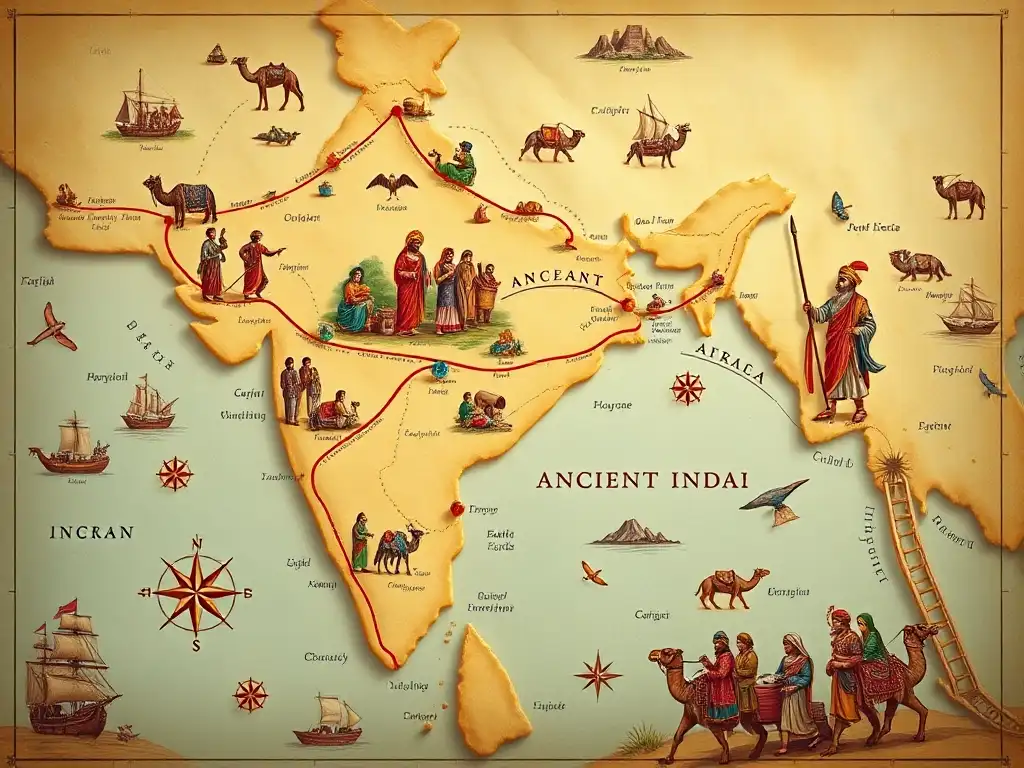
Introduction to Ancient Indian Trade Innovations
The history of ancient India is marked not only by its rich cultural heritage but also by its dynamic trade innovations that transformed the economy and social structures of its civilizations. From the bustling markets of the Indus Valley to the flourishing trade centers during the Gupta Empire, ancient Indian trade was characterized by a series of innovations that enhanced connectivity, expanded markets, and facilitated cultural exchanges. This article delves into the ancient Indian trade innovations that played a pivotal role in shaping economic and cultural landscapes, exploring how these advancements contributed to India's prominence in global trade networks.
Overview of Trade in Ancient India
Trade in ancient India was a robust and multifaceted system that involved both terrestrial and maritime routes. Archaeological evidence suggests that trade activities began as early as the Indus Valley Civilization (c. 3300–1300 BCE), where merchants engaged in the exchange of goods such as textiles, pottery, and metals. The routes established during this period laid the foundation for extensive trade interactions with neighboring regions, including Mesopotamia, Persia, and beyond.
- Key Characteristics of Ancient Indian Trade:
- Diverse Products: Ancient Indian traders dealt in a variety of goods, including spices, silk, precious stones, and agricultural products.
- Marketplaces: Prominent cities like Taxila, Pataliputra, and Ujjain served as vibrant commercial hubs, facilitating trade across vast distances.
- Cultural Exchange: Trade routes not only facilitated the movement of goods but also ideas, religions, and technologies, fostering a rich cultural exchange.
Significance of Trade Innovations in Ancient Civilizations
The innovations in trade practices were crucial for the economic prosperity of ancient Indian civilizations. These advancements can be categorized into several key areas:
- Technological Innovations:
- The development of advanced shipping techniques and the use of the compass greatly improved maritime navigation.
- Innovations in cartography helped traders plan more efficient overland routes.
- Standardization of Weights and Measures:
- The introduction of standardized weights and measures facilitated fair trading practices, enhancing trust among traders.
- This standardization was critical in establishing long-distance trade, as it allowed for accurate pricing and exchanges.
- Banking and Credit Systems:
- The emergence of early banking systems, including the use of promissory notes and bills of exchange, supported trade financing.
- These financial innovations allowed traders to conduct business over long distances without the need to carry large amounts of currency.
Major Trade Routes in Ancient India
Ancient India was linked to the broader world through a network of trade routes that not only facilitated commerce but also contributed to the cultural and political landscape of the region.
The Silk Road and Its Impact on Indian Trade
The Silk Road was one of the most significant trade routes connecting India to China, Persia, and beyond. This network of trade routes facilitated the exchange of goods, ideas, and cultures, with India serving as a crucial intermediary.
- Key Impacts of the Silk Road:
- Cultural Exchange: The Silk Road enabled the spread of Buddhism and other cultural practices across Asia.
- Economic Prosperity: Indian merchants thrived by exporting spices, textiles, and gems, while importing silk, precious metals, and other goods from the West.
The Maritime Routes and Their Role in Trade
In addition to overland routes, ancient Indian trade was significantly bolstered by maritime networks. These routes connected Indian ports to regions in the Arabian Sea and beyond.
- Significant Maritime Trade Centers:
- Lothal: An important port city of the Indus Valley Civilization, known for its dockyard.
- Kochi: A key trading post in South India, facilitating trade with traders from the Middle East and East Africa.
Regional Trade Networks within Ancient India
Within India itself, regional trade networks played a vital role in the economy. Different regions specialized in various goods, creating a vibrant internal market.
- Examples of Regional Trade:
- Textiles from Gujarat: Renowned for its high-quality cotton and silk fabrics, which were traded across the subcontinent.
- Spices from Kerala: This region became famous for its spices, which were sought after in international markets.
Through these trade routes and innovations, ancient India established itself as a significant player in global commerce, leaving a lasting legacy that shaped its economic and cultural identity.
Key Innovations in Ancient Indian Trade
Ancient Indian trade was marked by several key innovations that transformed its landscape, enhancing economic growth and cultural exchange. One of the most significant advancements was the development of a sophisticated system of trade routes, which included both overland and maritime paths. The emergence of the Silk Road and maritime routes facilitated the movement of goods such as spices, textiles, and precious stones, contributing to India's position as a pivotal trading hub in the ancient world.
Additionally, the introduction of standardized weights and measures played a crucial role in trade efficiency. Merchants were able to conduct transactions with greater accuracy, fostering trust and reliability. Innovations in navigation and cartography also emerged, allowing traders to explore new territories and expand their trade networks. The combination of these innovations laid the groundwork for a flourishing economy and the rich tapestry of cultures that thrived along the trade routes.
Development of Currency and Coinage
The development of currency and coinage in ancient India was a transformative innovation that streamlined trade practices. Initially, trade was conducted through barter systems, which proved inefficient as commerce expanded. The introduction of metal coins around the 6th century BCE marked a significant shift in trade dynamics.
The earliest coins, known as "punch-marked coins," were made from silver and stamped with various symbols, reflecting regional affiliations. These coins not only facilitated easier transactions but also aided in establishing value and trust among traders. Later, the Mauryan Empire standardized coinage, introducing gold coins known as "dinars," which became widely accepted across various regions.
This innovation in currency allowed for greater economic stability and encouraged long-distance trade, as merchants could easily transport and exchange coins rather than bulky goods. It also stimulated the growth of markets and trade centers, contributing to the overall prosperity of ancient Indian civilizations.
Advancements in Transportation Methods
Advancements in transportation methods were crucial to the development of ancient Indian trade. The use of animal-drawn carts, ships, and even the domestication of camels and elephants allowed traders to move goods efficiently across vast distances. The extensive network of roads, such as the Grand Trunk Road, facilitated overland trade, connecting major cities and regions.
Maritime trade saw significant advancements as well. Indian shipbuilders utilized advanced techniques to construct sturdy vessels capable of navigating the Indian Ocean. These ships enabled traders to transport large quantities of goods to distant lands, including the Arabian Peninsula, Southeast Asia, and beyond. The establishment of ports along the coasts, such as Lothal and Bharukachchha, further enhanced maritime commerce.
These innovations not only improved the logistics of trade but also expanded the reach of Indian merchants, fostering international trade relationships and cultural exchanges across continents.
Innovations in Trade Practices
Innovations in trade practices were instrumental in shaping the commerce landscape of ancient India. One noteworthy practice was the establishment of trade guilds, known as "shrenis," which organized merchants and craftsmen into cooperative societies. These guilds regulated trade standards, set prices, and provided support to their members, ensuring fair practices and fostering collaboration.
The adoption of credit and loan systems also emerged, allowing merchants to finance their trade expeditions. This financial innovation enabled traders to invest in larger quantities of goods, ultimately increasing profits and stimulating economic growth. The importance of contracts and written records began to surface, particularly with the use of inscriptions and seals, ensuring accountability in trade transactions.
Moreover, the rise of marketplaces and fairs served as focal points for trade, where goods were exchanged, and cultural interactions occurred. These innovations collectively contributed to a more organized and efficient trading environment, enhancing the prosperity of ancient Indian societies.
Cultural Exchange Through Trade Innovations

Cultural exchange during ancient Indian trade innovations was a profound aspect of commerce that transcended mere economic transactions. As trade routes flourished, they became conduits for the flow of ideas, technologies, and cultural practices between diverse civilizations.
Influence of Trade on Art and Architecture
The impact of trade on art and architecture in ancient India is significant, as exposure to various cultures led to the blending of artistic styles and techniques. Trade brought in new materials, such as marble and precious stones, which were used in the construction of temples and palaces. For instance, the influence of Persian architecture is evident in the intricate carvings and domes of ancient Indian structures.
Additionally, the exchange of artistic ideas resulted in the incorporation of foreign motifs and designs, enriching Indian art. The Indo-Greek period is a prime example, where artistic influences from Hellenistic culture merged with Indian aesthetics, leading to the development of unique forms such as Gandhara art.
The Spread of Ideas, Religion, and Culture
Trade routes served as pathways for the spread of ideas, religions, and cultures. The movement of merchants and travelers facilitated the dissemination of philosophies and spiritual beliefs, notably Buddhism and Jainism, which spread from India to Central Asia and beyond.
Additionally, the exchange of knowledge in fields such as mathematics, astronomy, and medicine occurred through trade interactions. The introduction of the numeral system, including the concept of zero, is a prime example of how trade fostered intellectual exchange, influencing various cultures around the world.
Impact on Social Structures and Community Relations
The innovations in trade and the ensuing cultural exchanges significantly impacted social structures and community relations in ancient India. The rise of trade networks created new economic opportunities, leading to the emergence of a merchant class that gained social prominence.
As different cultures interacted through trade, this fostered a sense of cosmopolitanism in urban centers, where people from various backgrounds coexisted. However, it also led to tensions and conflicts as cultural identities intersected. The dynamic nature of trade helped shape the social fabric of ancient Indian society, leading to both cooperation and competition among diverse communities.
The transformation of trade in ancient India through innovations not only revolutionized economic practices but also facilitated rich cultural exchanges, shaping the trajectory of Indian civilization.
Case Studies of Ancient Indian Trade Innovations
Ancient India was a hub of vibrant trade and commerce, characterized by innovative practices that not only facilitated economic growth but also fostered cultural exchanges. This section explores significant case studies of trade innovations throughout various epochs of ancient Indian history, highlighting how these developments shaped not only local economies but also influenced global trade networks.
The Role of the Indus Valley Civilization in Trade Innovation
The Indus Valley Civilization, flourishing around 2500 BCE, is often recognized as one of the earliest urban cultures, marked by advanced urban planning and innovative trade practices. The civilization had established trade routes extending to Mesopotamia, which facilitated the exchange of goods such as cotton textiles, pottery, and semi-precious stones.
- Standardized Weights and Measures: One of the most notable innovations was the use of standardized weights and measures, which promoted fairness and efficiency in trade. Archaeological finds have revealed a series of stone weights that were likely used for trade transactions, ensuring consistency in commercial exchanges.
- Maritime Trade: The Indus Valley also pioneered maritime trade through the ports of Lothal and Dwarka. These ports enabled the export of goods to distant regions, showcasing advanced shipbuilding techniques and navigation skills.
- Cultural Exchange: The trade networks of the Indus Valley facilitated cultural exchanges that influenced art, technology, and even religious practices, laying the foundation for future civilizations.
Contributions of the Maurya Empire to Trade Practices
The Maurya Empire (322-185 BCE) marked a significant evolution in ancient Indian trade practices. Under the reign of Chandragupta Maurya and his grandson Ashoka, trade flourished due to improved infrastructure and strategic governance.
- Road Development: The Mauryan rulers invested in the construction of extensive road networks that connected major cities and trade centers. The Grand Trunk Road, for example, became a vital artery for trade, enhancing the movement of goods and people across the empire.
- State Regulation: The Maurya Empire implemented regulations to standardize trade practices. Government oversight ensured the quality of goods, facilitated tax collection, and promoted fair trade practices, which enhanced trust among traders.
- Cultural Integration: The Mauryan Empire's policies fostered cultural integration through trade. Merchants and traders interacted with diverse cultures, leading to the exchange of ideas, technologies, and even religious beliefs, contributing to the rich tapestry of Indian civilization.
The Gupta Empire: A Golden Age of Trade Innovations
The Gupta Empire (c. 320-550 CE) is often referred to as a golden age in Indian history, marked by significant advancements in trade innovations, science, and arts. This period saw a dramatic increase in both domestic and international trade.
- Expansion of Trade Networks: The Gupta rulers established extensive trade networks that reached as far as the Roman Empire and Southeast Asia. This expansion was facilitated by improved transportation methods and maritime trade practices.
- Use of Coins: The introduction of standardized coins during the Gupta period revolutionized trade. The use of gold and silver coins not only simplified transactions but also enhanced the economy's liquidity, encouraging trade and commerce across vast distances.
- Cultural Exchange through Trade: The flourishing trade allowed for significant cultural exchanges, as goods like silk, spices, and precious stones flowed into and out of the empire. This interaction also led to the spread of Indian art, philosophy, and religious practices throughout Asia.
Conclusion: The Enduring Legacy of Ancient Indian Trade Innovations
The innovations in trade practices throughout ancient Indian history have left a profound legacy that extends into modern times. The strategies and systems developed by ancient Indian civilizations laid the groundwork for contemporary trade practices and economic interactions.
Summary of Key Points
- The Indus Valley Civilization laid the foundation for trade with standardized weights and maritime trade routes.
- The Maurya Empire enhanced trade through infrastructure development, state regulation, and cultural integration.
- The Gupta Empire marked a golden age of trade innovations, with the expansion of networks and the introduction of coinage.
The Lasting Influence of Ancient Trade on Modern India
The trade innovations of ancient India continue to influence the country's economy today. Modern India, with its rich history of trade, has embraced these foundations, exhibiting a robust economy characterized by both domestic and international trade. The historical practices of trade paved the way for contemporary economic policies, influencing trade agreements and fostering a spirit of entrepreneurship that resonates in today's global marketplace. The enduring legacy of ancient Indian trade innovations exemplifies the timeless nature of commerce and cultural exchange.
References

The study of ancient Indian trade innovations is well-supported by a variety of scholarly works and historical texts. These references provide insights into the mechanisms, routes, and cultural exchanges that characterized trade during this period. Key texts include:
-
"The Indus Valley Civilization: A Historical Perspective" by Jane McIntosh
This book provides an in-depth examination of one of the earliest urban cultures in India and its trade practices.
-
"Trade and Traders in Ancient India" by R.C. Majumdar
A comprehensive analysis of ancient trade networks and the significance of traders in Indian society.
-
"The Silk Roads: A New History of the World" by Peter Frankopan
Although it covers a broader context, this book emphasizes the role of India in international trade during ancient times.
-
"India: A History" by John Keay
This work details the evolution of trade and its impact on the Indian subcontinent throughout history.
Suggested Reading on Ancient Indian Trade
For those interested in delving deeper into the subject of ancient Indian trade innovations, the following readings are recommended:
-
"The Economic History of India: From 1200 to 1700" by Tapan Raychaudhuri and Irfan Habib
This book offers a critical look at the economic structures, including trade systems, that shaped early modern India.
-
"Ancient Indian Economy" by D. D. Kosambi
Kosambi’s work is essential for understanding the economic framework of ancient India, including the intricacies of trade.
-
"Merchants and Trade in Ancient India" by Vinay Kumar
This text focuses on the role of merchants in shaping trade practices and their influence on society.
-
"The Spice Route: A History" by T. A. F. C. Allen
This book explores the trade of spices, which was a significant aspect of ancient Indian commerce and its global connections.
Additional Resources for Further Exploration
To further explore the topic of ancient Indian trade innovations, consider the following resources:
- Online Archives and Databases: Websites such as JSTOR and Project MUSE provide access to a wealth of academic papers and articles on ancient Indian trade.
- Documentaries and Educational Videos: Platforms like YouTube feature documentaries that highlight the significance of trade routes in ancient India, such as the Silk Road and maritime trade.
- Museums and Exhibitions: Institutions like the National Museum in New Delhi often showcase artifacts related to ancient trade, offering a tangible connection to the past.
- Academic Journals: Journals like the Indian Economic & Social History Review publish scholarly articles that explore various aspects of ancient trade in India.
By utilizing these references and resources, readers can gain a comprehensive understanding of the innovations that transformed trade in ancient India and its enduring legacy in global commerce.
- Introduction to Ancient Indian Trade Innovations
- Major Trade Routes in Ancient India
- Key Innovations in Ancient Indian Trade
- Cultural Exchange Through Trade Innovations
- Case Studies of Ancient Indian Trade Innovations
- Conclusion: The Enduring Legacy of Ancient Indian Trade Innovations
- References
- Suggested Reading on Ancient Indian Trade
- Additional Resources for Further Exploration
Frequently Asked Questions
What were some key trade innovations in ancient India?
Ancient India saw innovations such as the introduction of monetary systems, standardized weights and measures, and the development of maritime trade routes that enhanced trade efficiency.
How did the Indus Valley Civilization contribute to trade?
The Indus Valley Civilization established one of the earliest forms of urban trade, utilizing advanced urban planning and sealed weights for trade, which facilitated inter-regional commerce.
What role did the Silk Road play in ancient Indian trade?
The Silk Road was crucial for ancient Indian trade, connecting India with China and the Mediterranean, allowing for the exchange of goods, ideas, and cultural practices.
How did the Gupta Empire influence trade?
During the Gupta Empire, trade flourished due to political stability, advancements in transportation, and the establishment of trade guilds, which bolstered both domestic and international trade.
What were some major goods traded in ancient India?
Ancient India was known for trading spices, textiles, precious stones, and metals, which were highly sought after in global markets, highlighting India's rich trading heritage.
Final Reflection: The Enduring Legacy of Ancient Indian Trade Innovations
The innovations in ancient Indian trade not only shaped the economic landscape of their time but also laid the groundwork for modern commerce. Today, as we navigate a rapidly changing global economy, the lessons drawn from these historical advancements remind us of the power of creativity and adaptability in trade practices. The ingenuity of ancient Indian merchants and their ability to embrace new ideas and technologies resonate deeply in our current era, where innovation is key to thriving in a competitive marketplace.
The cultural and social impact of these trade innovations continues to be felt, influencing everything from our understanding of globalization to the interconnectedness of diverse societies. The ancient Indian approach to trade was not merely about the exchange of goods; it was a conduit for cultural exchange, fostering relationships that transcended borders. As Mahatma Gandhi once said, “Commerce knows no country, and it is not a matter of national boundaries.” > This profound observation encapsulates the essence of how trade can unite people and cultures, a principle that remains vital in our increasingly interconnected world.
As we reflect on the transformative power of ancient Indian trade innovations, let us consider how we can apply these lessons in our own lives and communities. Embrace the spirit of innovation and collaboration, and seek opportunities to connect with others across cultural divides. In doing so, we honor the legacy of those who came before us and contribute to a future where trade is not just a transaction but a bridge that fosters understanding and unity among diverse peoples.
Unveil the Legacy of Ancient Indian Trade Innovation!
Thank you for exploring the fascinating evolution of trade in Ancient India with us! Your interest paves the way to a deeper understanding of how innovation drove historical connections and commerce. Now, let’s take the next step in celebrating this rich legacy.
- Dive into research: Start by exploring significant trading routes or key innovations from that era. Document your findings in a journal or share them with friends.
- Join a community: Connect with history enthusiasts through online forums or local groups to discuss the impact of trade innovations on contemporary systems.
- Share your knowledge: Write a short article or create a social media post highlighting what you learned about Ancient Indian trade, sparking engaging discussions among your peers.
What aspect of Ancient Indian trade innovation intrigues you the most, and how do you believe it influences our world today?