
From Spice to Silk: The Economic Power of Ancient Indian Trade


Welcome to Ancient India History, where we delve into the rich tapestry of civilizations that shaped the subcontinent. In our featured article, "From Spice to Silk: The Economic Power of Ancient Indian Trade," we embark on an enlightening journey through the ancient Indian trade routes that facilitated not just commerce but also cultural exchange across continents. Discover how these pathways not only connected far-flung regions but also laid the groundwork for economic prosperity and cultural flourishing.
Are you ready to uncover the secrets behind India's bustling marketplaces of yore? Keep reading to explore the fascinating interplay of trade and culture that defined ancient India!
- Introduction to Ancient Indian Trade Routes
- The Spice Trade: A Catalyst for Economic Growth
- The Silk Road: Connecting Cultures and Economies
- Major Ancient Indian Trade Routes
- Goods Traded Along Ancient Indian Trade Routes
- The Role of Trade in Cultural Exchange
- Challenges Faced by Ancient Indian Trade Routes
- The Legacy of Ancient Indian Trade Routes
- Conclusion: The Enduring Impact of Ancient Indian Trade Routes
- Frequently Asked Questions
- Final Reflection: The Enduring Legacy of Ancient Indian Trade Routes
- Unveil the Richness of Ancient Indian Trade!
Introduction to Ancient Indian Trade Routes
The history of ancient India is marked by vibrant trade routes that served as conduits for not just goods, but also ideas, cultures, and innovations. From the bustling markets of the Indus Valley Civilization to the thriving trade networks established during the Gupta Empire, ancient Indian trade routes were vital to the economic and cultural exchanges that shaped the subcontinent.
These routes connected India with distant lands, facilitating the exchange of spices, textiles, precious stones, and other commodities that were highly sought after across the globe. Understanding these trade routes is essential to appreciating the socio-economic fabric of ancient Indian civilizations and their far-reaching influence on global trade dynamics.
Overview of Ancient Indian Trade
Ancient Indian trade was characterized by a complex network of routes that evolved over millennia. The key features of these trade routes included:
- Land and Maritime Routes: Traders utilized both land (Silk Road) and maritime routes (Indian Ocean trade) to transport goods.
- Major Trading Cities: Cities like Taxila, Pataliputra, and ports along the western coast became hubs for trade, drawing merchants from distant regions.
- Diverse Commodities: Goods traded included:
- Spices: Such as black pepper and cardamom, which were highly valued in international markets.
- Textiles: Cotton and silk textiles were prominent exports.
- Jewelry and Gems: India was known for its exquisite craftsmanship in gold and gemstones.
The interconnectivity of these routes not only fostered economic prosperity but also encouraged cultural exchanges, leading to the dissemination of ideas, religions, and technologies across vast distances.
Importance of Trade in Ancient Civilizations
Trade played a pivotal role in the development and sustenance of ancient Indian civilizations. The significance of trade can be highlighted through the following points:
- Economic Growth: Trade contributed to the wealth of kingdoms and city-states, enabling them to fund public works and military campaigns.
- Cultural Exchange: As merchants traveled, they brought with them not only goods but also cultural practices and beliefs, enriching the local cultures.
- Political Alliances: Trade agreements and partnerships often led to political alliances, shaping the geopolitical landscape of the time.
- Technological Advancements: Exposure to foreign goods and techniques spurred innovation in various fields, including agriculture and manufacturing.
In essence, ancient Indian trade routes were not just pathways for commerce; they were lifelines that nurtured the growth of civilizations, making them integral to the historical narrative of ancient India.
The Spice Trade: A Catalyst for Economic Growth
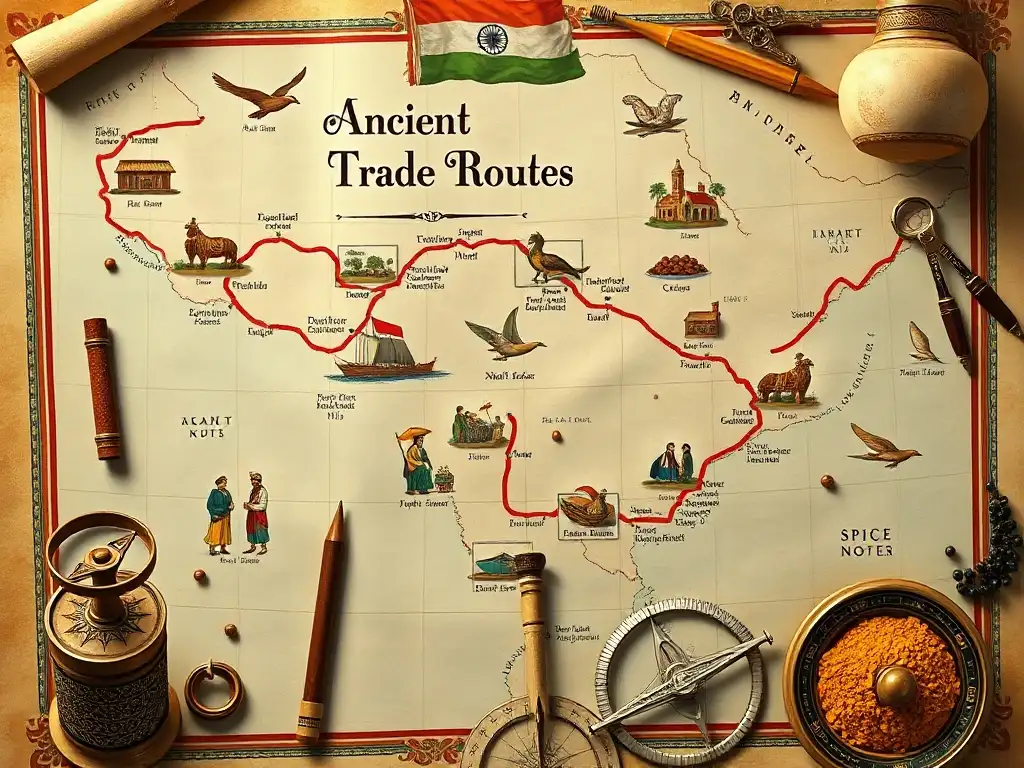
The spice trade was one of the most significant economic activities in ancient India, acting as a catalyst for growth and expansion. Spices such as black pepper, cardamom, and cinnamon were not just culinary enhancements; they held immense value in both local and international markets. Ancient Indian trade routes facilitated the movement of these spices, linking India with various regions, including the Middle East, Europe, and Southeast Asia.
Key Spices Traded in Ancient India
- Black Pepper: Known as "black gold," black pepper was the most sought-after spice. It was used not only for flavoring food but also for medicinal purposes. The demand for pepper led to its cultivation along the Malabar Coast, where it thrived in the humid climate.
- Cardamom: Often referred to as the "Queen of Spices," cardamom was prized for its unique flavor and aroma. It played a vital role in ancient Indian cuisine and was also used in traditional medicine, further increasing its market value.
- Cinnamon: This aromatic spice was highly valued for its flavor and preservative qualities. It was a significant export to various countries, and ancient texts indicate that it was used in religious rituals and offerings.
- Cloves: Originating from the Spice Islands, cloves found their way to Indian markets through trade. Their strong flavor made them popular in both cooking and medicinal applications.
- Turmeric: Known for its vibrant color and health benefits, turmeric was a staple in Indian households. It served both culinary and ceremonial purposes, enhancing its demand in trade.
- Saffron: Although limited in production, saffron's high value stemmed from its use in cooking, medicine, and dyeing. It was a luxurious commodity that attracted traders from far and wide.
Impact of Spice Trade on Indian Economy
The spice trade significantly impacted the economy of ancient India in several ways:
- Economic Prosperity: The export of spices contributed to the wealth of Indian kingdoms, allowing them to fund military campaigns, infrastructure, and cultural projects. The revenue generated from spice trade routes enriched local economies, leading to the establishment of prosperous trading cities.
- Cultural Exchange: Spice trade routes facilitated cultural interactions between India and other civilizations, leading to the exchange of ideas, art, and technology. This cultural diffusion enriched Indian society and laid the groundwork for advancements in various fields.
- Urbanization: The growth of trade led to the emergence of urban centers along key trade routes. Cities like Kochi and Calicut became bustling trade hubs, promoting commerce and attracting merchants from different regions.
- Global Influence: The allure of Indian spices drew traders from the Mediterranean and beyond, establishing India as a central player in global trade networks. This not only enhanced India's economic stature but also its political influence in international affairs.
- Innovation in Trade Practices: The demand for spices encouraged innovation in shipping and trade practices. Advances in navigation and shipbuilding allowed for longer voyages, thereby expanding the reach of Indian traders and facilitating the introduction of new goods and ideas.
The spice trade was a fundamental aspect of ancient Indian trade routes, shaping the economy and society of the time. It not only fostered prosperity but also established India as a pivotal player in the global trade landscape, leaving a lasting legacy on the world stage.
The Silk Road: Connecting Cultures and Economies
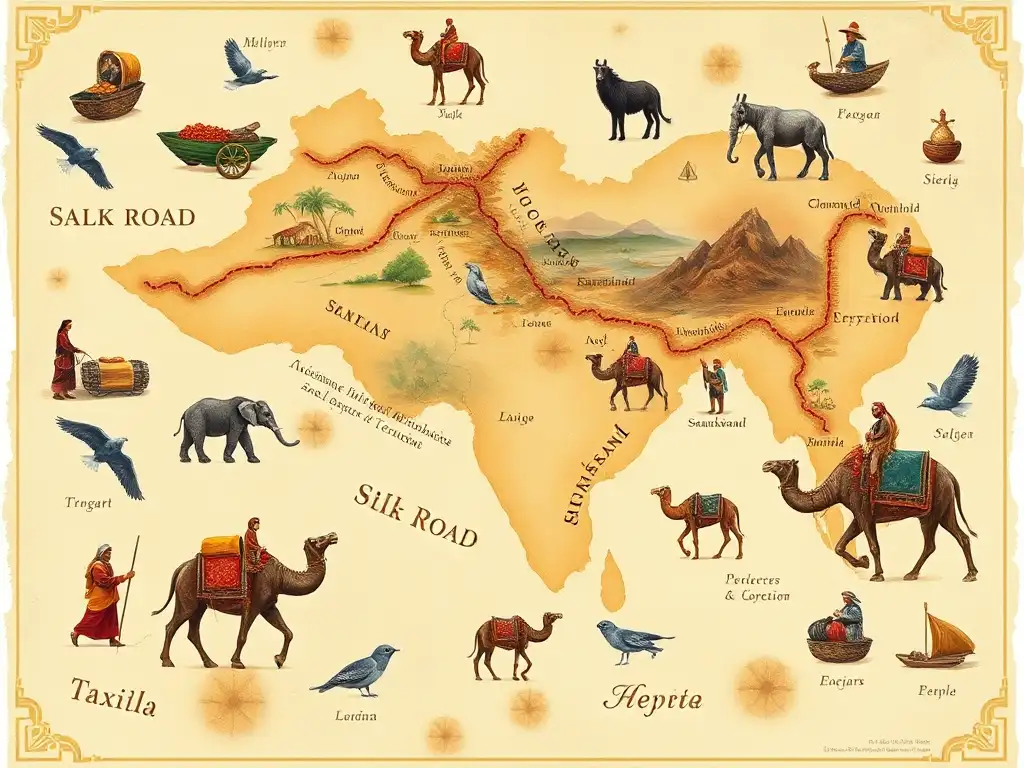
The Silk Road was not merely a single road but a vast network of trade routes that connected the East and West, facilitating the exchange of goods, culture, and ideas. Originating during the Han Dynasty around the 2nd century BCE, the Silk Road extended across Asia and eventually reached Europe, playing a crucial role in the development of civilizations along its path.
This intricate web of trade routes traversed diverse terrains, including deserts, mountains, and steppes, linking cities like Xi'an in China, Samarkand in present-day Uzbekistan, and Constantinople in Turkey. The term "Silk Road" itself comes from the lucrative trade in silk that was carried out along these routes, but the network facilitated the exchange of numerous commodities, including spices, precious metals, textiles, and more.
The establishment of the Silk Road was driven by several factors, including the demand for exotic goods, the desire for cultural exchange, and the need for new markets. As merchants and travelers moved across these routes, they not only traded goods but also shared ideas, philosophies, and technologies, leading to significant cultural and economic interactions between different civilizations.
Historical Context of the Silk Road
The Silk Road's origins can be traced back to the political and economic conditions of ancient empires. During the Han Dynasty in China, the expansionist policies and military conquests opened up territories that were previously isolated. This created opportunities for trade, as new regions were brought into contact with one another. The emergence of a stable political environment, characterized by the Pax Sinica, allowed for safer travel and trade.
The routes of the Silk Road evolved over time, adapting to changes in political landscapes, economic needs, and environmental challenges. Significant trade hubs emerged, such as Kashgar and Bukhara, which became melting pots of culture and commerce. Additionally, the rise of powerful empires, such as the Roman Empire and the Persian Empire, contributed to the Silk Road's expansion, as they sought to control trade and access to valuable resources.
Throughout history, various civilizations influenced the development of the Silk Road. The exchange of goods was often accompanied by the transmission of knowledge, with advancements in science, mathematics, and technology traveling along these routes. For instance, the introduction of papermaking and printing techniques from China to the West can be attributed to the interactions facilitated by the Silk Road.
Ancient Indian Contributions to Silk Road Trade
Ancient India played a pivotal role in the economic dynamics of the Silk Road, serving as a key hub for trade and cultural exchange. Indian merchants were instrumental in transporting goods such as spices, textiles, and gemstones along these routes. The demand for Indian products was particularly strong, as spices like pepper and cardamom became highly sought after in markets across Asia and Europe.
The Indian subcontinent's geographical location made it a crucial link between the East and West. Key trade routes passed through regions such as the northwestern frontier, allowing for the movement of goods into Central Asia and beyond. Indian ports like Lothal and Bharukachchha facilitated maritime trade, connecting India to distant markets in the Mediterranean and the Middle East.
Moreover, the cultural exchanges that occurred along the Silk Road significantly impacted ancient Indian civilization. The spread of Buddhism, which traveled from India to Central Asia and further into China, exemplifies how trade routes served as conduits for religious and philosophical ideas. This not only enriched the cultural tapestry of the regions involved but also established India as a center of spiritual and intellectual thought.
Ancient Indian trade routes were integral to the Silk Road's success, contributing both economically and culturally. The interactions fostered by these trade networks laid the groundwork for globalization in the ancient world, demonstrating the far-reaching influence of Indian civilizations on global trade dynamics.
Major Ancient Indian Trade Routes
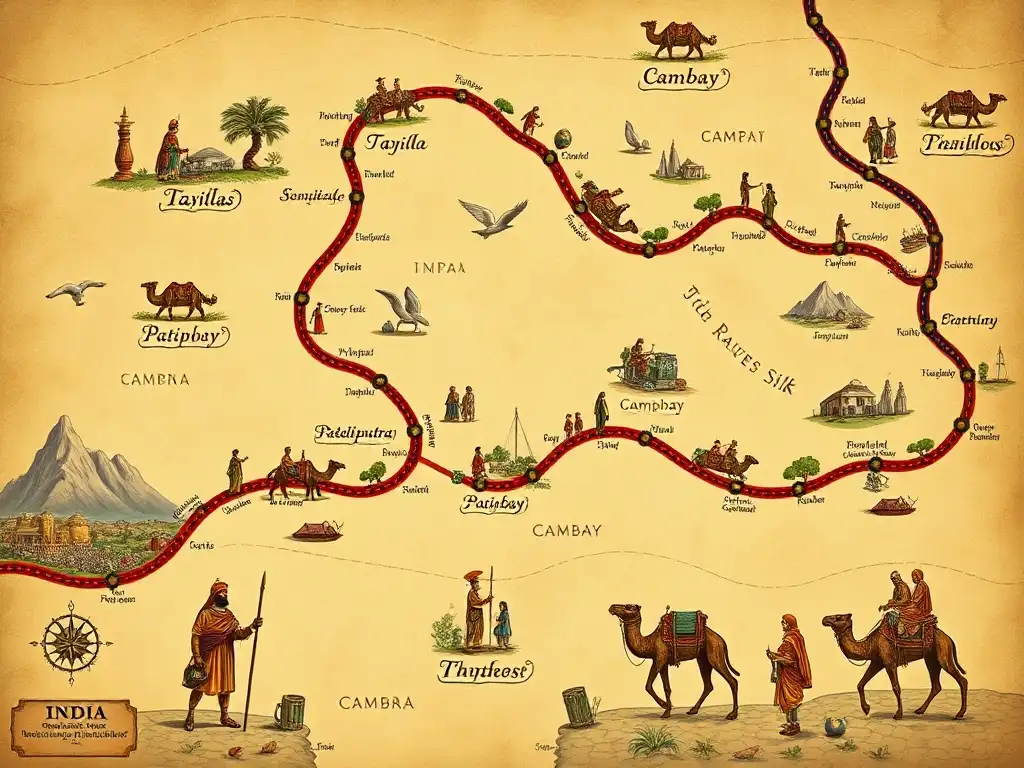
Overview of Key Trade Routes in Ancient India
Ancient Indian trade routes were pivotal in shaping the economic landscape of the subcontinent. These routes not only facilitated the exchange of goods but also fostered cultural interactions and the spread of ideas. At the heart of this vibrant trading network were several key routes that connected India with neighboring regions and beyond.
- Silk Road: This famous overland trade route linked India with China, enabling the exchange of silk, spices, and precious stones. The Indian segment of the Silk Road facilitated trade through regions like the northwestern passes of the Himalayas, particularly the Khyber Pass and the Bolan Pass.
- Maritime Trade Routes: India’s extensive coastline allowed for significant maritime trade. The ports of Lothal, Bharukaccha (modern-day Bharuch), and Sopara became bustling centers for trade with the Persian Gulf, Southeast Asia, and beyond. Indian merchants sailed across the Arabian Sea and the Bay of Bengal, exchanging goods like spices, textiles, and gemstones.
- Southern Trade Routes: The southern regions of India, particularly Tamil Nadu and Kerala, played a crucial role in trade with the Roman Empire and the Middle East. The spice trade, especially in black pepper and cardamom, was a driving force, making these routes essential for commerce.
- Inland Trade Networks: Within India, key routes connected major cities and trade hubs. The routes from Pataliputra (modern-day Patna) to Ujjain facilitated trade in both directions, feeding the demand for goods across various regions.
The interconnectivity of these routes highlights the importance of ancient Indian trade not only in economic terms but also in cultural exchanges that enriched the civilizations involved.
The Role of Maritime Trade Routes
Maritime trade routes were crucial in the economic development of ancient India, enabling the flow of goods, cultures, and ideas across vast distances. Several factors contributed to their significance:
- Geographical Advantage: India’s long coastline along the Indian Ocean facilitated direct access to trade with various regions, including East Africa, the Arabian Peninsula, and Southeast Asia. This geographical positioning allowed Indian merchants to become integral players in global trade networks.
- Key Ports and Cities: Major ports such as Lothal and Bharukaccha served as vibrant centers for commerce. Lothal, in particular, showcased advanced dockyard facilities, facilitating the anchorage of ships and the loading and unloading of goods.
- Trade Goods: The maritime trade routes were characterized by the exchange of high-demand goods. Indian spices, textiles, and luxury items were sought after in foreign markets. In return, India imported goods such as gold, silver, and precious stones, which enriched the Indian economy.
- Cultural Exchange: Maritime trade routes were not just conduits for goods but also for cultural interactions. The influence of Indian religions, particularly Buddhism and Hinduism, spread across Southeast Asia through these routes, leading to the establishment of Indianized kingdoms.
The significance of maritime trade routes in ancient Indian trade cannot be overstated, as they fostered economic prosperity and cultural diversity.
Overland Trade Routes: From India to Central Asia
The overland trade routes connecting India to Central Asia played a critical role in the economic and cultural exchanges of ancient times. These routes were characterized by various unique features:
- Major Overland Passes: The Khyber Pass and the Bolan Pass were critical gateways for trade between India and Central Asia. These routes allowed merchants to transport goods such as silk, spices, and metals across treacherous terrains.
- Cultural and Economic Exchanges: The overland trade routes facilitated not only the exchange of goods but also cultural interactions. Ideas, art, and religious beliefs flowed along these paths, leading to a rich exchange of knowledge and traditions.
- Impact of Empires: The rise and fall of empires, such as the Maurya and Gupta Empires, significantly influenced trade along these routes. The establishment of stable governance and protection along trade paths encouraged merchants to engage in commerce freely.
- Trade Goods: Key exports from India included textiles, spices, and precious stones, while goods imported from Central Asia included horses, wool, and various metals. This mutual exchange of commodities bolstered the economies of both regions.
The overland trade routes from India to Central Asia were instrumental in shaping the economic and cultural landscape of the region, reflecting the interconnectedness of ancient civilizations.
Goods Traded Along Ancient Indian Trade Routes
Ancient Indian trade routes were vital conduits for economic interaction and cultural exchange, facilitating the movement of a variety of goods that significantly influenced both local and distant markets. The rich tapestry of trade involved not just the exchange of commodities but also the blending of ideas and traditions. Below, we explore some of the key goods that were traded along these routes.
Textiles and Fabrics: The Silk Connection
Textiles were among the most prominent goods traded along ancient Indian trade routes, with silk being a standout product. The connection between India and silk production is deeply rooted in history, as India was a major supplier of silk to various regions, especially during the height of the Silk Road.
- Types of Textiles:
- Cotton: India was renowned for its high-quality cotton fabrics, which were lightweight and versatile.
- Silk: Produced primarily in the eastern regions, Indian silk was highly sought after for its intricate designs and vibrant colors.
- Wool: In some northern regions, woolen fabrics also found their way into trade.
- Cultural Influence: The demand for Indian textiles influenced local weaving techniques across various cultures. For instance, the introduction of Indian fabrics in the Roman Empire led to a fusion of styles and designs.
- Trade Centers: Key trade centers like Taxila and Ujjain facilitated the exchange of textiles, becoming bustling hubs of commerce.
Precious Stones and Metals: A Rich Legacy
The trade of precious stones and metals played a crucial role in the economic landscape of ancient India. The subcontinent was endowed with a variety of natural resources that attracted traders from around the world.
- Gemstones:
- Diamonds: Indian diamonds, particularly those from the Golconda mines, were highly prized in markets across Asia and Europe.
- Rubies and Sapphires: Known for their exceptional quality, these gemstones were often intricately cut and set into jewelry.
- Metals:
- Gold and Silver: Ancient India was rich in gold and silver, which were used both as currency and for crafting exquisite jewelry.
- Copper and Iron: These metals were essential for tools and weaponry, enhancing trade with neighboring civilizations.
- Global Impact: The high demand for Indian precious stones and metals contributed to the wealth of ancient kingdoms, making them significant players in international trade.
Other Notable Trade Goods: Spices, Artifacts, and More
In addition to textiles and precious stones, various other goods were integral to ancient Indian trade routes, particularly spices and artifacts.
- Spices:
- Black Pepper: Often referred to as "black gold," pepper was one of the most sought-after spices in ancient times, leading to extensive trade networks.
- Cardamom and Turmeric: These spices not only enhanced culinary experiences but also had medicinal properties that were valued in various cultures.
- Artifacts:
- Pottery and Terracotta: Artisans produced intricate pottery that was traded widely, showcasing the artistic skills of ancient Indian civilizations.
- Sculptures and Statues: Many of these artifacts reflected the rich cultural heritage and religious beliefs, making them valuable in trade.
- Trade Routes: The maritime routes, particularly those connecting the Indian subcontinent with Southeast Asia, facilitated the movement of these goods, enriching both local economies and cultures.
Through these diverse traded goods, ancient Indian trade routes served not only as economic lifelines but also as bridges of cultural exchange that shaped the history of the region and beyond. The legacy of these routes continues to influence trade practices today, reminding us of the rich heritage of ancient Indian civilizations.
The Role of Trade in Cultural Exchange
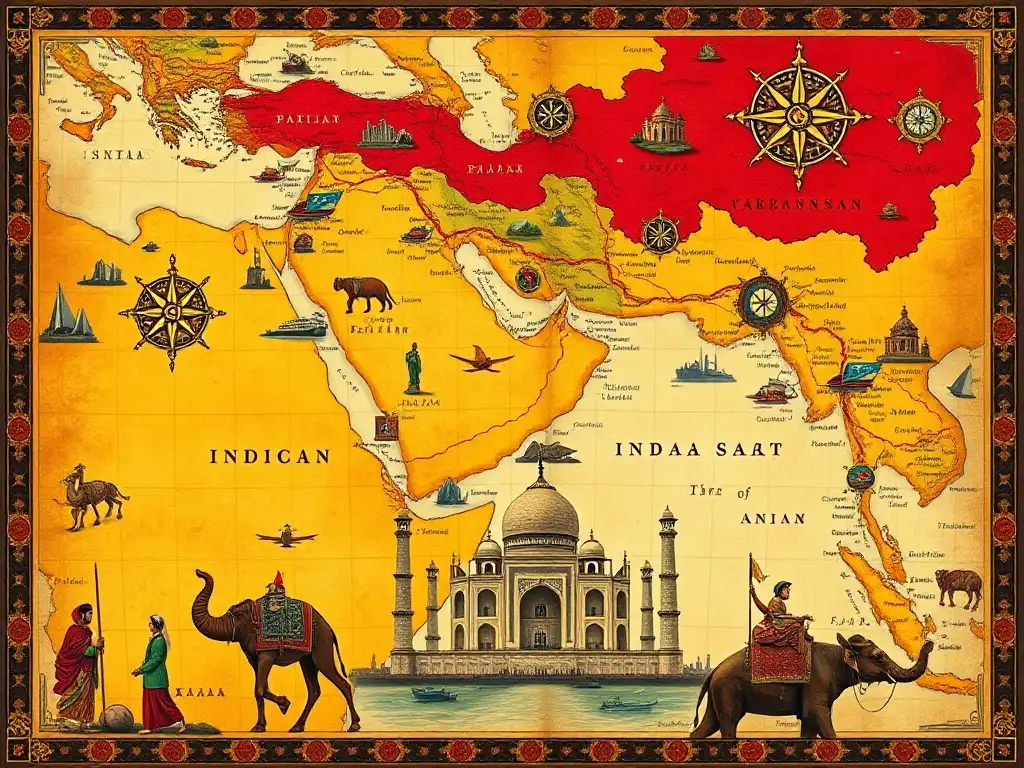
Trade in ancient India was not merely an economic activity; it was a vital force that facilitated cultural exchange and interaction among civilizations. The intricate network of Ancient Indian trade routes, which included both overland paths and maritime routes, played a significant role in connecting India with distant lands. This connectivity allowed for the exchange of not just goods, but also ideas, beliefs, and cultural practices, enriching the societies involved.
The importance of trade in fostering cultural interaction can be observed through various dimensions:
- Economic Growth: Trade stimulated local economies, leading to urbanization and the growth of prosperous cities. The rise of trade hubs like Taxila and Pataliputra can be attributed to their strategic positions along major trade routes.
- Cultural Interaction: As traders traveled, they brought with them diverse cultural elements, which influenced local customs, languages, and art forms. This interaction was critical in shaping the identity of ancient Indian society.
- Infrastructure Development: The need to facilitate trade led to the development of infrastructure such as roads, ports, and marketplaces, which further enhanced connectivity and cultural exchange.
Influence of Trade on Ancient Indian Society
The impact of ancient Indian trade routes on society was profound. Here are some key aspects:
- Economic Prosperity: Trade brought wealth to ancient Indian states, allowing for the patronage of arts and culture. Wealth generated from trade facilitated the construction of temples, educational institutions, and other cultural landmarks.
- Social Stratification: The influx of wealth through trade contributed to the formation of distinct social classes, including merchants and traders who gained prominence in society. This stratification influenced social dynamics and mobility.
- Diversity and Pluralism: The interactions among various cultures led to a diverse societal fabric in ancient India. Regions that were part of trade routes often witnessed a blend of customs, languages, and practices, fostering a spirit of pluralism.
- Political Alliances: Economic interests often translated into political alliances. Kingdoms established diplomatic relations with trading partners, which sometimes led to military alliances or conflicts, further influencing societal structures.
Cultural Exchanges Through Trade: Art, Religion, and Ideas
Ancient Indian trade routes were conduits for a rich exchange of cultural elements. The following points highlight the most significant cultural exchanges that occurred through trade:
- Art and Craftsmanship: The interaction with foreign traders introduced new artistic styles and techniques. For example, the influence of Greco-Roman art can be seen in the sculptures of the Gandhara region, where local artisans integrated foreign styles into their work.
- Religious Diffusion: Trade routes facilitated the spread of religious beliefs. Buddhism, for instance, traveled along the Silk Road, reaching Central Asia and beyond. The exchange of ideas contributed to the development and spread of various philosophical and religious thoughts.
- Language and Literature: The mingling of traders from diverse backgrounds led to the exchange of languages and scripts. This interaction contributed to the evolution of regional dialects and enriched the literary traditions of ancient India.
- Scientific Knowledge: Trade also served as a channel for the transfer of scientific knowledge. Ancient Indian scholars engaged with foreign ideas in fields like mathematics, astronomy, and medicine, which were then integrated into local practices.
Ancient Indian trade routes were not just pathways for commerce; they were vital channels for cultural exchange that significantly influenced the development of ancient Indian society, art, and ideas, solidifying India's position as a crucial hub in the interconnected world of antiquity.
Challenges Faced by Ancient Indian Trade Routes
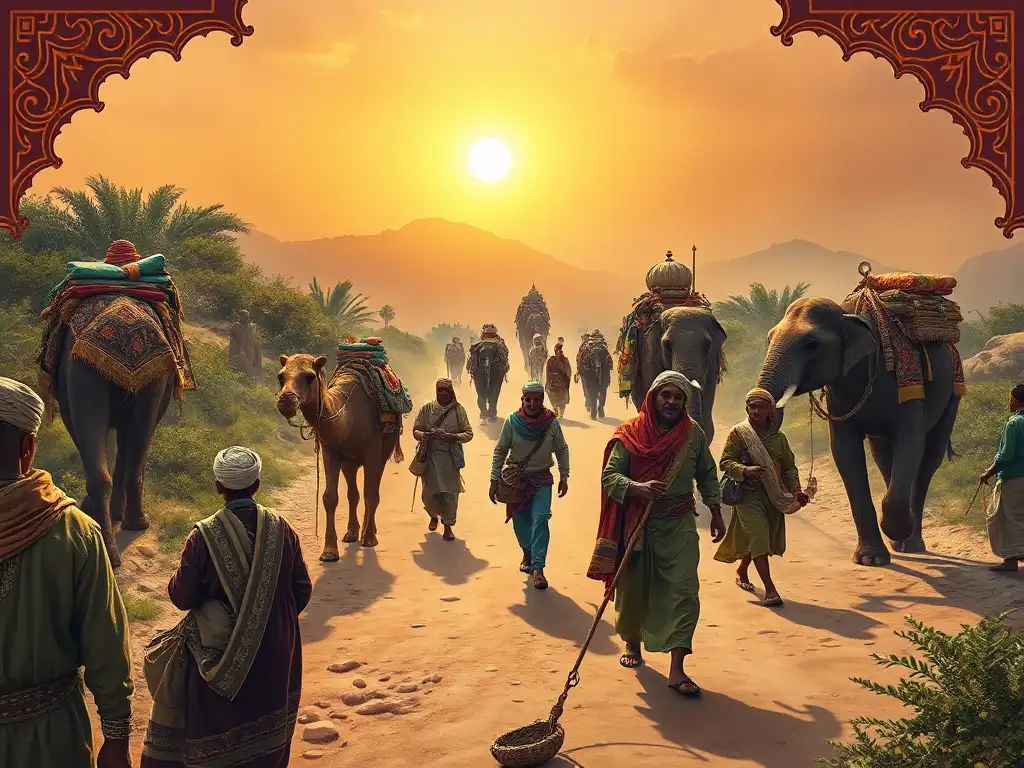
Geopolitical Factors Affecting Trade
Ancient Indian trade routes were not only crucial for the exchange of goods but also heavily influenced by geopolitical factors. The vast expanse of the subcontinent encompassed various kingdoms, each with its political dynamics, which significantly impacted trade.
- Territorial Conflicts: Many ancient Indian trade routes traversed regions that were often contested by kingdoms. For instance, the routes connecting the Indus Valley with Mesopotamia were threatened by the rivalries between the Harappans and neighboring cultures. Such territorial disputes could lead to the closure of trade routes, resulting in significant economic repercussions.
- Political Alliances: On the flip side, strategic alliances between different kingdoms often facilitated trade. The Mauryan Empire, for example, established diplomatic ties with regions as far as the Mediterranean, promoting trade relations and ensuring the safety of traders through mutual agreements. This diplomatic approach allowed for greater stability along trade routes.
- Cultural Exchanges and Influence: The political landscape of ancient India also enabled cultural exchanges that enriched trade. As traders from various regions interacted, they not only exchanged goods but also ideas, religious beliefs, and technologies. This cultural diffusion was pivotal in establishing a vibrant trade network that extended beyond the subcontinent.
- Control of Key Passages: Certain geographical features, such as mountain passes and river crossings, were vital for trade. Control over these passages often determined the prosperity of particular kingdoms. For instance, the Khyber Pass was a strategic point for trade between India and Central Asia, and its control was critical for the flow of goods.
Environmental Challenges and Their Impact on Trade
Environmental factors posed significant challenges to ancient Indian trade routes, influencing the movement of goods and the adaptability of traders.
- Monsoon Variability: The Indian monsoon played a crucial role in trade logistics. While the monsoon rains were essential for agriculture, their unpredictability often disrupted trade. For example, excessive rainfall could flood routes, making them impassable and leading to delays in the transportation of goods. Conversely, droughts could lead to food shortages, impacting trade dynamics.
- Geographical Barriers: The varied geography of India presented both opportunities and challenges for trade. The Himalayas, while providing a natural barrier, also created difficulties for overland trade routes. Traders had to navigate treacherous mountain paths, which not only posed risks to their safety but also increased the costs of trade due to the need for specialized transport.
- Desert Regions: The Thar Desert, located in the northwest, also presented significant challenges. The harsh conditions of the desert made it difficult for traders to traverse, necessitating the use of camels and specialized caravans. The scarcity of water sources along these routes required careful planning and knowledge of the terrain.
- Natural Disasters: Floods, earthquakes, and other natural disasters could abruptly halt trade activities. Historical records indicate that certain regions experienced significant turmoil due to such events, leading to long-term impacts on trade routes. The collapse of infrastructure following a disaster could take years to rebuild, severely affecting the economy.
By understanding these geopolitical and environmental challenges, we gain a deeper appreciation of the resilience and adaptability of ancient Indian trade routes, which were essential for the economic prosperity of the time.
The Legacy of Ancient Indian Trade Routes
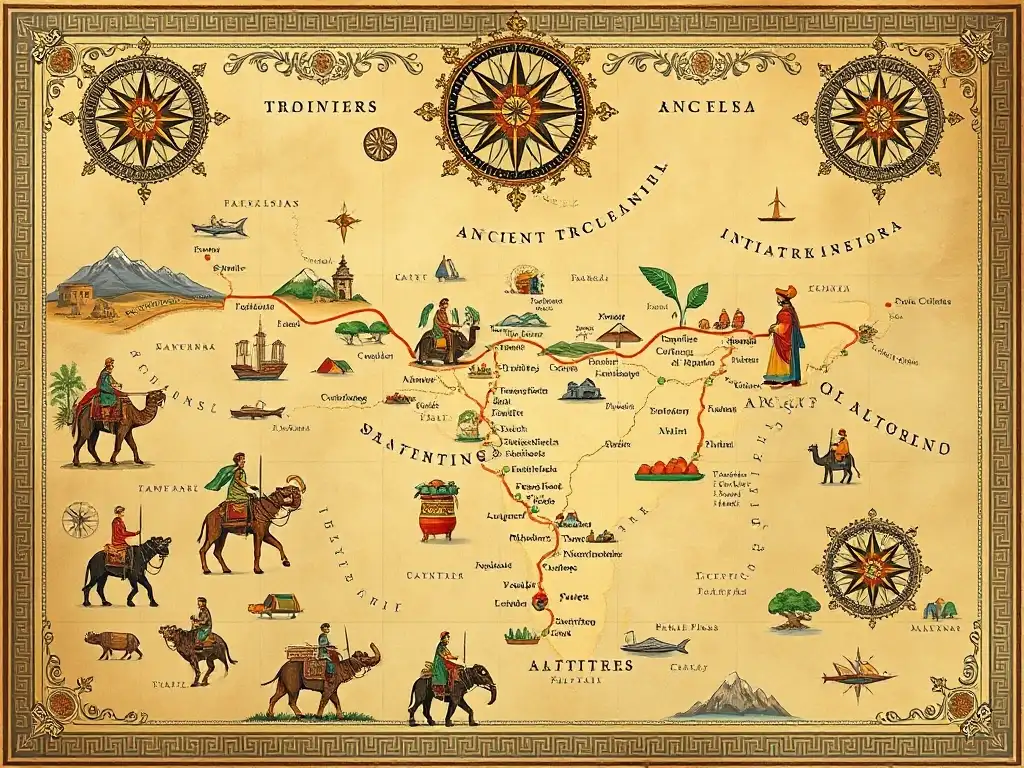
The ancient Indian trade routes were vital arteries of commerce that not only facilitated the exchange of goods but also contributed immensely to the cultural and economic development of the region. Spanning over several millennia, these routes enabled trade with distant civilizations, influencing not just the Indian subcontinent but also regions as far as the Mediterranean, Africa, and beyond.
Influence on Modern Trade Practices
The legacy of ancient Indian trade routes can be seen in contemporary trade practices, which have adopted various elements from these historic pathways. For instance, the strategic positioning of modern trade hubs in cities like Mumbai and Kolkata can be traced back to their historical significance as trading ports on the Arabian Sea and Bay of Bengal, respectively.
The ancient trade routes, such as the Silk Road and the Maritime Spice Route, established early practices of trade that emphasized:
- Network Building: Traders formed networks that facilitated not just the exchange of goods, but also ideas and culture. This concept continues in today’s globalized economy, where businesses often rely on networks for trade.
- Specialization: Different regions became known for specific goods, such as the production of textiles in Gujarat or spices in Kerala. Modern economies still operate on similar principles, with countries specializing in certain exports.
For example, the Indian textile industry, which has roots in ancient trade practices, remains a significant contributor to the economy today, exporting millions of dollars worth of goods globally.
Furthermore, the ancient practice of bartering, where goods were exchanged without the use of currency, has evolved but can still be seen in modern trade agreements where goods and services are exchanged under various arrangements.
Preservation of Trade Heritage in Contemporary India
Today, India continues to honor its rich trading heritage through various initiatives aimed at preserving the legacy of ancient trade routes. Efforts include:
- Cultural Festivals: Events such as the International Trade Fair and various regional artisan fairs celebrate the craftsmanship and goods that were historically traded along ancient routes.
- Educational Programs: Institutions are increasingly focusing on the study of ancient trade practices. For example, courses on ancient Indian commerce are being offered at universities, encouraging a deeper understanding of historical trade dynamics.
Moreover, the Indian government has recognized the importance of these trade routes in fostering economic development. Initiatives like the “Make in India” campaign aim to revive traditional industries, while also encouraging modern manufacturing and trade practices that echo those of the past.
The legacy of ancient Indian trade routes is not only preserved in cultural practices but also serves as a foundational element in contemporary trade strategies, ensuring that the rich history of commerce continues to influence modern economic landscapes.
Conclusion: The Enduring Impact of Ancient Indian Trade Routes
The legacy of ancient Indian trade routes is a profound testament to the economic prowess and cultural richness of early Indian civilizations. These routes, which spanned from the bustling markets of the Indus Valley to the vibrant exchanges along the Silk Road, facilitated not only the movement of goods but also the flow of ideas, technologies, and cultural practices. The intricate web of trade routes connected India to various parts of the world, enabling a robust economy that thrived on the exchange of spices, textiles, precious stones, and more.
The impact of these trade routes extended far beyond mere commerce; they served as conduits of cultural interaction that influenced art, religion, and philosophy. For instance, the exchange of goods along the Silk Road introduced Indian philosophies and religions, such as Buddhism, to Central Asia and beyond. Thus, ancient Indian trade routes were not just pathways for traders, but vital channels for the dissemination of culture and knowledge.
Summary of Economic Power and Cultural Exchange
Ancient Indian trade routes exemplified the economic might of the subcontinent. The trade in spices, particularly black pepper and cardamom, positioned India as a crucial player in global markets. The spice trade was so valuable that it attracted traders from as far as Europe and the Middle East, leading to long-standing commercial relationships.
| Goods Traded | Regions Involved | Cultural Significance |
|---|---|---|
| Spices | Southeast Asia, Middle East, Europe | Culinary influences, cultural exchanges |
| Textiles (Cotton, Silk) | China, Persia, Rome | Development of trade techniques, art styles |
| Precious Stones | Southeast Asia, Middle East | Symbol of wealth, influence on jewelry making |
The exchange of textiles, particularly cotton and silk, not only boosted the Indian economy but also laid the groundwork for the evolution of fashion and textile practices across cultures. The interaction among diverse cultures led to a fusion of artistic styles and techniques, enriching the tapestry of ancient Indian civilization.
The Importance of Understanding Ancient Trade for Future Generations
Understanding ancient Indian trade routes is crucial for contemporary society, as it provides insights into the economic strategies and cultural dynamics that shaped historical civilizations. By studying these trade networks, modern scholars and policymakers can glean valuable lessons about economic resilience, cultural diplomacy, and the importance of connectivity in a globalized world.
The significance of ancient trade routes also highlights the need to recognize the interconnectedness of cultures. The legacy of these routes serves as a reminder that trade is not merely an economic activity but a means of fostering relationships and understanding among diverse peoples. As we navigate the complexities of modern trade and globalization, the lessons from ancient Indian trade routes can inspire collaborative approaches to economic development and cultural exchange.
The exploration of ancient Indian trade routes illuminates the profound impact of historical commerce on contemporary society, encouraging future generations to appreciate and learn from the vibrant tapestry of human interaction that has shaped our world.
Frequently Asked Questions
What were the main trade routes in ancient India?
Ancient Indian trade routes included the Silk Road and maritime paths connecting India with Southeast Asia, the Middle East, and Africa, facilitating the exchange of goods and culture.
How did ancient Indian trade routes impact the economy?
These trade routes significantly boosted the economy by enabling the exchange of valuable goods like spices, silk, and precious stones, contributing to India's wealth and cultural exchange.
What goods were commonly traded along these routes?
Key goods included spices, silks, cotton textiles, and metals, which were highly valued both locally and internationally, enhancing India's status as a major trading hub.
How did trade influence ancient Indian culture?
The trade routes facilitated cultural exchanges, leading to the spread of religions, languages, and artistic influences, which enriched the diverse cultural landscape of ancient India.
What role did the Gupta Empire play in trade?
The Gupta Empire (circa 240-550 CE) was crucial in enhancing trade through improved infrastructure and security along trade routes, leading to economic prosperity and cultural flourishing.
Final Reflection: The Enduring Legacy of Ancient Indian Trade Routes
The intricate web of ancient Indian trade routes not only shaped the economic landscape of their time but also laid the groundwork for cultural exchanges that resonate in our globalized world today. The significance of these trade routes extends far beyond mere commerce; they were conduits of ideas, art, and innovation that fostered connections between diverse civilizations. As we navigate the complexities of modern trade and globalization, the lessons from ancient Indian trade remind us of the power of collaboration and mutual benefit in fostering prosperity.
The impact of these ancient trade routes continues to echo through history, influencing our cultural and social dynamics even today. The exchange of spices, textiles, and knowledge not only enriched the economies of ancient India but also contributed to the cultural tapestry of nations across continents. As we reflect on this legacy, we recognize that trade is not simply about goods; it is about the relationships and understanding that develop through shared interests. Trade is not just a transaction; it is a bridge that connects hearts and minds across the world.
As we consider the lessons from ancient Indian trade routes, I invite you to reflect on your own connections and interactions in today's world. How can you foster collaboration and understanding in your personal and professional life? Embrace the spirit of ancient traders who ventured into the unknown, forging paths of connection and discovery. Let us carry forward their legacy by building bridges in our communities and beyond, reminding ourselves that the true wealth of trade lies not just in material gain, but in the relationships we cultivate along the way.
Unveil the Richness of Ancient Indian Trade!
Thank you for diving into the world of Ancient Indian Trade! We hope you've uncovered fascinating insights about how spice routes and silk exchanges shaped economies and cultures. Now, it’s time to take action and deepen your exploration of this incredible history.
- Visit a local museum or exhibit that showcases artifacts from ancient trade. Engaging with history helps bring it to life!
- Share your insights with friends or on social media. Discussing what you've learned can spark engaging conversations and inspire others.
- Join a history group or forum to connect with fellow enthusiasts. Exploring different perspectives enriches your understanding!
How do you think ancient trade networks influence modern economies today? We would love to hear your thoughts!