
The Intersection of Religion and Politics in Ancient Indian Inscriptions

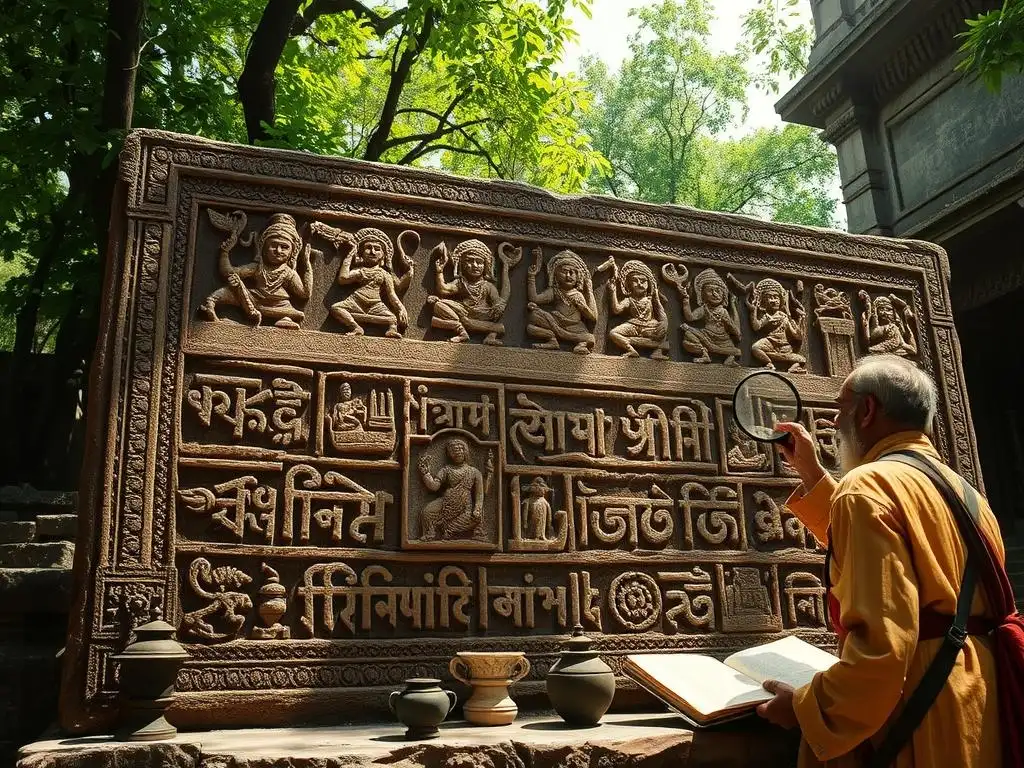
Welcome to Ancient India History, where we delve into the rich tapestry of ancient Indian civilizations and their profound contributions to our world. In our latest exploration, we invite you to uncover the fascinating "ancient Indian inscriptions analysis" that sheds light on the intricate intersection of religion and politics within these historical texts. What secrets do these inscriptions hold about the beliefs and governance of the time? Join us as we unravel their stories and encourage you to dive deeper into the captivating world of inscriptions and epigraphy. Your journey through the past begins here!
Introduction to Ancient Indian Inscriptions Analysis
Ancient Indian inscriptions serve as a vital window into the intricate tapestry of India's past, offering insights into the socio-political and religious dynamics that shaped its civilizations. From the earliest seals of the Indus Valley Civilization to the grand edicts of the Mauryan Empire, these inscriptions are not mere relics; they are powerful narratives that encapsulate the beliefs, governance, and cultural exchanges of their time.
As we delve into the analysis of ancient Indian inscriptions, particularly focusing on the intersection of religion and politics, we uncover how these elements coalesced to influence the development of societies across various epochs. The study of these inscriptions not only enriches our understanding of ancient Indian history but also highlights the enduring legacies that continue to resonate in contemporary Indian culture.
Understanding the Role of Inscriptions in Ancient India
Inscriptions in ancient India played a multifaceted role, serving as tools for communication, governance, and religious expression. They were typically inscribed on durable materials such as stone, metal, and clay, ensuring their survival through the ages. The content of these inscriptions ranged from royal edicts and administrative records to religious hymns and philosophical discourses.
- Administrative Functions: Many inscriptions functioned as decrees or laws issued by rulers, providing insight into governance practices and societal norms.
- Religious Significance: Inscriptions often contained prayers, mantras, and references to deities, reflecting the spiritual dimensions of life and the influence of religion on political legitimacy.
- Cultural Preservation: They served as historical documents that preserved language, script, and cultural practices, allowing modern scholars to study the evolution of Indian civilization.
Importance of Analyzing Religious and Political Themes
The dual themes of religion and politics are intricately woven into the fabric of ancient Indian inscriptions. Analyzing these themes is crucial for several reasons:
- Understanding Power Dynamics: By examining how rulers employed religious narratives to legitimize their authority, historians can better understand the power dynamics of ancient societies.
- Cultural Syncretism: Inscriptions often reveal the coexistence and interaction of various religious traditions, shedding light on the cultural syncretism that characterized ancient India.
- Societal Values: The themes present in inscriptions reflect the values and priorities of the time, offering insights into the moral and ethical frameworks that guided governance.
Historical Context of Ancient Indian Inscriptions
To fully appreciate the significance of ancient Indian inscriptions, it is essential to situate them within their historical context. This involves exploring the civilizations that produced these inscriptions and the historical periods that witnessed their proliferation.
Overview of Ancient Indian Civilizations
Ancient India was home to several great civilizations, each contributing uniquely to the corpus of inscriptions. Key civilizations include:
- Indus Valley Civilization: Characterized by its advanced urban planning and script, though much of its writing remains undeciphered.
- Mauryan Empire: Known for its extensive use of inscriptions, particularly during the reign of Ashoka, who spread Buddhist teachings through edicts.
- Gupta Empire: Marked by a flourishing of arts and sciences, this period saw inscriptions that celebrated both political achievements and religious patronage.
Key Periods in Ancient Indian History Related to Inscriptions
The following historical periods are particularly significant for the analysis of inscriptions:
| Period | Notable Features |
|---|---|
| Indus Valley (c. 3300–1300 BCE) | Early script and seal inscriptions, enigmatic symbols. |
| Mauryan Empire (c. 322–185 BCE) | Edicts of Ashoka promoting Buddhism and moral governance. |
| Gupta Empire (c. 240–550 CE) | Inscriptions celebrating literature, science, and Hinduism. |
Understanding these periods and their contributions to the field of epigraphy allows for a more nuanced analysis of how religion and politics intersected in ancient Indian inscriptions. This intersection not only reveals the complexities of historical governance but also highlights the enduring impact of these themes on the cultural landscape of India.
Themes of Religion in Ancient Indian Inscriptions
Ancient Indian inscriptions serve as invaluable resources for understanding the interplay between religion and politics in historical contexts. These inscriptions often reflect the dominant religious ideologies of the time, as well as the ways in which these ideologies influenced governance and societal structure. The themes derived from these inscriptions encompass various aspects such as the portrayal of deities, the reflection of religious practices, and the overarching influence of major religions like Hinduism, Buddhism, and Jainism on political structures.
By analyzing these themes, scholars can discern how religion shaped political authority and how the ruling elite utilized religious narratives to legitimize their power. The intersection of these two domains not only illuminates the cultural fabric of ancient Indian civilizations but also highlights the complexities of governance influenced by spiritual belief systems.
Depictions of Deities and Their Significance
The depictions of deities in ancient Indian inscriptions often serve dual purposes: they are both religious symbols and political tools. Many inscriptions feature images of gods and goddesses, conveying the divine endorsement of the rulers. For instance, inscriptions from the Maurya period frequently mention deities such as Brahma, Vishnu, and Shiva, emphasizing the belief that moral and divine authority legitimized their sovereignty.
The significance of these depictions lies in their ability to unify the populace under a shared religious identity. Rulers would commission temples and inscriptions that honored these deities, effectively intertwining their political legitimacy with religious devotion. This practice was not merely aesthetic; it reinforced a ruler’s power by aligning their governance with divine will, thereby fostering loyalty among subjects.
Religious Practices and Beliefs Reflected in Inscriptions
Ancient Indian inscriptions reveal a wealth of information about the religious practices and beliefs prevalent in various epochs. Inscriptions often detail rituals, festivals, and offerings made to deities, which were integral to maintaining societal order and divine favor. For example, the inscriptions of Ashoka, the Mauryan emperor, not only promote Buddhist values but also outline his efforts to spread Dharma, emphasizing moral and ethical governance as a religious obligation.
Moreover, these inscriptions provide insights into the daily lives of individuals and communities, illustrating how religious observances influenced social structures. The references to communal worship and public ceremonies in inscriptions show the importance of collective religious practices in fostering community cohesion and cultural identity.
The Influence of Major Religions (Hinduism, Buddhism, Jainism)
The influence of major religions—Hinduism, Buddhism, and Jainism—on ancient Indian inscriptions is profound and multifaceted. Each religion contributed to the political landscape in distinct ways. Hinduism, with its vast pantheon and rituals, often merged with royal authority, wherein rulers would identify themselves with divine figures to reinforce their rule. Inscriptions from various dynasties, such as the Gupta period, reflect this amalgamation, showcasing the rulers as avatars of gods.
Buddhism, particularly during the reign of Ashoka, utilized inscriptions to propagate its philosophies and ethical teachings across vast territories. Ashoka's edicts, carved on pillars and rocks, not only communicated Buddhist doctrines but also functioned as a means of political unification.
Jainism, while less pervasive in imperial politics, still found representation in inscriptions, especially during times when Jain merchants and rulers sought to reflect their values. The presence of Jain inscriptions highlights the diversity of religious thought and its role in shaping political discourse.
Political Context of Ancient Indian Inscriptions
The political context of ancient Indian inscriptions is critical for understanding their creation and purpose. The patronage of rulers and dynasties played a significant role in the production of these inscriptions, often serving as a testament to their authority and achievements. Through careful analysis, historians can gain insights into how political narratives were constructed and the manner in which they intersected with religious themes.
Inscriptions from various periods not only document the political landscape but also illustrate the complex relationships between rulers and the religious institutions of their time. This interplay often reveals how power dynamics shifted in response to changing societal values and religious influences.
Role of Rulers and Dynasties in Inscription Creation
Rulers and dynasties were pivotal in the creation of ancient Indian inscriptions, utilizing them as tools for both self-promotion and governance. The commissioning of inscriptions served several purposes: they documented military victories, territorial expansions, and benevolent acts towards subjects. Dynasties like the Mauryas and the Guptas often employed inscriptions to record their achievements and assert their divine right to rule.
Inscriptions were strategically placed in public spaces to ensure visibility, thereby reinforcing the ruler's presence in everyday life. This practice not only served to glorify the ruler but also acted as a mechanism to communicate with the populace, instilling a sense of unity and shared identity among subjects.
Political Power and Religious Authority in Ancient India
The relationship between political power and religious authority in ancient India is complex and deeply intertwined. Rulers often relied on religious institutions to legitimize their reign, while simultaneously using their political power to support and promote specific religious practices. This dynamic is evident in the way inscriptions reflect the intertwining of royal patronage with religious establishments.
For instance, many inscriptions document land grants to temples and monasteries, indicating the ruler's role in fostering religious communities. This support not only enhanced the ruler's status as a benefactor but also ensured the loyalty of influential religious figures who could sway public opinion. The result was a mutually beneficial relationship where political authority was reinforced through religious endorsement.
Case Studies of Political Inscriptions from Notable Dynasties
Examining specific case studies of political inscriptions from notable dynasties provides deeper insights into the intersection of religion and politics.
- Maurya Dynasty: The Edicts of Ashoka exemplify how inscriptions were used to promote Buddhist principles while consolidating political power. These inscriptions highlighted Ashoka's commitment to Dharma and social welfare, effectively merging his political agenda with religious ideals.
- Gupta Dynasty: Gupta inscriptions often celebrated military conquests and royal lineage while emphasizing the divine right to rule. The inscriptions of Chandragupta II, for instance, not only document his victories but also invoke Hindu deities, reinforcing the notion of divine kingship.
- Chola Dynasty: The Chola inscriptions are notable for their detailed accounts of temple construction and patronage, illustrating how political power was exercised through religious architecture. These inscriptions often reflect the rulers' devotion to Hindu gods and the importance of temples as centers of both spiritual and political life.
Through these case studies, it becomes evident that ancient Indian inscriptions were not just records of events but were intricately linked to the broader narratives of religion and politics, shaping the historical landscape of ancient India.
The Interplay Between Religion and Politics
The relationship between religion and politics in ancient India was intricate and multifaceted, often serving as a cornerstone for governance and societal structure. Ancient Indian rulers typically utilized religious endorsement to legitimize their authority, drawing on the divine to frame their political narratives. This interplay was evident in the way kings presented themselves as protectors of dharma (moral law) and champions of the divine order, thus intertwining their political legitimacy with religious principles.
Inscriptions from various periods reveal how rulers sought the approval of deities and religious leaders to bolster their rule. This symbiosis not only reinforced the authority of the monarchs but also provided a framework for societal norms and values. The emphasis on religious ideals in statecraft can be seen as a means to unify diverse populations under a common belief system, thereby facilitating political stability and cohesion.
How Religion Influenced Political Decisions
Religion played a crucial role in shaping the political landscape of ancient India. Decisions regarding warfare, governance, and diplomatic relations were often influenced by religious beliefs and practices. Rulers would consult oracles, priests, and sacred texts to determine the moral and ethical implications of their actions, ensuring that their decisions aligned with divine expectations.
For instance, the concept of dharma dictated that rulers must govern justly and uphold moral order, influencing their legislative and administrative choices. Additionally, religious festivals and ceremonies were frequently integrated into state functions, further cementing the connection between religious observance and political authority.
The Use of Inscriptions to Validate Political Power
Inscriptions served as powerful tools for rulers to assert and validate their political power. By commissioning inscriptions that highlighted their divine lineage or significant religious contributions, monarchs aimed to reinforce their legitimacy. These inscriptions often appeared on monuments, temples, and pillars, showcasing the ruler’s devotion to gods and their role in promoting religious activities.
Moreover, inscriptions could also function as historical records, chronicling significant events such as victories in battle or the construction of religious sites. This not only preserved the ruler’s legacy for future generations but also illustrated their commitment to maintaining the social and religious order, thereby intertwining their political narrative with their religious obligations.
Examples of Inscriptions Reflecting Religious Endorsement of Rulers
Several inscriptions from ancient India exemplify the endorsement of rulers by religious institutions. One notable example is the Edicts of Ashoka, which reflect the Mauryan Emperor Ashoka's commitment to Buddhism and moral governance. These edicts not only convey ethical guidelines but also reinforce his image as a benevolent ruler guided by religious principles.
Another significant example is the inscriptions found in the temples dedicated to the Hindu deity Vishnu, which often include praises for rulers who contributed to temple construction and maintenance. These inscriptions serve to legitimize the rulers’ authority by linking their reign with divine favor, illustrating the reciprocal relationship between religious institutions and political power.
Methodologies in Ancient Indian Inscriptions Analysis
The analysis of ancient Indian inscriptions requires a multidisciplinary approach, combining epigraphy, archaeology, history, and linguistics. This methodology allows researchers to uncover the complexities of political and religious narratives embedded in the inscriptions.
Techniques for Analyzing Inscriptions
Various techniques are employed in the analysis of inscriptions, including paleography, which involves studying the styles of ancient writing to date and authenticate inscriptions. Additionally, researchers utilize iconography to interpret the symbols and images accompanying the text, shedding light on the cultural and religious context of the inscriptions.
Digital imaging technologies have also revolutionized the field, enabling clearer visualization of worn or eroded texts. This aids scholars in deciphering inscriptions that may have been previously illegible, allowing for more comprehensive analyses of their content and significance.
Challenges in Interpreting Religious and Political Content
Interpreting the religious and political content of ancient inscriptions presents several challenges. The ambiguity of language, variations in dialects, and the evolving nature of script over time can complicate accurate translation and understanding. Furthermore, the cultural context in which these inscriptions were created must be considered, as it significantly influences the meaning and implications of the texts.
Scholars must also navigate potential biases in the inscriptions themselves, as they often reflect the perspectives of the ruling elite while marginalizing alternative viewpoints. This necessitates a critical approach to ensure a balanced interpretation that acknowledges the complexities of ancient Indian society.
Importance of Contextual and Linguistic Analysis
Contextual and linguistic analysis is paramount in understanding ancient Indian inscriptions. Contextual analysis involves examining the historical, cultural, and social circumstances surrounding the creation of an inscription, providing deeper insights into its significance and purpose.
Linguistic analysis, on the other hand, focuses on the language used in the inscriptions, including vocabulary, grammar, and style. This can reveal shifts in language over time and highlight regional variations, offering clues about the audience and intended message. Together, these analytical approaches enrich our understanding of the intersection of religion and politics in ancient Indian history, enhancing the overall analysis of ancient Indian inscriptions.
Case Studies of Significant Inscriptions
The study of ancient Indian inscriptions provides valuable insights into the interplay between religion and politics throughout India's history. Significant inscriptions from various periods reveal how rulers utilized religious ideologies to consolidate power, legitimize their authority, and communicate their governance strategies. Below are notable case studies that illustrate this intersection:
The Edicts of Ashoka: A Study in Religion and Politics
The Edicts of Ashoka, inscribed during the reign of Emperor Ashoka (268-232 BCE), stand as one of the most profound examples of how religion shaped political authority in ancient India. Ashoka, initially a fierce warrior, experienced a transformative journey after the Kalinga War, leading him to embrace Buddhism.
The edicts, carved on pillars and rocks across his empire, convey messages of moral governance, non-violence, and respect for all living beings. They reflect Ashoka's commitment to Buddhist principles and his desire to promote dharma (moral law) as the foundation of his rule. By intertwining religious tenets with his political agenda, Ashoka aimed to unify his diverse empire under a common ethical framework, promoting both spiritual and political cohesion.
Key Aspects of the Edicts:
- Promotion of Buddhist values: Emphasizing compassion and non-violence.
- Governance based on moral principles: Ashoka's vision for a just and ethical administration.
- Communication of ideals: The use of inscriptions to reach a wide audience, transcending linguistic barriers.
Inscriptions from the Gupta Empire: Balancing Religion and Governance
The Gupta Empire (circa 320-550 CE) is often regarded as a golden age in Indian history, marked by significant achievements in art, science, and literature. Inscriptions from this period reflect a nuanced relationship between religion and governance.
Gupta rulers, such as Chandragupta II and Samudragupta, often commissioned inscriptions that highlighted their patronage of Hinduism, particularly the worship of deities like Vishnu and Shiva. These inscriptions served dual purposes: they celebrated the rulers' divine right to rule while simultaneously reinforcing the social order and cultural identity.
Key Features of Gupta Inscriptions:
- Royal patronage of temples: Inscriptions often detail donations and the construction of temples, illustrating the integration of religion into statecraft.
- Celebratory narratives: Rulers utilized inscriptions to narrate their military victories and reinforce their legitimacy as divinely favored leaders.
- Promotion of cultural unity: The inscriptions fostered a sense of shared identity among diverse populations through religious commonality.
Local Inscriptions and Their Reflections of Religious and Political Dynamics
Beyond the grand narratives of emperors, local inscriptions provide a grassroots perspective on the interplay between religion and politics in ancient India. These inscriptions, often found in temples, village sites, and public places, reflect the beliefs, aspirations, and socio-political realities of local communities.
Local rulers and influential families frequently inscribed their contributions to religious institutions, indicating their roles as patrons of faith and their desire to gain social standing and legitimacy. These inscriptions often reveal the localized nature of governance, where religion played a crucial role in community cohesion and political authority.
Insights from Local Inscriptions:
- Community identity: Inscriptions often celebrate local deities and customs, fostering a sense of belonging among residents.
- Religious competition: The presence of multiple religious inscriptions can indicate the coexistence and rivalry of different faiths within a locality.
- Political alliances: Inscriptions may reflect alliances formed through marriage or patronage, showcasing the intricate relationship between local rulers and religious establishments.
Conclusion
Summary of Key Findings in Ancient Indian Inscriptions Analysis
The analysis of ancient Indian inscriptions reveals a complex tapestry of interactions between religion and politics. Through case studies such as the Edicts of Ashoka and the inscriptions from the Gupta Empire, it is evident that rulers strategically employed religious ideologies to consolidate power and legitimize their rule. Local inscriptions further illuminate the significance of community dynamics and the role of religion in shaping political relationships at a grassroots level.
The Significance of Understanding Religion and Politics in Ancient India
Understanding the intersection of religion and politics in ancient India is crucial for comprehending the socio-political landscape of the time. It sheds light on how religious beliefs influenced governance and how political structures were often intertwined with religious institutions. This knowledge can inform contemporary discussions on the role of religion in politics and governance in modern societies, providing historical context and insights.
Future Directions for Research in Ancient Inscriptions
Future research in ancient inscriptions should focus on several key areas:
- Interdisciplinary approaches: Combining epigraphy with archaeology, anthropology, and history to provide a more comprehensive understanding of inscriptions.
- Digital humanities: Utilizing technology to analyze and catalog inscriptions, making them more accessible for study and research.
- Regional studies: Exploring inscriptions from lesser-known regions to uncover diverse narratives and contributions to the overall understanding of ancient Indian history.
By pursuing these directions, scholars can enrich the field of ancient Indian inscriptions analysis and enhance our understanding of the intricate relationship between religion and politics in ancient India.
References
The study of ancient Indian inscriptions provides invaluable insights into the intersection of religion and politics, reflecting the complex societal structures that characterized ancient Indian civilizations. Scholars have extensively analyzed these inscriptions to uncover the ways in which religious beliefs and political power were intertwined. Below are some key references that contribute to this scholarly endeavor.
- C. R. Roy - Inscriptions of Ancient India: This foundational text explores the various inscriptions discovered across ancient Indian sites, examining their historical context and significance in understanding the political and religious dynamics of the time.
- D. C. Sircar - Indian Epigraphy: Sircar's comprehensive work on epigraphy not only details the methods of reading and interpreting inscriptions but also delves into the socio-political implications reflected in these texts.
- V. S. Bhat - The Role of Religion in Ancient Indian Politics: This study focuses on the influence of religious ideologies on political governance, utilizing inscriptions as primary sources to illustrate the connection between divine legitimacy and royal authority.
- R. S. Sharma - Material Culture and Social Formations in Ancient India: Sharma's work analyzes inscriptions within the broader framework of material culture, offering insights into how political and religious narratives were constructed and disseminated through written records.
- K. A. Nilakanta Sastri - A History of South India: This text provides a regional perspective on ancient inscriptions, exploring how local religious practices influenced political structures and vice versa.
Recommended Reading on Ancient Indian Inscriptions Analysis
For those interested in a deeper understanding of ancient Indian inscriptions, the following resources are highly recommended:
- P. R. Thaplyal - Reading Ancient Indian Inscriptions: A practical guide for deciphering inscriptions, offering methodologies and case studies that illustrate the analytical process.
- M. S. Nataraja - Inscriptions of the Gupta Period: This work covers inscriptions from the Gupta Empire, highlighting their significance in both political and religious contexts.
- A. S. Altekar - The Gupta Empire: This book analyzes the inscriptions associated with the Gupta dynasty, reflecting on how political authority was often justified through religious narratives.
- R. C. Majumdar - Ancient India: A comprehensive history that includes discussions on inscriptions as critical evidence for the political and religious interactions of ancient societies.
- B. S. Sinha - Ancient Indian Epigraphy and Culture: This text offers a broader cultural context surrounding inscriptions, providing insights into how they influenced and were influenced by the political landscape.
Key Sources for Further Studies on Religion and Politics in Ancient India
To further explore the relationship between religion and politics in ancient India, the following sources are invaluable:
- H. C. Raychaudhuri - Political History of Ancient India: This book provides an overview of political changes and their interrelation with religious transformations throughout ancient Indian history.
- S. N. Ghosh - The Religious Policies of the Mauryas: Ghosh’s work examines the Mauryan Empire's inscriptions, shedding light on how religious policies were utilized as tools of governance.
- R. N. Misra - The Role of Religion in Ancient Indian Statecraft: This scholarly article discusses the use of religious ideology in legitimizing political authority, using inscriptions as primary evidence.
- K. R. Qureshi - Islamic Influence on Indian Politics: While focusing on a later period, this text explores how religious inscriptions influenced political thought and governance in India, providing comparative insights.
- N. S. Rajaram - Inscriptions and Their Political Contexts: A collection of essays that analyze the political implications of various ancient inscriptions, offering a multidimensional view of their role in society.
These resources will provide a robust foundation for anyone interested in the intricate links between religion and politics as reflected in ancient Indian inscriptions.
- Introduction to Ancient Indian Inscriptions Analysis
- Historical Context of Ancient Indian Inscriptions
- Themes of Religion in Ancient Indian Inscriptions
- Political Context of Ancient Indian Inscriptions
- The Interplay Between Religion and Politics
- Methodologies in Ancient Indian Inscriptions Analysis
- Case Studies of Significant Inscriptions
- Conclusion
- References
- What is the significance of ancient Indian inscriptions?
- How do ancient Indian inscriptions reflect the relationship between religion and politics?
- What role did language play in ancient Indian inscriptions?
- Can modern analysis techniques be applied to ancient Indian inscriptions?
- What are some key examples of ancient Indian inscriptions?
Frequently Asked Questions
What is the significance of ancient Indian inscriptions?
Ancient Indian inscriptions are crucial as they provide insights into the political, religious, and cultural dynamics of past civilizations, revealing the values and beliefs of that era.
How do ancient Indian inscriptions reflect the relationship between religion and politics?
These inscriptions often document royal patronage of religions, showing how rulers used religious authority to legitimize their power and influence, thus intertwining politics with spiritual beliefs.
What role did language play in ancient Indian inscriptions?
Language was essential in inscriptions as it served to communicate royal decrees, religious texts, and cultural narratives, allowing for the preservation of historical records and traditions.
Can modern analysis techniques be applied to ancient Indian inscriptions?
Yes, modern analysis techniques, like digital imaging and linguistic studies, help researchers better understand the context and meaning behind inscriptions, enhancing our knowledge of ancient Indian history.
What are some key examples of ancient Indian inscriptions?
Notable examples include the Ashoka edicts, which convey the principles of Buddhism, and inscriptions from the Gupta Empire that highlight advancements in science, art, and politics.
Final Reflection: The Enduring Legacy of Ancient Indian Inscriptions
The intersection of religion and politics in ancient Indian inscriptions reveals profound insights into the societal values and governance of the time, making it increasingly relevant in today's world. As we navigate contemporary issues of faith, power, and identity, understanding how these themes were expressed in ancient texts can illuminate our current socio-political landscape. The inscriptions serve not only as historical artifacts but also as mirrors reflecting the complexities of human nature and governance.
The influence of ancient Indian inscriptions extends beyond mere historical curiosity; they continue to shape cultural narratives and national identities in modern India. These inscriptions remind us of the intricate relationship between belief systems and political authority, a dynamic that remains pertinent today. History is not just what happened; it is what we remember and how we interpret it.
This ongoing dialogue between past and present encourages us to critically engage with our heritage and recognize the lessons embedded within these ancient texts.
As we reflect on the insights gained from the analysis of ancient Indian inscriptions, I invite you to consider how these lessons can be applied in your own life. How can we draw from the wisdom of the past to foster a more inclusive and understanding society today? Embrace the opportunity to explore the intersections of your beliefs and values with the world around you, and let the rich tapestry of history inspire you to contribute positively to the ongoing narrative of our collective human experience.
Thank you for diving deep into the fascinating realm of ancient Indian history with us! Your exploration into the intricate ties between religion and politics has undoubtedly enriched your understanding of this pivotal era. Now, it's time to take the insights you've gained and translate them into meaningful action.
Consider these steps to further engage with this captivating topic:
- Dive deeper into the inscriptions: Visit your local library or online archives to find specific texts and translations of ancient inscriptions that illustrate the relationship between governance and religion.
- Share your newfound knowledge: Discuss your insights with friends or on social media platforms to help others understand how ancient societies interwove spirituality and politics.
- Join a history forum: Connect with fellow enthusiasts who share your passion for ancient history. Your unique perspective could inspire enlightening discussions!
As you reflect on these actions, consider which aspects of religion and politics in ancient India resonate most with you, and think about how you can apply their lessons to modern governance.