
Gender Roles in the Puranas: A Reflection of Ancient Indian Society

Welcome to Ancient India History, where we embark on a captivating journey through the rich tapestry of ancient Indian civilizations. From the bustling streets of the Indus Valley to the intellectual heights of the Gupta Empire, our exploration unveils the diverse cultures and remarkable contributions that shaped a vibrant society. In our featured article, "Gender Roles in the Puranas: A Reflection of Ancient Indian Society," we delve into the intricate dynamics of gender roles within ancient texts, revealing profound insights into the lives of men and women.
What can these age-old narratives tell us about the societal norms and values of the time? Join us as we uncover the layers of history and challenge your understanding of ancient India.

Introduction to Gender Roles in Ancient India
The exploration of gender roles in ancient India reveals a complex tapestry woven through the diverse narratives and teachings found within the Puranas. These sacred texts, revered for their historical and spiritual insights, not only document the mythological and religious frameworks of the time but also reflect the societal norms and values pertaining to gender. By examining the Puranas, one can gain a deeper understanding of how ancient Indian societies delineated roles, responsibilities, and expectations based on gender, shedding light on the underlying principles that governed social interactions and hierarchies.
Understanding Gender Roles in Ancient Indian Culture
Gender roles in ancient India were deeply ingrained and shaped by various factors, including religion, economy, and social structures. The Puranas serve as a critical resource for understanding these dynamics as they provide narratives that illustrate the roles of men and women in society.
- Men's Roles: Typically, men were viewed as the primary breadwinners and protectors of the family. They were often assigned roles in governance, warfare, and scholarly pursuits.
- Women's Roles: Conversely, women were primarily associated with domestic responsibilities, nurturing, and upholding family honor. However, the Puranas also depict powerful female figures, challenging the notion that women were merely passive participants in society.
This duality highlights the multifaceted nature of gender roles, where women, despite being relegated to domestic spheres, also held significant power and influence in certain contexts, such as in spiritual and familial domains.
The Puranas not only document historical narratives but also actively participate in shaping social norms and values. Through various stories and teachings, they delineate the ideal behavior for men and women, reinforcing traditional gender roles while also providing a platform for critique and reevaluation.
- Moral Lessons: Many Puranic tales serve as moral lessons that guide behavior and expectations within society.
- Cultural Reflection: The portrayal of gender roles in the Puranas reflects the cultural attitudes of the time, thereby offering insights into how these roles evolved and were contested in ancient Indian society.
By analyzing the Puranas, we can better understand the complexities and contradictions that characterize gender roles in ancient India, as well as their lasting impact on contemporary society.
Overview of the Puranas
Definition and Significance of Puranas
The Puranas are a genre of ancient Indian literature that encompass a vast array of topics including mythology, cosmology, and genealogy. Traditionally attributed to the sage Vyasa, these texts serve as a crucial link between the Vedic traditions and later Hindu thought.
- Literary Richness: With over eighteen major Puranas, they are rich in narrative forms and poetic expressions, making them accessible to a wide audience.
- Cultural Preservation: The Puranas play an essential role in preserving the cultural heritage of India, including customs, rituals, and social values, particularly around gender roles.
Key Puranas Relevant to Gender Roles
Several Puranas stand out in their exploration of gender dynamics, offering distinct perspectives on the roles of men and women:
- Bhagavata Purana: Focuses on the life of Lord Krishna and emphasizes the significance of women, depicting them as both devoted followers and powerful figures.
- Vishnu Purana: While outlining the duties of men and women, it also highlights the importance of women's roles in maintaining dharma (righteousness).
- Markandeya Purana: Known for its strong female characters, it challenges traditional notions of femininity and reveals the complexities of women's experiences.
These texts not only reflect the gender roles established in ancient Indian society but also provide a basis for understanding their evolution over time. By delving into these narratives, we can uncover the nuanced interplay between gender, power, and spirituality in ancient India.
Female Characters in the Puranas
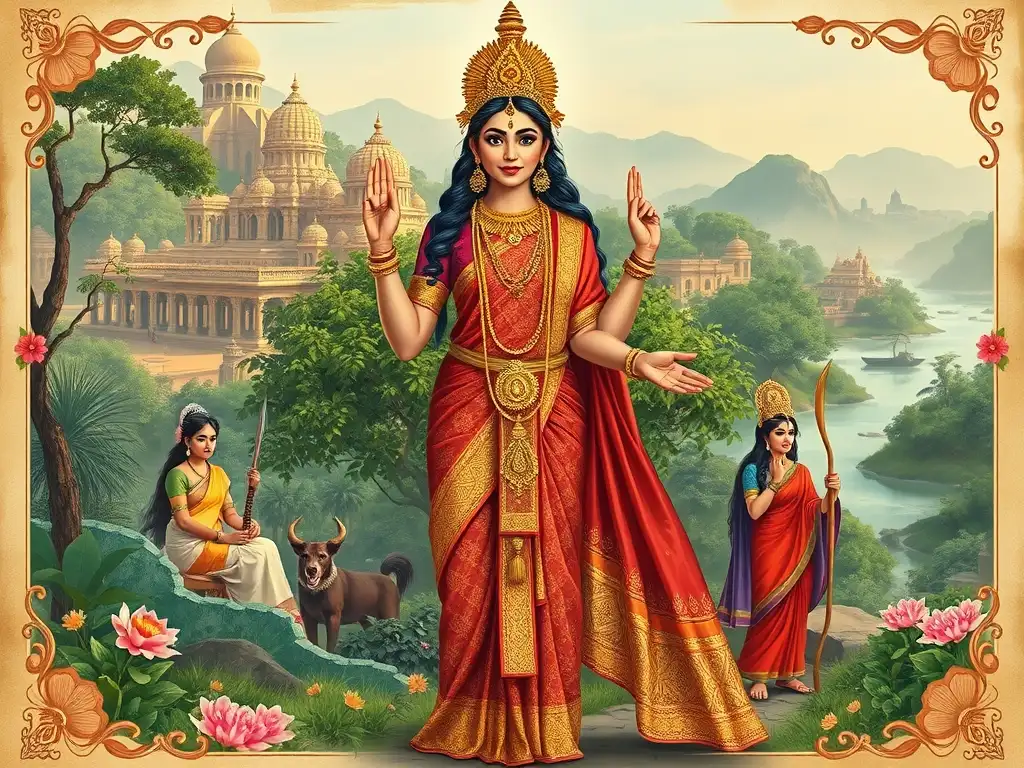
The Puranas, a genre of ancient Indian literature, offer a wealth of narratives that encapsulate the complexities of gender roles in ancient Indian society. Female characters in these texts are often portrayed with a wide range of attributes, strengths, and weaknesses, reflecting the multifaceted nature of womanhood in that era. While some women are depicted as devoted wives and mothers, others are shown as powerful goddesses, wise sages, and even warriors. This duality suggests that the representation of women was not monolithic but rather encompassed various dimensions of their identities and societal roles.
Depictions of Women in Puranic Texts
In the Puranas, women are often depicted through specific archetypes that highlight their societal roles. For example, the ideal of Sati (a woman’s devotion to her husband) is prominently featured, showcasing the virtue of loyalty. Conversely, figures like Durga and Kali represent the fierce and independent aspects of femininity, embodying strength and agency.
The narratives also reflect the significant influence of women in the spiritual and cosmic realms. The goddess Saraswati, as the embodiment of knowledge and arts, illustrates the respect accorded to women who contribute to culture and wisdom. These depictions suggest that while women were often confined to domestic roles, their spiritual and intellectual contributions were recognized and revered.
Influential Female Figures in the Puranas
Numerous female figures in the Puranas stand out for their influence and power. Draupadi, for instance, is a pivotal character in the Mahabharata, often associated with themes of honor and justice. Her unwavering resilience in the face of adversity has made her a symbol of strength and virtue in ancient Indian literature.
Another notable figure is Sita, whose story in the Ramayana emphasizes themes of fidelity and sacrifice. Her experiences reflect the societal expectations placed upon women, yet her character also challenges these norms by showcasing her strength and moral integrity.
Additionally, the goddess Lakshmi symbolizes wealth and prosperity, illustrating the reverence for women in roles that contribute to societal stability and abundance. These influential female figures highlight the complexity of gender roles, showcasing both adherence to and challenges against traditional norms.
Male Characters and Masculinity in the Puranas
Male characters in the Puranas are often depicted as embodiments of strength, valor, and moral integrity. They are frequently portrayed as protectors, warriors, and rulers, reflecting the patriarchal values that dominated ancient Indian society. The narratives surrounding these male figures often revolve around their responsibilities, including the protection of dharma (moral order) and the safeguarding of their families and kingdoms.
Representations of Men in Puranic Literature
The representations of men in Puranic literature are varied, yet they consistently emphasize ideals of honor and bravery. Characters such as Rama, the protagonist of the Ramayana, are depicted as paragons of virtue and righteousness. His adherence to dharma, even in challenging circumstances, sets a moral standard for masculinity in ancient India.
In contrast, characters like King Harishchandra exemplify the trials faced by men in their quest for truth and integrity, often sacrificing personal happiness for the greater good. Such narratives reinforce the expectation of men to uphold moral values, even at great personal cost.
The Concept of Masculinity and Its Implications
The concept of masculinity in the Puranas is closely tied to the ideals of bravery, leadership, and moral rectitude. Men are often depicted as the primary decision-makers, with their worth measured by their ability to protect and provide for their families and communities. This expectation creates a framework within which masculinity is constructed, often leading to rigid gender roles.
However, these representations also imply that masculinity is not solely about strength; it encompasses wisdom, compassion, and ethical behavior. The struggles faced by male characters often reflect societal pressures and the necessity of balancing personal desires with societal expectations. This complexity in the portrayal of masculinity reveals that while the Puranas endorse traditional gender roles, they also hint at the challenges and nuances involved in fulfilling these roles.
Gender roles in ancient India were deeply intertwined with the prevailing social hierarchies, which were largely influenced by caste and class structures. The Puranas, among other ancient texts, provide a comprehensive view of these dynamics, revealing how gender expectations were not only a matter of personal identity but also a reflection of societal norms.
Men were predominantly seen as the providers and protectors, responsible for the family's honor and financial stability. In contrast, women were often associated with domestic roles, focusing on household management, child-rearing, and adherence to the family's social and religious obligations. This binary division of labor reinforced the patriarchal framework, where the male figure held authority and decision-making power.
However, the Puranic narratives also illustrate that gender roles were not static. Women, particularly those of higher social standing, could exert influence in certain contexts, such as in the realms of religion and family lineage. For example, queens and noblewomen occasionally played significant roles in politics and governance, reflecting a nuanced portrayal of women that transcended mere subjugation.
Intersection of Gender Roles with Caste and Class
The intersection of gender roles with caste and class in ancient India introduced additional layers of complexity to societal expectations. The caste system, which categorized individuals into hierarchical groups, significantly influenced the dynamics of gender roles. Women from higher castes often faced stricter regulations than those belonging to lower castes, where labor divisions were more flexible.
In the Puranas, we see examples of how caste could dictate the extent of a woman’s agency. For instance, while Brahmin women were expected to uphold strict codes of conduct and purity, women from lower castes might have engaged in various economic activities outside the home, suggesting a degree of autonomy that was often denied to their upper-caste counterparts.
Moreover, the narratives in the Puranas highlight the role of marriage alliances between castes as a means of social mobility. The expectations placed upon women in these alliances often shaped their identities and roles within the family and society, creating a complex interplay between gender, caste, and class.
Influence of Religion and Rituals on Gender Expectations
Religion and rituals played a pivotal role in shaping gender expectations in ancient India. The Puranas, rich in mythological narratives and religious prescriptions, provide insights into how spiritual practices reinforced societal norms regarding gender. Women were often depicted as vital participants in religious ceremonies, yet their roles were typically confined to supportive positions.
The rituals surrounding marriage, motherhood, and family life were particularly significant in establishing gender roles. For example, the concept of sati (the practice of a widow self-immolating on her husband's funeral pyre) emerged as a powerful symbol of virtue and devotion, reflecting extreme expectations placed upon women. Conversely, women's participation in certain rituals as priestesses or leaders indicated that they could also hold significant religious authority, although such instances were rare.
Furthermore, the portrayal of goddesses in the Puranas, such as Durga and Saraswati, reflects the duality of women's roles—embodying both nurturing and fierce attributes. This duality presents a complex image of femininity that both upheld and challenged the traditional norms of gender roles within ancient Indian society.
Contradictions and Complexities in Gender Roles
The Puranas reveal a tapestry of contradictions and complexities regarding gender roles in ancient India. While the overarching narrative often centered on patriarchal dominance, there were many instances where women's roles were celebrated, acknowledged, and even elevated, creating a multifaceted view of gender dynamics.
Instances of Empowerment vs. Subjugation
Within the Puranas, we find numerous cases that illustrate the tension between empowerment and subjugation. Figures like Draupadi from the Mahabharata, though subjected to humiliation, ultimately became a symbol of resilience and strength, challenging male authority. Her story embodies the struggle against patriarchal oppression while simultaneously highlighting the limitations imposed on women in society.
Moreover, the Puranic texts also depict women as wise and knowledgeable, capable of influencing major decisions and spiritual outcomes. Instances of female sages and scholars, such as Gargi and Maitreyi, showcase that women could achieve prominence in intellectual and spiritual spheres, contradicting the notion of universal subjugation.
However, these empowering narratives often coexist with stories that emphasize women's dependency on male figures, reinforcing traditional gender roles. This duality creates a complex understanding of gender in ancient India, revealing that empowerment and subjugation could coexist within the same cultural framework.
The Role of Context in Understanding Gender Dynamics
To fully grasp the nuances of gender roles in the Puranas, it is crucial to consider the role of context. The historical, regional, and cultural backdrop against which these texts were produced significantly influenced how gender dynamics were portrayed.
For instance, the varying interpretations of women's roles across different regions and periods suggest that gender expectations were not monolithic. In some contexts, women might have enjoyed greater autonomy and influence, while in others, they were more confined.
Additionally, the Puranas themselves were written and compiled over centuries, reflecting the evolving views on gender within ancient Indian society. Historical events, such as invasions, socio-political changes, and shifts in economic structures, also impacted gender roles, demonstrating that these narratives cannot be understood in isolation from their broader historical context.
The exploration of gender roles in the Puranas reveals a rich and complex tapestry that reflects the diverse experiences of women in ancient India. By examining the intersections of gender with caste, class, religion, and historical context, we gain valuable insights into the multifaceted nature of gender dynamics in this period.
Comparative Analysis of Gender Roles in the Puranas and Other Ancient Texts
The Puranas, a genre of ancient Indian literature, provide a distinctive perspective on gender roles within the context of ancient Indian society. To understand these roles more comprehensively, it is essential to compare them with other ancient texts such as the Vedic literature and the great Indian epics, the Mahabharata and the Ramayana.
In the Puranas, women are often portrayed in multifaceted roles, ranging from devoted wives and nurturing mothers to fierce warriors and wise sages. This complexity is similar to that found in Vedic texts, where women like Gargi and Maitreyi are celebrated for their intellectual contributions. However, the representation of women in the Puranas tends to emphasize their divine qualities and spiritual significance, often associating them with specific deities or moral archetypes.
Contrasting the Puranas with the Mahabharata and Ramayana reveals notable differences in the portrayal of female characters. While the epics often highlight the trials and tribulations of women, such as Sita's abduction in the Ramayana and Draupadi's humiliation in the Mahabharata, the Puranas tend to focus more on the divine aspects of femininity and the roles women play in maintaining dharma (cosmic order). This divergence illustrates how societal norms surrounding gender were reflected differently across ancient Indian literary traditions.
Similarities with Vedic Literature
The Puranas share significant similarities with Vedic literature concerning the portrayal of women and their societal roles. Both bodies of work emphasize the importance of women in the family structure, often depicting them as central figures in rituals and domestic life. In Vedic texts, women are acknowledged for their roles as wives and mothers, tasked with upholding the sanctity of the household and bearing children. The Puranas reinforce this notion, celebrating female figures like Savitri, who embodies the ideal wife, demonstrating loyalty and devotion to her husband.
Additionally, both the Vedic texts and the Puranas contain references to the spiritual and intellectual capabilities of women. Figures such as Gargi and Maitreyi from the Vedas are noted for their philosophical inquiries, paralleling the Puranic tales of wise women like Anasuya and Lopamudra. These similarities highlight an underlying recognition of women's potential beyond domestic spheres, suggesting that ancient Indian society valued their contributions to both family and spirituality.
Differences from Other Indian Epics
The differences in the representation of gender roles between the Puranas and other Indian epics, such as the Mahabharata and Ramayana, are significant. While the epics often depict women as victims of circumstance, facing moral dilemmas and societal pressures, the Puranas tend to elevate female characters to divine status. For instance, the Puranas frequently feature goddesses like Durga and Lakshmi, who embody strength, empowerment, and agency, contrasting with the often passive roles assigned to women in the epics.
Moreover, the Puranas offer a more expansive view of women's roles in society, showcasing them as active participants in both the spiritual and cosmic orders. This is in stark contrast to the epics, where women's actions are often confined to familial and domestic realms. The portrayal of female characters in the Puranas suggests a complex understanding of gender that allows for more dynamic interactions between the divine and the mortal spheres.
Conclusion: The Legacy of Gender Roles in Ancient Indian Society
The Puranas provide a rich tapestry of gender roles that reflect the complexities of ancient Indian society. Their narratives not only illuminate the societal expectations placed upon women but also underscore their significant contributions to both the spiritual and cultural fabric of the time.
Lasting Impact of Puranic Gender Narratives on Modern India
The narratives surrounding gender roles in the Puranas have left an enduring impact on modern Indian society. These texts continue to influence contemporary perceptions of femininity and masculinity, often serving as cultural touchstones that shape familial dynamics and societal expectations. The idealized representations of women in the Puranas as both nurturing figures and powerful deities resonate with many in today's society, fostering a duality that can encourage both reverence and empowerment.
Reflection on Evolving Gender Roles in Contemporary Society
As society evolves, the interpretation of gender roles within the context of the Puranas prompts reflection on the changing dynamics of gender in contemporary India. While traditional roles remain influential, there is a growing recognition of the need for equality and the dismantling of rigid gender norms.
The Puranic narratives can serve as a foundation for discussions around gender equity, inspiring a re-evaluation of women's roles in both public and private spheres. This ongoing dialogue is crucial in fostering a more inclusive understanding of gender roles that honors the complexities illustrated in ancient texts while addressing the realities of modern life.
References
Key Texts and Sources on Gender Roles in Ancient India
The exploration of gender roles in ancient India is enriched by a variety of texts and scholarly interpretations that provide insight into societal norms, expectations, and the lived experiences of individuals. Some pivotal texts and sources include:
- The Vedas: As some of the oldest texts in Indian literature, the Vedas provide foundational perspectives on the roles of men and women in rituals and daily life. They depict a society that valued both genders but often placed men in dominant roles.
- The Manusmriti (Laws of Manu): This ancient legal text offers specific guidelines regarding the behavior and roles of women and men in society. It reflects patriarchal values and outlines the duties and responsibilities assigned to each gender.
- The Mahabharata: Beyond being an epic narrative, the Mahabharata includes various stories and dialogues that discuss gender dynamics, highlighting both the struggles and strengths of female characters like Draupadi and Sita.
- The Puranas: A significant source for understanding gender roles, the Puranas not only recount mythological tales but also reflect the societal norms and values regarding gender during the time they were composed. Texts like the Vishnu Purana and Devi Bhagavata Purana contain important narratives about women’s roles in both divine and earthly contexts.
- Historical Records: Accounts from travelers and historians, such as Megasthenes and Fa-Hien, provide external perspectives on the status of women in ancient Indian society, offering insights into their rights, education, and social standing.
These texts collectively contribute to a nuanced understanding of gender roles in ancient India, revealing a complex interplay between tradition, religion, and societal structure.
Suggested Further Reading on Puranas and Gender Studies
For those interested in a deeper exploration of gender roles as depicted in the Puranas and their impact on ancient Indian society, the following readings are recommended:
- "Gender and the Puranas" by V. N. S. S. Rao: This comprehensive study analyzes the representation of women in various Puranic texts, exploring how these narratives shape and reflect societal norms.
- "Women in Ancient India" by K. R. Sharma: This book provides a broader context of women's roles throughout ancient Indian history, including insights derived from the Puranas.
- "The Hindu Woman: A Social and Cultural History" by A. R. K. K. Sharma: This work examines the social status of women in Hindu society, touching on texts such as the Puranas for a holistic view of gender roles.
- "Myth and Reality: Gender in Ancient India" by Uma Chakravarti: This text delves into the dual narratives of myth and historical reality, presenting an analysis of gender as depicted in various ancient texts, including the Puranas.
- "Reimagining Gender in the Puranas" by Ellen Goldberg: An insightful exploration that critically examines gender constructs within Puranic literature, discussing implications for understanding ancient Indian gender dynamics.
These resources provide valuable perspectives and analyses, further enriching the discourse on gender roles in ancient India and the significant contributions of the Puranas.
- Introduction to Gender Roles in Ancient India
- Understanding Gender Roles in Ancient Indian Culture
- Importance of the Puranas in Shaping Social Norms
- Overview of the Puranas
- Female Characters in the Puranas
- Male Characters and Masculinity in the Puranas
- Gender Roles and Social Hierarchies in Ancient India
- Contradictions and Complexities in Gender Roles
- Comparative Analysis of Gender Roles in the Puranas and Other Ancient Texts
- Conclusion: The Legacy of Gender Roles in Ancient Indian Society
- References
- What are the gender roles depicted in the Puranas?
- How did the Puranas influence modern views on gender roles in India?
- Were there exceptions to traditional gender roles in ancient India?
- How do the Puranas compare with other ancient texts regarding gender roles?
- What is the significance of studying gender roles in the context of ancient Indian history?
Frequently Asked Questions
What are the gender roles depicted in the Puranas?
The Puranas illustrate distinct gender roles, showcasing women primarily as caretakers and mothers, while men are often portrayed as warriors and leaders, reflecting the patriarchal structure of ancient society.
How did the Puranas influence modern views on gender roles in India?
The Puranas have significantly shaped cultural perceptions of gender, often reinforcing traditional roles that persist today, thus impacting modern gender dynamics in Indian society.
Were there exceptions to traditional gender roles in ancient India?
Yes, some texts and historical accounts reveal women in roles such as scholars and leaders, indicating that while traditional roles were dominant, there were instances of female empowerment and influence.
How do the Puranas compare with other ancient texts regarding gender roles?
While the Puranas emphasize traditional roles, other texts like the Rigveda and Arthashastra offer more varied representations of women, indicating a complex and sometimes contradictory understanding of gender roles.
What is the significance of studying gender roles in the context of ancient Indian history?
Understanding gender roles in ancient India provides insights into the social structure, cultural norms, and the evolution of gender dynamics over time, helping to contextualize the present-day society.
Final Reflection: Understanding Gender Roles in Ancient India
The exploration of gender roles in ancient India, as depicted in the Puranas, reveals profound insights into the societal norms and values of the time. These ancient texts not only reflect the prevailing attitudes towards gender but also serve as a mirror to the complexities of human relationships and societal structures. As we navigate the modern world, the lessons from these narratives resonate deeply, reminding us that the foundations of gender roles have been laid over centuries, influencing contemporary thought and behavior.
The Puranas offer a rich tapestry of stories that shape our understanding of gender dynamics, illustrating both the reverence and restrictions placed upon individuals based on their gender. The ongoing dialogue surrounding gender equality and the reevaluation of traditional roles can be traced back to these ancient texts. As noted by feminist scholar Uma Chakravarti, The past is not a dead weight; it is a living force that shapes our present.
This perspective invites us to critically examine how historical narratives continue to inform our current societal frameworks and personal identities.
As we reflect on the lessons embedded in the Puranas, let us challenge ourselves to rethink and redefine gender roles in our own lives and communities. Consider how you can contribute to a more equitable society by embracing the complexities of gender and advocating for inclusivity. Each of us has the power to influence change, drawing inspiration from the past while forging a path toward a more just future. Embrace this opportunity to reflect on your own beliefs and actions, and let them guide you in creating a world where everyone, regardless of gender, can thrive.
Unveil the Perspectives of Gender in Ancient Texts!
Thank you for taking the time to explore the intricate dynamics of gender roles presented in the Puranas. We hope you’ve gained a deeper understanding of how these ancient texts reflect the complexities of society in their time. Now, let's turn that knowledge into action!
Here are a few steps you can take to further your exploration of this fascinating topic:
- Dive deeper into the Puranas: Set aside time to read selected chapters from the Puranas. **Focus on the themes of gender portrayals** and compare them with contemporary gender roles in society.
- Share your insights: Join our community forums or social media pages and engage in discussions about your findings. **Encourage others to reflect on how these ancient texts shape modern views on gender**.
- Explore gender in other cultures: Broaden your understanding by researching gender roles in ancient texts from diverse cultures. **Identify similarities and differences with the Indian context**.
What specific insights about gender roles from the Puranas resonated with you the most, and how can they inspire change in today's society?