
The Gupta Empire's Impact on International Relations in Ancient India


Welcome to Ancient India History, where we embark on a fascinating journey through the rich tapestry of India's past! Here, we delve into the remarkable civilizations that shaped the subcontinent, from the enigmatic Indus Valley to the illustrious Gupta Empire.
In our featured article, "The Gupta Empire's Impact on International Relations in Ancient India," we explore how this golden age not only thrived internally but also engaged with distant lands, forging connections that would influence cultures and economies for centuries. Prepare to uncover the intricate web of diplomacy and trade that defined the Gupta era, and let your curiosity guide you as you explore the profound legacies of ancient Indian civilizations!
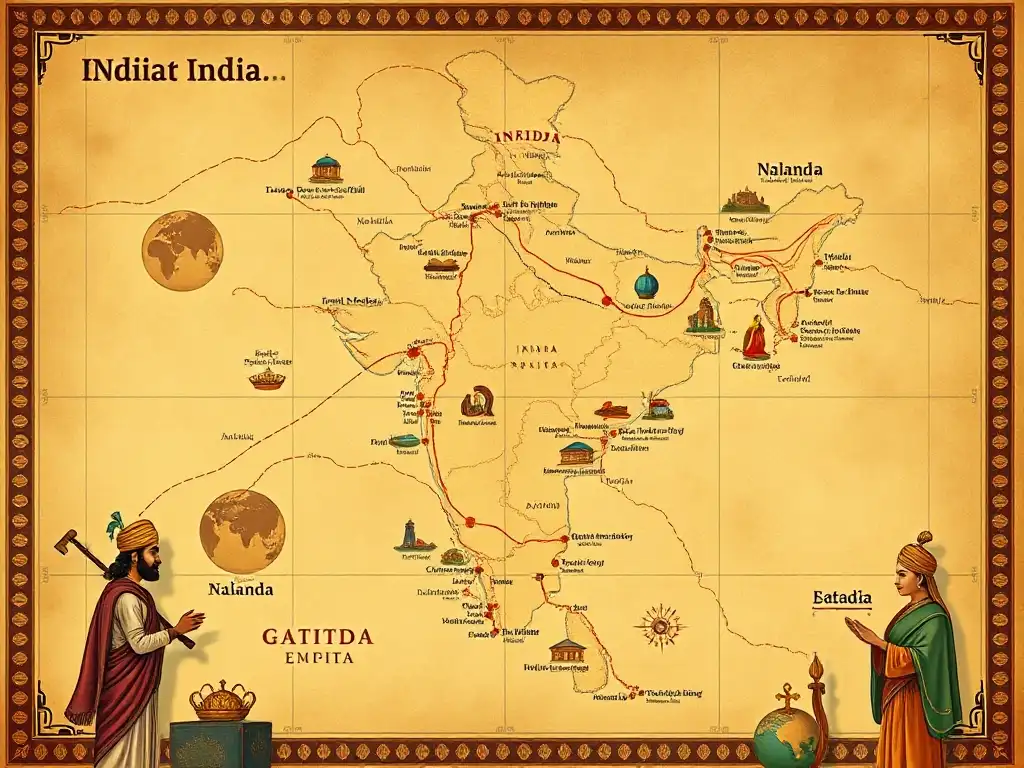
Introduction to the Gupta Empire and Its Role in International Relations
The Gupta Empire, often heralded as the Golden Age of India, marked a period of unparalleled prosperity, cultural richness, and intellectual advancement from approximately 320 to 550 CE. This era not only saw significant developments in art, literature, and science but also played a crucial role in shaping international relations in ancient India.
The Gupta rulers established diplomatic ties and trade networks that extended beyond the Indian subcontinent, influencing various regions and civilizations. The examination of the Gupta Empire's international relations reveals how these interactions contributed to the cultural and economic landscape of ancient India, while also highlighting the empire's strategic importance in the broader context of global exchanges during that time.
Overview of the Gupta Empire's Historical Context
The Gupta Empire emerged after the decline of the Maurya Empire, establishing its dominance through military conquests and strategic alliances. The empire's founders, Sri Gupta and Chandragupta I, laid the groundwork for a centralized administration that facilitated governance and trade. Under Chandragupta II, the empire reached its zenith, expanding its territory and enhancing its influence in the region.
The Gupta period was characterized by relative political stability, which allowed for increased interactions with neighboring states and distant lands. This stability fostered an environment conducive to both internal development and external engagement, making the Gupta Empire a pivotal player in international relations during its time.
Significance of International Relations in Ancient India
International relations in ancient India were not merely a function of diplomacy; they were deeply intertwined with trade, cultural exchange, and military alliances. The Gupta Empire's engagement with other civilizations provided a platform for the exchange of ideas, goods, and cultural practices. This dynamic interaction contributed significantly to the socio-economic development of ancient India.
Through diplomatic missions, the Gupta rulers established relationships that enhanced trade routes, allowing merchants to traverse vast distances, thereby enriching both local and foreign economies. Furthermore, the cultural exchanges initiated during this period had lasting impacts, influencing art, religion, and philosophy across various regions. Thus, the Gupta Empire's international relations were vital in shaping the historical narrative of ancient India.
The Gupta Empire: A Golden Age of Cultural Exchange
Cultural Flourishing and Its Impact on Diplomacy
The Gupta Empire is renowned for its cultural achievements, which included advancements in literature, science, and the arts. This flourishing of culture played a significant role in diplomacy, as Gupta scholars and artists were often sent as envoys to foreign courts. The patronage of the arts not only enhanced the empire's prestige but also facilitated cultural exchanges that enriched both the Gupta Empire and its international counterparts. For example, the renowned playwright Kalidasa and the mathematician Aryabhata were products of this vibrant cultural milieu, their works influencing other civilizations and fostering goodwill through cultural diplomacy.
Trade Networks Established by the Gupta Empire
The Gupta Empire established extensive trade networks that connected India with regions as far as Southeast Asia, the Middle East, and East Africa. These trade routes were instrumental in the exchange of goods such as spices, textiles, and precious stones, which were highly sought after in international markets. The empire's strategic location along the Silk Road allowed it to become a significant player in global trade.
This economic engagement not only brought wealth to the Gupta Empire but also facilitated the exchange of ideas, technologies, and cultural practices, reinforcing its role in international relations. The legacy of these trade networks can still be traced in the historical connections between India and other ancient civilizations.
Diplomatic Relations of the Gupta Empire
The Gupta Empire, often referred to as the Golden Age of India, is known not only for its remarkable advancements in art, science, and culture but also for its significant contributions to international relations. This era, which spanned from approximately 320 to 550 CE, saw the establishment of a sophisticated diplomatic framework that enhanced the empire's standing in the international arena. The Gupta rulers engaged in diplomatic negotiations, formed alliances, and maintained cordial relationships with various nations and civilizations, thereby facilitating trade, cultural exchange, and mutual support against common threats.
The diplomatic relations of the Gupta Empire were characterized by a blend of strategic marriages, envoy missions, and treaties. These efforts were aimed at securing peace, promoting trade, and extending territorial influence. The Gupta emperors recognized the importance of diplomacy as a tool for maintaining stability and prosperity, which in turn fostered an environment conducive to economic growth and cultural flourishing.
Key Nations and Regions Engaged in Diplomacy
The Gupta Empire's diplomatic endeavors extended across various regions, highlighting its influence and reach. Key nations and regions engaged in diplomacy with the Gupta Empire included:
- China: The Gupta Empire maintained a steady flow of cultural and commercial exchanges with China. This relationship not only facilitated trade in silk and spices but also allowed for the exchange of ideas, particularly in Buddhism.
- Sassanian Empire: As one of the Gupta Empire's prominent neighbors, diplomatic relations with the Sassanian Empire were crucial. Both empires engaged in trade and cultural exchanges, despite occasional military conflicts.
- Southeast Asia: The Gupta Empire played a pivotal role in establishing trade links with kingdoms in Southeast Asia, including Funan and Srivijaya. These relationships were instrumental in spreading Indian culture and trade routes throughout the region.
- Central Asian States: Diplomatic contacts with Central Asian states such as the Kushans and various nomadic tribes facilitated the movement of goods and ideas along the Silk Road, further enhancing the Gupta Empire's international standing.
Notable Diplomatic Missions and Treaties
Several notable diplomatic missions and treaties during the Gupta Empire illustrate its commitment to maintaining and expanding international relations:
- Envoys to China: The Gupta emperors sent envoys to the Chinese court, fostering bilateral relations that led to an exchange of knowledge and culture. This included the introduction of Indian astronomical knowledge to Chinese scholars, which had a lasting impact on Chinese astronomy.
- Treaty with the Sassanian Empire: The Gupta Empire and the Sassanian Empire entered into treaties that helped to define their borders and facilitated trade. These agreements were crucial in reducing hostilities and fostering a stable environment for merchants operating in the region.
- Marriage Alliances: Strategic marriages between Gupta royalty and foreign dignitaries were common, serving as a means to solidify alliances. Such unions helped to strengthen ties with neighboring kingdoms and foster peaceful coexistence.
The Gupta Empire's Influence on Neighboring Civilizations
The Gupta Empire's impact on international relations extended beyond mere diplomacy; it significantly influenced neighboring civilizations through cultural exchanges and military engagements. The empire's advanced administrative systems and cultural achievements served as a model for other societies, promoting stability and prosperity in the region.
Relations with the Sassanian Empire
The relationship between the Gupta Empire and the Sassanian Empire was complex and multifaceted. Initially characterized by rivalry, it evolved into a more nuanced diplomatic engagement. Both empires recognized the need for collaboration in trade and defense against common adversaries, such as the Huns. The flow of trade goods, including textiles, gemstones, and spices, enriched both civilizations and led to cultural exchanges in art, religion, and philosophy.
The two empires also shared religious connections, particularly in Zoroastrianism and Buddhism, which facilitated dialogue and mutual respect. Diplomatic missions were common, with envoys traveling between courts to negotiate treaties and maintain cordial relations. This interaction played a significant role in shaping the political landscape of the region during the Gupta period.
The Gupta Empire's Interaction with Southeast Asia
The Gupta Empire had a profound influence on the cultures and political structures of Southeast Asia. Through trade routes, Indian merchants and diplomats introduced Indian culture, religion, and governance principles to various Southeast Asian kingdoms. The spread of Hinduism and Buddhism, along with Indian art and architecture, is evident in several historical sites across the region.
Key interactions included:
- Funan: The Gupta Empire established trade relations with the Funan kingdom, facilitating the transfer of Indian cultural practices and religious beliefs. This relationship significantly influenced the political and cultural landscape of Southeast Asia.
- Srivijaya: The empire's interactions with Srivijaya, a powerful maritime kingdom, included both trade and cultural exchanges. The Gupta influence is evident in the adoption of elements of Indian governance and religious practices in Srivijaya's administration.
- Cultural Exchange: The Gupta period marked a significant flow of ideas between India and Southeast Asia, leading to a rich tapestry of cultural intermingling. This exchange contributed to the development of unique regional identities while preserving core elements of Indian culture.
The Gupta Empire's diplomatic initiatives and cultural exchanges with neighboring civilizations laid the groundwork for a sophisticated international relations framework that enhanced its influence and legacy in ancient history.
The Role of Religion in Gupta International Relations

Religion played a pivotal role in shaping the international relations of the Gupta Empire, influencing diplomatic ties and cultural exchanges with neighboring regions. The Gupta rulers were known for their patronage of Hinduism and Buddhism, which not only fostered internal unity but also served as a means to create rapport with foreign nations. This religious engagement allowed the Gupta Empire to position itself as a significant player on the international stage, promoting peace and alliances through shared beliefs and practices.
Spread of Buddhism and Hinduism Beyond India
During the Gupta period, both Buddhism and Hinduism experienced significant growth and expansion beyond the borders of India. The Gupta emperors, particularly Samudragupta and Chandragupta II, actively supported Buddhist missionaries and Hindu scholars, facilitating the spread of these religions to regions such as Southeast Asia, Central Asia, and even parts of the Middle East.
Key Factors in the Spread:
- Missionary Activities: Monastic orders, such as the Buddhist Sangha, played a crucial role in spreading Buddhist teachings. They established monasteries and learning centers, which became hubs of cultural exchange.
- Cultural Exchanges: Trade routes not only facilitated the movement of goods but also the exchange of religious ideas and practices. As merchants traveled, they brought with them religious texts, artifacts, and teachings, leading to the establishment of Buddhist and Hindu communities abroad.
- Royal Patronage: Gupta emperors commissioned temples and stupas, which served as symbols of their commitment to these religions and attracted pilgrims from distant lands.
This religious diffusion fostered a sense of shared identity and cultural affinity that enhanced diplomatic relations with other regions, creating a network of alliances based on mutual respect for each other's religious traditions.
Religious Diplomacy and Its Impact on International Relations
The Gupta Empire's approach to religious diplomacy significantly influenced its international relations. By promoting tolerance and understanding between different religious communities, the Gupta rulers were able to establish and maintain peaceful relations with neighboring kingdoms and regions.
Key Aspects of Religious Diplomacy:
- Intermarriage: Gupta rulers often arranged marriages between their royal family and those of neighboring states, which helped to solidify alliances and promote goodwill. These unions were frequently between families of different religious backgrounds, showcasing a commitment to religious pluralism.
- Cultural Exchanges: Religious festivals and ceremonies were often shared between states, providing a platform for diplomatic engagement. These gatherings allowed for discussions on governance, trade, and mutual interests, further strengthening ties.
- Support for Pilgrimages: The Gupta Empire encouraged pilgrimages to sacred sites, often providing protection and resources for travelers. This not only enhanced the status of the Gupta rulers but also facilitated cultural and religious interactions with foreign dignitaries.
Through these diplomatic strategies, the Gupta Empire effectively navigated the complexities of international relations, leveraging religion as a tool for fostering alliances and cooperation.
Economic Factors in Gupta International Relations
The economic landscape of the Gupta Empire was intricately linked to its international relations, with trade and commerce serving as key drivers of diplomatic engagement. The Gupta rulers understood the importance of economic stability and prosperity in securing their influence both domestically and internationally.
Trade Routes and Economic Alliances
The Gupta Empire thrived as a center of trade, with well-established routes connecting it to various regions, including Southeast Asia, the Middle East, and beyond. These trade routes not only facilitated the exchange of goods but also played a crucial role in forming economic alliances.
Significant Trade Routes:
- Land Routes: The Grand Trunk Road and other caravan routes allowed for the movement of merchants and goods, linking the Gupta Empire with the Silk Road trade network.
- Maritime Trade: Ports along the western coast of India, such as Sopara and Bharukachchha, served as vital hubs for maritime trade, connecting the Gupta Empire to distant markets in Africa and the Arabian Peninsula.
Economic Alliances:
- Mutual Trade Agreements: The Gupta rulers engaged in trade agreements with foreign powers, creating alliances that were beneficial for both parties. These agreements often included favorable tariffs and protection for merchants.
- Cultural Exchange through Trade: The influx of goods, ideas, and technologies through trade fostered a sense of interconnectedness, leading to improved diplomatic relations with trading partners.
The robust trade network established by the Gupta Empire served as a foundation for its international relations, creating a framework for collaboration and mutual benefit.
The Role of Coinage in Facilitating Trade
Coinage emerged as a vital instrument in facilitating trade during the Gupta Empire, contributing significantly to its international relations. The Gupta rulers introduced a standardized system of coinage that enhanced commerce both domestically and with foreign nations.
Key Features of Gupta Coinage:
- Standardization: The introduction of gold coins, known as "dinar," helped standardize transactions, making trade more efficient and reliable. This uniformity attracted traders from various regions, boosting the economy.
- Cultural Significance: Gupta coins often featured images of deities and symbols reflecting the empire's religious values, which not only promoted the faith but also served as a medium of cultural exchange with other civilizations.
- Economic Influence: The widespread use of Gupta coinage in trade networks established the empire as a major economic power. This economic strength allowed the Gupta rulers to engage in diplomatic negotiations from a position of influence.
Through the effective use of coinage, the Gupta Empire facilitated trade, strengthened economic ties, and enhanced its international relations, solidifying its status as a prominent player in the ancient world.
The Legacy of Gupta International Relations
The Gupta Empire, often referred to as a golden age of Indian civilization, was notable not only for its advancements in art, science, and philosophy but also for its significant contributions to international relations. The Gupta rulers established a network of diplomacy and trade that extended far beyond their borders, influencing neighboring regions and contributing to a vibrant exchange of culture and ideas. The legacy of Gupta international relations is evident in the subsequent diplomatic practices and trade routes that emerged in South Asia, which fostered cooperation and communication among various kingdoms and empires.
The Guptas employed a variety of diplomatic strategies, including alliances through marriage, tribute systems, and the establishment of embassies. These practices not only solidified their power within India but also facilitated interactions with foreign powers, such as the Huns, the Chinese, and the Persians. The emphasis on diplomacy allowed the Gupta Empire to maintain relative peace during its reign, promoting economic stability and cultural exchange that would echo through the ages.
Long-term Effects on Subsequent Indian Empires
The impact of Gupta international relations on subsequent Indian empires cannot be overstated. After the decline of the Gupta Empire, many of the diplomatic practices and trade networks they established continued to shape the political landscape of India. The emphasis on alliances and negotiations became a cornerstone for later empires, such as the Harsha Empire and the Chola Dynasty, which built upon Gupta precedents to foster regional stability and influence.
Moreover, the trade routes established during the Gupta period laid the groundwork for future economic exchanges with Southeast Asia, the Middle East, and beyond. The flourishing trade in spices, textiles, and precious stones not only enriched Indian kingdoms but also created a foundation for international commerce that would thrive for centuries. This interconnectedness facilitated the spread of cultural ideas, religions, and technologies, further enhancing the legacy of Gupta diplomacy.
Modern Perspectives on Gupta Diplomacy and Trade
Modern historians and scholars recognize the Gupta Empire's international relations as a complex and sophisticated system that contributed to the empire's longevity and prosperity. Recent research highlights how Gupta diplomacy was not merely reactive but strategically proactive, often anticipating potential conflicts and addressing them through negotiation rather than warfare.
Trade, too, is viewed through a contemporary lens, acknowledging its pivotal role in shaping the economic framework of ancient India. Archaeological findings, such as inscriptions and artifacts, provide evidence of extensive trade relations with regions as far away as Rome and Southeast Asia. This not only underscores the Gupta Empire's status as a significant player in global trade but also illustrates the cultural exchanges that occurred as a result, fostering a diverse and enriched society.
Conclusion: The Gupta Empire's Enduring Impact on International Relations
Summary of Key Contributions to Global Diplomacy
The Gupta Empire's legacy in international relations is marked by its innovative diplomatic strategies and its establishment of extensive trade networks. Key contributions include:
- Diplomatic Alliances: The use of marriage alliances and treaties to secure peace and foster cooperation.
- Cultural Exchange: Promotion of cultural and intellectual exchanges that enriched both the Gupta Empire and its foreign counterparts.
- Trade Networks: Development of trade routes that connected India to various regions, facilitating economic prosperity and cultural diffusion.
These contributions not only strengthened the Gupta Empire during its reign but also influenced future Indian empires and their approach to international relations.
Reflection on the Gupta Empire's Role in Shaping Ancient Indian International Relations
The Gupta Empire stands as a pivotal chapter in the history of ancient Indian international relations, showcasing how effective diplomacy and trade can shape the destiny of a civilization. By prioritizing diplomatic engagement and fostering economic partnerships, the Guptas laid the foundation for a legacy that would endure long after their decline. Their approach to international relations has left an indelible mark on the political and cultural landscape of South Asia, illustrating the profound impact of the Gupta Empire on the evolution of global diplomacy in the ancient world.
- Introduction to the Gupta Empire and Its Role in International Relations
- The Gupta Empire: A Golden Age of Cultural Exchange
- Diplomatic Relations of the Gupta Empire
- The Gupta Empire's Influence on Neighboring Civilizations
- The Role of Religion in Gupta International Relations
- Economic Factors in Gupta International Relations
- The Legacy of Gupta International Relations
- Conclusion: The Gupta Empire's Enduring Impact on International Relations
- What was the Gupta Empire known for in terms of international relations?
- How did the Gupta Empire establish trade links with other civilizations?
- What role did diplomacy play in the Gupta Empire's international relations?
- How did the Gupta Empire influence neighboring countries?
- What were the key outcomes of the Gupta Empire's international relations?
Frequently Asked Questions
What was the Gupta Empire known for in terms of international relations?
The Gupta Empire is recognized for its diplomatic engagements and trade relations that enhanced its influence across Asia, particularly in regions like Southeast Asia.
How did the Gupta Empire establish trade links with other civilizations?
The Gupta Empire established trade links through maritime routes and land caravans, facilitating the exchange of goods such as spices, silks, and metals with other cultures.
What role did diplomacy play in the Gupta Empire's international relations?
Diplomacy was crucial for the Gupta Empire as it fostered alliances and peace treaties with neighboring states, which helped maintain stability and prosperity within the empire.
How did the Gupta Empire influence neighboring countries?
The Gupta Empire's cultural and political practices influenced neighboring countries through cultural exchanges, including the spread of art, literature, and religion, particularly Hinduism and Buddhism.
What were the key outcomes of the Gupta Empire's international relations?
The Gupta Empire's international relations led to increased economic prosperity, enhanced cultural exchanges, and a solidified position in global trade networks, leaving a lasting legacy on regional dynamics.
Final Reflection: The Gupta Empire's Enduring Legacy in International Relations
The Gupta Empire's influence on international relations in ancient India is not merely a historical curiosity; it resonates profoundly in today's interconnected world. The diplomatic strategies, trade networks, and cultural exchanges established during this remarkable period laid the groundwork for how nations interact and collaborate. As we navigate a complex global landscape, the lessons from the Gupta Empire remind us that effective communication and mutual respect are timeless pillars of international relations.
The legacy of the Gupta Empire continues to shape our cultural and social frameworks, illustrating the importance of diplomacy and cooperation. In an era where globalization brings both opportunities and challenges, understanding the past can illuminate our path forward. As historian Romila Thapar aptly stated, History is not just about the past; it is a lens through which we can understand our present and shape our future.
The Gupta Empire's emphasis on alliances and cultural diplomacy serves as a powerful reminder of the potential for unity amidst diversity.
As we reflect on the Gupta Empire's contributions to international relations, I invite you to consider how these historical lessons can be applied in your own life. How can you foster connections and understanding in your community? Whether through dialogue, collaboration, or cultural exchange, each of us has the power to contribute to a more harmonious world. Embrace the spirit of the Gupta Empire and strive to build bridges that transcend borders, fostering a future where cooperation and respect reign supreme.
Unveil the Secrets of Ancient Diplomacy!
Thank you for diving into the intriguing world of the Gupta Empire's impact on international relations in ancient India. Your interest has surely revealed the remarkable ways this civilization shaped diplomatic ties and trade across nations. Now, take the next step to deepen your understanding and engage with this fascinating topic!
- Explore more about the diplomatic strategies of the Gupta Empire by reading supplementary articles on ancient trade routes and geopolitical alliances.
- Join the conversation by sharing your thoughts and insights on social media or in the comments below. Discuss how the Gupta Empire's methods resonate with contemporary international relations.
- Participate in local history discussions or book clubs that focus on ancient civilizations to broaden your knowledge and connect with others who share your passion.
Which aspect of the Gupta Empire's diplomacy do you believe had the greatest impact on modern international relations?